Loading…
ChapterBrief · Manhwa
manhwa like Chainsaw Man: 7 series that scratch the itch
manhwa like Chainsaw Man sorted by tonal whiplash, fear-based monsters, manipulative villains, or small desires against apocalyptic violence.
11 min readBy Yuna Park
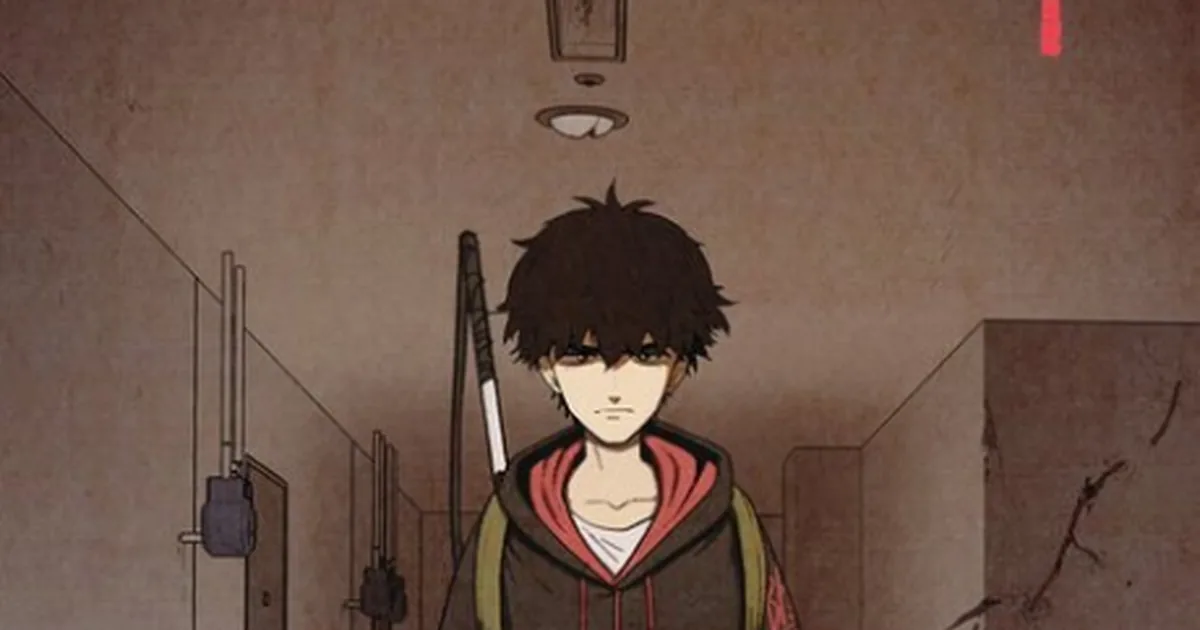
manhwa like Chainsaw Man is one of those searches that needs honest accounting before the list. Chainsaw Man is manga, not manhwa. Tatsuki Fujimoto published it in Weekly Shonen Jump starting 2018, and MAPPA's 2022 anime brought a wave of Western viewers who then went looking for Korean webtoons in the same register. Reasonable, even if the category is slightly off.
What makes it complicated: "same vibe" covers a lot of ground depending on which part of Chainsaw Man got to you. The tonal whiplash between Denji wanting a girlfriend and a burger and the apocalyptic horror surrounding him. The devil system where fear is literally the source of power. Makima as one of the most deliberately constructed manipulative villains in recent manga. The series' willingness to kill major characters without warning or grief cushion. The specific emotional register where characters want very small things inside a world that won't let them have anything.
Those aren't all the same search. This list separates them.
TL;DR: For tonal whiplash between mundane desire and extreme violence: Sweet Home and Bastard are the closest structural matches. For the fear-based supernatural system: Noblesse and The God of High School have external-power mechanics that parallel devil contracts. For Makima-equivalent manipulative antagonist: no manhwa replicates this exactly. Omniscient Reader's Viewpoint has the closest controlled-dangerous dynamic
Overview
Chainsaw Man is a Japanese manga by Tatsuki Fujimoto, published in Weekly Shonen Jump starting in 2018 and continuing in Shonen Jump+ for Part 2. It is not Korean and is not manhwa. MAPPA's 2022 anime adaptation brought it to a wide Western audience, many of whom then searched for Korean webtoons in a similar register. The search is real even if the source material's origin is Japanese.
The series follows Denji, a teenage devil hunter who, after being killed by the yakuza, is resurrected by his devil companion Pochita and becomes the Chainsaw Man: part human, part chainsaw devil. Denji works under the Public Safety Devil Hunters, an organization that contracts with and kills devils. The devil system is built on fear: the more people fear a devil, the more powerful it becomes. Makima, Denji's handler, is one of the most deliberately constructed manipulative antagonists in recent manga.
What makes Chainsaw Man distinctive is its emotional register. Denji's desires are embarrassingly modest: a soft bed, a warm meal, someone to touch. The story doesn't frame these as small dreams against a big backdrop. It frames them as the entire point. The series places that modesty directly against apocalyptic violence and Makima's systematic dismantling of everything Denji wants, without letting either register defuse the other. Characters die without dramatic protection. The mundanity and the carnage coexist in the same panel.
Part 2 shifts the setting to a high school and adds layers of social performance and manipulation around the violence. The tonal core stays consistent even as the setting changes.
Readers searching for manhwa like Chainsaw Man are usually chasing one of several distinct things: the tonal whiplash, the fear-based devil power system, a Makima-equivalent antagonist, or the specific emotional register of a protagonist with very small wants surrounded by very large stakes. This list separates those searches.
Key takeaways
- For tonal whiplash between mundane desire and extreme violence: Sweet Home and Bastard are the closest structural matches
- For the fear-based supernatural system: Noblesse and The God of High School have external-power mechanics that parallel devil contracts
- For Makima-equivalent manipulative antagonist: no manhwa replicates this exactly. Omniscient Reader's Viewpoint has the closest controlled-dangerous dynamic
- For characters who want very small things while everything falls apart around them: Weak Hero and Peerless Dad
- Chainsaw Man is manga, not manhwa; this list covers Korean webtoons that come closest to specific elements of what it does
- Sweet Home and Bastard are both completed and free on WEBTOON. Start there if you want something finished
What manhwa like Chainsaw Man actually needs to deliver
Advertisement
The thing Chainsaw Man does that's genuinely unusual is the emotional register. Denji's wants are so modest they're almost embarrassing: a soft bed, someone to hold, a normal meal. The story doesn't frame these as small dreams against a big backdrop. It frames them as the entire point. Denji isn't motivated by justice or power or revenge. He wants to live like a human being, which he's never been allowed to do.
That modesty, set against Makima's manipulation and the terror of the devil ecosystem, creates a tonal dissonance that Fujimoto sustains across both parts. Characters around Denji die because the world is genuinely dangerous and the series doesn't protect anyone. The mundanity and the carnage exist in the same panel without either register dismissing the other.
No manhwa like Chainsaw Man matches on all of this simultaneously. Each section below names which series delivers which piece most directly, and where the comparisons stop holding.
Our master manhwa reading list covers the top 30 titles across every genre for 2026.
Best Manhwa to Read in 2026 →
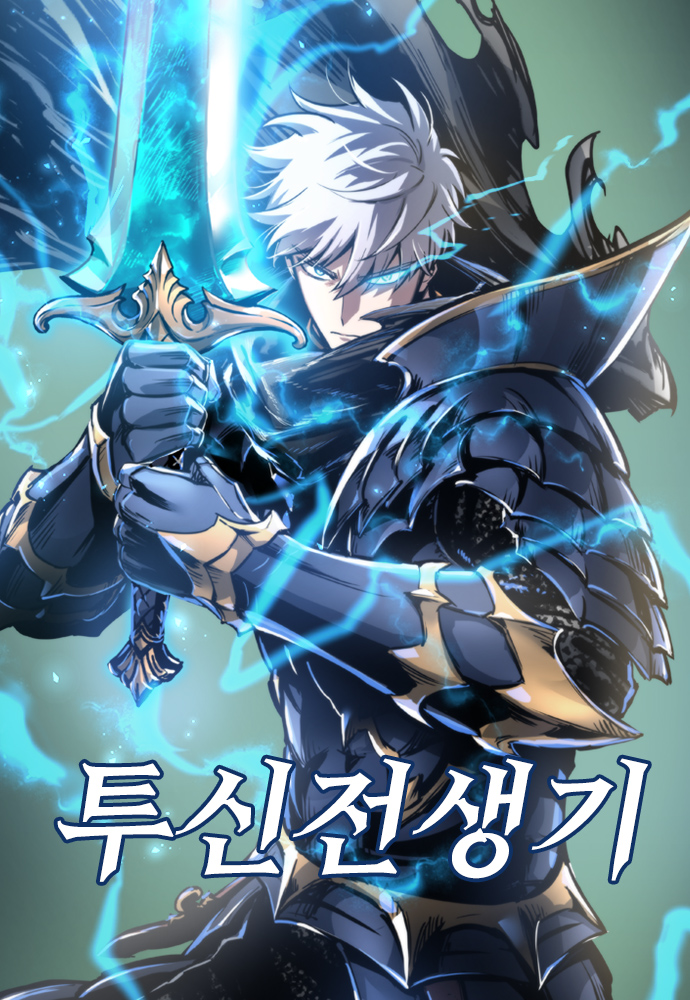
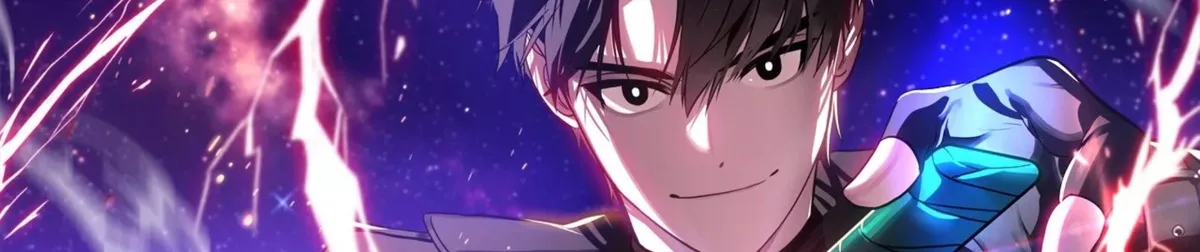
manhwa like Chainsaw Man: sweet home, mundane desire meets the end
Sweet Home (Naver, 2017-2020, 141 chapters, completed; Netflix Seasons 1-3) is the strongest overall structural match for manhwa like Chainsaw Man. The premise: Cha Hyun-soo is a teenager who has just moved to a new apartment after his family's deaths, planning to die there alone. Then the world ends around him.
The emotional grounding is where the Chainsaw Man comparison holds. Hyun-soo wants to be left alone. He doesn't want to be a hero. He doesn't want community or survival or redemption. His desires are as modest and privately held as Denji's, and the series forces both characters into situations that make those private wants impossible to protect. The horror in Sweet Home (residents transforming into monsters shaped by their deepest desires) runs on logic similar to Chainsaw Man's devils. A man who craved strength becomes something massive and armored. A child who wanted attention becomes something that screams for it. The monsters aren't random. They're specific to the person who became them.
Where the comparison breaks down: Sweet Home is survival horror in a way Chainsaw Man isn't. The ensemble stakes are broader, the cast is larger, and the series moves differently. Chainsaw Man can be funny. There's a sustained dark absurdism in Denji's obliviousness that Sweet Home doesn't share. Sweet Home's darkness is dread without relief. But the core mechanism (ordinary person with modest wants, supernatural horror that won't respect those wants) holds.
The manhwa is free on WEBTOON and complete. The Netflix adaptation is worth watching for Season 1, which tracks the source material closely, but Seasons 2 and 3 diverge significantly. For readers who want the full story, the manhwa's ending is more contained and thematically coherent than where the show goes.
Bastard: proximity to a monster in everyday clothes
 Bastard.
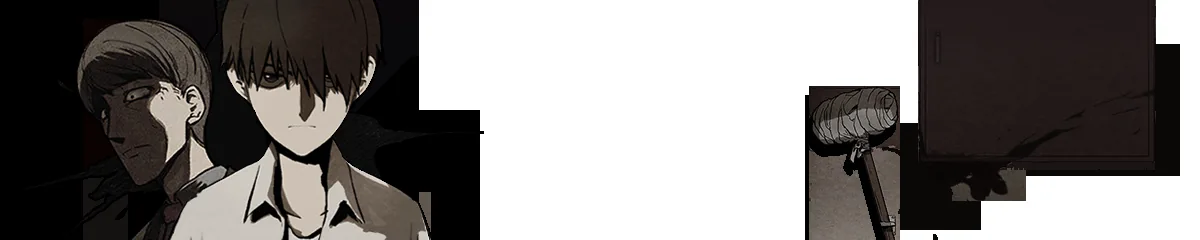
Bastard (Kim Carnby and Hwang Young-chan, WEBTOON, 92 chapters, completed) covers different ground from Sweet Home but hits the Chainsaw Man emotional mechanism from a different angle. Jin Seon is a high school student whose father is a serial killer. Jin has known this for years. His father uses Jin's social connections to locate victims. Jin covers his tracks, because the alternative is worse.
Denji's relationship with Makima is built on the same asymmetry as Jin's relationship with his father. Both protagonists are in proximity to someone who has power over them, who appears to offer something (validation, safety, connection), and whose actual intentions they can't fully read. Both series are interested in what it costs to stay near a person like that, not through naivety but through circumstance and dependency.
Bastard doesn't have devils or supernatural mechanics. The horror is entirely human and relational. But the tonal dissonance (high school hallways as a backdrop for something genuinely dangerous) maps to Chainsaw Man's trick of embedding extreme violence in recognizable settings. The pacing is as tight as Chainsaw Man's, with almost no wasted chapters. Each entry advances something.
If you came to Chainsaw Man for the specific feeling of a protagonist who knows something is badly wrong and stays anyway, Bastard is the recommendation. It's 92 chapters and it ends cleanly. The best dark manhwa list covers where Bastard sits alongside its peers if you want to extend from there.
Noblesse: the fear-based power system parallel
 Noblesse.
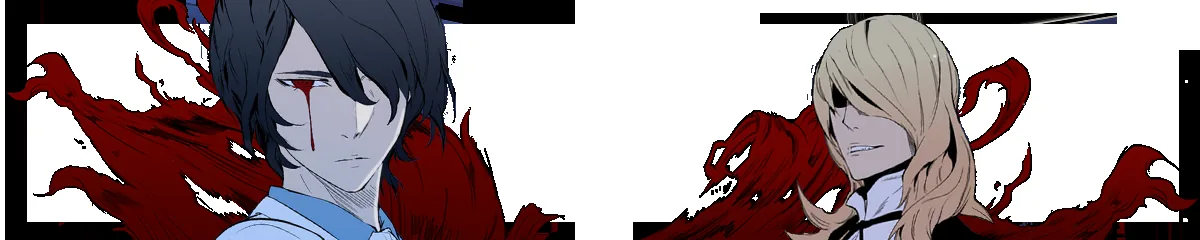
Noblesse (WEBTOON, 2007-2019, 543 episodes, completed; anime adaptation 2020) isn't an obvious Chainsaw Man comparison on its surface. The tone is considerably lighter in its early chapters, but the underlying power system shares something meaningful with Chainsaw Man's devil hierarchy.
In Chainsaw Man, devils gain power from how much humanity fears the thing they represent. Chainsaw Man himself is so powerful that he's eaten devils who feared him, erasing them and the memory of what they were from existence. Fear is the literal fuel. The system has an internal logic: stronger fears produce stronger devils, and the scope of human terror determines the ceiling.
Noblesse doesn't use fear explicitly, but the Nobles and their hierarchy operate on a similar principle. Cadis Etrama di Raizel (Rai) has been dormant for 820 years, and the power he holds is proportional to something older and deeper than any individual's capacity. The Union and the modified humans who serve as antagonists are strong in relation to human fear and limitation. The hierarchy has rules that feel like they emerged from the same place as Chainsaw Man's devil taxonomy: external, ancient, and only partially legible to the humans caught in the middle.
The early chapters of Noblesse lean heavily on comedy. An ancient aristocrat navigating a school cafeteria with his servant Frankenstein, eating ramen for the first time, gradually reconnecting with the world. If that stretch sounds like it undercuts the threat, it does, briefly and deliberately. By the time the Union's modified humans appear and Rai starts using his actual power, the series has earned its escalation. Free on WEBTOON, all 543 episodes. The manhwa like Noblesse list covers adjacent picks if the hierarchy system is the specific hook.
Our best thriller manhwa list highlights the most intense, darkly original stories in the medium.
Best Thriller Manhwa →
The God of High School: divine power from external sources
 The God of High School.
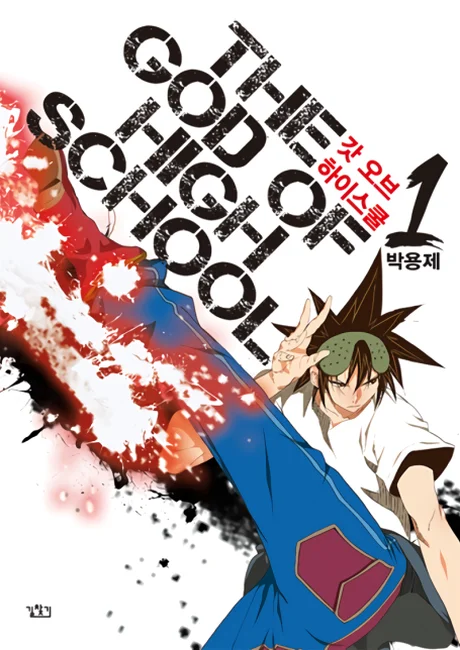
The God of High School (WEBTOON, 2011-2024, 569 chapters, completed; Crunchyroll anime 2020, 13 episodes) is the MAPPA production lineage connection (the studio adapted both GoHS and Chainsaw Man). The structural parallel to Chainsaw Man is in how its power system works.
GoHS fighters don't generate power internally. They channel it from external sources: gods, mythological entities, primordial forces. Park Mori channels the Monkey King. Others channel figures from Korean, Chinese, and Hindu mythology. The power belongs to something external; the fighters are conduits, not sources. That's a different mechanism from Chainsaw Man's devil contracts. Devils are separate entities; humans who contract with them gain access to that entity's power rather than developing it themselves, but the underlying logic is similar. You're borrowing from something older and larger than you are.
The tournament format in GoHS's first act is its most accessible stretch. The three leads (Mori: taekwondo eventually cosmic; Daewi Han: wrestling, motivated by a dying friend; Mira Yoo: sword style, lineage and obligation) have distinct disciplines and specific emotional through-lines, in the same way that Chainsaw Man's ensemble each carries a specific desire and limitation. The pacing weakens considerably in the later divine escalation arcs, where the scale becomes harder to track. But the early arcs hold up.
The Crunchyroll anime is 13 episodes, which compresses 569 chapters into a highlight reel. The manhwa is the actual argument. For dark manhwa fans who want their action with stakes, GoHS is one of the completed titles with the most consistent action across a long run.
Omniscient Reader's Viewpoint: the Makima-adjacent antagonist
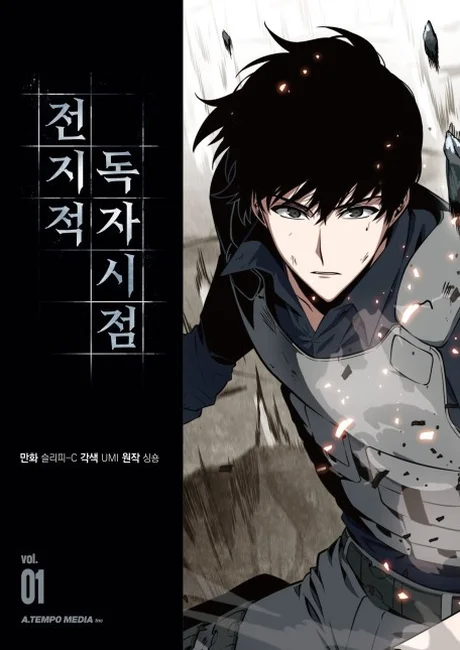 Omniscient Reader's Viewpoint.
Omniscient Reader's Viewpoint (kakaopage, 2018-2021, 551 chapters, completed) doesn't match Chainsaw Man on tone or setting. It's a fantasy survival epic about a man who has read a web novel his whole life and then the novel starts happening in reality. But for the specific quality of Makima (the character who presents as a benefactor, whose actual intentions remain opaque for long stretches, whose relationship with the protagonist the reader can't fully decode), ORV has the closest analogue in manhwa.
Yoo Joonghyuk is not Makima. He's not a manipulative villain. But his dynamic with Kim Dokja (the protagonist who has read everything Joonghyuk will do, who knows Joonghyuk's history but can't always predict his present choices, who exists in a power relationship with him that shifts across hundreds of chapters) has the same quality of a protagonist being unable to read the most important person in their orbit correctly. Dokja knows the text. He doesn't know the person.
That's a narrow parallel, and I'm being specific about it. ORV is worth reading for many reasons. The pay-off on its central emotional premise is one of the better-constructed conclusions in manhwa. But if you're specifically hunting Makima, manage expectations. The honest answer is that Makima as a villain type is essentially unreplicated in manhwa. The closest things to her specific construction are in other manga: Gendo Ikari, Johan Liebert. ORV is the best approximation the Korean medium has produced, which is still something worth knowing.
The manhwa like Omniscient Reader's Viewpoint list covers where ORV sits in the broader recommendation context if this pick lands.
Weak Hero: small desire, high school, escalating violence
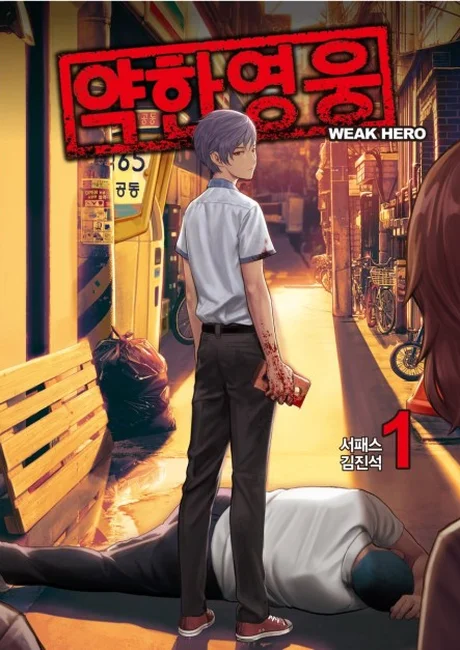 Weak Hero.
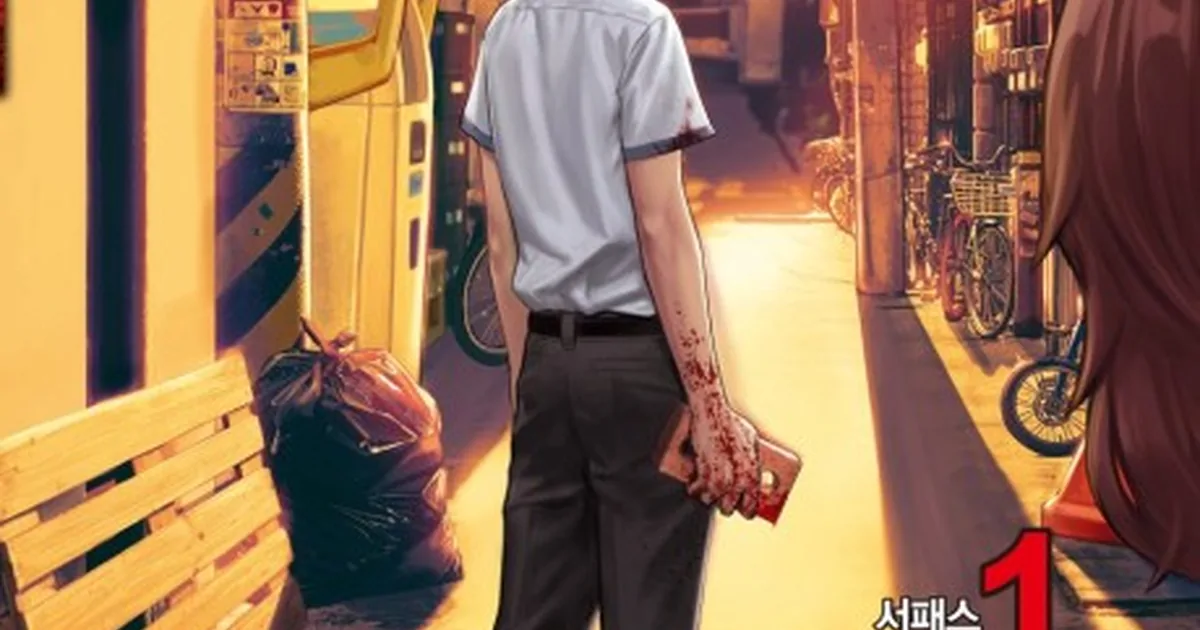
Weak Hero (Seo Pass and Kim Jin-seok, WEBTOON, completed, 268 chapters) is the most direct match for manhwa like Chainsaw Man's specific emotional mechanism: a character with modest private wants, set in a high school context, surrounded by violence that refuses to stay contained.
Gray Yeon doesn't want to fight. He wants to finish school without the violence that followed him from his previous school catching up with him. He's not strong in any physical sense. He wins fights through precise knowledge of where people break, applied without hesitation. The series gives him wins that don't feel like victories, because each win requires him to escalate past the point he wanted to stay at.
Denji gets what he wants, temporarily, and the wanting costs him something. Gray gets what he wants, temporarily, and the cost is always another threshold crossed that he can't uncross. Both series are interested in the specific damage of wanting small things inside systems designed to take everything you have.
Weak Hero's school setting also mirrors Part 2 of Chainsaw Man more directly than Part 1. The social performance around violence (who's watching, what witnesses mean, how reputation functions inside a closed institution) is present in both. For readers who want the horror-adjacent action of best manhwa horror 2026, Weak Hero sits at the edge of the category: it's not horror, but it uses horror's tools.
Peerless Dad: the character who wants the smallest thing
Peerless Dad (Ryu Hyang and Noh Myeongseong, Tapas, ongoing, 200+ chapters) is the outlier on this list because it's neither dark nor horror-adjacent. It's a martial arts manhwa about a man who wants to raise his three children after the death of their mother. That's the entire motivation. He trains, fights, and accumulates power not because he wants strength but because the world keeps escalating threats and he needs to be able to protect his kids.
The connection to Chainsaw Man is purely emotional: a protagonist whose wants are so simple they're almost embarrassing in a genre that usually demands grand ambitions. Noh Gajang doesn't want to be the strongest fighter. He doesn't want revenge or recognition. He wants his children to be okay. The series keeps presenting him with obstacles that require more power and keeps watching him acquire that power with the same tired patience of a man who just wants this done already.
The tone is entirely different from Chainsaw Man: lighter, more traditional martial arts structure, less carnage. But for readers who connected to the emotional core of Denji wanting very little and the world not accommodating even that, Peerless Dad delivers that specific register in a completely different genre package. It's available on Tapas in English.
Analysis: what manhwa does differently than Chainsaw Man
Advertisement
A few things worth knowing if you're coming from Chainsaw Man to manhwa for the first time.
Chainsaw Man is manga. Single-color panels, page-turn reveals, chapter releases in a weekly magazine format. Manhwa is vertical scroll, full color, built for mobile reading. The pacing grammar is different: manhwa builds dread and impact on downward momentum rather than the page-turn punctuation that Fujimoto uses as one of his primary tools. When a Chainsaw Man chapter ends on a reveal, it uses the physical medium. Manhwa reveals scroll into view, which is its own tool, but works differently.
The darkness also has different traditions. Chainsaw Man's carnage is specific and frequently funny. There's absurdism in how Denji processes violence that comes from Fujimoto's particular sensibility. Korean manhwa's darkness tends to be more sustained and less relieved by humor. Sweet Home doesn't cut away for comedy. Bastard doesn't use dark humor as a pressure valve. Weak Hero is grimly purposeful throughout. Readers who loved Chainsaw Man for its tonal switches should expect manhwa like Chainsaw Man to often be darker in a more sustained, unrelieved way.
Nothing on this list is a direct equivalent. Each pick delivers one or two specific elements from Chainsaw Man well. Which element matters most determines the recommendation.
Frequently Asked Questions
What manhwa has the same vibe as Chainsaw Man? The closest overall vibe match is Sweet Home: modern Korean setting, monsters that embody something human, tonal whiplash between mundane and extreme. Bastard gets the claustrophobic dread without the monster mechanics. For the specific combination of mundane desire plus overwhelming violence, Weak Hero comes closest in current manhwa.
Is there manhwa with devil powers like Chainsaw Man? Not with the exact fear-based devil system, but several manhwa use power tied to external supernatural forces. Noblesse has a hierarchy of beings whose power scales with age and bloodline. The God of High School channels divine power from external sources -- gods lend their abilities to fighters rather than fighters generating power themselves. Both are structurally closer to Chainsaw Man's devil contracts than anything else in manhwa.
What manhwa is similar to Chainsaw Man Part 2? Chainsaw Man Part 2 shifts to a high school setting and adds layers of social performance and manipulation around the violence. For that register, Weak Hero is the strongest match -- extreme violence inside an ordinary school context, and the series refuses to let the setting defuse how serious that violence is.
Is Makima from Chainsaw Man a character type that appears in manhwa? Makima as a specific type -- the figure who appears to offer a protagonist everything while engineering their destruction -- is rare in any medium and essentially unreplicated in manhwa exactly. The closest structural match for the controlled-dangerous-to-protagonist quality is Yoo Joonghyuk in Omniscient Reader's Viewpoint, but his dynamic with Dokja reads as adversarial rather than manipulative. Be skeptical of lists that claim a direct Makima equivalent.
What manhwa like Chainsaw Man are completed? Sweet Home is complete at 141 chapters on WEBTOON. Bastard is complete at 92 chapters on WEBTOON. The God of High School completed at 569 chapters. Noblesse finished at 543 episodes. Peerless Dad is ongoing. Weak Hero is completed at 268 chapters.
Is there manhwa like Chainsaw Man for fans who loved the MAPPA anime? Yes. The God of High School was also adapted by MAPPA in 2020, 13 episodes on Crunchyroll. Solo Leveling's anime is MAPPA 2024. For fans who came through the anime, GoHS and Solo Leveling are the natural entry points into manhwa -- both have the kinetic fight choreography and color saturation that MAPPA's Chainsaw Man established as the aesthetic baseline.
Where can I read Sweet Home in English? Sweet Home is available free in full on WEBTOON in English. The manhwa is complete at 141 chapters. Netflix adapted it across three seasons -- Season 1 tracks the source material closely, Seasons 2 and 3 diverge significantly. The manhwa's ending is more contained and thematically coherent. If you want the full story, Sweet Home on WEBTOON is the starting point.
Related Reading
- Best Manhwa to Read in 2026 →
- readers who want the full story
- best dark manhwa
- manhwa like Noblesse
- Best Thriller Manhwa →
References
- Chainsaw Man on Viz. Official English release of the manga, Parts 1 and 2
- Sweet Home on WEBTOON. Complete at 141 chapters, free
- Bastard on WEBTOON. Complete at 92 chapters, free
- The God of High School on WEBTOON. 569 chapters, completed 2024, free
- Noblesse on WEBTOON. 543 episodes, completed 2019, free
- Peerless Dad on Tapas. Ongoing martial arts manhwa
- Best dark manhwa. ChapterBrief list of dark manhwa across subgenres
- Best manhwa horror 2026. Horror and horror-adjacent picks for 2026
- Manhwa like Sweet Home. Adjacent picks if Sweet Home is the hook
- Best manhwa seinen. Mature manhwa across action, thriller, and dark fantasy
- Manhwa like Death Note -- for readers who came to Chainsaw Man for Makima and want the psychological manipulation angle explored further
About the author

Anime and manhwa writer covering seasonal releases and ongoing webtoons since 2018. Seoul-born, Melbourne-based. Writes the way she reads — fast and direct.
- Covering anime and manhwa since 2018
- 400+ series completed across anime and manhwa
- Seasonal anime tracker for 6 years running
- Romance and fantasy specialist with deep genre knowledge

Disclaimer
This article is published for informational and entertainment purposes. It does not constitute professional financial, legal, or technical advice. Series availability, platform access, translation status, and chapter counts change. Verify critical details (pricing, regional availability, official translation status) with publishers and platforms. Affiliate links, where present, help support our editorial work and are labelled in our affiliate disclosure.
Comments
Loading comments…