One Punch Man is manga, not manhwa. That's worth saying upfront, because every search for manhwa like One Punch Man starts with a premise that needs some clarity. ONE's webcomic, started in 2009 and given a Yusuke Murata redraw that is still some of the best action art being published anywhere, is Japanese. The Madhouse first season (2015) and J.C.Staff second season (2019) reached an enormous international audience, but the source material is not Korean.
What those searches are actually asking about is a set of specific qualities: a protagonist so overpowered that winning stopped being interesting; comedy that comes from the gap between what a character can do and what they actually care about; satire of shonen conventions (effort leads to triumph: what if you'd already won that argument ten years ago?); a satirical institutional structure in the Hero Association; and action art, in Murata's redraw, that belongs on a short list of the best in any format.
Those qualities don't all travel into any single manhwa. Some appear partially in Korean works. One of them (Mob Psycho 100 by the same creator, which addresses the same questions from a different angle) is also manga. This list covers six manhwa sorted by which quality from OPM each one delivers best, and where the comparison runs thin.
TL;DR: One Punch Man is a Japanese webcomic and manga, not manhwa. Saitama's story has no direct Korean equivalent in terms of format or direct influence. The closest thematic match for the "OP protagonist who finds winning boring" angle is Peerless Dad on Tapas. Noh Gajang chose domestic life over using his power, and the series examines that choice. For the satirical shonen formula, Mob Psycho 100 (same creator, also manga) is the natural companion. The manhwa like Mob Psycho 100 guide covers that territory
Key takeaways
- One Punch Man is a Japanese webcomic and manga, not manhwa. Saitama's story has no direct Korean equivalent in terms of format or direct influence
- The closest thematic match for the "OP protagonist who finds winning boring" angle is Peerless Dad on Tapas. Noh Gajang chose domestic life over using his power, and the series examines that choice
- For the satirical shonen formula, Mob Psycho 100 (same creator, also manga) is the natural companion. The manhwa like Mob Psycho 100 guide covers that territory
- For spectacular action art, The God of High School is the Korean manhwa closest to OPM's fight-sequence ambition; Weak Hero is precise where OPM is explosive
- True Beauty uses deadpan internal monologue for comedy in a completely different genre, worth noting as an example of how rare OPM's specific comedic register is in manhwa
- The OPM formula (godlike protagonist plus existential boredom plus shonen genre satire) is nearly unreplicated in manhwa as a complete package
- All picks are officially available in English; sources noted per entry
manhwa like One Punch Man: overview, what one punch man actually does
Saitama trained for three years: 100 push-ups, 100 sit-ups, 100 squats, 10km running, every day without fail. He became strong enough to defeat any opponent with a single punch. This gave him exactly one problem. Nothing is a challenge anymore. He is bored. He can't feel excitement in a fight. He became a superhero for fun, and the fun is gone.
That setup inverts the shonen premise. The genre runs on escalating challenge: heroes who train harder, grow stronger, face more powerful enemies, and triumph through effort. OPM's joke is that Saitama already completed that arc, it worked as advertised, and the result is an existential vacuum. He doesn't need to grow stronger. He needs something to threaten him, and nothing can.
The Hero Association ranks heroes by public image and written test scores rather than actual combat effectiveness. It's a bureaucracy that has no mechanism for processing someone like Saitama, a bald part-timer in a yellow suit who keeps showing up to S-class disasters without an invitation. Genos, Saitama's disciple, is earnest in the way classic shonen protagonists are earnest: relentless, self-improving, obsessed with strength. Saitama mostly ignores this. The comedy runs on how seriously everyone takes heroism as a system and how thoroughly Saitama has opted out of performing within it.
Murata's redraw adds something the original webcomic doesn't have: action sequences worth experiencing as spectacle on their own terms. The Boros fight. The Garou fights in later arcs. The scale is absurd and the execution is controlled. That's a distinct quality from the comedy premise, and it's worth tracking separately when looking at what manhwa can and can't match.
Our master manhwa reading list covers the top 30 titles across every genre for 2026.
Best Manhwa to Read in 2026 →
For the satire of wish-fulfillment: Peerless Dad
Advertisement
Noh Gajang is the most powerful martial artist in his world. He is also a single father to triplets who finds the most challenging thing in his life is picking up his children after school without them being embarrassed by him.
Peerless Dad (Tapas, 200+ chapters, ongoing) is the most structurally honest match in manhwa for what OPM is doing. Gajang was a legendary fighter who stepped away from that world when he became a parent. He didn't lose his power. He chose not to be defined by it. The comedy runs on the same gap: a man who could level cities worried about whether the other parents at the school gate think he's unemployed.
What Peerless Dad doesn't have is the institutional satire of the Hero Association. It's a family drama with martial arts undercurrents, not a genre-aware deconstruction of power hierarchies. Gajang's lack of interest in status is personal, not political. The best manhwa overpowered MC roundup covers Peerless Dad alongside series where the OP protagonist dynamic works differently. The contrast shows clearly what Gajang is doing that's unusual.
The emotional register is also different. Saitama's boredom is existential and young; Gajang's choice is parental and adult. They're the same type of person at different life stages. That's part of why the comparison holds without the series feeling like a copy.
For the same creator's approach: Mob Psycho 100
Mob Psycho 100 is also manga. Not manhwa. Also by ONE, running simultaneously with his OPM webcomic from 2012 to 2017. Including it as a manhwa recommendation would be wrong, but not mentioning it would be stranger.
Mob Psycho 100 asks the same questions as OPM from a different starting point. Shigeo Kageyama (Mob) is the most powerful psychic in his world. He knows this. He has decided that his power is separate from his worth as a person, and the series is about whether that decision is correct and what it costs him. Where Saitama's problem is that winning stopped feeling like anything, Mob's is that he's actively chosen not to let winning define him, and has to figure out what does. Both protagonists have opted out of the shonen protagonist's investment in getting stronger. Both series put a character at the center who resolved the genre's central question before chapter one and found the answer unsatisfying.
The manhwa like Mob Psycho 100 guide covers this territory in full: which manhwa approaches OPM from Mob's angle, which ones miss, and why the Reigen Arataka mentor dynamic is nearly impossible to find in Korean works. If you're here because you finished OPM and want something in the same philosophical neighborhood, that guide is the more specific resource.
For spectacular action art: The God of High School
The Murata redraw's Garou fights are among the best action sequences in the format: the pace, the scale, the willingness to let a single page carry a scene's weight. Finding manhwa that works at that level is a specific ask, and the honest answer is that nothing in Korean manhwa fully matches it. But one comes close.
The God of High School (WEBTOON, completed at 569 chapters, free to read) is the closest Korean manhwa for pure action spectacle. Park Yongje's fight choreography is fast, frequently absurd in scale, and sometimes genuinely impressive in how it commits to a visual moment without hedging. The early tournament arc has the energy of OPM's fights: high-skill combatants, clear stakes, a sense that any given fight might end differently than expected. Three high school students enter a nationwide martial arts competition run by the National Assembly. The prize is a single wish. The setup has bureaucratic absurdity in it (the Korean government is literally running a high school fighting tournament) but the series doesn't build on that critique. The satire is present for about 50 chapters, then gives way to Charyeok borrowed-power escalation and eventually divine mythology. The comedy mostly doesn't survive the transition. What lasts is the spectacle, which stays impressive through the end.
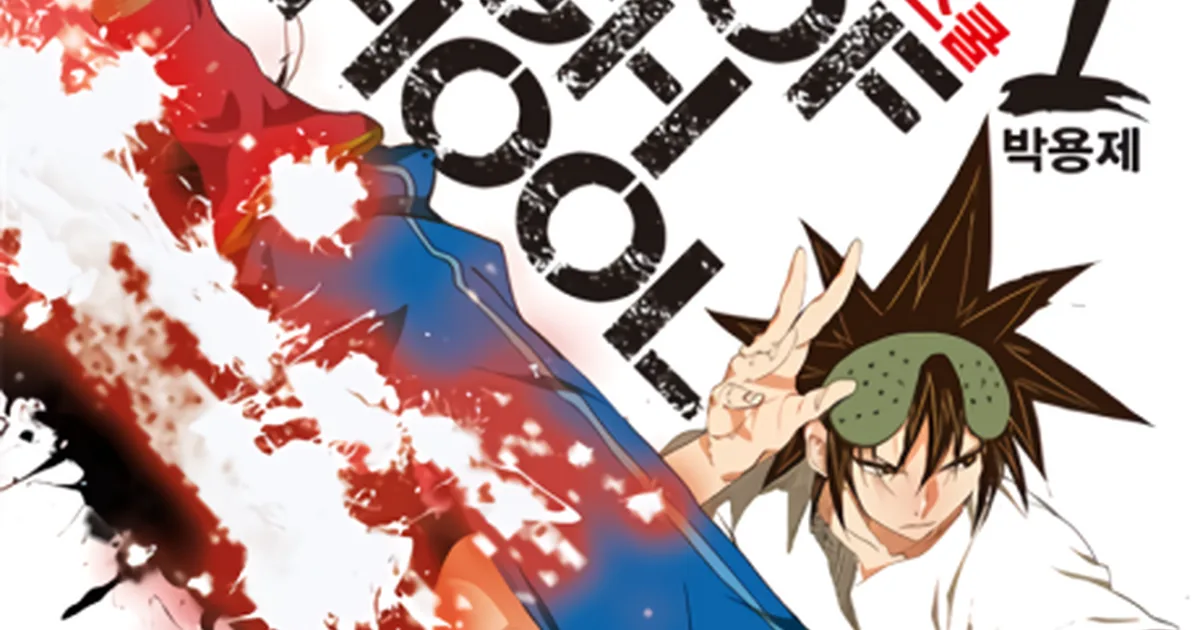
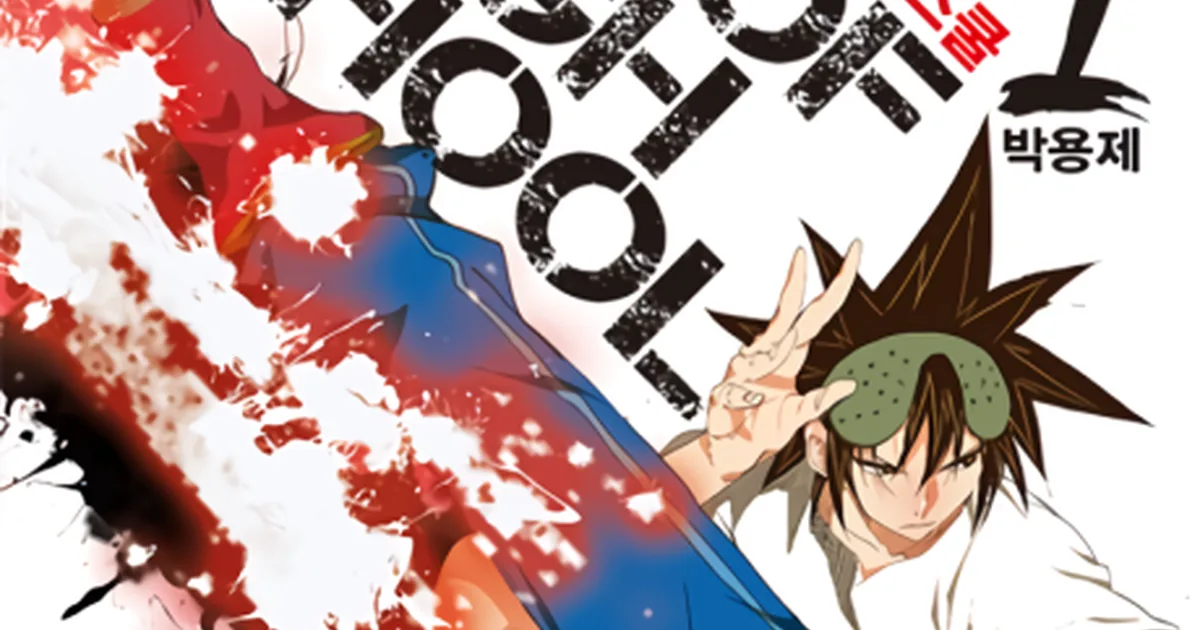
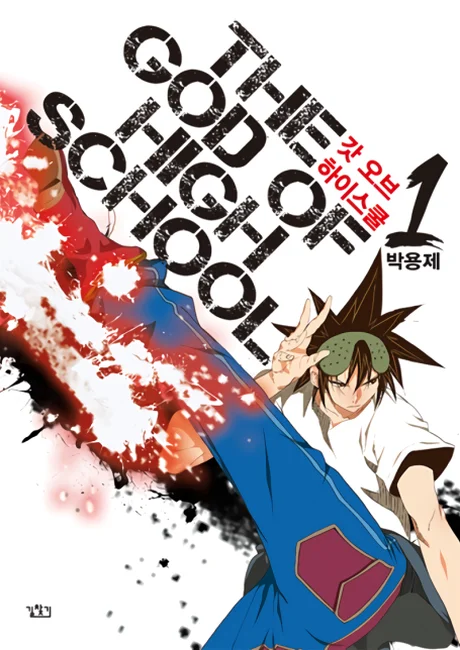 The God of High School cover art.
The manhwa like The God of High School guide separates readers by which element of GoH drew them in: tournament structure, Charyeok combat, or divine escalation. For manhwa like One Punch Man readers specifically, the early tournament arc through approximately chapter 100 is the strongest match.
Our best action manhwa list covers overpowered protagonist stories that nail the comedy-action balance.
Best Action Manhwa 2026 →
For precise, grounded fight art: Weak Hero
One Punch Man's fight sequences work through scale. Saitama's punches erase mountains, S-class heroes reshape city blocks. Murata draws destruction well. Weak Hero operates in the opposite register and delivers something equally impressive.
Weak Hero (WEBTOON, completed, 268 chapters) follows Yeon Sieun, a top-ranked student who takes apart physically much larger opponents through positioning, timing, and a willingness to absorb hits his opponents don't expect to cost him anything. He is not overpowered. The fight art is the point: panel composition that makes the reader understand exactly why a hit lands, not just that it does. Clear sightlines, legible choreography, no wasted splash.
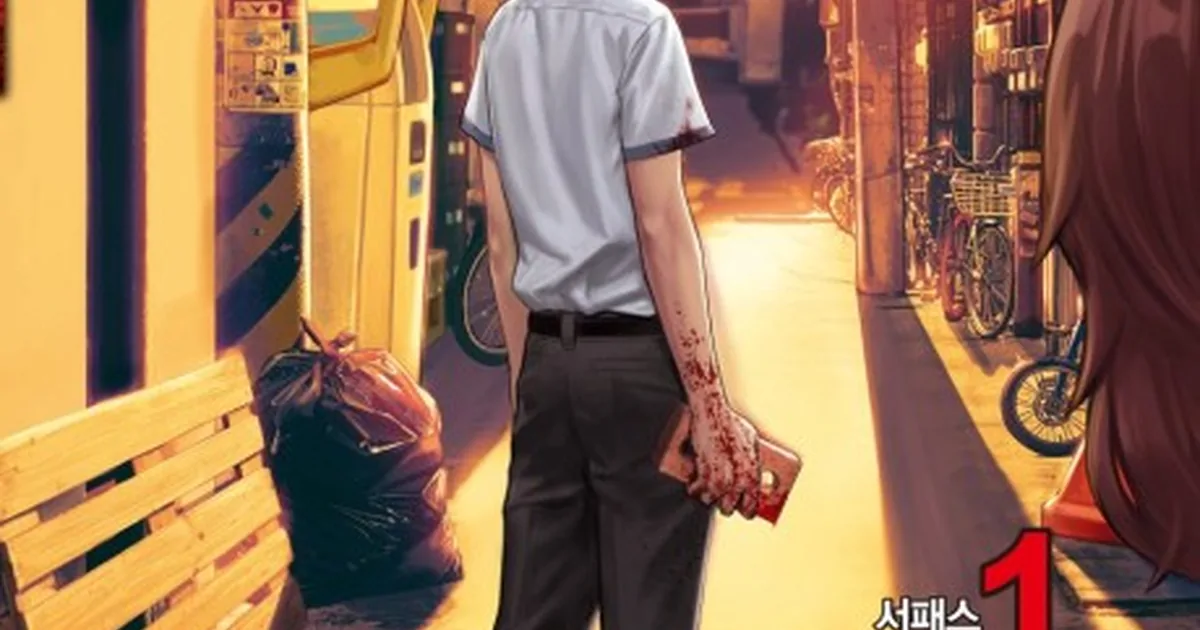
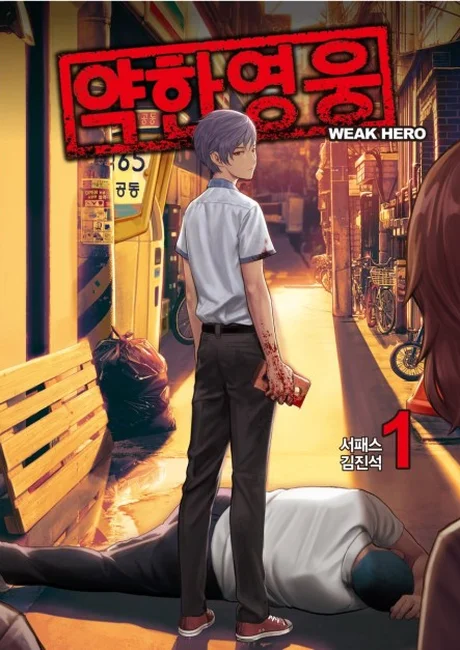 Weak Hero cover art.
The tonal comparison to OPM is narrow. Weak Hero has none of OPM's comedy or genre satire. Sieun is cold where Saitama is blank, deliberate where Saitama is effortless. The two series share almost nothing except that both treat fight art as something worth thinking through carefully. Readers who came to OPM for the Murata sequences and want manhwa that takes the same approach will find it here. The best manhwa action 2026 roundup covers Weak Hero alongside series where the fight art is the primary draw.
For deadpan comedy in a different genre: True Beauty
This one is a stretch, and it's here specifically because the deadpan comedic protagonist is genuinely rare in manhwa. Acknowledging the gap is more useful than pretending there's a perfect substitute.
Deadpan comedy in the OPM sense requires a protagonist who has checked out from the drama everyone around them is treating as urgent. Manhwa action series almost never build that character. The genre depends on protagonists who care about what's happening to them. Saitama's disengagement is the joke. Most manhwa protagonists' disengagement is a character flaw the plot eventually corrects.
True Beauty (WEBTOON, completed) is a high school romance with nothing in common with OPM in terms of genre. What it has is Lim Jukyung's internal monologue, which runs as dry commentary on the gap between how she appears and what she's actually thinking. Her external presentation: calm, effortlessly beautiful, composed. Her internal state: cataloguing every possible way the current situation could go wrong, often loudly. The discrepancy is the joke. It's structurally the same gap as Saitama's: perceived one way by everyone around them, actually something else entirely. The best manhwa comedy page covers True Beauty alongside other series that use internal monologue as their primary comedic tool.
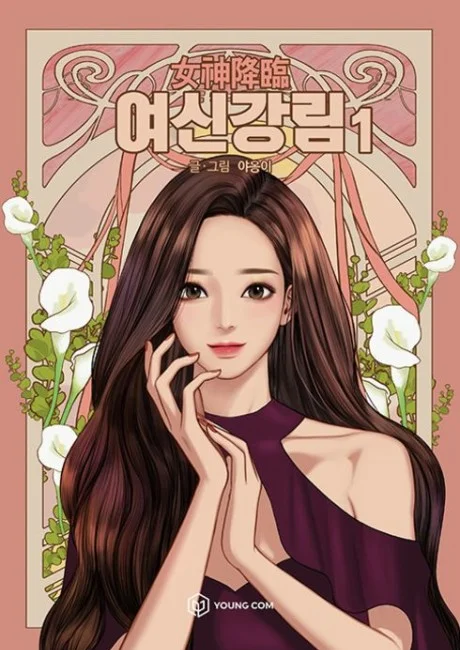 True Beauty cover art.
This comparison holds on exactly one axis. I'm including it specifically because OPM-style deadpan comedy is genuinely rare in manhwa, and naming what True Beauty does similarly is more useful than leaving readers to assume the genre just doesn't have it.
manhwa like One Punch Man: analysis, why opm's formula is nearly unreplicated
Advertisement
One Punch Man works because its elements reinforce each other. The satirical premise (effort leads to strength leads to victory, so what happens when you complete that arc) requires an overpowered protagonist. The overpowered protagonist creates the existential boredom. The boredom generates the deadpan comedy. The Hero Association's institutional satire needs a protagonist who is the most powerful person in the system and completely indifferent to what the system offers. Murata's art makes the fight sequences worth experiencing as spectacle regardless of the comedic premise. Pull out any one element and the others lose coherence.
Manhwa's OP protagonist genre is large and mostly earnest. Solo Leveling, The Beginning After the End, Nano Machine, Omniscient Reader's Viewpoint: these use the overpowered protagonist as a vehicle for cathartic wish-fulfillment story or strategic planning. Getting stronger is the point. OPM's inversion of that (the protagonist is already at maximum power, and that's the problem) requires sustained commitment to making the boredom funny rather than treating it as a phase to overcome. That's a different kind of storytelling decision, and manhwa hasn't made it often.
Peerless Dad makes it, in a domestic register. The best manhwa completed 2026 page covers the completed series in the broader OP protagonist space, which shows how consistently manhwa treats power as something to develop rather than something to be tired of. For OPM readers who want Korean works that approach the satire angle, the Mob Psycho 100 guide is the right continuation. Those two series are better understood as companions than separate recommendations.
Manhwa like One Punch Man is a search that yields partial matches because OPM is doing something unusual with a genre manhwa has largely adopted in earnest. The six picks above each cover one element of OPM well. None of them cover all of it.
Frequently Asked Questions
Is there a manhwa as funny as One Punch Man? Not with the same formula. Saitama's deadpan boredom while obliterating monsters is a specific comedic register that manhwa hasn't exactly replicated. The closest functional equivalent for the comedy is Peerless Dad on Tapas, where a catastrophically powerful martial artist worries more about packing his kids' lunches than about anyone challenging him. The gap between capability and actual concern is the same joke. For broader action comedy, The God of High School starts with that energy in its tournament arc before escalating into mythology.
What manhwa has the best action art? For sheer visual ambition in fight sequences, The God of High School is the benchmark in Korean manhwa. Park Yongje's fight choreography is kinetic and occasionally absurd in scale in ways that track One Punch Man's Murata-drawn action. Weak Hero is a different register: precise, brutal, grounded, every panel planned for impact. If spectacular means explosive, GoH. If it means technically impressive, Weak Hero. Neither is OPM, but both reward readers who came for the spectacle.
Is Mob Psycho 100 manhwa or manga? Mob Psycho 100 is a manga, specifically a Japanese webmanga written and drawn by ONE, the same creator as One Punch Man. It serialized on Ura Sunday from 2012 to 2017. The three-season Bones anime adaptation (2016, 2019, 2022) is where most Western readers encountered it, but the source material is Japanese, not Korean. Recommending manhwa like One Punch Man means looking for Korean webtoons and manhwa, not Mob Psycho 100 itself.
Is One Punch Man manhwa or manga? One Punch Man is manga and webcomic, not manhwa. The original webcomic was created by ONE starting in 2009 and is Japanese. Yusuke Murata's redraw, which runs in Weekly Young Jump, is the version most readers know. The two anime seasons (Madhouse in 2015, J.C.Staff in 2019) reached a massive international audience. One Punch Man is not a Korean production. Searches for manhwa like One Punch Man are looking for Korean works that share its specific qualities.
What manhwa has an overpowered main character? Dozens. It's one of the most common tropes in manhwa. Solo Leveling's Sung Jinwoo becomes the most powerful awakener in the world. The Beginning After the End's Arthur is OP from childhood in his new world. Nano Machine, Omniscient Reader's Viewpoint, Return of the Blossoming Blade: all feature protagonists who outpace most opposition. What separates One Punch Man from these is that Saitama's overpowered status is the source of comedy and existential crisis rather than cathartic wish-fulfillment story. The best manhwa overpowered MC roundup on this site covers the full genre range.
Is The God of High School free to read? Yes. The God of High School is a WEBTOON original. All 569 chapters are available on webtoons.com at no cost. The MAPPA anime adaptation (13 episodes, 2020) is on Crunchyroll. The manhwa is complete with a proper ending, so there is no wait for ongoing releases.
Where can I read Peerless Dad in English? Peerless Dad is available in English on Tapas. The series has over 200 chapters and is ongoing. Tapas uses a coin system for newer chapters, with older chapters available free. It's one of the few places in English-language manhwa publishing that hosts Peerless Dad consistently.
Related Reading
- manhwa like Mob Psycho 100
- Best Manhwa to Read in 2026 →
- best manhwa overpowered MC
- manhwa like The God of High School
References
- One Punch Man on Viz Media (the official English publisher for the Murata redraw volumes)
- The God of High School on WEBTOON (all 569 chapters, free to read)
- Peerless Dad on Tapas (the primary English-language publisher for the series)