Loading…
ChapterBrief · Manhwa
Best Dark Manhwa: 10 Series Ranked by Actual Darkness
Best dark manhwa: ten picks sorted by type of darkness. Psychological horror, brutal survival, exploitation. Content warnings for 18+ entries included.

Most best dark manhwa lists are actually "action manhwa where characters occasionally die." The deaths are real, but they're furniture. The story isn't changed by them. A character dies to raise stakes, the protagonist gets angrier, the fight escalates. That's not darkness. That's consequence without weight.
TL;DR: Best dark manhwa: ten picks sorted by type of darkness. Psychological horror, brutal survival, exploitation. Content warnings for 18+ entries included.
The best dark manhwa do something different. The darkness is structural. It's inside the protagonist's head, or built into the world's bones, or present in what the series refuses to let you look away from. Remove it, and the story doesn't work anymore, because the darkness isn't decoration.
This list ranks ten series by type of darkness, sorted roughly from most accessible to least. The order isn't a quality ranking; it's a threshold map. Start at the top if you want to test the water. The bottom entries earn their content warnings.
best dark manhwa: key takeaways
Ten best dark manhwa picks across five types of darkness:
- Sweet Home and Bastard: psychological darkness as the structural engine. The best entry points.
- Weak Hero: social darkness. School violence treated with the seriousness it deserves.
- Lookism: starts comedic, becomes a serious examination of gang violence and class exploitation.
- Your Throne: court intrigue with genuine moral cost. Betrayal as the series' currency.
- Doom Breaker: existential darkness. Grief as foreknowledge, survival as burden.
- Omniscient Reader's Viewpoint: existential stakes at scale. High death count with weight behind each one.
- Killing Stalking and Blood Bank: explicit content, adult audiences only. Not for everyone. Both are studied genre works, not shock content.
- The Boxer: dissociation as narrative structure. The darkest sports manhwa made.
best dark manhwa: overview, what qualifies as actually dark
Three questions are worth asking before calling a series dark. Does the darkness change what the protagonist is? Does it cost the story something? And does the series stay in the room with it, or does it cut away?
Most action manhwa fail the third test. The violence happens, the narrative cuts to the aftermath, the protagonist processes it through rage or power growth, and the story continues. Sweet Home doesn't cut away. Bastard doesn't let Jin Seon process his complicity into fuel. Killing Stalking doesn't allow Yoon Bum's captivity to be resolved into growth. These series earn the label because they refuse the exit.
Social darkness (Weak Hero, the post-chapter-100 arcs of Lookism) works through a different mechanism. The darkness is systemic. Gray Yeon's school isn't just violent; the violence has a hierarchy that the series maps with sociological accuracy. The darkness is that the system makes sense, internally. You can see how it functions and why people participate in it. That's a different kind of uncomfortable from horror.
Our best thriller manhwa list covers the most intense psychological and horror reads currently running.
Best Thriller Manhwa →
Tier One: Accessible Dark, Where to Start
Advertisement
Sweet Home (completed, 141 chapters, WEBTOON)
Sweet Home is where most readers find out they can handle dark manhwa. The premise is monster-apocalypse, but the mechanism is psychological: humans with desires strong enough become monsters. The protagonist, Cha Hyun-soo, is suicidal before the outbreak starts. That's not incidental backstory. It's the series' central question: whether a person who doesn't want to exist has any reason to survive.
Carnby Kim (story) and Youngchan Hwang (art) give the horror weight by making it diagnostic. Each transformation tells you what the person wanted. The bodybuilder becomes muscle. The figure-obsessed woman becomes something body-horror specific. By chapter 40, the monster designs stop being scary in the conventional sense and start being pathetic, which is worse.
The Netflix adaptation (three seasons, 2020-2024) is worth watching as a companion piece, not a replacement. It expands side characters and adds plot, but it makes the psychological argument quieter. The manhwa's answer to its own question is harder.
Free on WEBTOON. 141 chapters plus a short epilogue. Completed.
Bastard (completed, 94 chapters, WEBTOON)
The most structurally precise best dark manhwa on this list. Jin Seon is the son of a serial killer. His father uses him to lure victims. The series begins with that dynamic established and spends 92 chapters asking what complicity makes of a person, and whether it can be undone.
There's no wasted chapter in Bastard. Carnby Kim writes it like a locked-room thriller where the locked room is Jin's psychology. The thriller mechanics (will his father be caught, will Yun Ji survive) are real, but they function as pressure on the actual story, not as the story itself. By chapter 30, the relationship between Jin and his father is rendered precisely enough that the genre label almost stops mattering.
Completed 2016, collected in three print volumes by Seven Seas. The psychological thriller is the mode it shares with the rest of the site's best manhwa psychological thriller list. If Bastard hooks you, that list is your next stop.
Tier Two: Social and Genre Dark
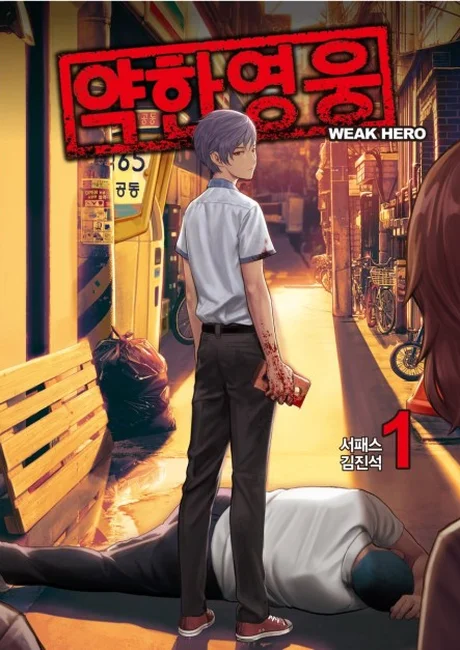 Weak Hero cover art.
Weak Hero (completed, 268 chapters, WEBTOON)
Weak Hero earns its place on any best dark manhwa list by refusing to make school violence exciting. Gray Yeon wins fights using physics and precision: joint locks, center-of-gravity disruption, precise targeting. The method is exactly right for a series whose actual subject is exploitation. Gray isn't powerful. He's efficient. The distinction matters because the series is arguing that brutality without spectacle is still brutality.
The darkness is in the structure of Eunjang High. SH and Razen spend chapters mapping the hierarchy: who benefits, who enforces it, who survives, at what cost. By the midpoint, the series has escalated from school fights to organized crime, and the escalation is earned. The school violence was always organized crime at a smaller scale. The same logic applies at both levels.
268 chapters, completed, free on WEBTOON. The Weak Hero review on this site covers the full series breakdown if you want more before starting.
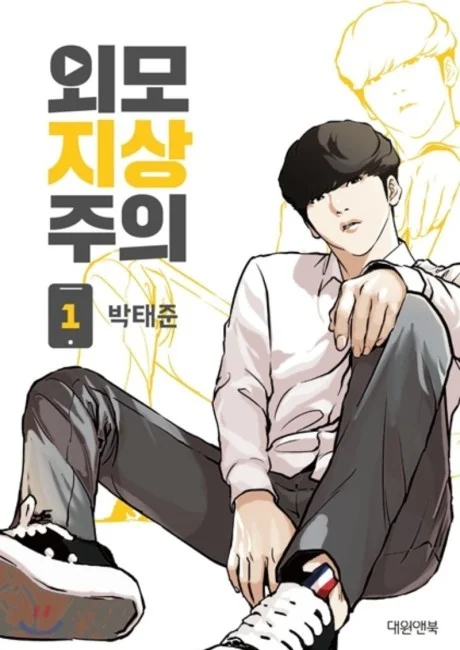 Lookism cover art.
Lookism (ongoing, 600+ chapters, WEBTOON/LINE Webtoon)
Lookism starts as a comedic premise: an overweight, bullied student wakes up in an attractive body. It reads like satire for the first 50 chapters. Then it doesn't.
The turn is gradual and deliberate. The series introduces the Workers Union, the Affiliates, and DG, a faction structure built on violence, class hierarchy, and exploitation that makes the early comedic arc look like prologue. By chapter 150, Lookism is examining what happens when the same social logic that governed one high school scales up into criminal structures that govern entire neighborhoods.
The gang violence arcs are not gratuitous. They're anatomical. Taejun Pak is interested in how hierarchy functions: what makes people enforce it, what makes others accept it, what conditions produce someone like Daniel Park. The best dark manhwa in this mode use social observation as their primary tool. Lookism, at its best, does exactly that.
Free on WEBTOON and LINE Webtoon (split between platforms at different arc points). Ongoing.
Your Throne (ongoing, 250+ chapters, WEBTOON)
Court intrigue with real stakes. Medea Solon and Psyche Callista body-swap, each now operating inside the other's life, with the other's enemies. The series' darkness is in what each character learns about what the court actually requires of them.
Kei doesn't romanticize the palace. The marriage Psyche is being groomed for is a transaction. The political alliances Medea navigates are violence at one remove. The body-swap mechanism works not as a comedy of errors but as a way to make both women complicit in each other's survival strategies, and to force the reader to watch that complicity accumulate.
250+ chapters and still updating. The art is precise and cold, the right aesthetic for a series interested in beautiful things used for ugly purposes.
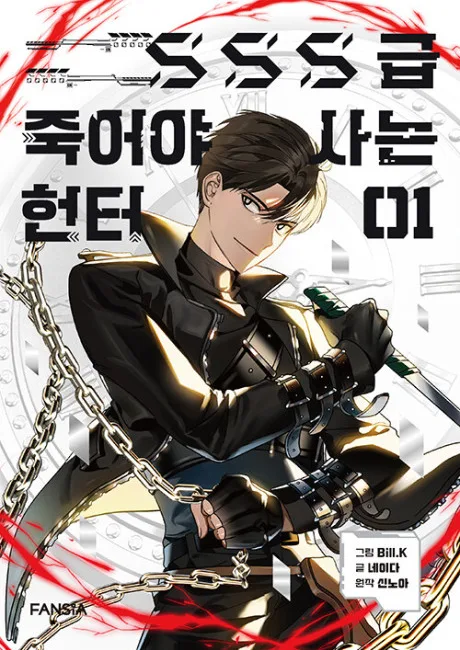
Tier Three: Existential Dark
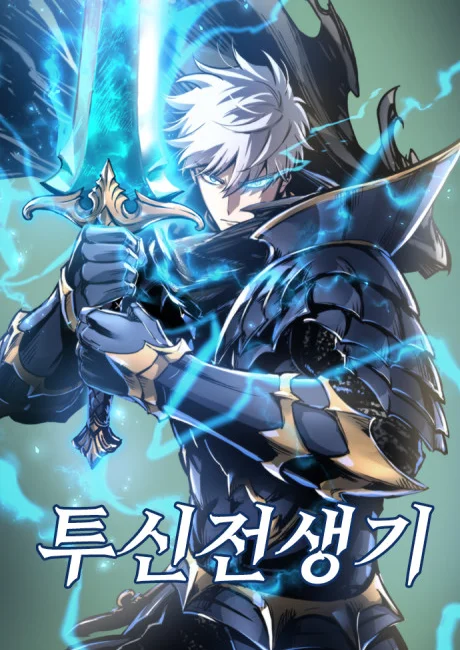 Doom Breaker cover art.
Doom Breaker (on hiatus, 101 chapters, WEBTOON, Season 3 confirmed)
Doom Breaker is a regression manhwa where the protagonist has already failed. Zephyr watched the world die. He goes back, not with power, but with knowledge and grief. The series makes his foreknowledge feel like a burden rather than an advantage in a way the genre rarely manages.
The existential darkness is structural. Zephyr knows people will die. He knows he can't save everyone. He knows what the cost of every choice is, because he's already paid it. The question isn't whether he survives. It's whether a person can carry that much knowledge without becoming something less than human.
101 chapters, Season 3 pending. The Doom Breaker review covers the mechanics and the current status if you want more detail before starting.
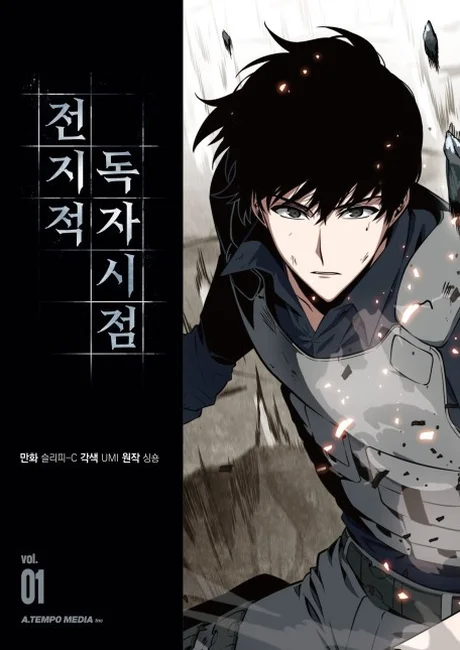 Omniscient Reader's Viewpoint cover art.
Omniscient Reader's Viewpoint (on hiatus, 300+ chapters, WEBTOON)
The scale here is larger than anything else on this list. Kim Dokja read a web novel called "Three Ways to Survive in a Ruined World," all of it. Then the apocalypse the novel described began happening. His foreknowledge is specific, detailed, and expires as the story diverges from what he read.
The death count in Omniscient Reader's Viewpoint is high and most of the deaths have weight. The series takes the time to establish who people are before they die, which is more effort than most series with comparable body counts bother with. The existential darkness comes from what Kim Dokja knows: that surviving his world requires using people, that he's aware he's doing it, and that the series refuses to let him be comfortable with that.
The meta-fictional layer (Kim Dokja is living inside a story he knows) is handled with more care than most series that try this concept. Free on WEBTOON. The series is on hiatus after Season 1 concluded in mid-2026, with a return date not yet announced.
Our master manhwa reading list covers the top 30 titles across all tones for 2026.
Best Manhwa to Read in 2026 →
Tier Four: Not For Everyone
Content Warning, Killing Stalking and Blood Bank: Both series contain explicit sexual content, non-consensual scenarios, and extreme power imbalances. Both are rated 18+ on Lezhin Comics. These are serious, studied works, not shock content, but the content is genuine and shouldn't be minimized. Skip this section if that territory isn't for you.
Killing Stalking (completed, 71 chapters, Lezhin)
Yoon Bum breaks into the apartment of his obsession, Oh Sangwoo, and is caught. Seventy-one chapters follow. The series tracks Yoon Bum's psychology (how captivity remakes a person's sense of what constitutes choice, care, and escape) with accuracy that makes it uncomfortable in a way that has nothing to do with spectacle.
Koogi doesn't romanticize Sangwoo. His predatory nature is consistent throughout the series; there is no redemption arc, no humanizing backstory that explains the behavior away. What makes Killing Stalking significant is not its content but its honesty about what that content does to Yoon Bum. The cognitive distortions are rendered precisely. The reader watches them form in real time.
Paid on Lezhin, coin-purchase model, 8 physical volumes. Genuinely not for all readers. The content warning exists for reasons that are visible in the first chapter.
Blood Bank (completed, 61 chapters, Lezhin)
A vampire dystopia where humans are property, used for blood. Shell is a vampire. One is a human blood bank worker who shouldn't be interesting to someone of Shell's class. The relationship that develops is built on power imbalance that the world's structure makes legal and expected.
Silb's art is the strongest argument for Blood Bank's place on a best dark manhwa list. The angular, high-contrast style is exactly right for a world built on bureaucratic violence. It makes the cold institutional logic visible in the page design itself. The dystopian world-building is specific: vampire society has laws, quotas, hierarchies that inform every scene without exposition.
The darkness here is social and romantic at once: a system that codifies exploitation, and two characters navigating it from opposite ends of the hierarchy. 61 chapters, completed, available on Lezhin. The Blood Bank review covers the content and structure in full.
The Bonus Entry: The Boxer
The Boxer doesn't fit neatly into best dark manhwa discussions because it's nominally a sports manhwa. Yu reads as psychologically dissociated from the start. He doesn't particularly want to win, doesn't particularly respond to pain, is boxing because he was pointed at it. The series is about what happens when the sport demands something from a person who may not be capable of caring.
By chapter 10, it's clear the sport is structural scaffolding for something more uncomfortable about consciousness and meaning. 133 chapters, completed, free on WEBTOON. It belongs on this list.
Analysis: What Makes Dark Manhwa Work
Advertisement
The series above share a quality that genre-dark manhwa don't: they take their own darkness seriously. Bastard doesn't use Jin's complicity as atmosphere. It uses it as causation. Weak Hero doesn't use school violence as a backdrop. It uses the hierarchy as a subject.
The consistent failure of dark manhwa that don't work is the cut-away. Violence happens, the camera moves, the story proceeds. The series signals that what just happened mattered without doing the harder work of staying in the room with it. Every series on this list refuses that shortcut at least once, and the best of them refuse it consistently.
For readers new to darker territory, Sweet Home and Bastard are the structural entry points. Both are free on WEBTOON, both are completed, and both earn their classification through craft rather than marketing. The Tier Four entries are for readers who specifically want to test how far the genre can go. The answer is further than you might expect, and handled with more discipline than the content warnings suggest.
Terror Man works a related vein from a different angle: instead of the protagonist being complicit in violence like Jin or Sangwoo, he's mislabeled a villain for trying to stop it. The Terror Man manhwa guide covers the completed 209-chapter run and its January 2026 anime.
Frequently Asked Questions
What is the darkest manhwa ever made? Killing Stalking is the most consistently extreme. It depicts psychological captivity, Stockholm Syndrome, and physical abuse across 71 chapters, with no softening of what Sangwoo is or what Yoon Bum's captivity costs him. For readers who want dark without the explicit content, Bastard is the strongest argument: a serial killer narrative told entirely through the psychology of his complicit son.
Is there dark manhwa for anime fans who haven't read manhwa before? Sweet Home is the natural entry point. It has a Netflix adaptation (three seasons, 2020-2024), which gives anime fans a reference frame before reading. The manhwa goes further than the adaptation. The psychological layer in the source material is more explicit about what the monster transformations mean. Omniscient Reader's Viewpoint also works well for anime fans already comfortable with high-stakes fantasy.
What are the content warnings for Killing Stalking and Blood Bank? Killing Stalking: Stockholm Syndrome, psychological captivity, physical abuse, non-consensual scenarios throughout. Rated 18+ on Lezhin. Not appropriate for readers who struggle with depictions of abusive dynamics regardless of framing. Blood Bank: explicit sexual content, non-consensual scenarios concentrated in the early chapters, extreme power imbalance as a structural premise. Also 18+ on Lezhin.
Is Killing Stalking worth reading despite its content? That depends entirely on your threshold. The series is psychologically precise. Yoon Bum's cognitive distortions under captivity are rendered with more honesty than most fiction that touches this territory. If you're approaching it as a serious character study in the tradition of dark literary fiction, it earns that reading. If you're approaching it expecting a dark romance, the content will be more disturbing than anticipated.
What's the difference between horror manhwa and psychological dark manhwa? Horror manhwa puts darkness outside the protagonist: monsters, killers, threats. The character reacts. Psychological dark manhwa puts darkness inside the protagonist: their beliefs, their complicity, their willingness to survive at a cost. Sweet Home starts as horror and becomes psychological. Bastard is psychological from page one. Weak Hero is neither; it's social darkness, using realistic school violence to examine exploitation and hierarchy without supernatural scaffolding.
Are any of these best dark manhwa picks suitable for younger readers? Weak Hero and Omniscient Reader's Viewpoint are appropriate for teen readers. Both contain violence and death but handle it seriously rather than gratuitously. Sweet Home is the borderline case; the horror is intense but not explicit. Bastard, Lookism's gang arcs, Your Throne, and Doom Breaker are suitable for older teens with tolerance for dark content. Killing Stalking and Blood Bank are adults-only, firmly.
Which series on this list have anime adaptations? Sweet Home has a Netflix live-action adaptation (three seasons). Lookism has an animated Netflix special covering its early arc. Omniscient Reader's Viewpoint has an anime adaptation announced. Bastard, Weak Hero, Killing Stalking, Blood Bank, Your Throne, and Doom Breaker currently have no anime or live-action adaptations.
Related Reading
- Best Thriller Manhwa →
- best manhwa psychological thriller list
- Weak Hero review
- Doom Breaker review
- Best Manhwa to Read in 2026 →
- Best Sci-Fi Manhwa →: 9 genre-tagged sci-fi picks including HIVE and TACIT, for horror-adjacent readers who want the tech and dystopia angle instead of pure psychological darkness.
References
- WEBTOON: Sweet Home, free to read, completed
- WEBTOON: Bastard, free to read, completed
- Lezhin Comics: Killing Stalking, 18+ paid, coin-purchase model
- Lezhin Comics: Blood Bank, 18+ paid, coin-purchase model
- WEBTOON: Lookism, free to read, ongoing
About the author

Anime Critic & Adaptation Specialist
Anime critic and design writer who has reviewed 500+ series across 10 years. Paris-based. Has strong opinions about pacing, adaptation fidelity, and animation quality.
- 500+ anime series reviewed over 10 years
- Specialist in adaptation fidelity and animation quality critique
- Tracks major studios — MAPPA, Ufotable, Wit, CloverWorks
- 80+ hours per season logged for coverage


Disclaimer
This article is published for informational and entertainment purposes. It does not constitute professional financial, legal, or technical advice. Series availability, platform access, translation status, and chapter counts change. Verify critical details (pricing, regional availability, official translation status) with publishers and platforms. Affiliate links, where present, help support our editorial work and are labelled in our affiliate disclosure.
Comments
Loading comments…