Best manhwa dungeon picks, ranked by how each series actually uses the dungeon as a mechanic rather than just a setting backdrop.
TL;DR: Solo Leveling invented the modern manhwa dungeon format. Every gate-hunter series since is working in its shadow. Tower of God predates Solo Leveling but uses dungeon logic differently: social and political, not resource-extraction. Second Life Ranker is the best manhwa dungeon pick for readers who want actual narrative complexity
The manhwa dungeon subgenre is more varied than most recommendation lists suggest. There's a real difference between a series where characters clear gates for money, one where they climb a tower with its own political factions, and one where dungeons function as narrative chapters with specific win conditions. Grouping them all as "dungeon manhwa" loses something important.
This list covers 7 series. Most use the classic hunter-gate or floor-clearing format; a few rework the dungeon logic loosely enough that "dungeon manhwa" is generous but earned.
Overview
Manhwa dungeon series borrow the dungeon concept from gaming, then pull it in different directions depending on what the story needs the dungeon to be. Understanding the three main structural approaches before picking a series saves a lot of confusion about why one dungeon manhwa feels completely different from another.
The gate-hunter format is what most readers picture first. Spatial rifts appear in the real world, monsters emerge from them, and licensed hunters enter to clear them before the gate destabilizes. Solo Leveling runs on this structure. The dungeon is a job site with an economy around it: C-rank gates that pay rent, S-rank gates that kill entire guilds, insurance premiums for hunter families. The danger is concrete and so are the rewards.
The tower format is older and more socially complex. Tower of God and Second Life Ranker both use towers with distinct floors, each functioning as a bounded world with its own rules and politics. You do not enter and exit a tower floor the way you clear a dungeon gate. You live on it, navigate its factions, and qualify to advance. The dungeon logic is still there, but the social and political layer on top of it produces a completely different reading experience.
The scenario format strips the dungeon architecture entirely but keeps the logic. Omniscient Reader's Viewpoint forces survivors into bounded events with specific win conditions, boss encounters, and system-tracked rewards. The arena is ordinary Seoul rather than a designated zone. The experience of reading it is close enough to dungeon-format series that readers who finish Solo Leveling tend to find it there next.
All seven picks in this list are mapped against these three structural types, so you can navigate toward the format that matches what you are actually looking for rather than assuming all dungeon manhwa work the same way.
Key takeaways
- Solo Leveling invented the modern manhwa dungeon format: every gate-hunter series since is working in its shadow
- Tower of God predates Solo Leveling but uses dungeon logic differently: social and political, not resource-extraction
- Second Life Ranker is the best manhwa dungeon pick for readers who want actual narrative complexity
- The Beginning After the End is the pick for readers who want the manhwa dungeon feel in a pure fantasy world
- Omniscient Reader's Viewpoint is technically system fantasy but its scenarios function like dungeon floors, listed for that reason
- Not all system manhwa has dungeons; not all manhwa dungeon series has level-up screens
What "manhwa dungeon" actually means
Advertisement
In gaming, a dungeon is a contained space with enemies, obstacles, and a reward at the end. Manhwa borrows the structure but runs it in different directions.
The gate-hunter format is what most people picture: spatial rifts appear in the real world, monsters pour out, licensed hunters enter and clear them. Solo Leveling runs on this. The dungeon is a zone you enter and exit; clearing it is a job with payment at one end and death at the other.
The tower format is older and more socially complex. Tower of God and Second Life Ranker both use towers with distinct floors, each a bounded world with its own rules. You don't clear a tower floor and go home. You live on it, navigate its politics, and eventually qualify to climb. The dungeon logic is still there, but the social layer makes it feel like a different genre entirely.
Then there's what Omniscient Reader's Viewpoint does. A world-ending game invades reality and forces people into scenarios with specific win conditions. The scenario works exactly like a dungeon floor (rules, objectives, boss at the end), but the setting is ordinary Korea, not a portal. Technically system fantasy. Mechanically, it belongs here.
If you want a dungeon as a job site, start with Solo Leveling. If you want a dungeon as a society, start with Tower of God. If you want a dungeon as a narrative puzzle, Omniscient Reader's Viewpoint is the pick.
Our best system fantasy manhwa list covers the top game-world and dungeon-exploration reads.
Best System Fantasy Manhwa →
Dungeons as the primary setting: the hunter-gate format
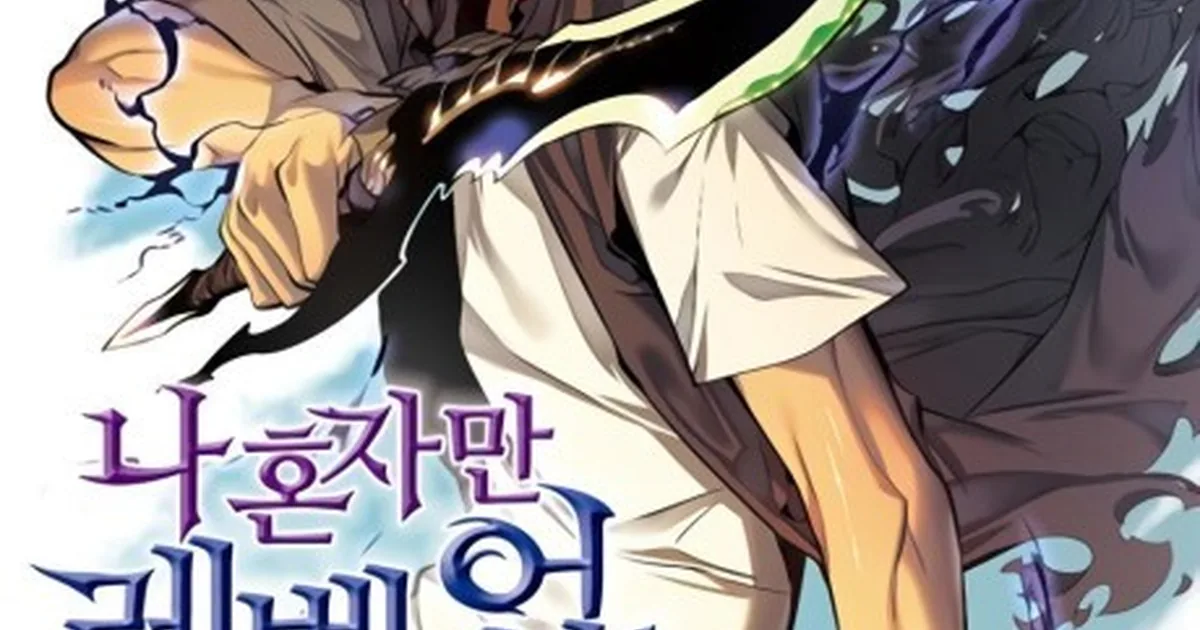
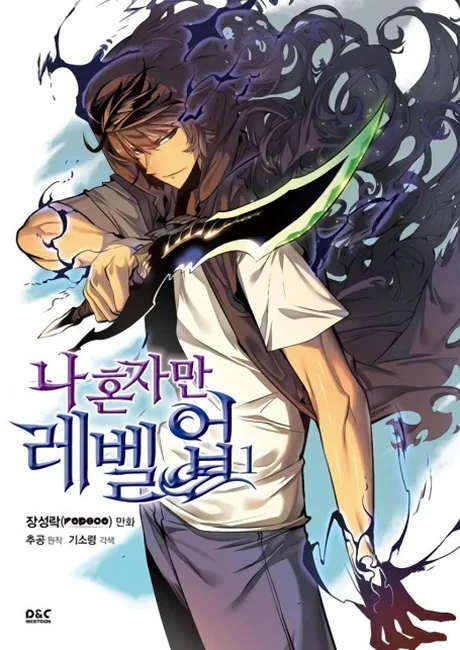
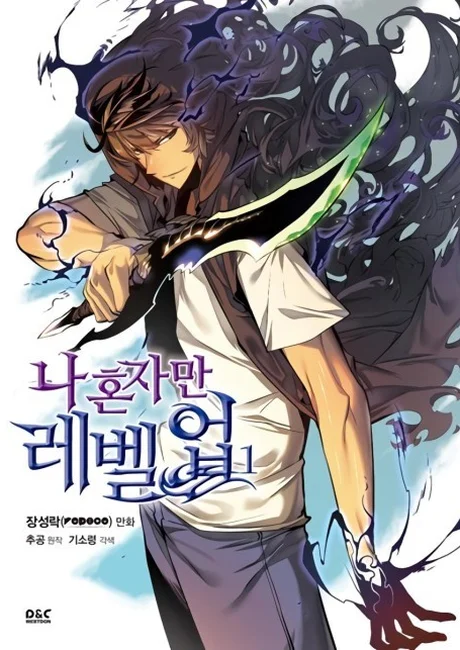 Solo Leveling cover art.
Solo Leveling
Sung Jinwoo is an E-rank hunter (the weakest classification in a world where spatial gates appear and licensed hunters keep the monsters from spilling out). He survives by staying near exits and contributing nothing useful. Then a double dungeon kills his entire team and Jinwoo alone wakes up with a system interface no one else can see.
The gates in Solo Leveling are a job market. There's an entire economy around hunting: insurance, guilds, C-rank licenses, the difference between a gate that pays your rent and an S-rank gate that kills everyone inside it. That economic layer grounds the fantasy in a way most dungeon series skip. The dungeons feel dangerous because failing them has concrete consequences.
The system levels Jinwoo through quest completion and monster kills. Dungeons become training environments as much as revenue sources. As his rank climbs, he starts clearing gates that entire guilds can't handle, and the story shifts from survival to domination.
The manhwa is complete at 179 chapters. Dubu's art exceeds the original novel in combat sequences. The Shadow Monarch arc in the final third is where the visuals peak. It's the best-looking stretch in any hunter-format manhwa I've read.
Platform: Tappytoon. The A-1 Pictures anime covers roughly the first 60 chapters across Season 1.
For everything related to this series, our manhwa like Solo Leveling guide covers the 10 closest successors in the gate-hunter format.
The Beginning After the End
Arthur Leywin is a former king reincarnated into a fantasy world with structured dungeons, mana cultivation, and an academy system. As a manhwa dungeon series it runs pure fantasy rather than modern-world gate-hunter: no gate economy, no real-world setting. Dungeons are ancient ruins with enemies inside, and clearing them is either a coming-of-age test or a survival situation.
The magic system is what separates it from most dungeon-adjacent isekai. Arthur's cultivated mana pool and family lineage create real constraints on what he can do inside dungeons. He's not infinitely leveling. There are diminishing returns, and the story doesn't bail him out when he pushes past his limits. Early dungeon sections feel dangerous because the rules hold.
The manhwa was adapted from a webnovel (TurtleMe). The manhwa is ongoing on Tapas, past 240 chapters (Season 7 resumed in March 2026); the novel runs well ahead of the adaptation at 529 chapters. If you catch up to the manhwa's current chapter and want more, the novel picks up from there.
Platform: Tapas. Both the manhwa and the original novel are available.
If you've finished it and want adjacent series, best manhwa with OP MC picks has several with similar reincarnation and power-progression structures.
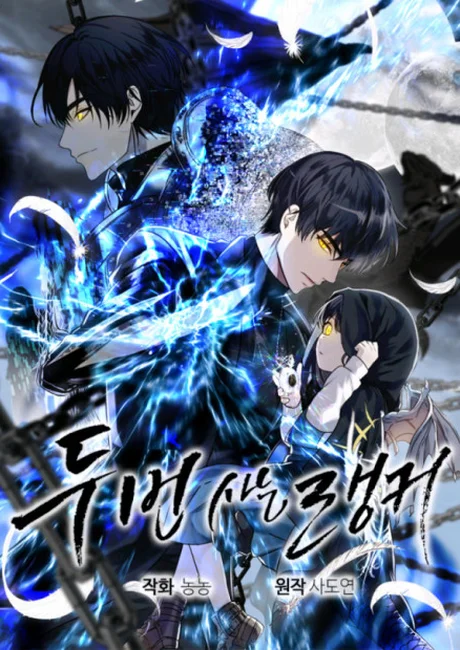 Second Life Ranker cover art.
Second Life Ranker
Yeon-woo receives his dead brother's pocket watch. Inside it are records of everything his brother experienced during years inside the Tower of Babel, a brutal structure where people fight to climb floors, backed by mythological factions who treat them as game pieces. His brother's records include maps, trap locations, NPC patterns, and personal logs of where he went wrong. Yeon-woo enters the tower with an intelligence advantage no one can explain.
The Tower of Babel is the most complex manhwa dungeon system on this list. Each floor has bosses with specific summoning conditions. Factions are embedded across multiple floors with their own interests. Some floors have markets, rest areas, and permanent NPCs. They're not spaces to clear, they're societies. Climbing means clearing floor trials while surviving the political layer on top of them.
The difference from Solo Leveling is how Yeon-woo uses his advantage. He outmaneuvers people as often as he outfights them. He picks when to show his cards. Several characters you expect to be pure antagonists turn out to have comprehensible motivations.
The manhwa ran on hiatus between seasons; Season 4 returned on Tapas in April 2026 and is currently active. The first three seasons form a coherent arc, so the wait fell between story chapters rather than in the middle of one.
Platform: Tapas. Manhwa like Tower of God covers other tower-structure series worth reading alongside it.
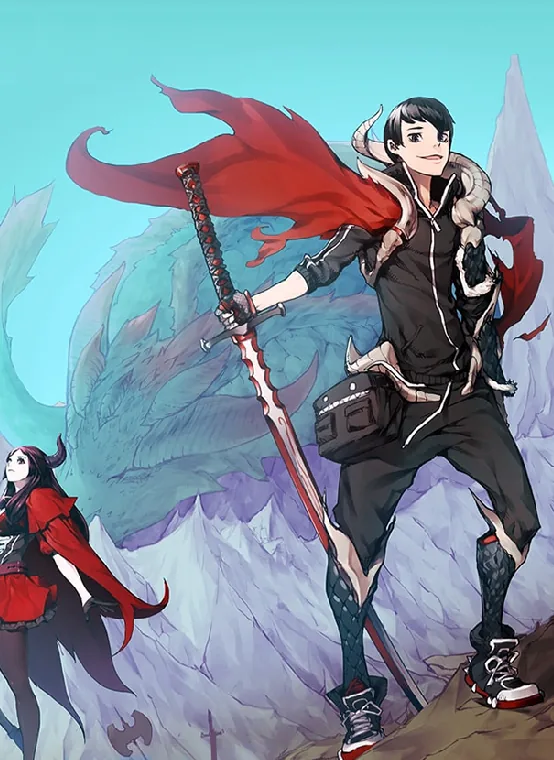
Tower structure: dungeons as society
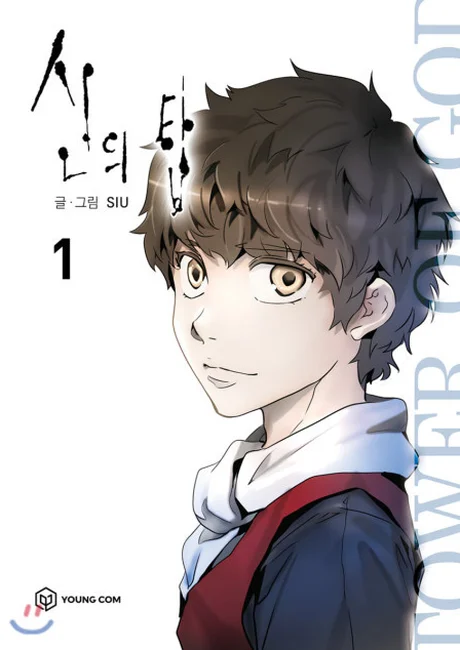 Tower of God cover art.
Tower of God
Bam enters the Tower to follow Rachel, the only person who ever mattered to him. The Tower tests everyone who enters, and passing means climbing to the next floor. Failing typically means death.
Tower of God predates Solo Leveling by several years. SIU (the author, real name Lee Jong-hui) began serializing on WEBTOON in 2010. As a manhwa dungeon series it's the oldest on this list and the most structurally unusual. There's no gate economy. You don't enter and exit: you live inside the Tower, and the tests on each floor determine whether you advance or stay.
The floors in Tower of God work like small countries. Floor 20 has its own administration, examination teams, and political blocs. The people running the tests have their own agendas. Passing a floor isn't just about defeating the boss. The rules can be changed by people with enough influence, and some of those people are watching you specifically.
It's also the longest series here at 652+ episodes. SIU has had health-related hiatuses, and the series is currently on hiatus following the Season 3 finale in February 2025, with no confirmed return date. The story has still been running for 16 years, and the main arc for the first generation of characters is effectively closed.
Platform: WEBTOON (free with ads, or Coins for fast-pass access). The full archive is on the platform.
Our Tower of God review covers the series in full for readers deciding whether to commit to its length.
Our master manhwa reading list covers the top 30 titles across every genre for 2026.
Best Manhwa to Read in 2026 →
Scenario format: manhwa dungeon logic without literal dungeons
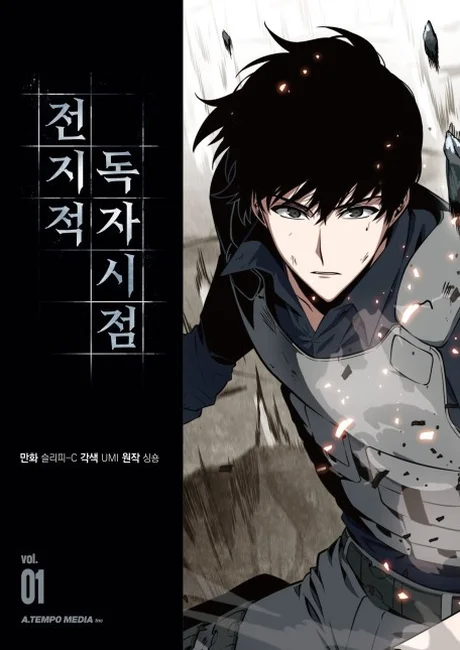 Omniscient Reader's Viewpoint cover art.
Omniscient Reader's Viewpoint
Kim Dokja is the only person who has read the full 3,149 chapters of a web novel called Three Ways to Survive in a Ruined World. Then the events in that novel start happening in reality. Scenarios (forced events with specific win conditions) invade ordinary Korean life. Survivors who complete scenarios earn stats, skills, and constellations (mythological figures who bet on humans like gamblers watch a game).
There are no portals or gates. But the scenarios work exactly like dungeon floors: bounded events with rules, objectives, and a boss encounter at the end. The system interface is there. The leveling logic is there. The difference is that the arena is ordinary Seoul, not a designated zone.
What ORV does better than most dungeon-format series is vary the win conditions. Not all scenarios are "kill the boss." Some require political maneuvering. Some can be cleared without combat. The system actually changes shape depending on what kind of problem the scenario is throwing at you.
The manhwa adaptation currently reaches Episode 308 (June 2, 2026) and is on a season break with WEBTOON's "will return" notice. The source novel by Sing Shong completed at 551 chapters, so the manhwa has a defined story source once it resumes.
Platform: Manta (full series) and WEBTOON (partial). The original novel by Sing Shong is available in English through various licensed platforms.
The best system fantasy manhwa guide has 10 series sorted by how well each one builds its mechanic, worth reading alongside this list.
Series worth knowing about
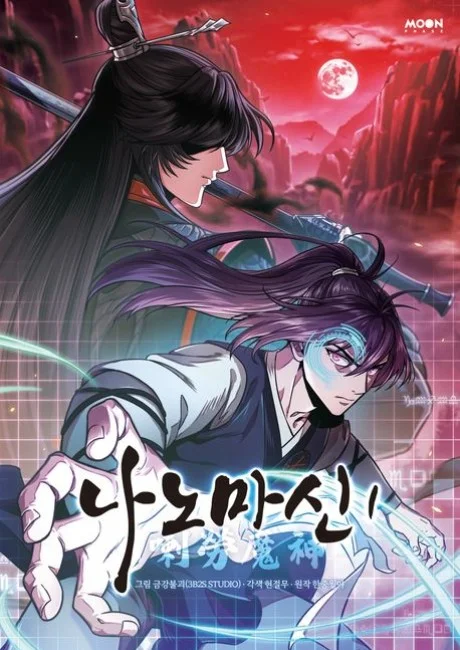 Nano Machine cover art.
Nano Machine
Nano Machine doesn't fit the dungeon format cleanly, which is worth saying upfront. Cheon Yeo-Woon is a murim (Korean martial arts) sect member who receives a nano machine from a future descendant. It accelerates his cultivation, analyzes opponents, and gives him real-time tactical data.
The dungeon equivalent is the murim ranking structure: sects, trials between disciples, life-or-death tests to advance. The structure resembles floor-clearing without being literally that. If you came to this list specifically for the dungeon mechanic, Nano Machine is the weakest fit here. If you want the system-plus-progression feel in a murim setting rather than a hunter or tower format, it's a genuinely strong example of that combination.
Platform: WEBTOON. Well past 200 chapters and still running.
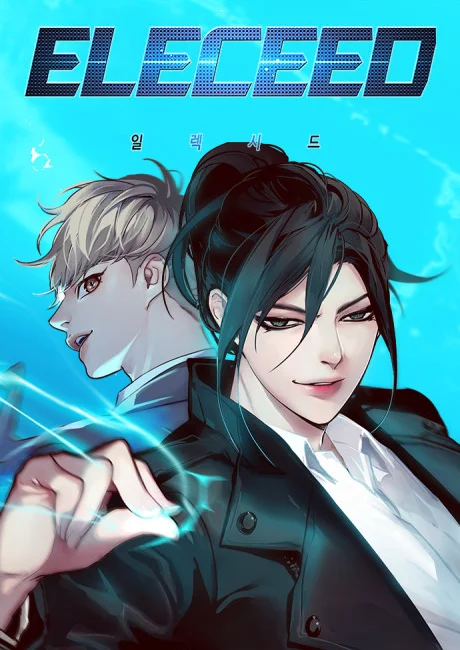 Eleceed cover art.
Eleceed
Jiwoo Seo can control cats and move with superhuman speed. Kayden is a world-class esper hiding in the body of an overweight cat. It's a combat manhwa set in a world where espers with ranked abilities operate through a global association.
The dungeon logic here is the most stretched on this list. Territory defense and ranked tournaments have the same structural feel as dungeon floors: bounded contests with stakes, advancement through defeating stronger opponents, a progression arc that tracks your standing against everyone above you. But there are no literal dungeons. Eleceed gets listed because the reading experience lands close enough to dungeon-hunter series that readers who finish Solo Leveling or Second Life Ranker tend to find it there next.
It takes about 200 chapters to get to the serious tournament arcs. Worth committing to if you want that energy without portal gates.
Solo Leveling and what came after
Advertisement
Solo Leveling published its manhwa adaptation from 2018 to 2021. Before it, manhwa dungeon series existed (Korean webcomics using gate or portal mechanics that predate it) but none achieved the international reach or genre-defining clarity that Solo Leveling did.
The template it set: gates appear in the real world, ranked hunters with government licenses clear them, the job pays better as the gate rank increases, and the dungeon interior is a completely separate environment from the surrounding city. Jinwoo's system added the leveling layer that made the format feel game-adjacent without being isekai.
Every manhwa dungeon series released after Solo Leveling is in some relationship with that template. The Beginning After the End moved the setting to pure fantasy to escape the modern-Korea framing. Second Life Ranker took the tower structure from Tower of God and added the hunter-economy logic on top of it. Omniscient Reader's Viewpoint stripped the dungeon architecture entirely but kept the system and the scenario-based progression.
The more useful question when you start a manhwa dungeon series isn't "is this like Solo Leveling" but "what did this series change about the template, and does the change work?" Second Life Ranker added mythological depth and political complexity. The Beginning After the End anchored its dungeons in a magic system with consistent internal rules. Tower of God (which predates the template it's now adjacent to) made the dungeon a civilization rather than a job site.
Those are three real answers. The series that don't land are usually the ones that copied the template without asking the question.
For completed picks across manhwa dungeon and system-fantasy genres, best completed manhwa is a good companion list; several of the series here are fully finished and worth reading without the wait.
Frequently Asked Questions
What is the best dungeon manhwa?
Solo Leveling is the most recommended dungeon manhwa by a wide margin. It invented the hunter-gate format that dozens of series now use, and it's fully complete: 179 manhwa chapters covering the full story. If you want something ongoing, The Beginning After the End covers similar dungeon-clearing territory in a pure fantasy world rather than a modern Korean gate-hunter setting. Is Solo Leveling the first dungeon manhwa?
Not technically, but it's the one that defined the genre for international readers and most Korean webcomic readers. Earlier manhwa used dungeon or tower structures. Tower of God predates Solo Leveling by several years. But Solo Leveling's gate-hunter format, where dungeons appear in the real world and licensed hunters clear them for money, became the template that most subsequent dungeon-adjacent manhwa consciously imitate or deliberately diverge from. What manhwa has the best dungeon system?
Solo Leveling has the cleanest hunter-gate system: dungeons appear, hunters with ranked licenses clear them, the rewards scale with difficulty. Second Life Ranker has the most complex dungeon system: the Tower of Babel is divided by floors with factional politics, boss conditions, and mythological figures as antagonists. Tower of God builds its dungeon logic differently again: the tests change per floor and it isn't about grinding for resources, it's about passing examinations that have no set solution. What is the difference between dungeon manhwa and system manhwa?
Dungeon manhwa centers the dungeon itself as a location. Characters enter, clear, and exit. System manhwa centers the UI-style interface that tracks stats, skills, and levels. The two overlap heavily but aren't the same. Solo Leveling is both. Omniscient Reader's Viewpoint has the system interface but the 'dungeons' are scenarios that play out in ordinary locations. Nano Machine has neither literal dungeons nor a traditional system: it uses a cultivation accelerator instead. Is Tower of God a dungeon manhwa?
Tower of God uses dungeon-like floor mechanics but it isn't a dungeon manhwa in the traditional sense. Characters don't enter and exit dungeons for rewards. They live inside the Tower, competing to climb it floor by floor. Each floor is more like a kingdom with its own politics than a dungeon with resources to extract. The structure is similar, but the intent and feel are different from series like Solo Leveling or Second Life Ranker. What dungeon manhwa are completed and worth reading?
Solo Leveling is the main one: fully complete, high production values, satisfying ending. The Beginning After the End is ongoing (~244+ manhwa chapters on Tapas (the source novel runs 529 chapters)). SSS-Class Revival Hunter is ongoing on Tapas, on a season break, not completed. For tower-structure manhwa, Tower of God's main storyline has resolved its first generation of characters. Omniscient Reader's Viewpoint currently reaches Episode 308 on WEBTOON, which displays a "will return" notice; it is ongoing/on hiatus rather than complete. Where can I read dungeon manhwa legally?
Solo Leveling is on Tappytoon and is available through the official anime app. Second Life Ranker is on Tapas. Tower of God is on WEBTOON (free with ads, or fast-pass). The Beginning After the End is on Tapas. Omniscient Reader's Viewpoint is on Manta and WEBTOON. Reading legally supports the creators and keeps new chapters coming.
Related Reading
- Manhwa Like Solo Leveling: 10 Series Worth Reading Next: Eight series that replicate Solo Leveling's dungeon-clearing loop.
- Best System Fantasy Manhwa: 10 Series to Read in 2026: 10 system-fantasy picks where mechanics drive the power progression.
- Best Manhwa with OP MC: 10 Must-Read Series in 2026: 10 series where the dungeon loop produces an unstoppable protagonist.
- Best Manhwa to Read in 2026: 20 Series Worth Your Time: The broadest 2026 starter list if you want to branch beyond dungeons.
- Solo Leveling Review: The Art Carries More Than the Story: In-depth look at the benchmark dungeon manhwa.
- Level Up with the Gods Review: Tower Climbing Progression Manhwa: Full review with rating and verdict.
- Manhwa Like Level Up with the Gods: 8 Mythology Picks: More tower-climb and mythology-driven power systems.