Loading…
ChapterBrief · Manhwa
Best Manhwa Redemption Arc: 7 Stories That Earn It
The best manhwa redemption arc stories, 7 series where transformation costs something and actually reshapes how you see the character by the end.
A manhwa redemption arc that holds up isn't just "bad guy becomes good." It's a story where the transformation is earned, costs something, and changes how you read every scene that came before it. There's a specific kind of reader who finishes a series and searches for more with the same character work, and keeps getting plot-similar titles that miss the point entirely. What they're describing isn't a setting or a genre. It's a particular kind of arc.
TL;DR: Omniscient Reader's Viewpoint, the best full-series manhwa redemption arc in the format. Yoo Joonghyuk's transformation is the spine of the entire story, not a mid-season pivot.. Doom Breaker, revenge arcs done correctly. The cost of abandoning revenge is made explicit, and it's not nothing.. Return of the Blossoming Blade, survival guilt as the engine of redemption. Rebuilding what you failed to protect.
That's a harder ask than it sounds. Most series give you a redemption beat, the villain turns, the hero forgives, the story moves on. What this list is looking for is the full arc: the setup that makes the past genuinely weigh on the character, the middle that makes the cost concrete, and the resolution that doesn't restore the original state.
Seven series. Sorted by type of arc rather than quality, because the type determines what you're actually in the mood for.
Overview
Redemption arcs in manhwa are common in plot structure and rare when executed with actual cost. The format has produced hundreds of regression stories where a character goes back to correct past failures, and almost all of them use regression as a power-fantasy reset: the character returns, becomes competent and admired, and the past failures are treated as backstory rather than ongoing weight. That is not a redemption arc. It is a do-over with a head start.
A real manhwa redemption arc requires the past to have weight that persists into the present, a cost that is specific and demonstrable, and a transformation that reshapes how the character acts rather than just how they describe themselves. Most series announce the redemption and skip the demonstration. The reader is told the character has changed without being shown what they lost or what they stopped doing.
The seven series on this list are exceptions. They were chosen because the transformation in each case is structural, not decorative. Yoo Joonghyuk's arc in Omniscient Reader's Viewpoint spans 550 chapters because the change he undergoes needs that much space. Gray Yeon in Weak Hero never fully resolves, and that unresolution is intentional. Doom Breaker's Zephyr doesn't abandon revenge because he has been convinced it is wrong. He abandons it because he has become someone who cannot choose it over protecting people.
If you have been searching for manhwa with genuine character transformation rather than plot-level redemption beats, these seven are the place to start. They are sorted by arc type rather than by overall quality, because the type determines what emotional experience you are actually looking for.
Key takeaways
- Omniscient Reader's Viewpoint, the best full-series manhwa redemption arc in the format. Yoo Joonghyuk's transformation is the spine of the entire story, not a mid-season pivot.
- Doom Breaker, revenge arcs done correctly. The cost of abandoning revenge is made explicit, and it's not nothing.
- Return of the Blossoming Blade, survival guilt as the engine of redemption. Rebuilding what you failed to protect.
- Weak Hero, not a villain arc, but the series interrogates its own protagonist's methods with more honesty than most.
- Lookism, Daniel Park's arc is more complex than the series gets credit for. 600+ chapters ongoing on WEBTOON, and the arc makes clear that power doesn't automatically produce better judgment.
- Peerless Dad, renounced violence under pressure is a specific and underused arc type. The pressure is real.
- The Beginning After the End, readers actively debate whether Arthur's arc is earned, which is itself the most interesting thing about it.
manhwa redemption arc: what makes a redemption arc actually work
Advertisement
The wrong version of a manhwa redemption arc is a character who does something bad, gets called out, feels bad for one chapter, then proceeds to be loved by everyone for the next fifty. The transformation is announced rather than demonstrated. The reader is told the character has changed without being shown what they've lost.
The right version requires three things the easy version skips:
The past has to have weight. Yoo Joonghyuk in Omniscient Reader's Viewpoint has run the apocalypse scenario thousands of times. That history isn't backstory, it determines his entire relationship with every person around him. When that history starts to shift how he acts, it means something because the history was already doing real work.
The cost has to be specific. Doom Breaker's Zephyr built his entire identity around revenge. When he chooses protection over completion, he doesn't just make a moral upgrade, he loses his organizing principle. That's a specific loss, and the series treats it as one.
The forgiveness can't come easy. Some of the best arcs on this list never resolve fully. Weak Hero doesn't decide whether Gray Yeon's methods are justified. The Beginning After the End lets its readers disagree about whether Arthur actually earned his resolution. The ambiguity is intentional and it's what makes these arcs worth discussing after you finish.
These aren't the only criteria, but they're the filter this list uses.
Our best action manhwa list includes top titles where the redemption arc is earned through brutal progression.
Best Action Manhwa 2026 →
Villain-to-protagonist: when the antagonist becomes the point
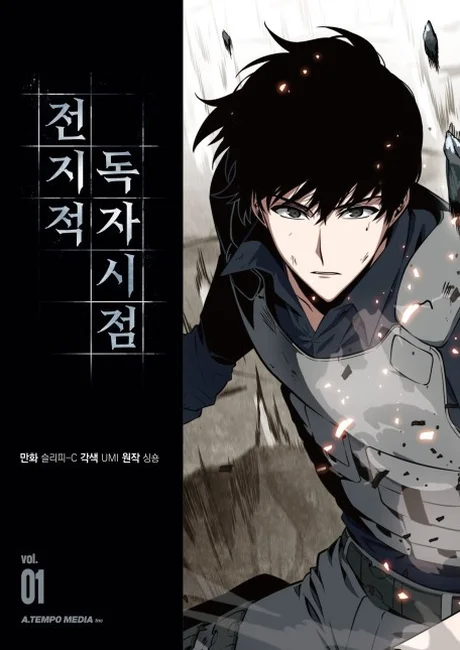 Omniscient Reader's Viewpoint cover art.
Omniscient Reader's Viewpoint
Yoo Joonghyuk is introduced as a threat. He's completed thousands of regressions to survive the apocalypse scenario and in most of those timelines he's either killed or abandoned every person around him. By the logic of the story, this is rational, he optimizes for the one run where he can succeed, and human connection is a liability. He's not a villain by intent. He's a weapon who learned to function at the cost of everything else.
What the series does over its full run, the arc is very deliberately a full-series arc, not a mid-story pivot, is put Yoonghyuk in situations where being witnessed by someone who chooses to care about him anyway starts to matter. That sounds simple. In practice it takes 550 chapters and several catastrophic failures to land, and when it does land it reshapes every scene you can remember him being in.
The specific thing that makes this arc work: Yoonghyuk never becomes warm. He remains difficult, instrumentalizing, and often wrong. But the transformation is legible in what he stops treating as disposable. That's a harder and more honest arc than most series are willing to write.
Status: Ongoing, on hiatus (Season 1 concluded at chapter 311 in May 2026; Season 2 confirmed, no return date announced). Available on WEBTOON (novel completed at 551 chapters).
For similar morally layered characters across a large-scale story, our best manhwa psychological thriller list includes several series that handle moral complexity with the same care.
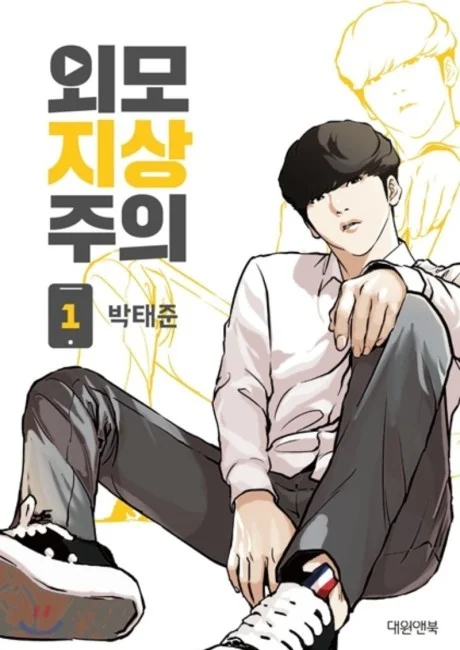 Lookism cover art.
Lookism
Daniel Park starts as a victim, bullied, isolated, physically assaulted, someone who has absorbed years of being told he doesn't count. When the series introduces its central body-switching premise, it gives him access to everything he was denied: physical power, social standing, the ability to walk through the world without flinching.
The arc the series is interested in isn't his rise. It's what he does with that rise, and whether having power actually makes him better or just gives his existing damage a larger radius. The series earns its reputation as more than a school fighting manhwa, by the later chapters, Daniel's understanding of his own behavior has been seriously interrogated, and the people around him have paid real costs for the choices he made when power felt like permission.
Status: Ongoing on WEBTOON, 600+ chapters.
Revenge-seekers who find something else
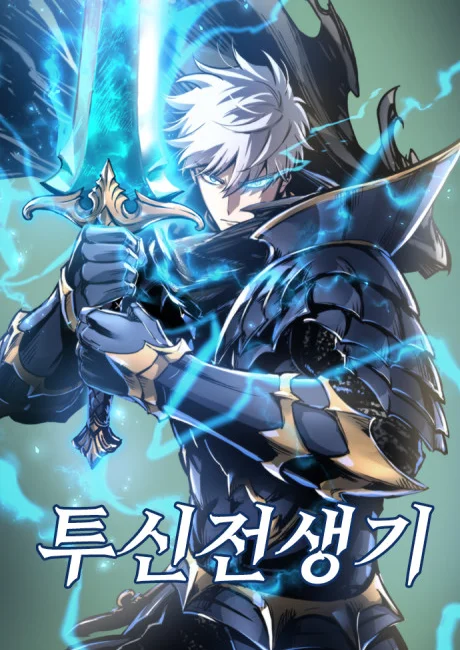 Doom Breaker cover art.
Doom Breaker
Zephyr died fighting the demon king and was sent back to an earlier point in history, a regression with a specific purpose. Every choice he makes is organized around completing what he failed to complete the first time. Revenge is the correct word: personal, specific, and structuring.
What complicates the arc is that Doom Breaker doesn't let the revenge stay clean. Zephyr encounters people in the past timeline who need protecting, and choosing to protect them isn't free, it costs time, resources, and strategic position that he'd otherwise spend on his primary goal. The series makes this trade explicit in ways most manhwa doesn't. He's not abandoning revenge because it's wrong. He's choosing something else because he's become someone who can't not choose it.
That distinction, changing because you've become different, not because you've been convinced, is what makes this arc land. Available on WEBTOON.
If Doom Breaker's premise intrigues you, the manhwa like Doom Breaker guide has nine series with similar revenge-regression frameworks.
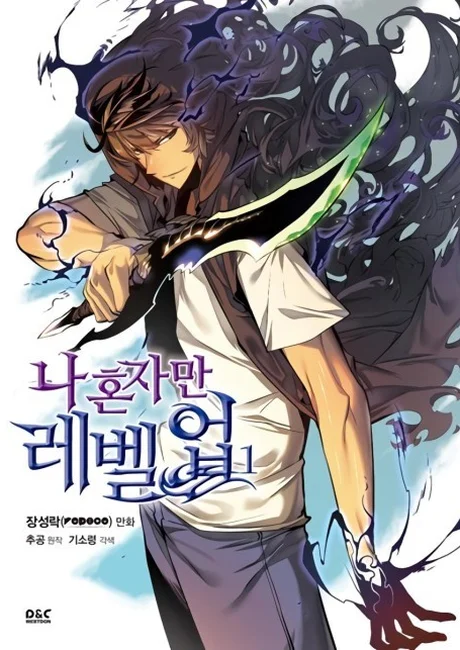 Solo Leveling cover art.
Solo Leveling
Sung Jinwoo's arc doesn't involve moral reckoning in the traditional sense, he wasn't a bad person before his transformation. But the depth of the identity shift is real in ways that are easy to miss on a first read. The weakest hunter in the world, in the universe of Solo Leveling, is someone who has internalized his own expendability. Every choice he made for years was made on the assumption that he didn't matter enough to make ambitious choices.
What the series tracks, underneath the power scaling, is how that assumption gets dismantled. He doesn't just get stronger. He stops organizing his decisions around the expectation of his own failure. That's a quieter arc than the spectacle suggests, and it's the reason the series has such strong reader attachment to the character rather than just to the action.
Status: Completed. Webtoon available on Tappytoon; anime on Crunchyroll.
For more completed series with this profile of protagonist transformation, the best completed manhwa guide covers the strongest options across genres.
Our master manhwa reading list covers the top 30 titles across every genre for 2026.
Best Manhwa to Read in 2026 →
Fallen characters rebuilding what they couldn't protect
Peerless Dad
Noh Gajang is one of the strongest martial artists in his world and has renounced violence entirely. He's raising three children alone. The arc is about whether that renunciation can hold under sustained pressure, whether someone who built their identity around being dangerous can actually stop, or whether the circumstances will eventually make stopping impossible.
The answer Peerless Dad gives is complicated and earns its length. At 314 chapters for the Korean original run, the series has room to put genuine pressure on that renunciation repeatedly. Each test is different. Each time Noh Gajang responds, the response reveals something about what he's actually renounced versus what he's merely suppressed. Available on Tapas.
The series belongs on any list of manhwa with mature, adult-register protagonists, it shares DNA with the best seinen manhwa in how it handles a protagonist with a complete history rather than a clean-slate beginning.
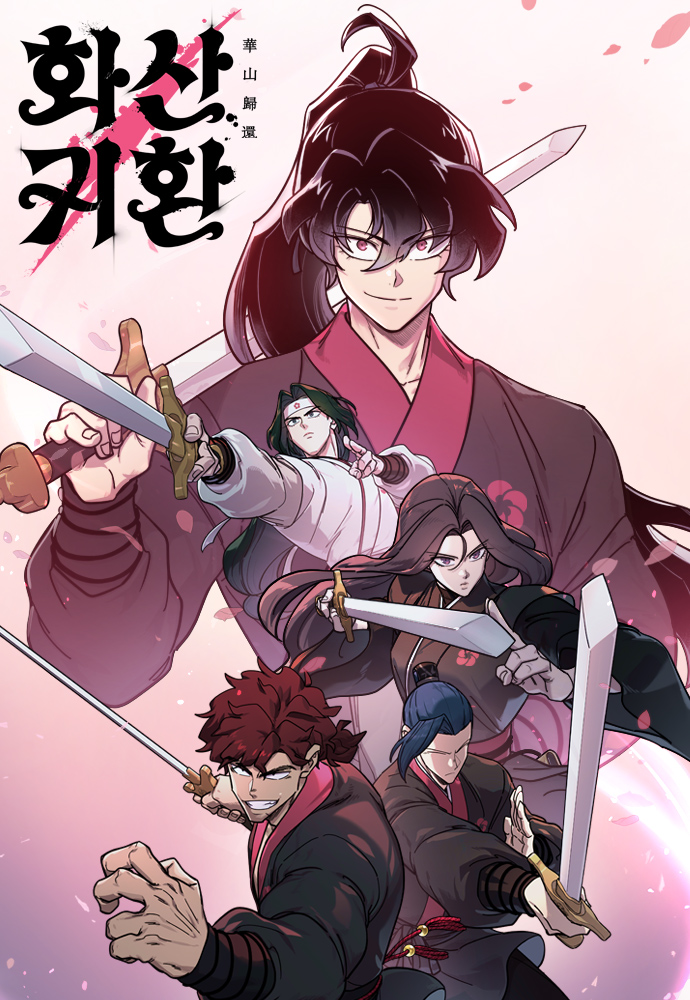
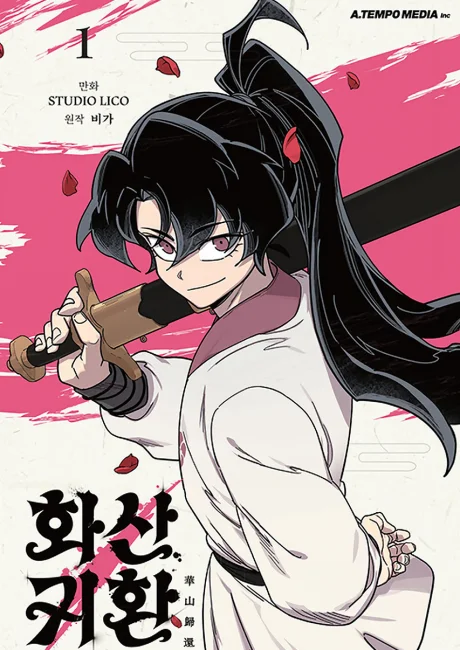 Return of the Blossoming Blade cover art.
Return of the Blossoming Blade
Chun Myung is the last survivor of his sect's destruction. He regresses to an earlier point in his life with full memory of what's coming, a familiar premise in manhwa, but Return of the Blossoming Blade uses the regression specifically as survivor's guilt made structural. He's not just trying to prevent a disaster. He's trying to earn the right to exist after failing to prevent it the first time.
The rebuilding arc is the series' core engine. Every chapter where he trains, recruits, or strengthens the people around him is an act of penance for the version of himself who wasn't strong enough when it mattered. That doesn't make him a grim or joyless protagonist, the series has considerable warmth, but the warmth exists in deliberate contrast to what he's carrying.
Status: Ongoing, 170+ translated chapters on WEBTOON.
For more long-running series where the investment pays off at scale, the best long-running manhwa guide covers series built to reward sustained reading.
The arc readers disagree about
The Beginning After the End
Arthur Leywin's arc is a specific case worth naming separately: it's the manhwa redemption arc that readers actively debate whether it was earned, and that debate is part of what makes it interesting.
The series gives Arthur multiple timelines of failure and success, a history of making choices under pressure that he later has to account for, and a final resolution that some readers find genuinely cathartic and others find unearned. The disagreement isn't a flaw, it's evidence that the series took the arc seriously enough to make it contestable.
The argument for "earned": Arthur's final-arc choices consistently involve him bearing personal cost to protect people he's failed before. The argument against: some of those costs arrive too conveniently, with forgiveness from characters who had legitimate reasons to withhold it.
Worth reading through Part 2 before deciding. The single-timeline reader experience and the regression-aware reader experience are genuinely different arcs superimposed on the same chapters.
Status: Ongoing (the manhwa is still serializing; the source novel is complete at 529 chapters, so the ending it's building toward is known).
For other morally complex protagonists in action-heavy series, the manhwa like Attack on Titan guide covers series that take their protagonist's ethics seriously.
manhwa redemption arc: how to pick
Advertisement
If you want to finish the arc before investing hundreds of chapters:
Completed and resolved:
- Lookism, WEBTOON, 600+ chapters, ongoing; Daniel's arc develops across the full run
- Solo Leveling, Tappytoon, 179 chapters, transformation complete
- Omniscient Reader's Viewpoint, WEBTOON, ongoing manhwa on hiatus after Season 1 (chapter 311; novel: 551 chapters); Yoonghyuk's arc builds across the full run
- The Beginning After the End, ongoing ~245 chapters on Tapas (novel complete at 529 chapters)
- Peerless Dad, Korean run concluded at 314 chapters; English translation ongoing
Ongoing with substantial arc progress:
- Doom Breaker, WEBTOON, on hiatus (101 chapters, Season 3 confirmed); the core revenge-to-protection shift happens by chapter 100
- Return of the Blossoming Blade, WEBTOON, 170+ translated chapters; arc is structural to the premise so it develops continuously rather than landing in a single moment
- Weak Hero, completed (268 total chapters, both parts done); Part 1 (109 chapters) is a self-contained narrative unit
For action manhwa that combines strong fight sequences with the character complexity these arcs require, the best manhwa action guide covers series where the two elements are working simultaneously.
The reader who finishes Omniscient Reader's Viewpoint and wants more Yoonghyuk-style arcs should start with Doom Breaker for the revenge structure and then Peerless Dad for the renunciation angle, they're different enough in tone that both have something the other doesn't.
Frequently Asked Questions
What makes a manhwa redemption arc actually work? The arc has to cost something real, the character should lose something they valued, be wrong about something they were certain of, or be seen clearly by someone they can't dismiss. If they walk away from their past with relationships and power intact, there was no arc.
What manhwa has the best villain-to-hero arc? Omniscient Reader's Viewpoint. Yoo Joonghyuk begins as an antagonist who sees people as resources and ends as someone genuinely changed by being witnessed. The arc spans the full 551 chapters, not a mid-season pivot.
Which manhwa redemption arcs are completed? Solo Leveling, The Beginning After the End, and Peerless Dad (Korean run at 314 chapters) are complete. Omniscient Reader's Viewpoint has Season 1 complete on WEBTOON with Season 2 ongoing. Lookism is ongoing at 600+ chapters. Weak Hero Part 1 is a satisfying standalone at 109 chapters.
What is the best manhwa with a morally complex protagonist? Weak Hero for compressed moral ambiguity, the series never decides whether Gray Yeon is right. For larger scale, Omniscient Reader's Viewpoint puts its protagonist in positions where every choice costs something.
Where can I read these manhwa for free? WEBTOON carries Weak Hero, Lookism, Doom Breaker, Omniscient Reader's Viewpoint, and Return of the Blossoming Blade. Solo Leveling is on Tappytoon. Peerless Dad is on Tapas.
Are redemption arcs common in manhwa? Common in structure, rare when executed with real cost. Hundreds of regression-return series exist, but most use regression as a power-fantasy reset rather than genuine reckoning. The series on this list are the exceptions.
Related Reading
- Best Action Manhwa 2026 →
- our best manhwa psychological thriller list
- the manhwa like Doom Breaker guide
- best completed manhwa guide
- Best Manhwa to Read in 2026 →
References
- Weak Hero on WEBTOON, official English release, 109 chapters for Part 1
- Doom Breaker on WEBTOON, official English release, on hiatus
- Solo Leveling on Tappytoon, official English webtoon release
- Omniscient Reader's Viewpoint, WEBTOON, manhwa like ORV guide for further reading
- Return of the Blossoming Blade, WEBTOON English release under the title Return of the Mount Hua Sect
About the author

Senior Manhwa Critic & Analyst
Manhwa critic and former Korean-to-English webtoon translator with 8 years reading across 40+ genres. London-based. Tracks everything from power-progression to slice-of-life romance.
- 8 years reading manhwa across 40+ genres
- Former Korean-to-English webtoon translator
- 500+ manhwa titles completed
- Specializes in progression systems and power-scaling analysis
Disclaimer
This article is published for informational and entertainment purposes. It does not constitute professional financial, legal, or technical advice. Series availability, platform access, translation status, and chapter counts change. Verify critical details (pricing, regional availability, official translation status) with publishers and platforms. Affiliate links, where present, help support our editorial work and are labelled in our affiliate disclosure.
Comments
Loading comments…