TL;DR: The best horror manhwa, ranked by type: creature horror, psychological horror, quiet dread. Platform, status, and content warnings for each.
Recent updates:
- October 6, 2026: Re-verified all 9 ranked entries, refreshed AniList and platform status notes, removed one unsupported ongoing claim, added depth, and added five new internal links.
- June 23, 2026: The list launched by scare mechanism, separating creature horror, psychological dread, and quiet literary horror.
The category "best horror manhwa" is doing a lot of work. Genre labels in manhwa are imprecise. A search for horror returns survival action, dark fantasy, and genuinely disturbing psychological work all in the same column, with roughly equal placement. This list is more specific than that.
Horror, for this list, means: the series is built around dread. Not darkness as a tone, not action with death in it, but dread as the load-bearing element. Remove the horror and the series doesn't function. By that definition, this best horror manhwa list is shorter than most roundups, and it's sorted by mechanism, not quality ranking.
Nine entries. Three categories. Platform and completion status for each. Content warnings where earned.
Overview
The best horror manhwa choice starts with the kind of fear you can actually tolerate. Sweet Home and Shotgun Boy use bodies and survival pressure. Bastard and Killing Stalking make human relationships frightening. The Horizon and Pigpen use silence, uncertainty, and aftermath. Pick the mechanism first, then the title.
Horror manhwa occupies a specific corner of the genre that most recommendation lists treat as interchangeable with dark fantasy or psychological thriller. This list is more precise about the distinction. Horror, here, means the series is built around dread as the primary structural element: not darkness as a backdrop for action, not tragedy as an emotional register, but dread that the story cannot function without.
By that standard, the field is smaller than typical horror manhwa roundups suggest. Plenty of manhwa is dark. Sweet Home, Bastard, and Killing Stalking are built on dread in the way a foundation is built on concrete: remove it and nothing stands. That's the category this list covers.
Korean horror has a flavor that distinguishes it from Japanese manga horror. Where Junji Ito places the source of dread outside and above human scale (geological, biological, cosmic), the best Korean horror makes the threat intimate. The killer is your father. The monster is what you become when you stop wanting to live. The danger is someone who has already decided you belong to him. The setting is an apartment building or a school because that's where Korean readers actually live. The dread is specific, relational, and personal in a way that makes it harder to dismiss.
This list is sorted by mechanism, not quality ranking. Creature and body horror, psychological horror, and quiet literary horror function through different methods, and knowing which mechanism you want is more useful than a single ranked list treating them as one category.
These are horror manhwa recommendations 2026 readers can use as a filter rather than a flat scorecard. The platform and completion lines matter because a finished psychological thriller is a different commitment from an ongoing survival story.
If you want the wider category of manhwa with supernatural elements, that guide separates ghost stories, psychic powers, vampires, and gate-based supernatural action from horror-first series.
Readers who are new to Korean comics can start with the best manhwa for beginners, while readers choosing by visual approach can compare the best full-color manhwa.
best horror manhwa: key takeaways
Nine best horror manhwa picks across three modes of dread:
- Creature and body horror: Sweet Home, Shotgun Boy, Chasing Tails: the best horror manhwa for readers who want transformation, survival, and claustrophobic investigation
- Psychological horror: Bastard, Killing Stalking (18+ only), Melvina's Therapy: the best horror manhwa for dread that lives inside a character's head
- Quiet and literary horror: The Horizon, Pigpen, The Strange Tales of Oscar Zahn: horror manhwa where what's unsaid does the work
- Sweet Home and Bastard share the same creative team (Kim Carnby and Hwang Young-chan) and reading one is a legitimate argument for reading the other
- Killing Stalking is completed, psychologically serious, and explicitly adult content. It should not appear on an all-ages best horror manhwa list
- The Horizon is one of the shortest completed manhwa worth your time: 21 chapters, no filler
Horror manhwa: which series should you start with?
Advertisement
Start with Sweet Home if transformation and survival are your priorities, Bastard if you want a completed human thriller, or The Horizon if quiet devastation scares you more than a monster. Killing Stalking is a separate adult-content choice, while Shotgun Boy offers a shorter survival route through a school setting.
For horror manhwa, start with Sweet Home for body horror, Bastard for a completed psychological thriller, or The Horizon for quiet post-apocalyptic dread. Shotgun Boy follows the same creator into faster survival horror, while Killing Stalking is an adult Lezhin title with a specific abuse warning. Choose by the kind of fear you want.
For narrower overlap, compare the best manhwa psychological thriller list and the best dark manhwa guide, which cover adjacent kinds of dread.
What Separates Korean Horror from Its Closest Neighbors
Korean horror manhwa usually makes the threat intimate before it makes it supernatural. A family, school, apartment, or care relationship becomes the pressure chamber, so the setting carries social meaning as well as atmosphere. That is why these series often feel closer to trauma fiction than to a puzzle built around an unknowable monster.
Best horror manhwa from Korea has a specific flavor that manga horror doesn't. That's worth naming before the list, because it affects what to expect from every entry here.
Junji Ito horror is cosmic. The source of dread is external, inexplicable, and usually geological or biological in scale: a town built on a spiral, a disease that spreads through the shape of a face. Characters react to something that was there before them and will be there after them. The horror is fundamentally impersonal.
The best horror manhwa makes the threat intimate. In Bastard, the killer is your father. In Sweet Home, the monster is what you become when you stop wanting to live. In Killing Stalking, the danger is someone who has already decided you belong to him. The scale is smaller and the origin is personal. The apartment building is the setting because that's where families are; the school is the setting because that's where hierarchies are. Korean horror repeatedly places its dread inside institutions its readers actually inhabit.
There's also a specific strain of Korean horror rooted in family violence and social isolation that appears in both Bastard and Sweet Home. Before any supernatural element arrives in Sweet Home, the protagonist Cha Hyun-soo is suicidal, isolated, and estranged from his family. The monsters show up into a character who already has a relationship with the idea of self-destruction. That prior condition is load-bearing. It's not backstory decoration.
Our best thriller manhwa list covers psychological and horror-adjacent reads that pair well with these picks.
Best Thriller Manhwa →
Creature and Body Horror
Creature and body horror works when the body becomes evidence of a private fear. Sweet Home turns desire into physical transformation, Shotgun Boy turns a school outbreak into a survival test, and Chasing Tails turns a sealed disaster into an investigation where every body also hides a story.
The best horror manhwa in this category are built around physical transformation and the dread of bodies that behave wrongly.
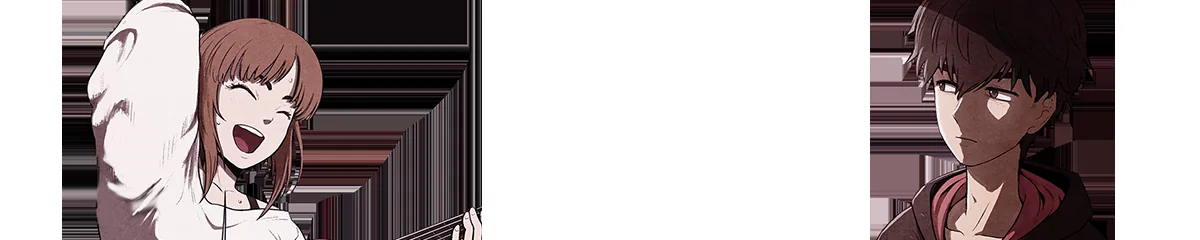 Sweet Home cover.
Sweet Home
Platform: WEBTOON (free) | Status: FINISHED, 141 AniList chapters; WEBTOON completed | Written by: Kim Carnby | Art by: Hwang Young-chan
Sweet Home earns its place on any best horror manhwa list by doing something body horror rarely manages: making the monster mechanic coherent. People who lose their will to live begin to transform into monsters shaped by their desires. The man who wanted strength becomes something armored, the man who wanted attention becomes something that screams. Each monster carries the logic of its origin. It's why Sweet Home is still the best horror manhwa entry point for readers who haven't read Korean horror before.
The protagonist, Cha Hyun-soo, moves into a new apartment complex and survives the outbreak. He's also transforming. The question the series runs on (for 141 chapters) is whether he can hold onto enough of himself to keep acting like a person when the biological incentive runs in the other direction. It doesn't sentimentalize that question.
The Netflix adaptation is watchable. Season 1 tracks the source material reasonably well. Seasons 2 and 3 diverge significantly: new characters, different fates, altered ending. If you want the complete story, the manhwa has it. The Netflix version is a looser translation of the premise.
That split is useful when choosing a starting point. The series works as a closed reading experience because the source keeps its transformation rules and apartment setting in view. The television version is better treated as an adaptation with its own later direction. The manhwa adaptation guide puts that distinction beside other Korean comics with screen versions.
For more series in the Sweet Home vein, manhwa like Sweet Home sorted by what each series delivers best covers the field.
Shotgun Boy
Platform: WEBTOON (free) | Status: FINISHED, 69 AniList chapters; WEBTOON completed | Written by: Kim Carnby | Art by: Various
For best horror manhwa readers who finish Sweet Home and want more from Kim Carnby at a smaller scale: Shotgun Boy is the direct follow-up. A bullied student named Gyuhwan survives a monster outbreak at a remote school with nothing but a shotgun. The isolation works. There's no apartment building full of strangers to draw on, just a school where Gyuhwan already knows exactly who wants him dead before the monsters arrive.
The horror is grittier and more immediate than Sweet Home. Less psychological scaffolding, more survival. The social dynamics of the school (Gyuhwan's status before the outbreak) are relevant to who helps him and who doesn't. Kim Carnby keeps returning to that premise: what does prior social cruelty do to people's choices under extreme pressure?
The art doesn't match Sweet Home's quality across its run, but the pacing is tighter and the length is more manageable. Both Sweet Home and Shotgun Boy also sit inside a wider post-apocalyptic field: the best apocalypse manhwa after Solo Leveling roundup covers nine genuinely apocalyptic picks, these two included.
Shotgun Boy also makes the school setting matter before the outbreak turns it into a survival arena. The social map is already in place, so danger changes existing loyalties instead of introducing strangers with no history. Readers who want that setting explored outside horror can browse the best manhwa school settings.
Chasing Tails
Platform: WEBTOON (free) | Status: FINISHED, 107 AniList chapters | Country of origin: South Korea
Chasing Tails fills the previously unverified slot with a verified locked-room mystery that keeps its horror close to the characters. Nine college students are trapped under a collapsed building for 14 days, only six come out alive, and the investigation turns the survivors' testimony into the pressure chamber.
AniList marks Chasing Tails FINISHED at 107 chapters, and the official WEBTOON listing is live. The fear comes from unreliable testimony, a sealed environment, and the possibility that the truth is less safe than the lie. It is horror-adjacent mystery, but the claustrophobia earns its place in this category.
The locked-room structure gives Chasing Tails a different pace from the outbreak entries. Survival is part of the premise, yet the main pressure comes from deciding which account deserves belief. That makes it a good fit for readers who want horror to operate through investigation rather than through a visible creature.
Psychological Horror
Psychological horror creates fear through dependence, secrecy, and distorted judgment. Bastard makes a family bond unsafe, Killing Stalking makes captivity reshape perception, and Melvina's Therapy turns observation into intrusion. These stories do not need monsters because the relationship itself supplies the threat.
The best horror manhwa in the psychological category works without monsters. The dread is entirely human and relational.
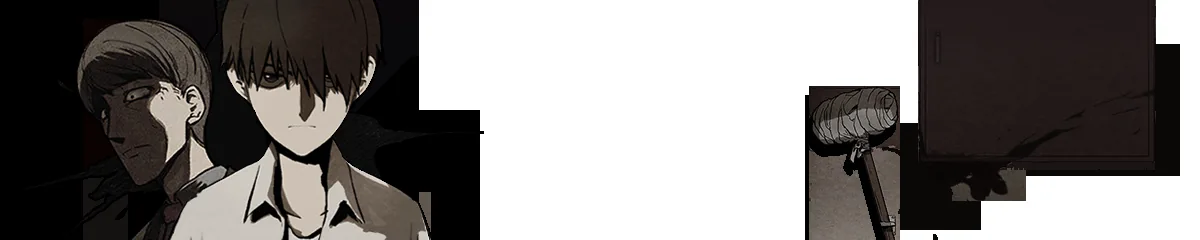 Bastard cover.
Bastard
Platform: WEBTOON (free) | Status: FINISHED, 94 AniList chapters; WEBTOON completed | Same creative team as Sweet Home
Jin Seon's father is a serial killer. Jin knows. His father knows Jin knows. The tension is built entirely on what that knowledge costs everyone in the room, and what happens when someone enters who doesn't know yet.
No supernatural elements. No powers, no monsters, no genre scaffolding. The dread is relational and human from page one. The father is charming and functional and capable of violence; Jin is his alibi and his cover and, conditionally, his protected thing. The series asks how long a person can maintain proximity to something like that before the proximity changes them.
94 AniList chapters is exactly the right length. The series doesn't overstay or stretch. The ending earns its position. As a best horror manhwa, Bastard's case is that psychological precision can generate dread as effectively as any monster, and sustain it longer.
The short run also keeps the father's threat close to the reader. Jin cannot wait for a larger conspiracy to explain what is happening. Each scene has to carry both family intimacy and immediate risk, which is why the series still feels controlled when its premise becomes more intense.
The relationship between Bastard and Sweet Home is direct: same writer, same artist, different register. Bastard is tighter and more claustrophobic. Sweet Home is larger and more varied. Readers who finish one have a credible reason to read the other. They're not the same series, but they come from the same set of questions. Manhwa like Bastard sorted by mechanism covers the comparable series in detail.
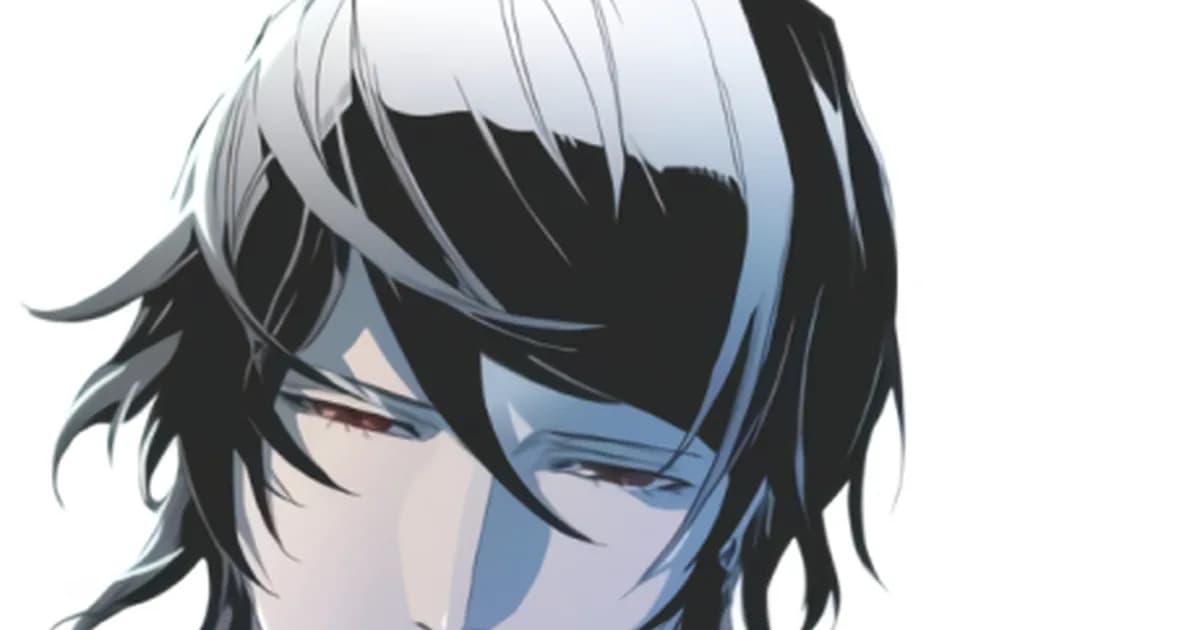
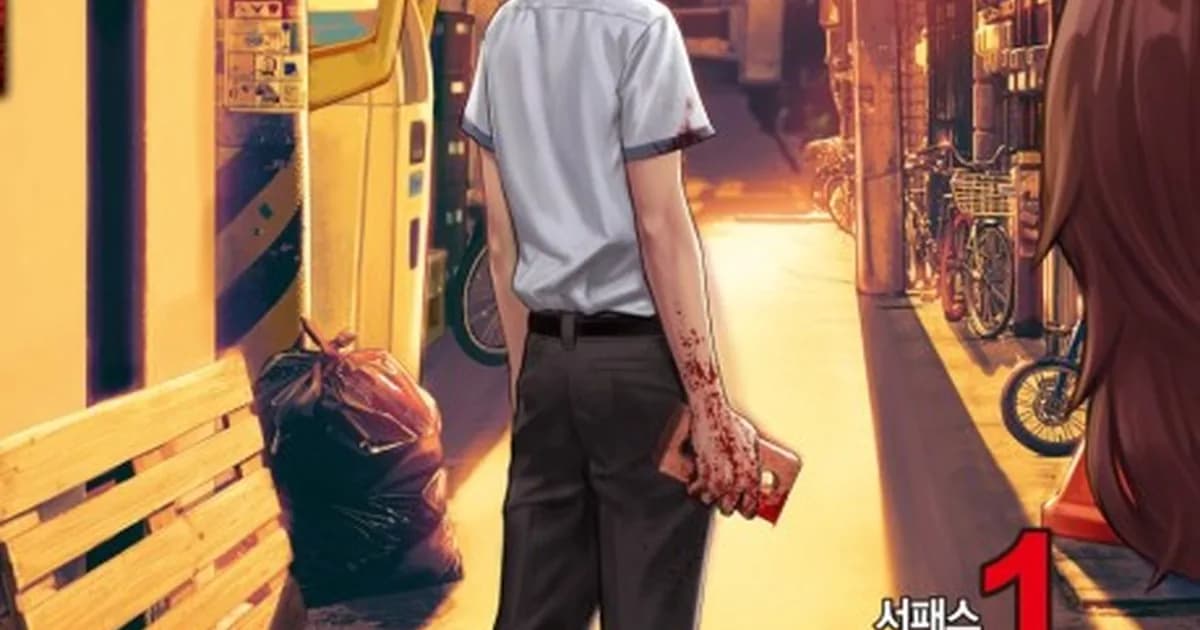
Killing Stalking
Platform: Lezhin Comics (paid, 18+ only) | Status: FINISHED, 71 AniList chapters; Lezhin English edition packaged as 67 numbered episodes
Content warning: Stockholm Syndrome, psychological captivity, physical abuse throughout. This is an adult series, not a dark romance. Do not approach it expecting the captivity to resolve into something redemptive.
Yoon Bum is a stalker who breaks into the apartment of Oh Sangwoo, who he is obsessed with. Sangwoo captures him. The series runs on what captivity does to a person's psychology across its complete run: how Yoon Bum's perception of Sangwoo shifts under the conditions of total dependence and intermittent violence, and how the series refuses to let that shift stand as anything other than what it is.
It's not pleasant reading. It's also not shock content. Koogi (the writer-artist) is doing something specific with the psychology, and the series is consistent about what Sangwoo is. He is not secretly redeemable. Yoon Bum's cognitive distortions are rendered with more honesty than most fiction that approaches this material.
The reason it's on this best horror manhwa list: it is the most psychologically precise horror manhwa in the category. The horror is not supernatural. It is entirely interior: the horror of watching a person's self-concept distort under sustained manipulation. That is a legitimate and serious use of horror as a formal category.
It requires the content warning. It also requires the accuracy that it is a serious work, not prurient content dressed up in darkness.
That distinction changes how the series should be discussed. The horror comes from manipulation and dependency, while the explicit violence is part of the warning rather than a selling point. Readers who want the psychological side without an adult captivity premise should start with Bastard or Melvina's Therapy instead.
The legal manhwa platform guide is useful for checking current platform access, especially for mature titles whose licensing and purchase models differ from WEBTOON's free archive.
Melvina's Therapy
Platform: WEBTOON (free) | Status: Completed short series
A therapist who enters her patients' traumatic memories. The formal conceit makes the reader uncomfortable in a specific way: observation as intrusion. Melvina is inside experiences that aren't hers, and the series asks what that does to the observer as well as the observed.
Shorter than most entries here. The horror is formal rather than visceral. It works through the structure of the premise rather than through monsters or psychological captivity. As a best horror manhwa pick for formal innovation over gut impact, Melvina's Therapy is the clearest case on this list. Worth reading for the way it uses the therapeutic relationship as horror mechanism.
For psychological horror in the broader sense, the best manhwa psychological thrillers sorted by mechanism covers this territory in more depth.
Melvina's Therapy works best as a short formal experiment. Its premise puts the reader in the position of watching someone cross a boundary, then asks whether understanding trauma can become another kind of intrusion. That angle makes it less visceral than Killing Stalking and more concept-driven than Bastard.
Our master manhwa reading list covers the top 30 titles across every genre for 2026.
Best Manhwa to Read in 2026 →
Quiet and Literary Horror
Quiet horror lets the reader supply the worst part. The Horizon uses aftermath, Pigpen uses an enclosed mystery, and Oscar Zahn uses short ghost stories with a lower threshold for violence. Choose this section when unease and implication matter more than explicit scares.
The best horror manhwa in this category works without a single moment of explicit fear. The horror is structural and arrives in retrospect.
The Horizon
Platform: WEBTOON (completed) | Status: Completed, 21 chapters
This is the shortest entry on the list and the one that fits the horror category most loosely. The world has already ended. Two children (a boy and a girl) find each other and keep moving. There are no explanations for what happened, no functional adult figures, no monsters. Just the quiet of a destroyed world and two small people inside it.
The horror is what has already occurred and cannot be undone. It's horror as aftermath. The series doesn't build toward a scare. All 21 chapters sit inside a sustained, quiet dread of absence. What's gone, who isn't here, and what these children don't know are the source of the pressure.
The silence is the point. The Horizon gives the reader very little explanation, so the ruined landscape becomes a record of violence without turning into a puzzle box. Its short length makes the emotional pressure easier to hold in one sitting, even if the subject matter is severe.
For anyone who wanted horror without violence, this is the best argument in the best horror manhwa category. It is the most restrained and the most formally controlled short manhwa in the genre. As a best horror manhwa case study in what the form can do without explicit horror mechanics, The Horizon earns its place.
Pigpen
Platform: WEBTOON | Status: FINISHED, 68 AniList chapters
A contained horror story. Pigpen works through atmosphere and its specific setting: enclosed space, accumulating wrongness, no external help available. The horror is not explained in the way genre horror often resolves its monster. What makes Pigpen effective is the choice to leave the mechanism partially obscured.
Worth noting for completeness: the series is short, the horror is situational, and it doesn't have the psychological density of Bastard or the narrative scale of Sweet Home. In a best horror manhwa ranking by ambition, Pigpen is not the top. For readers who want a complete horror read in under two hours that doesn't demand the content warnings of Killing Stalking, it is a reasonable answer to the best horror manhwa question at minimum commitment.
Pigpen's strength is controlled uncertainty. The setting supplies enough clues to make the reader form a theory, then withholds enough context to keep that theory unstable. It is the right choice for atmospheric horror that rewards attention more than speed.
The Strange Tales of Oscar Zahn
Platform: WEBTOON | Status: FINISHED anthology
Lighter than the rest of this list: readable without content warnings, accessible without prior tolerance for horror mechanics. Oscar Zahn is a skeleton (literally visible skeleton) who can see the dead and helps them resolve unfinished matters. The format is anthology: short self-contained stories with recurring characters.
It belongs on any best horror manhwa list in the way that a good horror anthology television series belongs in the genre. The tonal register is closer to gothic ghost story than to body horror or psychological dread. Individual stories vary in intensity, which is part of the completed anthology format. The art is distinctive and the premise is applied consistently.
Oscar Zahn is also a useful reset after the heavier entries. The skeleton protagonist and ghost-story structure create room for melancholy and curiosity, so the series can sit on a horror list without requiring the same tolerance for abuse or body transformation.
For readers who arrived at this list from the best dark manhwa list and want something lower threshold: Oscar Zahn is the lowest-stakes entry here, which is not an insult. It's a description of what it's designed to do. The official WEBTOON listing marks the anthology completed.
The Sweet Home to Bastard Pipeline
Sweet Home and Bastard make a useful pair because they share a creative team while using different scales of fear. Move from Sweet Home to Bastard for tighter psychological pressure. Move from Bastard to Sweet Home for a larger cast and broader body-horror system. Neither is a substitute for the other.
This is the most common reader path within the best horror manhwa space. Readers of Sweet Home often land on Bastard because the two series share a creative team. But they work differently, and the direction you travel between them matters.
Sweet Home → Bastard: you're trading scale for precision. Sweet Home uses an ensemble, a large setting, and body horror as its mechanism. Bastard uses three characters, an apartment building, and relational complicity. The move is from wide to narrow. If Sweet Home felt slightly diffuse in its later chapters, Bastard's compression will feel like a correction.
Bastard → Sweet Home: you're trading compression for ambition. Bastard is contained and controlled; Sweet Home has more moving parts, more characters, more tonal variation. The psychological core is there in both, but Sweet Home embeds it in a bigger narrative machine. If Bastard felt like it ended before you were ready, Sweet Home gives you significantly more.
Both are completed. Both are free on WEBTOON. Neither wastes your time.
The manhwa like Sweet Home list and the manhwa like Bastard list cover adjacent titles for each direction, if you've already read both and want what comes next.
How to Choose Your Best Horror Manhwa
Advertisement
Choose by scare mechanism, then check completion and content warnings. Sweet Home is the broadest body-horror entry, Bastard is the most controlled psychological thriller, and The Horizon is the quietest. Killing Stalking needs the adult warning before any quality discussion, while Oscar Zahn is the lowest-stakes route into the category.
Three filters that actually narrow this best horror manhwa list:
If you want body horror: Sweet Home is the best horror manhwa starting point: 141 chapters, free, completed. Shotgun Boy second, Chasing Tails third if you want survival pressure and investigation without Sweet Home's psychological scaffolding.
If you want psychological horror: Bastard if you want the tightest version, completed, no supernatural elements. Killing Stalking if you have high threshold for disturbing content and want psychological precision taken further. Melvina's Therapy if you want something formally inventive and short.
If you want quiet or literary horror: The Horizon is the best horror manhwa answer for readers who want dread without a single explicit horror moment. Pigpen for contained atmospheric horror. Oscar Zahn for anthology horror at lower stakes.
The best manhwa psychological thrillers list and the best dark manhwa list both cover adjacent territory if this best horror manhwa list isn't quite matching the specific kind of uncomfortable you're looking for. Horror and psychological dark overlap. The distinction is whether the dread is primarily external (horror) or primarily internal (psychological). Several best horror manhwa entries here function in both registers.
Frequently Asked Questions
Is Sweet Home completed? Yes. Sweet Home completed its run on WEBTOON at 141 chapters. The story has a definitive ending. The Netflix adaptation is a different matter. Season 1 follows the manhwa closely, but Seasons 2 and 3 diverge with new characters and altered fates. The manhwa's ending is more contained. If you want resolution, read the source.
Is Killing Stalking appropriate for all ages? No. Killing Stalking is rated mature on Lezhin and is recommended for readers 18+ only. AniList lists 71 chapters, while Lezhin's English edition is packaged as 67 numbered episodes. It depicts psychological captivity, Stockholm Syndrome, and physical abuse. Do not approach it as dark romance.
What is the best completed horror manhwa? Bastard is the strongest argument: AniList lists 94 chapters, and the series is fully completed on WEBTOON, free to read, and tightly constructed. The horror is psychological rather than supernatural, but it sustains dread across its entire run without relying on shock. Sweet Home is the best completed creature horror at 141 chapters. The Horizon is the best completed short-form horror at 21 chapters.
How does manhwa horror differ from manga horror? Manhwa horror is more likely to use modern Korean urban environments (apartment blocks, school systems, family units) as the pressure cooker. The horror is often rooted in social and familial trauma before any supernatural element arrives. Manga horror (Junji Ito, Uzumaki, Tomie) tends toward cosmic or body horror where the source of dread is external and inexplicable. Manhwa horror frequently makes the threat intimate: the killer is your father, the monster is what you become when you stop wanting to live.
Is there a pipeline from Sweet Home readers to Bastard? Yes, and it works in both directions. Both series are written by Kim Carnby and drawn by Hwang Young-chan. Readers who finish Sweet Home and want the same writer's work at a smaller scale and with no supernatural elements will find Bastard a natural next read: it's tighter, shorter, and darker in a more contained way. Readers who start with Bastard's psychological focus and want the writer to go bigger will find Sweet Home delivers that escalation.
What platform is Killing Stalking on? Killing Stalking is on Lezhin Comics, behind a coin-purchase system (no subscription; chapters bought individually). It is not available on WEBTOON. AniList lists the series as FINISHED at 71 chapters, while Lezhin's English edition is packaged as 67 numbered episodes. Use the official Lezhin release.
Is The Horizon a horror manhwa or something else? The Horizon sits at the edge of the horror label. It is post-apocalyptic and quiet rather than frightening in the conventional sense: no jump scares, no body horror, no monsters. The dread comes from what has already happened and from the vulnerability of two children moving through a destroyed world with no adult protection. It is closer to literary horror than genre horror. If you want unsettling rather than scary, it earns the category.
What horror manhwa should I start with? Start with Sweet Home for body horror, Bastard for psychological horror, or The Horizon for quiet dread. Shotgun Boy is the faster survival companion, while Killing Stalking is an adult Lezhin title with a content warning, not a dark-romance recommendation. Choose by the kind of fear you want.
Related Reading
- Best Thriller Manhwa →
- manhwa like Sweet Home sorted by what each series delivers best
- Manhwa like Bastard sorted by mechanism
- the best manhwa psychological thrillers sorted by mechanism
- Best Manhwa to Read in 2026 →
- Best Manhwa of All Time: the wider genre-spanning list, including Sweet Home and Bastard
References
- Sweet Home on WEBTOON: https://www.webtoons.com/en/thriller/sweet-home/list?title_no=1285
- Bastard on WEBTOON: https://www.webtoons.com/en/thriller/bastard/list?title_no=485
- Killing Stalking on Lezhin Comics: https://www.lezhin.com/en/comic/killingstalking
- Killing Stalking on AniList: https://anilist.co/manga/97897
- Shotgun Boy on WEBTOON: https://www.webtoons.com/en/thriller/shotgun-boy/list?title_no=2534
- Shotgun Boy on AniList: https://anilist.co/manga/130229
- Chasing Tails on WEBTOON: https://www.webtoons.com/en/mystery/chasing-tails/list?title_no=3440
- Chasing Tails on AniList: https://anilist.co/manga/139639
- Pigpen on AniList: https://anilist.co/manga/108952
- The Horizon on WEBTOON: https://www.webtoons.com/en/drama/the-horizon/list?title_no=74
- The Strange Tales of Oscar Zahn on WEBTOON: https://us-m.webtoons.com/en/fantasy/the-strange-tales-of-oscar-zahn/list?title_no=685
- Melvina's Therapy on WEBTOON: https://www.webtoons.com/en/horror/melvinas-therapy/list?title_no=1021