Loading…


ChapterBrief · Manhwa
Best manhwa like Nana: 6 picks for adult drama readers
Manhwa like Nana: six series ranked by emotional match. Female friendship, adult drama, the cost of ambition, grief when life does not go as planned.
11 min readBy Ethan Mercer

TL;DR: Manhwa like Nana: six picks sorted by which emotional quality brought you to the source, not padded to fill a list. Nana is Japanese manga (on hiatus since 2009, never completed), not manhwa; the search for manhwa like Nana is for the emotional register, not the format. The dual female protagonist structure (two equally centered women, friendship as the spine) has no direct equivalent in manhwa
Readers searching for manhwa like Nana are usually clear-eyed about what they're actually chasing. They know the source is Japanese. They know nothing in Korean webtoon format has done exactly what Ai Yazawa did across 21 volumes. What they want is the emotional register: adult women with serious interior lives, friendships that carry as much weight as romances, ambition that costs something, and relationships that fail not because of misunderstanding or villainy but because people are genuinely incompatible in ways that take years to become visible.
That's a specific ask, and manhwa has a specific answer. Not a complete one. But a real one. The six series below are sorted by emotional angle: pick the one that describes why manhwa like Nana matters to you, and start there.
Overview
Nana is a Japanese josei manga by Ai Yazawa, serialized in Cookie magazine from 2000 to 2009, when it went on indefinite hiatus after Yazawa's serious illness. It has never been completed. The story follows two women who share the name Nana: Nana Osaki, a punk vocalist building a career with her band BLAST, and Nana Komatsu (nicknamed Hachi), an impulsive romantic who moves to Tokyo chasing a relationship. They meet by chance on a train and end up sharing an apartment. Over 21 volumes and 84 chapters, the manga tracks both women through the accumulating costs of ambition, love, friendship, and incompatibility.
Nana sits in the josei category, aimed at adult women, and takes its characters seriously as adults with interior lives rather than as genre functions. Relationships fail not because of villainy or misunderstanding but because people want incompatible things and take years to admit it. Female friendship is treated as the emotional core of the series, equal in weight to any romantic relationship. And the music industry gives Nana Osaki's arc a career-versus-love tension that never resolves cleanly.
Readers searching for manhwa like Nana are looking for that emotional register in Korean webtoon format. Most manhwa featuring adult women centers a single protagonist in a romance arc. The specific structural elements that define Nana, two equally weighted female leads, friendship as the spine, ambition as a genuine cost rather than a background detail, have no direct Korean equivalent. What does exist are manhwa that approach one or two of those qualities with similar seriousness. The six picks below are sorted by emotional angle.
Key takeaways
- Manhwa like Nana: six picks sorted by which emotional quality brought you to the source, not padded to fill a list
- Nana is Japanese manga (on hiatus since 2009, never completed), not manhwa; the search for manhwa like Nana is for the emotional register, not the format
- The dual female protagonist structure (two equally centered women, friendship as the spine) has no direct equivalent in manhwa
- Closest for adult emotional interiority: Yumi's Cells (520 episodes, completed), the strongest manhwa like Nana for interior emotional depth
- Closest for psychologically complex adult relationships: Cheese in the Trap (301 chapters, completed)
- The romance-with-dark-undercurrent angle: My Deepest Secret and Orange Marmalade
- Best entry point for readers new to this emotional register: True Beauty (completed) and I Love Yoo (ongoing)
- The music industry backdrop and career-as-identity dimension of Nana is genuinely absent from manhwa
What Nana actually is, and why finding manhwa like Nana is hard
Advertisement
Before the recommendations, it helps to be precise about what Nana does, because manhwa like Nana searches can mean several different things.
Nana by Ai Yazawa ran in Cookie magazine from 2000 to 2009, when it went on hiatus following Yazawa's illness. It has never been completed. The story follows two women who share the name Nana: Nana Osaki, a punk vocalist chasing a career with her band BLAST, and Nana Komatsu (nicknamed Hachi), chasing a love interest to Tokyo. They meet on a train and end up as roommates. The manga ran 21 volumes and Chapter 84. The anime adaptation (47 episodes, by Madhouse) ends mid-story.
Four things define what the series is doing:
The dual female protagonist structure. Both Nanas are equally weighted. The friendship between them is the emotional spine: not a supporting relationship, not a subplot. The series treats female friendship as seriously as it treats romance, which is unusual.
Ambition versus love as a structural tension. Nana Osaki's career is not background texture. BLAST's success and Osaki's identity as a performer are in genuine conflict with everything romantic in her life. The cost of artistic pursuit is not resolved. It accumulates.
Relationships that fail from incompatibility, not villainy. People in Nana hurt each other, but rarely from cruelty. They hurt each other because they want incompatible things and are slow to admit it. The breakups and betrayals feel earned in a specific way that requires actual character work over hundreds of chapters.
The unfinished state. There is no ending. Anyone reading Nana is reading a story that stops rather than concludes. This is part of why finding a manhwa like Nana that satisfies the same way is structurally impossible, because most manhwa ends.
Our master manhwa reading list covers the top 30 titles across every genre for 2026.
Best Manhwa to Read in 2026 →

Manhwa like Nana for the emotionally serious adult female protagonist
Yumi's Cells (Kakao Webtoon / Tapas, completed, 520 episodes) is the strongest manhwa like Nana pick for anyone who connected with Nana's approach to showing what characters feel rather than summarizing it. The series follows Kim Yu-mi, an office worker in her early thirties, through relationships that succeed and fail. The formal device (anthropomorphized brain cells arguing about what she should do, despair-celling after a breakup, rationality-celling during a work crisis) does the same job Nana's internal narration does: it makes the interior visible rather than stated. Yu-mi is not a heroine in any conventional sense. She's an ordinary person making ordinary-scale decisions that carry real emotional weight because the series earns that weight across 520 episodes.
The grief in Yumi's Cells is the accumulative kind: months of low-level heartache after a relationship ends, the slow recalibration of who you are when someone who shaped you is gone. It doesn't arrive as a dramatic episode. By chapter 180, when a relationship she genuinely believed in falls apart for reasons that aren't anyone's fault exactly, the damage lands because the series has spent that time making you understand what it meant to her. That's Nana's method too, working over a longer timeline.
The friendship layer is less central than Nana's, since Yumi's Cells focuses on one woman's interior, not two women's bond. That's the honest gap for this manhwa like Nana comparison. But the emotional seriousness, the refusal to resolve things artificially, and the willingness to show adult disappointment as its actual subject rather than as backdrop: that matches. Best slice-of-life manhwa if you want more series working in this register.
Cheese in the Trap (WEBTOON, completed, 301 chapters) handles psychological complexity in a relationship at a level most manhwa doesn't attempt. Hong Seol is a university student who begins dating Yoo Jung, a senior who is attentive, charming, and very slightly off in ways she can't identify. What she's sensing is real. The series spends 301 chapters earning that, and it doesn't simplify either character to do it. Yoo Jung isn't a villain. Seol isn't naive. They're two people with complicated histories trying to be in a relationship, and the places where that fails are specific to who they are rather than generic.
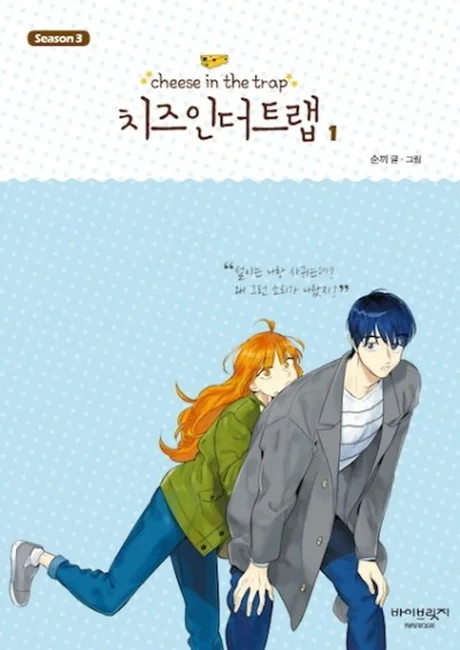 Cheese in the Trap cover art.
The emotional register matches Nana's in one precise way: relationships fail from incompatibility, not from misunderstanding that could be resolved by a single conversation. By chapter 60, Seol has enough information to make a rational decision, but the series understands that relationships don't work that way. People stay in situations that aren't good for them because of how they feel, not what they know. Nana understands this too. Cheese in the Trap is the manhwa like Nana pick for readers who want that psychological register without the music-industry setting. Best romance manhwa for a broader starting list.

Manhwa like Nana for the romance with dark undercurrents
My Deepest Secret (WEBTOON, completed) is darker than Nana and more thriller than drama, but it covers territory manhwa like Nana readers will recognize: obsessive attachment, the cost of emotional dependency, a relationship that isn't what it appears on the surface. Emma is a college student who appears to have a perfect boyfriend in Elios, attentive, protective, and increasingly difficult to read. The series reveals gradually that the relationship is not safe in specific ways that take time to clarify. It's more psychologically intense than Nana and more explicitly dark, but readers drawn to Nana's willingness to let relationships be disturbing, to show the uglier mechanics of attachment, will find something here.
Completed status matters. My Deepest Secret has an ending, which is more than Nana can offer. As a manhwa like Nana pick for the darker-romance reader specifically, it's the most honest match in that corner. Best psychological thriller manhwa if this angle is what you're prioritizing.
Orange Marmalade (LINE Webtoon, completed) is structurally closer to Nana's emotional pattern: a relationship shadowed by something one person is concealing, a reveal that reframes the early sections, an ending that doesn't arrive where you were hoping. Baek Ma-ri is a vampire in a world where vampires are stigmatized; she has spent her entire life learning how not to be visible. Jung Jae-min falls for someone she has trained herself to hide. The supernatural premise is light. It functions almost entirely as a metaphor for being fundamentally different and having to manage how much of yourself other people can safely know. The romantic tragedy angle, the concealed identity across a sustained timeline, and the ending that doesn't provide comfort make Orange Marmalade a solid manhwa like Nana recommendation for the slow-burn romantic side. Best completed manhwa if completed series are a requirement.
Our best romance manhwa list covers dramatic, character-driven stories for fans of Nana's emotional depth.
Best Romance Manhwa 2026 →
Manhwa like Nana for readers new to this emotional register
True Beauty (WEBTOON, completed at 223 episodes) is the warmest pick on this manhwa like Nana list and the least devastating. Lim Jukyung becomes skilled at makeup and constructs a public identity, someone effortlessly beautiful and socially confident, that her actual self has very little to do with. Two people see through the performance for different reasons, and the question the series eventually asks is which version of herself she chooses to live as. There's no terminal illness and no band. The tone is lighter than Nana's, and the grief is identity-level rather than the kind that accumulates over years of real adult life. But the underlying question (can someone love who you actually are rather than who you've learned to perform) is Nana-adjacent, and True Beauty earns its answer rather than assuming it.
 True Beauty cover art.
Start here if you want guaranteed emotional payoff without the devastation risk. As a manhwa like Nana entry point, True Beauty is the pick that won't break you before you've had a chance to build up to the heavier series. It's a good calibration point before committing to Cheese in the Trap's 301 chapters or Yumi's Cells' 520.
I Love Yoo (WEBTOON, ongoing) is Quimchee's series about Shin-Ae Yoo, a young woman who has methodically built her life around not needing anyone, and whose careful construction starts to fail when she becomes entangled with two brothers. The female friendship layer is present in a way that most manhwa romance doesn't provide. Shin-Ae's relationships with other women carry real weight and don't exist just to support the romantic plot. The emotional register is lighter than Nana's, and the series handles adult complications with more restraint, but it's operating in the right territory: guarded people whose defenses are expensive, relationships that cost something, friendship that isn't decorative. For the manhwa like Nana reader who specifically wants the female friendship layer, I Love Yoo is the strongest available answer, with the caveat that it's ongoing. Best manhwa for coming-of-age stories for series covering similar emotional territory.
Caveat: I Love Yoo is ongoing and has not updated consistently as of mid-2026. Committing to it means accepting an uncertain timeline. As a manhwa like Nana recommendation, it's the most honest answer for the friendship-layer specifically, but go in knowing it may not resolve soon.
The honest gap: what manhwa like Nana cannot fully give you
Advertisement
Three things in Nana have no equivalent in manhwa, and any manhwa like Nana list that pretends otherwise wastes your time.
The dual female protagonist. Most manhwa with female leads centers one woman. The structure Nana uses (two women of equal narrative weight, whose friendship is the primary relationship of the series) doesn't exist in Korean webtoon at the same scale. I Love Yoo has meaningful female friendship, but the lead is singular. Yumi's Cells follows one woman's interior. Cheese in the Trap's secondary female characters are supporting figures, not co-leads. If the thing that hit you about Nana was specifically that two women's friendship could carry a 21-volume series, manhwa doesn't have that yet.
The music industry as a setting with career stakes. BLAST's success and failure as a band isn't texture. It's plot. Nana Osaki's identity as a performer is in genuine conflict with her romantic life across hundreds of chapters. The specific tension of artistic ambition and what it costs in relationships is the structural engine. Manhwa has plenty of romance and plenty of adult drama, but the music industry as a sustained setting with actual career mechanics is rare. True Beauty has performance in a general sense; nothing in manhwa runs the way Nana's band plotlines run.
The unresolved ending, by design. Nana's incompleteness is not a flaw you learn to accept. It's part of what the series became. Every manhwa on this list is either completed or ongoing with a clear narrative structure. None of them leave you mid-sentence the way Nana does at Chapter 84. That experience of a story stopping rather than ending isn't something you can find elsewhere because it wasn't intended.
What you can find are manhwa like Nana in partial ways. Yumi's Cells for the adult emotional interiority. Cheese in the Trap for the psychological complexity in relationships. Orange Marmalade for the slow-burn concealed-identity romance that doesn't give you the ending you wanted. My Deepest Secret for the dark undercurrent beneath what appears to be a healthy relationship. True Beauty as an entry point. I Love Yoo for the female friendship layer in a lighter register.
None of them are Nana. When readers look for manhwa like Nana, the honest summary is: pick the emotional quality that mattered most to you, and match from there. Some of these series are worth reading on their own terms entirely separately from the comparison. That's a real outcome, not a consolation prize. Best romance manhwa picks has broader coverage if you want to extend the search further.
Frequently Asked Questions
Is there a manhwa as emotional as Nana?
Yumi's Cells is the closest match in emotional register. It tracks an adult woman through relationships that succeed and fail, with serious attention to what those experiences cost. Cheese in the Trap handles psychological complexity in a relationship at a similar level of seriousness. Neither replicates what Nana does with the dual-protagonist structure, but both take adult emotional life as their actual subject rather than as backdrop.
Is Nana a manhwa or manga?
Nana is a Japanese manga, not manhwa. It was created by Ai Yazawa and serialized in Cookie magazine from 2000 to 2009, when it went on indefinite hiatus due to Yazawa's illness. Manhwa is Korean. The search for manhwa like Nana is legitimate (readers want the emotional qualities in Korean webtoon format) but the source is unambiguously Japanese.
What happened to the Nana manga? Is it finished?
The Nana manga is unfinished and has been on hiatus since 2009 following Ai Yazawa's serious illness. As of mid-2026, no new chapters have been published. The anime adaptation (47 episodes, by Madhouse) ends mid-story. The manga ran 21 volumes and Chapter 84. There is no announced return date and no completed ending.
What manhwa has a female friendship at the center like Nana?
This is the hardest gap to fill in manhwa. Most manhwa with female leads centers one woman. The dual female protagonist structure that Nana uses (two equally weighted women whose friendship is the emotional spine of the series) is not common in Korean webtoon. I Love Yoo has meaningful female friendship subplots, but the lead is singular. The honest answer is that manhwa like Nana, in this specific structural sense, does not yet exist.
What manhwa has the same adult-drama register as Nana?
Cheese in the Trap and Yumi's Cells are both adult dramas in the sense that Nana is. They treat their adult characters as people with complicated interior lives rather than as types performing genre functions. Both are set in realistic contemporary Korea, deal with romantic relationships that fail for non-villainous reasons, and do not offer clean resolutions. Yumi's Cells runs 520 episodes and is complete. Cheese in the Trap runs 301 chapters and is complete.
Is Yumi's Cells similar to Nana?
Emotionally yes, structurally no. Yumi's Cells follows one woman (Kim Yu-mi, an office worker in her thirties) through relationships that work and don't work, using anthropomorphized brain cells to show what she is feeling rather than what she is saying. Nana splits this attention between two women and grounds it in the music industry. Yumi's Cells is funnier, less dramatic, and the grief it handles is more accumulative and quiet. But the emotional seriousness, the willingness to show adult disappointment without resolving it artificially, is the same.
Related Reading
- Best Romance Manhwa 2026: 12 Series for Every Mood: 12 romance picks across drama, fantasy, and slice-of-life.
- True Beauty Review: The Manhwa the K-Drama Can't Replace: Full review of the most widely read romance-drama manhwa.
- True Beauty Reading Guide: 223 Episodes, Where to Start: How to read True Beauty's 223-episode arc.
- Best Manhwa With Strong Female Lead: 8 Series to Read: 8 picks with complex, non-idealized female protagonists.
- Best Manhwa to Read in 2026: 20 Series Worth Your Time: 2026 starter list for readers new to manhwa from manga.
References
- True Beauty on WEBTOON (completed at 223 episodes)
- Cheese in the Trap on WEBTOON (completed, 301 chapters)
- Yumi's Cells on Tapas (completed series, 520 episodes)
- Best romance manhwa picks
- Best completed manhwa to read in 2026
- Slice-of-life manhwa recommendations
About the author

Senior Manhwa Critic & Analyst
Manhwa critic and former Korean-to-English webtoon translator with 8 years reading across 40+ genres. London-based. Tracks everything from power-progression to slice-of-life romance.
- 8 years reading manhwa across 40+ genres
- Former Korean-to-English webtoon translator
- 500+ manhwa titles completed
- Specializes in progression systems and power-scaling analysis



Disclaimer
This article is published for informational and entertainment purposes. It does not constitute professional financial, legal, or technical advice. Series availability, platform access, translation status, and chapter counts change. Verify critical details (pricing, regional availability, official translation status) with publishers and platforms. Affiliate links, where present, help support our editorial work and are labelled in our affiliate disclosure.
Comments
Loading comments…