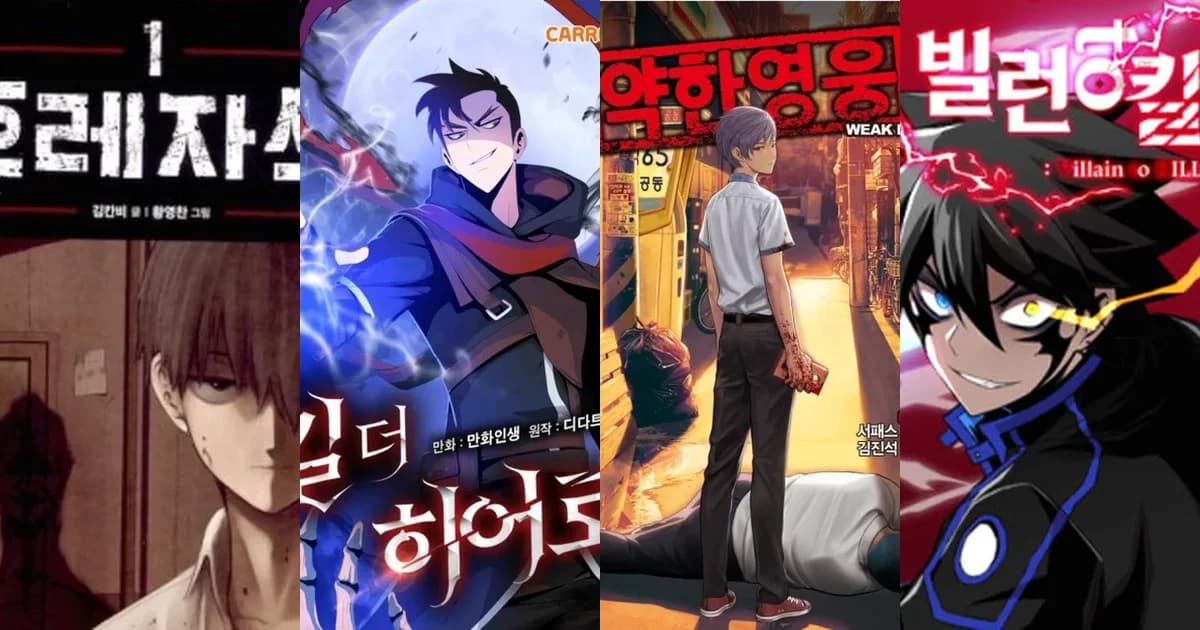
Best manhwa antiheroes don't get a clean redemption arc, and that's the point. These eight protagonists kill without a hero's hesitation, work for people they shouldn't trust, or simply lack whatever ingredient turns a strong lead into a likable one.
TL;DR: Best manhwa antiheroes ranked: eight verified picks where the protagonist is complicit, ruthless, or explicitly coded as a villain rather than a hero. Bastard and Kill the Hero anchor the list for moral compromise done without a safety net. Villain to Kill closes it out as the deep cut most readers haven't found yet.
Best Manhwa Antiheroes: Overview
An antihero isn't just a strong character with a chip on their shoulder. The label describes a specific relationship between the protagonist and the story's moral framing: the narrative refuses to reassure you that this person is good. They might be forced into complicity, like Jin Seon in Bastard. They might choose coldness deliberately, like Woojin in Kill the Hero. They might just be missing the part of a person that cares whether they win, like Yu in The Boxer. The best manhwa antiheroes make that discomfort the point of reading, not a side effect.
This list isn't the overpowered-protagonist category. Those two get confused because manhwa antiheroes are often dangerous, but danger and moral ambiguity aren't the same axis. Several picks here, Jin Seon especially, have no combat advantage over anyone. For the strength-progression version of manhwa, best manhwa with OP MC covers that separately.
Every entry below is checked against AniList or the official platform for chapter count, status, and author credit. Completed series are marked; ongoing ones list their most recent confirmed chapter or episode.
Best Manhwa Antiheroes: Key Takeaways
- Bastard and Kill the Hero are the sharpest moral-compromise picks: one forced into complicity, one choosing coldness on purpose
- Villain to Kill is the deep cut, a hero soul-swapped into a body the world has already classified as a villain
- God of Blackfield and The Breaker put their antiheroes inside institutions, intelligence work and murim sects, that reward ruthlessness
- The Boxer and Get Schooled earn the label through absence rather than villainy: no drive to win, no clean stance on state-sanctioned violence
- Four picks among these best manhwa antiheroes are fully completed (Bastard, Kill the Hero, Weak Hero, The Boxer); the rest are ongoing or on hiatus with the chapter count noted for each
1. Bastard
Advertisement
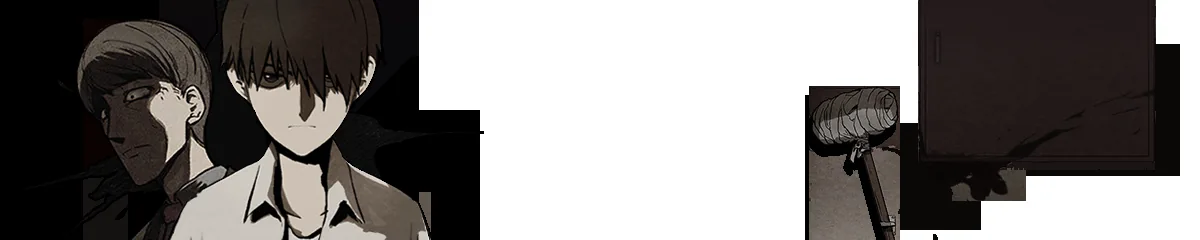 Bastard by Kim Carnby and Hwang Young-chan.
Jin Seon has been helping conceal his father's murders since he was a child, not because he wants to, but because refusing was never a real option growing up in that house. When a new student becomes his father's next target, Jin has to decide whether staying quiet is still survivable.
Bastard is the clearest case on this list of an antihero created by circumstance rather than choice. The manhwa never asks readers to forgive Jin's years of complicity. It asks what's left of him once he stops enabling it, and that question is harder than a straightforward revenge arc would be. Written by Kim Carnby with art from Hwang Young-chan (the same team behind Sweet Home), it ran 94 chapters and completed in 2016. Free on WEBTOON, originally serialized on Lezhin. For the full arc breakdown, the Bastard reading guide covers where the tone shifts.
2. Kill the Hero
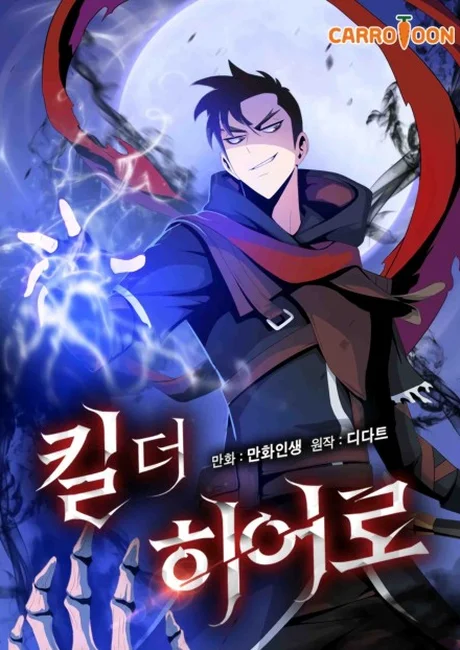 Kill the Hero, based on the D-Dart web novel.
The title is the thesis. Woojin regresses with full knowledge of who betrayed his party and why, and he spends the series hunting the person the world still calls a hero. He doesn't get a moment where the story softens him into someone more conventionally sympathetic. He plays people against each other, prioritizes the kill over the clean version of justice, and stays that way through the ending.
Kill the Hero completed at 153 chapters on Tapas in 2021, based on D-Dart's original web novel. Compared to a regression series like Solo Leveling, where the protagonist's return to power reads as earned strength, Kill the Hero's regression reads as a tool for a grudge. That distinction is the whole appeal for readers tired of regression stories that flinch. The Kill the Hero reading guide has the chapter-by-chapter breakdown.
If cold, calculated payoff is what you're after, the revenge-specific list covers the format in more depth.
Best Manhwa Revenge →
3. Weak Hero
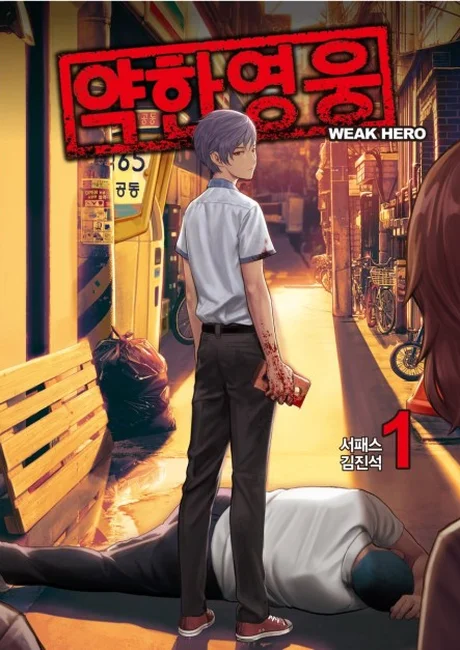 Weak Hero by Seopass and Kim Jin-Seok.
Yeon-si is small and gets targeted for it, so he wins fights by being smarter and colder than whoever's trying to hurt him: knowing exactly where to hit, controlling the terms of a confrontation before it escalates into something he can't manage. The early chapters frame this as intelligence. The later ones frame it as something closer to a habit he can't switch off.
That's the antihero mechanism in Weak Hero: the same strategic violence that protects Yeon-si also isolates him. Each win costs him something social, a friendship, a version of a normal school life, and the series tracks that cost instead of skipping past it. Written by Seopass with art from Kim Jin-Seok, Weak Hero completed at 268 chapters on WEBTOON. The Weak Hero reading guide walks through the season structure.
4. God of Blackfield
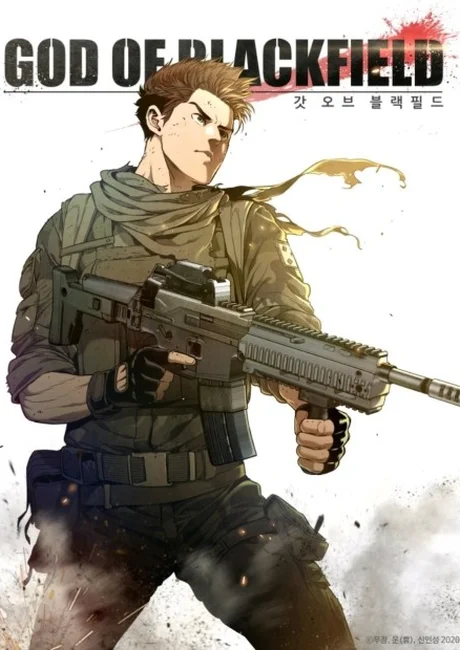 God of Blackfield by Mujang, Un, and Insung Shin.
Kang Chan, a legendary mercenary known as the God of Blackfield, gets revived in a Korean high schooler's body three years after his death. The school-bullying setup that opens the series is a decoy. By episode 50, God of Blackfield becomes a story about Kang Chan doing intelligence work that governments can't officially claim: the kind of job description that requires someone comfortable operating outside a clean legal or moral framework.
Story by Mujang and Un, art by Insung Shin, running 280 episodes across three seasons on Tapas (not WEBTOON, a common point of confusion). Tapas posted a hiatus announcement on July 31, 2026, ahead of Season 4, which has not been scheduled. The God of Blackfield reading guide explains the pivot from school arc to spy thriller in more detail.
5. The Breaker
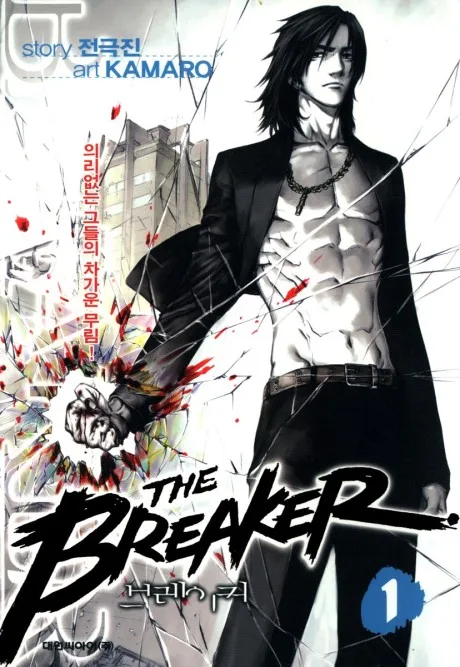 The Breaker by Jeon Geuk-jin and Park Jin-hwan.
Chun-Woo Han takes a bullied student under his wing to teach him martial arts, which sounds like a mentor setup until you notice how little regard Chun-Woo has for anyone caught between him and his own feud. He's dangerous to be around and doesn't pretend otherwise, and his student ends up absorbing consequences that a more protective teacher would have kept away from him.
The Breaker ran Part 1 (72 chapters) and New Waves (203 chapters), both completed, for a combined 275 chapters, with the story continuing in the ongoing Eternal Force arc. Written by Jeon Geuk-jin with art from Park Jin-hwan, the series is published in Korean on Naver and in English print through Ablaze. The murim mentor archetype usually softens into found-family warmth. Chun-Woo Han mostly doesn't. The Breaker reading guide maps the three-part structure for new readers.
6. Get Schooled
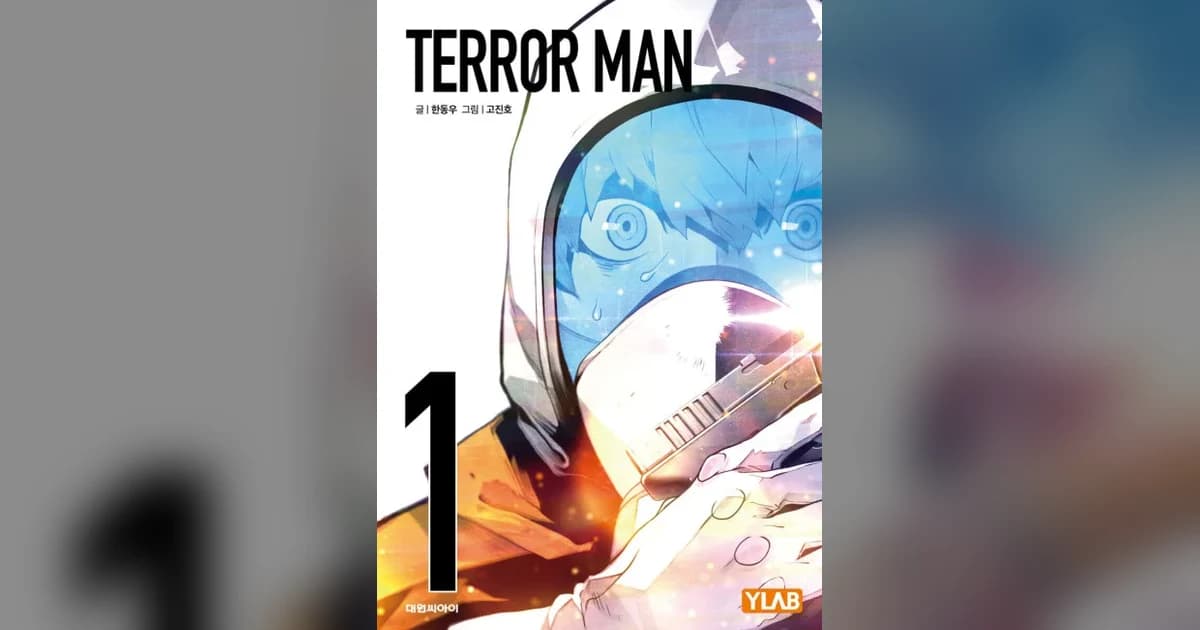
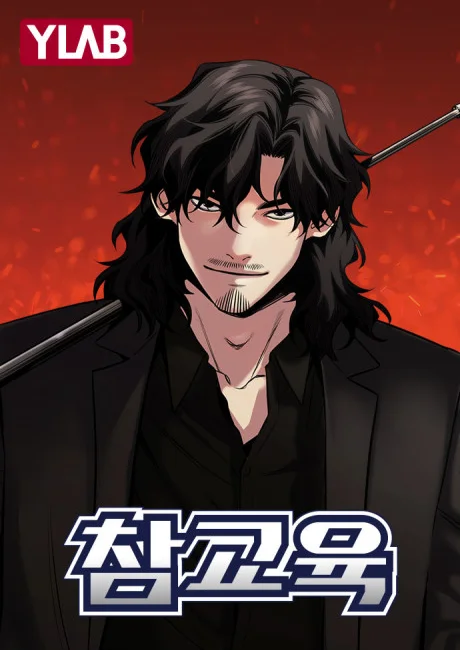 Get Schooled by Chae Yong-taek, part of YLAB's Blue String Universe.
Na Hwajin is a government inspector authorized to use physical force against violent students under a fictional Teacher Rights Protection Act. He moves from school to school, breaking up bullying rings and abusive teachers with the kind of violence the series never fully endorses or condemns.
That refusal to take a side is what puts Get Schooled on this list rather than in a straightforward vigilante-justice category. Na Hwajin isn't punished for his methods, but he isn't cleared of them either, and the ambiguity is deliberate rather than an oversight. Written by Chae Yong-taek with art by Han Ga-Ram and published by YLAB, the Korean Naver listing is active at 265 total episodes, with episode 259 the latest public release as of September 13, 2026. The English WEBTOON listing is not currently publishing new episodes. The Get Schooled reading guide covers the omnibus arc structure.
For manhwa where the moral discomfort is closer to the entire point, our dark-manhwa list has adjacent picks.
Best Dark Manhwa →
7. The Boxer
 The Boxer by Ji-Hun Jeong.
Yu is the strongest boxer anyone in the series has encountered, and he doesn't care whether he wins or loses. He feels close to nothing when he fights and can't explain why the sport matters to the people around him. Coach Ryu has spent his career looking for a fighter like this and isn't prepared for what that actually means once he finds him.
The Boxer earns its place among the best manhwa antiheroes through absence rather than villainy: Yu doesn't have the internal drive a hero needs, and the series treats that gap as the actual subject, not an obstacle for him to overcome by the final chapter. Written and illustrated solely by Ji-Hun Jeong, it completed at 133 chapters (103 main plus 30 bonus chapters). Free on WEBTOON, with English print volumes from Yen Press.
8. Villain to Kill
 Villain to Kill by Pyupin and Eun-Ji.
This is the deep cut most antihero lists skip, and the premise makes the case for itself. People with abilities in this setting get sorted into two camps: villains, ruled by their worst impulses, and psykers, who hunt them. Cassian Lee is a powerful, good-hearted psyker who ends up soul-swapped into the body of a Korean teenager the instant that teenager becomes a villain.
Villain to Kill isn't about a secret hero pretending to be bad. Cassian is stuck inside a classification the setting treats as fixed, hunted by the same kind of people he used to work alongside, and the series' tension comes from whether his sense of justice survives contact with a role that isn't built to allow one. Written by Fupin with art from Eunji, it's ongoing on WEBTOON, into Season 2 (episode 244 as of September 14, 2026) since launching in February 2021. No official English review exists on this site yet, worth correcting given how sharply the title commits to its own premise.
Analysis: which of these actually earns the antihero label
Advertisement
Among the best manhwa antiheroes above, ranking by "worst person" misses what separates a good pick from a lazy one. Jin Seon never chooses his moral position; circumstance assigns it to him. Woojin chooses his coldness and never apologizes for it. Cassian Lee didn't choose anything, a classification system did it for him, which is the sharpest version of the "not a hero" framing on this list.
Weaker antihero stories treat moral ambiguity as an aesthetic: dark lighting and a tragic backstory bolted onto a conventional hero arc. Every pick here makes the protagonist's moral position load-bearing to the plot, not decoration around it. That's the actual filter.
Frequently Asked Questions
What makes a manhwa protagonist an antihero?
An antihero lacks the clear moral compass a traditional hero has. They might kill without much hesitation, work for morally compromised organizations, use manipulation and violence as their default tools, or simply lack the motivation a hero needs. The defining trait isn't power level, it's that the story refuses to frame them as unambiguously good.
What is the best manhwa with a morally grey protagonist?
Bastard and Kill the Hero are the two most structurally committed to moral ambiguity on this list. Bastard's Jin Seon is complicit in his father's murders from childhood, not by choice. Kill the Hero's Woojin hunts down a false hero through calculated, cold revenge with no redemption arc softening him.
Is Bastard's Jin Seon a villain or an antihero?
Neither cleanly. Jin Seon has helped conceal his serial-killer father's crimes since childhood, which makes him complicit, but the alternative to silence was worse for him at the time. The manhwa never asks you to forgive that complicity, which is antihero territory rather than villain or hero.
What manhwa has a protagonist who is literally framed as the villain?
Villain to Kill. Cassian Lee is a heroic psyker who ends up soul-swapped into the body of a Korean teenager who has just become a villain, the setting's term for anyone whose abilities are classified as evil-aligned. He has to survive inside that classification while trying to hold onto a hero's ethics.
Are manhwa antiheroes different from overpowered manhwa protagonists?
Yes. An overpowered protagonist is defined by raw strength relative to everyone around them. An antihero is defined by moral position, not power level. Several antiheroes on this list, Bastard's Jin Seon especially, have no combat advantage at all. For strength-progression picks, see best manhwa with OP MC instead.
Which of these manhwa antihero picks are completed?
Bastard (94 chapters), Kill the Hero (153 chapters), Weak Hero (268 chapters), and The Boxer (133 chapters) are all completed. God of Blackfield is on hiatus after 280 episodes. Get Schooled is active on the Korean Naver platform at 265 total episodes, with episode 259 the latest public release. Villain to Kill and The Breaker's Eternal Force arc are actively releasing.
Related Reading
- Manhwa Like God of Blackfield →: more survival-tournament picks for readers who liked God of Blackfield's structure specifically.
- Best Manhwa Revenge →
- Best Manhwa with OP MC
- Bastard Manhwa Review
- Kill the Hero Manhwa Review