Loading…
ChapterBrief · Manhwa
Manhwa Like Fullmetal Alchemist: 6 Picks That Deliver
Six manhwa like Fullmetal Alchemist sorted by what you actually want: the sibling bond, the power system with real costs, or the corrupt institution.
11 min readBy Ethan Mercer

Manhwa like Fullmetal Alchemist is a harder search than it first looks. FMA is a Japanese manga, not manhwa. That's worth naming upfront, because the distinction matters for format and availability. More importantly, FMA's specific combination of qualities is genuinely unusual, even in manga: a power system governed by real constraints that the plot has to respect, two brothers whose relationship is the moral center of everything, a protagonist embedded in an institution that turns out to be rotten from the top, and a plot where every setup pays off.
That combination isn't fully replicated anywhere in manhwa. The honest answer to "is there a manhwa like Fullmetal Alchemist" is: several manhwa deliver one or two of those elements at a comparable level. None delivers all four simultaneously. This list names which manhwa handles which quality best, and is direct about where the match breaks down.
TL;DR: Fullmetal Alchemist is manga, not manhwa: the qualities you're looking for are spread across multiple Korean series. For plot construction quality and a fully resolved story: Omniscient Reader's Viewpoint is the closest available. For the rigid power system where ability has costs: Legend of the Northern Blade (completed, 202 chapters) and ORV's constellation system
Key Takeaways
- Fullmetal Alchemist is manga, not manhwa: the qualities you're looking for are spread across multiple Korean series
- For plot construction quality and a fully resolved story: Omniscient Reader's Viewpoint is the closest available
- For the rigid power system where ability has costs: Legend of the Northern Blade (completed, 202 chapters) and ORV's constellation system
- For the sibling or close-pair relationship as emotional core: Tower of God (Rachel and Bam's fractured bond) and Peerless Dad (a father whose children are his entire reason)
- For a corrupt institution the protagonist works within and against: Return of the Blossoming Blade and ORV
- FMA's specific quality of historical revisionism (the revelation that the state's foundation is a war crime) isn't replicated in manhwa
- See best manhwa fantasy for the wider genre view before starting any of these
Manhwa Like Fullmetal Alchemist: What Makes It a Hard Search
Understanding the specific mechanics helps narrow the search considerably.
The alchemy system is the first thing to name. Equivalent exchange is not flavor text: it's a rule the plot has to follow. Every time Edward or another alchemist attempts something, the story has to account for the cost. This isn't common in action fiction, where power systems are usually escalation mechanisms. In FMA, the system is a constraint, and the story's best moments come from characters trying to work around a constraint that doesn't budge. The whole plot is built on one violation of that rule: the brothers' attempt to resurrect their mother, and the consequences of that violation run through every arc.
The second quality is the sibling relationship. Edward and Alphonse aren't brothers who fight alongside each other. They're brothers whose bond is the reason either of them does anything. Alphonse has no body. Edward has no arm and no leg. Every decision they make is filtered through what it means for the other. The relationship has genuine cost and genuine stakes that aren't resolved by the story simply making things easier.
The third quality is institutional corruption. The Amestrian military is the institution the brothers are embedded in, and the series reveals over time that its entire foundation (its wars, its borders, its history) is built on a systematic atrocity. The protagonists don't just fight enemies. They have to reckon with the fact that the organization they work for is responsible for mass murder, and that the people at the top knew the whole time.
The fourth is plot construction. FMA: Brotherhood is one of the few shonen-adjacent stories where every element introduced early pays off. The Homunculi, the minor alchemists, the country of Xing, the philosopher's stone: nothing is introduced decoratively. Readers looking for manhwa like Fullmetal Alchemist are often specifically looking for this quality: a story that holds together under scrutiny.
Our master manhwa reading list covers the top 30 titles across every genre for 2026.
Best Manhwa to Read in 2026 →
For the rigid power system: picks with real constraints
Advertisement
Legend of the Northern Blade (202 chapters, completed, Tappytoon) is the strongest single match for readers who want an FMA-style power system, one with costs the story can't ignore. The martial arts in this series aren't a stat-screen escalation. Jin Mu-Won rebuilds a destroyed legacy through demonstrated practice across hundreds of chapters, without system windows or sudden power spikes. Techniques exhaust the user. Fights have consequences that carry forward. By chapter 40, the protagonist still isn't the strongest person in the room, which is not the default setting for this genre.
 Legend of the Northern Blade cover art.
The equivalent exchange parallel is structural rather than literal. Nothing in this series is free. The Northern Blade arts require years to internalize. Allies who die don't come back. The villain's strength is explained through specific history, not through being arbitrarily powerful. The series completed at 202 chapters with genuine payoff: every major thread from the first arc resolves. That alone puts it in rare company.
For readers who valued FMA's completed, no-loose-threads structure specifically: best completed manhwa 2026 is a useful companion, covering what's fully available versus ongoing.
Omniscient Reader's Viewpoint (ORV, ongoing manhwa on WEBTOON; source novel completed) handles the constraint question differently. The constellation system that governs the post-apocalyptic Korea the story takes place in has rules, and those rules have costs. Kim Dokja, the protagonist, gains abilities through negotiation with constellations, beings who watch the story unfold and grant power in exchange for entertainment. Every ability is a deal with attached conditions. Nothing is granted for free, and the conditions come due.
 Omniscient Reader's Viewpoint cover art.
ORV's plot construction is the closer FMA analogy. The story introduced in the first 30 chapters pays off in the final arc. Characters introduced as minor early on turn out to be structurally essential. The ending addresses what the story was actually about rather than simply stopping the action. This is the manhwa most consistently cited when readers ask whether anything matches FMA's narrative engineering. The honest addendum is that ORV's power system is more complex than FMA's (it takes longer to understand the rules), and the scale is much larger, running on apocalyptic stakes rather than the human scale FMA maintains.

For the sibling and close-pair emotional core
Tower of God (on hiatus since Feb 2025, WEBTOON) opens on a bond that functions like the Elric brothers in structure if not in circumstance. Bam enters the Tower because Rachel (the only person in his life before the series begins) disappears into it. Her absence is his entire reason. The series then progressively reframes that relationship in ways that recontextualize everything. What seemed like a straightforward loyalty turns out to be something more complicated, and the gap between what Bam believed and what Rachel was doing drives the story's emotional register through hundreds of chapters.
 Tower of God cover art.
The FMA parallel is this: in both stories, the relationship between the two principals is the actual subject, and the action around it is how that relationship gets tested. Edward and Alphonse's bond survives because it's built on something real. Tower of God's equivalent relationship is more deliberately ambiguous: whether it survives, and in what form, is one of the series' sustained questions.
Tower of God has been on hiatus since February 2025 (Season 3 concluded) with 652+ episodes. Readers who valued FMA's completed resolution should know what they're entering. The series' pacing in the first 80 chapters is also unusual: the Tower's structure and its rules dominate early chapters in a way that can delay the relationship dynamics from landing. By chapter 100 those dynamics are fully established and the series becomes considerably more compelling.
See best manhwa action 2026 for where Tower of God sits among the current action manhwa field.
Peerless Dad (ongoing, Tapas, 200+ chapters) runs on a different version of the same core. Noh Gajang has three children. They are the reason he works as a gate guard instead of pursuing the murim power he clearly possesses. Every decision he makes is filtered through what it costs him relative to what it means for his kids. The series' emotional engine is the relationship between a man of significant capability and the people who are the reason he doesn't use it.
This isn't a sibling relationship, but it functions similarly to the Elric dynamic: the bond constrains what the protagonist will do, and watching someone with real power choose restraint because of who they'd become if they used it is the specific thing FMA does with Edward. Noh Gajang makes that choice before the series starts, and the series runs on maintaining it under pressure. The first 40 chapters are slow by murim standards, almost entirely domestic in focus, but by chapter 80 the narrative weight becomes clear.

For the corrupt institution
Return of the Blossoming Blade (ongoing, WEBTOON) handles the institutional corruption angle most directly. Chun Myung wakes in his past with knowledge of how his sect will be destroyed, and the series spends its run revealing that the Murim Alliance (the dominant institution every character operates within) is thoroughly corrupted by the people running it. The protagonist has to work within it, because wholesale rejection would make him ineffective. He has to work against it, because its official goals and its actual goals diverge. That's the specific tension FMA maintains for most of its run.
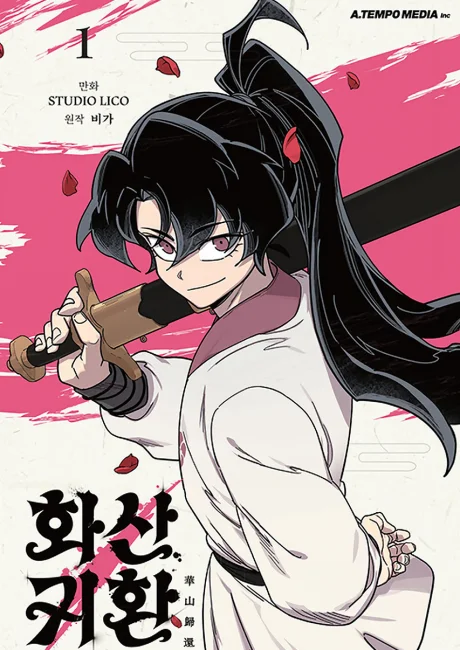 Return of the Blossoming Blade cover art.
The Amestrian military equivalent here is the Alliance's leadership structure: powerful, legitimate-looking from outside, and running on a logic the protagonists were never informed of. By chapter 80 of Return of the Blossoming Blade the institutional corruption is clear enough that the reader understands Chun Myung's position: working inside a system he knows is compromised, trying to change enough of it to matter.
Manhwa like attack on titan covers the institutional corruption angle in more depth across several series, for readers who weight this quality particularly.
Omniscient Reader's Viewpoint (ORV) returns here for the same reason it appeared in the power system section. The constellation system, the overarching structure that governs Kim Dokja's world, is revealed progressively to be serving agendas the protagonist was never informed of. The constellations benefit from the suffering the system creates. The beings that appear to grant power are running their own calculations. This is structurally identical to FMA's revelation about the military. The institution has a secret purpose, the protagonist has been serving it without full information, and reckoning with that is what the second half of the story is about.
Our best action manhwa list has top picks for fans of alchemy-style power systems and found-family stories.
Best Action Manhwa 2026 →
The honest gap: what manhwa hasn't built
FMA's most specific quality, the one that genuinely hasn't been replicated, is the use of historical revisionism as a narrative device. The revelation that the country was founded on a systematic atrocity, that the wars that built the borders were deliberately engineered to generate philosopher's stones, that the rulers knew the whole time: this is a story about how states are built and what gets buried to build them, political in a way that goes past institutional corruption into something closer to historical critique.
Manhwa has institutional corruption as a recurring element. It hasn't, in the same period, built a story where the revelation of the institution's secret purpose reframes the entire prior history of the world the story takes place in. That's the specific gap. If FMA's final act (the reveal about Amestris, about Father, about the geometry of the philosopher's stone network) was what landed hardest for you, the honest answer is that no manhwa currently replicates that specific structure.
For plot engineering quality (stories where the ending feels like an inevitability that the beginning had been quietly constructing) ORV is the answer. For completed stories with actual payoff: best manhwa completed 2026. For the philosophical action angle across manga and manhwa more broadly: manhwa like Vinland Saga covers adjacent terrain with similar emphasis on plot over power escalation.
manhwa like Fullmetal Alchemist: quick reference
Advertisement
| Manhwa | FMA quality | Status | Chapters | Platform |
|---|---|---|---|---|
| Omniscient Reader's Viewpoint | Plot construction, corrupt institution, power costs | Manhwa ongoing (novel complete) | 550+ | WEBTOON |
| Legend of the Northern Blade | Rigid power system, completed payoff | Completed | 202 | Tappytoon |
| Tower of God | Close-pair emotional core, revealed world structure | On hiatus (Feb 2025) | 652+ | WEBTOON |
| Peerless Dad | Relationship as moral constraint on power | Ongoing | 200+ | Tapas |
| Return of the Blossoming Blade | Corrupt institution, protagonist embedded within it | Ongoing | 150+ | WEBTOON |
For further reading on the magic system angle in particular, including how manhwa handles rule-based power versus FMA's approach, best manhwa magic system covers the structural differences in detail. And for readers who came to FMA through Brotherhood and are looking for seinen-adjacent work, best manhwa seinen has the complete picture.
Frequently Asked Questions
Is there a manhwa as well-plotted as Fullmetal Alchemist? Omniscient Reader's Viewpoint is the closest available in manhwa for plot construction quality. Every element introduced in the first 30 chapters pays off by the final arc, the rule system has no convenient exceptions, and the ending resolves what the story is actually about rather than simply stopping. FMA's specific combination (historical revisionism as a narrative device, alchemical rules constraining every plot beat, sibling relationship as the moral core) isn't fully replicated. But if you're searching for a manhwa where the structure holds under scrutiny, ORV is the answer.
What manhwa has equivalent exchange as a mechanic? Legend of the Northern Blade is the closest match for a rigid power system where nothing is free. The martial arts in that series have real costs: techniques exhaust the user, progression requires years of demonstrated practice, and no character gains an ability the story hasn't earned for them. It's not a literal equivalent exchange system, but the underlying logic is the same: power has a price and the story doesn't forget it. ORV's constellation system also has this quality: every ability the protagonist gains is a negotiation with costs attached.
What manhwa has the best sibling relationship? Tower of God opens on one of manhwa's defining relationship setups: Bam enters the Tower entirely because of Rachel, the person who was his entire world before she left. Whether that's a sibling-equivalent bond depends on how you read it, but the emotional structure is the same as Edward and Alphonse: one person's absence or betrayal driving another person's entire arc. Peerless Dad handles the equivalent differently: Noh Gajang's children are the reason he renounced personal glory, and every decision he makes is filtered through what it means for them.
Is Fullmetal Alchemist a manhwa? No. Fullmetal Alchemist is a Japanese manga by Hiromu Arakawa, serialized in Monthly Shonen Gangan from 2001 to 2010. The Brotherhood anime is based on it. Manga is Japanese; manhwa is Korean. When readers search for manhwa like Fullmetal Alchemist, they're looking for Korean comics that deliver FMA's structural qualities: the rule-based power system, the corrupt institution, the sibling emotional core. Not a remake of the same story.
Is there manhwa with a corrupt military institution like Fullmetal Alchemist? Return of the Blossoming Blade is the strongest match. The Murim Alliance functions exactly as the military does in FMA: it's the dominant institution, the protagonist is embedded in it, and the series progressively reveals how thoroughly it has been corrupted by the people running it. ORV has this too: the constellation system that governs everything is revealed to be serving agendas the protagonist was never informed of. Both series require the protagonist to work within and against the institution simultaneously.
What manhwa is best if I liked the alchemy system in FMA? The alchemy system in FMA works because it has genuine narrative constraints: equivalent exchange isn't decoration, it's the law the plot has to follow. For manhwa with comparable rule-based systems, Legend of the Northern Blade's martial arts and ORV's constellation system are the two closest. Both have costs attached to every ability gain, both prevent the protagonist from simply receiving power, and both use the system's limits as actual plot devices rather than window dressing.
Does Tower of God have a completed story? Tower of God has been on hiatus since February 2025, when Season 3 concluded. The series has 652+ episodes. For a manhwa like Fullmetal Alchemist with an actual resolved conclusion, Legend of the Northern Blade (202 chapters, fully concluded) is the best choice.
Related Reading
- best manhwa fantasy
- Best Manhwa to Read in 2026 →
- best completed manhwa 2026
- best manhwa action 2026
- Manhwa like attack on titan
References
- Fullmetal Alchemist on Viz Media (official English manga volumes)
- Omniscient Reader's Viewpoint on Kakao (licensed manhwa adaptation of the original novel)
- Legend of the Northern Blade on Tappytoon (official English release, 202 chapters)
- Tower of God on WEBTOON (official English release, on hiatus since Feb 2025)
- Return of the Blossoming Blade on WEBTOON (official English release, ongoing)
About the author

Senior Manhwa Critic & Analyst
Manhwa critic and former Korean-to-English webtoon translator with 8 years reading across 40+ genres. London-based. Tracks everything from power-progression to slice-of-life romance.
- 8 years reading manhwa across 40+ genres
- Former Korean-to-English webtoon translator
- 500+ manhwa titles completed
- Specializes in progression systems and power-scaling analysis




Disclaimer
This article is published for informational and entertainment purposes. It does not constitute professional financial, legal, or technical advice. Series availability, platform access, translation status, and chapter counts change. Verify critical details (pricing, regional availability, official translation status) with publishers and platforms. Affiliate links, where present, help support our editorial work and are labelled in our affiliate disclosure.
Comments
Loading comments…