A good manhwa magic system limits what the protagonist can do. Most don't. The numbers get larger, the system window announces the next tier, and the rules bend whenever the story needs them to.
This list ranks seven series by that standard. Not by scale, not by how the powers look, but by whether the system has teeth. The ranking goes from series where the magic is mostly cosmetic to series where understanding the constraints is how you understand the plot.
TL;DR: Hard magic systems with real constraints are rare in manhwa: Tower of God and Legend of the Northern Blade are the clearest examples. Solo Leveling has the most readable system for new readers: RPG conventions, no genre knowledge required. Omniscient Reader's Viewpoint hides its constraints early and reveals them slowly. The system is more rigorous than it appears in the first arc
The category covers cultivation, stat screens, shinsu manipulation, ranked esper abilities, and one counterpoint series with no magic at all. "Magic system" in manhwa usually means any structured power framework, and this list uses that definition.
Overview
A manhwa magic system is any structured power framework that governs what characters can and cannot do. The term covers a wide range: cultivation (accumulating internal energy through training), stat-screen systems (RPG-style level-ups and skill acquisition), ability tiers (ranked esper powers with defined limits), and shinsu manipulation (a physical substance with measurable properties). What makes any of these interesting or frustrating is the same thing: whether the rules actually constrain the protagonist.
Most manhwa runs on soft power systems. The numbers on the stat window signal power relationships but don't determine outcomes. The story needs the protagonist to win the fight that matters, so the system accommodates that need. Level-up notifications exist as anchoring details, not as genuine constraints. This is fine as a reading experience when the story is otherwise strong, but it means the magic system is decorative rather than load-bearing.
Hard power systems set rules that hold and build fights around the limits rather than around the numbers. Tower of God's shinsu is the clearest example in manhwa: a physical substance with density and flow properties that determine what any fighter can attempt on a given floor. When the rules of shinsu say a technique is impossible at a given ambient density, the story respects that. Fights turn on understanding the system rather than overriding it.
This list ranks seven series by that standard, from the most rule-constrained to the most cosmetic. The category includes a counterpoint entry, Weak Hero, which has no magic system at all and uses that absence to make an argument about what systems are actually for. Knowing which type of system you want determines where on this list to start reading.
Key takeaways
- Hard magic systems with real constraints are rare in manhwa: Tower of God and Legend of the Northern Blade are the clearest examples
- Solo Leveling has the most readable system for new readers: RPG conventions, no genre knowledge required
- Omniscient Reader's Viewpoint hides its constraints early and reveals them slowly. The system is more rigorous than it appears in the first arc
- Free options: Tower of God, Omniscient Reader's Viewpoint, Eleceed, and Nano Machine all have free chapters on WEBTOON
- Weak Hero is included as a counterpoint: it's the best argument that you don't need a magic system for fights to feel earned
What makes a manhwa magic system actually work
Advertisement
Before the rankings: the distinction between a soft and hard magic system.
Soft systems are defined by feel rather than rules. A character's power is "immense," their technique is "legendary," and fights resolve based on narrative momentum. Most manhwa runs soft. The level-up notifications give the reader anchoring numbers, but the story overrides them when it needs to.
Hard systems set rules that hold. Limitations are established early and stay in place. When a protagonist wins against a stronger opponent, it's because they found a way to work within the system's constraints, not because the story needed them to win.
Tower of God's shinsu is the clearest hard system in manhwa. Eleceed comes close. Legend of the Northern Blade runs a different type (technique-based rather than rule-explicit) but the constraints are real. Everything else on this list lands somewhere on the spectrum between those extremes.
For how the system-fantasy genre fits into the broader manhwa categories, the best system fantasy manhwa list breaks down the full range.
Our best cultivation manhwa list covers titles with the most developed magic and qi progression systems.
Best Cultivation Manhwa →

manhwa magic system: the rankings
 Tower of God cover.
1. Tower of God: the hardest system in the category
Platform: WEBTOON (free) | Status: On hiatus after Season 3, 652+ episodes | System type: Shinsu manipulation
Tower of God's shinsu is a substance with physical properties: density, flow patterns, compression thresholds. Manipulating it requires mastering specific "breathes": techniques that determine how a practitioner channels shinsu through their body. Each floor of the Tower has different ambient shinsu density, which affects what any fighter can attempt. A technique that works on Floor 20 may be physically impossible on Floor 50 because the ambient density doesn't support the required flow.
That's the actual constraint mechanism. The system isn't power levels: it's a material with properties. When Bam develops a new application, the series establishes what physical prerequisites allow it. When an enemy exploits shinsu behavior in an unexpected way, the fight turns on understanding that behavior, not on who has the higher number.
By Season 2, fights require shinsu compatibility between team members, wave-control techniques calibrated to the opponent's signature, and positional structures that only work with specific team compositions. Individual power matters less than knowing what the system will and won't do in a given context.
Season 1 takes time to establish the framework. The first 80 episodes build the test structure gradually, and readers who drop off early tend to do so before the system depth becomes apparent. That's the one real ask of a new reader: patience through the setup.
This is the strongest manhwa magic system on the list by the constraint standard.
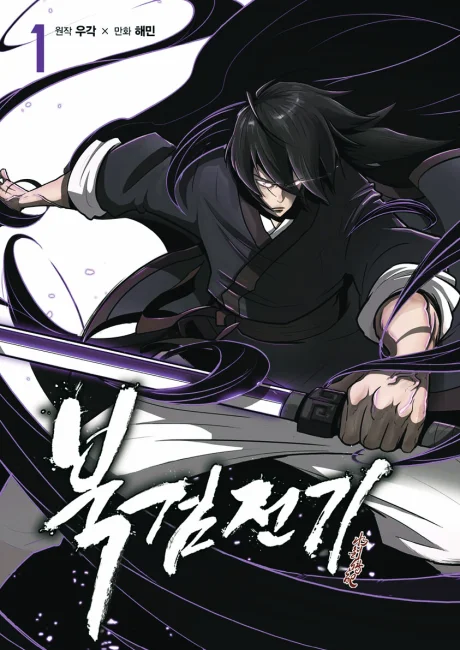 Legend of the Northern Blade cover.
2. Legend of the Northern Blade: no windows, technique is everything
Platform: Tappytoon | Status: Completed, 202 chapters | System type: Internal energy / technique-based cultivation
Legend of the Northern Blade has no stat windows and no level-up notifications. Jin Mu-Won learns the Silent Night techniques (a martial art developed by the Northern Heavenly Sect) through physical training, instruction from written records, and iterative practice. Each technique has specific physical prerequisites. To execute the higher-level forms, the practitioner needs to have built the foundational forms correctly. That isn't announced through a system window; it plays out in the story through what Mu-Won can and can't execute at a given point in the narrative.
What distinguishes this from most cultivation series is that the system is opaque to the protagonist the way a real skill is opaque to a practitioner. Mu-Won doesn't see a progress bar. He feels whether the technique is working or not, and the series tracks that progress through physical feedback rather than UI notifications.
The constraint here is internal to the technique, not external from a game-like framework. You can't copy Silent Night from observation alone. You can't acquire it from a dropped skill book. It has to be trained, and the training path is specific.
Completed at 202 chapters with a proper ending, which makes it one of the strongest options on this list for readers who don't want to commit to an ongoing series.
For more series in the cultivation-without-windows category, the best murim manhwa 2026 guide covers the full range of internal energy systems.
For a complete breakdown, see our Embodiment of the Assassin in the Murim World Review: 8.0/10.
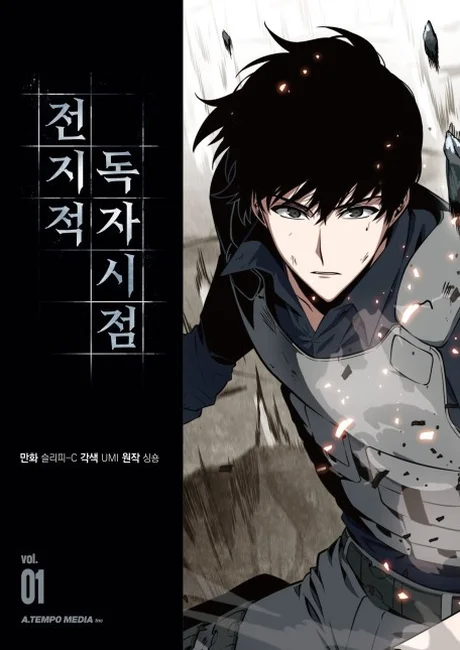 Omniscient Reader's Viewpoint cover.
3. Omniscient Reader's Viewpoint: constraints that reveal themselves
Platform: WEBTOON | Status: Ongoing/on hiatus at latest listed Episode 308; WEBTOON says it will return | System type: Constellation-sponsored incarnation powers
Omniscient Reader's Viewpoint runs its system through a constellation hierarchy. Humans become "incarnations" sponsored by constellations (entities with specific narratives and thematic associations). and thematic associations. The abilities granted to an incarnation are tied to what their constellation represents. Kim Dokja's constellation choices, and the star-rating limits on his incarnation connections, create real constraints on what he can attempt.
The catch is that the system explains itself slowly. The early arcs read as looser than they are. Dokja's genre awareness looks like soft magic at first. By the midpoint, the constellation mechanics are specific enough that his wins require working within them rather than overriding them.
The real interest in ORV's system is the meta-layer. Dokja's advantage is understanding the scenario's narrative rules, not accumulating power. He wins fights by recognizing which genre archetype the enemy is operating under and using that recognition as a constraint on their behavior. Story structure as hard magic. It's the most unusual version of the concept on this list, and it works.
For readers who want more series that handle this style of power, the best manhwa isekai 2026 list covers the fantasy-with-rules category.
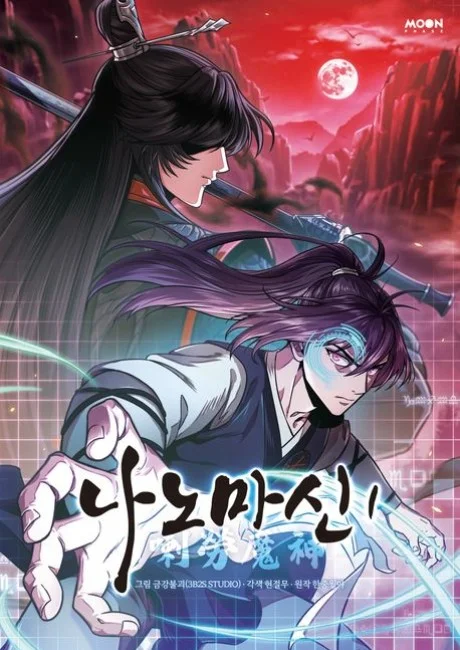 Nano Machine cover.
4. Nano Machine: stat screen grafted onto murim
Platform: WEBTOON / Naver Webtoon | Status: Ongoing | System type: System interface in a murim cultivation setting
Nano Machine fuses two frameworks that rarely appear together: murim internal energy cultivation and a stat-screen system interface. Cheon Yeo-Woon receives nanomachines from a future time traveler, and those machines provide real-time combat analysis, technique acquisition support, and a system-style notification layer over his cultivation progress.
The combination works better than it sounds. The stat window doesn't replace the murim logic: it makes that logic visible to readers unfamiliar with cultivation hierarchy and internal energy theory. When Yeo-Woon develops a new technique, the system readout explains both what he can now do and what the ceiling of that technique is within the murim ranking structure.
The constraints come from both layers. He can't just acquire any technique the system identifies: he needs the foundational internal energy base for the acquisition to take. And the murim political structure means that even with superior abilities, he operates under social and clan constraints that limit his options in ways the system alone can't resolve.
For readers who want more series in the Nano Machine vein, the manhwa like Nano Machine list covers series that blend the two frameworks. The manhwa like Murim Login guide covers the adjacent murim-meets-modern-world category.
 Solo Leveling cover.
5. Solo Leveling: the most readable system on the list
Platform: Tappytoon, Yen Press | Status: Completed, around 179 main chapters | System type: Stat-screen / level-based progression
Solo Leveling's system is the clearest RPG-convention mapping in manhwa: levels, skills, dungeons, shadow extraction. Sung Jin-Woo starts as the weakest hunter in a world where clearing dungeons is a profession, picks up a system interface no one else can access, and levels up through solo grinding.
The system is soft by the constraint standard: the story needs Jin-Woo to win the fights that matter, and the system accommodates that. Shadow Extraction is theoretically unlimited in scale; the only ceiling is what the narrative decides to introduce. But the internal consistency is high enough that the system never feels arbitrary within a single arc. Rules introduced early stay in place.
Where Solo Leveling wins isn't constraint depth: legibility. The RPG conventions are immediately readable. There's no cultivation theory to learn, no shinsu density to track. A reader who has never seen another system manhwa understands what's happening in chapter five. For that reason, it's the standard entry point for the genre.
Completed with a proper ending, two anime seasons on Crunchyroll, and a light novel for readers who want the same story in a different format.
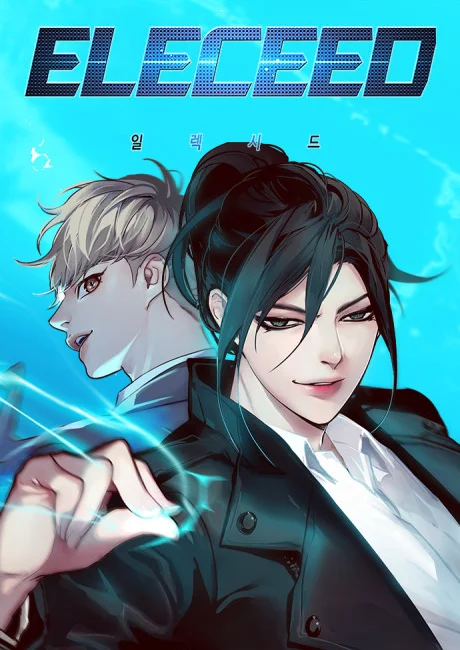 Eleceed cover.
6. Eleceed: bounded abilities, consistent rules
Platform: WEBTOON | Status: Ongoing, 390+ chapters | System type: Ranked esper tiers with specific ability categories
Eleceed's awakened-user system divides practitioners into ranked tiers with specific ability categories. Each fighter's power set is visually and mechanically distinct: range, cost, and interaction rules are established when the ability is introduced and held consistently from that point forward. When Jaewoo develops a new application, it comes with specific range and cost conditions. The series keeps them.
The constraint is the ability boundary. There's no vague power-up escalation. Individual abilities have defined limits, and fights resolve within those limits. When a character can't punch through a problem, they have to solve it a different way, and the series has to show how.
Eleceed is later on this list than its fight quality might suggest because the system is less formally developed than Tower of God's or Legend of the Northern Blade's. The rules are consistent without being deeply articulated. But consistent is more than most ongoing manhwa manages.
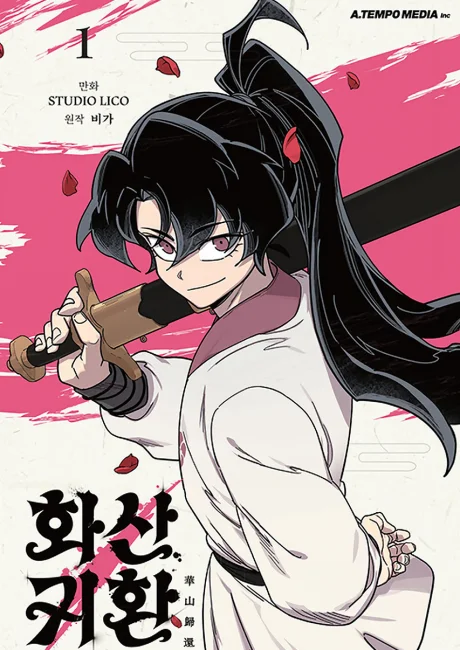 Return of the Blossoming Blade cover.
7. Return of the Blossoming Blade: clan-specific internal energy
Platform: WEBTOON | Status: Ongoing | System type: Murim cultivation with clan technique inheritance
Return of the Blossoming Blade is a murim series where the cultivation system is tied to clan lineage and technique inheritance. Seol Cheon-Rang's clan has specific internal energy techniques that are unique to that bloodline. Other schools cannot acquire or replicate them through observation alone. The protagonist's advantages come from recovering lost clan techniques and developing them further, not from generic power accumulation.
The constraint is technique-specificity. Acquiring a higher-level form requires having mastered the lower forms correctly. Opponents from other clans have their own technique trees with different strengths and limitations, and fights turn on which tree is better suited to a given exchange.
It's softer than Legend of the Northern Blade on the constraint scale: the series doesn't commit as fully to making limitations feel absolute. But it's more rigorous than most murim series in establishing that not all internal energy is interchangeable, and that technique origin matters to what you can do with it.
For the full murim category, best murim manhwa 2026 covers this alongside stronger options.
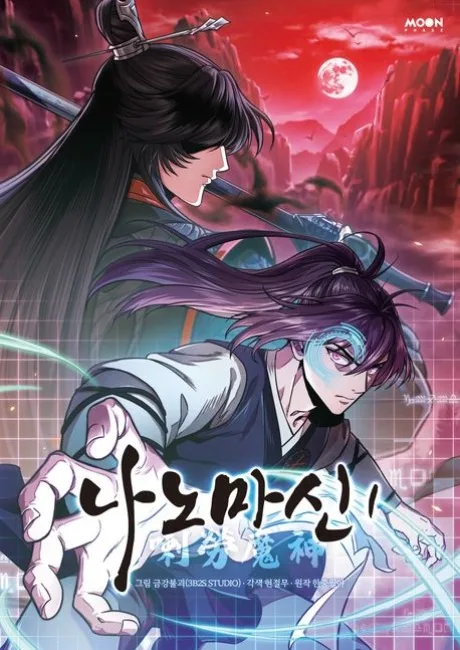
The counterpoint: Weak Hero (no system at all)
Platform: WEBTOON | Status: Completed, 268 chapters | System type: None
Weak Hero is on this list as the argument against magic systems entirely.
Gray Yeon wins fights by knowing which pressure points produce which results, and applying that knowledge with better timing than his opponents. There are no levels, no cultivation arcs, no stat windows. The constraint is physical reality: a smaller fighter who knows anatomy and timing precisely can beat a larger fighter who doesn't.
The fights feel more earned than most of the systems above, because the rules are just anatomy and mechanical advantage. Nothing can be hand-waved. When Gray wins an exchange he shouldn't win by size, the series has to show exactly why, and it does.
If you're reading this list because power systems feel arbitrary in the manhwa you've been reading, Weak Hero is the correction. It's a complete story at 268 chapters.
For action series with more variety on the power-system spectrum, the best manhwa action 2026 list covers both system and non-system series. For readers who want to stay in the overpowered-protagonist lane, best manhwa overpowered MC covers that category.
Our best system fantasy manhwa list covers game-stat and skill-tree power systems.
Best System Fantasy Manhwa →
Soft vs. hard: where each series lands
Advertisement
Most readers come to manhwa from an RPG or anime background, which means the stat-screen type (Solo Leveling, Nano Machine) is the easiest entry point. But those systems are soft by design: the numbers exist to signal power relationships, not to constrain plot outcomes.
If you want a system that actually limits what can happen, the ranking above is the reading order. Tower of God first. No other series in the format goes as deep into the rules. Legend of the Northern Blade if you want constraints without any game interface. Eleceed if you want ongoing content with consistent ability limits.
The cultivation-hybrid series (Nano Machine, Return of the Blossoming Blade) are worth reading for how they blend frameworks, not for constraint rigor. ORV rewards readers who want to think about how story rules function as power systems.
For readers who want more in the structured-power-system genre, best system fantasy manhwa and best manhwa isekai 2026 cover adjacent territory.
Frequently Asked Questions
What manhwa has the most complex power system? Tower of God. Shinsu has physical properties (density, flow, compression) and using it requires mastering breathes that determine how you channel it. The test structure imposes external constraints on what any given floor's inhabitants can attempt. By Season 2, fights involve shinsu compatibility, wave-control techniques, and team-level coordination. It's the only manhwa where the system itself evolves in complexity across its runtime.
Is Nano Machine a magic system manhwa? Technically yes, though the frame is unusual. Nano Machine fuses a murim cultivation setting with a stat-screen mechanic: the nanomachines provide real-time combat analysis and system-style notifications inside a world that runs on internal energy and clan hierarchy. The system readouts explain the murim logic to readers unfamiliar with the genre.
What is the difference between cultivation and magic in manhwa? Cultivation is power through long physical and mental training: accumulating and refining internal energy over years of practice. Magic in manhwa is usually instant-access: you receive or unlock an ability and can use it immediately. System manhwa gives characters stat screens and skill windows, which maps more closely to game-interface framing than either cultivation or traditional magic. Tower of God's shinsu sits between the two: it has rules and techniques like cultivation, but access is immediate like ability-based systems.
Which magic system manhwa is best for new readers? Solo Leveling. The stat-screen system is immediately readable because it maps directly onto RPG conventions. No cultivation theory to learn, no esoteric breathe techniques, no political hierarchy to track. The system explains itself within the first five chapters. It's completed, has two anime seasons as a preview option, and the power scaling stays coherent from start to finish.
Does Omniscient Reader's Viewpoint have a real magic system? Yes, though it reveals itself slowly. The constellation system gives humans incarnation powers bounded by what their sponsoring constellation represents and by the star rating of the connection. The rules emerge through use rather than upfront explanation. By the midpoint, the constraints are real enough that the protagonist's wins require working within them rather than overriding them.
What manhwa has a power system with actual limitations? Legend of the Northern Blade and Tower of God are the strongest answers. Legend of the Northern Blade's Silent Night technique is specific to its school's training: it can't be copied or acquired from a system window. Tower of God's shinsu has density and flow constraints that determine what a fighter can attempt on a given floor. Both series build fights around what the system won't allow, not just what it enables.
Is there a manhwa power system list that covers all types? The best system fantasy manhwa list covers the stat-screen type most thoroughly. For cultivation systems, best murim manhwa 2026 covers that category. For shinsu-style energy channeling with real constraints, Tower of God is the only manhwa that goes that deep.
Related Reading
- best system fantasy manhwa
- Best Cultivation Manhwa →
- best murim manhwa 2026
- best manhwa isekai 2026
- manhwa like Nano Machine
- Dungeon Odyssey Review: 8/10 Dungeon-Lord Fantasy Manhwa
- Reformation of the Deadbeat Noble Review: Rated 7.5/10
- The Shepherd Wizard Reading Guide: Chapters and Status
References
- Tower of God on WEBTOON
- Legend of the Northern Blade on Tappytoon
- Nano Machine on WEBTOON
- Nano Machine on Naver Webtoon
- Brandon Sanderson's First Law of Magic: "An author's ability to solve conflict with magic is directly proportional to how well the reader understands said magic." This is the foundational framework for the soft/hard distinction used in this ranking