
This Omniscient Reader's Viewpoint manhwa review covers the current release through the latest listed Episode 308 and its season break. Kim Dokja is the only reader of "Three Ways to Survive in a Ruined World." Every other person who read it is dead, or never existed, or was him in a different sense that takes 150 chapters to fully understand. That's not a spoiler. It's the premise.
TL;DR: Omniscient Reader's Viewpoint review: 9.2/10. The latest listed manhwa release is Episode 308 (June 2, 2026) on WEBTOON, where a "will return" notice marks an ongoing season break. AniList marks the manga RELEASING. The premise is Kim Dokja being the only reader of a novel whose events are now real, his power is reading comprehension, not combat. Slow first 15 chapters, exceptional from chapter 16 onward. Anime confirmed for Crunchyroll with no release date yet. Read it now while the series is paused.
Omniscient Reader's Viewpoint has been the most-discussed manhwa in certain corners of the internet for four years running. The latest listed English release is Episode 308 (June 2, 2026), and WEBTOON currently displays a "will return" notice. AniList marks the manga RELEASING, so this review covers the current season-break stopping point rather than a completed manhwa arc. The anime, confirmed for Crunchyroll distribution, moves it into a wider conversation than the readership that carried it this far. That is enough to assess whether the reputation holds.
It does. With a specific explanation for why.
This page reviews the manhwa adaptation. For the complete 551-chapter web novel as its own work, including whether the famous ending holds up, see our Omniscient Reader's Viewpoint novel review.
Key Takeaways
- Platform: WEBTOON (official English), Naver Webtoon (Korean original)
- Status: Ongoing/on hiatus at the latest listed Episode 308 (June 2, 2026). WEBTOON displays a "will return" notice; AniList's status field is RELEASING. Source novel by singNsong completed at 551 main chapters
- Novel author: singNsong | Manhwa artist: Sleepy-C
- Reading time to catch up (270 chapters): approximately 11-15 hours at average pace
- Arc structure: multiple major arcs, each averaging 30-60 chapters, with escalating scope
- Translation: official English on WEBTOON, updated weekly; quality is high and accurate to the original
- Reading list placement: see our best manhwa to read in 2026 list for where ORV ranks against the full field
Omniscient Reader's Viewpoint: current season break
The current Omniscient Reader's Viewpoint manhwa release reaches Episode 308 (June 2, 2026), after which WEBTOON displays a "will return" notice. AniList marks the manga RELEASING. That is the important reading status: the English adaptation is ongoing but paused for a season break, and the manhwa has not reached its full ending.
What this means in practice: recommending ORV still comes with a commitment caveat. The current release is substantial enough to reward a start now, but readers reach a season break rather than a final ending. At average reading pace, reaching Episode 308 takes roughly 11-15 hours, comparable to a long novel or a short television season before the wait for the manhwa's return.
The series is on hiatus with WEBTOON explicitly saying it will return; no new season start date has been announced. The story singNsong's original novel tells continues well beyond Episode 308, so more material exists to adapt. The current window is still a good entry point: a substantial release, an active community, and an anime coming to Crunchyroll before the manhwa resumes.
For readers who tried ORV and stopped in the first 15-20 chapters: the slow start is a real structural issue, discussed further below. The current release has enough runway to show the premise's payoff, but it is not a finished manhwa; readers should expect the season-break wait after Episode 308.
Overview of Omniscient Reader's Viewpoint
Advertisement
The premise: a guy named Kim Dokja has spent years as the sole reader of an obscure online novel called "Three Ways to Survive in a Ruined World." One day, the events of that novel begin occurring in reality. He is not transported anywhere. The novel's world invades his. Because he is the only person who has read the entire story, he is the only person who knows what's coming.
This is not isekai in the conventional sense. Kim Dokja doesn't gain a new body or wake up in a fantasy world with a stats screen. He's a 28-year-old office worker in Seoul who watched his entire subway car transform into monsters on his way to work, and he happened to have read the manual.
singNsong's novel ran on a Korean web fiction platform and was completed before the manhwa adaptation started. Sleepy-C's art began serializing in 2020 on Naver Webtoon, with WEBTOON carrying the official English translation. By the time the anime announcement arrived, the manhwa had built a substantial international readership independent of the original novel community.
The closest market comparison is Solo Leveling. They share a genre shelf and get compared constantly. They are doing almost entirely different things.
ORV characters: the main cast explained
Kim Dokja isn't surrounded by generic action-manhwa support. The cast is one of the reasons readers keep recommending this series over comparable apocalyptic manhwa.
Kim Dokja is the only person who read the entire novel "Three Ways to Survive in a Ruined World." That's his power: not physical ability, not combat talent, but the specific knowledge of having finished a story other people don't know exists. He's a 28-year-old office worker, and that context matters. The series doesn't give him a convenient physical upgrade early. He survives by positioning people who are stronger than him and knowing which fights to avoid.
Yoo Joonghyuk is the novel's actual protagonist, the one who was supposed to be the hero of Three Ways to Survive. He's a regression fighter: he's lived through the apocalypse before, died, and started over with memories intact. By the time Kim Dokja meets him, he has run previous loops. The tension between a character who knows the story from the outside and a character who has lived it from the inside is the core relationship of Season 1. Yoo Joonghyuk is cold, efficient, and operating from a completely different frame than Kim Dokja. Their dynamic is the series' strongest element.
Han Sooyoung is a writer who eventually figures out what Kim Dokja actually is. Of the ensemble, she's the one who most directly engages with the meta-fiction layer of the series; she understands narrative structure in the same way Kim Dokja does, which makes her both his closest collaborator and his most dangerous adversary in certain arcs. Her arc in Season 1's second half is one of the cleaner character arcs in the series.
Lee Hyunsung and Jung Heewon are the ensemble's practical anchors. Hyunsung is a soldier: physically capable, dependable, and the most morally straightforward character in the core group. Heewon is a fighter whose development across the series tracks closely with the group's overall shift from survival to something more deliberate. Neither is flashy. Both are consistently well-used.
Lee Jihye was Yoo Joonghyuk's disciple in previous timeline loops, which gives her relationship with him a weight that the current timeline doesn't fully explain until later chapters. Her early presence is confusing until the series reveals why she treats him the way she does.
The cast is larger than this, and the series adds significant characters through the arc structure. These are the ones whose arcs carry Season 1.
Kim Dokja as a Protagonist: Why He Reads Differently
Most manhwa protagonists lead with capability: combat skill, special power, or physical strength that earns the respect of other characters early. Kim Dokja does not work this way.
His advantage is that he read the entire novel. He knows the story he's living through: who survives, which events are coming, what the system's underlying rules are. He is a 28-year-old office worker whose primary asset is reading comprehension. In the first arc, he cannot fight better than the people around him. He uses information to survive, position other characters where they need to be, and avoid deaths he saw coming on the page.
This creates a reader experience that frustrates action-fantasy readers early on. Chapters 1-20 have Kim Dokja consistently making decisions that look passive from the outside: staying near someone he knows will become powerful, avoiding a confrontation he knows he'd lose, letting someone else take a fight he could help with. The reasoning is always sound in context, but it reads differently than a protagonist who charges forward.
The payoff is that this setup makes later chapters hit harder. When Kim Dokja acts outside what the novel predicted, or when the novel's knowledge fails him, the stakes are different than they would be for a protagonist whose advantage is combat scaling. He is specifically vulnerable to scenarios where the story he read stops being a useful map.
If your entry point to manhwa has been series where the protagonist gets progressively stronger and more confident, ORV's early chapters will feel counterintuitive. That discomfort is a deliberate structural choice, not a flaw in execution. Whether it works depends on your patience for setup.
ORV vs Solo Leveling: The Real Difference
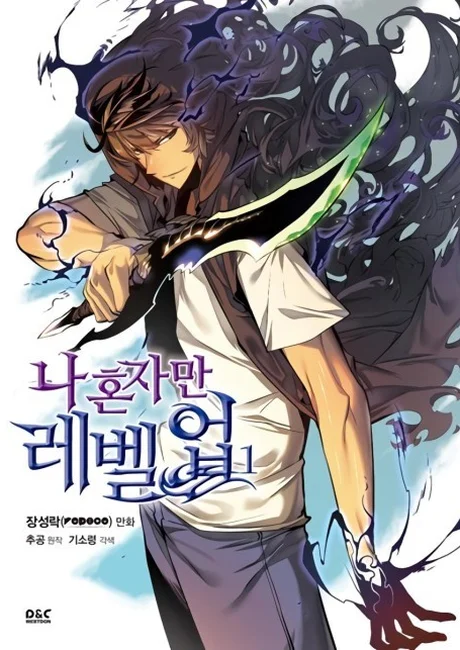 Solo Leveling and ORV share a Korean-origin readership but differ in intent. Solo Leveling is power fantasy; ORV is a story about what stories mean to the people inside them.
These two series are compared constantly. They share a genre shelf: both are Korean action manhwa with game-like systems, both feature protagonists dealing with a transformed world, and both get recommended together. The actual reading experience is different enough that it's worth being direct about who prefers which.
Solo Leveling is a progression series. Sung Jinwoo starts at the bottom tier and scales upward. The power system is clean and legible: levels, ranks, abilities earned through combat. The visual spectacle increases in step with the power level. Solo Leveling's emotional register is confidence building toward dominance.
ORV is not primarily a progression series. Kim Dokja does gain abilities and grow stronger, but his power is never the point of the scenes he's in. The series is about what it means to know the ending before the story is over, and what that knowledge does to a person who has to keep living through it anyway. The emotional register is closer to grief, complicity, and the discomfort of being useful to people you can't fully protect.
If Solo Leveling's appeal to you was the clean power escalation and visual action set pieces: ORV will give you those, but they're not the center of the series. Expect the first third to feel slow compared to SL's pacing.
If what you valued in Solo Leveling was the protagonist's relationship to the world he's in: ORV pushes that further, makes it stranger, and invests more in the characters surrounding the protagonist.
Both are worth reading. They serve different moods and different reading contexts. Recommending one over the other without knowing what a reader is looking for is unhelpful; recommending both as different experiences is accurate.
ORV arc breakdown: which scenarios peak in Season 1
The current manhwa release reaches Episode 308 across multiple named scenarios. Each scenario is a discrete story arc with its own setting, cast pressure, and stakes. The structure is closer to a novel-in-parts than a conventional manga arc system: each scenario ends before the next begins, though threads carry across them.
Prologue and the 0th Scenario (chapters 1-15): This is the slow section. Kim Dokja boards a subway, the apocalypse begins, and he has to convince people that his novel knowledge is worth trusting. The premise is established; the mechanics are introduced. Most readers who drop the series do it here. That's not wrong. The series is working hard to set things up and it shows.
1st Main Scenario and early arcs (chapters 16-80): This is where ORV becomes the series people talk about. The party coalesces: Yoo Joonghyuk, Lee Hyunsung, Jung Heewon, Lee Jihye, and eventually Han Sooyoung. The interactions between Kim Dokja's knowledge of the novel and Yoo Joonghyuk's memory of his regression loops begin. Chapters 25-60 are the series at its most confident and also its most fun.
The mid-season push (chapters 81-160): The scope expands and the meta-fiction layer deepens. The "Secretive Plotter" plotline introduces the series' central question: who is reading whom, and what does it mean to be a character who knows they are in a story? This section has a plateau around chapters 120-140 where the pacing slows again, but it's not as long or as opaque as the opening.
The escalation arc (chapters 161-250): Widely considered the creative peak of Season 1 by the community. Multiple major character revelations, the relationship between Kim Dokja and Yoo Joonghyuk reaches its most complex point, and the nature of the apocalypse shifts from "novel event" to something the series earns through build. If you're reading to find out what the series' ceiling is, this section is the answer.
Latest published stretch (chapters 251-308): The convergence arc as far as the current English release goes. The manhwa pauses at Episode 308 with WEBTOON's "will return" notice; it is not a final season ending, and the full ORV experience still requires the returning adaptation or the source novel.
The series' pacing is front-loaded in its problems. Readers who clear chapter 16 are in a different series than the one that opens.
For a full reading guide covering the current release through Episode 308 with pacing notes by arc:
ORV Reading Guide: Current Release →


The scenario and constellation system in ORV
ORV's power system is one of the things most readers get wrong before starting. It's not a dungeon-gate system like Solo Leveling, and it's not cultivation. The apocalypse is structured as a series of scenarios assigned to groups of survivors, run by an intelligence that treats human conflict as entertainment.
Scenarios are the system's basic unit. When a new scenario activates, affected survivors receive a notification: the conditions, the win state, the failure penalty. Early scenarios are local (a subway car, a building). Later scenarios expand to regions and eventually larger areas. The system assigns them; it doesn't explain them. Kim Dokja's advantage is that he read the novel, which means he knows most scenarios before they happen and knows which ones are survivable without full information.
Constellations are the beings watching. They're ancient entities who exist in the space above the scenarios and sponsor individual humans in exchange for those humans performing in ways the constellation values. A fighter who wins through overwhelming strength attracts different constellations than one who wins through calculated deception. Sponsorship means gaining abilities from the constellation's domain, but it also means maintaining behavior the constellation finds compelling, or losing the sponsorship.
Kim Dokja's relationship with constellations is unusual because his novel knowledge means he knows which constellations will become important before they identify themselves. He can position himself to attract specific sponsors. He can also identify which constellations are dangerous to accept help from. Most survivors take sponsorships based on what's available. Kim Dokja is choosing.
The highest-level sponsorship tier is the "nebula" structure: constellations organized into factions with competing interests. The scenarios humans are running through serve those factional interests in ways the humans don't initially understand. The series reveals this layer gradually across Season 1, which is part of why re-reading early chapters hits differently. The system that looked like a survival game has an agenda.
This structure makes ORV's mechanics specific to itself. It's not interchangeable with other system fantasy manhwa, and "it has a system" undersells what's distinctive about how the system operates here.
Omniscient Reader's Viewpoint manhwa review: art and story
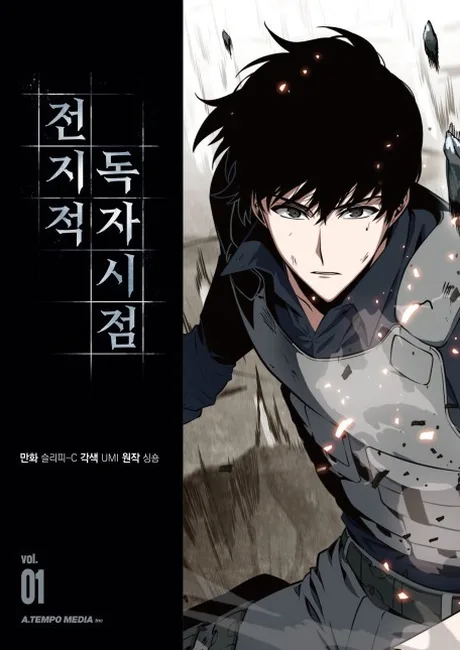 Official cover art for the Omniscient Reader's Viewpoint manhwa adaptation by Sleepy-C, serialized on WEBTOON. Source: AniList.
The meta-fiction layer
Every review of this series mentions that it's "meta." Most don't explain what that means in practice.
Kim Dokja doesn't just know the plot of the novel. He knows the novel is a story: that it has a narrative structure, that characters serve narrative functions, that certain events exist because a story needed them to exist. As the series progresses, other characters begin to suspect this. The novel's protagonist, Yoo Joonghyuk, runs a regression loop and has memories of previous timelines. The tension between a character who knows the story and a character who has lived the story (and what that knowledge difference does to a relationship) is the actual engine of the series.
This is the layer competitors miss when they describe ORV as "a manhwa where the protagonist knows the plot." He knows the plot of one version of events. The series repeatedly demonstrates that his knowledge is incomplete, wrong, or about to become irrelevant. The reader's relationship to Kim Dokja's certainty is what makes the series structurally unusual.
The hook and the slow start
The series does not start fast. The first ten chapters establish the premise and introduce Kim Dokja without showing why his knowledge matters in practice. Chapter 15 is where the first significant payoff arrives. Chapter 25-30 is where the power system and the ensemble begin to clarify.
Readers who drop ORV in the first 12 chapters (and many do) are dropping it at the setup phase before the machine turns on. This is a genuine structural problem with the series, not a matter of taste. The pacing in chapters 1-15 is uneven. The series earns patience; it doesn't reward it immediately.
The hook, once it arrives, is durable. The combination of apocalyptic action, narrative meta-commentary, and a protagonist whose primary asset is reading comprehension rather than power scaling is specific enough that readers who respond to it tend to stay.
Art consistency
Sleepy-C's art handles a difficult job: the series requires action sequences, intimate character moments, horror, and comedy, sometimes within the same chapter. The consistency across the current release is notable. Action sequences are clear and dynamic without the chaotic panel layouts that make some action manhwa difficult to follow. Character expressions carry emotional weight without over-emoting.
The art is not the most spectacular on WEBTOON. It doesn't have the visual excess of some action series. It is consistently competent at the specific things the story needs, which matters more at 270 chapters than raw spectacle does.
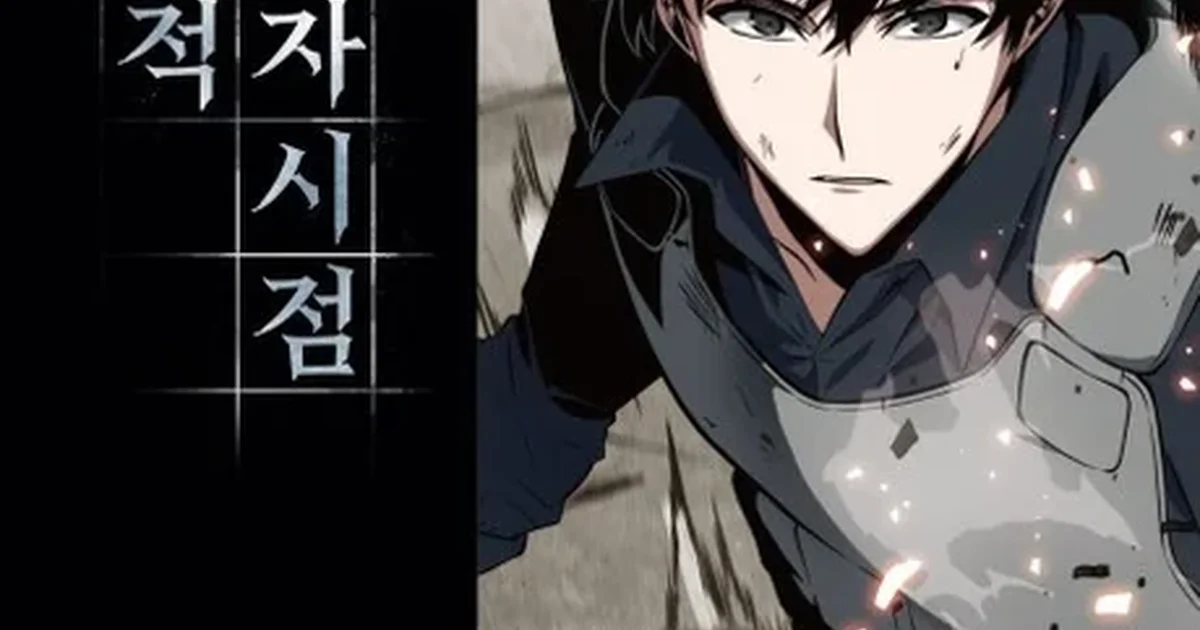
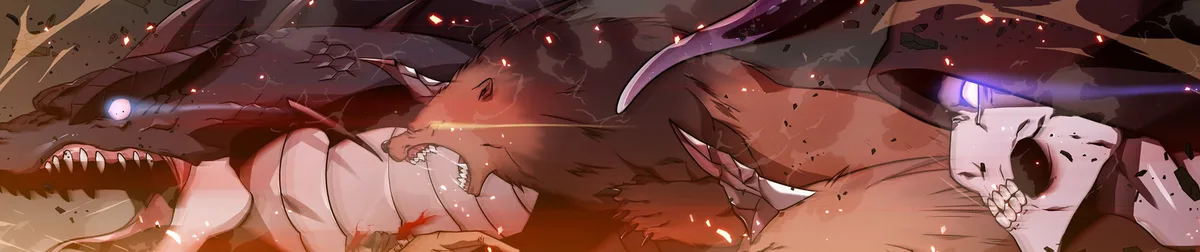 Promotional banner for Omniscient Reader's Viewpoint on AniList, depicting the central tension between Kim Dokja and Yoo Joonghyuk. Source: AniList.
Rubric Assessment
Art consistency
Strong across the full run. There are chapters where the line work is less detailed (presumably schedule pressure), but they don't collapse into off-model episodes the way some long-running serializations do. The color palette is controlled and functional. Score: high.
Pacing
Chapters 1-15 are slow. Chapters 16-90 are exceptional. The series hits a mid-run plateau around chapters 120-150 before escalating again. The pacing problems are real but they're front-loaded; readers who clear the first arc encounter a much more confident series rhythm.
Compared to the source novel, the manhwa adaptation is tighter in early chapters and occasionally adds visual clarity to scenes the prose version had to explain. Score: strong overall, weak at the entry.
Character depth
The ensemble is larger than most comparable series and most of them have interior lives. Yoo Joonghyuk specifically (the novel's protagonist, now a secondary character in Kim Dokja's version of events) is doing something unusual: a cold regression protagonist whose arc is being shaped by someone else's awareness of him. The supporting cast thins as the scope expands, which is the series' main structural compromise. Score: very strong for the central pair, inconsistent for the wider cast.
Translation quality
The WEBTOON English translation is official and accurate. Update frequency is consistent: weekly chapters, rare delays. The translation handles the novel-within-a-novel text excerpts with care, which matters because those excerpts are load-bearing for the meta-fiction structure. Score: high.
Reread value
High. The early chapters contain structural foreshadowing that becomes legible only once the later arcs reveal the full picture. Re-readers report that chapters 5-20 read as a different series with the context of what comes later. This is by design.
ORV anime (Crunchyroll): what to expect
An anime adaptation of Omniscient Reader's Viewpoint has been confirmed for Crunchyroll distribution. No release window had been announced as of the writing of this review. What's known is the licensing and platform; the production timeline is not public.
The adaptation question is worth addressing directly because it affects how to approach the series now. The manhwa is a substantial current release through Episode 308, but it is not complete. It doesn't require the anime to be worth reading. If you're waiting for the anime to decide whether to engage with the series: don't. The manhwa's current release and the community around it are already established, even as WEBTOON pauses for the announced return.
What the anime is likely to bring: a new wave of readers who discover the manhwa through the adaptation, and a new round of comparison discussion similar to the Solo Leveling anime discourse. Whether the adaptation will be faithful to the meta-fiction structure is the key question. The source novel's narrative architecture is more translatable to animation than most action manhwa because it's fundamentally about character and premise rather than visual spectacle. The adaptation's treatment of Kim Dokja's internal monologue will define whether it succeeds.
For readers deciding between manhwa and anime as their entry point: the manhwa is available now through Episode 308, with WEBTOON displaying a "will return" notice. The anime doesn't have a date. Reading the current release now is the best way to be current when the manhwa resumes.
Omniscient Reader's Viewpoint Manhwa Review Verdict
Advertisement
The Good
- Meta-fiction premise is genuinely original: Kim Dokja's power is reading comprehension, not combat ability, nothing else in the genre does this
- Latest listed Episode 308 gives new readers a substantial current release before the season break
- Yoo Joonghyuk and Kim Dokja's dynamic is the best central relationship in current action manhwa
- Art by Sleepy-C escalates across the run; late-arc visual sequences are exceptional
- Reread value is extremely high, early chapters mean different things after the finale
The Cons
- First 15 chapters are slow, setup-heavy, and have a high reader drop rate for good reason
- 308 episodes is a serious time commitment before you hit the current season break
- on hiatus before Season 2; the full story from the source novel remains unfinished in manhwa form
- Cast expands significantly in mid-run arcs, requiring active tracking to follow all threads
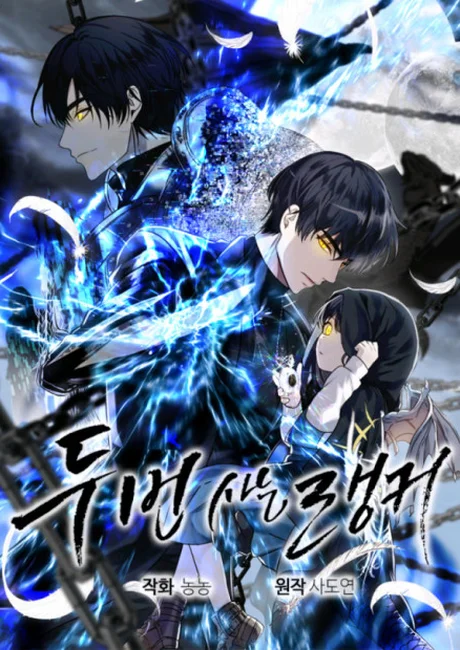 Second Life Ranker has structural similarities to ORV's ensemble cast and progression mechanics without the meta-fiction layer.
Omniscient Reader's Viewpoint is a series with a genuine thesis: that reading a story and living inside one are different kinds of knowledge, and that the gap between them is where character happens. That thesis is carried consistently through the current Episode 308 release, which is not a given for a serialized work at this length.
The 9.2 reflects a series that executes its specific goals at a high level with one clear weakness: the entry barrier is real and the series makes no effort to lower it. Readers who clear chapter 15 are reading something that will likely appear on their permanent recommendation list. The failure rate before that threshold is high enough to mention.
The anime announcement has already increased search traffic for the series. If the adaptation is faithful to the source (a reasonable expectation given the novel's structure), it will bring new readers to the manhwa. For anyone reading this before that happens: the manhwa is a substantial current experience through Episode 308, but it remains ongoing and doesn't require waiting for the adaptation to be worth your time.
What would raise the score: a tighter first arc. The existing first arc is not bad, it's setup for something better. But 15 chapters of setup that readers have to take on faith is a real ask.
Rating: 9.2/10
This Omniscient Reader's Viewpoint manhwa review covers the current release through Episode 308 (June 2, 2026). WEBTOON displays a "will return" notice, while AniList's status field is RELEASING.
For a full list of isekai-adjacent manhwa where ORV fits in the genre landscape:
Best Isekai Manhwa in 2026 →
Finished ORV and looking for what reads closest to it, ranked by meta-narrative depth rather than just genre:
Manhwa Like ORV: 8 Picks →
Frequently Asked Questions
How many chapters is the ORV manhwa? Latest listed Episode 308 (June 2, 2026). WEBTOON displays a "will return" notice, and AniList marks the manhwa RELEASING. The source novel completed at 551 main chapters. The next manhwa season has not started yet. Reading through the current release takes 11-15 hours at average reading pace.
Is it a good entry point for new manhwa readers? Yes, but clear the first 15 chapters before deciding. The series reveals its structure slowly. Many readers who drop it in the first arc come back later after hearing more about what it does.
Is this an isekai? Structurally, no. Kim Dokja stays in his original world. The novel's events invade it. He doesn't gain a new body, a system, or a transport mechanism. The mechanics it shares with isekai (protagonist with foreknowledge, power system, apocalyptic world) are present, but the narrative approach is closer to meta-fiction.
How does it compare to Solo Leveling? Solo Leveling has cleaner power progression and stronger visual spectacle. ORV has more narrative complexity and a stronger emotional throughline. They're both worth reading. They serve different moods.
Is the anime confirmed? An anime adaptation has been confirmed for Crunchyroll distribution. No air date had been officially announced at the time of writing.
Where to read it? WEBTOON for the official English translation. The source novel by singNsong is available on licensed digital platforms. For a full comparison of platform options and pricing, see where to read manhwa legally in 2026. Both the manhwa and novel are worth reading. They cover the same story differently.
Does the slow start get better? Chapter 15 is where the pacing shifts. The series from chapter 16 onward operates at a different rhythm than the setup chapters. Most readers who stick through the first arc find the second arc to be a significant improvement.
Related Reading
- Manhwa Like Omniscient Reader's Viewpoint: 8 Picks Sorted by What It Does: 8 series for readers finished with ORV, sorted by which element of the series drew them in.
- SSS-Class Revival Hunter Review: Full review of the closest structural match to ORV's time-loop and death mechanic.
- Best Manhwa to Read in 2026: 20 Series Worth Your Time: 2026 starter list placing ORV in context alongside the full manhwa recommendation landscape.
- Omniscient Reader's Viewpoint Character Guide: AniList-verified names for the full cast, party, constellations, and antagonists.
- Omniscient Reader's Viewpoint Reading Guide
References
- Omniscient Reader's Viewpoint on WEBTOON
- Omniscient Reader's Viewpoint on Naver Webtoon
- Original web novel by SingShong on Munpia
- Omniscient Reader's Viewpoint Reading Guide