Loading…
ChapterBrief · Manhwa
Manhwa Like Vinland Saga: 7 Series Sorted by Appeal
Manhwa like Vinland Saga sorted by what drew you in: historical world, philosophical arc, brutal weighted combat, or slow-burn character development.
11 min readBy Léo Fontaine

Manhwa like Vinland Saga is one of those searches that tells you something specific about the reader. You're not looking for just another action series. You're looking for something that has earned its violence: where combat has weight and consequence, where the protagonist isn't granted easy victories, where the story seems to have something to say about what it costs to live the way these characters live.
TL;DR: Manhwa like Vinland Saga sorted by what drew you in: historical world-building, philosophical arc, brutal weighted combat, or slow-burn character development. Legend of the Northern Blade is the closest overall match.
One thing to address upfront: Vinland Saga is a manga, not manhwa. It's Japanese, drawn and written by Makoto Yukimura, serialized in Kodansha's Monthly Afternoon since 2005. When people search for "manhwa like Vinland Saga" they're usually asking a real question: is there anything in Korean comics that delivers what Vinland Saga delivers? The honest answer is partial yes. The historical texture of 11th-century Viking Europe isn't replicated anywhere. What can be replicated (and sometimes is) is the protagonist's philosophical arc, the combat that has real cost, and the patience required to watch a character change over years of story.
The seven picks below are sorted by which of those elements is the primary match.
manhwa like Vinland Saga: key takeaways
- The most structurally close manhwa to Vinland Saga overall is Legend of the Northern Blade: historical murim setting, protagonist questioning their legacy of violence, completed at 202 chapters
- For the philosophical arc specifically: Peerless Dad and Weak Hero both interrogate their protagonist's relationship to violence in ways most action manhwa doesn't
- For historical setting: Return of the Blossoming Blade and Red Storm deliver the richest world-building
- For slow-burn character development requiring patience: Peerless Dad requires the most patience and rewards it the most
- For completed stories: Legend of the Northern Blade (202 chapters) and The Breaker (72 chapters + 201 chapters across two series) are fully available
- See the best murim manhwa 2026 roundup for context on the murim genre before starting any of these
- All chapter counts current as of June 2026
manhwa like Vinland Saga: overview: what vinland saga actually delivers
Understanding what makes Vinland Saga distinctive helps narrow what to actually look for.
The first arc is a revenge story told over years. Thorfinn watches his father (Thors, a warrior who had already renounced violence) get killed by the mercenary leader Askeladd. He spends the next decade or so working as Askeladd's errand boy, earning the right to duel him through service, losing every duel, and building his fighting ability on a foundation of hatred. It reads as a conventional revenge-arc setup. Then Askeladd dies in a way Thorfinn had no part in, the revenge is taken from him by history, and he is left with nothing.
The second arc (the farm arc) is what separates Vinland Saga from the rest of the genre. Thorfinn is sold as a slave. He doesn't fight back. The series spends dozens of chapters with him doing farm work, making friends among other slaves, and slowly rebuilding an understanding of himself that isn't organized around violence. It's patient to a degree most readers aren't expecting, and it earns everything.
When someone searches for manhwa like Vinland Saga, they're almost always looking for one of four things: the historical world with real texture, the protagonist arc from violence toward questioning violence, the combat that has consequence and doesn't feel like a wish-fulfillment story, or the sheer patience of a long story that trusts its characters to develop. The picks below address each.
Our master manhwa reading list covers the top 30 titles across every genre for 2026.
Best Manhwa to Read in 2026 →
Historical Setting: World-Building That Earns the Setting
Advertisement
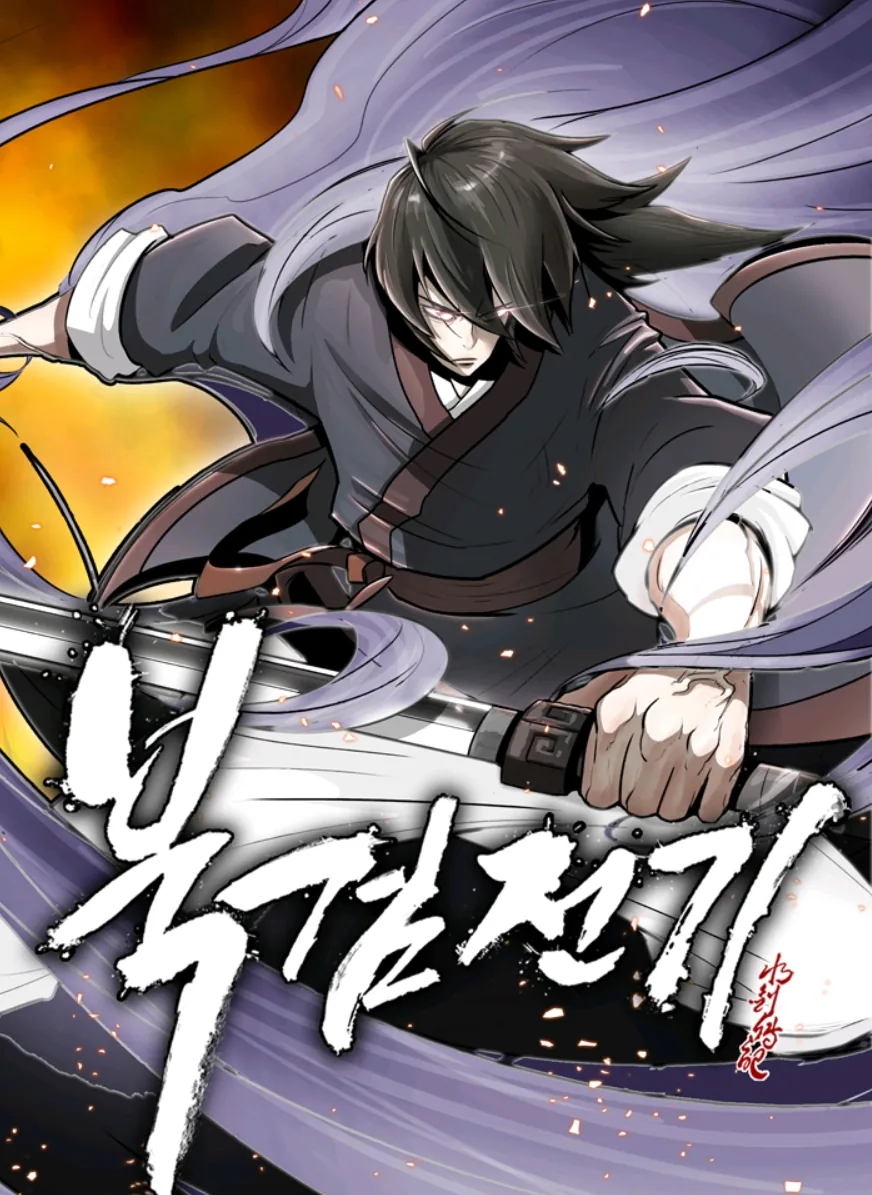
Legend of the Northern Blade (202 chapters, completed, Tappytoon) is the strongest all-around match for Vinland Saga readers. The setting is a historical murim Korea, not a fantasy world with Korean aesthetics, but a world with functioning clan hierarchies, court politics, and geography that behaves like it has history behind it. The protagonist, Jin Mu-Won, inherits the legacy of the Silent Night (a martial arts sect destroyed by political enemies) and rebuilds from nothing.
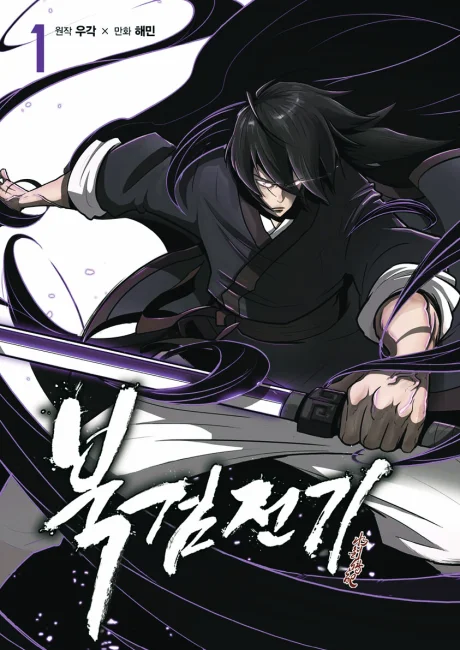 Legend of the Northern Blade cover art.
The parallels to Vinland Saga are specific. Both series start the protagonist with a lost father who represented something worth preserving. Both protagonists earn their abilities through demonstrated training rather than system-granted stat increases. Both series are interested in what it means to carry a violent legacy and choose what to do with it. Mu-Won is not a philosophical protagonist in the way Thorfinn is (the series doesn't pause for farm-arc-style reflection) but his arc is genuinely about what he's building rather than simply who he can defeat.
At 202 chapters and completed, the series has the kind of full payoff that ongoing murim manhwa can't provide. For more detail on what to expect chapter by chapter: Legend of the Northern Blade reading guide.
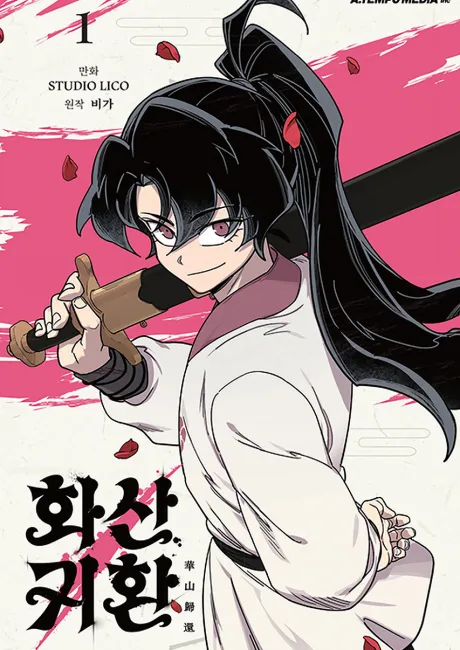
Return of the Blossoming Blade (ongoing, WEBTOON) takes a regression mechanic: Chun Myung wakes up in the past, before his sect's destruction, but the emotional register beneath it is similar to Vinland Saga's first arc. The world has real texture. The Heavenly Blade Sect has history and internal politics. The enemies are institutions as much as individuals. Chun Myung's goal is reconstruction rather than pure revenge, which moves it away from the standard regression-fantasy formula and toward something with more structural weight.
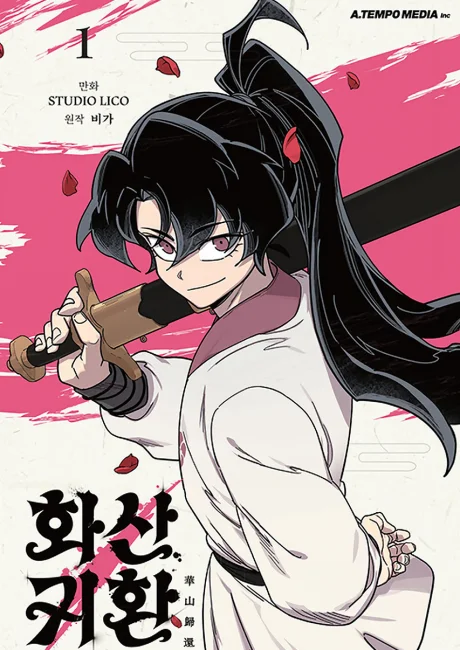 Return of the Blossoming Blade cover art.
The historical murim setting here is richer than most manhwa in the subgenre. Court dynamics, faction relationships, and clan obligations all function as constraints that the protagonist has to navigate, not simply obstacles to defeat. For a wider view of this subgenre: manhwa like Return of the Blossoming Blade covers the genre's options in useful depth.
The Philosophical Arc: Protagonists Who Question Their Own Violence
This is the hardest element to replicate because most action manhwa doesn't try. Violence in action manhwa is almost always a means to clearly justified ends (revenge against a clear villain, protection of family, ascension in a clear hierarchy). What Vinland Saga does is make the question "is any of this worth it" into the actual subject of the series.
Peerless Dad (ongoing, Tapas/Manhwafreak, 200+ chapters) is the closest manhwa approximation. Noh Gajang is a murim fighter of significant ability who chose, before the series begins, to prioritize his children over any martial ambition. He works as a gate guard. He endures slights from people far below his power level. His children don't know who he really is or what he gave up.
The series is slow. The first 40 chapters are almost entirely domestic: Noh Gajang dealing with his children's school issues, minor political interference, small-scale local conflict. Readers expecting a typical murim escalation curve will stall here. But the series' argument is the same as Vinland Saga's farm arc: the meaningful choice isn't what you do when fighting is the obvious answer, it's what you hold onto when you could simply dominate and choose not to. Noh Gajang is interesting because the renunciation was a deliberate decision made before the series starts, and the series runs on the cost of maintaining it.
Weak Hero (WEBTOON, completed, 268 chapters) approaches the question from a different direction. Yeon-si is a physically small student who uses extremely precise violence to defeat opponents who rely on strength and numbers. The violence works. But the series is unusually honest about what it costs him: the psychological toll of being someone who has figured out how to hurt people efficiently, the way it marks him, the way other characters relate to him differently once they understand what he can do.
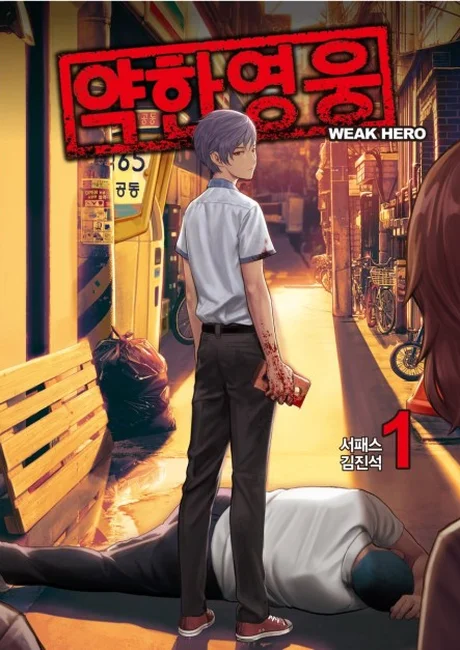 Weak Hero cover art.
Most manhwa treats the "small protagonist beats large opponents through technique" premise as pure wish-fulfillment story. Weak Hero doesn't. The fights are ugly, tactical, and occasionally won through moves that would cause real permanent damage. Yeon-si never becomes comfortable with what he does. For Vinland Saga readers who were drawn to Thorfinn's specific discomfort with his own capabilities, Weak Hero is the most direct match currently available in manhwa.
Brutal Combat With Weight: Consequence, Not Wish-Fulfillment
The Breaker (72 chapters, completed) and its sequel The Breaker: New Waves (201 chapters, completed) are structured around a mentor-student relationship, but the series earns its combat in a specific way: the student, Shi-Woon, starts from genuine weakness and the series doesn't paper over how long real improvement takes. His master, Chun-Woo, is one of the most powerful fighters in the series' murim world, and early chapters make clear that the gap between them is vast.
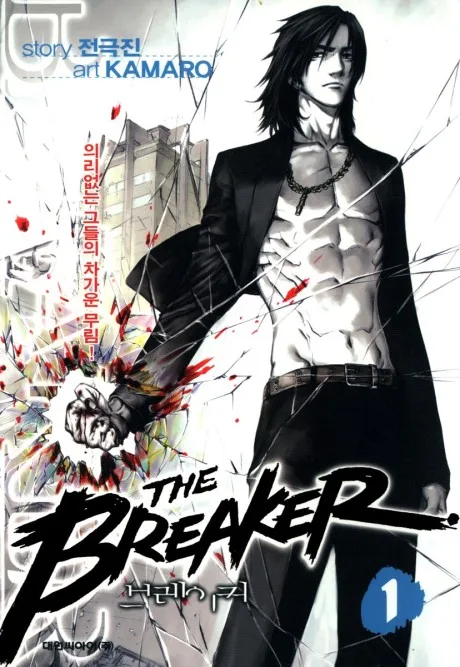 The Breaker cover art.
The Breaker also engages with the same tension Vinland Saga does: whether someone who can fight well can ever choose not to, and what it costs to try. Chun-Woo's arc runs on this question in the original series. The fights have visible consequence: people die, injuries carry over, winning doesn't always mean you were right to fight. The art style is older (early 2010s) and takes adjustment, but structurally this is one of the few manhwa where the martial arts system behaves like a real discipline rather than a video game stat tree.
Doom Breaker (on hiatus, WEBTOON, 101 chapters, Season 3 confirmed) operates in a dark-fantasy frame rather than a historical one, but Vinland Saga readers looking for combat with emotional weight will find something here. Zephyr's use of violence is framed as a burden: he carries the memory of everyone who died, he's using abilities that have structural costs, and the series doesn't let him accumulate wins without accumulating damage. The philosophical register is lighter than Vinland Saga's, but the emotional register is comparable. For a full breakdown: Doom Breaker review.
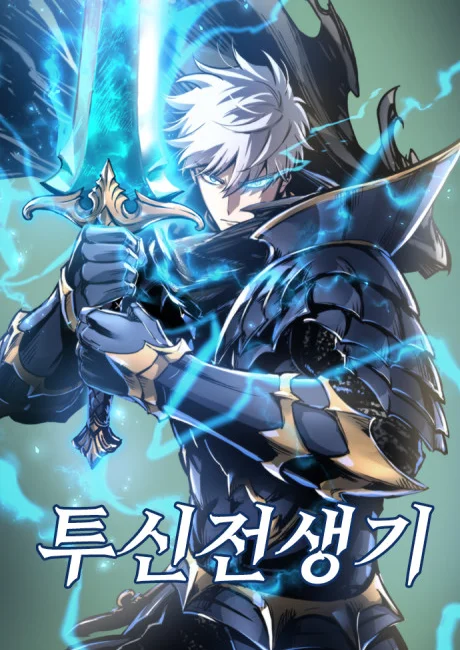 Doom Breaker cover art.
Our best action manhwa list includes top historical warrior manhwa with character-driven redemption arcs.
Best Action Manhwa 2026 →
Slow-Burn Character Development: Series That Require Patience
Red Storm (ongoing, 500+ chapters) is the most demanding entry on this list in terms of patience. Yulian Provoke starts as a young man from a desert nomad tribe with ambitions he can't yet back up. The series follows him across decades of development (alliances formed, battles fought, political structures built) and doesn't accelerate anything. The world is large, invented, and consistent. The art style ages across the run (it started in 2004) and the early chapters reflect that.
Red Storm doesn't replicate Vinland Saga's specific philosophical content. What it replicates is the experience of watching a world develop over a very long timespan, with a protagonist who grows into someone fundamentally different from who he was at the start. The payoff requires patience comparable to following Vinland Saga through its farm arc. Readers who dropped Vinland Saga during the farm arc will likely drop Red Storm around the 50-chapter mark. Readers who stayed with the farm arc will likely find Red Storm worth the same investment.
Analysis: What Manhwa Can and Can't Replicate
Advertisement
Being honest here: no manhwa does everything Vinland Saga does.
The historical setting of 11th-century Viking Europe, researched to the level Yukimura researches it, isn't something you're going to find in manhwa. The genre's historical settings are almost entirely murim: fictional Korean historical contexts that borrow from actual Joseon-era structures but aren't bound by them. That's not a criticism. It's just a different tradition.
What manhwa can replicate is more specific. The protagonist-arc structure (someone moving from violence as identity toward questioning whether violence ever produces what it promises) exists in Peerless Dad and Weak Hero, approached from different angles. The combat-with-consequence quality exists in Legend of the Northern Blade and The Breaker, both of which are structured around earned skill rather than granted power. The patience of a long, slow-burn story exists in Red Storm and Peerless Dad, both of which ask you to sit with early chapters that don't accelerate toward action.
Legend of the Northern Blade covers the most ground (historical texture, earned combat, a protagonist whose arc has shape) and it's completed. That's the recommendation for readers who want the closest single-series match. Legend of the Northern Blade review covers what the series does well and what it doesn't before you commit 200 chapters.
For readers who specifically want the philosophical weight of Vinland Saga's farm arc: start with Peerless Dad. Read through chapter 60 before deciding. If the domestic patience of those early chapters holds you, the rest of the series earns it. If it doesn't, Weak Hero is the alternative, with the same philosophical question about violence, faster pacing, and less historical texture.
The manga-to-manhwa barrier is worth addressing directly. Many readers who found Vinland Saga through anime haven't read much manga or manhwa before. The reading experience is different (vertical scroll in manhwa vs. horizontal page turns in manga) but neither should be a barrier after a few chapters. Manhwa's full-color pages are an adjustment from Vinland Saga's black-and-white art if you read the manga, but the story delivery is the same. For a starting point that's both historically rich and accessible: best manhwa action 2026 has context on current standouts in the action genre.
Frequently Asked Questions
Is there a manhwa equivalent to Vinland Saga?
Vinland Saga is a manga, not manhwa, a distinction worth keeping straight. The closest manhwa in terms of what it does (historical setting, protagonist who questions their own violence, brutal combat with real cost) is Legend of the Northern Blade. It's set in a fictional murim Korea rather than Viking-Age Europe, but the structural beats (an idealist protagonist carrying a destroyed legacy, training without shortcuts, enemies who have genuine depth) align more closely with Vinland Saga than any other manhwa on the market. It's also completed at 202 chapters. Is Vinland Saga about Vikings?
Yes. It's set in 11th-century Viking-Age Europe and follows Thorfinn, the son of a legendary warrior named Thors. The first arc covers Thorfinn's years as a mercenary seeking revenge against Askeladd, the man who killed his father. The second arc, adapted in the MAPPA Season 2 anime, shifts dramatically: Thorfinn has abandoned revenge and is now working as a farm slave, trying to understand whether there is any way to live without violence. The Viking setting is historically researched, not a fantasy backdrop. What is the closest manhwa to Vinland Saga Season 2?
Season 2 of Vinland Saga is the arc that most readers find hardest to replace: it's about a protagonist who has given up violence and is working through what that actually costs. The closest manhwa equivalent for that specific quality is Peerless Dad. Noh Gajang is a murim fighter who has renounced personal glory to raise his children, and the series runs on the tension between his values and the world's demands. It doesn't have the Viking-Age historical weight, but the character beat (a powerful person choosing not to use their power, and the price of that choice) is the same. Are there manhwa with historical settings like Vinland Saga?
Yes. Manhwa has a strong tradition of historical murim fiction: stories set in Joseon-era or similar Korean historical periods with detailed court politics, clan structures, and martial arts hierarchies. Legend of the Northern Blade and Return of the Blossoming Blade are both set in richly constructed historical murim worlds. Red Storm goes further into invented historical geography. None are set in Viking Europe specifically, but the historical texture (the sense that the world has functioning institutions with logic behind them) is present in all three. Is there manhwa with an anime like Vinland Saga?
Most of the murim manhwa recommended here don't have anime adaptations yet. The closest is Weak Hero Class 1, which has a live-action Korean drama adaptation (2022, Viki) rather than anime. For manhwa that do have anime adaptations and share something of Vinland Saga's quality (slow pacing, characters who change over time), Tower of God (Crunchyroll, Season 2 in 2024) and Solo Leveling (Crunchyroll, 2024) are the most prominent, though neither is a close thematic match. What manhwa has brutal realistic combat like Vinland Saga?
Legend of the Northern Blade has the most grounded combat in murim manhwa: no system windows, no stat screens, just technique and training shown across hundreds of chapters. The Breaker (72 chapters for Part 1, 201 chapters for New Waves) also earns its fights through a mentor-student structure where the student's limitations are realistic and the cost of combat is visible. Weak Hero has realistic street-violence combat with no martial arts fantasy: the fights are ugly, tactical, and occasionally won by the person who hits first rather than the person who trained hardest. Does manhwa have anything as philosophically heavy as Vinland Saga?
The philosophical weight of Vinland Saga (Thorfinn's arc from revenge-seeker to pacifist, the series' sustained interrogation of whether violence can ever produce peace) is genuinely rare in manhwa. The closest is Weak Hero, where Yeon-si's use of violence is framed as morally costly and practically dangerous from the first chapter, and the series doesn't let him off the hook for the damage he does. Doom Breaker handles grief and violence seriously in a dark-fantasy frame. Neither has the explicit philosophical discourse Vinland Saga reaches in its farm arc, but both treat their protagonists' relationship to violence as a real question rather than a genre convention.
Related Reading
- Best Manhwa to Read in 2026: 20 Series Worth Your Time: 2026 list for readers crossing from manga to manhwa.
- Return of the Blossoming Blade Review: Best Murim Manhwa: Historical revenge manhwa with serious combat weight.
- Return of the Blossoming Blade Reading Guide: Season 3: Arc breakdown for the top historical Korean manhwa.
- Best Action Manhwa 2026: 12 Series Worth Your Time: 12 action manhwa for readers who want serious weight in combat.
- Best Cultivation Manhwa: 10 Murim Series Ranked 2026: 10 murim picks adjacent to Vinland Saga's warrior culture themes.
References
- Vinland Saga on MyAnimeList: Manga listing with chapter count and reader score
- Legend of the Northern Blade on Tappytoon: Official English publisher, completed series
- Return of the Blossoming Blade on WEBTOON: Official English publisher
- Weak Hero on WEBTOON: Free with daily passes
- Peerless Dad on Tapas: English translation
- The Breaker on Tapas: Original series and New Waves both available
About the author

Anime Critic & Adaptation Specialist
Anime critic and design writer who has reviewed 500+ series across 10 years. Paris-based. Has strong opinions about pacing, adaptation fidelity, and animation quality.
- 500+ anime series reviewed over 10 years
- Specialist in adaptation fidelity and animation quality critique
- Tracks major studios — MAPPA, Ufotable, Wit, CloverWorks
- 80+ hours per season logged for coverage
Disclaimer
This article is published for informational and entertainment purposes. It does not constitute professional financial, legal, or technical advice. Series availability, platform access, translation status, and chapter counts change. Verify critical details (pricing, regional availability, official translation status) with publishers and platforms. Affiliate links, where present, help support our editorial work and are labelled in our affiliate disclosure.
Comments
Loading comments…