
TL;DR: Noblesse review: 544 chapters on AniList, completed January 2019, rated 7.5/10. Naver's Korean listing displays 545 total episodes. The manga that defined the calm OP protagonist archetype -- the first 200 chapters are among the genre's best. Mid-arc repetition is real. The ending delivers. English on WEBTOON (the website lists up to Episode 50, the rest is in the app); 2020 anime on Crunchyroll covers 24% of the source.
Reviewing
Noblesse
Son Jeho (story), Lee Kwangsu (art) · Naver Webtoon
Score
Pros
- Pioneered the calm, composed OP protagonist archetype in Korean webtoon
- Strong comedic beats that balance action without undermining stakes
- Clean Noble power hierarchy with clear internal logic
- Proper ending with major narrative threads resolved
- Production I.G anime faithfully covers the early school arc
Cons
- Mid-arc repetition: antagonist factions follow an identical escalation-defeat-reset formula
- Female characters consistently underwritten across the full 544-chapter run
- 2020 anime adapts only roughly 24% of the total story
- Final arc feels compressed compared to the series' earlier pacing
Verdict
The manhwa that invented Rai's archetype still holds up in its first half. Essential reading for anyone serious about manhwa history, with real caveats for the middle chapters.
This Noblesse review covers a 544-chapter, 11-year run that ended in January 2019. The 544 figure follows AniList's chapter field; Naver's official Korean listing displays 545 total episodes. Son Jeho and Lee Kwangsu built something the genre now takes for granted: the calm, restrained, massively overpowered protagonist who doesn't flex his power until the moment he has to. Nearly every manhwa featuring an emotionally controlled OP lead that came after owes something to this series. This is what that template looks like at its source, and where the seams show.
Noblesse review: key takeaways
- Platform: WEBTOON (official English): full run, but the website lists only up to Episode 50 and the rest is in the app; AniList lists 544 chapters
- Status: Completed, January 2019, proper ending
- Authors: Son Jeho (story), Lee Kwangsu (art), Naver Webtoon original
- Anime: Finished, not ongoing -- Production I.G's 13-episode TV series aired October 7 to December 30, 2020, no season 2 announced as of mid-2026; the 2016 ONA Noblesse: Awakening is the direct prequel
- Reading time estimate: At 20 chapters per sitting, approximately 27 sessions to complete
- Translation: Official English on WEBTOON, clean, no significant gaps
Overview
Noblesse launched on Naver Webtoon in December 2007, before webtoon was an established global format and before the Korean manhwa export wave had an English-language infrastructure. Son Jeho began the series when the platform was new and the audience was primarily Korean. That context matters when evaluating what the series accomplished.
The premise is deliberately simple. Cadis Etrama di Raizel, known as Rai, is a Noble of immense and singular power who wakes from an 820-year slumber and enrolls in a Korean high school. His loyal servant Frankenstein has been managing affairs in his absence. The school setting grounds an otherwise mythological premise in accessible social comedy.
The Nobles operate in a hierarchy that the story reveals gradually. Rai occupies a position above even the Noble Lord as what the series calls the Noblesse, a function not of governance but of judgment. The 820-year absence has complicated that role. The series is built around the process of Rai reconnecting with the world and eventually exercising that function.
What made Noblesse defining was not the premise but the protagonist execution. Rai doesn't explain his power. He doesn't threaten. He acts when he must, stops exactly when the threat is neutralized, and then returns to learning how to use a microwave. That restraint formula wasn't common in the genre at the time.
For readers comparing across the best completed manhwa, Noblesse sits in the top tier of series with a genuine ending: not a dropped series, not an open conclusion, but a narrative that closes its central promise.
Noblesse characters: the main cast
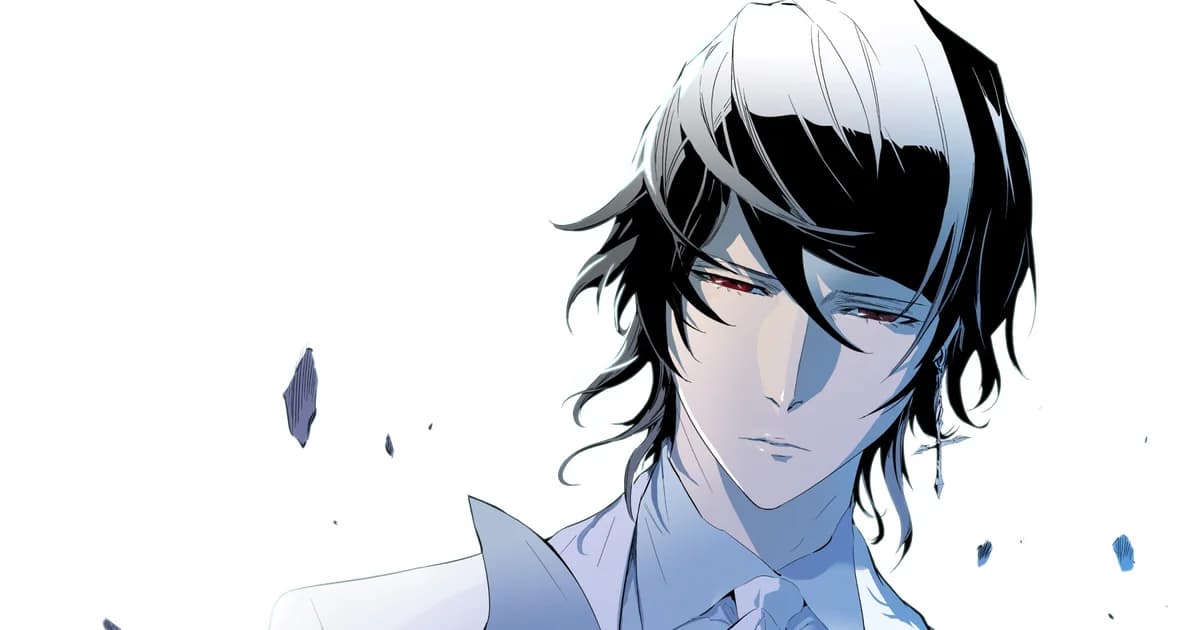
Cadis Etrama di Raizel (Rai) is the series' protagonist in name, though he functions more as a fixed point than a character who develops in the conventional sense. He wakes from an 820-year slumber, enrolls in a Korean high school while Frankenstein manages the situation, and navigates modern Korea with the demeanor of someone for whom everything is entirely beneath comment. The comedy emerges from this gap: he's baffled by instant noodles, mobile phones, and the social hierarchy of a high school cafeteria, and responds to all of it with the same composed dignity. In combat, his crimson eyes fully opening is the visual signal that the threat is over. His power costs his life force to use, which is why he doesn't.
Frankenstein is the series' most expressive character and the one who actually carries emotional weight through most arcs. He has served Rai for centuries, spent the 820-year sleep building a cover life as a school principal, and greets every crisis with theatrical enthusiasm barely concealing genuine competence. His weapon -- the Dark Spear -- is a significant plot element in later arcs. His dynamic with Rai (the understated master, the flamboyant servant who is also deeply dangerous) is the series' most consistent source of both comedy and dramatic stakes.
M-21 begins as a Union agent, a modified human sent to surveil the school. He's the series' most sustained character study in the first 150 chapters: a manufactured soldier trying to determine whether what he is constitutes a person. His relationship with Rai and the school children he's nominally surveilling becomes the arc's moral anchor. His arc runs alongside the Union conflict and doesn't resolve neatly or quickly.
Regis and Seira are young Nobles who appear when the story expands into Noble political territory. Regis has considerable lineage pride and limited power relative to that standing; Seira is quieter and more capable. Their relationship with Rai and each other extends the series' interest in what Noble hierarchy means in practice versus in principle.
Rael occupies the aggressive-rival slot in the Noble cast -- initially antagonistic, gradually more complicated as the Noble political structure he's operating within gets revealed.
What is the Noblesse power?
Within Noble society, there is a Noble Lord who governs the Noble hierarchy. The Noblesse is a separate function: not a ruler, but a judge. It exists to act when the Noble Lord cannot or will not -- specifically against threats that have been tolerated too long. Rai's power isn't just greater than other Nobles in degree; it occupies a structurally different category.
The practical consequence in combat is that Rai's aura and blood-manipulation techniques operate at a scale other Nobles cannot approach, including council-level figures. The limitation is specific and consistent: using the Noblesse power fully consumes his life force. The 820-year sleep was partly a consequence of the last full exercise of that power. Using it significantly shortens whatever lifespan remains.
This creates the series' central tension: Rai could end most threats immediately but chooses not to. The restrained combat approach isn't affectation -- it's the rational management of a non-renewable resource. The moments when he acts fully are the series' set-piece sequences, and the series earns them by not overusing them.
Why he slept for 820 years connects to the Noble political structure and a figure from his past who appears as a significant presence in the final arc. The explanation is withheld deliberately across the mid-series material and released in stages through the Noble homeland sequences.
Art & Story
The series can be divided into five conflict phases: the school phase establishing Rai and the initial Union antagonists; the Noble homeland arc; the extended Union confrontation; the Noble faction conflict; and the final arc. Each phase introduces a new tier of antagonist that raises the power ceiling.
The structure's strength is also its problem. Each arc follows the same rhythm: threat arrives, Rai or Frankenstein addresses it, the threat tier resets upward. Across 544 chapters, this pattern holds with minimal variation. By the fourth cycle, the formula is recognizable before the new antagonist even has a name.
The comedic threading keeps this from becoming deadening. Rai's disorientation with modern Korea (his confusion about instant noodles, his dignified response to trivial inconveniences, his inability to grasp that mobile phones require charging) earns consistent laughs across the full run, not just the early chapters. Lee Kwangsu's expression work carries much of this: Rai's deadpan face responding to Frankenstein's theatrical overreaction is a visual gag that the series returns to without exhausting.
Art quality is highest in the first 200 chapters and degrades modestly across the extended middle arc, a common pattern in weekly serialized work over 11 years. The Noble character designs maintain consistency throughout. Action choreography is readable but not complex; Noblesse isn't a series where fight mechanics reward close reading. Power resolution comes from presence rather than technique, which suits the protagonist archetype but limits the visual imagination of combat sequences.
The most persistent structural failure is the female cast. The school girls who interact with the main group exist largely as reaction shots and comedic relief. Female Nobles who appear in later arcs receive more narrative function but still fall short of the depth given to male characters at equivalent power levels. This is a 2007-era design choice that the series never revisited across its 11-year run.
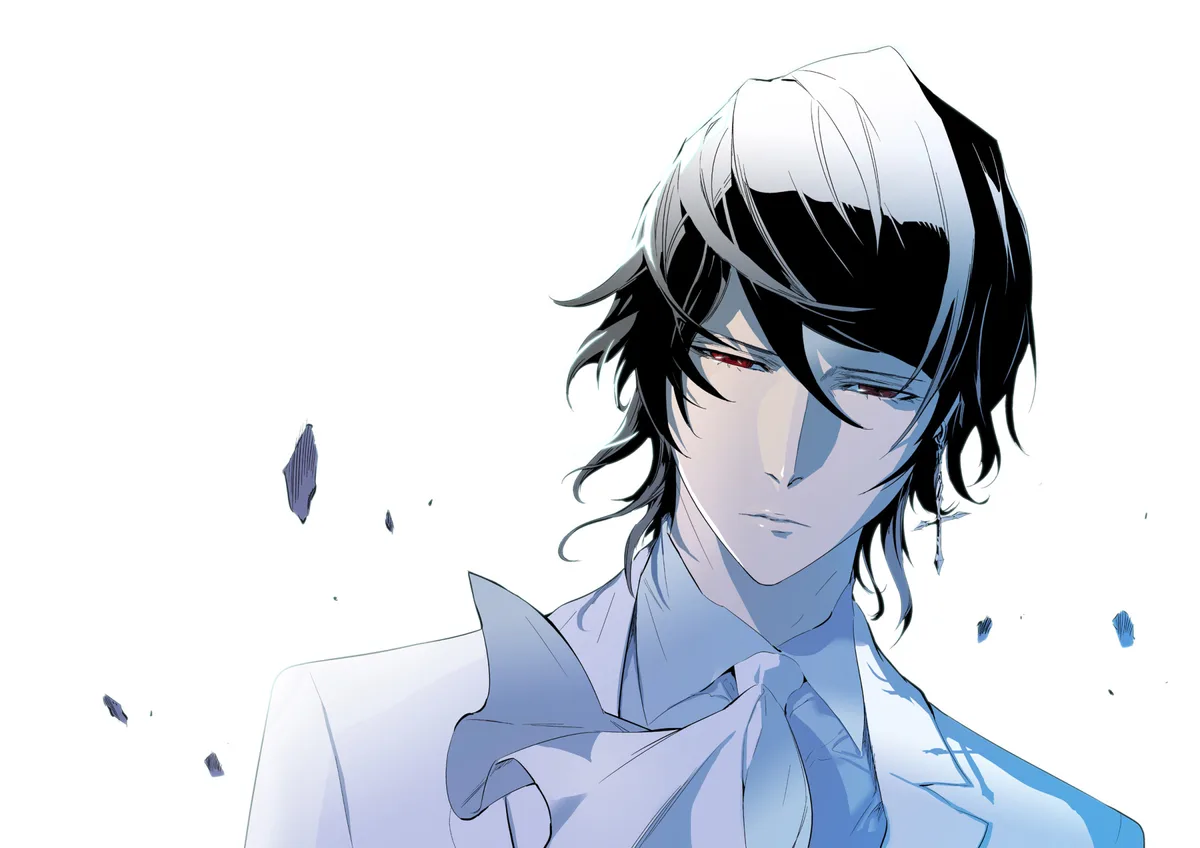 The core ensemble: Rai, Frankenstein, and the modified humans whose dynamics carry the series' character work.
Rubric Assessment
The Good
- Pioneered the calm, composed OP protagonist archetype: Rai's restraint formula influenced nearly every similar protagonist in Korean manhwa after 2010
- The comedy is consistent across 544 chapters without overstaying; Frankenstein's theatrical reactions never get old
- Proper ending with major narrative threads resolved after 11 years, which is rarer than it should be
- Noble power hierarchy has clear internal logic that the series respects throughout

The Cons
- Mid-arc repetition is real: the antagonist escalation-defeat-reset cycle repeats identically across arcs 3 through 5
- Female characters are persistently underwritten across the full 544-chapter run; no named female character approaches the depth of Frankenstein or M-21
- The 2020 anime covers only 24% of the story, which misleads new readers about how much source material remains
- Final arc feels compressed relative to the pacing of the series' strongest middle material
Art consistency
Consistent within reasonable tolerance for 11 years of serialized work. Lee Kwangsu's style became more confident in facial expression and scene staging across the first 100 chapters, then plateaued. The most visually inventive pages appear during high-stakes Noble power confrontations in roughly chapters 150 to 350. Background density decreases noticeably after chapter 400, a common indicator of schedule pressure in long-running serialized work. Score: 3.5 out of 5.
Pacing
The first arc, roughly chapters 1 to 90, establishes character and setting efficiently. The Union conflict arcs, approximately chapters 90 to 280, maintain forward momentum. The extended Noble homeland material is where the pacing problem becomes explicit: multiple arc cycles follow the same escalation-defeat-reset structure without substantial narrative payoff between them. The final 100 chapters recover pace but feel compressed relative to the rest of the series.
The 2020 anime adapts 13 episodes covering roughly the first 24% of the manhwa. For context on how this ratio compares to other recent adaptations, see manhwa with anime adaptations in 2026. Readers who only watch the anime encounter neither the pacing problems nor the extended Noble lore that makes the ending meaningful. Worth separating two different things here: the anime season itself is finished (it aired October 7 to December 30, 2020, and no second season has been confirmed by Production I.G as of mid-2026), while the story it tells is incomplete relative to the manhwa. Score: 3 out of 5.
Character depth
Rai is a well-realized specific archetype. Frankenstein is the series' most expressive character and carries the emotional weight of many arcs through his dynamic with Rai. Noble Council members who appear in later arcs are individually distinct. The modified human supporting cast (M-21 and others) develops meaningfully across the first half of the series, particularly their relationship to the question of what it means to be human in a world governed by Noble hierarchy.
The primary failure is the school cast, who function as tonal anchors but receive minimal development across 544 chapters. Score: 3 out of 5.
Translation quality
The official WEBTOON English translation is complete and consistently readable. Some chapters from the early serialization period have minor translation artifacts not fully revised in the official release. Chapter-by-chapter consistency is generally maintained. Score: 4 out of 5.
Reread value
Moderate. A reread pays off if you're tracking how Son Jeho established Rai's power ceiling before demonstrating it. The comedic scenes hold. The mid-arc antagonist cycles don't reward returning to. Score: 3 out of 5.
Noblesse review: verdict
The Good
- Pioneered the calm OP protagonist archetype, Rai's restraint formula is the direct template for a generation of Korean supernatural manhwa protagonists
- Consistent comedy across 544 chapters without undermining stakes; Frankenstein's dynamic with Rai carries the series' emotional weight
- Proper ending with major narrative threads resolved after a 11-year serialization run
- Noble power hierarchy has internal logic the series respects from arc 1 through the finale
The Cons
- Mid-arc repetition: antagonist factions follow an identical escalation-defeat-reset cycle through arcs 3-5 with no structural variation
- Female characters persistently underwritten, no named female character approaches the depth of Frankenstein or M-21 across the full run
- 2020 anime (13 episodes) covers only 24% of the manhwa, which creates misleading expectations about content depth for new readers
- Final arc feels compressed relative to the first 200 chapters
Noblesse established one of manhwa's most durable protagonist templates. Readers who encounter it after SSS-Class Revival Hunter, Omniscient Reader's Viewpoint, or any series featuring an impossibly powerful character defined by restraint rather than display will recognize the formula at its origin.
The series doesn't hold up equally across all 544 chapters. The mid-arc repetition is real, and the female character writing is a persistent structural problem that modern readers will notice. But the first 200 chapters are among the strongest in the genre's history, and the ending delivers what 11 years of setup promised.
For readers who want to understand where modern Korean supernatural action manhwa came from: this is where it came from. For readers whose entry point is contemporary titles with more narrative complexity: start with the first 150 chapters and then see manhwa like Noblesse for what the archetype produced across a generation of writers who read it. The most direct descendant in the creator's own catalog is Eleceed -- Son Jeho returned to the same hidden-power-in-a-school-setting premise with faster pacing and more tactical fight design.
Rating: 7.5/10
Related Reading
- Manhwa Like Noblesse: 8 picks sorted by what Noblesse specifically delivered
- Noblesse Reading Guide: 544 Chapters and Where to Start
- Noblesse Character Guide: the full named cast, Rai and Frankenstein through the Union's Dr. Crombel, checked against AniList rather than a fan wiki
- Bastard Manhwa Review: Kim Carnby's earlier psychological thriller -- same moral weight, no supernatural framing, same craft
- Manhwa Could Be Big Three: Is Any Series Close Enough?: Noblesse shows up in the "OG tier" readers name in this exact debate, alongside Tower of God and God of High School
Frequently Asked Questions
Is Noblesse completed? Yes. AniList lists Noblesse as FINISHED at 544 chapters, while Naver's official Korean listing displays 545 total episodes and marks the series complete. It has a proper ending with most major narrative threads resolved. The series ran for 11 years from its December 2007 launch.
Is the Noblesse anime finished? Yes. The 13-episode TV anime aired October 7 to December 30, 2020 and has been complete since that finale. No second season has been announced by Production I.G, Crunchyroll, or Naver Webtoon as of mid-2026. What's unfinished is the story coverage relative to the 544-chapter manhwa, not the season itself.
Does the Noblesse anime cover the whole story? No. The 2020 anime (13 episodes, Production I.G, Crunchyroll) covers the early school arcs, roughly the first 24% of the 544-chapter manhwa. The complete story, including the deeper Noble lore and extended conflict arcs, requires reading the manhwa.
Is the Noblesse anime a good entry point before the manhwa? The 2016 ONA Noblesse: Awakening (Production I.G, 31 minutes) is a better entry point than the 2020 TV series, since the TV series picks up directly after it and assumes you've seen it. The manhwa reads cleanly from chapter 1.
What makes Rai from Noblesse different from other OP protagonists? Rai's archetype is defined by restraint rather than dominance display. His power is established through implication before demonstration; readers understand his level not from flashy displays but from how other Nobles respond to his presence. This formula influenced the calm-protagonist archetype seen across later manhwa.
How does Noblesse compare to Tower of God? Both launched on Naver Webtoon in the same era. Tower of God is a more ambitious narrative structure with a larger cast. Noblesse is more direct: one protagonist, one anchoring setting, a cleaner power hierarchy. Tower of God rewards readers tracking multiple arcs; Noblesse rewards readers who want one well-defined protagonist across a long run.
Where can I read Noblesse in English? On WEBTOON, in the official English translation: the website lists up to Episode 50 and points readers to the app for the rest (checked October 15, 2026). The 2020 Production I.G anime adaptation is on Crunchyroll.
Is there a sequel to Noblesse? No official sequel. Son Jeho and Lee Kwangsu have not announced a continuation as of mid-2026. The ending of the main series is self-contained.
References
- Noblesse on WEBTOON (official English platform, full 544-chapter run available free)
- Noblesse on Naver Webtoon (official Korean listing, 545 total episodes, completed)
- Noblesse anime on Crunchyroll (2020 TV series, 13 episodes, aired October-December 2020, plus the 2016 ONA prequel)