"Manhwa like My Hero Academia" is doing at least four things at once, and most recommendation lists treat it as one.
The UA Academy training structure: ranked students, competitive evaluations, teacher-student relationships built around mentor figures passing down inherited power. The Sports Festival tournament arc and its specific energy, where every fight reveals something about a character rather than just advancing a bracket. The underdog formula: Izuku Midoriya is not talented, does not have natural gifts, and rises through moral conviction and preparation rather than raw ability. And the ensemble cast, the friends-who-also-compete dynamic that makes MHA's class structure feel more alive than most shonen schools.
Sorting by which of those drew you in changes the list significantly. This article covers six series matched to each specific element, plus an honest account of what MHA does that manhwa hasn't replicated.
TL;DR: My Hero Academia is a completed Japanese manga (2014-2024, 430 chapters), not manhwa. The closest overall match in Korean comics is Eleceed: ranked esper powers, school training structure, warm ensemble tone, and a mentor-student dynamic that mirrors Deku and All Might. For tournament arcs specifically, The God of High School is the benchmark. For the underdog-without-powers angle, Weak Hero delivers the moral conviction without a Quirk fantasy.
Overview
My Hero Academia (Boku no Hero Academia) is a Japanese manga by Kohei Horikoshi, serialized in Weekly Shonen Jump from 2014 and completed in 2024 at 430 chapters. Bones produced the anime adaptation across seven seasons. The series is set in a world where approximately 80% of humanity has developed superpowers called Quirks, society has restructured around this fact, and heroism is a licensed profession with schools, rankings, and regulatory bodies. Izuku Midoriya is born into this world without a Quirk, genuinely powerless in a society built around the assumption of ability. He receives One for All, a transferable stockpile Quirk, from the greatest hero alive, All Might, and the series follows his training at UA Academy alongside a class of students who compete, fight alongside, and shape each other.
What distinguishes MHA from comparable shonen is the ethical texture it builds around heroism as a vocation. The antagonists are products of the same society that creates heroes, and their grievances are legible. The school structure has institutional weight: evaluations matter, teachers have histories, the hierarchy reflects how a real institution might actually work. The protagonist's power is inherited rather than earned, and the cost of using it before he's ready is real damage to his body.
Readers looking for manhwa like My Hero Academia are searching for one or more of those elements: the school training structure with actual stakes, tournament arcs where fights reveal character, an underdog protagonist rising through conviction, or an ensemble cast with genuine chemistry. Korean manhwa has different strengths in each category, and sorting by the element you want most changes the answer significantly.
manhwa like My Hero Academia: key takeaways
- My Hero Academia is a completed Japanese manga (2014-2024, 430 chapters), not manhwa. The manhwa recommendations below are Korean webtoons with structural overlap.
- For the school training structure and ranked power hierarchy: Eleceed (ongoing, 400+ chapters, WEBTOON)
- For tournament arcs and ensemble-cast fight reveals: The God of High School (completed, 569 chapters, WEBTOON)
- For the underdog-without-powers angle: Weak Hero (completed, 268 chapters, WEBTOON)
- For school setting with faction politics and escalating antagonists: Noblesse (completed, 543 episodes, WEBTOON)
- For ensemble cast with diverse power combinations and long-form political arc: Tower of God (on hiatus after Season 3, 652+ chapters, WEBTOON)
- For school setting with social hierarchy dynamics: Lookism (ongoing, 600+ chapters, WEBTOON)
- None of these replicate MHA's specific ethical argument about heroism as vocation. See the honest gap section below.
manhwa like My Hero Academia: what my hero academia actually delivers
Advertisement
Knowing what MHA does helps sort which manhwa matches. Kohei Horikoshi's series runs on several distinct engines simultaneously, and readers tend to be drawn in by different ones.
The world structure: in MHA's setting, 80% of humanity has Quirks, unique physical or mental abilities. Society has restructured entirely around that fact. Heroes are licensed professionals. Villains are categorized. UA Academy is the most prestigious school for training heroes, with a competitive class system, ranked instructors, and practical examinations that matter. The institution has weight.
The protagonist formula: Izuku Midoriya is born into this world without a Quirk. He's not hiding exceptional ability. He genuinely doesn't have it for most of the series. He receives One for All from All Might, but that inheritance is also a burden. The Quirk nearly destroys his body when he uses it at full capacity. His path forward requires him to develop ways of using it that don't cripple him. This is different from a hidden-power setup. Deku has to become worthy of what he was given.
The villain structure: MHA's antagonists have intelligible motivations. Shigaraki Tomura and the League of Villains aren't evil because they lack moral reasoning. They're products of a society that failed them. This ethical weight, the idea that the system that creates heroes also creates the conditions for the people it excludes, is what gives the series more moral texture than most shonen.
Those three engines together (structured institution, underdog with inherited power that costs him, antagonists with coherent grievances) are what readers are trying to replace when they search for manhwa like My Hero Academia.
Our master manhwa reading list covers the top 30 titles across every genre for 2026.
Best Manhwa to Read in 2026 →
For the school training structure and ensemble cast
This is the category where manhwa comes closest to MHA's specific texture. Two series build training institutions with enough structural weight that the school doesn't feel like just a backdrop.
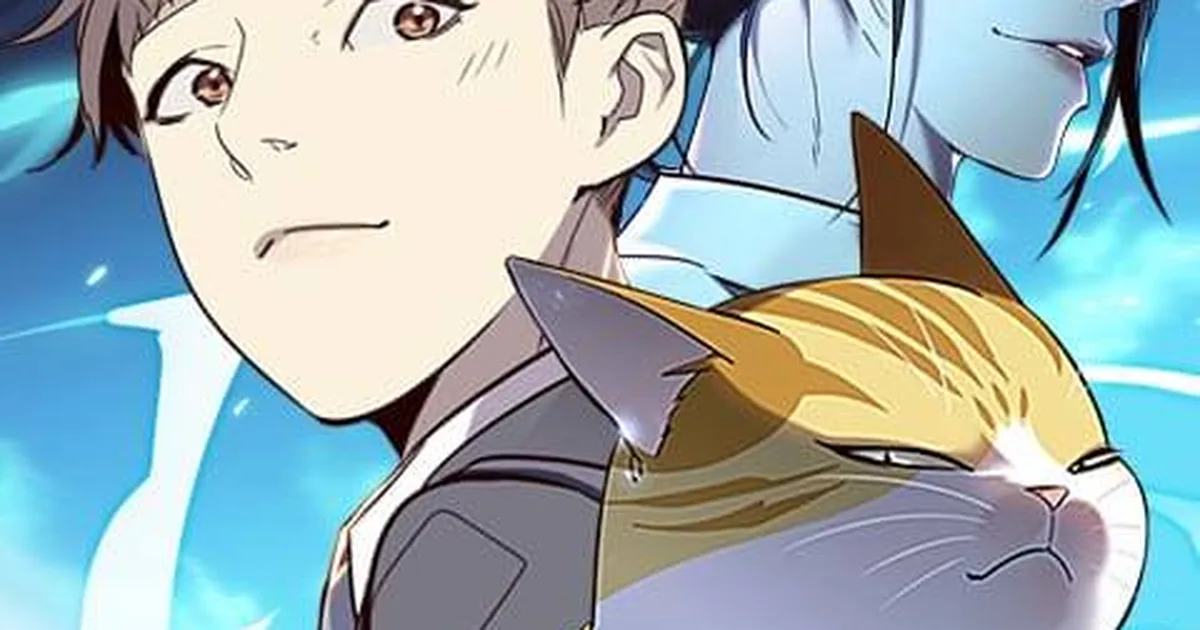
Eleceed (WEBTOON, ongoing, 400+ chapters as of mid-2026) is the strongest match in the category and probably the closest single piece of manhwa to MHA's overall feel. Jiwoo Seo has speed-based esper abilities he has spent his life suppressing. The cat he rescued from a highway, Kayden, is a master-class esper stuck in animal form after an encounter with a rival organization. Kayden trains Jiwoo in secret while pretending to be an ordinary pet.
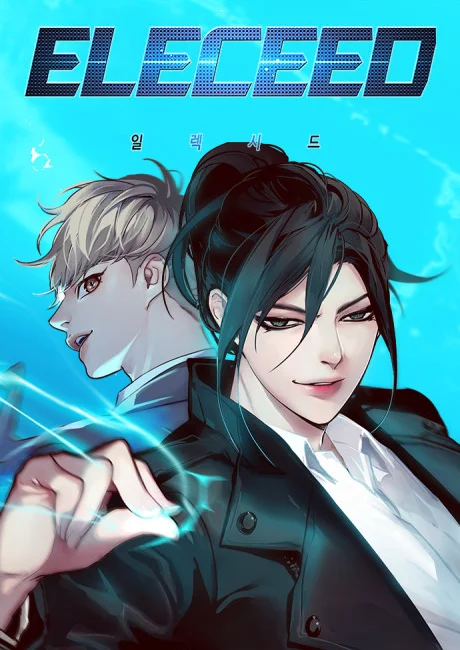 Eleceed cover art.
The esper world in Eleceed has explicit rankings, organized associations, faction politics between national organizations, and international summits where rankings shift. As Jiwoo's visibility grows, those larger structures start bearing down on him. The school-training equivalent exists in the Esper Association's evaluation system: Jiwoo progresses through rankings, faces senior-ranked opponents, and earns legitimacy through demonstrated results rather than inherited status.
What makes the Eleceed match particularly close is tone. The series is warm, frequently funny, and maintains the warmth of its core relationships even during arcs with genuine stakes. That's harder to find than fight choreography or power systems. Most action manhwa gets grimmer as it escalates. Eleceed has been running since 2019 and the Jiwoo-Kayden dynamic is still intact at 400 chapters. For the MHA reader who came for the classroom energy and the mentor-student relationship, Eleceed is where to start.
For readers who want to understand why Eleceed is structured the way it is, the manhwa like Eleceed guide covers the series' specific elements in detail.
Noblesse (WEBTOON, completed, 543 episodes) uses a modern school as its central setting without making the school curriculum the focus. Cadis Etrama di Raizel (Rai) is a Noble who has been dormant for 820 years and wakes up in Seoul with no context for smartphones, school schedules, or instant food. His servant Frankenstein manages logistics. Rai attends the high school where Frankenstein works, building relationships with three students who don't understand what they're dealing with.
The school in Noblesse provides the context that the Noble faction conflicts then threaten. The escalating antagonist structure (each new enemy force is more capable than the last) maps directly to MHA's villain progression, where each arc introduces a more serious threat to the institutional order. The mentor-student dynamics are present in the relationship between Rai and the students he protects. The series completed in 2019, so there's no ongoing wait. Free on WEBTOON.
For tournament arcs and escalating stakes
MHA's Sports Festival arc is one of the most efficient tournament structures in shonen: it reveals character through fights rather than just demonstrating power levels. Two manhwa use tournament structure as a primary narrative engine.
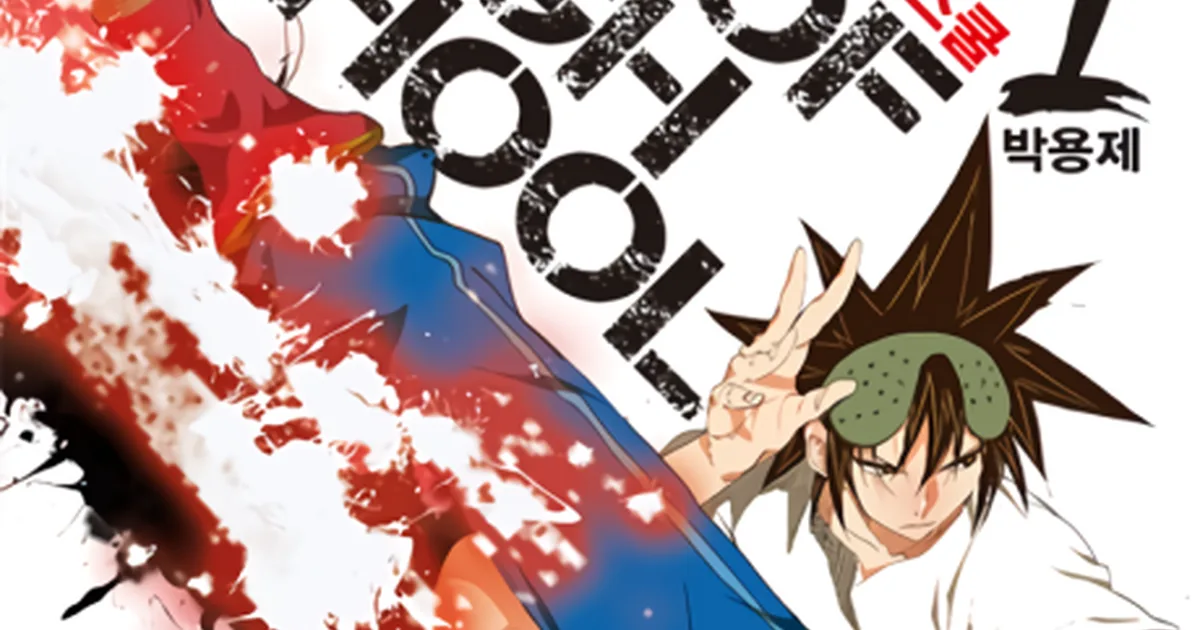
The God of High School (WEBTOON, completed, 569 chapters) is the benchmark for tournament-arc manhwa. Jin Mo-Ri is a carefree high school martial artist invited to a nationwide tournament, with a single wish as the prize, granted by whatever organization is running the competition. The early arc is built around bracket-structure fights between students with diverse combat styles and power types.
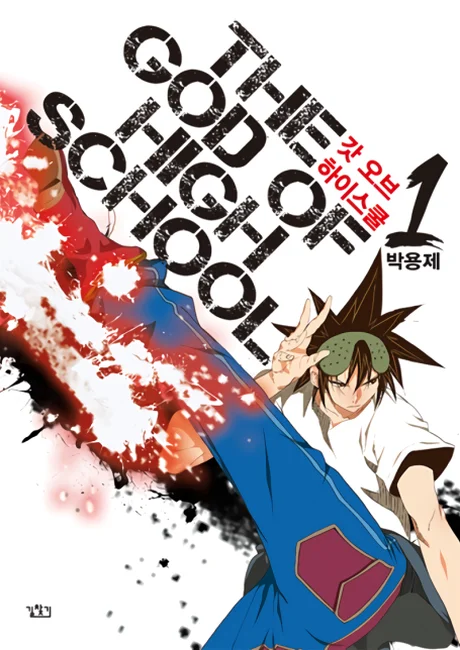 The God of High School cover art.
The ensemble energy is extremely close to MHA's Sports Festival feel. Secondary characters get fight arcs that establish their abilities and motivations. Alliances form across the bracket. The protagonist wins in ways that aren't always about being the most powerful person in the room.
The series escalates considerably beyond the initial tournament into a mythology arc involving divine entities (which diverges from MHA's register), but the first 200 chapters cover the tournament structure at a density and quality that nothing else in manhwa matches. The full series completed at 569 chapters and is free on WEBTOON.
The best manhwa tournament arc guide covers how GoH compares to the other options in this category.
Tower of God (WEBTOON, on hiatus after Season 3, 652+ chapters across three seasons) approaches tournament structure differently. Twenty-Fifth Bam enters a tower to find someone and discovers that the Tower is a structured system with floors, tests, and ranked positions: a competitive hierarchy with political weight behind it. Tournament arcs are embedded in the larger floor-climbing structure rather than being the framing device.
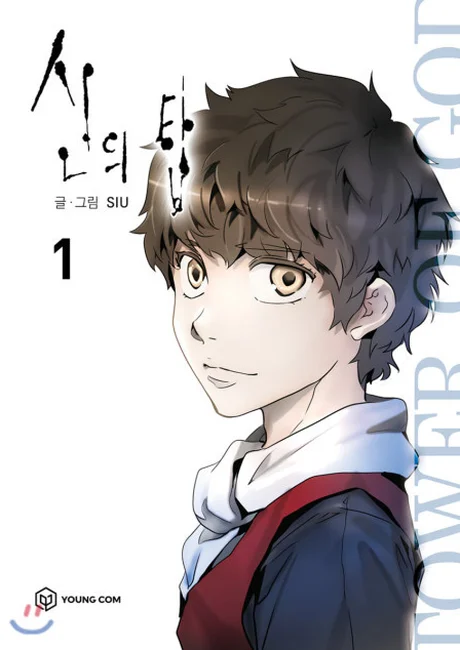 Tower of God cover art.
The ensemble cast is one of manhwa's strongest. Bam's team members have distinct abilities, conflicting motivations, and long-term character arcs that span hundreds of chapters. The political complexity (the Jahad Empire, FUG, Wolhaiksong) escalates the way MHA's hero-villain conflict does: from personal stakes to institutional stakes to civilizational ones. Tower of God takes longer to reach its tournament arcs and the tone is less warm than MHA's, but for the reader who came for the ensemble dynamics and escalating faction conflict, it's the correct long-term pick.
The manhwa like Tower of God guide covers the arc structure and what the series' pacing requires in the early chapters.
Our best action manhwa list covers top manhwa for MHA fans who want superpowers, schools, and hero hierarchies.
Best Action Manhwa 2026 →
For the underdog-without-powers angle
MHA's Deku is an underdog in a specific way: he has a power but can't use it safely, which means he has to win through strategy and preparation while managing a body that breaks under his own strength. That's different from most shonen underdogs. Two manhwa cover related territory, with important caveats.
Weak Hero (WEBTOON, completed, 268 chapters) is the closest manhwa equivalent to the underdog-by-conviction formula, with a significant caveat. Weak Hero has no superpowers. Gray Yeon is a student in a school dominated by physical hierarchy, smaller than most of his opponents, with no special ability. He wins because he understands the mechanics of a fight better than the people trying to hurt him. He uses opponents' mass against them, identifies commitment points before they develop, and operates on margins that leave him with damage he actually shows.
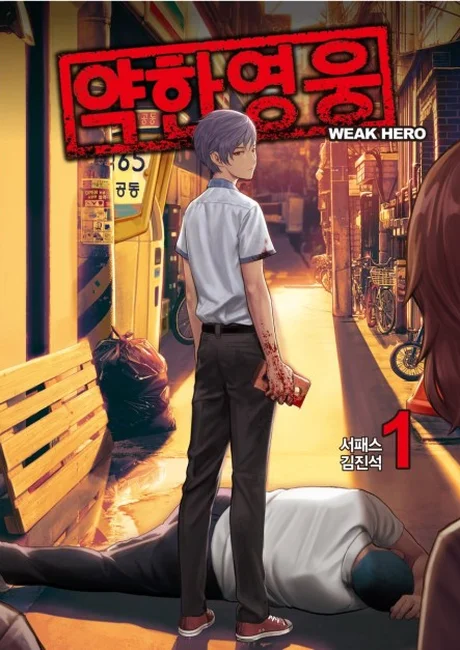 Weak Hero cover art.
If what drew you to MHA was Deku's moral conviction, the idea that you can face something you can't win through power and find a way to win anyway, Weak Hero covers that engine without the Quirk structure. The series is tonally darker and more confined than MHA. There's no mentor figure equivalent to All Might, no institutional support, no friends waiting in the hallway. Gray operates mostly alone.
For readers who want the superpower version of the underdog formula, Eleceed (covered above) is the better match. Weak Hero is for the reader who came to MHA for the conviction more than the Quirk fantasy.
The manhwa like Weak Hero guide breaks down what the series requires from its reader and which alternative series match each specific element.
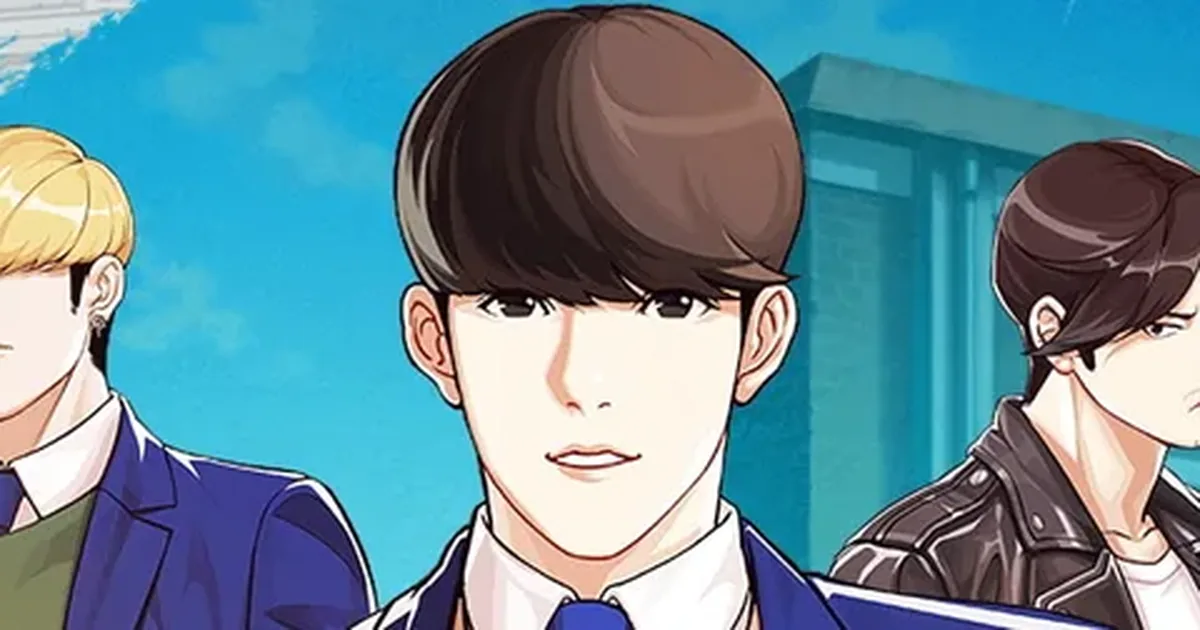
Lookism (WEBTOON, ongoing, 600+ chapters) approaches the school hierarchy and power structure from a different angle. Park Hyungjin is a bullied student who wakes up able to switch between two bodies: one that matches how people treated him before, one that opens doors. The series uses appearance-based social advantage the way MHA uses Quirk rankings: as a structural inequality that shapes every interaction.
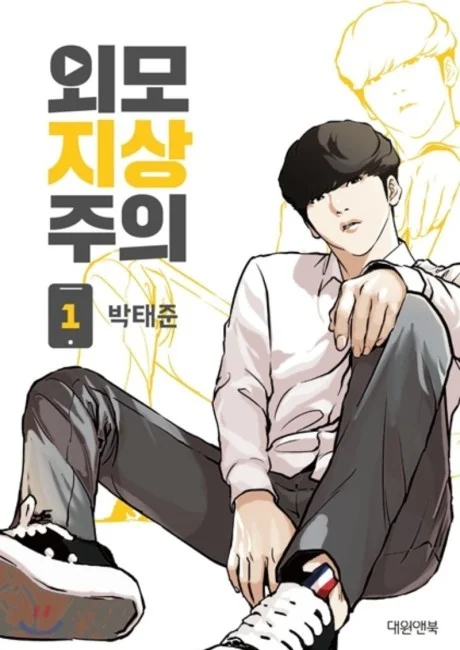 Lookism cover art.
The early chapters are the strongest match for MHA's school-setting dynamics. The faction politics that emerge by mid-run (which groups control what, how power transfers, who backs whom) maps to MHA's hero-villain institutional conflict at a smaller scale. The series has grown very long and the scope shifts significantly from its school origins, so Lookism is recommended with the caveat that the first 100 chapters are the most direct match for what MHA readers tend to want.
The honest gap: what manhwa doesn't replicate about MHA
Advertisement
Most recommendation lists for manhwa like My Hero Academia avoid naming this, so: the specific quality that makes MHA more than a school action series is not its tournament structure, its ensemble cast, or its power system. It's the ethical argument running under the story.
Heroism in MHA is a vocation. Deku is not pursuing power or status. He's pursuing worthiness. The question the series keeps asking is whether he has the right to carry One for All, whether he is becoming the kind of person the power is meant for. All Might's decline runs parallel to Deku's growth as a deliberate contrast: what it means to hold the title versus what it means to earn it. The villains' grievances are real. The hero system that Deku is trying to join has genuine failures built into it. Shigaraki's path is a product of that failure.
That ethical weight, heroism as a thing you must be worthy of rather than just capable of, is less common in manhwa, which more often uses power as tool (what can I accomplish) or power as revenge (what was done to me, what I can now do to them). The closest manhwa comes to this specific register is Eleceed's treatment of Jiwoo's suppressed ability: there's a version of the story where the explanation for why he hides is purely practical, but the series hints at something more. The reason he hasn't claimed the recognition he could claim seems connected to what he thinks recognition should cost.
That's a partial match. For the full ethical argument MHA makes about heroism as obligation, the reader should be aware that the manhwa listed here won't replace it. They'll give you the school structure, the tournaments, the ensemble dynamics, and the underdog formula. The specific moral weight is MHA's own.
Frequently Asked Questions
Is there a manhwa like My Hero Academia?
Yes, though the match depends on which part of MHA drew you in. Eleceed is closest for the school training structure and esper hierarchy. The God of High School is the tournament-arc match. Noblesse fits the school setting with escalating antagonists. None replicate MHA's ethical argument about heroism as vocation, but several cover three or four of its major structural elements.
What manhwa has the best school training structure like MHA?
Eleceed is the strongest match. Jiwoo trains within an esper association hierarchy (ranked evaluations, senior mentors, factional politics) that maps closely to UA Academy. The warm ensemble tone survives into the 400-chapter range. Noblesse uses a modern school setting as context, though the curriculum itself isn't the focus.
Is Eleceed similar to My Hero Academia?
More than most manhwa. Both feature a protagonist who underperforms relative to his potential in a world where ranked superpowers structure everything. Both use the training-under-a-senior-figure mechanic. The key difference: Eleceed is warmer and never as morally serious about what using power costs.
What manhwa has tournament arcs like MHA?
The God of High School. The Sports Festival arc in MHA (diverse power types, bracket advancement, character revelations built into fights) is what GoH does for its entire first act (chapters 1-200). For pure tournament density, GoH is the answer.
What manhwa has an underdog protagonist like Deku?
Weak Hero covers the underdog-by-conviction angle without superpowers. Gray Yeon is smaller than his opponents and wins through precision, not strength. If you came to MHA for moral conviction more than the Quirk fantasy, Weak Hero is the match. For the superpower underdog formula, Eleceed is closer.
Is My Hero Academia a manhwa?
No. My Hero Academia is a Japanese manga by Kohei Horikoshi, published in Weekly Shonen Jump from 2014 and completed in 2024 at 430 chapters. Manhwa is Korean; manga is Japanese. The series has a BONES anime adaptation. Readers search for manhwa like My Hero Academia after finishing MHA and want Korean webtoons with similar structure.
Related Reading
- Best Manhwa Like Black Clover: 7 Series Worth Reading: Picks for fans of Black Clover's underdog-to-top power progression.
- The God of High School Review: 569 Chapters Done Right: Full review of the Korean academy-tournament benchmark.
- The God of High School Reading Guide: 569 Chapters Done: How to navigate GoH's 569 chapters.
- Best Action Manhwa 2026: 12 Series Worth Your Time: 12 action manhwa where hero progression is the main drive.
- Best Manhwa to Read in 2026: 20 Series Worth Your Time: 2026 starter list for readers crossing from anime to manhwa.
References
- Eleceed on WEBTOON (ongoing, free, 400+ chapters)
- Tower of God on WEBTOON (on hiatus after Season 3, free, 652+ chapters across three seasons)
- The God of High School on WEBTOON (completed, free, 569 chapters)