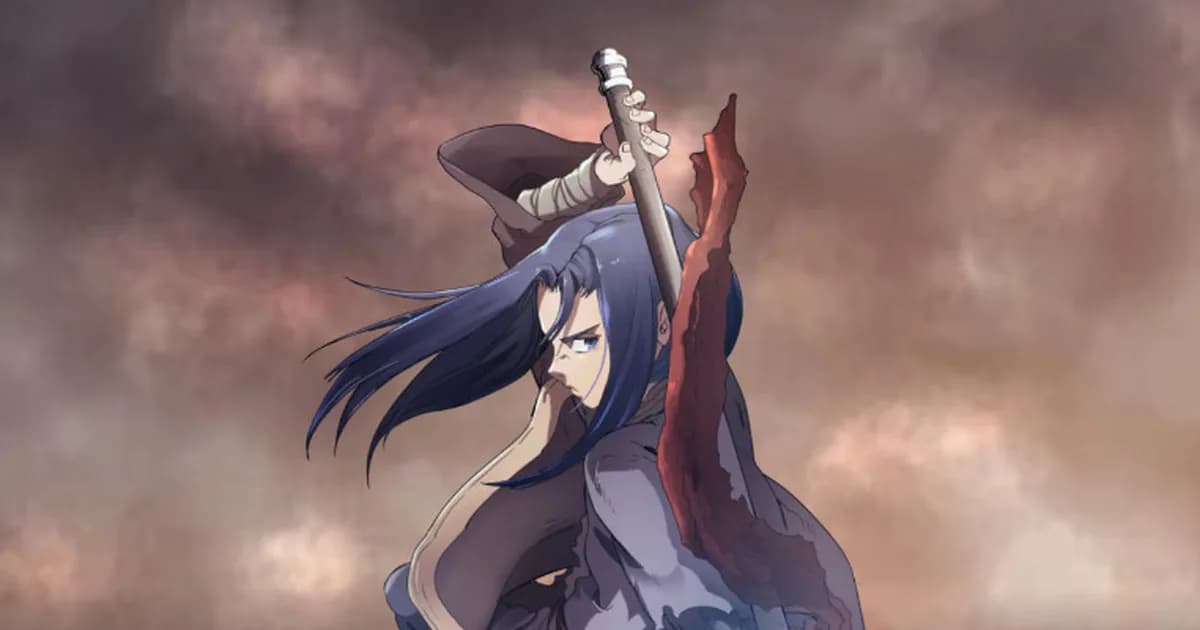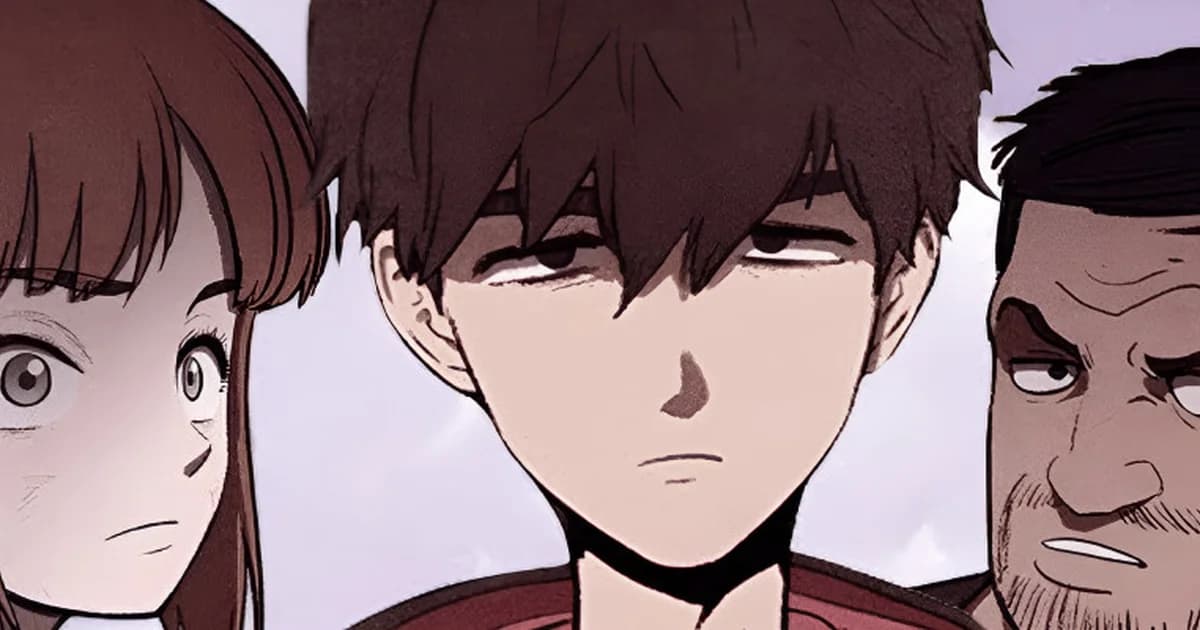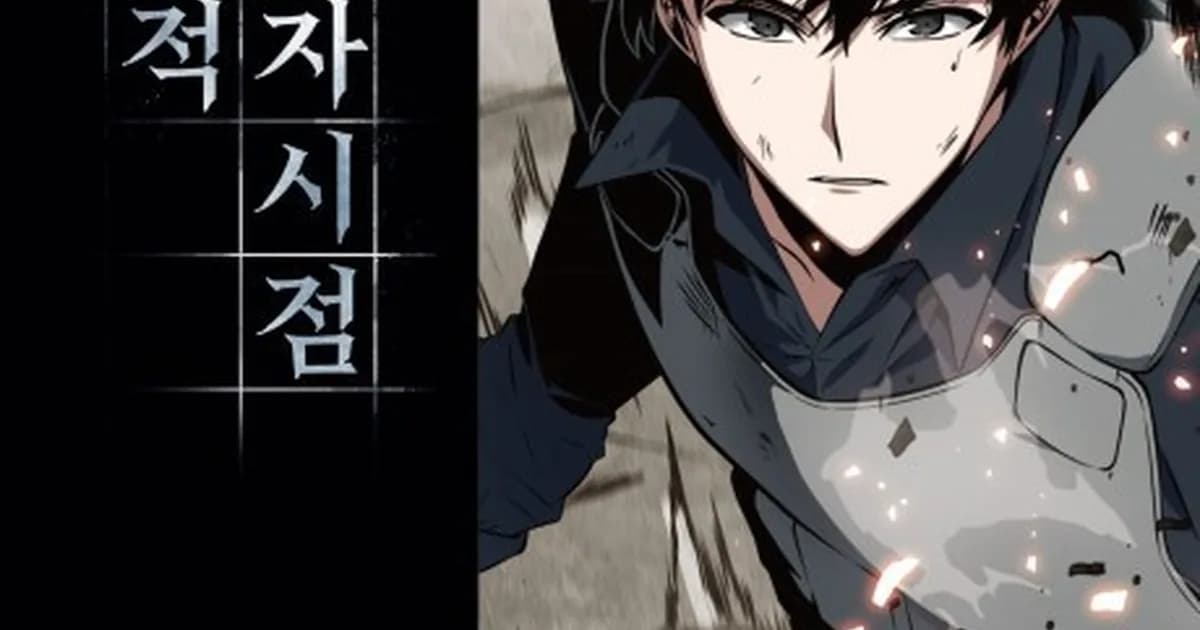
Legend of the Northern Blade review, upfront: Jin Mu-Won starts with nothing. No system window. No hidden bloodline power. No master who sees potential and takes him in. His father disbanded the Northern Heavenly Sect before dying, and Mu-Won spends the opening arc under surveillance: alive, but stripped of status, training, and allies. When he finally escapes to the mountains, he teaches himself from fragmented documents his father left behind.
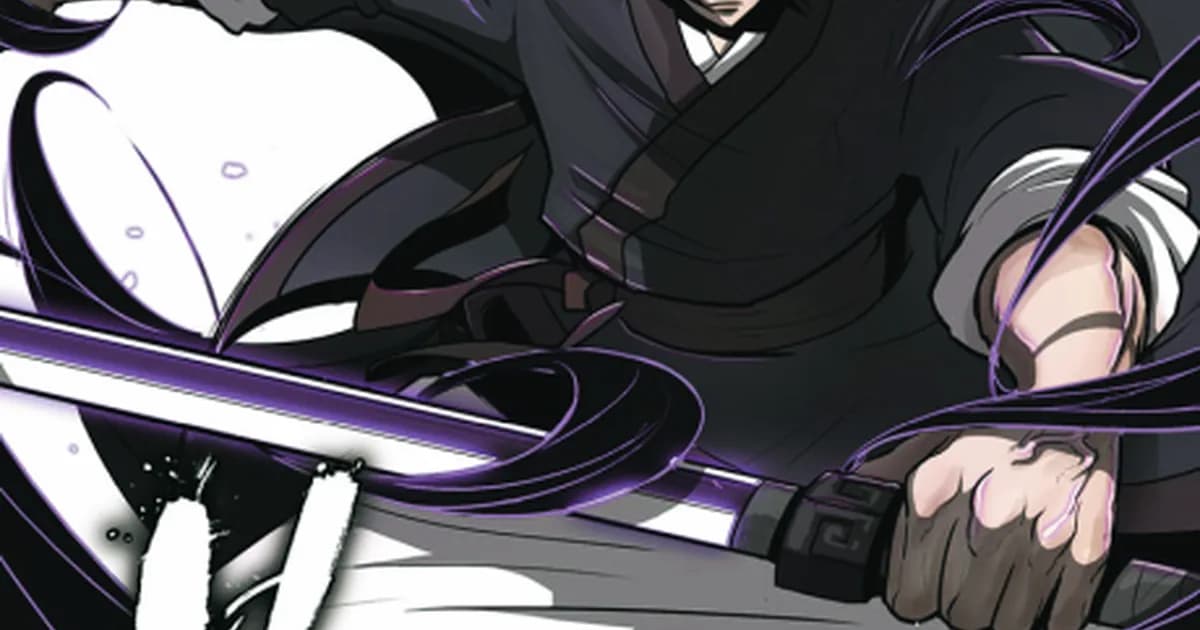
Reviewing
Legend of the Northern Blade
Woo-Gak (story) / Hae-Min (art) · Tappytoon
Score
Pros
- Fight choreography is spatially coherent across panels: attacks have paths, not just impacts
- 202 chapters, fully completed with a confirmed happy ending. Zero wait, binge the whole run.
- Protagonist builds power through actual work, not a system prompt or convenient inheritance
- Art improves measurably arc by arc: chapters 150-202 look substantially better than 1-40
Cons
- Mountain training arc is compressed to the point of elision. The core premise deserved more page time.
- Middle arc's political plotting introduces characters who vanish for 30 chapters at a time
- Silent Night's internal structure stays underwritten relative to how long they function as the threat
Verdict
A completed 202-chapter murim manhwa with the genre's most legible fight choreography. The middle arc sags but the series earns its ending.
TL;DR: Legend of the Northern Blade review: 8.5/10. The murim manhwa that gets fight choreography right, in a complete 202-chapter package. Written by Woo-Gak and illustrated by Hae-Min. AniList lists the manhwa's start date as December 31, 2019. Fully completed: read from chapter 1 to 202 in one sitting if you want.
That setup separates this series from most of what exists in the murim genre. The question this Legend of the Northern Blade review will answer is whether the execution justifies the premise, and whether it earns a spot on any list of the best completed murim manhwa to read. Having the right starting conditions and delivering on them are different problems.
Key Takeaways
- Legend of the Northern Blade review: 8.5/10. The murim manhwa that gets fight choreography right, in a complete 202-chapter package.
- Written by Woo-Gak and illustrated by Hae-Min. AniList lists the manhwa start date as December 31, 2019; the Korean platform is Kakao Page.
- Fully completed. Read from chapter 1 to 202 in one sitting if you want. Happy ending confirmed.
- Official English: Tappytoon. Korean platform: Kakao Page. Not on the official WEBTOON catalog
- The strongest element is fight choreography. The weakest is the middle arc's political plotting
- Full read runs 5-10 hours. No ongoing wait, no hiatus, no abandoned arc
- For where this fits in the broader genre, the best murim manhwa guide for 2026 covers how Northern Blade ranks against both completed and ongoing options
Overview: What Kind of Story This Is
The Northern Heavenly Sect spent decades fighting the Silent Night, a martial arts organization operating through infiltration and sabotage rather than open war. When the sect's fourth-generation leader, Jin Kwan-Ho, is falsely accused of coordinating with the Silent Night, the accusation destroys everything. Kwan-Ho disbands the sect and dies protecting his son. Mu-Won survives, but survives under watch. He has no official standing in the murim world, no access to martial arts training, no one willing to align with the son of a disgraced leader.
A Silent Night attack disrupts his surveillance and gives him a narrow window. He runs to the mountains. What follows (the isolation arc, the self-taught training sequence, the eventual return) is the structural backbone of the story. The series is a restoration narrative: Mu-Won is trying to uncover what actually happened to his father's sect, confront the organization that destroyed it, and rebuild something that was unjustly erased.
That's not an unusual premise for murim. What's less usual is the pacing restraint. Northern Blade wraps its story in 202 chapters without adding tournament filler, training arcs that don't connect to anything, or secondary antagonists introduced to buy time. The Silent Night functions as a coherent long-term threat rather than a rotating series of stronger-and-stronger bosses. Mu-Won's goals stay consistent across the run.
For readers coming from regression or system-fantasy murim, this series asks for something different. Mu-Won doesn't know the future. He doesn't have accumulated advantage from a previous life. The Legend of the Northern Blade reading guide has arc-by-arc breakdowns for anyone who wants to track the specific structural shifts. This review focuses on overall quality.
Our Legend of the Northern Blade reading guide covers the full story arc and essential chapters.
Legend of the Northern Blade Reading Guide →
The Protagonist Arc: Building from Nothing
The mountain training section covers roughly chapters 1-40, and it's where the series establishes its central argument. Mu-Won finds texts left by his father: not a complete manual, just fragments. He works through them without confirmation that he's executing the techniques correctly, without feedback, without the scaffolding that most murim protagonists take for granted.
The premise earns the right to be slow here, and Northern Blade is not slow enough. The training arc is compressed in ways that deflate what should be the series' most interesting stretch. We see Mu-Won discover the texts. We see him later, demonstrably more capable. What happens between those two points (the actual process of a person reconstructing techniques from incomplete documentation, the errors, the recalibration) is summarized rather than shown. This is the version of the series that trusts the concept without fully trusting the reader's patience for it.
It's a significant gap. A series explicitly built around the idea that power costs something, that it comes from labor rather than luck, should be willing to show that labor in specific detail. Northern Blade decides against it. The training arc reads like setup for a character rather than a character being built.
Once Mu-Won returns to the murim world, the series finds more confident footing. His interactions with other martial artists carry weight because the reader knows he built his skill in isolation, even if the isolation itself wasn't fully rendered. The power scaling stays controlled. Mu-Won doesn't become the strongest person in every room immediately. He earns escalating credibility, which is a harder narrative to sustain and one Northern Blade mostly manages.
Art and Story: Fight Choreography in This Legend of the Northern Blade Review
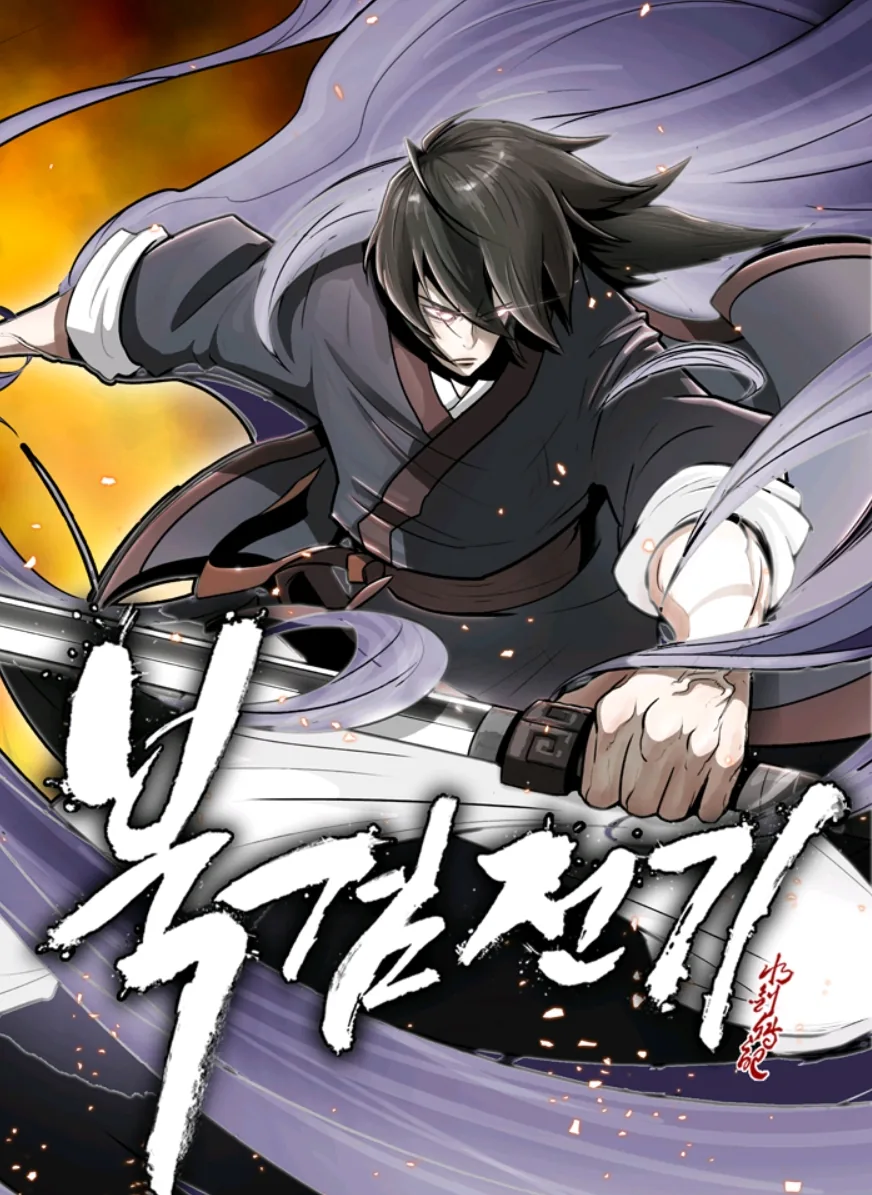
This is where the Legend of the Northern Blade review reaches its clearest conclusion. Hae-Min draws action sequences differently from most manhwa illustrators, and the difference is legibility.
Standard manhwa fight choreography operates in two modes: the anticipation pose, then the impact panel. What connects them (the attack path, the redirection, the physics of what a block or dodge actually does) gets collapsed into an implied cut. The reader infers the transition. This is fine as a convention, and readers acclimate to it. But it means fights in most manhwa are series of climactic moments without the mechanical logic that makes those moments feel earned.
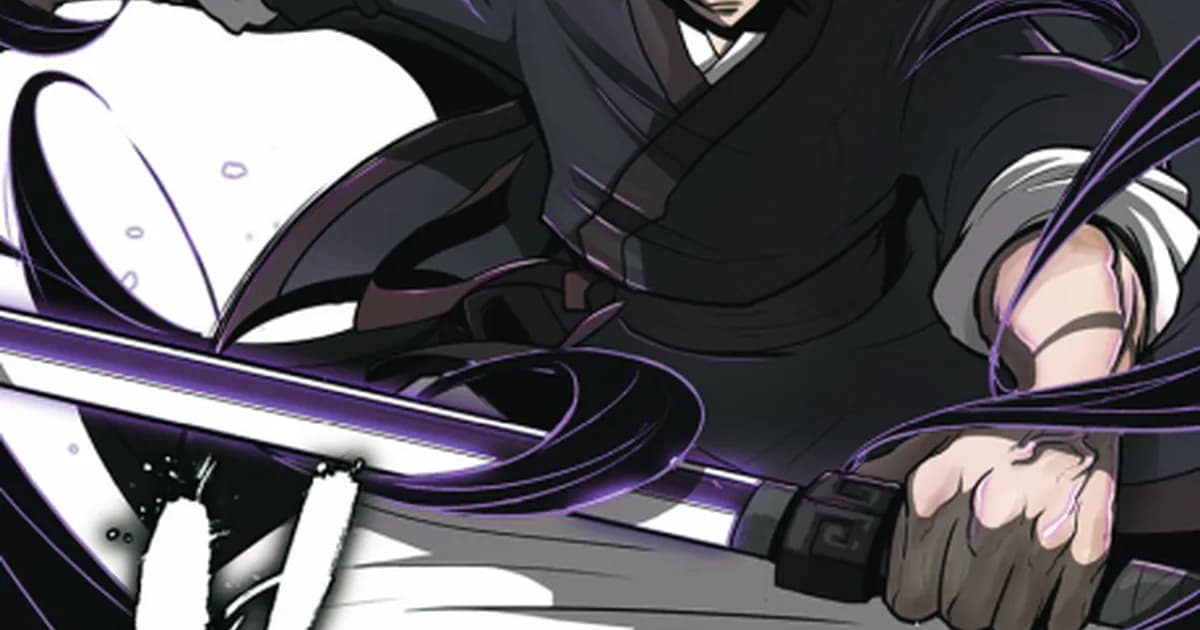
Northern Blade adds the middle. Hae-Min tracks where characters are in physical space across a sequence. When Mu-Won throws a strike, the next panel shows the trajectory, not just the outcome. When an attack is redirected, the panel shows the angle of redirection. You can trace, across three or four panels, exactly what happened in a given exchange. This sounds technical because it is technical, and it's genuinely rare.
The result is fights that feel like they have physics. Mu-Won's Northern Heavenly Sect techniques have a visual signature (cold, precise, heavy on deflection rather than direct confrontation) that stays consistent across the run. When he develops new applications of those techniques, the art makes the development legible rather than just asserting that he's gotten stronger.
The art improves across arcs. Chapters 1-40 are competent but sparse. By chapters 150-202, Hae-Min's panel composition has noticeably more confidence. Background detail increases, character expressions carry more range, action sequences use more complex multi-panel layouts. Anyone reading the completed run now gets the benefit of that arc without waiting through the earlier quality.
For a genre comparison on this specific dimension, the manhwa like Nano Machine guide covers how Northern Blade's art approach contrasts with other major murim titles. Nano Machine's busier, more kinetic style versus Northern Blade's controlled and minimal approach.
What Longtime Readers Say About the Pacing
The training-arc criticism above isn't just this review's opinion. It's the single most common question new readers post in r/manhwa and r/webtoons threads about the series: some variation of "I'm at chapter 41, when does it get interesting?" That's a specific, recurring data point, and it lines up almost exactly with where this review draws the line between the compressed opening arc and the more confident murim-world section that follows.
The flip side shows up just as consistently once readers finish the run. Threads posted after the final chapter tend to be short and satisfied rather than argumentative: readers who stuck through the slower opening say the ending justified it, without the usual hedge of "but the last arc ruined it" that shows up on other long-running murim series. For a genre where completed-but-disappointing endings are common enough to be their own recurring complaint, that pattern from actual readers matters as much as any critic's rating.
Where It Falls Short
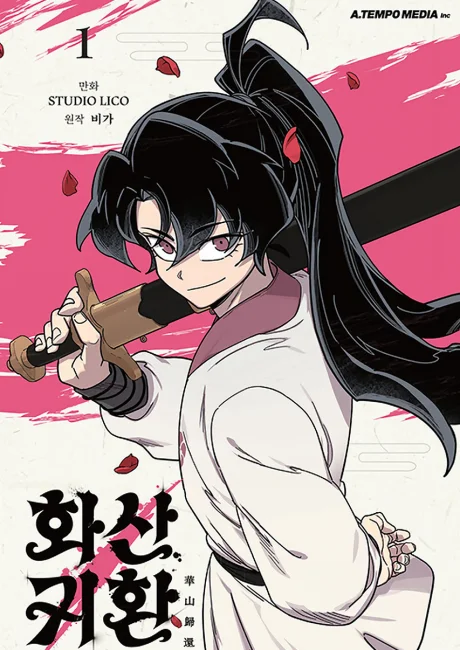 Return of the Blossoming Blade is the genre counterpart -- same murim sect-rebuilding premise, opposite tone: where Legend of the Northern Blade is severe, Blossoming Blade is comedic.
The middle arc (roughly chapters 40-120) is where Northern Blade's structural weaknesses concentrate. The return to the murim world introduces a political layer: how sects interact, how power is distributed, how the Silent Night has embedded itself in that structure over decades. This is interesting territory. The series doesn't invest enough in it.
Characters arrive with apparent significance (a sect leader who knows something about Jin Kwan-Ho, a faction that has its own reasons for opposing the Silent Night, a figure whose allegiance is unclear) and then disappear for twenty or thirty chapters at a time. When they return, the series expects the reader to carry the weight of their earlier introduction. Some of this works. A lot of it doesn't, because the introductions weren't deep enough to sustain that kind of absence.
The Silent Night itself stays underwritten. The antagonist organization has internal structure (ranks, competing priorities, long-term goals) but these are described rather than dramatized. Individual Silent Night agents are characterized enough to function as threats, but the organization as a system, as something with its own internal logic and contradictions, doesn't come through. A series about restoring a sect destroyed by a conspiracy should be more interested in how that conspiracy actually works.
None of this makes the middle arc unreadable. It makes it uneven. The action sequences carry the weight that the political plotting doesn't. But readers who came for world-building depth will notice the gap. Return of the Blossoming Blade handles the sect-politics dimension with substantially more care. It's worth reading as a companion piece specifically for that contrast.
Our best cultivation manhwa list covers the top murim and martial arts progression reads.
Best Cultivation Manhwa →
Verdict: Legend of the Northern Blade Review Final Score
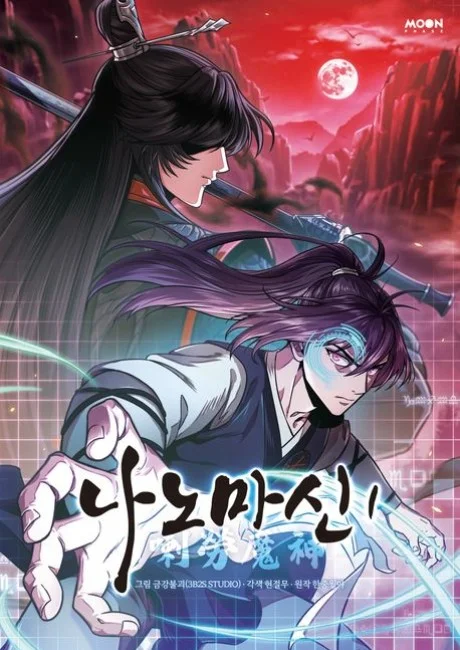 Nano Machine for readers who want the murim-action pacing without Legend of the Northern Blade's darker survival tone.
The Legend of the Northern Blade review conclusion: this is the murim manhwa to recommend to someone who bounced off the genre because fights all look the same. Hae-Min's choreography is the genre's clearest and most spatially coherent, and that quality alone earns the read.
The story underneath the art is solid, not great. It's a clean revenge-and-restoration arc that wraps at 202 chapters without padding and delivers a resolved ending. These are criticisms of a good series, not a mediocre one.
The Good
- Fight choreography is spatially coherent across panels: attacks have paths, not just impacts
- 202 chapters, fully completed with a confirmed happy ending. Zero wait, binge the whole run.
- Protagonist builds power through actual work, not a system prompt or convenient inheritance
- Art improves measurably arc by arc: chapters 150-202 look substantially better than 1-40
The Cons
- Mountain training arc is compressed to the point of elision. The core premise deserved more page time.
- Middle arc's political plotting introduces characters who vanish for 30 chapters at a time
- Silent Night's internal structure stays underwritten relative to how long they function as the threat
What makes the completed-status argument particularly strong here is that the genre's problem isn't usually quality. It's abandonment. Promising murim series stall at 150 chapters, go on hiatus, or get cancelled before resolution. Northern Blade doesn't have that problem. You get 202 chapters, a resolved narrative, and a happy ending. The ask is five to ten hours. For what you get back, that's a reasonable trade.
Rating: 8.5/10
Frequently Asked Questions
Is Legend of the Northern Blade completed? Yes. AniList marks the manhwa FINISHED at 202 chapters, and the official Tappytoon listing presents the completed English edition. Binge the entire manhwa without any wait. One of the strongest arguments for picking this up now.
Where can I read Legend of the Northern Blade in English? The official English translation is on Tappytoon at tappytoon.com. Some early chapters are free; later chapters require coins. AniList links the Korean release to Kakao Page, and no official WEBTOON listing was found.
Is Legend of the Northern Blade on WEBTOON? No. The official English release is on Tappytoon, not the WEBTOON platform (webtoons.com). If you find it there, it's an unauthorized fan scan. The Korean original is on Kakao Page.
How long does it take to read Legend of the Northern Blade? At 202 chapters, most readers finish in 5-10 hours at a normal pace. Chapters are action-dense. Because the series is complete, there's no reason to pace yourself. The ending is already waiting.
What makes Legend of the Northern Blade different from other murim manhwa? Two things: the protagonist earns his power through genuine isolated self-study rather than a system, mentor, or inheritance. And the fight choreography is spatially coherent across panels in a way most manhwa aren't. Both qualities are rarer than they should be.
Who wrote and drew Legend of the Northern Blade? Story by Woo-Gak and art by Hae-Min. AniList lists the webtoon start date as December 31, 2019; Kakao Page is the Korean platform and Tappytoon is the official English platform.
How does Legend of the Northern Blade compare to Nano Machine? Nano Machine escalates faster and leans on system mechanics: the implanted nano device provides measurable stat advantages early. Northern Blade is slower and more grounded, with Mu-Won building from near-zero through isolated technique study. If rapid power escalation is what you're after, Nano Machine. If you want the protagonist's growth to feel earned through work, Northern Blade.
What rating does this Legend of the Northern Blade review give? 8.5/10. The fight choreography and completion status are the strongest arguments for reading it. The compressed training arc and the middle arc's underdeveloped politics are the main criticisms. A strong series with specific, knowable weaknesses. Not a recommendation with reservations, just an honest one.
Related Reading
- Manhwa Like Legend of the Northern Blade: Seven picks sharing the martial arts revenge structure and solo-training arc.
- Return of the Blossoming Blade Review: The other elite murim revenge series, different in tone but, same genre register.
- Best Manhwa Martial Arts 2026: Ranked list of martial arts manhwa with Legend of the Northern Blade in context.
- Best Manhwa About Rejection and Revenge: Jin Mu-Won's father falsely accused and the sect destroyed, alongside 7 other manhwa built around a specific betrayal by someone close.
- Legend of the Northern Blade Character Guide: Full named roster, Jin Mu-Won, key allies, the Nine Skies, and the traitor behind his father's fall.
- Manhwa Like Surviving as a Genius on Borrowed Time: 3 Picks: names this series as the closest tonal match for its own unconventional-path protagonist
- Best Sword Manhwa: 8 Swordsmanship-First Series: ranks Legend of the Northern Blade as the best completed pick, where learning the sword is an inheritance from the sect's predecessors.