
This Tower of God review covers all three seasons of a sixteen-year manhwa: 652+ episodes, one hiatus, and a Season 2 that contains some of the best writing in the format. The series has frustrated its readership as often as it's rewarded them. The frustration has been worth it.
TL;DR: Tower of God review: 8.5/10. 652+ episodes free on WEBTOON. Season 1 (78 episodes) is slow setup, necessary but not the show. Season 2 is exceptional: the Workshop Battle arc alone justifies the investment. On hiatus after Season 3 ended February 23, 2025. Episode 79 is the turning point. Currently free, no paywall, no subscription required.
Rating it on Season 1 alone is like reviewing a television series based on a pilot. The pilot isn't the show. For completed action manhwa to compare against (including shorter series that don't require this kind of patience), see best completed manhwa.
Key Takeaways
- Rating: 8.5/10; Season 2 is exceptional, Season 1 requires patience, Season 3 is ambitious but uneven
- 652+ episodes free on WEBTOON, all readable now; no paywall, no subscription required
- On hiatus since February 23, 2025; Season 4 has no announced release date
- Episode 79 (Season 2 start) is the turning point that most long-term readers identify as when the series becomes what it actually is
- The Workshop Battle arc (Season 2) is the series peak
- Two anime seasons on Crunchyroll; neither approaches the source material's depth
Overview
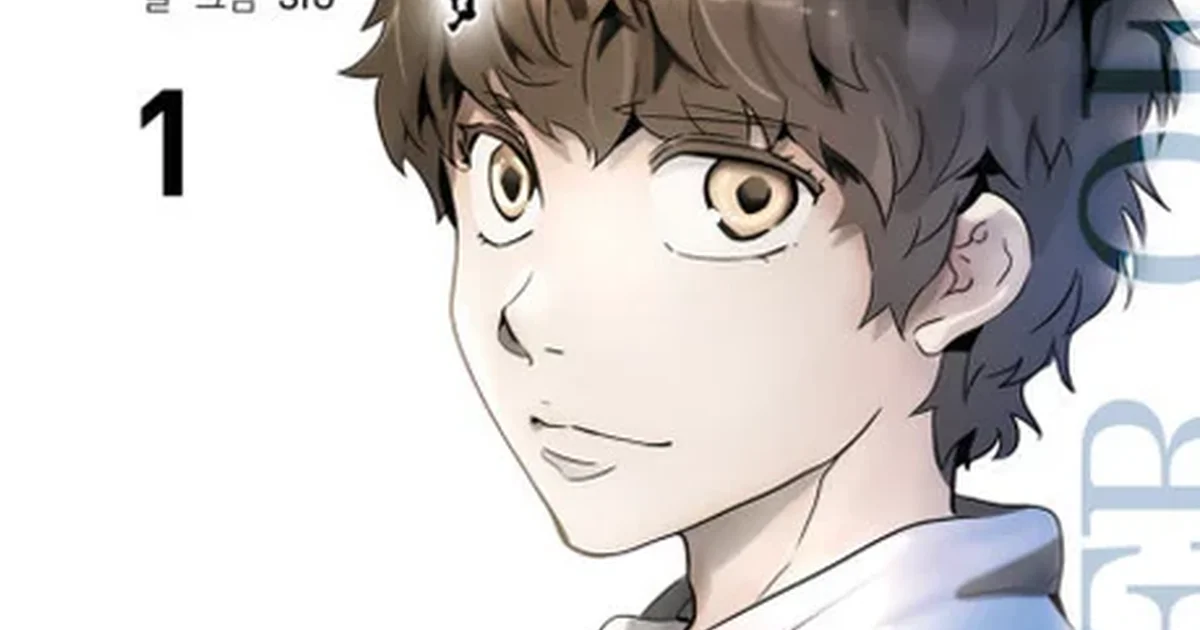
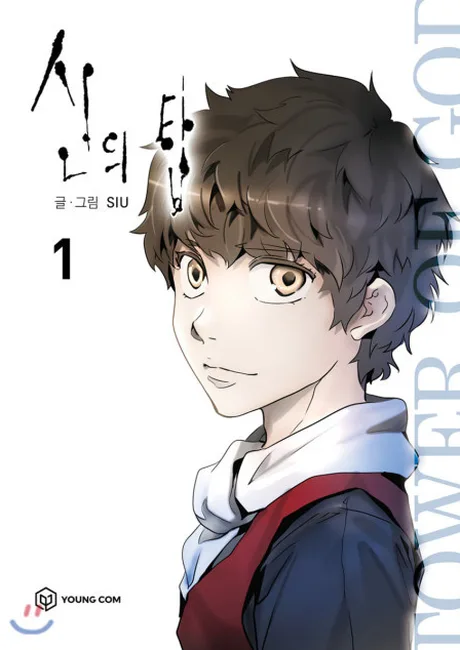 Official cover art for Tower of God by SIU, serialized free on WEBTOON since 2010. Source: AniList.
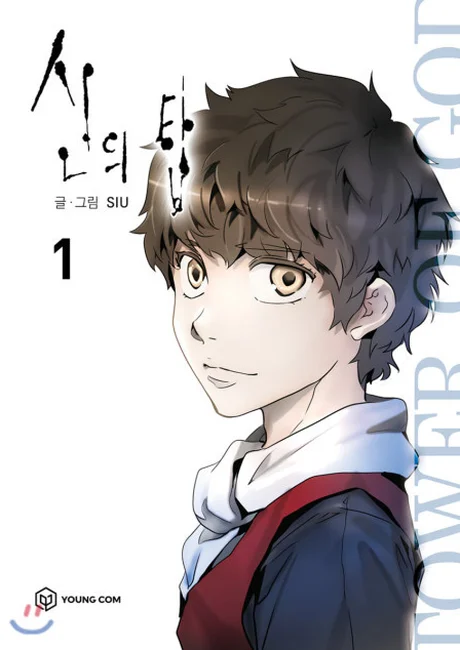 Tower Of God.
Twenty-Fifth Bam enters a Tower he doesn't understand to follow Rachel, the only person he knows. Each floor of the Tower presents a test that must be passed to climb higher. Passage grants access to power, wealth, and the world above. Failure means staying below, forever.
That's the Season 1 premise. Season 1 is also 78 episodes of test structure that functions as prologue for what comes next. Bam and the people he meets on the lower floors are pieces being positioned for the actual story, which begins at episode 79.
Tower of God characters: the core trio
Advertisement
Twenty-Fifth Bam is the protagonist and an Irregular: someone who entered the Tower without an invitation. Irregulars are supposed to be impossible. They break the Tower's established rules by nature, which makes Bam an anomaly that the Tower's power structures have strong reasons to eliminate.
Rachel is the girl Bam follows into the Tower. Their relationship in Season 1 appears to be straightforward loyalty; by the end of Season 1, it's clear it was never that. Rachel is the series' most discussed character and the reason most readers cite for why Season 1's ending changes the entire premise.
Khun Aguero Agnis is a strategist from one of the Tower's ancient noble families, cut off from his family's resources for reasons Season 2 eventually explains. He's the closest thing Tower of God has to a tactician protagonist. Where Bam fights forward, Khun plans. Their dynamic carries large portions of Season 2.
Rak Wraithraiser is a Great White Crocodile who enters the Tower to hunt "prey." He's the ensemble's physical anchor and comic relief in Season 1, a position that evolves significantly in Season 2 when the series starts taking his arc seriously. The shift from joke character to something more complete is one of the series' quieter achievements.
Tower of God power system: Shinsu and positions
Shinsu is the fundamental energy of the Tower. It's present on every floor, denser on higher floors, and what separates Tower residents from baseline humans. Shinsu manipulation is the basis of combat: Wave Controllers concentrate and direct it as ranged attacks, Fishermen use it to amplify close combat, Spear-Bearers throw it as projectiles. Scouts and Lighthouses support the group with speed and positioning tools respectively.
The position system matters because it's how groups function on test floors. A well-balanced group includes one of each position. Most of Season 1's test structure is built around this team composition requirement, which means readers who understand what a Wave Controller vs a Fisherman does will find the early arcs easier to follow.
Irregulars like Bam are different because they don't enter the Tower through the standard invitation system; they force entry. This means they aren't assigned a floor level, haven't been screened, and their Shinsu potential isn't on record. In a system built on controlled ascent, an Irregular's existence is a structural violation.
Season 1: the setup
Season 1 (78 episodes) has two things working against it. The test structure (each floor presents a task, the ensemble completes or fails it, someone dies or doesn't, they advance) is functional but not distinctive. And the cast, while large, isn't differentiated enough yet for their dynamics to carry the chapters between test sequences.
The test at the top of Season 1, involving Rachel and Bam's relationship, is the first moment the series shows what it can do emotionally. By then most readers have committed. That's either good or a sign of front-loaded patience requirements, depending on how you interpret it.
Season 1 is not bad. It's a slow setup that would be unremarkable as a standalone story and necessary as a foundation for what follows.
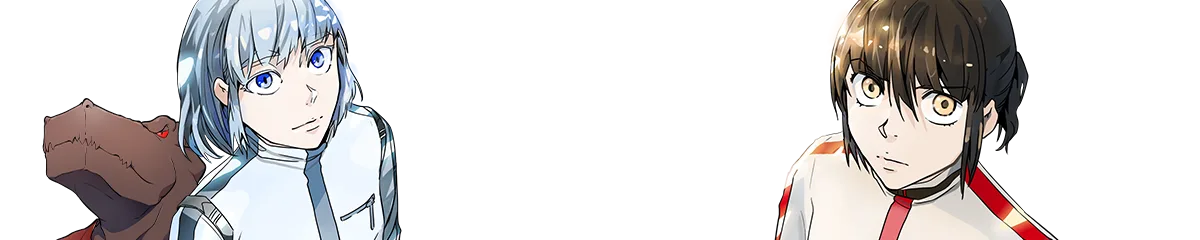 Tower of God promotional banner from the official WEBTOON series page. Source: WEBTOON.
Season 2: the payoff
Season 2 is where Tower of God becomes what it is. The time skip opens with a changed Bam (still recognizable, but not the naive kid from Season 1) and a cast that has scattered through the Tower's political landscape. The scale expands from individual floor-climbing to faction warfare: Zahard's empire, the Irregular population, the Slayer candidates, the ancient families whose histories the world is built around.
The Workshop Battle arc is the series at its highest. Multiple factions converge on a single event, each with their own agenda. SIU's writing in this arc manages something rare in long-form serialization: actions have consequences that persist, character decisions cost something, and the plot doesn't reset to a comfortable status quo between arcs. By the end of the Workshop Battle, the series has changed in ways that the Hell Train arc and everything after is built on.
Season 2 runs longer than it should. The Hell Train arc is compelling in its own right but extends past the point where compression would have served it. Some readers stall here. That's a legitimate response. The Workshop Battle is the answer to "show me why this series has 652 episodes."
For where to find all episodes and how to navigate Season 2's Episode 0:
Tower of God Reading Guide →
Season 3: ambitious and uneven
Season 3 operates at a scale that Season 1 couldn't have anticipated. The political structures SIU built across Season 2 are paying off in ways that require understanding what came before: who the named factions are, why Zahard's forces function as they do, what each major character was working toward through the Hell Train and its aftermath.
The season opens with the consequences of Season 2's final confrontation still fresh. Bam has changed again, in ways that put him in direct conflict with the Tower's established power structure rather than simply climbing through it. The antagonists who felt distant in Season 1 and increasingly present in Season 2 are now unavoidable.
What distinguishes Season 3's writing from Season 2 is its relationship with the cast SIU built. Characters who were introduced as minor pieces in Season 1 (Karaka is the clearest example) arrive in Season 3 with accumulated context that makes their arcs land significantly harder than they would for readers who skimmed. The reward is proportional to prior investment. Some arcs in Season 3 would work in isolation; the best ones don't.
SIU's art in Season 3 is visibly more technically ambitious than what came before. Full-floor environments with real spatial logic, choreography that uses each character's specific powers distinctively, and full-page spreads that earn their scale. If you found the art in Season 1 (by its own admission, an early work) rough around the edges, Season 3 is where that growth is most visible.
Season 3 concluded on February 23, 2025. SIU ended at a season boundary that functions as a genuine stopping point: not every thread closed, but the immediate arc resolved, and what's left open is clearly setup for a Season 4 rather than a dangling mid-story cut. Whether that's acceptable depends on your tolerance for ongoing serialization with no fixed end date.
Tower of God review: art and story
SIU's visual style is one of the most distinctive in manhwa. The Tower's architecture is rendered with structural specificity: floors are not interchangeable settings but distinct environments with their own spatial logic, lighting, and implied physics. The visual language of the test floors in Season 1 (sparse, institutional, geometric) shifts in Season 2 into something more organic and politically layered, reflecting the story's move from individual climbing to faction conflict.
The character design manages something difficult at the series' scale: a cast of dozens of named characters who remain visually distinct across hundreds of episodes. SIU uses silhouette differentiation aggressively, which means characters remain recognizable even in crowd panels. The Irregular and Regular populations have visual tells that reinforce their in-world status differences without requiring constant dialogue explanation.
Fight choreography becomes more confident from Season 2 onward. Season 1's test structure keeps combat functional and clear. The Workshop Battle arc is where SIU uses panel scale and environmental staging most ambitiously: fights in that arc have spatial stakes (what the combatants are fighting over physically, not just narratively) that make the visual storytelling do structural work.
The narrative structure is the most ambitious aspect of the series. Tower of God uses its 652+ episode run to build a world with genuine historical depth: the ancient families, the Zahard empire's origins, and the Tower's fundamental nature are revealed incrementally, so that readers in Season 3 understand the setting differently from readers in Season 1. That layered reveal is rare in long-form manhwa and is the primary argument for the investment required to reach the later seasons.


Tower of God anime: Season 1, Season 2, and what comes next
Two anime seasons exist and they are meaningfully different from each other, different studios, different art direction, different receptions from the community.
Season 1 (13 episodes, April. July 2020, Telecom Animation Film) covers the Tower's first tests through roughly chapter 78. It's a faithful adaptation in terms of plot, but the character designs compress the manhwa's visual complexity into a softer, more conventionally anime aesthetic. Community reception was mixed on the adaptation quality while being broadly positive on the source: Season 1 introduced a large number of readers to the Tower of God manhwa, which is why the WEBTOON saw its biggest growth period around 2020, 2021. Available on Crunchyroll.
Season 2 (The Answer Studio, 2024) covers the next major arc stretch (chapters 79 onward, including the Workshop Battle). It's a different studio, different art style, and the production quality inconsistency between episodes was noticeable. Community consensus on Season 2: the story it's adapting is stronger than Season 1's material, but the animation execution was weaker. If you watched S2 hoping for a visual upgrade from S1, the result was the reverse.
Where to start reading after the anime: If you finished Season 1, the manhwa picks up directly from chapter 79. If you watched Season 2, starting from chapter 1 is still worth it, the manhwa's art is significantly more detailed than either adaptation, and the early arcs read differently when you're not working around animation shortcuts.
Season 3 has no official announcement. The production gap has been extended by the hiatus discussed below. Fan campaigns for S3 are active but no studio has confirmed.
The hiatus
The hiatus is the most practical issue for a reader approaching Tower of God in 2026. No Season 4 date has been announced. SIU has documented health issues going back years, and the community around the series has generally been patient with extended breaks; this isn't the first and isn't treated as abandonment. The creator has been transparent about his situation across multiple announcements on the WEBTOON platform.
To put it in context: Tower of God has been serializing since 2010. It has run through multiple hiatuses and returned each time. The current break follows a Season 3 finale that functions as a real stopping point, not a mid-arc cut that leaves key story questions unanswered mid-beat. It's frustrating, but it's also a pause in a sixteen-year series that has, historically, come back.
Practically: reading Tower of God right now means committing to 652+ episodes of free content and then stopping at what is, by long-form manhwa standards, a well-structured pause. Readers who have followed the series since 2010 and waited through prior breaks find that framing more acceptable than readers arriving expecting a completed story. Both responses are reasonable.
Season 4 could arrive in 2026 or 2027; the community at r/TowerofGod has speculation threads worth scanning if you want current status. Starting now puts you in position to be current when it does. Given the pace at which most readers work through 652 episodes, you're unlikely to run out of material before news arrives.
For the broader picture on where Tower of God sits in the completed and ongoing manhwa landscape:
Best Manhwa to Read in 2026 →
Tower of God Review Verdict
Advertisement
The Good
- Season 2 is among the best long-form manhwa writing: political intrigue, ensemble cast, consequence-driven plotting
- 652+ episodes entirely free on WEBTOON, no paywall, no subscription, no coin system
- The Workshop Battle arc is one of the medium's best sustained sequences
- Bam's arc across three seasons is one of the most complete protagonist journeys in ongoing manhwa
- The world-building accumulates across all three seasons in ways that reward every episode you've read before
The Cons
- Season 1 (78 episodes) is slow, test-based setup that front-loads patience before any real payoff
- On hiatus after Season 3; no Season 4 date announced; SIU has documented health issues
- The cast size in Season 2 and beyond requires genuine attention to track, dozens of named factions and characters
- The Hell Train arc (Season 2) extends past its natural endpoint and divides the community
Rating: 8.5/10
Season 2 earns a higher score than this review gives the series as a whole. Season 1 brings it down. Season 3 holds steady. The average across all three is a series that achieves things other manhwa don't attempt, in a format that rewards the investment if you reach chapter 79 and keep going.
The Workshop Battle is worth the 78 episodes before it. The hiatus is annoying. The cast size in Season 2 and beyond requires genuine attention to track. None of that changes the fact that Tower of God at its best is writing at a level most serialized action manhwa doesn't approach.
Read it. Start at episode 1, don't skip, and reach episode 79. This Tower of God review reflects the full series through Season 3's conclusion in February 2025.
The Telecom Animation Film anime from 2020 and The Answer Studio Season 2 anime from 2024 are both worth watching as a preview of the early material. For how the anime compares to the manhwa scope and where to pick up reading after each season, see Manhwa with Anime Adaptations in 2026 →.
Tower of God is one of the longest and most ambitious manhwa in the isekai genre. For how it ranks against other top entries, see the best isekai manhwa list.
Frequently Asked Questions
Is Tower of God worth reading in 2026?
Yes. 652+ episodes free on WEBTOON, all readable now. The series is on hiatus after Season 3 ended in February 2025, which means there's a real stopping point you can reach rather than a mid-arc cut. The investment is large but the payoff, especially in Season 2, is among the best in the format.
How long is Tower of God?
652+ published episodes across three seasons. Season 1 is 78 episodes, Season 2 is the longest (400+ episodes), Season 3 concluded at around 235 episodes in February 2025. At a pace of 20-30 chapters per sitting, this is a multi-week read. Free on WEBTOON.
Is Tower of God completed?
No. Tower of God is on hiatus after Season 3 concluded on February 23, 2025. SIU has not announced a Season 4 release date. All 652+ published episodes are readable, but the story is not concluded. Season 3's ending provides a genuine stopping point.
When does Tower of God get good?
The standard answer among long-term readers is episode 79, the start of Season 2. Season 1 is 78 episodes of test structure and world setup. Season 2 opens with a time skip, a changed protagonist, and faction politics that operate at a different scale. Most readers who bounced off Season 1 report significantly higher engagement from Season 2 onward.
What is the best Tower of God arc?
The Workshop Battle arc in Season 2 is the most commonly cited. It brings multiple factions into conflict for the first time, introduces major secondary characters, and escalates the series from individual climbing into something resembling an ensemble political thriller. The Hell Train arc that follows is longer and more divisive.
Is the Tower of God anime worth watching?
Season 1 (2020, 13 episodes) compressed 78 manhwa episodes into a single cour, watchable but thin. Season 2 (2024, 26 episodes, The Answer Studio) is better. Neither approaches the manhwa's depth or visual detail. The anime is a functional preview; the manhwa is the actual experience.
What is Tower of God about?
Twenty-Fifth Bam enters the Tower (an enormous structure containing entire worlds within its floors) to follow Rachel, the only person he knows. Each floor presents a test that must be passed to climb higher. The premise opens as a tournament arc and evolves into a multi-faction epic with decades of accumulated world-building behind it.
Related Reading
- Manhwa Like Tower of God: 9 Picks for Faction Politics and Epic Climbing: Nine recommendations sorted by which aspect of Tower of God drew you in, covering faction politics, tower-structure series, and ensemble mysteries.
- Best Completed Manhwa: 20 Series With Real Endings: Curated list of fully finished series for readers who prefer not to commit to an ongoing or hiatus title.
- Best Manhwa to Read in 2026: 20 Series Worth Your Time: Full 2026 reading list across action, fantasy, and genre picks with Tower of God placed in context.
- Tower of God Characters: Bam, Khun, Rak, and Every Ranker
- Best Selling Manhwa of All Time: Tower of God's 1.3 billion official WEBTOON views, the highest of any series checked for that list.
- Manhwa Could Be Big Three: Is Any Series Close Enough?: Tower of God is one of the names readers actually nominate for a manhwa Big Three, and the honest reasons why it's not there yet.