Loading…
ChapterBrief · Manhwa
Manhwa Like The Promised Neverland: Top Dark Picks
Manhwa like The Promised Neverland, sorted by what you loved: children in survival horror, escape planning, or dark world-building reveals. 6 picks.
11 min readBy Sophie Laurent
TL;DR: Searching for manhwa like The Promised Neverland is a valid question about structural and emotional qualities, not a format request. The Promised Neverland is Japanese manga, not manhwa, but its structural qualities have manhwa equivalents. For children protagonists in survival horror: The Horizon (30 chapters, completed)
Manhwa like The Promised Neverland is a question that starts with a necessary clarification and then gets genuinely interesting. The Promised Neverland (Yakusoku no Neverland) is a Japanese manga, not manhwa. It ran in Weekly Shonen Jump from 2016 to 2020, written by Kaiu Shirai and drawn by Posuka Demizu. Manhwa is Korean. The distinction isn't trivial, because the formal differences are real: manhwa is typically full-color and vertical-scroll, manga is black-and-white and print-oriented. When readers search for manhwa like The Promised Neverland, they're not asking for a format equivalent. They're asking whether Korean comics have produced anything with TPN's specific emotional and structural properties.
Those qualities exist in manhwa. Not always in the same series, and not always at the same pitch. This guide to manhwa like The Promised Neverland names which series delivers each of TPN's core qualities most directly, and addresses the arc 1 versus full-run split that shapes what different readers are actually looking for.
Key Takeaways
- Searching for manhwa like The Promised Neverland is a valid question about structural and emotional qualities, not a format request
- The Promised Neverland is Japanese manga, not manhwa, but its structural qualities have manhwa equivalents
- For children protagonists in survival horror: The Horizon (30 chapters, completed)
- For intellectual cat-and-mouse with a competent adult antagonist: Bastard (92 chapters, completed)
- For the "world is worse than you thought" reveal structure: Sweet Home (141 chapters, completed)
- For the high-school-as-system trap with intellectual stakes: Dice: The Cube That Changes Everything (WEBTOON, completed 388 episodes)
- For a vulnerable protagonist winning through intelligence against superior physical threat: Weak Hero (completed)
- TPN's arc 1 (Grace Field House) is tightly plotted survival thriller; the later arcs are widely considered weaker. Readers who stopped at arc 1 will have different needs than readers who finished the full run
- See best completed thriller manhwa if you want only series with actual endings
Overview: What Manhwa Like The Promised Neverland Should Deliver
The more interesting question isn't what TPN is about, it's what mechanics produce its tension.
Grace Field House runs on information asymmetry. Emma, Norman, and Ray know. Isabella doesn't know they know. The structure generates sustained dread from the gap between what the protagonists understand and what they can safely reveal. When the gap closes (when Isabella figures out that they know), the series escalates because the reader has been tracking two chess games simultaneously. The children's escape plan and Isabella's countermeasures. One mind against another, both partially visible to the reader.
The second mechanic is systemic horror. The farm isn't a random act of cruelty. It exists inside a structured world where demons and humans have negotiated this arrangement over centuries. The horror deepens not because the danger escalates but because the world reveals itself as having been designed for this. The children aren't victims of an individual monster. They're inside an institution that functions correctly from the perspective of the species that built it.
The third mechanic is children as genuine protagonists, not honorary adults. Emma and Norman are eleven. Their plan has the logic of very smart children: it accounts for variables they can see and misses several they can't. This is different from the many manga and manhwa where "young protagonist" is aesthetic and the character reasons and fights like an adult. TPN's early arcs preserve the vulnerability of actual children operating at the edge of their understanding.
The later arcs (everything after the escape) largely abandon the first two mechanics. The story expands to world-building at the expense of closed-room tension. Norman becomes a strategist operating at a different scale, and the cat-and-mouse narrows to geopolitical maneuvering. Whether this is a failure or a different kind of success is a genuine debate, but it means readers who loved arc 1 are looking for something specific that the full manga itself eventually stops providing.
Our master manhwa reading list covers the top 30 titles across every genre for 2026.
Best Manhwa to Read in 2026 →
The Horizon: Manhwa Like The Promised Neverland for Children, Completed
Advertisement
The Horizon is the strongest answer for readers looking for manhwa like The Promised Neverland's first arc specifically. Jo Ui-shin's 30-chapter completed WEBTOON is the closest manhwa to TPN's arc 1 emotional register. The premise is nearly the inverse: instead of children in a hidden institutional horror, two children walk through a post-apocalyptic world that has stopped hiding what it is. A boy, a girl, no names given for much of the series, moving through a world populated by adults who are dangerous, broken, or absent.
What makes this the correct comparison isn't genre overlap: it's the scale of what the protagonists can do. They're children, with children's physical limitations and children's reasoning. The boy survives the early chapters through luck and instinct rather than plan. The threat isn't one antagonist but the accumulated weight of a world that has already decided children aren't the priority. The tone is quiet dread. Not shock, not action setpiece. The same register TPN's Grace Field House runs on before the escape plan fully emerges.
It's a survival manhwa where children outwit adults, when they manage it, through timing and wit rather than force.
The Horizon doesn't have TPN's institutional architecture. There's no Grace Field, no Isabella, no systematic organization to the horror. The danger is ambient and structural rather than conspiratorial. But readers who valued TPN's quality of vulnerability (the sense that these specific children might not make it) will find it here at higher density than anywhere else in manhwa.
At 30 chapters, The Horizon ends before it can outlast itself. This is relevant. TPN's later-arc problems are partly a function of scale (more story than the original premise could structurally support). The Horizon never faces that problem.
 Bastard.
Bastard: Intellectual Cat-and-Mouse, Completed
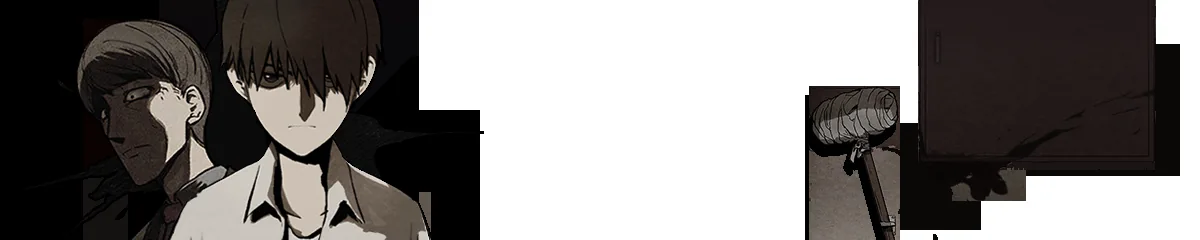
When the question is manhwa like The Promised Neverland for the intellectual cat-and-mouse quality, Bastard (Kim Carnby and Hwang Young-chan, 92 chapters, completed on WEBTOON) is the most direct answer. Jin Seon is a high school student whose father is a serial killer. Jin knows. His father knows Jin knows. The story runs on the gap between these two pieces of knowledge, and what happens when other people enter that gap without understanding it.
The structural comparison to TPN is precise rather than approximate. Both series place a young protagonist with superior situational awareness next to a threat who is genuinely competent, not an action-manga villain who exists to be defeated, but an antagonist whose threat is real and whose moves require anticipating. In TPN, Isabella is the closest thing the series has to an equal for the children. She doesn't underestimate them, which is why she's frightening. In Bastard, Jin's father is frighteningly capable and has been doing this for years. The protagonist's only advantage is knowing what other characters don't.
The difference is in register. Bastard is psychological horror where TPN is survival thriller. Bastard's tension comes from proximity and complicity: Jin is not running from his father, he is living with him, going to school, presenting normalcy. The claustrophobia is interior. TPN's tension is architectural: the fence, the tracking devices, the harvest schedule. The planning in Bastard is social performance rather than logistics. It's the dark webtoon with horror and strategic thinking that comes closest to replicating TPN's chess-match tension, even though the horror itself lives in a different place.
For readers who want more of the cat-and-mouse psychological structure that TPN runs on in its best chapters, Bastard is the closest manhwa delivers. That it's 92 chapters and complete matters: no stall, no filler arcs, no narrative drift.
 Sweet Home.
Sweet Home: World-Building Reveal Structure, Completed
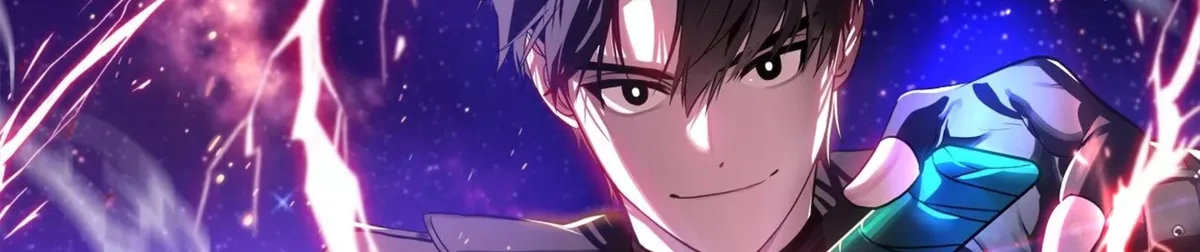
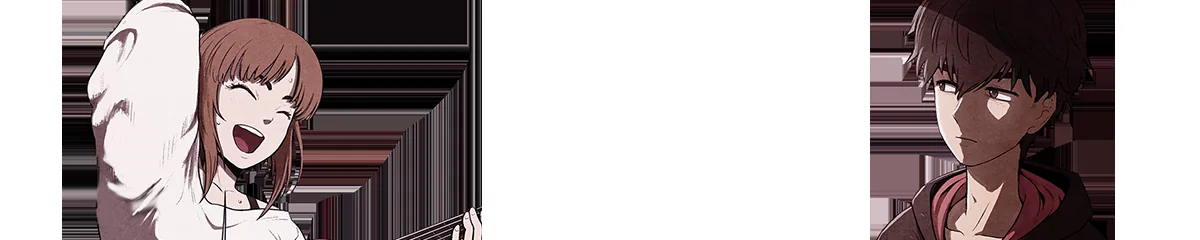
Sweet Home is the best recommendation for manhwa like The Promised Neverland where "the world is worse than you thought" is the primary quality. Kim Carnby and Hwang Young-chan's 141-chapter completed WEBTOON approaches TPN's structural quality from the opposite direction. Where TPN reveals that the horror was always institutional and designed, Sweet Home reveals that the horror is inside the people themselves. The monster transformation mechanic (humans becoming creatures shaped by their suppressed desires) works like TPN's farm reveal: it recontextualizes everything before it.
The protagonist, Cha Hyun-soo, is a shut-in teenager who moves to an apartment building the week the transformation crisis begins. He is not a children-protagonist in the TPN sense (he's 17, and the ensemble around him includes adults). The survival register is different, more kinetic and less chess-game. Sweet Home's survival is ensemble and tactical; TPN's is dyadic and strategic.
Where the series earns its place on this list is the world-building reveal structure. Sweet Home doesn't front-load its rules. The reader understands the transformation mechanic gradually, across dozens of chapters, in the same incremental way TPN reveals the scope of the demon world. Each revelation makes the situation worse and more coherent simultaneously. The horror isn't that the world is chaotic: it's that the world is operating exactly as it was designed to.
The Netflix adaptation exists and diverges significantly from the manhwa. Readers who watched the show should know the manhwa's ending is a different thing. Sweet Home's manhwa alternatives covers what to read after completing it, but for TPN readers specifically, starting Sweet Home is the recommendation, not the adaptation.
Our best thriller manhwa list covers escape narratives and psychological horror reads.
Best Thriller Manhwa →
Analysis: Arc 1 Readers vs. Full-Run Readers
The arc 1 vs. full-run split in TPN's readership is real enough to affect recommendations. It's worth making the distinction explicit.
Arc 1 readers stopped at the Grace Field House escape or shortly after. They experienced TPN as a tightly plotted, closed-room survival thriller with a clean structural logic. For this group, the most useful recommendations are series that preserve that closed-room quality: The Horizon for the children-in-danger register, Bastard for the intellectual cat-and-mouse, and completed series with actual endings. The instinct to recommend ongoing 600-chapter epics to this reader is wrong: they liked TPN because it was focused.
Full-run readers finished the manga, including the controversial final arc. They know the story expands to world-spanning political conflict, that Norman's character takes a hard turn, and that the ending is divisive. For this group, the relevant question is whether manhwa delivers the expanded mythological world-building TPN attempts in its later arcs. The honest answer is that no single manhwa does this, but Tower of God (on hiatus since Feb 2025, 652+ episodes) has the same quality of gradually revealed hidden political history, and manhwa like Attack on Titan covers the full category of "dark world-building that keeps getting bigger."
The one thing both groups share is that they want the intelligence to feel earned. TPN's characters think their way through problems. The antagonists are competent. The tension comes from minds operating against each other, not from power-scaling or combat. Readers who come to manhwa expecting that quality will find the genre skews heavily toward the opposite: strength, progression systems, power gaps closed through training. The series on this list are the exceptions.
Dice: The Cube That Changes Everything: System Horror, Completed
Dice: The Cube That Changes Everything (Yun Hyun-Suk, completed at 388 episodes on WEBTOON) covers different genre territory but shares TPN's structural interest in a system that traps its participants. High school students gain "Dice" that allow them to upgrade any stat, at the cost of an escalating dependency on the system and competition with each other. The horror is systemic: the rules are not neutral, the game is not fair, and the students who engage with it most are being changed in ways they don't fully register.
The survival element is present but different. No one is about to be harvested. The danger is the slow logic of a system that produces specific behaviors (competition, secrecy, escalating stakes) in the people inside it. For TPN readers who valued the institutional architecture of Grace Field House (the system functions correctly by its own logic; the horror is that it functions at all), Dice provides a structurally similar quality, and it's complete at 388 episodes.
It's a long but complete series: 388 episodes with an ending. This is not The Horizon's 30-chapter density. But for readers who can stay with a series, Dice is one of the few manhwa with TPN's interest in how systems shape behavior rather than just creating conflict.
Weak Hero: Intelligence Against Superior Threat, Completed
Weak Hero (Seo Paik and Kim Jin-seok, completed on WEBTOON) belongs on this list for one reason: it is about a protagonist who cannot win through strength and wins instead through an accurate assessment of threat, timing, and information. Gray Yeon is physically capable but deliberately deploys that capability only when the conditions give him an advantage. Otherwise he uses tactical de-escalation, misdirection, and careful engineering of confrontations he can win on his own terms.
This is not survival horror. Weak Hero is a school-violence thriller, a genre with different conventions than TPN's institutional horror. But the underlying intellectual posture is similar. The protagonist wins through thinking, not through acquiring power. The antagonists in Weak Hero are not cartoons: they're genuinely threatening people operating with their own logic. When Gray loses, he loses because his assessment was wrong, not because the story needed a setback.
TPN readers who valued the quality of Emma and Norman's careful reasoning (the sense that their success is conditional on getting the planning right) will recognize that quality in Weak Hero even though the genre frame is different. The full psychological thriller category covers more territory for readers who want to explore broadly.
Killing Stalking: A Note
Advertisement
Killing Stalking (Koogi, completed) appears on enough TPN recommendation lists to require acknowledgment. The structural parallel exists: a young protagonist in psychological proximity to a genuinely dangerous adult, information asymmetry as the primary tension, completed story. The difference is content: Killing Stalking is an 18+ manhwa dealing with captivity, psychological abuse, and graphic violence in ways that differ significantly from TPN's register.
Including it here without context is a disservice to readers expecting TPN-like content. It's not wrong as a recommendation for readers who specifically want psychological horror at adult intensity. It's wrong as an undifferentiated substitute for what TPN does, because TPN's horror is institutional and strategic and Killing Stalking's horror is interpersonal and visceral. They operate at different temperatures.
Frequently Asked Questions
What manhwa is most like The Promised Neverland?
The Horizon (30 chapters, completed) is structurally closest to The Promised Neverland's first arc: children alone in a hostile world, survival driven by wit and moral clarity rather than combat power, and a tone that treats quiet dread as more effective than shock. Bastard (92 chapters, completed) is the closest match for the intellectual cat-and-mouse element specifically: a teenage protagonist surviving proximity to a genuinely competent adult threat. Neither is a perfect substitute, but together they cover most of what TPN's first arc delivers. Is The Promised Neverland a manhwa?
No. The Promised Neverland (Yakusoku no Neverland) is a Japanese manga by Kaiu Shirai and Posuka Demizu, serialized in Weekly Shonen Jump from 2016 to 2020. Manhwa is the Korean equivalent. The distinction matters because manhwa is typically published in full-color vertical-scroll format (webtoon), while manga is black-and-white for print volumes. When readers look for manhwa like The Promised Neverland, they're looking for similar structural and emotional qualities in Korean comics, not a format remake. Are there manhwa with children protagonists in survival horror?
Yes, though they're rarer than adult-protagonist survival manhwa. The Horizon features two child protagonists (a boy and a girl) navigating a post-apocalyptic world, and it's one of the few series in the genre where children are genuinely at risk rather than functionally invincible. Sweet Home has some younger cast members but its ensemble skews older. Bastard has a teenage protagonist in a survival situation defined by psychological threat rather than physical apocalypse. What is the best completed survival thriller manhwa?
Sweet Home (141 chapters, completed on WEBTOON) is the strongest completed survival thriller manhwa by scope and emotional weight. The Horizon (30 chapters, completed) is the strongest by density: it packs an arc's worth of emotional impact into graphic novella length. Bastard (92 chapters, completed) is the best-constructed psychological survival thriller, with a tighter antagonist-protagonist dynamic than either. All three have actual endings, which matters in a genre where ongoing series frequently stall. Does any manhwa have the escape-planning structure of TPN's Grace Field arc?
Bastard comes closest to TPN's quality of intellectual survival: a protagonist who can't outfight the threat and must instead outthink it, using information asymmetry as the primary weapon. The 'who knows what' structure in Bastard is different from TPN's literal escape plan, but the underlying mechanic is the same: winning requires the protagonist to control what the antagonist believes, not to overpower them. Sweet Home has moments of tactical planning within the ensemble but doesn't sustain the single-protagonist intellectual structure that defines TPN's early arcs. Is there a manhwa version of The Promised Neverland's arc 1 without the later arcs?
The Horizon functions as the emotional equivalent of TPN arc 1 in isolation: a short, complete story about children surviving in a world that has already decided they aren't the priority. It doesn't have the institutional horror (no farm, no caretaker villain), but it has the same register: quiet, determined, grief-adjacent survival. At 30 chapters, it ends before it can replicate TPN's later-arc drift. Readers who stopped TPN after the Grace Field House escape and considered that a complete experience will find The Horizon satisfying on similar terms. What manhwa has the same slow world-building reveal as The Promised Neverland?
Sweet Home structures its horror around incremental revelation: early chapters establish the apartment building as a space, then gradually show how the outside world has already ended in ways the characters haven't processed. The reveal that the monster transformation is driven by human desire, rather than a random infection, works like TPN's reveal that the orphanage is a farm: it recontextualizes everything before it. For readers who valued TPN's quality of finding out the horror is systemic and designed rather than accidental, Sweet Home is the closest structural parallel in manhwa.
Related Reading
- Best Thriller Manhwa: 10 Series You Can't Put Down (linked above): 10 thriller picks for readers who want Promised Neverland's tension.
- Omniscient Reader's Viewpoint Manhwa Review: Earns Its Hype: Full review of the most strategically complex manhwa.
- SSS-Class Revival Hunter Review: The Best Death Mechanic: High-stakes survival with death-loop mechanics.
- Best Manhwa to Read in 2026: 20 Series Worth Your Time (linked above): 2026 list for readers crossing from manga thriller to manhwa.
- Tower of God Review: 652 Episodes and Worth Every One: Full review: survival, betrayal, and long-form stakes.
References
- Yakusoku no Neverland (The Promised Neverland), Kaiu Shirai / Posuka Demizu, Weekly Shonen Jump, 2016-2020. Manga series overview
- The Horizon, Jo Ui-shin, WEBTOON. Read on WEBTOON
- Sweet Home, Kim Carnby / Hwang Young-chan, WEBTOON. Read on WEBTOON
- Bastard, Kim Carnby / Hwang Young-chan, WEBTOON. Read on WEBTOON
- Dice: The Cube That Changes Everything, Yun Hyun-Suk, WEBTOON. Read on WEBTOON
- Weak Hero, Seo Paik / Kim Jin-seok, WEBTOON. Read on WEBTOON
About the author

Critical Theorist & Features Writer
Manhwa and webcomic critic with a background in literary analysis. Writing about narrative and genre since 2016. Specialises in genre history and story structure.
- Manhwa and webcomic critic since 2016
- Graduate background in comparative literature
- Published criticism covering Korean and Japanese comics
- Specializes in genre lineage and narrative structure
Disclaimer
This article is published for informational and entertainment purposes. It does not constitute professional financial, legal, or technical advice. Series availability, platform access, translation status, and chapter counts change. Verify critical details (pricing, regional availability, official translation status) with publishers and platforms. Affiliate links, where present, help support our editorial work and are labelled in our affiliate disclosure.
Comments
Loading comments…