
Most lists that claim to recommend the best manhwa psychological thriller treat "psychological" as a synonym for dark, violent, or unsettling. They're wrong. Darkness is weather. Psychology is the engine. The series that earn this label aren't just grim, their protagonists' minds determine what happens next. What a character believes, fears, refuses to see, or convinces themselves is true is the load-bearing element. Remove that interior logic and the plot collapses.
TL;DR: The best manhwa psychological thriller picks ranked by what makes them actually psychological, unreliable narration, moral ambiguity, and mind games.
This list uses a stricter definition: a best manhwa psychological thriller is one where deception, unreliable narration, moral ambiguity, or mind games function as the primary structural mechanism, not as decoration on top of action sequences. Eight series follow, some completed, some with current platform return notices. All earn the label on craft, not genre marketing. For tension across a wider range, including crime and survival horror that isn't necessarily built around interior psychology, see our broader best thriller manhwa list.
If you want dread to come from monsters, killers, or aftermath rather than cognition alone, the best horror manhwa list sorts verified picks by creature, psychological, and quiet literary horror.
psychological manhwa: what makes it different from thriller manhwa
Psychological manhwa turns a character's beliefs, fears, blind spots, or moral choices into plot mechanics. A thriller manhwa can center external danger, clues, or survival without doing that. Bastard and Cheese in the Trap belong here because perception changes what happens next. Our Best Thriller Manhwa list covers the broader external-threat category.
psychological romance manhwa: where to start
For psychological romance manhwa, start with My Deepest Secret if concealed motives and trust are the hook, or Cheese in the Trap if you want unresolved character ambiguity. Both make the relationship itself the pressure system. The romance is not a break from the psychological plot; it is the place where perception and power are tested.
psychological manhwas: completed vs ongoing
Advertisement
Completed psychological manhwas offer a controlled arc through Bastard, Sweet Home, My Deepest Secret, and Cheese in the Trap. UnOrdinary and I'm the Grim Reaper have current WEBTOON episode markers and return notices rather than a finished label. Choose the first group for closure, the second for developing ideas.
best manhwa psychological thriller: key takeaways
Eight best manhwa psychological thriller picks across four psychological modes, survival horror, obsession, moral ambiguity, and power psychology. The best manhwa psychological thriller category is broader than most readers expect:
- Bastard (AniList FINISHED, 94 source chapters; WEBTOON Completed), the tightest example of the genre. Every chapter is psychological pressure wearing the shape of a thriller plot.
- Sweet Home (AniList FINISHED, 141 source chapters; WEBTOON Completed), the broadest entry point. Monster horror as a container for something more uncomfortable about human desire.
- My Deepest Secret (WEBTOON Completed), the clearest psychological romance pick. Trust, concealment, and the gap between a caring surface and a hidden truth drive the tension.
- Cheese in the Trap (299 AniList source chapters; 301 WEBTOON episodes, Completed), the subtlest pick. It operates on sustained character ambiguity rather than plot mechanics, and the two counts are edition-specific.
- UnOrdinary (WEBTOON Episode 393, platform #407, return notice), the power psychology case. What a person does differently when they believe no one is watching.
- I'm the Grim Reaper (WEBTOON Episode 230, platform #232, return notice), ethical stakes as psychological mechanism. Who you are when forced to choose is the recurring question.
- Melvina's Therapy (WEBTOON Completed, 15 listed platform episodes), formally distinctive. A therapist who enters patients' traumatic memories, structured to make the reader uncomfortable about observation itself.
- The Boxer (AniList FINISHED, 133 source chapters; WEBTOON Completed), technically a sports manhwa. The dissociation is the story by chapter 10.
best manhwa psychological thriller: overview, what separates the genre
"Psychological thriller" has a classification problem in manhwa. The label gets applied to anything with a murder, a manipulative antagonist, or a dark visual aesthetic, to series whose protagonists are primarily reactive, where things happen to them and the story is about surviving those things. That's survival fiction, or horror fiction. Both are valid genres. Neither is a psychological thriller in the structural sense.
The best manhwa psychological thriller puts the protagonist's cognition at the center of causation. In Bastard, Jin Seon's complicity is not incidental to the plot, it is the plot. Every decision he makes or refuses to make is produced by a psychology the series has spent chapters building, and the thriller mechanics (will his father be caught, will the girl survive) are secondary pressure on that psychology rather than the story's actual interest.
In Cheese in the Trap, the psychological mode is epistemological. Seol, the narrator, is smart and careful, but the story withholds enough information about Yoo Jung that her readings of his behavior might be wrong. The reader lives in that uncertainty across 299 AniList source chapters and 301 WEBTOON episodes. No twist resolves it. The ambiguity is the point.
Carnby Kim is a defining voice in the survival-horror branch of the best manhwa psychological thriller. His work shares a preoccupation with whether survival is worth having. The rest of this list fills out the other psychological modes.
Our best thriller manhwa list covers the top psychological and horror-adjacent reads.
Best Thriller Manhwa →
Completed Picks, Start and Finish
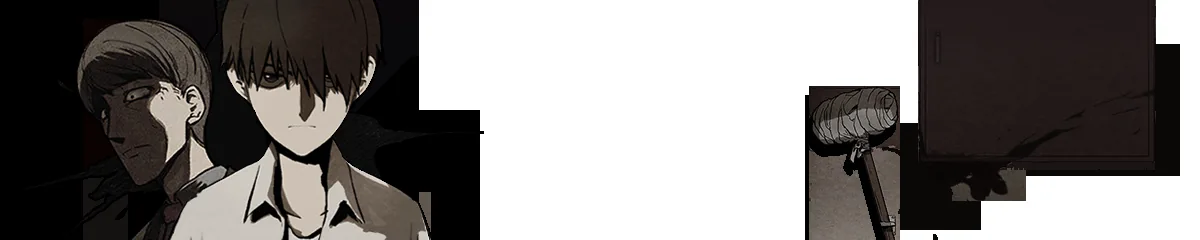 Bastard cover.
Bastard (94 AniList source chapters, completed on WEBTOON)
Bastard earns its place as the best manhwa psychological thriller on this list for pure structural integrity: no filler arcs, no mythology sprawl, just sustained interior pressure from first chapter to last. Jin Seon is the son of a serial killer. His father uses him to lure victims. The first chapter establishes the dynamic in one page without excess exposition. The completed run tightens the question of what kind of person complicity has made Jin, and whether he can stop being that person without being destroyed. AniList lists 94 source chapters, while WEBTOON uses its own platform episode packaging and marks the series Completed.
The series is precise about what it refuses to explain. Jin's father, Seon Jin, is charming, controlled, operating at a level of social deception the reader understands long before Jin admits it to himself. The thriller mechanics, will he be caught, will Yun Ji survive, are real, but they function as pressure on the actual story, which is about a boy who understands what he is part of and has to work out what he's willing to do about it.
By chapter 30, the power dynamics between Jin and his father are rendered precisely enough that the genre classification becomes almost incidental. Written by Carnby Kim and illustrated by Youngchan Hwang.
As the best manhwa psychological thriller with no wasted chapters, Bastard is the obvious first recommendation for anyone new to the genre. For readers who want context on other completed series at this level, the best completed manhwa list covers 15 series and includes notes on where Bastard sits within the genre. The best manhwa psychological thriller for pure efficiency is Bastard. Everything else on this list requires more patience.
Sweet Home (141 AniList source chapters, completed on WEBTOON)
Sweet Home is the most accessible entry in the best manhwa psychological thriller genre for readers new to Korean webtoons. It operates at a larger scale than Bastard but maintains the same core question. Humans with strong enough desires transform into monsters. The protagonist, Cha Hyun-soo, is suicidal before the outbreak begins, a narrative choice that reconfigures what the series is actually about. It isn't asking whether the characters survive. It's asking whether Hyun-soo wants to.
AniList lists 141 source chapters, while WEBTOON marks the English series Completed and packages its episodes separately. The Netflix adaptation (three seasons, 2020-2024) diverges significantly after season 1 and expands side characters in ways that thin the central psychological argument. The manhwa's answer, that the desire to survive can coexist with a belief that one doesn't deserve to, is quieter than the adaptation suggests. Chapter 40 is where the psychological layer stops being subtext. Chapter 80 is where it becomes explicit.
The wider Carnby Kim survival-horror work is useful context, but this list stays with the entries whose psychological mechanism is central to the recommendation.
My Deepest Secret (completed, WEBTOON)
Status: WEBTOON Completed; English page does not expose a reliable total in its public index
My Deepest Secret starts with Emma and her handsome, caring boyfriend Elios. The official WEBTOON synopsis immediately adds the pressure point: Elios is hiding a deep secret. That premise makes the relationship itself the thriller mechanism. Emma has to decide what she knows, what she trusts, and what the evidence means before the story can offer a stable answer.
The series is the cleanest psychological romance entry here because the concealed truth is not a late decoration. It changes how every affectionate gesture reads. WEBTOON marks the English series Completed. The localized official archive reaches platform #102, but that marker should not be presented as an English episode total.
 Cheese in the Trap cover art.
Cheese in the Trap (299 AniList source chapters, 301 WEBTOON episodes, completed)
Cheese in the Trap rarely appears on best manhwa psychological thriller rankings because it doesn't look like one. But it functions as a best manhwa psychological thriller more rigorously than most series that use that label explicitly. No murders, no monsters, no captivity. It's a college romance drama about a female protagonist navigating a complicated relationship with a senior student who may or may not be genuinely helping her.
The psychological thriller element is entirely in Yoo Jung's character construction. His motivations are never reconciled. He is generous and cold in alternating chapters in ways Seol, a careful, intelligent narrator, reads differently each time, and the series never confirms which reading is right. Across the run, the reader sits inside an epistemological problem: is this person manipulative, kind, or operating from a psychology the narrative is deliberately withholding? That sustained ambiguity is a more sophisticated formal choice than most series that market themselves as thrillers manage in their entire run.
AniList's season records total 299 source chapters (47, 67, 108, and 77). WEBTOON packages the English archive as 301 episodes, so the two numbers are not interchangeable.
There is a live-action Korean drama adaptation from 2016 worth watching separately. It makes different choices about Yoo Jung, and the comparison is instructive.

Ongoing Picks, Worth the Wait
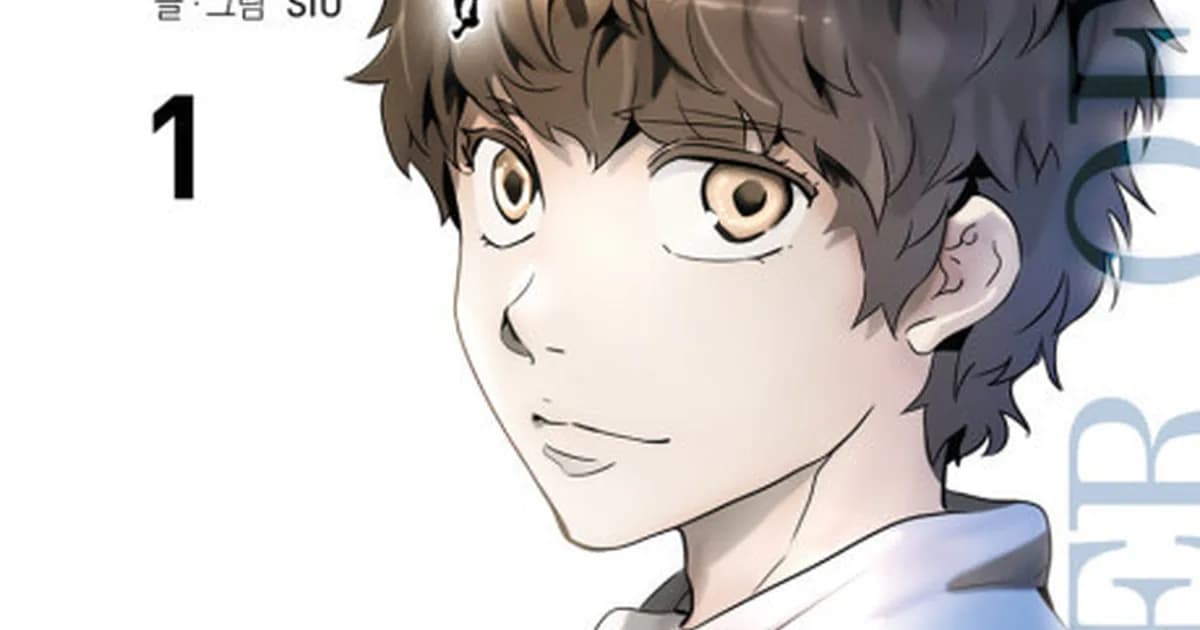
UnOrdinary (WEBTOON Episode 393, platform #407, return notice)
UnOrdinary is a high school series set in a world with rigid ability hierarchies. John Doe has suppressed his power, posing as a cripple in a school where power determines everything. The psychological layer comes from what that suppression costs him, and from what he does when he stops suppressing.
As a best manhwa psychological thriller, UnOrdinary's claim to the label rests on what it asks about power. The more interesting question it raises is structural. What does a person do differently when they're operating in a context where cruelty is socially permitted? The series tracks that answer across several hundred platform episodes with more patience than many serialized manhwa. By episode 150, the suppression narrative has become something more explicit about complicity.
The official WEBTOON page currently shows Episode 393 (#407) and says UnOrdinary will return. The page does not establish a finished status, so this guide does not call it a final-season endpoint or convert the platform marker into an AniList chapter count. The psychological argument is strongest in the first 150 episodes.
I'm the Grim Reaper (WEBTOON Episode 230, platform #232, return notice)
Scarlet becomes a grim reaper after arriving in hell, not through death but through a bureaucratic mistake. The series' psychological mechanism is simpler than most on this list and more direct: every chapter forces a moral choice with real consequences for Scarlet's identity. Is she still herself if she makes choices that protect her at the cost of others? The series doesn't flinch at answering, and then immediately complicates the answer.
The dark fantasy framing is genre-functional, the afterlife bureaucracy is elaborate enough to be interesting, but the actual drama is entirely interior. Scarlet's choices accumulate into a portrait of a person who started the series believing herself ordinary and is slowly learning she might not be. That's what earns it a place in the best manhwa psychological thriller discussion, not its horror premise.
For readers who prefer completed series before committing, the best manhwa for couples list includes a section on series with strong romantic tension that also operate with psychological depth, several overlap with the current list's concerns about character interiority.
Melvina's Therapy (completed short series, WEBTOON, 15 listed platform episodes)
Melvina is a therapist who enters her patients' traumatic memories. As a best manhwa psychological thriller, its structural conceit is unusual: the reader accompanies Melvina through each patient's interiority, which means the series commits to unreliable environments from chapter one. What Melvina sees inside a patient's memory is filtered through the patient's distortions, and the series makes that filtering visible.
It's the shortest series on this list and the most formally distinctive. It doesn't build the sustained narrative tension of Sweet Home or Bastard, but it executes its specific psychological project, making the reader complicit in another person's interior life, with more precision than longer series manage. WEBTOON lists 15 platform episodes and marks the series Completed.
Our master manhwa reading list covers the top 30 titles across every genre for 2026.
Best Manhwa to Read in 2026 →
Analysis, What Makes Manhwa Psychological
A few specific techniques separate the best manhwa psychological thriller from dark fiction, and Korean webtoon writers deploy them in ways that are worth naming explicitly. Identifying them makes it easier to spot which series claiming the best manhwa psychological thriller label actually earn it.
Unreliable narration in manhwa tends to operate at the structural level rather than through twist reveals. Cheese in the Trap maintains character ambiguity across 299 AniList source chapters and 301 WEBTOON episodes without resolving it in a single scene. Bastard maintains the reader's uncertainty about Jin's father's awareness of his son's plans well into the final act. The withholding is persistent, not saved for a late-series revelation. This is different from the "the killer is revealed at the end" construction, it's a sustained epistemological condition the reader inhabits for the entire run.
The protagonists in these series are also implicated in what they're resisting. Jin participates in his father's crimes. Hyun-soo in Sweet Home resists transformation while being attracted to what transformation offers. UnOrdinary's John is the most explicit version: his power makes him capable of exactly the cruelty he claims to oppose. The series that handle this well don't resolve the implication cleanly. The protagonist ends the series altered, not vindicated.
Power imbalance is the most common generator of psychological pressure across this genre. My Deepest Secret builds that pressure through unequal knowledge inside a relationship. UnOrdinary and I'm the Grim Reaper both use asymmetric power more directly, but the mechanism is the same. What's distinctive in manhwa is that writers tend to depict the psychology of the person with less power with more specificity than the person with more. Emma's uncertainty is more carefully drawn than the secret itself. John Doe's interior is more developed than the high-tier students who antagonize him.
What's less common in manhwa than in manga is the mind-game plot, the best manhwa psychological thriller variant that runs on scheming, deception, and counter-deception as external mechanics. Korean webtoon writers tend to prefer interior psychological states over external puzzle-solving. When mind games appear, as in Bastard's final act, they emerge from established psychology rather than functioning as the story's primary mode.
The series that fail at this genre set up a psychological premise and resolve it with action. The psychology becomes decorative. A genuine best manhwa psychological thriller holds the psychological frame from first chapter to last, and the ones on this list do exactly that.
Where to Read
Advertisement
| Series | Platform | Cost | Status |
|---|---|---|---|
| Bastard | WEBTOON | Free | Completed |
| Sweet Home | WEBTOON | Free (fast-pass coins optional) | Completed |
| My Deepest Secret | WEBTOON | Free (platform access rules vary) | Completed |
| Cheese in the Trap | WEBTOON | Free | Completed |
| UnOrdinary | WEBTOON | Free (fast-pass coins optional) | Return notice at Episode 393 (#407) |
| I'm the Grim Reaper | WEBTOON | Free | Return notice at Episode 230 (#232) |
| Melvina's Therapy | WEBTOON | Free | Completed, 15 listed episodes |
For readers coming from action or isekai backgrounds looking for a first best manhwa psychological thriller, Bastard is the cleanest entry, shorter than Sweet Home, no upfront platform cost, and the psychological frame is established in the first three chapters rather than built over 40. For readers who want completed series only, five of the seven picks above are finished.
The doom breaker review covers a series on the other end of the psychological spectrum, a pure action manhwa, which is useful context for understanding where best manhwa psychological thriller picks diverge from the genre's default action mode. The contrast is instructive: good action manhwa and the best manhwa psychological thriller are solving entirely different problems.
Frequently Asked Questions
What counts as a psychological thriller manhwa versus just a dark manhwa?
The distinction is structural. In a psychological thriller, the protagonist's mental state, what they believe, fear, or refuse to see, is the mechanism driving the plot. Violence or darkness alone doesn't qualify. Bastard is a psychological thriller because Jin's complicity determines every major story beat. A series is dark without being psychological if the protagonist simply reacts to external horror. Is Bastard completed and how long is it?
Yes. AniList lists Bastard as FINISHED with 94 source chapters, while WEBTOON marks the English series Completed. The source and platform use their own episode packaging, so the AniList count is not a WEBTOON episode total. Is Sweet Home a psychological thriller or straight horror?
It reads as survival horror in premise, but its actual subject is psychological. The transformation mechanic, humans with strong desires become monsters, means every character's psychology is plot-relevant. The protagonist, Cha Hyun-soo, is suicidal before the monsters arrive, and the series spends its 141 AniList source chapters asking whether survival changes that. WEBTOON marks the English edition Completed. The Netflix adaptation emphasizes the horror. The manhwa emphasizes the psychology. Is My Deepest Secret a psychological romance manhwa?
Yes. WEBTOON marks My Deepest Secret Completed and frames its romance around Emma's caring boyfriend Elios hiding a deep secret. The tension comes from what the relationship conceals and how that concealment changes Emma's understanding of the person she trusts. The localized official archive reaches #102, but that is not an English episode total. What makes Cheese in the Trap a psychological thriller?
Yoo Jung's motivations are never fully explained. His behavior is generous, helpful, and occasionally cruel in ways the narrative refuses to reconcile into a consistent character. The reader's uncertainty about whether he is calculating or genuinely kind is maintained across 299 AniList source chapters and 301 WEBTOON episodes. That sustained ambiguity is the psychological thriller element, not plot mechanics, but epistemological tension about a single character. Is UnOrdinary considered a psychological thriller?
It contains strong psychological thriller elements, particularly in its first 150 episodes. The series examines what a protagonist does with power when the social order permits cruelty. The official WEBTOON page currently shows Episode 393 (#407) and says the series will return, so this guide does not infer a finished status or a final-season endpoint. Where can I read these series in English?
Bastard, Sweet Home, My Deepest Secret, UnOrdinary, Cheese in the Trap, Melvina's Therapy, and I'm the Grim Reaper are on WEBTOON. Some series use fast-pass access, and platform availability can change. All platforms listed offer English translations. Which series on this list has the best unreliable narrator?
Cheese in the Trap, because the unreliability is structural rather than twist-based. The narrator, Seol, is observant and intelligent, but the series never confirms whether her readings of Yoo Jung are correct. The ambiguity isn't resolved at a plot level, it's maintained as the default state of the story, which is harder to sustain than a single revelation scene.
Related Reading
- Best Manhwa Mystery Detective Picks →: for the external puzzle-solving side of this territory, deduction and clue-following instead of interior dread.
- Best Thriller Manhwa →
- best completed manhwa
- best manhwa for couples
- Best Manhwa to Read in 2026 →
- doom breaker review
- Best Manhwa of All Time: Bastard and Weak Hero both make this genre-spanning canon list alongside action, horror, romance, and murim picks.
References
- Bastard on WEBTOON
- Sweet Home on WEBTOON
- Cheese in the Trap on WEBTOON
- Bastard on AniList
- Sweet Home on AniList
- My Deepest Secret on WEBTOON
- Cheese in the Trap season record on AniList
- The Boxer on WEBTOON
- The Boxer on AniList
- UnOrdinary on WEBTOON
- I'm the Grim Reaper on WEBTOON
- Melvina's Therapy on WEBTOON