The God of High School reading guide starts with a fact that the MAPPA anime obscures: this is a 569-chapter completed series, and the 13 anime episodes cover roughly the first 112 of those chapters. What follows those 112 chapters is a different series than the tournament arc suggests: larger in scope, mythologically dense, and structurally unlike anything the anime previews.
All 569 chapters are available on WEBTOON. The series is done and has an ending. Read in order.
TL;DR: The God of High School reading guide: 569 chapters, series complete. Where the anime stops, how the mythology arc changes the series, and what to expect.
The God of High School reading guide: key takeaways
- 569 chapters, completed. Full series readable now on WEBTOON.
- The MAPPA anime (13 episodes, 2020, Crunchyroll) covers roughly the first 112 chapters, the tournament arc; the mythology arc and series conclusion are manhwa-only
- The main trio (Jin Mori, Han Daewi, Yoo Mira) have distinct motivations that ground the early tournament arc
- Charyeok (borrowed divine power) is introduced gradually and becomes the series' dominant power system by the midpoint
- Series started on Naver Webtoon in 2011; by 2011 standards it's an early example of what WEBTOON-format action manhwa could do
Overview
The God of High School is a Korean martial arts manhwa by Park Yongje, free on WEBTOON with all 569 chapters available and a complete ending. It ran from 2011 to 2022 on Naver Webtoon, making it one of the longest continuously running series in WEBTOON's history.
The premise: a national high school martial arts tournament in Korea, open to fighters of any style, with a wish-granting prize. Jin Mori, Han Daewi, and Yoo Mira each enter for different reasons. The tournament is a real tournament for the first 112 chapters. After that, the series reveals what was operating beneath the competition from the beginning.
Genre: martial arts action, then mythology action. The tonal shift is significant and worth knowing about before you start. The MAPPA anime (2020, Crunchyroll, 13 episodes) covers only the tournament arc. The remaining 450+ chapters are manhwa-only.
Park Yongje's art strength is fight choreography. Techniques are visually distinct, character positioning is tracked across panels, and different martial arts styles look different from each other. The 2011 start date means the early chapter art is rougher; it improves steadily through the run.
The main trio
Advertisement
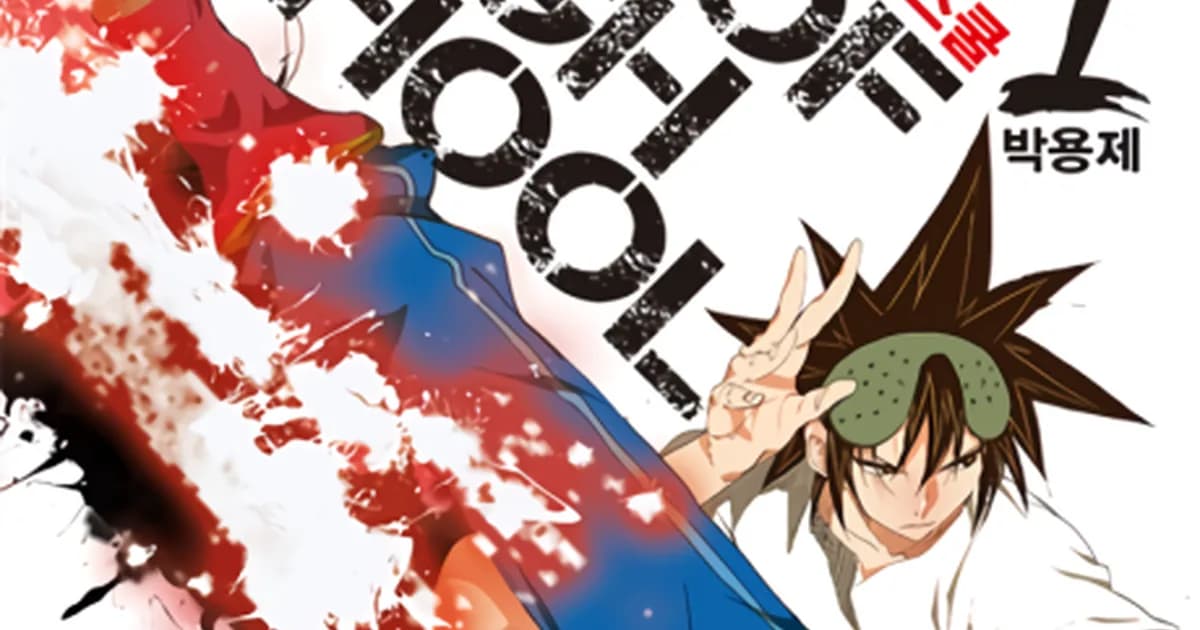
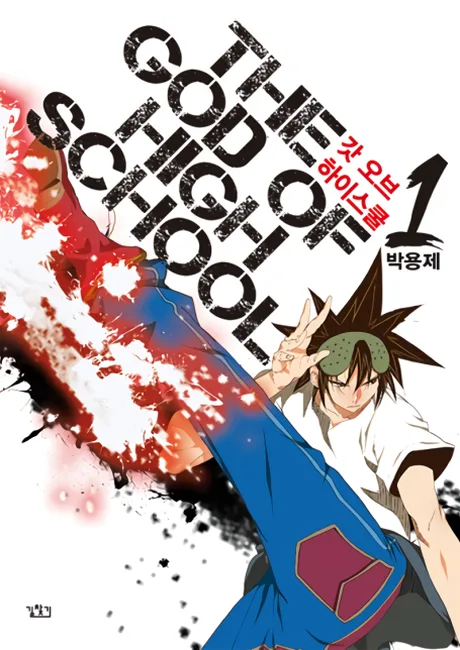 Official cover art for The God of High School by Park Yongje, free on WEBTOON with all 569 chapters available. Source: AniList.
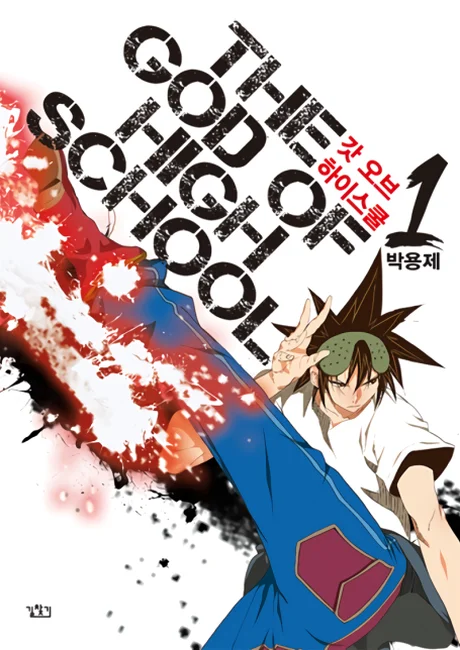 The God Of High School.
Jin Mori is the protagonist. His relationship to fighting is uncomplicated in a way that takes on complexity over the series. He's not the strongest character in the series by the end, but he's the most fully realized. His motivation (he wants to fight people as good as him) sounds like a tournament premise and turns into something closer to a statement about what it means to be human.
Han Daewi is a street fighter from a poor background who enters the tournament for the simplest possible reason: prize money to pay for his sick friend's treatment. His arc from purely external motivation to something more internal is one of the series' quieter successes. He doesn't overshadow the tournament action but provides the emotional weight that grounds it.
Yoo Mira is the last practitioner of a sword style that will die with her if she doesn't attract a master to continue it. Her reason for competing is tied to tradition and obligation in a way the other two aren't. The series gives her more agency as it progresses than the early chapters suggest.
The three compete separately, encounter each other during the tournament, and form the alliance that the rest of the series depends on. By the mythology arc, the relationships between them are the load-bearing emotional elements of a story that has otherwise scaled to divine conflict.
The God of High School Reading Guide: Tournament Arc
Jin Mori enters a national high school martial arts tournament for one reason: he wants to fight. Not for money, not for politics, not to fulfill an obligation. He fights because the joy of fighting someone as skilled or more skilled than him is the thing he wants most. This motivation sounds simple and turns out to be load-bearing for the series' later themes.
Han Daewi enters to fund the medical treatment of a close friend. Yoo Mira enters to find a worthy husband and master who can continue her sword style's lineage. Three people in the same tournament for reasons that have nothing to do with each other, except that the act of competing puts them in proximity long enough for the relationships that drive the rest of the series to form.
The tournament arc (roughly chapters 1-112) is a bracket-style fighting competition. Park Yongje's approach to fight choreography is physical and specific: different martial arts styles are visually distinct, joint locks and throws are drawn with enough anatomical logic to be readable, and fights between evenly matched opponents have weight. The MAPPA anime adapted this well within its episode count.
For the full ranked list of action manhwa including where God of High School fits:
Best Action Manhwa 2026 →
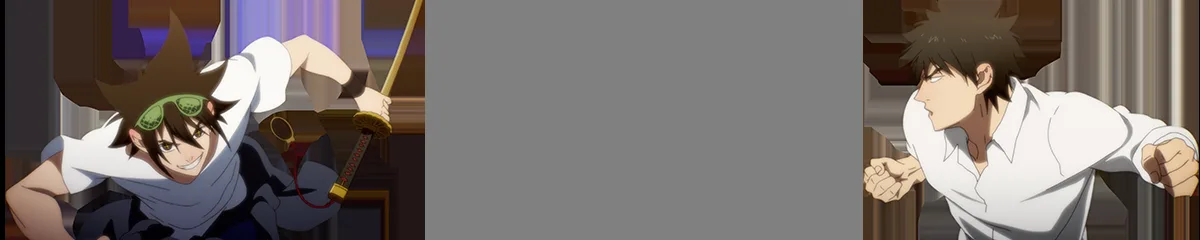 The God of High School promotional landing page banner from WEBTOON, featuring the main trio before the charyeok arc. Source: WEBTOON.
When charyeok appears
Borrowed power (charyeok) is introduced before the tournament concludes, but its full implications take longer to become clear. Fighters who access divine power (drawing from mythological entities across Korean, Chinese, Buddhist, and other traditions) can operate at scales that raw martial arts cannot reach.
The transition from martial arts tournament to divine-power conflict is the series' most significant tonal shift. Readers who engaged with the tournament arc for its grounded fight choreography will find the later chapters operating in a different register. The scale of what characters can do expands considerably, and the mythology underpinning the charyeok system becomes the story's primary driver.
This is where many readers who approached God of High School purely as a tournament manhwa either commit to the larger story or step back. The mythology is dense and rewards attention; it draws from multiple religious traditions in ways that work together but require following.
The mythology arc
By the series' midpoint, the martial arts tournament that opened the story has been revealed as a mechanism for something else. The organization behind the competition, the nature of certain characters' powers, and Jin Mori's own origin all connect to a conflict that has been operating beneath the surface since chapter 1.
The mythology arc is where God of High School becomes structurally unusual for its genre. The power scaling continues, with characters reaching divine-entity level. But the emotional core remains the relationships established in the tournament arc. Jin Mori's relationship to what he discovers about himself, Han Daewi's motivations evolving beyond their original scope, and Yoo Mira's position in a conflict she didn't initially understand: these threads from the early chapters come back with accumulated weight.
Park Yongje's approach to the mythology involves scale that can feel disconnected from the school-tournament premise that opened the series. Some readers find it a natural extension. Others find the shift too large. The reading guide version of this: if you engaged with the trio's relationships and Jin Mori's character, the mythology arc is for you. If you came purely for grounded high-school fighting, the series changes significantly after the tournament.
One specific thing the mythology arc does well: it circles back to the tournament arc's open questions. Characters who appeared briefly in the competition and seemed to have simple motivations turn out to be connected to the larger conflict in ways that weren't visible at the time. The series planted its later revelations in the early chapters. Re-reading the tournament arc after the mythology arc makes this visible; the foreshadowing is genuinely embedded rather than retroactively invented.
For a comparison of how the God of High School anime covers this material versus the manhwa: Manhwa with Anime Adaptations in 2026 →.
For a full list of completed manhwa worth bingeing:
Best Completed Manhwa →
Reading tips for The God of High School
Expect different art quality in the early chapters versus the late chapters. Park Yongje started the series in 2011, and the visual improvement across an 11-year run is significant. Don't let the early art put you off. By the time the mythology arc starts, the art is substantially better.
The charyeok system is introduced gradually. Don't expect an explanation early. The series gives you enough to follow the action before it explains the theory behind borrowed power. Let it build rather than looking for a rules summary.
Watch the trio's motivations as the scale expands. Jin Mori's reason for fighting, Han Daewi's reason for fighting, and Yoo Mira's reason for competing all evolve as the mythology arc reveals what the tournament was actually about. The early motivations aren't abandoned; they're recontextualized. That thread is worth tracking.
If the mythology arc feels like a different series, it is a different series in tone, and that's intentional. The foreshadowing from the tournament arc is genuinely embedded in the early chapters. Readers who finish the mythology arc and re-read the tournament section report noticing things that weren't visible on first read.
Why Read The God of High School Now
God of High School is an 11-year serialization (2011-2022) that finished in an era when most comparable manhwa are still ongoing. The series has an ending that addresses what it set up. The mythology arc resolves. Jin Mori's arc concludes.
This matters for deciding when to read it. Catching up to 569 chapters of an ongoing series involves eventual uncertainty about what the ending will be. God of High School removes that variable: you can read the full story, see the conclusion, and evaluate the series as a complete work.
Step-by-Step
Advertisement
1. Start on WEBTOON. Free, no subscription, all 569 chapters available with a complete official English translation. The WEBTOON app is recommended for mobile reading; the vertical-scroll format on phone screens is more comfortable than desktop browser for a series this long.
2. Read chapters 1-112 first, in order. This is the tournament arc, and it's the series' clearest entry point regardless of whether you've seen the anime. It sets up the trio dynamics (Jin Mori, Han Daewi, Yoo Mira) that the rest of the series depends on.
3. Treat the MAPPA anime as an optional companion, not a substitute. It covers roughly the same chapters 1-112 and is a fair sample of the tournament arc, but it condenses material the manhwa gives more room to develop.
4. Expect charyeok (borrowed power) to appear before the tournament wraps. The system is introduced gradually in the back half of the tournament arc. Don't expect a full rules explanation right away; the series builds it in through action first.
5. Continue into the mythology arc from chapter 112 onward, expecting a pacing change. Longer continuous story arcs replace the tournament's bracket-and-break rhythm. That shift is intentional, not the series losing its footing.
The MAPPA anime (Crunchyroll) covers chapters 1-112 and is worth watching as a sample. If the tournament arc engages you, the remaining 450+ chapters extend it into something the anime doesn't suggest.
A note on reading pace: the tournament arc moves at the speed of its bracket structure. Matches are followed by breaks and character development, then more matches. The mythology arc has a different rhythm with longer continuous story arcs and less regular pacing between fights. The first 112 chapters set a cadence that the later chapters don't maintain; that's worth knowing before you start so the shift doesn't read as the series losing its footing.
God of High School sits alongside Tower of God in the category of long-running WEBTOON action series that use tournaments as their opening structure before expanding into something larger. If you've finished GoHS and want that same pattern, Tower of God Reading Guide → covers the platform navigation and season breakdown for a 652+ episode commitment.
Frequently Asked Questions
Is The God of High School manga completed?
Yes. The God of High School completed its run at 569 chapters. The series has a full ending. All chapters are available to read on WEBTOON. No ongoing wait. Where does the anime end in the manga?
The MAPPA anime (13 episodes, 2020) covers roughly the first 112 chapters of the manhwa: the tournament arc through the early introduction of borrowed power. The remaining 450+ chapters continue the story through the mythology arc and the series' full conclusion. Where do I read The God of High School?
The God of High School is free on WEBTOON. All 569 chapters are available. WEBTOON is the official English source with no subscription required. What is charyeok in The God of High School?
Charyeok is the system of borrowed power in The God of High School. Fighters borrow a portion of a divine being's (god's, demon's, or mythological entity's) power for combat. Each borrowed power has specific properties tied to the entity it comes from. Characters with strong charyeok can access abilities that raw martial arts cannot match. The system is introduced gradually during the tournament arc. Who are the main characters in The God of High School?
The main trio are Jin Mori (a prodigy martial artist who fights purely for the joy of it), Han Daewi (a street fighter who enters the tournament to earn prize money for a sick friend), and Yoo Mira (the last practitioner of her family's sword style, competing to attract a master). Their different motivations are the emotional foundation of the series. What is The God of High School about?
The God of High School begins as a martial arts tournament, a Korean-wide competition among high school fighters, with a prize that grants any wish. The early arc is the tournament itself. The later arcs reveal that the tournament is a front for something much larger involving mythological powers, ancient conflicts between divine entities, and the nature of a god. Does The God of High School have an anime?
Yes. MAPPA produced a 13-episode anime in 2020, available on Crunchyroll. The anime covers the tournament arc and makes a significant impression in that limited window. It doesn't reach the mythology arc or the series' full scope.
For series recommendations in the same genre, see Manhwa Like The God of High School: What to Read Next.
Related Reading
- God of High School Review
- The God of High School Character Guide: Full named roster, AniList-verified: Jin Mori, Han Daewi, Yoo Mira, and the allies and antagonists around them.