
TL;DR: Nano Machine review: 8.1/10. The murim-cultivation and system-fantasy genres look incompatible on paper, and this hybrid manhwa runs both at full depth instead of treating one as set dressing. 329 Korean episodes, ongoing weekly, no completion date announced. Best entry point for system-fantasy readers moving into murim.
Nano Machine review: the two genres it combines look incompatible on paper, and it's worth explaining why they aren't.
System fantasy manhwa give you a visible interface: stat windows, skill notifications, quest logs, numerical progression. Murim cultivation manhwa give you qi circulation, internal meridian stages, master-student technique lineages, and faction politics. These genres have different aesthetics, different power-scaling logic, and different emotional cores. Nano Machine runs both simultaneously. The system interface tracks the cultivation progress. The cultivation is the actual story.
That's not a simple combination to make work. Most attempts at genre hybrids in manhwa pick one primary and treat the other as set dressing. Nano Machine doesn't, and understanding why it works is the central question any Nano Machine review has to answer.
Key Takeaways
- Nano Machine review: 8.1/10, the best hybrid cultivation/system fantasy manhwa as of September 2026
- 329 Korean episodes listed on Naver Webtoon, ongoing weekly, with an English release on WEBTOON
- Cheon Yeo-woon starts at the bottom of the Demonic Cult's internal hierarchy; the system interface accelerates cultivation but doesn't replace it
- Best first murim series for readers coming from Solo Leveling or similar system fantasy
- No anime adaptation announced
Overview
Cheon Yeo-woon is illegitimate: lowest status within the Demonic Cult's bloodline hierarchy, politically exposed, regularly targeted by higher-ranking disciples who have both the motive and the standing to have him removed. The Cult's internal politics are brutal not because the series wants to be grimdark, but because the cultivation tradition the Cult practices ties advancement to status ties to survival. This isn't a background detail. It's the series' central conflict for the first major arc.
He receives nanomachines from a descendant in the future. The machines integrate into his body and provide a system interface: a HUD with stat tracking, cultivation stage monitoring, and skill proficiency metrics. In a world where this framework doesn't exist and where most fighters have no external measure of their own progress beyond what their masters tell them, Yeo-woon is operating with a data layer his peers can't access.
The premise is clever because it uses the system interface to solve a genre problem. Murim cultivation is mechanically rich but opaque to readers without prior genre knowledge. Qi stages, meridian circulation, internal technique compatibility are meaningful concepts, but they require investment to understand. The system interface makes the cultivation mechanics legible immediately: when Yeo-woon's HUD labels a stage and tracks his progress through it, readers who came from Solo Leveling or Tower of God understand the structure without requiring a separate explanation.
The murim architecture is fully present. The Cult's technique hierarchy, the master-student training, the faction politics: these are not simplified for accessibility. They operate at the depth of dedicated cultivation manhwa. The system interface is the on-ramp, not a replacement.
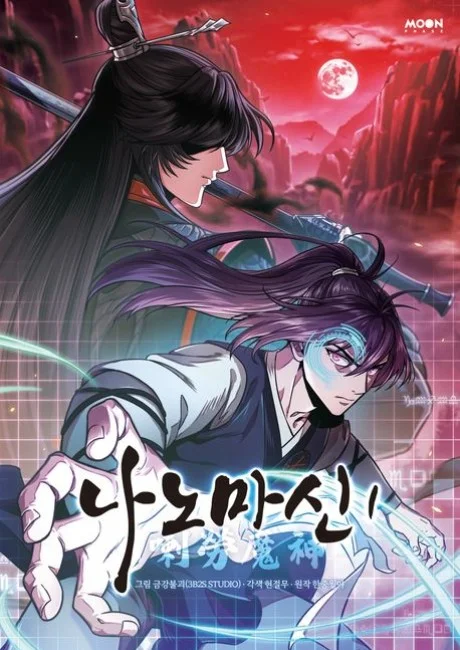 Nano Machine by Geobalhan (story) and Geumgangbulgoe (art), adapting Hanjung Worya's web novel, a system-infused murim manhwa with 329 Korean episodes listed on Naver Webtoon.
Art & Story
Advertisement
Geumgangbulgoe's art serves the dual-genre premise efficiently. The character designs distinguish the Demonic Cult's faction members clearly, which matters when the internal political map requires readers to track antagonist motivations across many chapters. The cultivation sequences visualize internal techniques through energy flow and posture rather than relying on the system interface alone. Combat choreography is readable without being exceptional: the fights convey stakes and technique distinctions, but the art does not produce the kinetic impact that the best action manhwa achieves. The system interface panels are cleanly designed and avoid the visual clutter that some manhwa HUD implementations produce.
Narratively, Nano Machine's structural achievement is running two demanding genres simultaneously without simplifying either. The cultivation mechanics (qi circulation, meridian stages, master-student technique transfer) operate at the depth of dedicated murim series. The system interface tracks those mechanics with the numerical clarity of system fantasy. The story uses the interface as an on-ramp for genre newcomers while maintaining the full complexity of murim faction politics for readers already familiar with the space. The Demonic Cult's internal hierarchy, where cultivation advancement has immediate political consequences rather than just personal power gains, gives the first major arc more tension than most cultivation series achieve. The transition arcs between major confrontations are the narrative's weak point: the political layer keeps them functional, but the pacing thins noticeably compared to the arc peak chapters.
The Demonic Cult's internal politics
Murim fiction's most interesting feature is that power and politics run together. Cultivation advancement is not just a personal achievement. It's a social position, a threat to rivals, and a negotiating instrument. Nano Machine understands this and uses it structurally.
Yeo-woon's low status within the Cult means every cultivation advancement has immediate political stakes. When he progresses a stage, the implication isn't only that he's stronger. His position within the Cult's hierarchy has shifted, that rivals need to update their threat assessment, that certain senior members now have different calculations to run. The system interface tracks his cultivation progress; the series tracks the political consequences.
This is what separates the early arc from a standard progression fantasy. Most manhwa use power advancement as the mechanism for clearing obstacles. Nano Machine uses it as a mechanism for creating them. A sufficiently strong Yeo-woon is not safer within the Cult. He's more visible, which generates new antagonism from members who were previously indifferent to him.
The senior disciples who operate as antagonists in the first arc are not simple. Several have their own interests, their own cultivated techniques, their own political reading of what Yeo-woon represents. The series treats them as competent people with agendas rather than obstacles to be overcome. That's the murim tradition operating at full depth: the Cult is a world, not a backdrop.
By chapter 40, the political map within the Cult has shifted enough that Yeo-woon's position has changed, not because he cleared the main antagonist, but because the web of interests around him has recalculated. That's more satisfying than a boss fight.
For how Nano Machine compares to other cultivation series including Return of the Blossoming Blade:
Best Cultivation Manhwa →
The system interface design
The nanomachine HUD is one of the better-designed system interfaces in the genre, specifically because it doesn't import dungeon-game vocabulary into a murim setting. Stat windows in Nano Machine use murim naming conventions. When the system labels a technique or a cultivation stage, it uses the terminology the Demonic Cult actually uses for that technique and that stage.
This matters more than it sounds. System interfaces in murim hybrids often create a tonal disconnect: the historical martial arts setting has one vocabulary, the HUD has another, and the collision is either jarring or requires constant code-switching. Nano Machine avoids this by designing the system interface to speak the setting's language.
The cultivation progression is still the actual work. When Yeo-woon learns the Demonic Cult's Nine Yin True Technique, the system doesn't simply unlock it. He has to acquire the technique, understand the meridian circulation it requires, and practice until the system can recognize proficiency. The system's contribution is optimization data: efficiency metrics, comparative performance benchmarks, training sequence suggestions. The cultivation itself is his.
This design preserves what cultivation manhwa readers come for: the training arc, the hard-won mastery, the physical and internal logic of advancement. It adds what system fantasy readers want: the visible, numerical, tracked progress that makes the cultivation work feel legible and satisfying in real time. Both groups get what they came for from the same sequence.
By chapter 80, this system is fully established and the series is running both genres at speed. The pacing here is Nano Machine at its best: tight faction politics, meaningful cultivation advancement, system interface delivering feedback that changes how Yeo-woon approaches the next challenge.
 Martial Peak is the most common comparison point when placing Nano Machine in the broader cultivation genre.


Nano Machine review: where it thins out
The transition arcs (sequences between the Cult's internal conflict arc and the larger external faction confrontations) are where the pacing issues appear. The series needs bridge chapters to move characters and political situations into the next major conflict's starting position, and these chapters are noticeably less efficient than the arc peak chapters.
This is a structural issue with ongoing murim series rather than a Nano Machine-specific problem. The genre's long serialization format creates transition overhead. Nano Machine handles it better than average. The political layer keeps these chapters from being pure filler, but by around chapters 120-150, the difference between the series at its best and the series in transit mode is visible.
The ongoing status is the other real constraint on this Nano Machine review. The official Naver Webtoon listing shows 329 total Korean episodes with no announced completion date, which means evaluating it requires acknowledging that the arc structure is incomplete. The cultivation system is well-designed, the premise is sound, the faction politics have been compelling through the current run. Whether the series builds to a satisfying conclusion or extends indefinitely as a platform for escalating power conflicts. That question remains open.
For readers who prioritize completed series with full endings: a Nano Machine review has to acknowledge it can't deliver that verdict yet. For readers comfortable with ongoing serialization who want the best cultivation/system hybrid available now: Best System Fantasy Manhwa → puts Nano Machine in the context of the full genre, and it holds up well against the competition.
How it compares to other cultivation manhwa
The direct comparison is Return of the Blossoming Blade, the other major cultivation series worth reading in 2026. They're different series solving different problems.
Return of the Blossoming Blade uses comedy as its structural mechanism: the gap between Cheongmyeong's century-old standards and the modern sect's mediocrity generates both the humor and the dramatic tension. The character work is more developed, the series has completed more of its arc across three seasons, and the murim setting is more traditional.
Nano Machine is faster, more accessible to genre newcomers, and more explicit about progression mechanics through the system interface. The comedy isn't the delivery mechanism. The faction politics are. Both series are worth reading; they serve different reader preferences within the same genre.
The Return of the Blossoming Blade review → covers that series in full. The Nano Machine review comparison: both are cultivation, but different reader types land on different sides of that split. The short version: if you want the cultivation genre's character depth first, start there. If you want the fastest on-ramp from system fantasy into murim, start with Nano Machine.
Nano Machine review: verdict
Advertisement
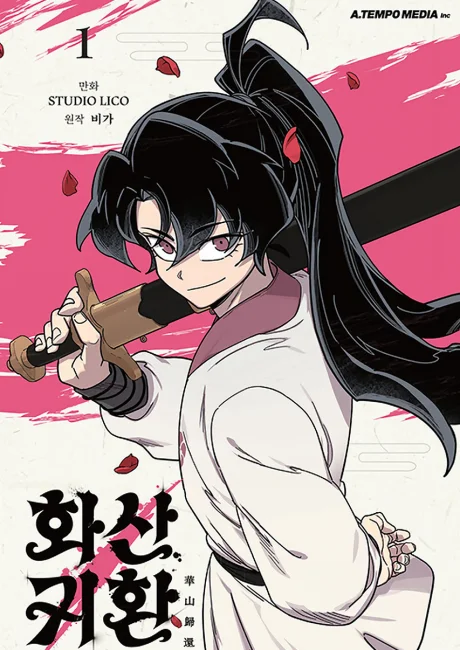 Return of the Blossoming Blade is the comedy-first murim recommendation to pair with Nano Machine's action-first approach.
This Nano Machine review lands at 8.1: the best hybrid cultivation/system fantasy manhwa available, with real limitations from its ongoing status and mid-arc pacing.
The design is genuinely good. Running two demanding genres simultaneously without simplifying either is not the default outcome in manhwa, and Nano Machine does it for 329 Korean episodes without breaking. The system interface serving as genre scaffolding for cultivation newcomers is the most practically useful thing any murim entry-point series has done in recent memory.
The deduction is for the pacing gaps between major arcs and for the incompleteness of the ongoing run. An 8.1 on a completed version might be an 8.5. What exists now is excellent through about chapter 150 and good through the current chapter count, with some unevenness in between.
The Good
- Hybrid system/cultivation design: both genres operate at full depth, not one as veneer over the other
- Best bridge series for system-fantasy readers entering the murim genre for the first time
- Demonic Cult internal faction politics give the power progression real stakes beyond raw numbers
- The system interface is flavored for the murim setting rather than importing dungeon-game vocabulary
The Cons
- 329 Korean episodes and still ongoing, with no completion date announced, so the full arc's payoff can't be judged yet
- Pacing thins out in transition arcs between the major faction confrontations
Rating: 8.1 / 10
The Nano Machine review verdict for newcomers: start here if you're coming from system fantasy and want to try murim. The on-ramp is the best in the cultivation genre.
Frequently Asked Questions
 Solo Leveling is the standard starting point for readers who want progression-fantasy manhwa outside the murim genre.
Is Nano Machine worth reading?
Yes, especially if you're coming from system fantasy and want to try cultivation manhwa. The hybrid design makes the murim mechanics legible immediately. 329 Korean episodes of good-to-excellent content are listed, and the series remains ongoing weekly.
How long is Nano Machine?
329 Korean episodes listed on Naver Webtoon as of September 16, 2026, ongoing weekly. No completion date has been announced.
Cultivation or system fantasy?
Both, fully. The cultivation mechanics are not simplified for the system layer, and the system layer is not simplified for the cultivation setting. Genre purists from either camp can engage with what's actually there.
What is the Demonic Cult?
The martial arts organization Yeo-woon belongs to at the series' start. Brutal internal hierarchy; his low status within it is the first arc's central conflict.
Where do I read it?
Naver Webtoon and Kakao. Regional availability varies. Official English translations available through both platforms' international services.
Does it have an anime?
No announcement as of this writing.
How does it compare to Return of the Blossoming Blade?
Different series, different genre approaches. Nano Machine is faster and more accessible for newcomers; ROTBB has stronger character work and a more traditional murim structure. Both are recommended cultivation picks for different reader types.
Related Reading
- Martial Peak Review: 7.5/10, Chinese Manhua That Earns Its Length: Full review of Martial Peak, the closest large-scale cultivation counterpart to Nano Machine.
- Manhwa Like Murim Login: 7 Picks for the Virtual-World Arc: 7 series that share Nano Machine's system-meets-cultivation formula.
- Best Manhwa to Read in 2026: 20 Series Worth Your Time: 2026 starter list with cultivation, action, and genre picks ranked by readability.
- Nano Machine Cultivation Explained: All 8 Realms in Order
- Nano Machine Character Guide: full AniList-verified cast, from the Six Clans throne rivals to the Demonic Cult's elders and allies.
- Best Manhwa About Rejection and Revenge: where Yeo-woon's illegitimate, disowned status fits among 8 manhwa built around a specific betrayal by someone close.
- Manhwa Like Surviving as a Genius on Borrowed Time: 3 Picks: names this series as the system-mechanic alternative to a lifespan-deadline premise