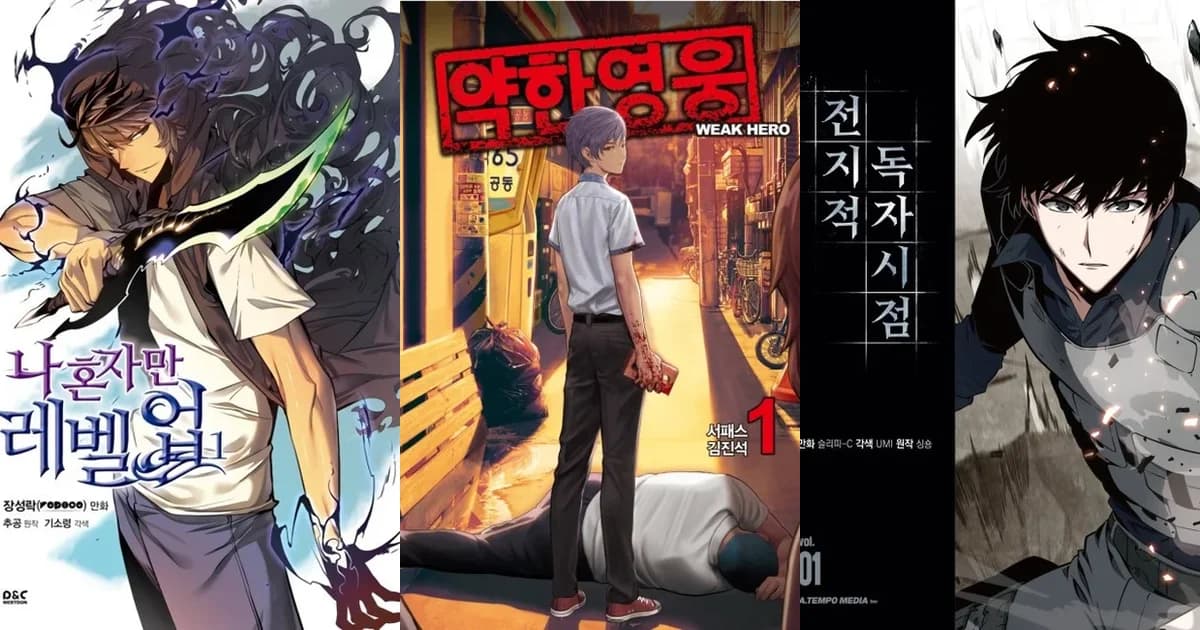
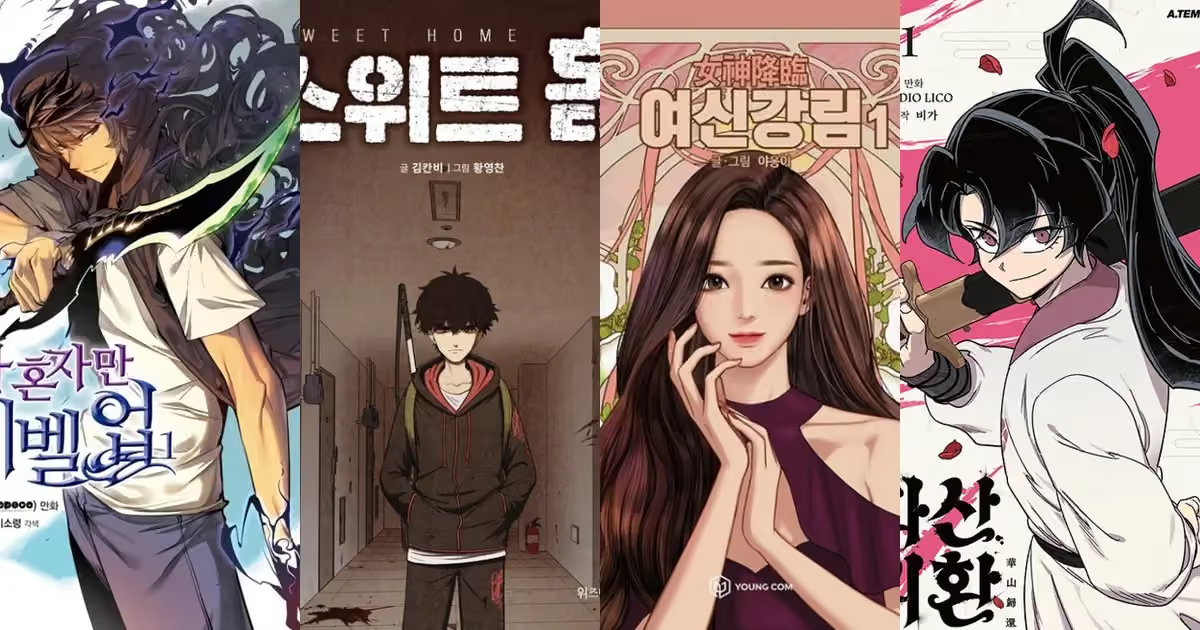
TL;DR: Best manhwa of all time, picked across every genre instead of just one: Solo Leveling and Omniscient Reader's Viewpoint for action, Sweet Home for horror, True Beauty for romance, Return of the Blossoming Blade for murim. Eighteen series, 2007 through 2026, each with a specific reason it earned the spot beyond popularity alone.
Every "best manhwa of all time" list I've read this year is secretly a best action manhwa list wearing a bigger headline. Nine action picks, one romance pick tacked on at the bottom so nobody complains, and a title that promises "all time" while delivering "whatever's trending in the hunter genre right now." I get why. Action is the biggest manhwa category by a wide margin, and Solo Leveling traffic alone could justify an entire site's list of ten Solo Leveling adjacent picks.
That's not what this is. I went back through nearly two decades of manhwa, from 2007 portal-era Naver serials to whatever's actively airing in 2026, and picked 18 series that earn a spot in an actual canon: horror, thriller, murim, romance, and slice of life sitting next to the action names everyone already knows. Two of these picks (Cheese in the Trap and Yumi's Cells) have shown up as mentions in other roundups here but never gotten a dedicated review. I read them specifically because a genre-spanning "all time" list that skips slice of life entirely isn't really an all-time list, it's an action list with a misleading name.
A note on what "best" means here, because it matters. This isn't a sales chart. ChapterBrief doesn't have access to real circulation or revenue data, and any list claiming "10 million copies sold" without a citable source is making that number up. Where I reference popularity below, it's AniList's favorites-and-list-adds metric, a genuine signal of how many readers engaged with a series, not a stand-in for sales. Quality judgments come from our own published reviews (linked throughout) and from reading the series myself, not from a spreadsheet.
One more thing before the list: two well-known titles that show up constantly on "best manhwa of all time" roundups aren't here on purpose. I'll explain why near the bottom.
Best manhwa of all time: which one should you read first?
Short answer: The best manhwa of all time depends on the genre you want, but Solo Leveling is the easiest action entry point, Sweet Home the strongest horror pick, and True Beauty the clearest completed romance gateway. This list ranks 18 Korean series by craft, influence, readability, and the quality of their complete or ongoing runs.
Key Takeaways
- Best action entry point: Solo Leveling, marked FINISHED at 201 chapters on AniList. English platform editions split the main run and side stories differently, but it remains the highest-popularity manhwa on AniList by a wide margin.
- Highest-rated pick on this whole list: Bastard at 9.0, a psychological thriller most "best manhwa" lists skip entirely.
- Best horror pick: Sweet Home, completed at 141 chapters, the Netflix adaptation drove people back to a manhwa that was already better on its own.
- Best deep cuts: Cheese in the Trap (2010, predates WEBTOON's global platform) and Yumi's Cells (511 AniList chapters of anthropomorphized brain cells narrating a woman's dating life), neither with a dedicated review on this site until now.
- Genuinely genre-spanning: this best manhwa of all time list splits 18 picks across action, horror, thriller, murim, romance, and slice of life, not 15 action picks with a token romance tacked on.
How This Best Manhwa of All Time List Was Built
Advertisement
The filter starts before quality even enters the conversation: every series below was checked against AniList for country of origin, chapter count, and status before it made the cut. That country-of-origin check matters more than it sounds like it should: two well-known titles that get called "manhwa" constantly turned out to be Japanese manga and Chinese manhua respectively when I actually checked the metadata instead of trusting the label everyone else uses. Both got cut. More on that in the honorable mentions section.
Beyond the origin check, every entry needed a confirmed chapter count and publication status from AniList or the official platform (WEBTOON's own listing, mostly), cross-referenced against our own published reviews where one exists. Sixteen of the 18 picks already have a full review on this site. Two don't (Cheese in the Trap and Yumi's Cells), and I included them anyway because a genre-spanning canon list that only draws from an existing review catalog is really just "our back catalog, ranked," and that's a narrower and less honest exercise than what "all time" implies.
I grouped the 18 by rough category instead of forcing a strict 1-to-18 power ranking, because comparing a psychological thriller against a body-swap slice-of-life comedy on the same numeric scale doesn't produce a useful answer for anybody. Within each group, order reflects how strong a case each entry makes for itself, not raw popularity.
New to manhwa entirely and this list feels like a lot to start with? A shorter, gentler on-ramp exists.
Best Manhwa for Beginners 2026 →
The Modern Blockbusters
Three picks that define what "manhwa" means to most readers who found the medium in the last five years. All three are still actively read at scale, and all three earned that scale honestly, not just through algorithm luck.
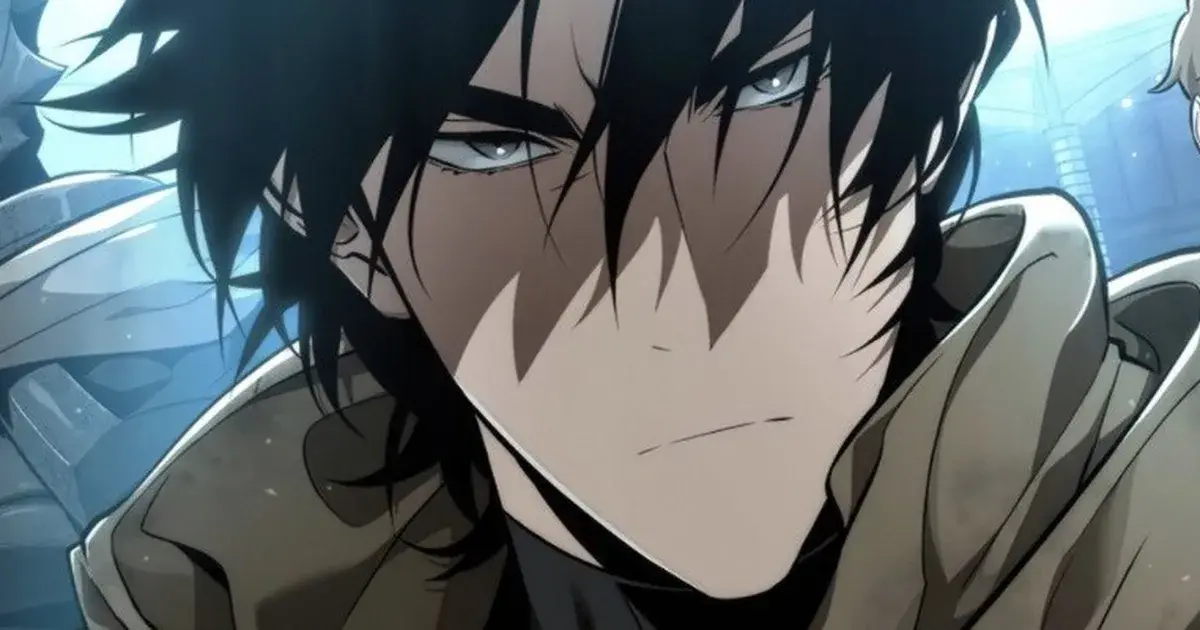
1. Solo Leveling
 Solo Leveling
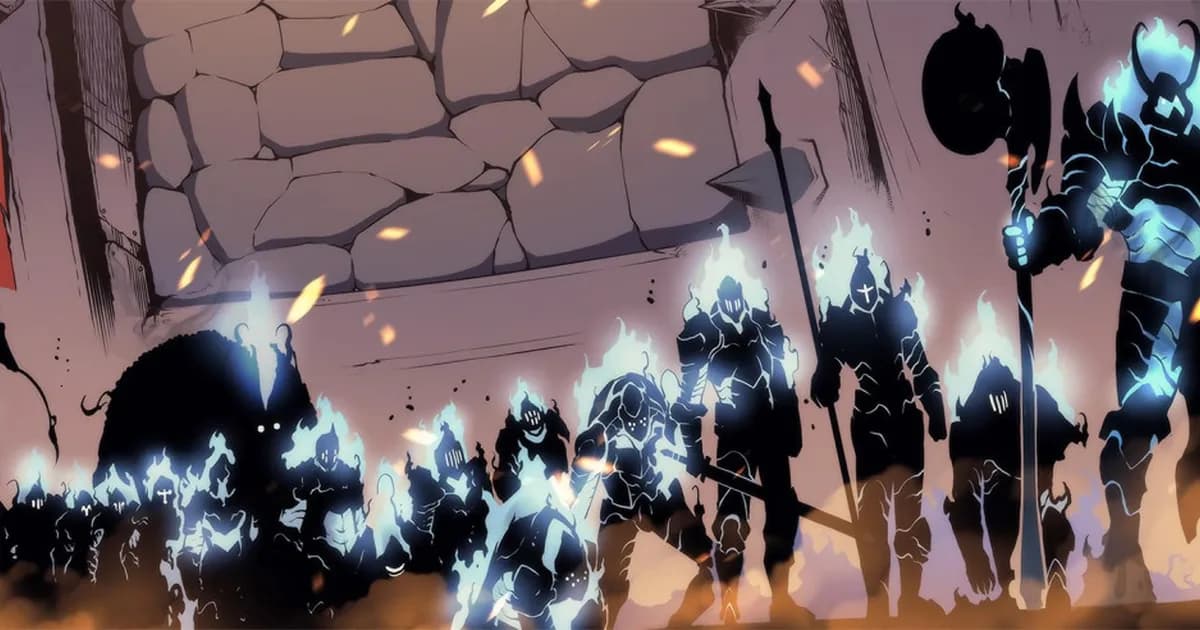
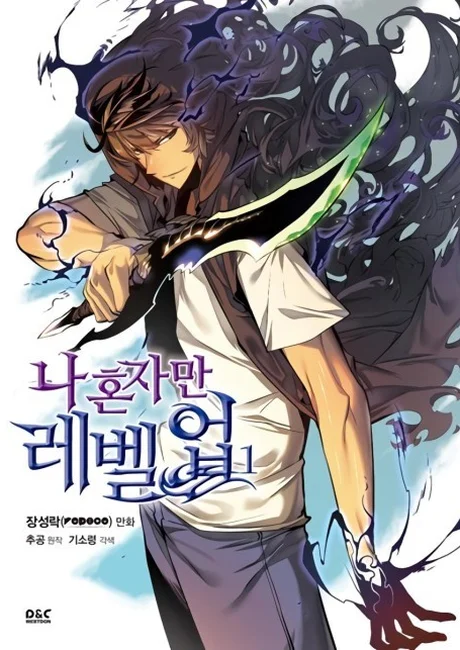
Solo Leveling isn't here because it's popular. It's here because DUBU (Jang Sung-rak) took a competent but fairly generic web novel and turned it into something visually operatic, and that gap between the source material and the art is the actual reason this series became the genre's reference point instead of any of the dozen similar hunter-system web novels that came before it. Chapter 25 is where it stops being a tutorial and starts being the thing people mean when they say "Solo Leveling."
AniList lists the completed manga at 201 chapters and marks it FINISHED. English platform editions split the main run and side stories differently, so this is an edition-specific count. It was written by Chugong with art by DUBU, and it's available through official English services including Tappytoon and Tapas, with print volumes through Yen Press. It remains the highest-popularity manhwa on AniList by a wide margin (over 285,000, more than double the next entry on this list).
Best for: readers who want the genre's clearest on-ramp with zero prior manhwa knowledge required. Full review: Solo Leveling review.
2. Omniscient Reader's Viewpoint
 Omniscient Reader's Viewpoint
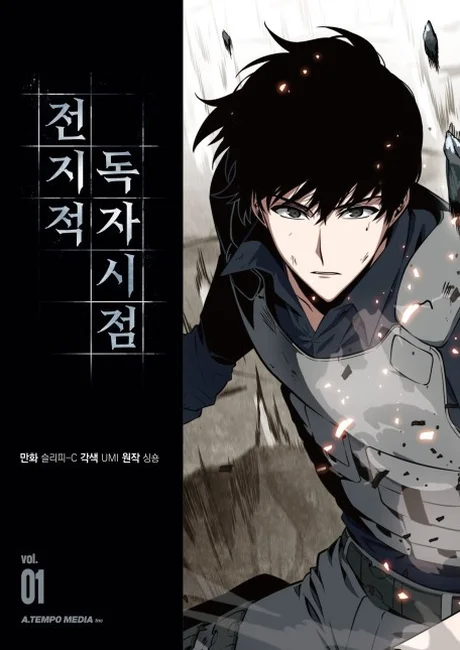
I'd put this above Solo Leveling if the list forced a single winner, and it doesn't, so I won't force the fight. singNsong's premise puts protagonist Kim Dokja inside the web novel he's spent years reading, and instead of turning that foreknowledge into a cheat code, the story treats it as a genuine burden: knowing every death coming doesn't mean you can stop it, and trying anyway breaks something in a person over time. That's a harder story to write than "protagonist knows what happens next and wins," and this one commits to the harder version.
WEBTOON's English listing ends at Episode 308 and displays a "will return" notice during the season break; AniList marks the manga RELEASING. Our review of the manhwa specifically (not the separate web-novel review on this site, they're different products with different pacing) rates it 9.2, the highest action score on this whole list.
Best for: readers who want meta-narrative weight, not just power escalation. Full review: Omniscient Reader's Viewpoint manhwa review.
3. Eleceed
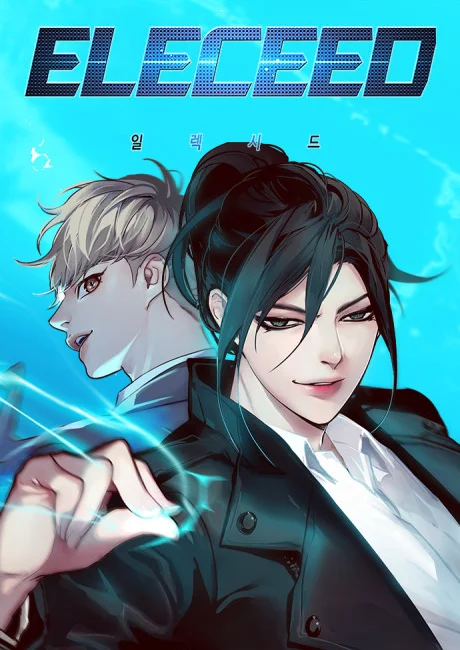
Jae-Ho Son and Zhena's Eleceed earns its spot on pure consistency. It's been running weekly on WEBTOON for years without the quality dropping off the way most long-runners eventually do, currently at official WEBTOON Episode 404 (September 21, 2026). AniList marks it RELEASING and lists no final chapter count, while our review rates it 8.6 and AniList gives it a mean score of 85, one of the highest of anything checked for this list. The premise (an ordinary teenager, a superpowered cat forced into a house-cat disguise, and a slow reveal of just how much danger that cat represents) sounds like a joke and mostly plays like one on purpose, right up until the fight choreography kicks in and it isn't joking anymore.
What keeps it off the "obvious pick" pile some readers might expect is that Eleceed never sacrifices its comedy instincts to chase seriousness the way a lot of long-running action series eventually do. The tonal whiplash is the whole appeal, not a flaw the story needs to grow out of.
Best for: readers who want action-comedy that hasn't run out of ideas after hundreds of chapters.
Foundational Action Classics
Four picks from the era before WEBTOON went global, when Korean webcomics were still finding their footing as a serious medium instead of a curiosity. Skip these and you're missing the foundation the modern blockbusters above are actually built on.
4. Noblesse
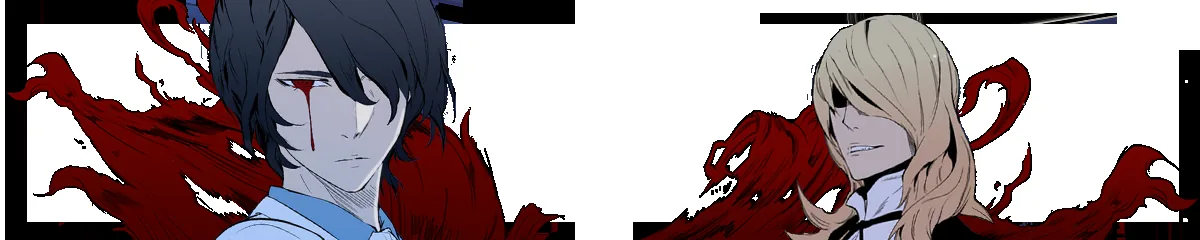 Noblesse
Son Jeho and Lee Kwangsu's Noblesse is listed by AniList as FINISHED at 544 chapters, and it's easy to undersell how much of the modern action manhwa toolkit this series helped establish before anyone called it a toolkit. The "impossibly powerful protagonist wakes up after centuries asleep and has to relearn a changed world" structure that's since become a genre convention doesn't originate here exactly, but Noblesse is where a lot of readers who now write and draw their own manhwa first encountered it done well, at scale, over more than a decade of serialization.
It's completed with a real ending, available free on WEBTOON, and Production I.G's 2020 anime adaptation on Crunchyroll (13 episodes) introduced a second generation of readers who then went back to the source.
Best for: readers who want to see where a lot of current genre conventions actually came from. Full review: Noblesse review.
5. Tower of God
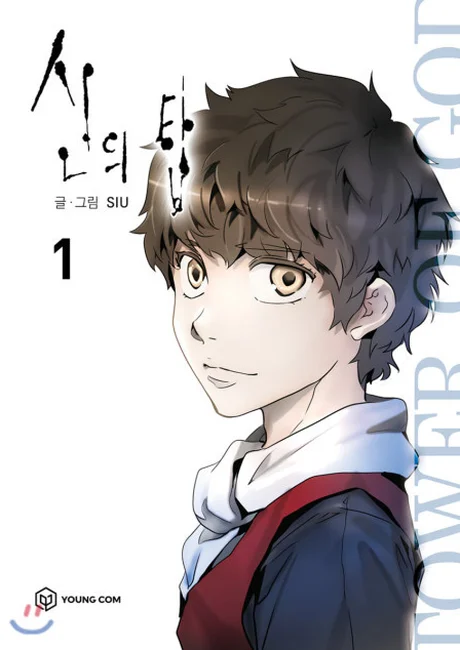 Tower of God
SIU's Tower of God has been serializing since 2010, which makes it one of WEBTOON Originals' first genuine breakout hits, predating most of what's on the platform today by the better part of a decade. Across 652 official WEBTOON episodes and three seasons (Season 1 runs 78 episodes on its own), Tower of God builds the deepest, most internally consistent world of anything on this list. That depth is also the honest caveat: Season 1 asks for real patience before the payoff arrives.
AniList marks Tower of God RELEASING. Official WEBTOON lists Season 3's finale as Episode 652, dated February 23, 2025, and displays a "will be back" notice rather than a Season 4 release date. That's frustrating if you're already invested, less so if you're a new reader with 652 free episodes to work through before the wait becomes your problem too.
Best for: readers who want the deepest world-building manhwa has to offer and don't mind an active hiatus. Full review: Tower of God review.
6. The Breaker
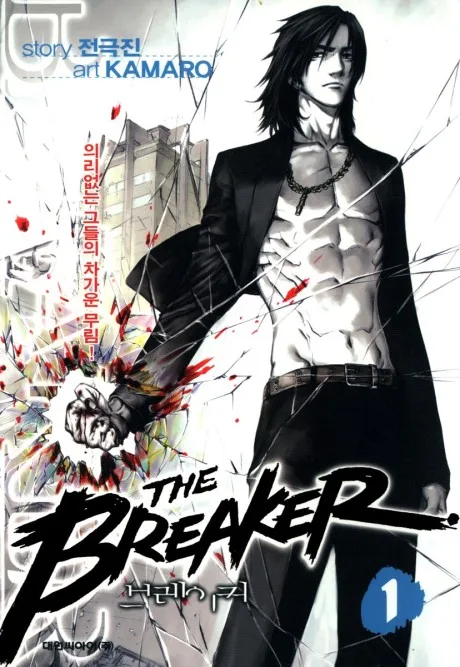 The Breaker
This is the deep cut in this group, and I mean that literally: most readers under 25 have never heard of it. Jeon Geuk-jin's story, drawn by Kamaro, ran from 2007 through 2011 across two parts, The Breaker (72 chapters) and The Breaker: New Waves (203 chapters), 275 chapters total, both complete. It's a martial arts high-school action series about a bullied student who gets pulled into a hidden world of hand-to-hand combat by a reluctant teacher-mentor, and it plays that setup with genuine craft instead of the shortcuts a lot of school-action manhwa lean on.
AniList scores it in the low 80s across both parts, which is strong for a series most current readers have simply never encountered, since it predates WEBTOON's international platform entirely and was serialized on Naver in Korean before any of the current English-reading audience had access. A separate continuation, The Breaker: Eternal Force, is marked RELEASING on AniList, but the two-part story that earns this spot is the completed 275-chapter original.
Best for: readers who want to see martial-arts manhwa before the genre had modern conventions to lean on. Full review: The Breaker review.
7. The God of High School
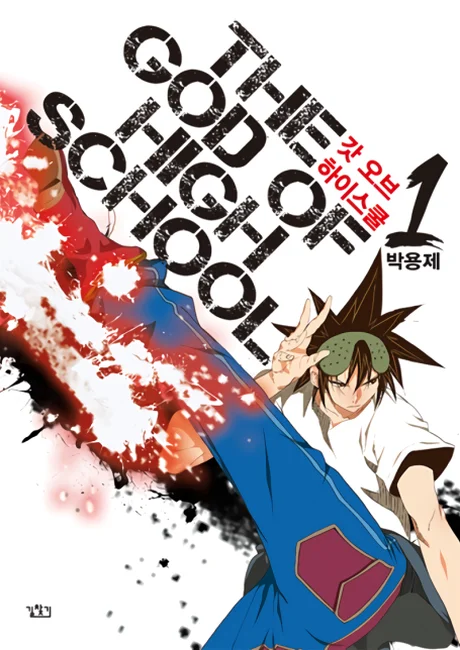
Park Yong-je's The God of High School (2011-2020, 569 chapters, completed) is the tournament-arc structure done at genre-defining scale: dozens of fighters, escalating stakes, and a mid-series tonal swing into cosmic mythology that either works for you or doesn't. What it did unambiguously well was function as a gateway. Crunchyroll's 2020 anime adaptation was, for a meaningful chunk of Western viewers, the first manhwa-based property they ever watched, whether or not they clocked it as manhwa at the time.
Our review rates it 8.5, and it holds up specifically as a document of what mainstream action manhwa looked like in the years right before Solo Leveling changed the genre's center of gravity.
Best for: readers who want a tournament arc built at full scale, with an anime on hand if you want the compressed version first.
Horror and Psychological Thriller
Three picks that share a creative pedigree in two cases: the same two-person team responsible for both the strongest horror entry and the highest-rated pick on this entire list.
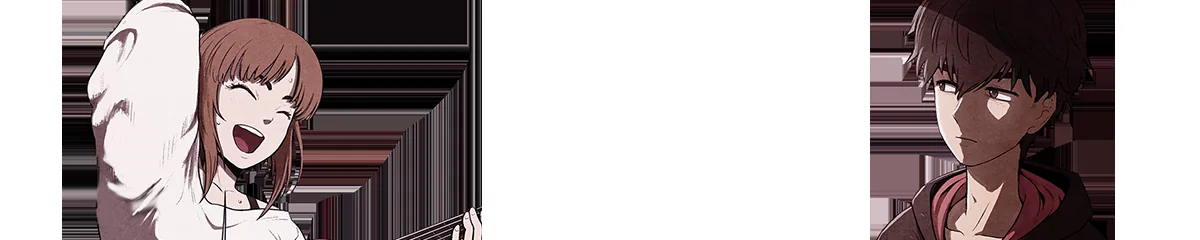
8. Sweet Home
 Sweet Home
Kim Carnby and Hwang Young-chan's Sweet Home completed at 141 chapters in July 2020, and Netflix's live-action adaptation is genuinely the wrong entry point if you want the strongest version of this story. The manhwa's body-horror designs and the slow-burn dread of watching an apartment complex's residents mutate into monsters shaped by their own worst impulses land harder on the page than the show ever manages, and that's not a knock on the show, it's a sign of how specifically the source material was built for the medium it was made in.
Our review rates it 8.8, the highest horror score on the site, and it's free and complete on WEBTOON with a Mature content rating.
Best for: horror readers who want body-horror with actual psychological weight behind the monster designs. Full review: Sweet Home review.
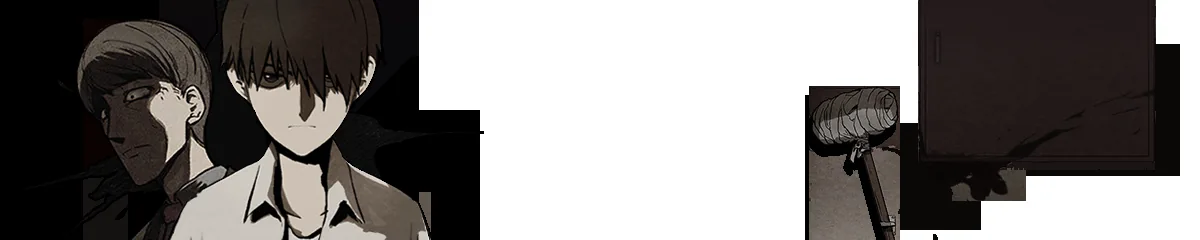
9. Bastard
 Bastard
This is the pick I most want readers to actually click on, because it's the highest-rated entry on this entire list at 9.0, and I'd guess most people reading this have never heard of it. Same creative team as Sweet Home, Kim Carnby and Hwang Youngchan, but Bastard came first and goes somewhere much smaller and more claustrophobic: a teenager slowly realizing his own father might be the serial killer the town has been hunting, and having no safe way to act on that suspicion. Ninety-four chapters, completed, originally on Lezhin and now free on WEBTOON.
AniList's mean score sits at 83 with a popularity figure (76,456) that's actually higher than several more "famous" entries on this list, which tells me the readers who find Bastard tend to become genuinely invested, it's just not the series that gets algorithmically pushed to new readers the way action titles do. If you only take one recommendation from this entire list that you weren't already planning to read, make it this one.
Best for: readers who want psychological horror grounded in a family, not a monster. Full review: Bastard review.
10. Weak Hero
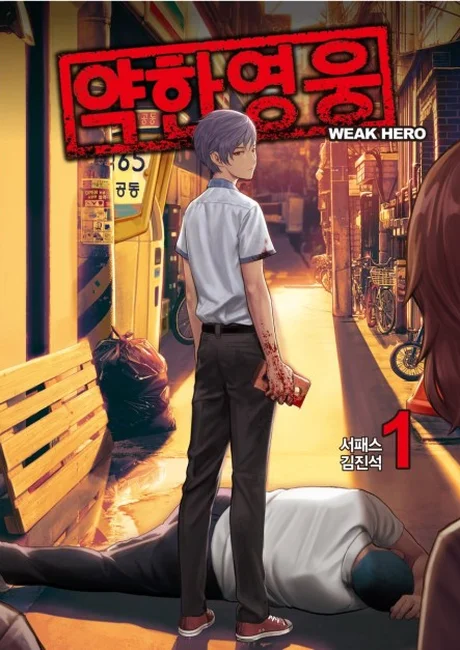
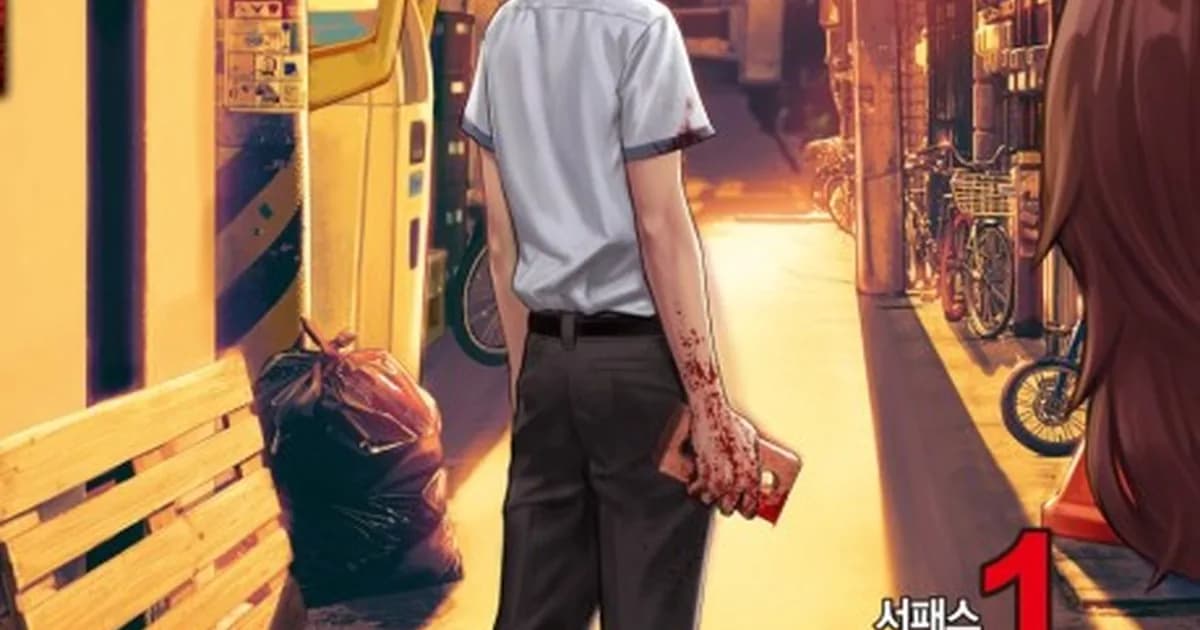
SH and Razen's Weak Hero (268 chapters, completed, rated 8.8 in our review) is school-violence fiction that treats every fight as a consequence with a cost, not a spectacle to be enjoyed for its own sake. The protagonist survives on tactics and desperation, not superpowers, and the series is honest about what that survival actually costs him physically and emotionally over time.
The live-action adaptations, Weak Hero Class 1 and Class 2, brought a wave of new readers back to the source material, and unusually for a manhwa-to-live-action jump, the shows are genuinely faithful to the original's tone instead of softening it for a broader audience.
Best for: readers who want school-set violence written with real consequences attached to it.
Murim and Cultivation
Two picks from the murim genre (Korean martial-arts cultivation fiction, structurally related to Chinese xianxia but with its own distinct sect-and-honor conventions). One's still running. One's complete, if you'd rather start with a guaranteed ending.
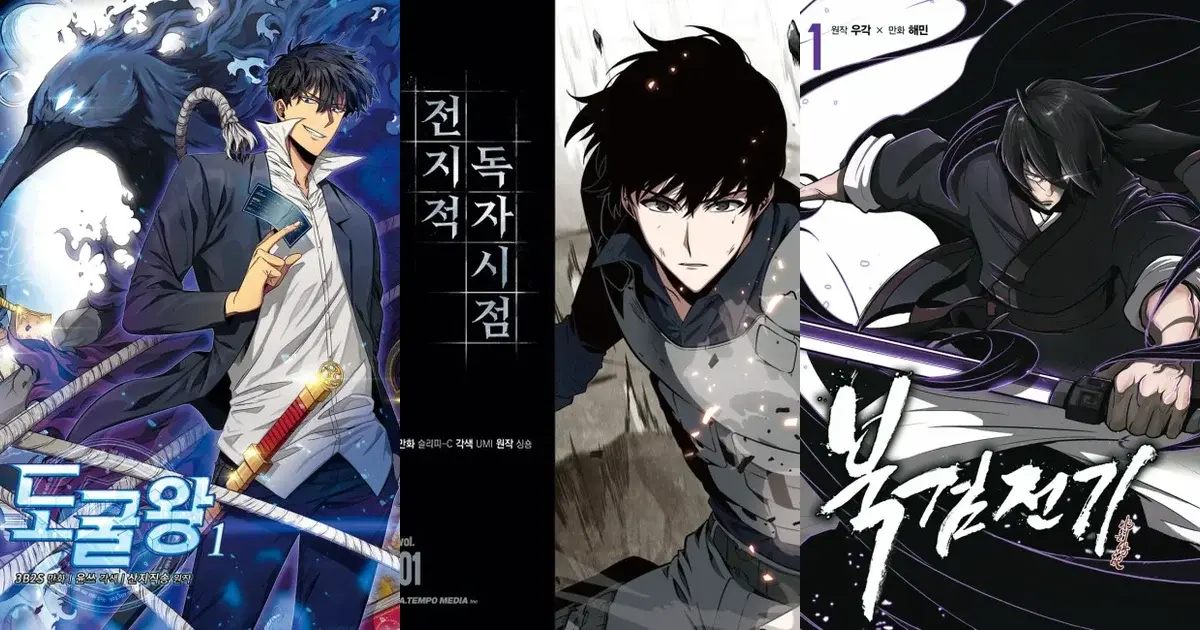
11. Return of the Blossoming Blade
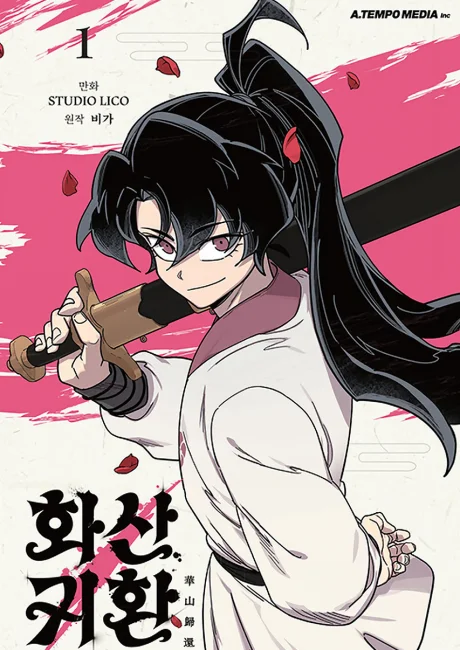 Return of the Blossoming Blade
Biga's story, illustrated by Studio LICO, is the highest-popularity murim manhwa currently running, with an AniList mean score of 84 and a popularity figure past 43,000. The regression premise (a legendary swordsman reborn into his own younger, weaker body with his memories intact) isn't a new structure for the genre, but Return of the Blossoming Blade earns its spot through character work: the emotional stakes come from relationships the protagonist gets a second chance to repair, not just from a bigger sword and a longer kill list.
AniList marks it RELEASING, and official WEBTOON lists Season 3 Episode 176 dated September 22, 2026. It is free to start on WEBTOON, and our review rates it 9.1.
Best for: murim readers who want regression built around relationships instead of a straightforward revenge climb.
If the regression structure is what hooked you here, there's a whole genre built around it.
Best Regression Manhwa 2026 →
12. Chronicles of the Heavenly Demon
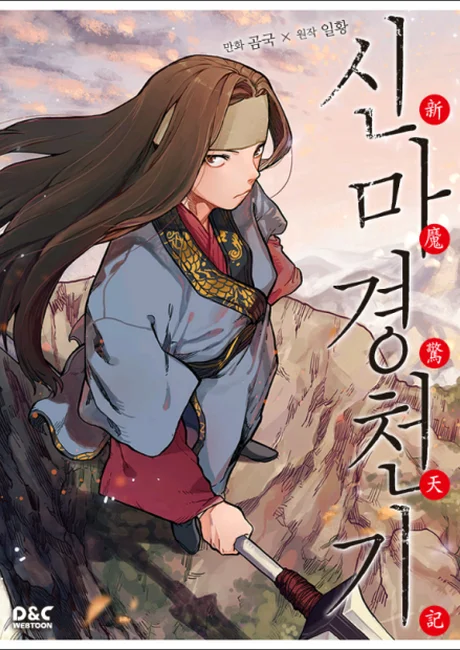 Chronicles of the Heavenly Demon
Hwang Je-gon's story, with art by Kim Kyung-Rak, gives murim readers the thing Return of the Blossoming Blade can't offer yet: a finished ending. Completed at 252 chapters on Tappytoon, it follows a legendary Heavenly Demon reincarnated generations after his death, forced to rebuild his standing from nothing inside a martial world that's already forgotten what he was capable of. Our review rates it 7.8, a notch below Blossoming Blade's craft but with the advantage of a real conclusion instead of an open hiatus risk.
I'd point a reader here specifically if the previous entry's ongoing status is the dealbreaker. Same genre conventions, same power-rebuilding structure, guaranteed payoff.
Best for: murim readers who want the genre's structure without committing to a series that might go on hiatus mid-arc.
Romance and Royal Fantasy
Two picks that dominate the romance side of manhwa for very different reasons: one through cultural crossover, one through structural ambition.
13. True Beauty
 True Beauty
Yaongyi's True Beauty is the romance genre's biggest crossover hit, and the makeup-transformation premise undersells what actually makes it work. The story is more specifically about the exhausting performance of maintaining an image you don't believe in yourself, and it takes that anxiety seriously instead of treating it as a punchline, even while the plot mechanics stay firmly in rom-com territory. AniList lists it as FINISHED at 257 chapters, and official WEBTOON marks it COMPLETED. Our review rates it 7.5.
The tvN and Viki K-drama adaptation (2020-2021) is one of the more faithful manhwa-to-drama translations out there, and it's a reasonable way to sample the story before committing to the full webtoon run.
Best for: romance readers who want a completed series with zero system-window learning curve. Full review: True Beauty review.
14. The Remarried Empress
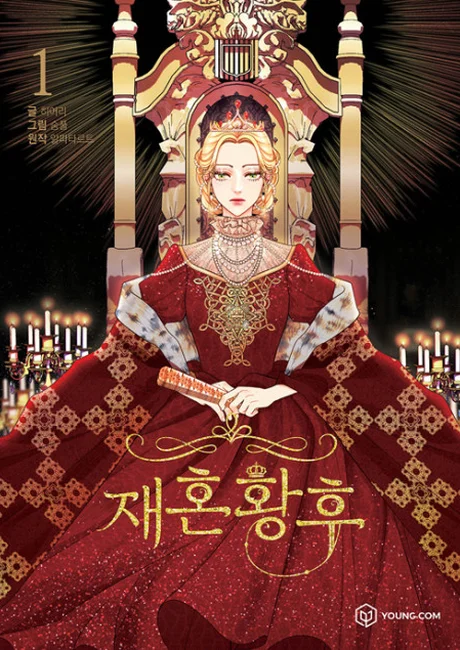
Alpha Tart's The Remarried Empress is listed by AniList as FINISHED at 247 chapters, with an end date of January 1, 2026, which means new readers get the entire arc without any hiatus risk, unusual for a series this ambitious. The structure is the actual draw here: multiple point-of-view threads across a royal court, tracking not just the empress at the center of the title but the people orbiting her political remarriage from angles a single-protagonist romance manhwa couldn't reach. Our review rates it 7.5, free on WEBTOON.
It's a heavier commitment than True Beauty in scope, palace intrigue and political maneuvering alongside the romance beats, but it rewards readers who want their romance manhwa to carry actual narrative weight.
Best for: readers who want royal-court political drama with the romance as one thread among several, not the whole story.
Slice of Life and Coming of Age
Four picks, two of which have never gotten a dedicated review on this site before, despite showing up in passing on other lists. If a "best manhwa of all time" list only draws from an existing review catalog, it's really just ranking what's already been written about, and that's a narrower exercise than what this genre deserves.
15. Cheese in the Trap
 Cheese in the Trap
This is the oldest series on the entire list, and the one I'd bet fewest readers have encountered. Soonkki's Cheese in the Trap ran from 2010 to 2017 across four seasons. AniList's four season records total 299 chapters, all marked FINISHED, and official WEBTOON marks the series complete. It predates the platform's global rebrand entirely; this was one of Naver's first webtoons to be taken seriously as literary fiction rather than disposable entertainment, and it earned that reputation through a genuinely ambiguous male lead. Is Yoo Jung manipulative, or is he just intense in a way the story never fully resolves for you? The manhwa never tells you which read is correct, and that refusal is the entire point.
A 2018 film and a 2016 K-drama both adapted the story, neither quite capturing the slow-burn discomfort of the source. If your "best manhwa" mental list stops at whatever WEBTOON's app has pushed to your homepage in the last two years, this is the series that expands it backward by a full decade.
Best for: readers who want ambiguous character writing instead of a clearly-defined romantic lead.
16. Yumi's Cells
 Yumi's Cells
Lee Dong-geon's Yumi's Cells does something structurally unlike anything else on this list: Yumi's internal life gets narrated by literal anthropomorphized brain cells, love cell, anxiety cell, rational cell, all bickering over how she should handle her own dating life. It sounds gimmicky described flatly like that, and for the first handful of chapters it kind of is, but the conceit becomes a genuinely effective way to externalize the specific, petty, embarrassing internal negotiations everyone has with themselves and never says out loud. AniList lists it as FINISHED at 511 chapters, and official WEBTOON marks it COMPLETED, making it one of the longest-running slice-of-life webtoons in the medium.
Two K-drama seasons (2021, 2022) adapted it for a mainstream Korean audience, but the manhwa's format, watching individual cells argue in the panel margins while the "real" scene plays out above them, is a visual joke the show structurally can't replicate.
Best for: readers who want slice-of-life romance told through a genuinely unusual narrative device.
17. Viral Hit
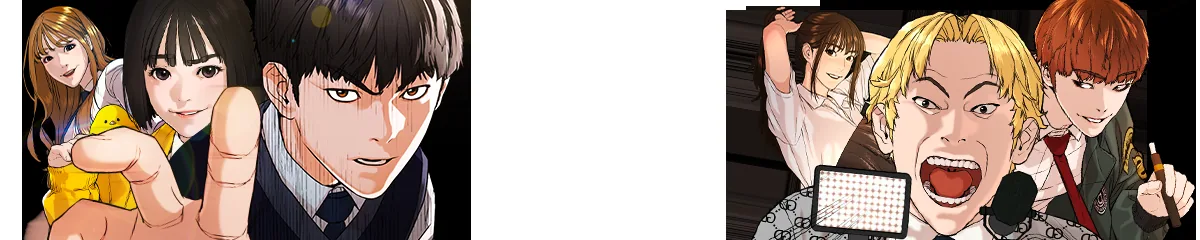
Park Tae-jun's story, with art by Kim Jeong-hyeon, follows a bullied high schooler who takes up amateur MMA and starts posting his fights online, and it's the same author behind Lookism (below) working in a completely different register: less body-swap fantasy, more grounded underdog sports drama with real stakes attached to every match. AniList lists Viral Hit as FINISHED at 222 chapters. Official WEBTOON marks it COMPLETED, although platform editions can number episodes differently, and our review scored it a solid 7.8.
It's proof Park Tae-jun's range extends past the premise that made him famous, and it's a legitimate coming-of-age sports manhwa in a list that otherwise leans hard on fantasy and horror.
Best for: readers who want grounded underdog sports drama without any fantasy elements attached.
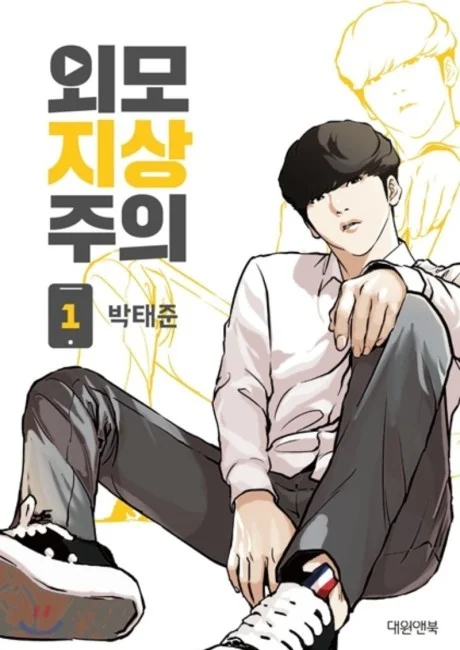
18. Lookism
 Lookism
Park Tae-jun's Lookism uses a body-swap premise (a bullied teenager wakes up with a second, conventionally attractive body he can switch into at will) as a vehicle for something closer to actual social commentary than a straightforward wish-fulfillment setup. The story is unflinching about how differently people treat the same person based purely on appearance, and it doesn't let the protagonist off the hook for enjoying the unfair advantage once he has it. Official WEBTOON lists Episode 614 dated September 19, 2026; AniList marks the manga RELEASING. Our review rates it 8.0.
I'm including it specifically as the "no ending yet, worth the investment anyway" pick. Long-runners without a confirmed endpoint are a real commitment, and Lookism has earned the benefit of the doubt through consistency over a decade of serialization.
Best for: readers who want social commentary wrapped inside a genre premise, not despite it. Full review: Lookism review.
What Didn't Make the Cut
Two series get called "manhwa" constantly and show up on nearly every competing "best manhwa" list, and neither belongs here, on purpose. Wind Breaker has a huge readership and a strong AniList mean score, but it's a Japanese manga by Satoru Nii, published through Kodansha and K MANGA, not a Korean manhwa at all. Martial Peak is enormously popular in cultivation-fiction circles, but AniList lists its country of origin as China; it's a manhua adapted from a Chinese web novel by Momo, illustrated by PIKAPI. Both are genuinely worth reading. Neither is manhwa, and a list with "manhwa" in the title that includes them anyway is either sloppy or not actually checking its sources.
A few manhwa that are strong but didn't make the final 18: God of Blackfield and Sweet Home cover similar horror-adjacent ground, and Sweet Home's craft simply edges it out for one of the two horror slots this list allotted. Semantic Error is a strong romance pick that lost out to True Beauty and The Remarried Empress on the strength of those two series' broader cultural reach. Any best manhwa of all time list will have close calls like these; the point is showing the reasoning, not pretending the cut was obvious.
Where to Read These Manhwa
Advertisement
Most of the entries in this best manhwa of all time roundup live in one place. WEBTOON (webtoons.com) hosts the large majority of this list: Omniscient Reader's Viewpoint, Eleceed, Noblesse, Tower of God, Sweet Home, Bastard, Weak Hero, Return of the Blossoming Blade, True Beauty, The Remarried Empress, Cheese in the Trap, Yumi's Cells, and Lookism are all available there. Solo Leveling has official English editions on Tappytoon and Tapas instead.
Tappytoon carries Chronicles of the Heavenly Demon if you've exhausted the Kakao-licensed murim catalog elsewhere.
Ablaze publishes The Breaker in English print for readers who'd rather own a physical volume of the martial-arts classic than read digitally.
LINE Webtoon and Naver Webtoon both carry Viral Hit, alongside its WEBTOON availability.
If several of these picks led you here through their anime or K-drama versions rather than the source manhwa, our guide built specifically for that entry path covers more series that made the same jump.
Frequently Asked Questions
What is the best manhwa of all time?
There's no single answer, because it depends what you're optimizing for. Solo Leveling is the most-read hunter manhwa ever made and the easiest entry point. Omniscient Reader's Viewpoint is the highest-rated action pick on this list at 9.2. Sweet Home is the strongest horror entry, and Bastard is the highest-rated thriller. This list ranks 18 across every genre instead of crowning one champion.
What is the most popular manhwa ever made?
By AniList's popularity metric (favorites and list adds, not sales figures ChapterBrief doesn't have access to), Solo Leveling leads by a wide margin at over 285,000, followed by Omniscient Reader's Viewpoint and Tower of God. Popularity and quality aren't the same thing, though. Several lower-popularity entries here, Bastard and Cheese in the Trap especially, rate just as high or higher on reader score.
Is Solo Leveling the best manhwa of all time?
It's the best entry point and the most influential hunter-genre manhwa of the last decade, with an art job by DUBU that's rarely been matched since. Whether it's the single best is a different question. Readers who want depth over spectacle often rate Omniscient Reader's Viewpoint or Bastard higher, and both show up on this list too.
What manhwa should I read if I've never read one before?
Solo Leveling is the standard recommendation because it's completed, fast-paced, and the art carries any rough early chapters. True Beauty is the better starting point if action isn't your genre, since it's a completed romance with a K-drama adaptation that eases new readers in without any system-window learning curve.
Are there manhwa on this list that aren't action or fantasy?
Yes, six of the eighteen. Sweet Home is horror, Bastard is psychological thriller, and True Beauty, The Remarried Empress, Cheese in the Trap, and Yumi's Cells are romance or slice of life. The list deliberately spans genres instead of ranking the same handful of action hits that show up on every other roundup.
What older manhwa are still worth reading in 2026?
The Breaker (2007), Noblesse (2007), and Cheese in the Trap (2010) all predate WEBTOON's global platform and still hold up. The Breaker in particular is a martial arts classic most readers under 25 have never heard of, despite an AniList score in the low 80s and a legitimate claim to shaping the genre.
Related Reading
- Best Completed Manhwa: A best manhwa of all time list with a guaranteed ending on every entry, since several picks above are still ongoing or on hiatus.
- Best Manhwa Slice of Life: More series in the register Cheese in the Trap, Yumi's Cells, and Viral Hit represent here.
- Best Manhwa Psychological Thriller: If Bastard and Weak Hero were the standouts for you, this list stays in that lane.
- Best Manhwa Mystery Detective Picks: If Bastard and Tower of God interested you for the manhunt or the puzzle mechanics specifically, this list is built around that.
- Best Manhwa Magic System: 7 Series Ranked by Design: A focused follow-up for readers who want to compare power rules rather than overall canon status.
- Manhwa Could Be Big Three: Is Any Series Close Enough?: A different question than this list answers, not which manhwa are best, but whether any of them could reach the cultural scale of anime's Naruto/One Piece/Bleach Big Three.
- Best Selling Manhwa of All Time: This list ranks craft and story quality. That one ranks commercial performance instead, NYT bestseller charts, official platform view milestones, streaming rankings, and licensing deals, for readers who want to know what actually moved the needle commercially rather than what's worth reading.
- Best Manhua 2026: 10 Chinese Series Beyond Cultivation: a separate current ranking for Chinese-origin comics across mystery, romance, comedy, action, and fantasy.
References
- Solo Leveling on Tappytoon
- Omniscient Reader on WEBTOON
- Tower of God on WEBTOON
- Noblesse on WEBTOON
- Sweet Home on WEBTOON
- Yumi's Cells on WEBTOON
- Cheese in the Trap on WEBTOON
- AniList verification: Solo Leveling, Omniscient Reader, Eleceed, Noblesse, and Tower of God.
- AniList verification: The Breaker, The Breaker: New Waves, The Breaker: Eternal Force, The God of High School, and Sweet Home.
- AniList verification: Bastard, Weak Hero, Return of the Blossoming Blade, Heavenly Demon Reborn!, and True Beauty.
- AniList verification: The Remarried Empress, Cheese in the Trap Season 1, Season 2, Season 3, Season 4, Yumi's Cells, Viral Hit, and Lookism.