Loading…
ChapterBrief · Manhwa
Best Manhwa Better Than Shonen Jump: 9 Series to Read
Best manhwa better than Shonen Jump: 9 picks by SJ audience type. Naruto fans get Solo Leveling. HxH fans get Tower of God. All nine series covered.

The best manhwa better than Shonen Jump depends entirely on which part of the SJ catalog you actually read. Naruto's underdog arc is a different pull than Hunter x Hunter's strategy-heavy combat. The answer for a Naruto fan isn't the same series a Bleach fan should start with.
TL;DR: Nine manhwa matched to specific Shonen Jump audiences. Solo Leveling for Naruto progression fans, Tower of God for HxH strategy readers, Omniscient Reader's Viewpoint for One Piece's civilizational scope. Each entry below names which SJ reader it serves and why the manhwa does that thing better in at least one dimension.
Best manhwa better than Shonen Jump: key takeaways
- These picks are matched to SJ audience type, not ranked by generic popularity score
- All nine titles have official English access, either digital or in print
- Tower of God (2010) predated the manhwa international boom and was the first WEBTOON title to receive an anime adaptation
- Solo Leveling and Tower of God both have North American print editions through Yen Press alongside their digital releases
Best Manhwa Better Than Shonen Jump: How These Picks Were Made
Generic "top manhwa" lists don't help manga readers because they don't explain the translation between the two mediums. A Bleach reader and a Haikyu reader want completely different things. This list maps from SJ audience type to manhwa equivalent rather than ordering by AniList score or view count.
The criterion for "better" here is narrow and honest: at least one dimension where the manhwa does something structurally or narratively that the SJ equivalent can't. Length discipline, darker thematic range, pacing choices that a series running for 800+ chapters in a weekly magazine can't afford. Not better in every dimension -- manga has advantages manhwa doesn't -- but better specifically in the dimension each SJ reader cares about most.
The more interesting comparison isn't "manhwa vs. manga" as formats. It's: what does the SJ editorial system make structurally difficult, and where does manhwa fill that gap? Length inflation, power reset cycles, and editorial-driven filler are the answers. The manhwa titles below address each of those problems. Each one is the best manhwa better than Shonen Jump for at least one specific reader type, not every reader, but a specific one.
For a broader look at how manhwa handles power progression differently from traditional manga pacing, see
Best Manhwa with Overpowered MC →
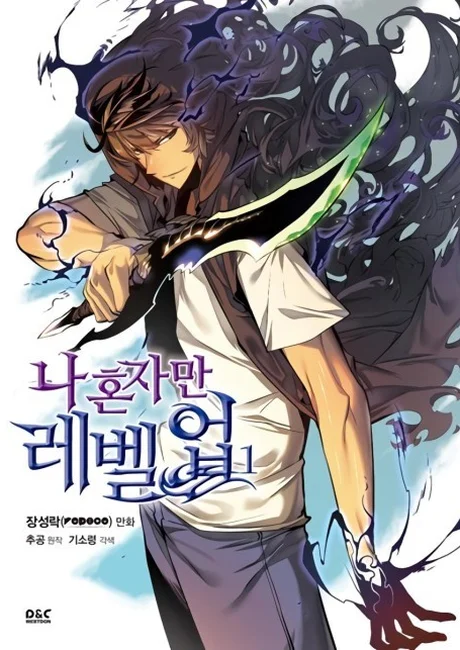 Solo Leveling cover art.
1. Solo Leveling (For Naruto and Dragon Ball Z Fans)
Advertisement
The underdog-to-top arc is the foundational shonen structure. The protagonist starts weak, gets tested, discovers hidden strength, trains past the limit, eventually stands alone at the top. Naruto does it in 700 chapters across 15 years. Dragon Ball Z does it in repeated cycles that reset the ceiling. Solo Leveling does it in roughly 200 chapters, full color, at a pace that doesn't require waiting out filler arcs.
Sung Jin-Woo's progression from E-rank hunter to Shadow Monarch follows the same emotional logic as Naruto's journey to Hokage, but the compressed timeline means each escalation actually lands. There's no arc where he spends 40 chapters doing training that amounts to a stat bump. The stakes don't dilute because the series doesn't need to stall for serialization reasons.
Available on WEBTOON in English. The anime premiered on Crunchyroll in January 2024. Print editions are available through Yen Press.
For the full structure breakdown, see our Solo Leveling review.
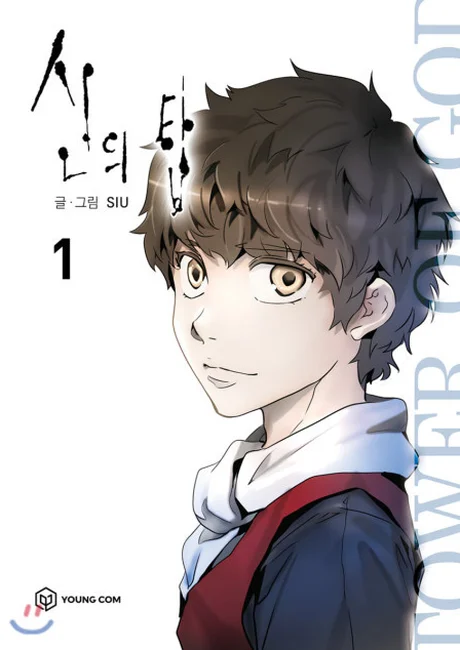 Tower of God cover art.
2. Tower of God (For Hunter x Hunter Fans)
Hunter x Hunter fans tolerate long hiatuses because the payoff is strategic complexity: fights where the outcome depends on reading the opponent correctly rather than powering up faster. Tower of God delivers the same model without the decade-scale wait, though it has its own pacing quirks.
SIU built Tower of God on a premise that resists simple resolution. Characters enter a mysterious tower where the rules change by floor, and the protagonist's actual goal keeps revealing itself to be something different than initially stated. Cast dynamics are genuinely adversarial in the way HxH's exam arcs are -- alliances form and break on logic, not friendship power-ups.
Tower of God launched on WEBTOON in 2010, one of the earliest manhwa to reach international readers at scale. It accumulated over 5.5 billion views on the platform. An anime aired in 2020; Season 2 aired in 2024, adapting the Prince of Zahard and Workshop Battle arcs.
Tower of God on WEBTOON -- full series. See our Tower of God review for the arc breakdown.
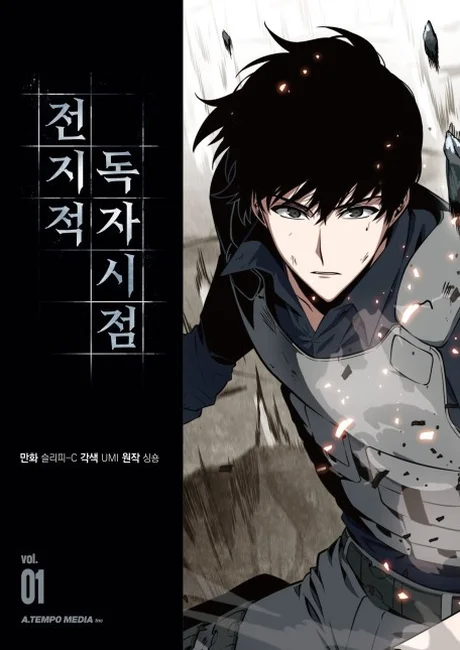 Omniscient Reader's Viewpoint cover art.
3. Omniscient Reader's Viewpoint (For One Piece Fans)
One Piece works because the world is large enough to feel real and the protagonist's relationship with the reader feels unusually intimate. You root for Luffy specifically because of the kind of person he is, not just the outcomes he achieves. That level of reader investment, sustained across a 30-year run, is what most manhwa doesn't attempt. ORV does, and mostly delivers it.
Omniscient Reader's Viewpoint builds on the same mechanic with a different structure. The protagonist, Kim Dokja, is a reader who finished a web novel nobody else read -- and then the world from that novel becomes real. His advantage is knowing the story, but the story keeps changing because his presence changes it. The dramatic irony is constant: he knows what should happen next, and then it doesn't.
The scope is One Piece-scale. By the later chapters, the cast operates at civilizational or cosmic levels, and the series commits to that scale in a way most manhwa titles avoid. Available on WEBTOON.
Read our Omniscient Reader's Viewpoint review for the full arc breakdown.
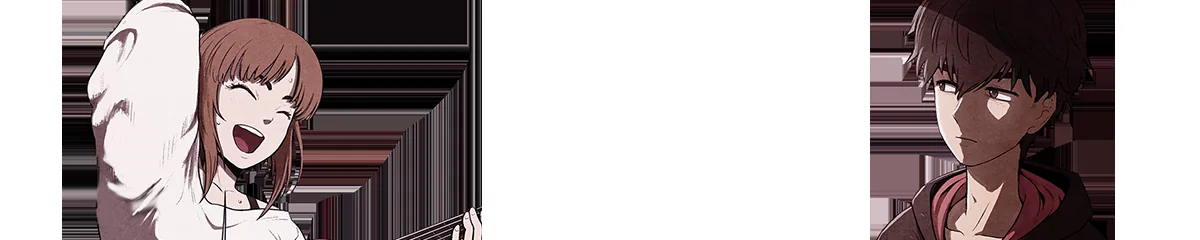 Sweet Home cover art.
4. Sweet Home (For Chainsaw Man Fans)
Chainsaw Man's mainstream success confirmed that the Shonen Jump readership will follow horror-adjacent content with real body count and moral ambiguity. Sweet Home operated in that space before Chainsaw Man codified it for the SJ format.
The premise: apartment residents are trapped as humanity begins transforming into monsters, and the transformation is tied to deepest desires, which means the monsters are legible as characters. The protagonist is himself beginning to transform and has to decide whether to fight it. The genre mix -- survival horror plus internal psychological horror -- isn't something SJ can really do inside weekly serialization.
WEBTOON published Sweet Home to completion. Netflix adapted it across three seasons, concluding in 2024. The source material ends conclusively in a way the adaptation doesn't.
Full coverage in our Sweet Home review.
If the system-fantasy and strategic-combat side of this list is what draws you, see
Best System Fantasy Manhwa →
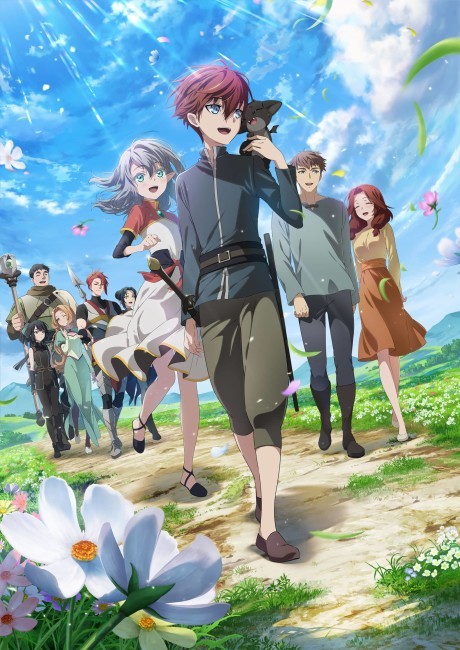 The Beginning After the End cover art.
5. The Beginning After the End (For Black Clover and Fairy Tail Fans)
Black Clover works because it takes the "magical power system with class hierarchy" structure and adds enough mechanical specificity that the rules feel real. The Beginning After the End does similar work in an isekai framing: a king is reborn into a magic-structured fantasy world and has to navigate both the power system and the political reality.
The real advantage over Black Clover is pacing. TBATE doesn't lock into the tournament-then-new-villain cycle that runs Fairy Tail into diminishing returns by its third arc. The protagonist's past-life knowledge creates decisions that feel strategic rather than power-up-gated. Stakes don't reset between arcs.
Available through Tapas in English. Full breakdown in our The Beginning After the End review.
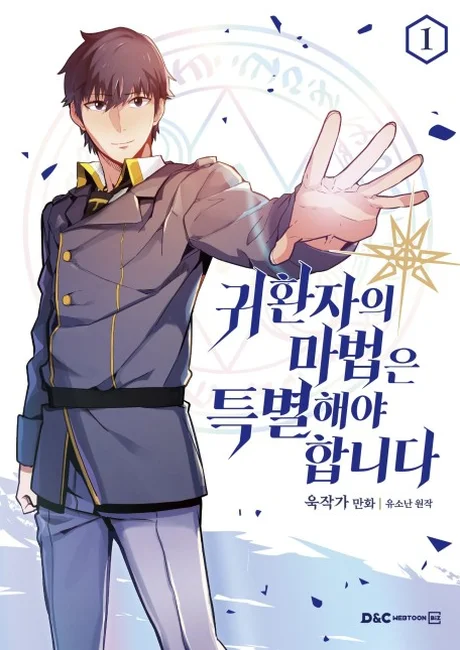 A Returner's Magic Should Be Special cover art.
6. A Returner's Magic Should Be Special (For Dr. Stone Fans)
Dr. Stone's appeal is a protagonist who wins through intelligence rather than raw power. Senku's plans take longer to understand than a punch lands, which means the victory feels earned differently. A Returner's Magic Should Be Special targets that same reader.
Desir Herrman, one of the last survivors of a world-ending disaster, is sent back in time ten years before the event occurs. He knows what's coming. His advantage is complete knowledge of future outcomes, and it's fundamentally about how an intelligent person uses advance information under social and political pressure. The tactical problem-solving -- how do you change outcomes when the people around you don't believe your warnings -- is Dr. Stone-adjacent in a fantasy magic context.
Available via KakaoPage with English-language release through Tapas. See our A Returner's Magic review.
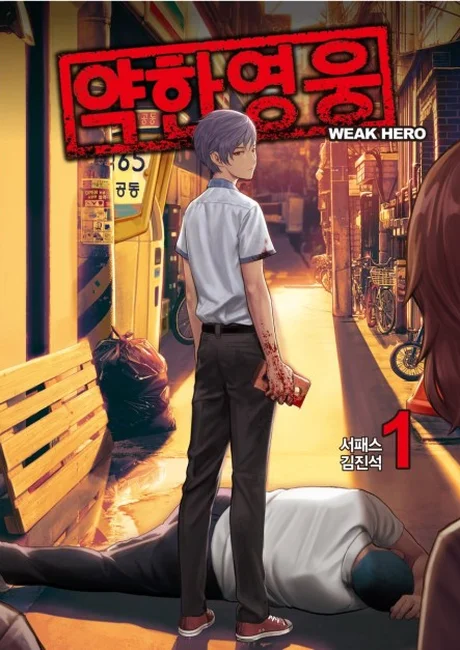 Weak Hero Class 1 cover art.
7. Weak Hero Class 1 (For Realistic Combat Fans Ready to Skip Power Escalation)
This one doesn't map cleanly to a specific SJ title because it fills a gap SJ largely can't serve. Weak Hero Class 1 is a school-setting series about a small, physically unremarkable student who wins fights through precise targeting of vulnerabilities rather than escalating power levels. The violence is realistic and consequence-heavy in a way SJ editorial guidelines make nearly impossible to sustain.
Readers who've burned through the tournament arcs of Bleach or Naruto and want something structurally similar without the power ceiling -- Weak Hero covers that gap. The fights matter because the protagonist can't absorb unlimited damage. He wins strategically or he loses, and losing is a real option.
Available on WEBTOON. See our Weak Hero review.
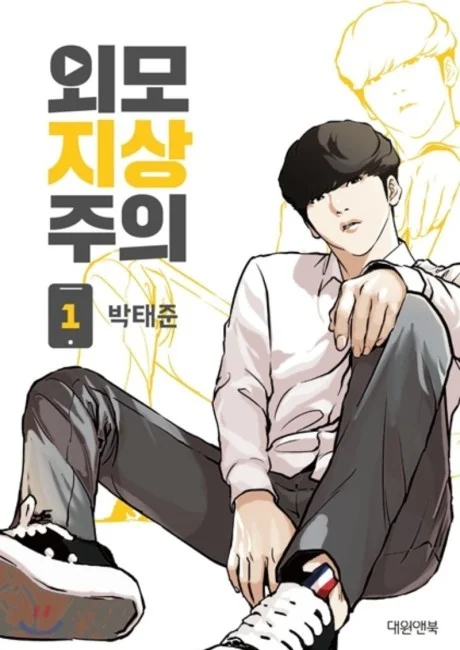 Lookism cover art.
8. Lookism (For Character Growth and Slice-of-Life Fans)
Lookism starts with a premise that sounds like a school comedy -- protagonist wakes up able to transfer between two bodies, one conventionally attractive and one not -- and becomes a sustained examination of how physical appearance structures social access. The series maps the two experiences systematically across dozens of characters and institutional settings.
This premise would get a two-season run in a SJ title and then pivot into a tournament arc. Lookism uses its page space for character psychology instead. It's not for readers who want combat spectacle; it's for readers who wanted Naruto's academy years to actually develop the character relationships the later arcs leaned on.
Available on WEBTOON. See our Lookism review for the full breakdown.
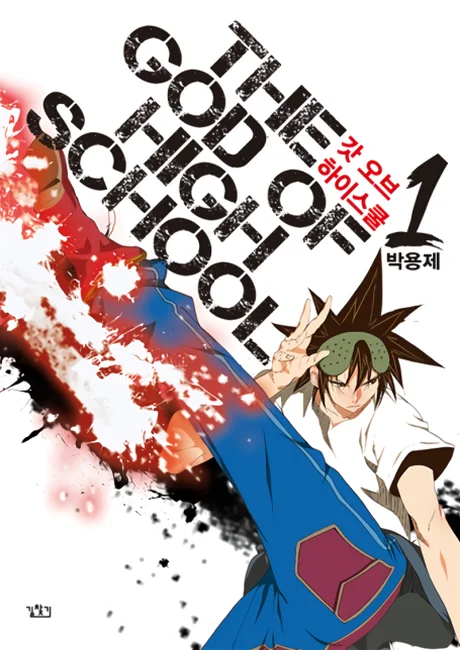 God of High School cover art.
9. God of High School (For Tournament Arc Fans)
Advertisement
If Naruto's Chunin Exams or early Bleach's Soul Society arc were the draw -- structured tournament combat with rising tier reveals -- God of High School is the direct equivalent. The premise is a martial arts tournament where students fight to win a wish from figures who may or may not be divine.
The series knows its main value is the fights and commits to that. Combat choreography and escalating power reveals are where the pages go. The plot between fights is thinner than comparable SJ arcs, but the tournament structure runs cleaner -- there's no multi-year training montage before the next bracket.
Available on WEBTOON. An anime adaptation aired in 2020. See our God of High School review for what works and where the non-combat sections lose the thread.
Related Reading
- Solo Leveling Review -- the manhwa that converted the most SJ readers and redefined what manhwa could do internationally
- Tower of God Review -- the series that launched manhwa's global distribution model on WEBTOON
- Best Manhwa with Overpowered MC -- 12 more series for readers who want the power-fantasy end of this list
- Sweet Home Review -- the manhwa that proved Korean horror could compete at the level of any format
Frequently Asked Questions
What manhwa is comparable to Naruto?
Solo Leveling is the closest manhwa equivalent to Naruto's story structure. Both start with an underdog protagonist who can't keep up with peers, build through years of training and sacrifice, and resolve into a dominant world-saving arc. Solo Leveling does it in roughly one-third the runtime.
Is manhwa better than manga?
The question is genre-dependent. Manhwa uses full color and tighter pacing, which makes it more approachable for new readers. Manga has deeper genre diversity and a longer track record. The most accurate answer is that the best manhwa and best manga occupy different creative spaces.
What should I read if I like Shonen Jump?
If you want the quick version: Solo Leveling for action progression, Tower of God for strategic multi-party combat, Omniscient Reader's Viewpoint for epic scope. All three are the best manhwa better than Shonen Jump for their respective audience type.
Is Solo Leveling from Shonen Jump?
No. Solo Leveling is a Korean manhwa originally published as a web novel by Chugong, then adapted as a manhwa by DUBU (Redice Studio) for KakaoPage. Its anime aired on Crunchyroll in 2024 and has no connection to Shonen Jump.
What manhwa is similar to One Piece?
Omniscient Reader's Viewpoint is the closest tonal match. Like One Piece, it operates at civilizational scale, builds an enormous cast, and centers on a protagonist whose relationship with the reader is unusually intimate across hundreds of chapters.
Are manhwa available in print like Shonen Jump manga?
Yes. Solo Leveling and Tower of God have print editions through Yen Press. Sweet Home is available via Seven Seas Entertainment. The print manhwa market has expanded significantly since the 2024 anime adaptations.
References
- Tower of God on WEBTOON -- official series page; 5.5 billion view count cited from WEBTOON platform stats
- Solo Leveling print edition via Yen Press -- print availability confirmed; North American release 2023
About the author

Critical Theorist & Features Writer
Manhwa and webcomic critic with a background in literary analysis. Writing about narrative and genre since 2016. Specialises in genre history and story structure.
- Manhwa and webcomic critic since 2016
- Graduate background in comparative literature
- Published criticism covering Korean and Japanese comics
- Specializes in genre lineage and narrative structure


Disclaimer
This article is published for informational and entertainment purposes. It does not constitute professional financial, legal, or technical advice. Series availability, platform access, translation status, and chapter counts change. Verify critical details (pricing, regional availability, official translation status) with publishers and platforms. Affiliate links, where present, help support our editorial work and are labelled in our affiliate disclosure.
Comments
Loading comments…