
Best manhwa with op female lead is a search category with a real problem: most lists conflate "strong female lead" with "female protagonist exists." The distinction matters. A protagonist who survives with help is not the same as a protagonist who controls the situation. Both are valid story structures, but they're different reading experiences.

TL;DR: The Remarried Empress (247 chapters, completed January 2026, WEBTOON) is the benchmark for political OP. Navier is never rescued and always has a plan. Unholy Blood (93 AniList chapters, completed, WEBTOON) is the strongest finished action option with a female protagonist who fights and wins. The Villainess Reverses the Hourglass (125 AniList chapters, completed) is the clearest case of regression used as a weapon rather than a survival tool.
Tapas access note: Tapas ends service on March 31, 2027 at 23:59 PT, so unlocked episodes will not be accessible after that date; see the official Tapas update.
This list is organized by what kind of OP the protagonist actually is. Three types appear with some consistency in the genre. Regression heroines use foreknowledge: they've lived through one version of the story and are rewriting it. Political heroines win through strategy, social influence, and institutional control. Combat heroines have direct physical or supernatural power that puts them above the conflict. Most series blend two of these, which is noted for each entry.
Nine picks below. Platform, chapter count, and completion status included because those change the decision significantly.
Overview
Overpowered, in the context of female-lead manhwa, rarely means what it means in male-protagonist action series. A male OP protagonist usually has a numerical power advantage: higher stats, better drops, faster leveling. A female OP protagonist more often has a structural advantage: she already knows how the story ends, she controls the social levers the antagonist depends on, or she has a supernatural ability that lets her sidestep the conflict rather than overpower it directly.
This list is organized by the type of OP rather than by overall quality, because that type changes what you're actually reading. Three categories appear consistently in the genre. Regression heroines have foreknowledge: they've lived one version of the story and are correcting its failures. Political heroines operate through strategy, institutional positioning, and social capital. Combat heroines have direct physical or supernatural power. Most series blend two of these, and that mix is noted for each entry.
Nine picks follow. Each entry includes the platform, the chapter count, and the completion status, because those three pieces of information change the decision as much as anything in the description does. A 247-chapter completed series is a different reading commitment than an 80-chapter ongoing one, and what qualifies as OP in chapter 5 can look very different by chapter 150.
How to use this list: if you want political OP with full resolution, The Remarried Empress is the benchmark. If you want combat OP completed in under 100 chapters, Unholy Blood. If you want regression used tactically rather than emotionally, The Villainess Reverses the Hourglass.
Key Takeaways
- The Remarried Empress (247 chapters, completed January 2026, WEBTOON) is the benchmark for political OP. Navier is never rescued and always has a plan
- Unholy Blood (93 AniList chapters, completed, WEBTOON) is the strongest finished action option with a female protagonist who fights and wins
- The Villainess Reverses the Hourglass (completed, WEBTOON) is the clearest case of regression used as a weapon rather than a survival tool
- Marry My Husband (completed, WEBTOON) treats foreknowledge with unusual tactical specificity: career decisions and relationship rebuilding, not just avoiding death
- Most picks are free on WEBTOON with older chapters available at no cost
Manhwa With OP Female Lead: Political and Strategic Power
These protagonists win by thinking several moves ahead. Their OP status comes from information, influence, and the willingness to act on both.
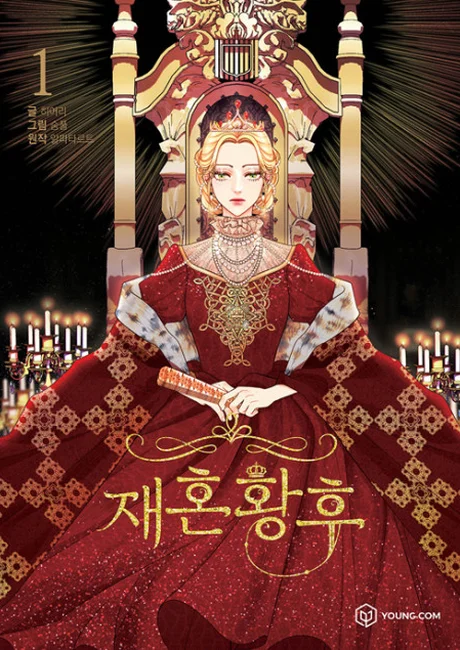 The Remarried Empress cover art.
The Remarried Empress
Chapters: 247 | Platform: WEBTOON | Completed: January 2026
Navier Eliza Sovieshu is the Empress of the Western Kingdom. When the Emperor starts moving a mistress toward her position, she doesn't collapse or plead. She recognizes the situation for what it is and begins planning her exit, not as a retreat, but as a lateral move to greater power.
The series' reputation rests on one structural decision: Navier is always competent. She was trained for her role, she's good at it, and nothing the Emperor does strips her of that. The romance with the neighboring emperor Heinrey develops because of her competence, not in spite of it. He's attracted to what she actually is, not some version of her that the plot needs her to be.
247 chapters is a real commitment. The best stretch is chapters 1-80, where the first political crisis plays out. The later arcs involve more ensemble characters and broader war narrative, which some readers find diluting and others find satisfying. The ending lands.
Where to read: WEBTOON (free, older chapters). Art by Sumpul is one of the cleaner productions in the romance historical subgenre.
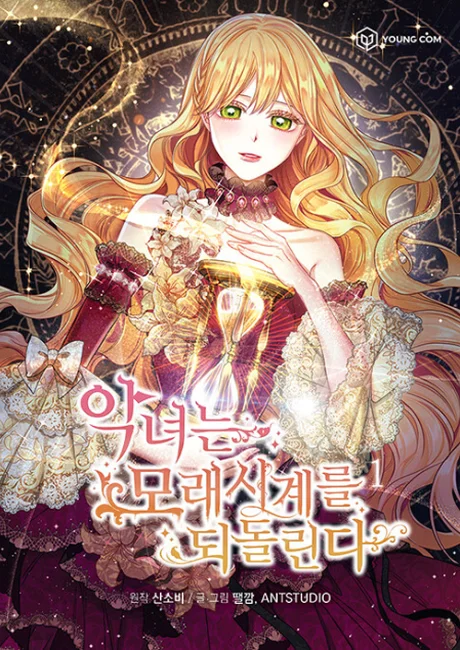 The Villainess Reverses the Hourglass cover art.
The Villainess Reverses the Hourglass
Platform: WEBTOON | Completed: Yes
Most regression manhwa use foreknowledge defensively: the protagonist knows what's coming and avoids it. This one uses foreknowledge offensively. Aria was executed at the end of her first life, and the series follows her using the reset to methodically dismantle everyone responsible.
That shift from survival to revenge changes the reading experience. Aria is not trying to be liked or redeemed. She's executing a plan she's thought through over the course of one entire lifetime. The series is smarter about consequence than most genre entries. Her actions have costs, and the story tracks them.
Completed on WEBTOON. Art by Sansobee holds across the full run. The ending earns its conclusion without softening what the protagonist has done to get there.
For readers who want more series in this political scheming mode, the manhwa like Trash of the Count's Family guide covers transmigration series where the protagonist's foreknowledge changes everything.
Marry My Husband
Chapters: 68 | Platform: WEBTOON | Completed: Yes
The protagonist watches her husband murder her with her best friend's help. She wakes up ten years earlier and decides not to waste the reset on the marriage that killed her.
What separates Marry My Husband from the average regression premise is how specific the tactics are. She's not just avoiding the bad ending. She's rebuilding her career, redirecting the best friend toward the original husband, and investing in a different relationship with clear-eyed awareness of what she's doing and why. The story treats her decisions as adult choices with real stakes, not as obvious good/bad forks.
68 chapters, completed. The WEBTOON adaptation was produced with higher production values than most of its contemporaries in the romance category.
Our best manhwa with strong female lead list covers the top action and drama reads led by women.
Best Manhwa with Strong Female Lead →

Best Manhwa With OP Female Lead: Combat-Capable Heroines
These protagonists have direct power (supernatural, physical, or both) that puts them above the conflict rather than inside it.
 Unholy Blood cover art.
Unholy Blood
Chapters: 93 AniList chapters | Platform: WEBTOON (free) + Yen Press (8 print volumes) | Completed: Yes
Hana Im spent years passing as human, hiding that she's half-vampire, waiting for the right moment. When the organization that killed her family starts threatening people she knows, she stops waiting.
Unholy Blood does one thing that most action manhwa with female leads avoids: it doesn't spend time on Hana doubting her abilities. She knows what she can do. The tension is external and tactical: who to fight, in what order, and how to keep the detective investigating the same case from becoming collateral. That's a different reading experience from the standard power-accumulation structure, and it works better at 93 AniList chapters than most action manhwa manage at 300.
Completed with a real ending. One of the few finished action manhwa of this length with a female protagonist who is the source of power, not the beneficiary of someone else's.
For more action-forward series, the manhwa like Overgeared guide covers series where competence and preparation drive the protagonist's dominance rather than raw power inheritance.
Girls of the Wild's
Chapters: 260 | Platform: WEBTOON (free) | Completed: 2016
The premise: Song Jaegu enrolls at a prestigious all-girls fighting academy as the first male student. He's the frame. Queen (the reigning champion) and the rest of the female cast are the actual draw.
This one gets categorized as "male lead" and dropped from female-lead lists, which misses what the series is. Song Jaegu's arc is a device. The competitive stakes, the fighting skill, the character history: that belongs to Queen and the fighters around her. The tournament fights are well-choreographed, the female cast has individual motivation rather than shared purpose, and the 260-chapter run holds quality better than most series half its length.
Completed in 2016. Free on WEBTOON.

Purple Hyacinth
Platform: WEBTOON (free) | Status: Official page currently shows (S3) Episode 158, platform #163, dated Feb 27, 2023; no current return date is shown
Lauren Genevieve works as a detective in a European-influenced historical setting. Her ability (reading memories through touch) is an investigative tool, not a combat power. She solves crimes with it.
The distinction matters for this list: Lauren's OP status comes from understanding people rather than overpowering them. Each mystery arc is tight and builds on the previous one. The art is among the stronger ongoing productions on the platform.
The official page does not expose a current return date, and AniList has no matching record in the live query used for this audit. Treat the English release as unfinished rather than assuming a current weekly schedule.
Regression Heroines Who Win at Life
Not every OP female lead needs to fight. These protagonists use foreknowledge to remake their circumstances (careers, relationships, family) rather than escape a death sentence.
 I Shall Master This Family cover art.
I Shall Master This Family
Platform: Tapas / Tappytoon | Status: AniList RELEASING; Tapas currently lists 232 episodes and Tappytoon labels its edition Hiatus
Firentia reincarnates as the eldest daughter of a declining noble family. The series follows her systematic effort to reverse the family's collapse, dealing with finances, political alliances, and family members who don't understand what she's doing or why.
The villainess connection is loose. Firentia isn't escaping a villain role. She's running a turnaround operation. Her power is institutional and administrative. The romance subplot exists and moves slowly because the story is more interested in the family dynamics than the love interest, which makes it unusual within the female-lead genre.
Where to read: Tapas or Tappytoon. Full breakdown in our I Shall Master This Family review.
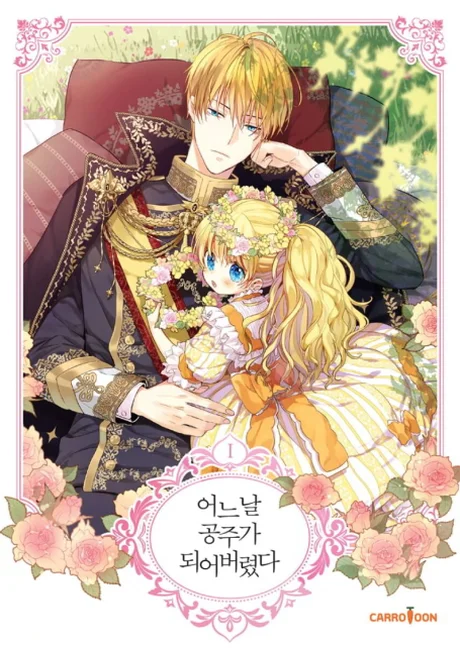 Who Made Me a Princess cover art.
Who Made Me a Princess
Chapters: 135 AniList chapters | Platform: Tapas / Tappytoon | Completed: Yes
Athanasia wakes up as the doomed princess daughter of a cold-blooded emperor. She knows from having read the novel that he kills her in the original timeline. She has to change that outcome.
The structural core is the father-daughter relationship, not the romance. Athanasia slowly makes Claude love her while knowing he's capable of killing her, and that tension between her knowledge and his ignorance drives the series more than any external threat. The romance exists and is well-executed; it's just not why the series works.
135 AniList chapters, completed, with art by Plutus consistent across the three main seasons and side stories. Available in official English on Tapas and Tappytoon, with physical volumes from Seven Seas Entertainment.
For readers interested in the broader romance genre that Who Made Me a Princess helped shape, the best manhwa romance list covers the overlap between female-lead isekai and historical romance more widely.
 Beware the Villainess cover art.
Beware the Villainess
Platform: Tapas | Completed: 144 chapters
Melissa reincarnates as the antagonist of a romance novel. Rather than playing the role, she decides to critique it from inside. The love interests are written as archetypes (possessive male lead, cold duke), and Melissa is explicitly unimpressed with all of them.
The comedy is sharp enough that the structural point lands: the behaviors the original novel romanticized were manipulation, and Melissa is one of the few protagonists positioned to name that clearly. There's genuine emotional content underneath the meta-commentary, and the ending doesn't undercut it.
Completed on Tapas. Better read after you've encountered at least two or three straight villainess manhwa, since the satire lands harder with prior genre exposure.
Our master manhwa reading list covers the top 30 titles across every genre for 2026.
Best Manhwa to Read in 2026 →
Where to Find More
The series above cover the established picks. If you've read through this list and want to go further, a few directions:
The best manhwa for beginners guide is a useful entry point if you're coming to the genre fresh and want context on which series reward patience versus which ones deliver from chapter one. The omniscient reader's viewpoint review also shows what a strong ensemble female cast looks like in a male-lead series, a useful comparison if you're trying to calibrate what "OP" means in practice.
For translations and platform access: WEBTOON handles most of the major titles above for free with older chapters unlocked. Tappytoon and Tapas carry specific licensed titles. Lezhin Comics carries more adult-oriented series in the historical romance category that don't always appear on WEBTOON, worth checking if your preferred tone runs darker.
The villainess and regression subgenre has also produced a secondary wave of series worth tracking: How to Get My Husband on My Side (WEBTOON, darker psychological tone), I Became the Villain's Mother (WEBTOON/Kakao, lighter comedy register), and Doctor Elise: The Royal Lady with the Lamp (Tappytoon, completed, with an anime adaptation). None of those quite clear the OP threshold for this list, but they're adjacent reading for anyone who gets through the 9 picks here.
Frequently Asked Questions
What is the best manhwa with an OP female lead? It depends what OP means. For combat dominance from the start, Unholy Blood is the strongest completed option. For political OP (a woman who out-maneuvers everyone in the room), The Remarried Empress is the standard. The Villainess Reverses the Hourglass is the pick if you want a protagonist who uses foreknowledge as a weapon rather than a safety net.
What does OP mean in manhwa? OP stands for overpowered, meaning a protagonist whose abilities, knowledge, or status exceeds what the antagonists can reasonably counter. In female-lead manhwa specifically, OP rarely means brute combat strength. It more often means foreknowledge (regression heroines), social and political influence, or an unusual skill set the world around them hasn't caught up to yet.
What manhwa has a strong female lead that isn't romance? Unholy Blood is the clearest action pick: half-vampire hunting the organization that killed her family, 93 AniList chapters, completed. Purple Hyacinth is a detective series whose official page currently exposes a 2023 Season 3 endpoint. Girls of the Wild's runs 260 AniList chapters of serious tournament fighting with a female-dominant cast.
Are there completed manhwa with an OP female lead? Yes. Unholy Blood (93 AniList chapters), The Remarried Empress (247 chapters, January 2026), The Villainess Reverses the Hourglass (125 AniList chapters), Beware the Villainess (144 chapters), Marry My Husband (68 AniList chapters), and Who Made Me a Princess (135 AniList chapters) are finished in AniList or on their official platform. The English editions can expose different episode counts.
Is The Remarried Empress worth reading? Yes, particularly for readers who find most romance manhwa too passive. Navier's response to the Emperor's infidelity (rebuilding her power base across the border) is what the series is known for. The political arc in chapters 1-80 is the best stretch. 247 chapters total, completed January 2026.
What manhwa has a female lead who wins through strategy rather than combat? The Remarried Empress, The Villainess Reverses the Hourglass, Marry My Husband, and Beware the Villainess all feature protagonists whose power comes from information, planning, and social intelligence. I Shall Master This Family is the clearest case of institutional rebuilding as the protagonist's primary tool.
Where can I read these for free? WEBTOON hosts Unholy Blood, Girls of the Wild's, Purple Hyacinth, The Remarried Empress, The Villainess Reverses the Hourglass, Who Made Me a Princess, and Marry My Husband. I Shall Master This Family is officially on Tapas and Tappytoon, and Beware the Villainess is on Tapas. Older chapters may be free, while recent chapters can require coins or a waiting period.
What is the difference between OP female leads and typical shoujo heroines? Traditional shoujo heroines are often reactive. The story happens to them and they adapt. An OP female lead has agency over outcomes: she plans, she executes, and the result reflects her decisions rather than luck or rescue. Regression and foreknowledge are the genre's most common mechanism for establishing this.
Related Reading
- Best Manhwa With Strong Female Lead: 8 Series to Read: 8 picks focused on competence and agency over raw power.
- Best Villainess Manhwa 2026: 10 Reincarnation Picks: 10 reincarnation-as-villainess picks with powerful female protagonists.
- True Beauty Review: The Manhwa the K-Drama Can't Replace: Full review of the most-read female-lead manhwa.
- True Beauty Reading Guide: 257 Chapters, Where to Start: How to read True Beauty efficiently, including the drama tie-in.
- Best Romance Manhwa 2026: 12 Series for Every Mood: 12 romance picks, many featuring strong female leads.
- A Bona Fide Killer Webtoon: Is It on Netflix?: an assassin mother whose competence the story never has to justify, now also a 2026 K-drama.