Loading…
ChapterBrief · Reviews
Martial Peak Review 2026: 7.5/10, Chinese Manhua Rated
Martial Peak review: 7.5/10 for this 3,877+ chapter Chinese cultivation manhua, on hiatus since Dec 2025. Overview of plot, art, xianxia, where to read.

Reviewing
Martial Peak
Momo (莫默) · Webnovel (official English)
7.5
Score
7.5/ 10
Webnovel
Pros
- The mid-arc (chapters 300-1000) matches the quality ceiling of the cultivation genre: new civilizations, escalating opponents, and a protagonist whose resourcefulness reads as genuinely earned
- Internal consistency maintained across 3,877+ chapters and multiple scale shifts, from continental politics to cosmic-level antagonists
- The cultivation system develops real mechanical depth once the wider-world arc begins, moving past tier-label escalation into actual interaction between systems
- For readers committed to the premise, the scale of the wish-fulfillment structure remains unmatched in any comparable ongoing series
Cons
- The series has been on hiatus since December 2025, leaving the story paused mid-arc for both new and existing readers
- The romantic subplot accumulates partners at a frequency that becomes a sustained structural complaint in reader communities from the mid-arc onward
- 3,877+ chapters is a multi-year commitment; the first 300 chapters are slow enough to cost impatient readers who might have stayed
- Not a starting point for the cultivation genre. Xianxia conventions are assumed without explanation, which creates a steep entry barrier for unfamiliar readers
Verdict
Martial Peak earns its reputation in the middle third (chapters 300 to 1000 are among the best material in cultivation manhua), but the current hiatus and the romantic subplot's frequency are legitimate problems for readers weighing the commitment.
Martial Peak review opens with the number that matters most: 3,877+ chapters. The series has been on hiatus since December 2025, but the manhua adaptation has been running since before most readers discovered the cultivation genre in English. The source web novel by Momo (莫默) ran to 6,000+ chapters before completing. By volume alone, Martial Peak remains one of the largest cultivation comics in existence, hiatus or not.
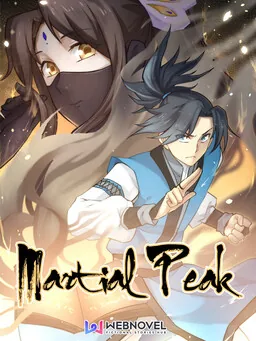
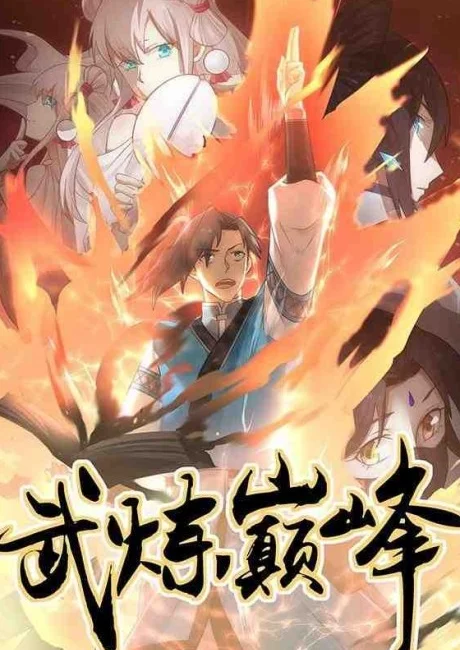 Martial Peak.
That scale is both the argument for reading it and the honest warning against starting without knowing what you are getting into.
Rating: 7.5/10
Martial Peak review: key takeaways
- Martial Peak review: 7.5/10. Mid-arc (chapters 300-1000) is the genre's best material; the series has been on hiatus since December 2025
- Chinese manhua, not Korean manhwa. Art conventions and storytelling rhythms are different
- Officially available in English on Webnovel, a licensed platform, not a fan translation site
- 3D donghua adaptation premiered December 5, 2024; Season 1 concluded May 2025; Season 2 unconfirmed
- Not a starting point for the cultivation genre. Xianxia conventions are assumed throughout
- Romantic subplot accumulation is a sustained reader complaint from mid-arc onward
Martial Peak Review: Overview
Martial Peak is a Chinese manhua (Chinese comics, as distinct from Korean manhwa), adapted from Momo's web novel. The distinction matters more than it might seem. Chinese manhua and Korean manhwa share the vertical scroll format and color-panel presentation, but they come from different creative traditions, different genre histories, and different visual sensibilities. Readers who approach Martial Peak expecting the kinetic pace and tighter arc structures of Korean series like Nano Machine or Solo Leveling will find something slower, larger in scope, and operating under a different set of genre assumptions.
The xianxia tradition (a Chinese fantasy genre built around cultivation, immortali
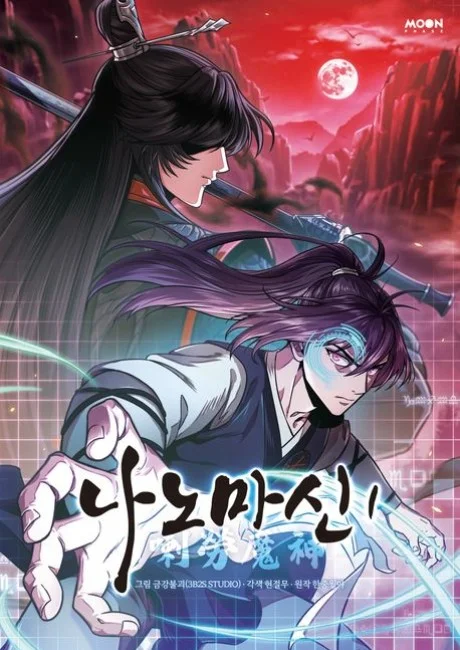 *Nano Machine.*ty pursuit, sect hierarchies, and cosmic fate) is taken entirely for granted throughout the series. There is no tutorial. Cultivation realms, meridian points, qi refinement, sect rankings, the logic of breakthroughs: Martial Peak assumes familiarity with all of it from the first chapter. For readers who have that familiarity, this reads as efficient storytelling. For readers who do not, it is a steep entry that the series makes no effort to ease.
Yang Kai begins as a floor sweeper in Sky Tower Sect, the lowest-ranked role in an already low-tier institution. He finds a black book discarded as worthless, a cultivation technique that everyone else rejected. What follows is the standard xianxia ascent: underestimated protagonist, hidden technique, enemies who have to revise their understanding of him one arc at a time.
The premise is not novel. The execution is what determines whether this 3,877+-chapter run holds up. In the mid-arc, it does. In the early chapters, you earn the right to find out.
For a breakdown of where to access the series and what each arc covers in more depth, the Martial Peak reading guide walks through the arc structure chapter by chapter. The guide also covers where the official English release currently stands and what the December 2025 hiatus means for readers catching up.
Our best cultivation manhwa list covers the top long-running martial arts cultivation reads.
Best Cultivation Manhwa →
The Three Arcs: What Changes at Scale
Advertisement
The series breaks into three structural zones, each operating at a different scope.
Chapters 1 to 300 cover the sect and the continent. This is the slowest section. Yang Kai builds his base, establishes his technique, and works through opponents who underestimate him. The pattern repeats: someone dismisses him, learns they were wrong. This is the cultivation genre's foundational loop and Martial Peak executes it competently without doing much to distinguish itself. Readers who drop the series tend to drop it here.
Chapters 300 to 1000 are where the series earns its reputation. Yang Kai enters a wider world he was not prepared for: new civilizations with their own cultivation traditions, opponents who are stronger and stranger, situations where resourcefulness matters more than raw power ranking. The cultivation system begins to interact with itself in more interesting ways. The antagonist pattern diversifies. This is the strongest sustained stretch of the entire run, and it is genuinely strong, not by the adjusted standard of long-running xianxia, but against the cultivation genre broadly. The series generates actual tension during this phase, which most power-fantasy series struggle to sustain past the early arcs.
Chapters 1000 and beyond shift scale again. Star fields and higher realms, cosmic-level antagonists, a scope that moves from continental politics to something approaching metaphysics. What is notable here is that Martial Peak maintains its internal consistency across the shift. The cultivation logic established in the first arc still applies in the third, adapted and extended rather than discarded when the writer needed to escalate. That is harder to do than it sounds over thousands of chapters. Most series in this length range simply stop caring about earlier world-building.
For readers coming from Korean cultivation manhwa looking for a comparison, the best cultivation manhwa guide covers both traditions side by side, including where Martial Peak fits relative to Korean murim series.

Art & Story
The manhua art occupies the standard space for Chinese cultivation adaptations: competent action choreography, clear panel hierarchy, with occasional double-page spreads during breakthrough moments that are the visual highlight of the early arc. The color work is reliable without being distinctive. There is nothing here that approaches the best Korean art teams in terms of fluidity, but the visual storytelling is clear enough that following action sequences is not difficult.
The 3D donghua adaptation premiered December 5, 2024, and finished its first season in May 2025. It covered roughly the first 100 to 150 chapters of story, which amounts to a fraction of the source material. The CGI rendering is in line with mainland Chinese donghua production standards, functional for the scale, noticeably different from Japanese anime conventions. Season 2 has not been confirmed as of mid-2026. The adaptation is not a replacement for reading the manhua; the pacing difference alone makes this clear.
Narrative structure over the full run follows the xianxia episodic model: arcs build to a ceiling opponent, Yang Kai pushes through it, a new ceiling appears. The series does not subvert this structure. It executes it at scale, which for readers who want the wish-fulfillment structure delivered consistently over years of reading is the point.
The romantic subplot is the sustained problem. Yang Kai accumulates romantic partners at a frequency that becomes a genre joke in reader communities. By the mid-arc, the pattern is well-established. This is a common complaint in xianxia, not unique to Martial Peak, but Martial Peak runs with it at high volume. Readers who find this element tolerable elsewhere may find the frequency here harder to dismiss.
Where to Read Martial Peak
Martial Peak's official English release is on Webnovel, confirmed through AniList's external links for the series (media ID 104494). It's a licensed webnovel and comic platform under Qidian International's Yuewen Group, the same category as Tapas or WEBTOON, not a scanlation aggregator. Korean readers have official access through Naver Series and KakaoPage; the Chinese original runs on Tencent Comics and other domestic platforms.
What does need flagging is the hiatus. Martial Peak has not posted new chapters since December 2025, per MangaUpdates' tracking. (AniList's status field still shows the series as releasing, which reflects lag in that particular community tracker rather than a real contradiction. MangaUpdates is the more current source on this specific point.) For a series at 3,877+ chapters, catching up on Webnovel right now means reading a genuinely paused stretch of story rather than chasing a moving weekly release, at least until it resumes.
There's no announced date for when the hiatus ends. The Martial Peak reading guide has the current status and where the story stands if you're planning to start or catch up.
The contrast with Korean manhwa is more about format than access now. Titles like Nano Machine run through a dedicated publisher (Pocket Comics) with a fixed release schedule; Martial Peak's English chapters live on Webnovel's broader platform alongside hundreds of other webnovels and comics, a different reading experience even though both are officially licensed.
For readers navigating the Chinese versus Korean cultivation space and looking at the full genre comparison, the manhwa like Nano Machine guide covers the murim tradition specifically and where manhua titles like Martial Peak fit relative to Korean counterparts on pacing, tone, and accessibility.
Our master manhwa reading list covers the top 30 titles across every genre for 2026.
Best Manhwa to Read in 2026 →
Where Martial Peak Fits vs. Korean Cultivation Manhwa
Chinese manhua and Korean manhwa share a format but not a tradition. Xianxia, the Chinese genre that Martial Peak sits in, carries specific philosophical weight: cultivation as the pursuit of immortality, the logic of fate and karma, sect politics as a mirror for Confucian social hierarchies. These elements are background texture in Martial Peak rather than explicit themes, but they shape the story's rhythm in ways that differ from the Korean murim tradition.
Korean murim series tend toward faster escalation, tighter arcs, and protagonists with more defined short-term goals. Nano Machine's Jin Mu-won operates in a more constrained political and narrative space than Yang Kai. The scope is smaller, the pacing is faster, and the arc endpoints are clearer. Martial Peak's Yang Kai is operating across a scale that keeps expanding. The Korean series resolve; Martial Peak extends.
Neither approach is better. They are different answers to different reader preferences. Readers who want a contained, fast cultivation story are better served by Korean manhwa. Readers who want a cultivation story at cosmological scale, willing to commit years to it, will find the mid-arc of Martial Peak worth the cost.
Verdict
Advertisement
Martial Peak earns a 7.5/10 by having a genuinely excellent middle section (roughly chapters 300 to 1000) embedded inside a series with real access problems and a romantic subplot that accumulates to a point where it becomes hard to ignore. The early arc is slow but functional. The late arc maintains the internal consistency that most series this long sacrifice for escalation convenience. The mid-arc is the reason the series has the reputation it does.
The ceiling on the rating is the current hiatus and the romantic subplot frequency. Neither is a minor friction point. The hiatus in particular means the story is paused mid-arc for existing readers, and new readers won't get to experience it as an active weekly release until it resumes.
If you have read cultivation manhwa and want to know whether the long-form Chinese version of the genre is worth the investment: the mid-arc answers yes. If you are new to cultivation entirely, start with Korean murim titles that have official translations and tighter arc structures. Return to Martial Peak when you want something larger and slower.
Frequently Asked Questions
Is Martial Peak worth reading? For readers already familiar with the cultivation genre, yes. Specifically the mid-arc (chapters 300-1000) is strong enough to justify the commitment. For readers new to xianxia, it is not a starting point. The early chapters are slow and assume genre knowledge the series does not provide.
What is the Martial Peak rating? This review rates Martial Peak 7.5/10. The mid-arc execution and unusual internal consistency across enormous length justify the score. The series' hiatus since December 2025 and the romantic subplot frequency are real problems that prevent a higher rating.
Is there an official English translation of Martial Peak manhua? Yes. Webnovel hosts the official English release of Martial Peak, confirmed through AniList's external links for the series. It's a licensed webnovel and comic platform, the same category as Tapas or WEBTOON, not a fan translation aggregator. Note that the series has been on hiatus since December 2025, so no new chapters have posted anywhere recently.
How is Martial Peak different from Korean cultivation manhwa like Nano Machine? Martial Peak is a Chinese manhua, not Korean manhwa, a distinction that affects both art style and storytelling conventions. Korean murim series like Nano Machine tend to be faster-paced and more self-contained in their arc structure. Martial Peak operates on a much larger scale and slower burn, with a cosmological scope that Korean counterparts rarely attempt. The tone is also different: xianxia carries a specific relationship to fate and cultivation philosophy that murim stories don't share.
What is the 3D donghua adaptation of Martial Peak? A 3D Chinese donghua adaptation premiered on December 5, 2024. Season 1 concluded in May 2025, covering approximately the first 100 to 150 chapters of story. As of mid-2026, Season 2 has not been confirmed. The adaptation uses CGI rendering standard to mainland Chinese donghua production.
How many chapters is Martial Peak manhua? The Martial Peak manhua has 3,877+ chapters as of 2026, though the series has been on hiatus since December 2025. It remains one of the longest-running cultivation comics in the medium by volume alone. The source web novel by Momo (莫默) is complete, at 6000+ chapters, serialized on Chinese platforms.
Where can I read Martial Peak in English? Webnovel hosts the official English release of Martial Peak (webnovel.com/comic/martial-peak). It's a licensed platform, not a fan translation site. The series is also officially available in Korean via Naver Series and KakaoPage, and in Chinese via Tencent Comics. All versions reflect the December 2025 hiatus, so chapter counts haven't moved recently anywhere.
Related Reading
- Nano Machine Review: 8.3/10, The Best Entry to Korean Cultivation: Full review of the most accessible cultivation manhwa for new readers to the genre.
- Manhwa Like Murim Login: 7 Picks for the Virtual-World Arc: 7 martial arts and cultivation series for readers who want the system-meets-murim formula.
- Best Manhwa to Read in 2026: 20 Series Worth Your Time: Full 2026 list with cultivation, action, and genre recommendations ranked by readability.
- Manhwa Like Martial Peak: 6 Cultivation Series to Read: Top manhwa picks for fans of Martial Peak.
- Martial Peak Character Guide: Full Roster, AniList-Verified: Yang Kai, his named companions, allies, and antagonists, verified against AniList rather than a fan wiki.
References
- Martial Peak on Webnovel (Official English): Licensed English release, confirmed via AniList's external links for the series
- Martial Peak on MangaUpdates: Series status tracker; confirms the hiatus that began December 2025
- Martial Peak Official Chinese Manhua: Original Chinese source, 3,877+ chapters, most complete version available
About the author

Critical Theorist & Features Writer
Manhwa and webcomic critic with a background in literary analysis. Writing about narrative and genre since 2016. Specialises in genre history and story structure.
- Manhwa and webcomic critic since 2016
- Graduate background in comparative literature
- Published criticism covering Korean and Japanese comics
- Specializes in genre lineage and narrative structure




Disclaimer
This article is published for informational and entertainment purposes. It does not constitute professional financial, legal, or technical advice. Series availability, platform access, translation status, and chapter counts change. Verify critical details (pricing, regional availability, official translation status) with publishers and platforms. Affiliate links, where present, help support our editorial work and are labelled in our affiliate disclosure.
Comments
Loading comments…