
The best comedy manhwa is chronically underserved in recommendation lists.
TL;DR: Best comedy manhwa sorted by tone: genre-aware, dark, murim absurdism, and romantic. 7 picks with platform info and what makes each one actually funny.
The reason is structural: most manhwa aggregators and forum threads sort by engagement, and the engagement leaders are action and isekai. A list of "best manhwa 2026" will surface Solo Leveling, Omniscient Reader's Viewpoint, and Tower of God before it surfaces a single genuinely funny series. This isn't because comedy manhwa doesn't exist or isn't good. It's because the recommendation infrastructure wasn't built with comedy readers in mind.
The more interesting problem, though, is that comedy in manhwa operates differently from comedy in manga or Western comics, and most readers coming from those adjacent formats don't know what to look for. Manga comedy leans on reaction shots, physical gags, and established character types playing against each other. Western comics use irony, cultural reference, and increasingly meta-textual humor. Manhwa comedy's dominant mode is structural: a protagonist who knows they're inside a story genre and has decided to stop respecting its conventions.
That specific comedy type (the genre-aware protagonist treating a romance novel's setup as a bureaucratic inconvenience, or a reluctant hero watching his lazy retirement plan get destroyed for the fifth time) doesn't have a good equivalent in manga or Western comics. It requires reading fluency in the genre being subverted. Which is precisely why most lists skip it: you can't recommend Beware of the Villainess! to a reader who hasn't read enough villainess manhwa to recognize what it's dismantling.
This list handles that by sorting picks by comedic tone rather than by overall quality ranking. A dry genre-parody and a supernatural romantic comedy are not competing with each other. They're producing different experiences. The structure here is: what kind of comedy are you in the mood for?
Overview
Comedy manhwa is underrepresented in most recommendation lists, and for a specific reason: the way comedy functions in manhwa is different enough from manga or Western comics that readers coming from adjacent formats sometimes miss what makes a series funny.
The dominant comedic mode in manhwa is structural rather than joke-based. The comedy comes from a protagonist who has read the genre they're living in and has decided not to cooperate with its conventions. A heroine who was supposed to be the villainess in a romance novel and treats that role as an administrative inconvenience. A reluctant hero whose carefully constructed plan to stay obscure keeps producing the opposite result. A reincarnated grandmaster in a child's body, silently furious at being lectured on techniques he invented. These are not setups for punchlines. The comedy lives in the ongoing gap between what the genre demands and what the character chooses to do.
This structural comedy requires reader familiarity with the genre being subverted. Beware of the Villainess works better if you have read enough villainess isekai to recognize what it is dismantling. Return of the Mount Hua Sect is funnier if you know what a murim sect hierarchy normally looks like and why a child behaving with the exhausted authority of a peak cultivator is incongruous. This is part of why comedy manhwa recommendations often get passed over: they are harder to pitch to readers without genre context.
The seven picks in this list are sorted by comedic tone rather than by a single quality ranking. A dry genre-parody and a supernatural romantic comedy are not competing with each other. They are producing different reading experiences. The structure here is designed to help you find what kind of comedy you are actually in the mood for, and why each series is worth reading on its own terms.
Best comedy manhwa: key takeaways
- Best genre-aware comedy: Beware of the Villainess! (completed): protagonist treats the romance novel as a problem to fix rather than a story to inhabit
- Best dark comedy: Trash of the Count's Family: 900+ chapters in the web novel, the reluctant-hero premise has not exhausted itself
- Best murim comedy: Return of the Mount Hua Sect: an elder's mind in a child prodigy's body, found family, genuinely funny sect dynamics
- Best supernatural romantic comedy: My Roommate is a Gumiho: lighter tonal register, complete story arc with a satisfying payoff
- Best dark comedy in a survival frame: Dungeon Reset: free on WEBTOON, protagonist solves impossible situations with the least dramatic methods available
- The best manhwa villainess 2026 list covers the full spectrum of the villainess subgenre for readers who want more than just the comedic entries
- All seven picks have official English translations available
Deadpan and genre-aware comedy
Advertisement
This category requires the most context to enter and delivers the sharpest humor once you have it. The comedy depends on knowing what the genre's conventions are supposed to do, and watching a protagonist decide those conventions are optional.
Beware of the Villainess!
Platform: Tapas | Status: Completed (144 chapters) | Tone: Dry, genre-contemptuous
Melissa Foddway is reborn as the villainess of a romance novel. Her first assessment of the male leads is negative. Her second assessment is also negative. Her primary project across the series is building a household that doesn't need them while systematically exposing the flaws that made them desirable in the original novel's logic.
The comedy here isn't that Melissa is rude or incompetent. She's consistently correct about the male leads' actual behavior, and the story validates her readings. What makes it funny is the method. She treats the romance plot's machinery like a municipal problem: file the right paperwork, redirect the right resources, and the thing stops being a problem. The male leads keep failing to understand that they've been reclassified as administrative obstacles.
A scene from early in the run illustrates the register: one of the male leads delivers what the original novel scripted as a meaningful declaration. Melissa's response is to check whether it satisfies a specific social obligation she owed his family and, finding that it does, thank him for his efficiency. The scene is played entirely straight. That's the whole joke, not that she's oblivious to the romance beat, but that she has genuinely reassigned it to a different category.
For readers who want more from this subgenre: best manhwa villainess 2026 maps the full range from comedy to serious dark survival.
The art is looser than the top-tier romance villainess series, which fits the comedic register. This isn't a visual recommendation. The writing is carrying the series, and it carries it well to the end.
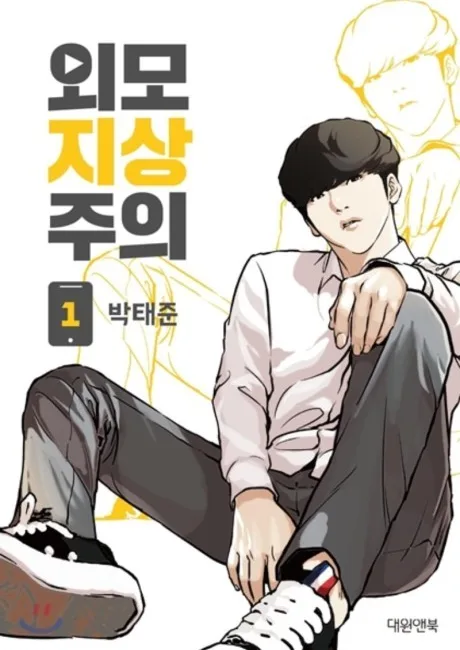
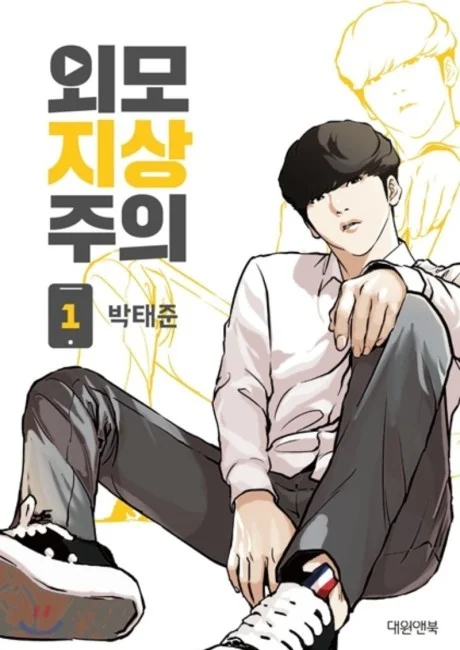 Lookism cover art.
Lookism
Platform: WEBTOON | Status: Ongoing (600+ chapters) | Tone: Dark comedy, social satire
Lookism is not primarily comedy. It's a long-running social thriller that tracks how physical appearance determines social power across school, gang, and corporate hierarchies. But its dark comedy is consistent and its comedic sensibility is unusually specific: the humor comes from the gap between the brutality of the status dynamics and the complete sincerity of the characters operating within them.
The protagonist's two-body situation (a conventionally unattractive original body and an extremely handsome second body he can swap between by sleeping) is played for satire at the structural level rather than for slapstick. The serious characters in his life (the school social hierarchies, the gangs, the modelling world) treat the handsome body's presence with complete earnestness, which makes every moment he navigates both versions of his life into a dead-pan examination of how differently identical situations play out at different attractiveness levels.
Ongoing, 600+ chapters. The early school arcs are the best-calibrated for the dark comedy register. The later chapters shift toward serious gang dynamics. Read the Lookism reading guide if you want to know which arcs fit which mood.
Our best manhwa for beginners guide picks the most accessible and entertaining entry points.
Best Manhwa for Beginners →
Dark comedy
Dark comedy in manhwa is usually reluctant-hero comedy: a protagonist who has decided not to be involved in the story's heroic demands and fails to maintain that decision across hundreds of chapters. The situations become more dangerous; the protagonist's refusal to take them at face value becomes funnier by contrast.
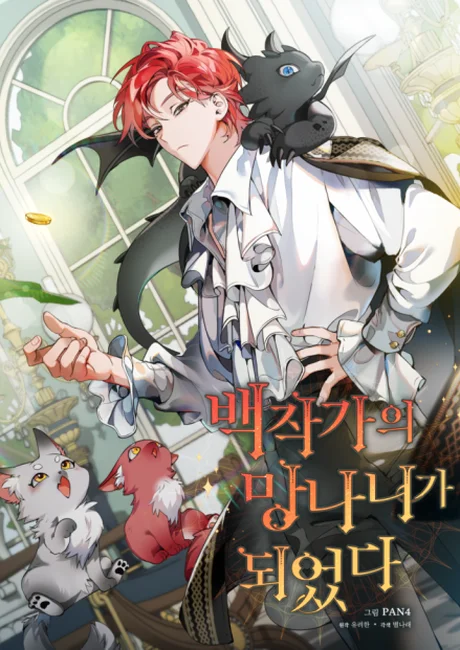 Trash of the Count's Family cover art.
Trash of the Count's Family
Platform: WEBTOON (manhwa), fan translation (web novel) | Status: Manhwa ongoing; web novel completed (900+ chapters) | Tone: Warm dark comedy, reluctant-hero absurdism
Cale Henituse read a novel called The Birth of a Hero. The protagonist of that novel is not Cale. Cale is a minor villain character described in chapter one as a trash noble who becomes irrelevant early in the story. This is the life Cale has transmigrated into, and his plan is explicit: become the novel's background trash noble, collect a few low-key items to make life comfortable, and stay out of the main plot's blast radius.
The comedy of the series lives entirely in the gap between Cale's plan and the story's refusal to honor it. He does everything correctly. He identifies the story beats in advance, positions himself at the edges, and makes decisions that should keep him obscure. Each decision produces a consequence that puts him more centrally in the story than before. By chapter 30 he has accidentally collected a dragon, a wolf child, a half-blood princess, and a berserk combat specialist, all of whom have adopted him as their person.
His response to this is not warmth. He's not secretly a protector who was waiting to be needed. His response is calculation: if they exist now, they're a resource, and resources should be kept alive. The warmth that develops is genuine, but it develops in spite of his framing, not because of it. That specific structure (someone's actual emotional development outrunning their stated position) is what the best readers of this series are following.
The manhwa is currently adapting the early web novel arcs on WEBTOON. The full story, including the ending, is available in English fan translations of the web novel. Both are worth reading; the manhwa's color artwork elevates the early chapters, and the web novel goes much further.
The manhwa like Trash of the Count's Family guide covers adjacent picks for readers who want more of this structural comedy.
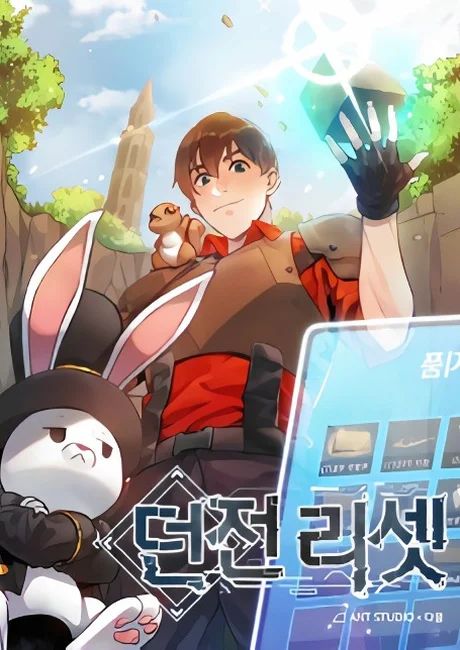 Dungeon Reset cover art.
Dungeon Reset
Platform: WEBTOON | Status: Completed | Tone: Dry survival comedy
Jung Dawoon enters a dungeon game with other players and gets caught in a reset error: he retains his memories and items from each reset cycle while everyone else starts fresh. The survival situation is genuinely dangerous. His approach to it is not.
The comedy comes from his methodology: he solves problems by finding the least dramatic, most practical path available. The dungeon wants heroism; Dawoon does not provide heroism. When a boss encounter that would require three other players is approaching, his preference is to find an alternative route. When the alternative route has a monster that drops a useful ingredient for a recipe he's been developing, that becomes the priority.
There's a domesticity to his dungeon gameplay that the series plays entirely straight. He builds a home. He cooks. He improves his quality of life. The dungeon keeps escalating the threat level; he keeps finding a way to improve his living situation in response to the new threat level. The comedy is consistent because neither the dungeon nor Dawoon ever changes their position. They're just having an ongoing disagreement about what this experience should be.
Murim and sect comedy
Murim manhwa (stories set in the Korean martial arts world with historical or pseudo-historical framing) has generated its own comedic subgenre. The structure usually involves regression or reincarnation, with someone from a position of deep mastery dropped into a much weaker starting point. The comedy comes from the gap between their internal competence and their visible situation.
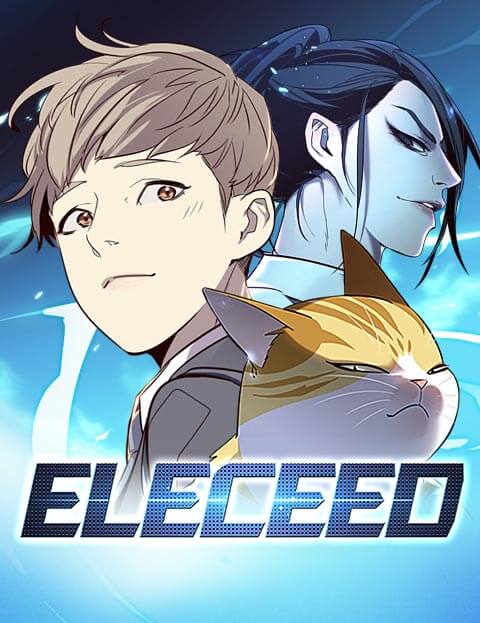
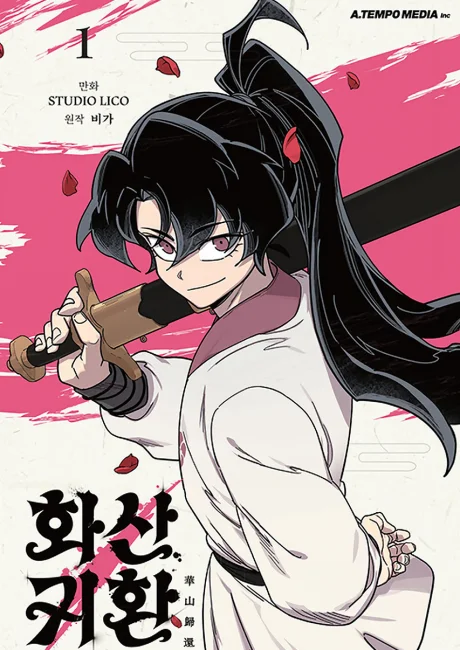 Return of the Mount Hua Sect cover art.
Return of the Mount Hua Sect
Platform: WEBTOON | Status: Ongoing (175 public episodes plus five app-only episodes listed) | Tone: Found family murim absurdism
Chung Myung is a 13th-generation disciple of Mount Hua (the sect's greatest ever swordsman) who dies in the climactic battle against the demon cult and reincarnates 100 years later as a minor child disciple of a Mount Hua that has completely fallen apart in his absence. The sect he built his entire identity around is a shambles. His new body is talented but undeveloped. His seniority is theoretically enormous and practically irrelevant.
The comedy is double-layered. Externally, a child behaving with the exhausted competence of a 13th-generation peak expert is consistently funny, particularly when the sect's current teachers lecture him on basics he invented. Internally, the gap between his internal reaction to this situation (barely-suppressed fury at what happened to his sect) and his external behavior (calculated patience, since he can't explain who he actually is) creates a running deadpan that the series sustains across its full run.
The found-family dynamic develops with more patience than most murim series. The other young disciples of the ruined sect are not immediately competent. They're underfed, undertrained, and demoralized when Chung Myung arrives. His investment in rebuilding them is sincere, even when he expresses it entirely through insults about their current standard. By chapter 100 the reader has come to understand that the insults are, for this particular character, the affection.
For context on how this fits the broader murim genre: the best manhwa school setting article covers some adjacent training-arc series, and murim sect dynamics overlap significantly with school hierarchy structures.
Our master manhwa reading list covers the top 30 titles across all genres for 2026.
Best Manhwa to Read in 2026 →
Romantic comedy
Romantic comedy manhwa is not primarily subversive. It plays the genre straight, with supernatural or genre-adjacent premises used to engineer the central situation. The humor comes from character chemistry and situational absurdity rather than from genre deconstruction.
My Roommate is a Gumiho
Platform: Tapas | Status: Completed | Tone: Supernatural romantic comedy
A gumiho (a nine-tailed fox from Korean folklore who consumes life force) accidentally swallows a bead of human energy belonging to college student Shin Woo-yeo, which creates a co-dependence problem for both of them. His solution is to move her into his apartment and manage the situation until the bead can be recovered. Her solution is to try to understand what humans are actually like, having spent most of her existence avoiding them.
The comedic register is light. This is not a series with dark undertones or structural subversion. The humor comes from the gumiho's prior conception of humanity (violent, complicated, not worth knowing) colliding with the mundane reality of a modern apartment share: grocery shopping, utility bills, and the specific social awkwardness of two beings who are trying to pretend they don't need each other. The situation earns the romance without rushing it.
The series was adapted into a K-drama (2021, tvN), which follows the same premise with the genders swapped: the human protagonist becomes female in the adaptation. Both exist and have audiences. The manhwa is the original structure and holds the better character writing for the gumiho specifically.
Boyfriends
Platform: WEBTOON | Status: Completed (~60 chapters) | Tone: Slice-of-life, warm low-stakes comedy
Four very different boyfriends (a jock, a nerd, a goth, and a preppy) are dating the same protagonist. The series is aware this is unusual and does not spend time explaining how it works. The comedy comes from the dynamics between the four of them: they have no reason to like each other, they have strong reasons to compete, and they mostly decide the protagonist is worth the social inconvenience of getting along.
The humor is quiet. No one is catastrophically flawed, no one is making globally stupid decisions, and the drama is proportional to the actual stakes (which are low). For readers coming from longer series with elaborate power systems and escalating conflicts, Boyfriends reads like turning the volume down to a comfortable level for a weekend.
Completed at approximately 60 chapters. Free on WEBTOON. The art is simple and character-distinct enough to track all four without effort. The best manhwa for couples includes this as a low-commitment shared-read recommendation.
Finding the best comedy manhwa for your taste
Advertisement
Comedy is a mode, not a genre, and different readers are looking for different things within it.
| You want... | Start with |
|---|---|
| Genre subversion, completed | Beware of the Villainess! |
| Long run, consistent quality | Trash of the Count's Family |
| Dark comedy in a survival frame | Dungeon Reset |
| Murim + found family | Return of the Mount Hua Sect |
| Social satire, longer commitment | Lookism |
| Supernatural romantic comedy | My Roommate is a Gumiho |
| Low-stakes, weekend read | Boyfriends |
The best manhwa romance fantasy list covers adjacent titles for readers whose interest is in the romantic comedy end of this spectrum. The best manhwa completed 2026 list includes several of these picks alongside the broader recommendation context.
Frequently Asked Questions
What is the best completed comedy manhwa?
Beware of the Villainess! is the strongest completed pick at 144 chapters on Tapas, with genre-aware comedy that treats its romance-novel conventions as a problem to dismantle rather than celebrate. For murim comedy, Return of the Mount Hua Sect is ongoing but has 150+ chapters and consistent tonal quality. Lookism is ongoing at 600+ chapters and has dark comedy across its full run.
Is Trash of the Count's Family actually funny?
Yes, consistently so, but the humor is structural rather than joke-based. The comedy comes from Cale's stated plan (become a lazy, disreputable noble who nobody cares about) colliding with every chapter's events. He explains his logic perfectly. The logic is sound. Then everything goes wrong in exactly the right way to make him more heroic than he intended. The joke runs for 900+ web novel chapters without going stale because the story keeps inventing new ways to embarrass his plans.
What is the best short comedy manhwa I can finish quickly?
Beware of the Villainess! at 144 chapters is the most self-contained comedy on this list. Boyfriends is shorter still, around 60 chapters, light slice-of-life, no dramatic arc to track. Both are the kind of series you read in a weekend without needing to follow ongoing chapters afterward.
How is comedy different in manhwa compared to manga or Western comics?
The most common comedic structure in manhwa involves the protagonist's genre awareness. They know they're inside a romance novel, an isekai, or a game, and the comedy comes from their refusal to play the role they were assigned. This is distinct from manga, which more often uses reaction comedy and physical gags, and from Western comics, which tend toward irony and cultural reference. Manhwa comedy is frequently structural: the joke lives in the gap between what the story expects and what the protagonist decides to do.
Are there good dark comedy manhwa?
Trash of the Count's Family and Dungeon Reset are the strongest picks in the dark comedy register. Both treat genuinely dangerous situations with a comedic distance the protagonists have earned through their prior reading or game experience. Lookism has dark comedy spread across a long run, particularly in its school arc confrontations. None of these are horror-adjacent; the darkness is tonal, not graphic.
Which comedy manhwa has the best art?
Return of the Mount Hua Sect has the highest art quality of the comedic entries: the chapter artwork for the peak murim fights is technically strong, and the expressiveness required for comedy timing carries into the serious action sequences too. Beware of the Villainess! uses a looser style deliberately suited to its comedic tone. Boyfriends is minimalist but the character design work is distinct enough to carry the shorter format.
What platforms carry comedy manhwa in English?
WEBTOON has Trash of the Count's Family, Return of the Mount Hua Sect, Dungeon Reset, Lookism, and Boyfriends. Tapas carries Beware of the Villainess! and My Roommate is a Gumiho. Most of these have free-to-read options with paid fast-pass access for current chapters.
Related Reading
- best manhwa villainess 2026
- Lookism reading guide
- Best Manhwa for Beginners →
- manhwa like Trash of the Count's Family