

"Manhwa like Solo Leveling" is searching for four different things depending on the reader. The system mechanic. The dungeon structure. The lone protagonist who starts weak and becomes something extraordinary. Or the art quality, because DUBU's work is a specific bar that most series don't clear.
For a complete breakdown, see our Solo Leveling Power System Explained.
TL;DR: 16 manhwa like Solo Leveling, organized by what actually drew you to the original. If it was the system windows and stat growth, start with SSS-Class Revival Hunter or Second Life Ranker. Dungeon escalation: Leveling with the Gods. Power arc: The Beginning After the End. Art: Omniscient Reader's Viewpoint. System windows plus stats specifically: The S-Classes That I Raised and Player Who Can't Level Up.
The recommendations change based on which part you're chasing. A list that treats all four as equivalent sends system-mechanic readers toward tower-climbing series and art-driven readers toward narrative-dense series they'll bounce off in ten chapters.
This list of manhwa like Solo Leveling, including manhwa similar to Solo Leveling in structure, tone, or mechanics, is sorted by what actually draws readers in, with the most common entry points first.
Overview
Solo Leveling is a completed Korean manhwa about a weak hunter whose private system turns steady grinding into overwhelming power. The closest follow-ups split that appeal across different titles: SSS-Class Revival Hunter matches the mechanic, Level Up with the Gods matches tower escalation, and Omniscient Reader's Viewpoint matches the production value and larger-than-life stakes.
Solo Leveling is a Korean action manhwa written by Chu-gong and illustrated by DUBU (Jang Sung-rak). It ran on KakaoPage from 2018 to 2021, completing its main run at 179 chapters with 21 additional side stories. The series follows Sung Jin-woo, a hunter ranked E-grade in a world where gates to monster-filled dungeons have opened across the globe. After surviving a near-death encounter in a hidden double dungeon, he gains access to a private system no other hunter can see, one that assigns him missions, tracks his stats, and allows him to level up indefinitely. Over the course of the series, he goes from the weakest active hunter in Korea to a figure capable of confronting threats that threaten the world itself.
The gate-hunter premise sets Solo Leveling apart from traditional isekai: the protagonist never leaves his world. The system is layered over a recognizable present-day Korea with functioning governments, hunter associations, and media. What makes the series distinctive is the combination of DUBU's high-production art, a solo protagonist who accumulates power through a death-soldier army mechanic called Shadow Extraction, and a narrative structure that keeps escalating the threat level to match Jin-woo's growth. The official English release is on WEBTOON and Tappytoon. An anime adaptation by A-1 Pictures aired its first two seasons on Crunchyroll in 2024 and 2025, and a theatrical continuation, Solo Leveling: Beyond the System, was confirmed at Anime Expo 2026 with no release date set yet.
Why Solo Leveling is hard to replace
No single manhwa reproduces Solo Leveling perfectly because its appeal is a bundle of four features: visible stats, dungeon escalation, a lone-protagonist power gap, and unusually polished action art. A useful recommendation therefore matches the feature you miss most instead of promising that every title is a clone. That is the organizing rule for this list.
Most "manhwa like Solo Leveling" lists fail because they treat Solo Leveling as a single thing. It isn't. The series works because four separate elements hit at the same time: a progression system with visible stat windows that reward grinding, a dungeon structure that escalates threat in lockstep with the protagonist's growth, a lone-wolf power arc that goes from weakest hunter in Korea to a figure capable of killing gods, and DUBU's illustration work, which set a visual bar most manhwa still haven't matched.
The problem is that no single series replicates all four. SSS-Class Revival Hunter has the system mechanic but different art. Omniscient Reader's Viewpoint matches the art and the singular protagonist but runs on narrative irony rather than power accumulation. The Beginning After the End has the long underdog-to-unstoppable arc but is set in a mana-cultivation world with no gate-hunter structure.
Finding the right recommendation means deciding which of those four elements you're actually chasing. That's what every section below does.
Manhwa similar to Solo Leveling: the short answer
Advertisement
For the fastest match, start with SSS-Class Revival Hunter for the system loop, Level Up with the Gods for tower progression, The Beginning After the End for the long power arc, and Omniscient Reader's Viewpoint for visual scale and narrative ambition. The current platform data matters: several popular alternatives are on seasonal breaks, so this is not a list of uninterrupted weekly releases.
If the system mechanic is what drew you: SSS-Class Revival Hunter, 154 Tapas episodes through Season 4 (hiatus before S5), same lone-protagonist power growth structured around a death-copy loop rather than shadow collection.
If the dungeon/tower progression is what you want: Level Up with the Gods on Tapas, regression plus tower climbing. Tapas currently lists 169 episodes and a Season 3 break before Season 4, so it is a strong structural match but not a continuously updating read right now.
If you want the protagonist arc (starting weak, becoming unstoppable): The Beginning After the End, the most direct structural equivalent, with anime Season 2 on Crunchyroll 2026 for a preview.
If the art quality was the draw: Omniscient Reader's Viewpoint, the closest visual production values, better narrative, needs patience for a slower first 30 chapters than Solo Leveling's opening.
If you want something with a clean stopping point: SSS-Class Revival Hunter through Season 4 (154 Tapas episodes) ends at a deliberate narrative break. Omniscient Reader's Viewpoint currently reaches Episode 308 and pauses with a will-return notice, so it is not a completed manhwa. True end-to-end completions in the system-fantasy genre are rare -- see the dedicated section below.
The detailed breakdown of each pick, including platform, chapter count, and what specifically matches, is below.
Manga like Solo Leveling: what the query usually means
"Manga like Solo Leveling" is usually a broad search label for Korean manhwa and webcomics, not a request for Japanese manga only. This guide keeps the medium visible: Solo Leveling and the other Korean titles are manhwa, while The Beginning After the End is an English Tapas webcomic. That distinction helps readers choose the right official platform.
The list therefore answers the intent behind the phrase without pretending every recommendation is the same format. If you mean Japanese manga literally, this is not a manga-only list; the platform labels in the table are the reliable way to tell what each entry actually is.
Key Takeaways
- The search for manhwa like Solo Leveling is usually one of four searches: system mechanics, dungeon structure, protagonist arc, or art quality
- For the system mechanic: SSS-Class Revival Hunter, Second Life Ranker, The Tutorial Is Too Hard
- For the tower/dungeon structure: Leveling with the Gods, Return of the Disaster-Class Hero, Tomb Raider King
- For the power-arc alone: The Beginning After the End, Nano Machine
- For narrative sophistication with system elements: Omniscient Reader's Viewpoint
- For something completely different but similarly executed: Eleceed
Quick reference
| Series | Hook | Platform | Status | Current count |
|---|---|---|---|---|
| SSS-Class Revival Hunter | Death-copy mechanic, dark comedy | Tapas | Hiatus (S4 ended; S5 unannounced) | 154 episodes |
| Second Life Ranker | Twin's encrypted notes + tower | Tapas | Hiatus (S3 ended; S4 unannounced) | 219 episodes |
| The Tutorial Is Too Hard | Hell-difficulty grinding | Tapas | Releasing (Tuesday) | 273 episodes |
| Level Up with the Gods | Tower + regression foreknowledge | Tapas | Hiatus (S3 ended; S4 unannounced) | 169 episodes |
| Return of the Disaster-Class Hero | 20-year revenge | Tapas / WEBTOON | Releasing | 178 Tapas episodes |
| Tomb Raider King | Relic system + regression | Tappytoon | Finished | 411 |
| The Beginning After the End | Reincarnated king, slow burn | Tapas | Releasing (Thursday) | 297 episodes |
| Nano Machine | Nanotech + cultivation world | WEBTOON / Naver | Releasing | 329 Korean episodes; English release differs |
| Omniscient Reader's Viewpoint | Reader's genre knowledge | WEBTOON | Releasing/on hiatus (will return) | latest #308 |
| Eleceed | High-craft action, lighter tone | WEBTOON | Releasing (Tuesday) | latest #404 |
| Return of the Mount Hua Sect | Regression + murim martial arts | WEBTOON | Releasing (Wednesday) | S3 Ep. 176 (#182) |
| Murim Login | Modern hunter + murim VR crossover | KakaoPage / Tapas | Korean S3 ended; English S1 hiatus | Korea #250; Tapas 117 episodes |
| I'm the Max-Level Newbie | Game knowledge in real tower | WEBTOON English / WEBTOON French | Releasing; regional editions differ | English page lists 4; French latest #260 |
| The S-Classes That I Raised | Regression + stat-raising skill | WEBTOON | Releasing (Tuesday) | S2 Ep. 169 (#172) |
| Player Who Can't Level Up | Stuck at Lv1 for 5 years, then breakthrough | Tapas | Hiatus (S4 ended; S5 unannounced) | 220 episodes |
| Leveling Up, by Only Eating | Stat growth through food consumption | Tapas | Finished | 208 episodes |
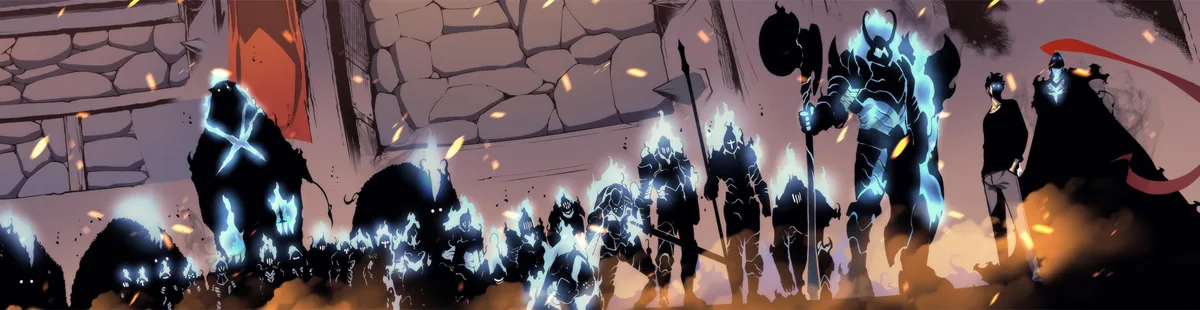 Caption: Solo Leveling's power ceiling is what draws readers, and it's also why finding something comparable is harder than it looks.
Manhwa Like Solo Leveling: System Fantasy
For readers who want the blue-window feeling, the best matches are SSS-Class Revival Hunter, The Tutorial Is Too Tough!, and the stat-focused picks later in this article. They all make progress visible, but they change the cost: death, impossible repetition, support skills, or a ceiling that refuses to move. Expect similar feedback loops, not identical shadow powers.
The system mechanic is the most directly imitable element of Solo Leveling. The stat window, the skill acquisition, the visible gap between where Jin-Woo starts and what he becomes. Several series replicate this directly.
SSS-Class Revival Hunter (Tapas, as SSS-Class Revival Hunter). Kim Gong-ja dies to copy the powers of whoever killed him and wakes back in time 24 hours. The mechanic inverts the standard wish-fulfillment story: every ability he holds came from dying to something that could kill him. Tapas lists 154 episodes, and its February 27, 2026 notice says Season 4 ended before a hiatus ahead of Season 5. The comedy is dry and self-aware in a way Solo Leveling isn't; both are worth reading, but they're not the same experience.
What it replaces from Solo Leveling: The power-acquisition loop. Jin-woo's system assigns tasks and grows him through grinding; Gong-ja's system grows him through deliberate self-sacrifice to specific enemies. Both result in a protagonist who accumulates an implausible range of abilities from what started as a single weak trait. If you liked watching the gap between Jin-woo and every other hunter widen chapter by chapter, this series delivers the same satisfaction through a structurally different route.
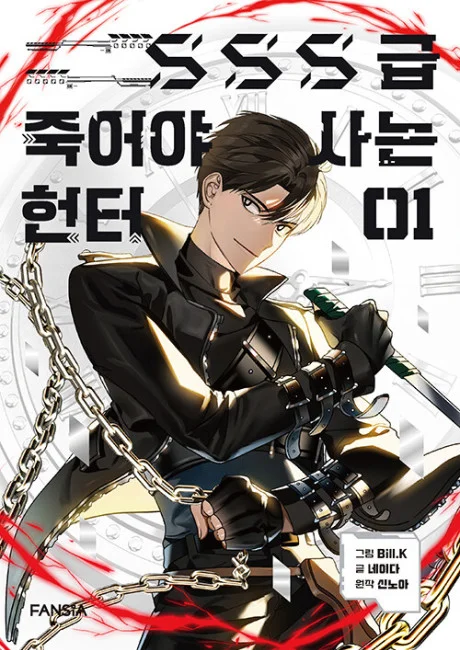 SSS-Class Revival Hunter cover art.
Second Life Ranker (Naver/Kakao Page; official English release on Tapas). Yeon-woo enters the Tower of the Sun God system, guided by his deceased twin brother Jeong-woo's encrypted notes. The notes are the series' best structural idea: they give Yeon-woo foreknowledge of specific traps, floor conditions, and which players to trust, but not a complete picture of what went wrong. Tapas lists 219 episodes and says Season 3 has ended before a hiatus ahead of Season 4; it has not returned there. If the revenge motivation was part of what you liked in Solo Leveling's early arcs, Second Life Ranker sustains it longer.
What it replaces from Solo Leveling: The tower structure and the revenge-motivation undercurrent. Jin-woo's early arc carries a quiet anger at the system that classified him as the weakest; Yeon-woo's is explicit. He enters the tower specifically to find out what killed his brother and to settle the account. The tower floors function like Solo Leveling's gate hierarchy: each one is a contained threat that Yeon-woo outpaces through preparation rather than raw power alone.
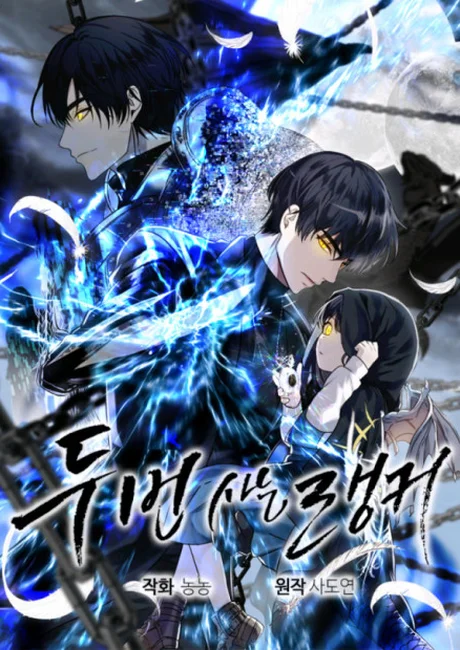 Second Life Ranker cover art.
The Tutorial Is Too Tough! (often searched as The Tutorial Is Too Hard; Tapas). The protagonist chose "Hell" difficulty in a god's tutorial system as a joke, not realizing the tutorial is an actual dimensional trap with no easy exit. The difficulty was designed to be impossible. Tapas currently lists 273 episodes and a Tuesday schedule, so the official English edition is not merely a partial release. Worth starting if you want a protagonist whose power growth is genuinely earned through suffering rather than a fortunate awakening.
For a longer list that covers the system-fantasy genre with status tracking for each series.
Best Action Manhwa 2026 →
If the dungeon or tower structure is what you want
If the dungeon rooms and escalating floors were the hook, choose Level Up with the Gods, Return of the Disaster-Class Hero, or Tomb Raider King. Each turns progression into a sequence of contained challenges, but the source of the advantage differs: remembered tower routes, revenge-fueled strength, or relic knowledge. Their platform schedules are not interchangeable.
Solo Leveling's dungeons are a specific type of escalation: a contained threat with a defined challenge, rising in difficulty, with the protagonist's growth measured against each floor. Other series use similar escalation architecture.
Level Up with the Gods (also searched as Leveling with the Gods; Tapas). A regression series layered over a tower-climbing system. The protagonist regressed to the beginning of the tower with full memory of its upper floors, floors he died on, floors that broke parties of S-rank hunters. Tapas lists 169 episodes and its June 26, 2026 notice says Season 3 ended before a hiatus ahead of Season 4. The power scaling is more deliberate than Solo Leveling's: closer to a chess-match tower series than a dungeon-clearing one.
Return of the Disaster-Class Hero (WEBTOON and Tapas; REDICE Studio). Lee Geon was the one hero no zodiac god ever chose, yet he became stronger than the twelve chosen saints, so they betrayed him and sealed him inside the Tower of Demons for twenty years. He breaks out and hunts them down one by one. Tapas lists 178 episodes and updates Sundays; the WEBTOON listing is also live but exposes a different public episode view. Our full Return of the Disaster-Class Hero review covers whether the already-OP premise sustains.
Tomb Raider King (Naver; Tappytoon). Relics appear across the globe, bound to divine "god's tombs," and only specific individuals can interact with them. The protagonist regresses with knowledge of which tombs exist, when they appear, and which relics are worth the risk. The power-acquisition loop is structurally similar to Solo Leveling's shadow collection, just disguised as artifact archaeology. The manhwa has since wrapped, completed at 411 chapters. Tomb Raider King's anime adaptation premiered July 8, 2026 and is airing weekly on Crunchyroll with the finale set for late September, so it's worth catching up on the now-finished source while the season is still running.
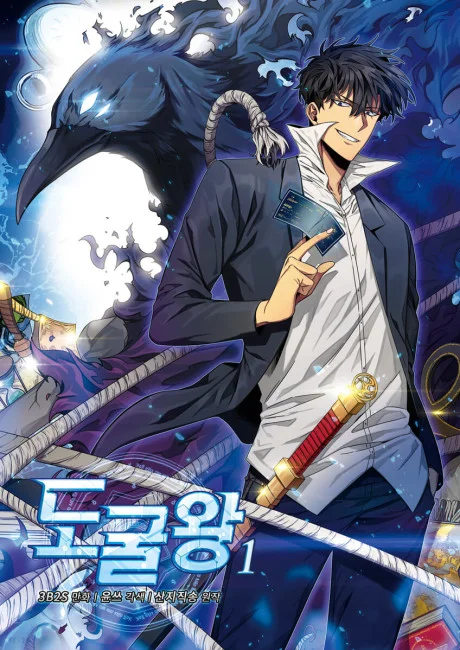 Tomb Raider King cover art.
I'm the Max-Level Newbie (WEBTOON; REDICE Studio). A game streamer is the only person who ever cleared the game Tower of Trials, and then that tower appears in reality with a 90-day clear-or-die deadline. His mastery is an enormous head start, but the real tower diverges from the game he memorized, so the foreknowledge decays as he climbs. That is the inverted version of Solo Leveling's setup: instead of starting weak and growing strong, the lead starts at the ceiling and watches it crack. Our full I'm the Max-Level Newbie review covers how the divergence keeps the stakes alive.
If the protagonist arc is what you want
For the weakest-to-strongest emotional rhythm, The Beginning After the End is the longest and slowest option, while Nano Machine gives the quickest interface-driven rise in a murim setting. Both differ from Jin-woo's hunter world, but they preserve the satisfaction of watching a protagonist's ceiling move beyond everyone else's expectations.
The underdog-to-unstoppable arc is the third major draw. Jin-Woo's trajectory, weakest to strongest, starting from near-nothing, is satisfying in a specific way that has more to do with structure than mechanics.
The Beginning After the End (Tapas; technically an English webcomic, not a Korean manhwa). A former king at the peak of his world's combat hierarchy is reincarnated as Arthur Leywin in a mana-cultivation fantasy world. Chapters 1-30 are childhood, and they're genuinely slow. The series earns the patience: by the midpoint Arthur has developed a build that uses both his inherited king's instincts and new-world mana mechanics. Tapas currently lists 297 episodes and a Thursday schedule; an anime adaptation's Season 2 premiered on Crunchyroll in 2026. Physical editions through Yen Press go to 10 volumes.
What it replaces from Solo Leveling: The long protagonist arc, specifically the version where the protagonist is already extraordinary at the start and then becomes something beyond that. Jin-woo's arc runs from genuinely the weakest to the strongest; Arthur's runs from former greatest to greater. The emotional shape is the same: a character whose internal ceiling is always higher than whatever external challenge currently exists. Solo Leveling covers this in 179 chapters; TBATE stretches the same arc across a larger world and a slower burn.
Nano Machine (WEBTOON; ongoing). Cheon Yeo-Woon is a descendant of a martial arts cult's low-ranking concubine, positioned to die in the succession competition. His future descendant sends a nanobot back in time that embeds itself in his body, giving him a system interface (stat windows, upgrade prompts, skill acquisition) inside a world that operates on pure cultivation mechanics. The official Korean Naver listing currently shows 329 episodes; the English WEBTOON release is a separate edition with app-only episodes. The genre blend (cultivation plus sci-fi overlay) shouldn't work as well as it does. Readers who want a martial arts setting with Solo Leveling's interface aesthetic will find this is the most direct match in that subgenre.
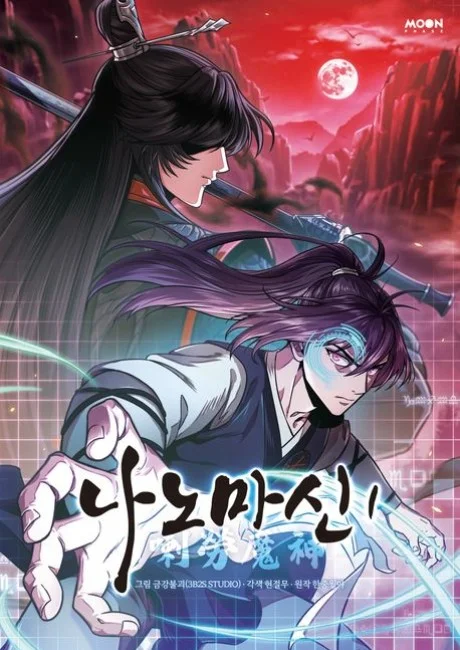 Nano Machine cover art.
Want a complete look at isekai manhwa with power arcs that go the distance?
Best Isekai Manhwa Ranked →


Murim manhwa similar to Solo Leveling
Murim alternatives replace gates and hunters with sects, cultivation, and martial-arts hierarchies. Return of the Mount Hua Sect is the traditional martial-arts power climb; Murim Login is the closest hybrid because it keeps a modern hunter frame. Nano Machine sits between both categories by putting a literal interface inside a cultivation succession story.
The murim subgenre, Korean martial arts fiction set in a world of sects and cultivation, shares Solo Leveling's core loop: protagonist starts at the bottom, trains obsessively, power gap widens toward implausibility. The mechanics differ but the shape is the same.
Return of the Mount Hua Sect (official English title: Return of the Blossoming Blade on WEBTOON). Chung Myung was the greatest swordsman of the Mount Hua sect. After dying to protect it, he reincarnates a century later as the sect's lowest-ranking disciple in an institution that has collapsed while he was gone. WEBTOON's current listing is Season 3 Episode 176, overall episode #182, dated September 22, 2026, with Wednesday updates. Readers who want Solo Leveling's power ceiling expressed through traditional martial arts rather than dungeons and stats will find this is the closest structural match outside the gate-hunter genre.
Murim Login (KakaoPage / Tapas). Jin Tae-Kyung is a low-ranked hunter in a modern gate-clearing world who gets trapped inside a murim virtual-reality game. The Korean KakaoPage run currently stops at episode 250 after Season 3, with Season 4 promised but undated; Tapas lists 117 English episodes and a Season 1 hiatus before Season 2. The most direct recommendation if you want Solo Leveling's modern-world framing but want the power growth to feel like traditional martial arts training.
Manhwa like Solo Leveling with system windows and stats
If the stat panel itself is the non-negotiable feature, start with Nano Machine, My S-Class Hunters, or The Player Who Can't Level Up. These series use visible rules or ability systems, but not all turn the protagonist into a solitary fighter. The current counts also show why platform-specific labels matter: some are weekly, while others are between seasons.
The status window is one of Solo Leveling's most imitated elements: a visible interface that tracks HP, MP, strength, agility, and stamina, levels up when conditions are met, and treats the protagonist's body as a game character. Several manhwa use this mechanic specifically, separate from the dungeon or tower structure.
My S-Class Hunters (official English title; also known as The S-Classes That I Raised). Han Yu-jin regresses to before the gate awakening with the knowledge of which hunters become S-class and a new skill that lets him raise any hunter's stat cap. The stat-window interface is present throughout and functions like Solo Leveling's system: visible numbers, condition-based upgrades, and a protagonist who operates from a position of information advantage over everyone else. WEBTOON currently lists Season 2 Episode 169, overall episode #172, with Tuesday updates. The tone is lighter and the protagonist is less combat-focused.
Player Who Can't Level Up (Naver / Tapas). Kim Kikyu awakens as a player but cannot level past 1 for five years. The series spends its first arc on a genuinely weak protagonist who cannot use the system other players rely on, then pivots when a secondary ability surfaces. Tapas lists 220 episodes and says Season 4 has ended before a hiatus ahead of Season 5. The contrast between stagnation and exponential growth remains the closest emotional equivalent to Jin-woo's early arc.
Leveling Up, by Only Eating! (official English title: Gourmet Gaming on Tapas). A shorter recommendation but worth flagging: the system interface here tracks the protagonist's stats through food consumption, creating a different flavor of the same leveling loop. Less serious in tone but directly in the system-window subgenre for readers who want the mechanic in a lighter package. Tapas lists all 208 episodes and the series is finished, making it another option for readers who want a closed system-fantasy read.
If system windows and stat tracking are the core appeal, these three series are more precise matches than the broader dungeon or tower series listed elsewhere in this guide.
If the art quality was the draw
If DUBU's art is what you miss, Omniscient Reader's Viewpoint is the strongest visual follow-up, while Eleceed offers polished action with a warmer cast. Neither is a copy of Solo Leveling's shadow-army staging. The useful match is production confidence: clear motion, readable powers, and pages that make escalation feel expensive.
This is the category where most "manhwa like Solo Leveling" lists fail the reader. DUBU's illustration is not a genre feature. It's a specific artist's work, and most manhwa don't come near it. The honest answer is that only a few series are in the same visual tier.
Omniscient Reader's Viewpoint (WEBTOON). Kim Dokja was the only person who read the web novel that then became reality around him. He knows how the story ends. He knows which characters die and in which order. His advantage over every other system user in the world is that he's read the script. ORV uses this for narrative irony rather than power accumulation, since knowing how the story ends doesn't mean you can survive it. The art, by Sleepy-C, is the closest thing to DUBU's Solo Leveling work in terms of action clarity and character expressiveness. The manhwa currently reaches Episode 308 (June 1, 2026), and WEBTOON displays a will-return notice during the season break. This is the recommendation that applies when what you actually want is the aesthetic and a story that does more with it.
What it replaces from Solo Leveling: The visual production quality and the singular protagonist. Jin-woo's isolation is part of his identity: he outgrows the category that other hunters occupy. Dokja is similarly isolated, but by knowledge rather than power. DUBU's action pages in Solo Leveling set a benchmark for energy and impact; Sleepy-C's work in ORV matches that benchmark while also handling quieter emotional scenes with more range. If the draw was the feeling of reading something that looked and moved better than most manhwa, ORV is the correct next step.
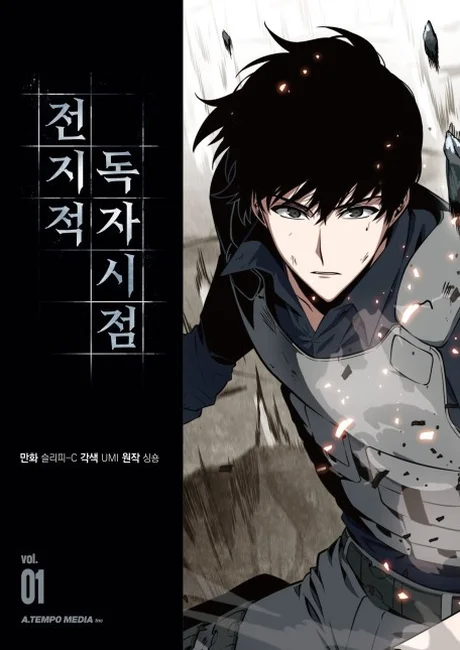 Omniscient Reader's Viewpoint cover art.
Eleceed (WEBTOON, free). Contemporary setting, lighter tone, no isekai. Jisuk Woo has superhuman speed; Kayden Break is a former world-class awakener currently inhabiting a stray cat and mentoring Woo from that position. The premise sounds like comedy, and the series is often funny, but the fight choreography is consistently clean and the character work is stronger than most action manhwa twice its length. WEBTOON currently lists Episode 404, dated September 21, 2026, with Tuesday updates. Read this if the draw was execution quality and you're willing to drop the wish-fulfillment structure frame entirely.
 Caption: SSS-Class Revival Hunter's mechanic: die to the enemy, wake up 24 hours earlier with their skill. Structurally close to Solo Leveling's power acquisition, emotionally much stranger.
Completed manhwa like Solo Leveling: the honest answer
If you need a fully finished replacement, the honest shortlist is short. Solo Leveling and Gourmet Gaming are closed runs here; Tomb Raider King is also finished. SSS-Class Revival Hunter and Omniscient Reader's Viewpoint have useful stopping points, but their manhwa adaptations are not complete. Treat a seasonal break as a pause, not an ending.
If you want something you can finish before committing to an ongoing series, the options are limited but real.
Solo Leveling itself is the obvious answer: 179 main chapters plus 21 side stories, fully concluded. The manhwa adaptation is complete. Readers who stopped at chapter 179 thinking the story was done missed the actual resolution -- the side story volume contains the ending.
Omniscient Reader's Viewpoint currently reaches Episode 308 after a long run and is on a season break with a will-return notice. The source novel's main story is complete, but the manhwa adaptation is not. It's not a direct Solo Leveling substitute: ORV runs on narrative irony rather than power accumulation. It is the other manhwa in the same visual and quality tier that most directly rewards readers who want a larger story still in progress.
SSS-Class Revival Hunter ran 154 Tapas episodes through Season 4 before entering a seasonal break. It's not fully complete -- Season 5 exists, date TBD -- but Season 4 ends at a deliberate story beat rather than mid-arc. If you need something with a satisfying stopping point that doesn't require waiting for a years-long serialization, reading through Season 4 is a coherent experience.
The honest gap in this genre: system-fantasy manhwa at Solo Leveling's scale generally runs for years and rarely ends. The short list above represents the realistic options for readers who need completion before they start.
Manhwa Like Solo Leveling: Where to Start
Start with Solo Leveling itself if you have not finished it. After that, pick by the missing ingredient: SSS-Class Revival Hunter for systems, Level Up with the Gods for towers, The Beginning After the End for a long reborn-king arc, or Omniscient Reader's Viewpoint for art plus a deeper ensemble. Use the table to check whether a title is currently on hiatus.
If you haven't read Solo Leveling itself yet: start there. Nothing on this list replaces the experience of reading the actual series, and most of the recommendations make more sense with the original as context. The Solo Leveling reading order → covers the novel, manhwa, and anime sequence, and flags which chapters are easy to miss. For a full rating of the series before committing, the Solo Leveling review → gives an honest read on where the story underperforms and where it doesn't.
If you've finished Solo Leveling and need the closest structural match: SSS-Class Revival Hunter for the system mechanic (154 Tapas episodes through Season 4, hiatus before S5) or Second Life Ranker for the revenge arc (219 Tapas episodes, hiatus before Season 4).
If you want better story at similar production: Omniscient Reader's Viewpoint is the obvious answer, and the one the manhwa like Solo Leveling search should end at if narrative depth is the goal. New to ORV and unsure whether to start with the manhwa or the completed web novel? The ORV reading guide explains the difference and where to begin. Once you've read it, the manhwa like ORV guide goes deeper, ranking what to read after ORV by meta-narrative depth, not just genre.
If you want something that just hits the same energy without resembling the formula: Eleceed is the answer. Different genre, same level of craft.
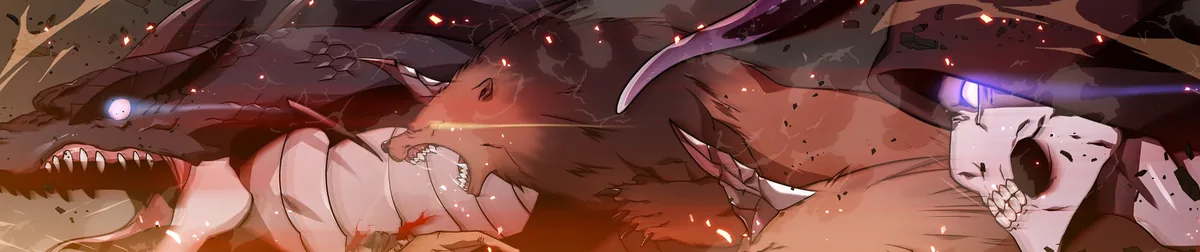 Caption: ORV is the answer when Solo Leveling's aesthetic is what you're chasing, and you want a story that does more with it.
If you started with the anime
Advertisement
If the anime is your entry point, read the original manhwa from chapter 111 after Season 2, but remember that the side stories contain the actual ending. The anime has not covered the full Monarch conflict, and no confirmed release date exists for the next theatrical continuation. The recommendations below are for what to read after catching up, not substitutes for finishing Solo Leveling.
A-1 Pictures' Solo Leveling adaptation (Season 1: January-March 2024, Crunchyroll; Season 2 "Arise from the Shadow": January-March 2025) brought a wave of new readers into the manhwa space. The anime covers roughly chapters 1-45 in Season 1 and approximately chapters 46-110 in Season 2, including the Demon Castle raid and the early Monarchs arc, ending well before the full Monarch war and the Shadow Monarch's endgame resolution.
The manhwa picks up from chapter 111 and runs through 179 main chapters plus 21 side stories. The actual ending is in those side stories; stopping at chapter 179 leaves the story unfinished. Most readers who watched both seasons before picking up the manhwa report the same experience: the animation sold the premise, the manhwa delivers the resolution.
A theatrical continuation, Solo Leveling: Beyond the System, was confirmed at Anime Expo 2026 as a direct follow-up to Season 2, animated by A-1 Pictures again. No release date has been set. It's not a Season 3 replacement; D&C Media's own investor materials still put the actual next TV season in a 2027-2028 window.
For what to watch or read next, the series on this list break down by anime availability:
- The God of High School: MAPPA anime (2020, Crunchyroll, 13 episodes). The most complete adapted version of any series here. Watch it first if you want a finished anime before committing to the 569-chapter manhwa; the adaptation covers only the tournament arc and skips the divine-escalation entirely.
- Omniscient Reader's Viewpoint: No anime adaptation yet, but one is confirmed for Crunchyroll (no release date announced). The latest listed manhwa release is Episode 308 (June 1, 2026), and WEBTOON displays a will-return notice during the season break. If you read it now, before the adaptation lands and before search traffic shifts, the current release is available on WEBTOON.
- The Beginning After the End: Season 2 anime adaptation premiered on Crunchyroll in April 2026 (Season 1 aired in 2025). Unlike the decade-old GoHS fandom, TBATE's anime is new enough that the 297-episode Tapas webcomic still has a low barrier to entry.
Readers who watched the anime before picking up the manhwa consistently flag chapter 120 onward as the point where the manhwa earns its reputation. The anime's pacing compresses significantly, since the manhwa has more room.
Frequently Asked Questions
What is the closest manhwa to Solo Leveling?
SSS-Class Revival Hunter and Second Life Ranker are structurally closest. Both use a system mechanic where the protagonist gains power through a specific condition and largely operates alone. If the aesthetic was the draw, ORV has similar art production and a similarly singular protagonist. Their current English platform pages are on different seasonal breaks, so neither is an actively updating substitute today.
What manhwa like Solo Leveling are completed?
Completed system-fantasy manhwa at Solo Leveling's tier are rare. SSS-Class Revival Hunter ran through Season 4 (154 Tapas episodes) and is on hiatus before S5 -- not fully complete, but Season 4 ends at a deliberate narrative stopping point rather than mid-arc. Omniscient Reader's Viewpoint currently reaches Episode 308 (June 1, 2026) with a will-return notice. Nano Machine is still releasing at 329 Korean episodes. Second Life Ranker and Level Up with the Gods are also on official English seasonal breaks; TBATE is releasing on Tapas at 297 episodes.
Is Tower of God like Solo Leveling?
Superficially yes, since both involve climbing through increasingly powerful challenges. But Tower of God is an ensemble story with faction politics and a morally ambiguous cast. Solo Leveling is a lone-wolf wish-fulfillment story with a clearly heroic protagonist. They feel quite different to read, and readers who bounce off one often enjoy the other.
What manhwa like Solo Leveling are on WEBTOON for free?
Return of the Disaster-Class Hero, Eleceed, Nano Machine, and Omniscient Reader's Viewpoint are on WEBTOON, with free/app access varying by episode. Level Up with the Gods is on Tapas, as are SSS-Class Revival Hunter and the official English release of Second Life Ranker.
Is Omniscient Reader's Viewpoint similar to Solo Leveling?
System mechanics yes, but the advantage is narrative awareness rather than power accumulation, the cast is more developed, and the emotional stakes are substantially higher. Read it if you liked Solo Leveling's protagonist but wanted the story to do more with a similarly singular main character.
What is "manhwa like Solo Leveling" actually searching for?
One of four things: a system or leveling mechanic, a dungeon or tower structure, a lone-protagonist power arc, or high-production art quality. Each points to different series. SSS-Class Revival Hunter for the mechanic, Tower of God for the tower structure, TBATE for the power arc, ORV for the art.
How is Sophie recommending these?
Every title on this list was in my reading queue before I wrote this. I've read the first 50+ chapters of each. The ones with caveats, like Tutorial Is Too Hard and Tomb Raider King, are the ones where I stalled out. Worth noting for readers who want something with a cleaner first act.
For the reading order and arc breakdown: Solo Leveling Reading Guide: Complete Arc Breakdown.
Related Reading
- Best Action Manhwa 2026 →
- Tomb Raider King anime 2026 release date: adaptation incoming for one of the picks on this list.
- Best Isekai Manhwa Ranked →
- Solo Leveling reading order →
- Solo Leveling review →
- Solo Leveling: Ragnarok review →: the sequel following Jin-Woo's son Suho, and whether it is worth reading.
- SSS-Class Revival Hunter review →: the completed system-fantasy pick, with arc breakdown and rating.
- SSS-Class Revival Hunter reading guide →: where the death-copy mechanic gets genuinely strange.
- Second Life Ranker review →: the 219-episode English run, Season 3 break, and best entry point explained.
- Best Hunter Manhwa 2026: a stricter rank-and-association list for readers who want the hunter system itself to matter.
- Manhwa like ORV →: what to read after the series that ends this list.
- Player Who Can't Level Up Review: system-fantasy manhwa where the MC is literally stuck at level 1 -- the stalled-progression hook taken to its logical extreme.
- Dungeon Odyssey Review: 8/10 Dungeon-Lord Fantasy Manhwa
- 100th Regression of the Max-Level Player Review: 7.5/10
References
- Solo Leveling on Tappytoon
- SSS-Class Revival Hunter on Tapas
- Second Life Ranker on Tapas
- The Tutorial Is Too Tough! on Tapas
- Level Up with the Gods on Tapas
- The Return of the Disaster-Class Hero on Tapas
- Tomb Raider King on Tappytoon
- The Beginning After the End on Tapas
- Nano Machine on WEBTOON
- Nano Machine on Naver Webtoon
- Omniscient Reader's Viewpoint on WEBTOON
- Eleceed on WEBTOON
- Return of the Blossoming Blade on WEBTOON
- Murim Login notice on KakaoPage
- Log-in Murim on Tapas
- I'm the Max-Level Newbie on WEBTOON
- My S-Class Hunters on WEBTOON
- The Player Who Can't Level Up on Tapas
- Gourmet Gaming on Tapas
- r/manhwa community


