

Second Life Ranker review, starting with the thing that actually makes it worth reviewing separately from the pile of tower-climbing manhwa that appeared in its wake.

Reviewing
Second Life Ranker
Do-Yeon Sa (story), Nong Nong (art) · Tapas
Score
Pros
- The dead-twin diary is a genuine genre innovation: not time regression, not reincarnation, but a first-timer armed with a dead man's complete notes
- Season 1 pacing is tight: floor-by-floor application of Jeong-woo's knowledge creates real suspense even when outcomes feel foreseeable
- The moment the diary runs out (around chapters 65-70) is handled as a proper narrative shift, not just a mechanical reset
- Nong Nong's art is clean and functional at the system-interface panels, genuinely expressive in the emotional beats between brothers
Cons
- Paid platform (Tapas) limits accessibility in a genre where readers default to WEBTOON's free tier first
- Season 3's divine-scale conflict feels like a different series; the intimate revenge premise of Season 1 is almost unrecognizable by chapter 200
- Season 4 has no confirmed return date; the series has been on hiatus since Season 3 wrapped, so any current read ends in suspension rather than resolution
Verdict
Second Life Ranker does one thing no other tower-climbing manhwa does: it makes the protagonist's foreknowledge emotionally complicated rather than just mechanically convenient.
TL;DR: Second Life Ranker review: 8.0/10. The dead twin's diary gives Yeon-woo a map through the Obelisk, not a regression power. Tapas lists 219 episodes across three completed seasons, with Season 4 still on hiatus.
The premise is a twin-brother story before it's a wish-fulfillment story. Yeon-woo's brother Jeong-woo entered the Obelisk, a tower-climbing challenge where rankers accumulate power and reputation, and died there. Betrayed by members of his own party. Yeon-woo finds Jeong-woo's secret diary afterward: encrypted, methodical, obsessive. It contains Jeong-woo's complete documentation of every floor he reached: trap placements, enemy patterns, item locations, alliance structures, and the names of everyone who eventually killed him. Yeon-woo reads all of it. Then he enters the same tower.
This is not a regression story. Yeon-woo doesn't go back in time. He doesn't have memories of a past life. He enters the Obelisk for the first time, as himself, using his dead brother's notes as a map. That's the genre distinction that this Second Life Ranker review keeps coming back to: the foreknowledge is borrowed, not lived, and that makes the emotional register completely different.
 Second Life Ranker.
Second Life Ranker review: key takeaways
- Second Life Ranker review: 8.0/10, three seasons complete, on hiatus since a Tapas announcement April 10, 2026, ahead of Season 4
- 219 Tapas episodes; Season 1 (~episodes 1-70) is the strongest, most purposefully paced arc
- The dead-twin diary mechanic has no direct equivalent in comparable tower-climbing manhwa
- Available on Tapas (paid); KakaoPage carries the Korean original; not free on WEBTOON
- No anime adaptation as of 2026; the Tapas title may appear listed differently depending on platform version, but it's a single series, not a crossover
Overview
Second Life Ranker is a Korean manhwa written by Do-Yeon Sa and illustrated by Nong Nong, serialized on Tapas in English with a paid subscription or episode-purchase model. The series runs across three completed seasons (219 Tapas episodes) and has been on hiatus since a Tapas announcement on April 10, 2026, ahead of Season 4. This review covers all available material through the current run.
The series sits within the tower-climbing system fantasy genre but approaches its core mechanic from a direction most comparable titles don't take. Yeon-woo, the protagonist, does not time-travel, regress, or reincarnate. He enters the Obelisk tower for the first time using his dead twin brother's encrypted diary as a guide. The foreknowledge is borrowed from someone else's documented experience, not from a personal past life. That distinction shapes the entire emotional register of Season 1.
As the story extends into Seasons 2 and 3, the scope expands from personal revenge into divine-scale conflict involving gods and mythological entities, which is where the intimacy of the early premise gives way to something more conventional for the genre.
Second Life Ranker is the right read for fans of tower-climbing manhwa who want the informed-protagonist structure to carry emotional weight rather than just strategic advantage. Readers who engage most with the revenge-driven, grief-infused first season should prepare for a different experience in Season 3. The Tapas paywall is a practical barrier in a genre where most readers default to WEBTOON's free tier.
One risk to know: AniList lists Tapas, KakaoPage and Piccoma for this series but none of WEBTOON, Tappytoon, Lezhin, Manta or Comikey, so Kakao's reported plan to shut Tapas down matters here. See Tapas shutting down: what is confirmed and what isn't for what is and isn't confirmed.
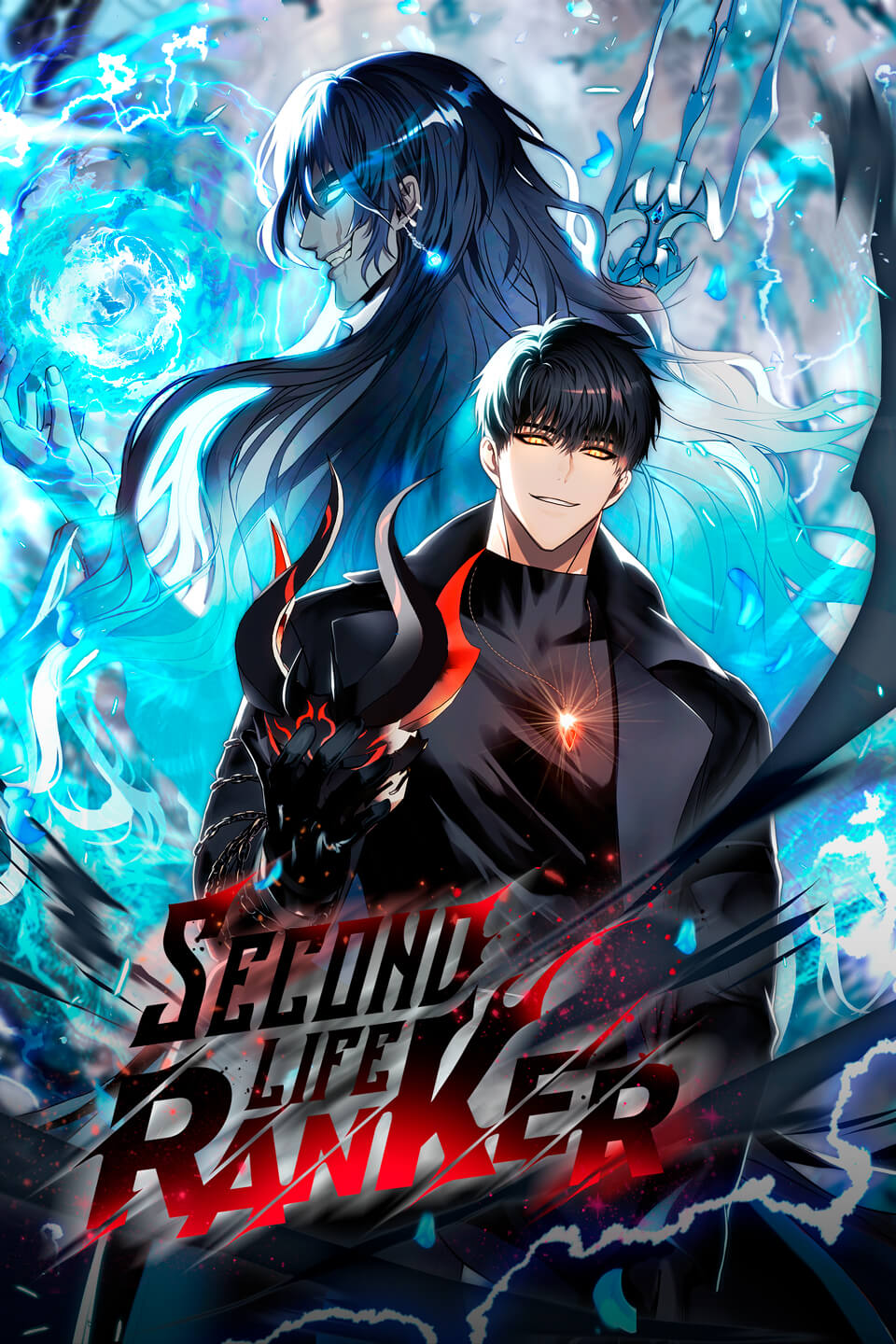 Second Life Ranker cover art. The player-system aesthetic signals the mechanical complexity inside.
Second Life Ranker Review: The Core Premise
Most "informed protagonist" manhwa in this genre use the same mechanism: the protagonist died, returned to an earlier point in the timeline, and now knows what's coming because they lived through it. Solo Leveling does not use this mechanic but achieves similar power through Sung Jin-woo's direct system access. SSS-Class Revival Hunter (a different and frequently confused title) uses actual kill-and-copy regression. Second Life Ranker does something structurally distinct.
Jeong-woo documented the tower in real time. He didn't know he was going to die. He kept notes the w
 *Solo Leveling.*ay a careful climber would: methodically, practically, with the expectation that he'd consult them again on later floors. When Yeon-woo reads this diary, he's not accessing memories from a personal past. He's reading a dead man's notes with the emotional weight of knowing what happened to the person who wrote them.
This creates a specific kind of dramatic tension in Season 1 that's unusual for the genre. Yeon-woo applies the diary's information floor by floor: correct trap avoidance, accurate enemy analysis, knowing which items are worth taking and which aren't. The reader watches him be right. The suspense comes not from whether the information is accurate but from what it costs to be right this way, every time, with his brother's handwriting guiding him through the place his brother died.
For readers coming from the Second Life Ranker reading guide, the structural arc breakdown covers how Season 1's floor-by-floor pacing differs from the expansion approach of Seasons 2 and 3. This review focuses on the qualitative experience.
Our Second Life Ranker reading guide covers chapter order, key reveals, and where to start.
Second Life Ranker Reading Guide →
The Diary Mechanic: What Makes This Different
The diary runs out. This is the narrative event the whole first season builds toward and handles better than most comparable series handle their equivalent turning points.
Around chapters 65-70, Yeon-woo reaches depths his brother didn't document. Jeong-woo died before he could record those floors. The notes end. Yeon-woo, who has been operating with full information for sixty-plus chapters, suddenly has none. This is a well-executed structural shift: not a reset, not a power-scaling adjustment, but a genuine change in what the protagonist can and cannot do. The series earns it because it spent the preceding chapters establishing exactly why the diary mattered beyond its mechanical utility.
What separates this from standard tutorial-arc conclusions in manhwa like this one (where the protagonist simply outgrows their initial advantage) is that the diary was never just tactical information. It was Jeong-woo's voice. Losing it as a guide means losing the last direct channel to understanding what his brother was actually like as a person inside the tower, not just as a victim.
The power mechanics expand significantly after this point. The system elements (stat windows, skill acquisition, numerical progression) operate through the full series. But they're weighted differently before and after the diary ends. In Season 1, they feel secondary to the brother-tracking premise. By Season 2, they've become the primary narrative driver.
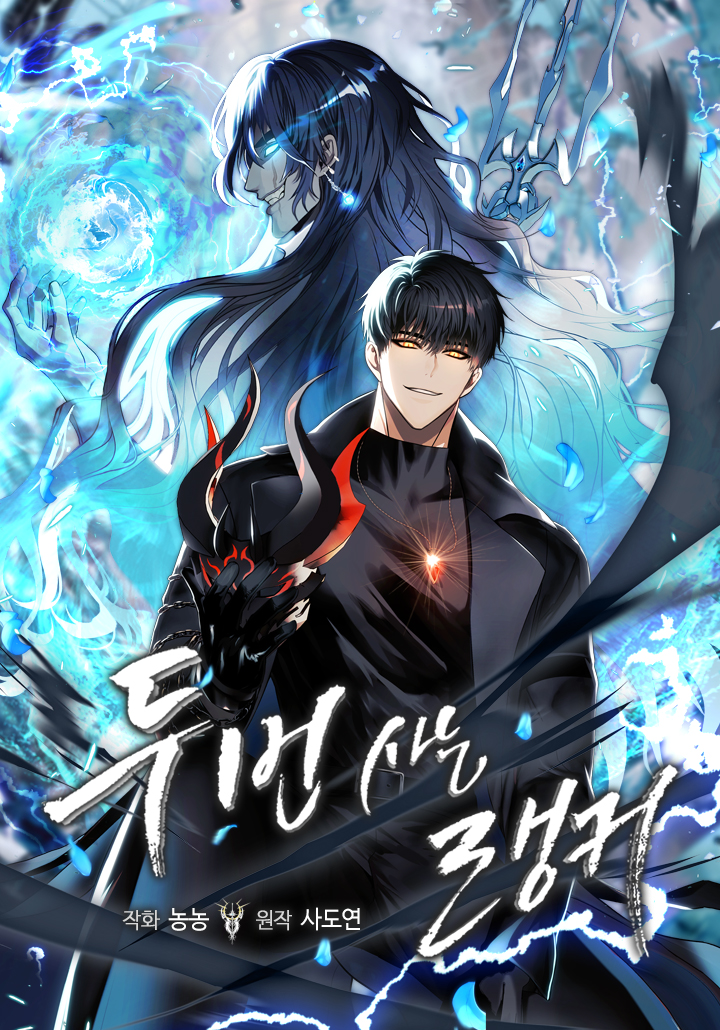 The twin brother backstory is Second Life Ranker's primary emotional hook, and the series never lets you forget it.
Art & Story
Nong Nong's art does two things particularly well. The system interface panels (stat windows, skill notifications, status screens) are legible and consistent without being visually dominant. A chronic problem in system fantasy manhwa is that panel real estate allocated to floating UI text can crowd out the actual scene. Nong Nong manages the balance: the information is there when the story needs it, gone when it doesn't.
The more interesting work is in the human scenes. The flashback sequences involving Jeong-woo (delivered in small doses through the early chapters, as Yeon-woo reads diary entries and imagines the situations his brother described) carry a different visual register from the combat sequences. Cleaner lines, more deliberate composition. The distinction isn't drastic but it's consistent, and it does the work the narrative needs it to do: these flashbacks feel like a different time.
Combat art is functional rather than exceptional. The tower's early floors involve standard enemy types and the choreography covers the mechanical requirements. Tower of God sets an aesthetic standard for architecture-based fantasy settings that most series don't match; Second Life Ranker doesn't reach that level of environmental design, but it's not trying to. The Obelisk is a tool of the story, not its aesthetic focus.


Second Life Ranker power system: Yeon-woo's class and abilities
Yeon-woo starts with his twin's pocket watch, a physical object containing a diary that functions as a complete walkthrough of the Tower written by someone who died near the top. This gives him advance knowledge of boss locations, hidden quests, rare skill triggers, and faction politics that other players spend years figuring out. The diary is finite: it ends where Jeong-woo stopped writing, which creates a structural tension that the series uses well.
His base class is Necromancer, but Second Life Ranker moves past the generic undead-raiser framing quickly. Yeon-woo's necromancy involves absorbing the powers of defeated opponents and manifesting them as shadow soldiers, an extension of his twin's own abilities that complicates the revenge dynamic in ways the series earns rather than asserts.
For a complete breakdown, see our Rise of the Limitless Necromancer Review.
Key abilities developed across the early arcs: the Demonic Dragon's Tail (a defensive technique absorbed from a boss encounter on the early floors), the Black Bracelet (a cursed item from Jeong-woo's belongings that expands his necromantic range), and the Draconic Eye, which lets him perceive hidden information layers in the Tower environment, effectively a second reading of stages other players experience once.
By the end of Season 3 (219 Tapas episodes, the current material), calling Yeon-woo a Necromancer is a simplification. He functions as an accumulator: necromancy is the scaffolding, not the ceiling. The power system is the series' main draw for readers arriving from system-fantasy manhwa. It's mechanically more specific than Solo Leveling and less rigidly game-framed than Overgeared, the middle register of the genre, handled with care.
Where It Falls Short
The Tapas paywall is the practical barrier for most readers. WEBTOON built the audience habit for this genre: browse free, read free, maybe buy fast passes for current chapters. Second Life Ranker isn't there. Tapas operates on a different model and while the official translation quality is good, the friction of a paid platform in a genre that defaulted free for years is a real accessibility issue.
The more significant problem is Season 3. By chapters 140-219, the series is operating at a divine and cosmic scale: gods, mythological entities, conflicts that span the tower's fundamental architecture. This is a common pattern in long-running system fantasy manhwa: the stakes have to keep escalating, and eventually the ceiling is the world. Second Life Ranker reaches that ceiling by its third season and the intimate revenge premise of the first arc is essentially absent. Yeon-woo's grief for Jeong-woo, which powered the early chapters, functions as backstory rather than active motivation.
This isn't a failure unique to Second Life Ranker; it's a structural challenge the genre produces reliably. But it means readers who engage strongly with Season 1's emotional specificity should understand that Season 3 is a different reading experience.
Season 4's status adds a different kind of uncertainty. Three seasons of content are available, which is substantial. But the series has been on hiatus since Tapas announced Season 3's close on April 10, 2026, and the next season still has no confirmed release date as of September 16, 2026. Reading the full current run means ending in suspension. That's not a quality criticism, but it's relevant to how you approach starting it.
Our best action manhwa list covers the top dungeon-clearing and revenge-arc reads.
Best Action Manhwa 2026 →
Verdict
The Good
- The dead-twin diary makes familiar tower climbing emotionally specific.
- Season 1's floor-by-floor pacing uses the information advantage well.
The Cons
- The paid Tapas model is a real access barrier.
- Season 3's divine-scale shift feels less intimate than the opening.
Second Life Ranker earns its reputation in Season 1. The dead-twin diary is a genuine genre contribution: not regression, not reincarnation, but a specific kind of grief-infused foreknowledge that makes the tower's early floors mean something beyond the power accumulation they're structurally delivering. The series handles the diary's end with more care than most manhwa handle equivalent structural pivots.
Season 3's scale expansion and the Tapas paywall are real barriers for different kinds of readers. But for anyone who reads tower-climbing manhwa and has gotten tired of the standard informed-protagonist mechanic, this one does it differently. That's rarer than it sounds.
For more context on how Second Life Ranker sits in the action manhwa subgenre, see our manhwa like Nano Machine guide. Both series use a system interface to drive tower/dungeon-adjacent power progression, with significantly different emotional cores beneath the surface.
For the full range of system fantasy and tower-climbing manhwa beyond Second Life Ranker, the best system fantasy manhwa guide ranks series by power mechanic type.
Rating: 8.0/10
Second Life Ranker in 2026: where the story stands
Second Life Ranker sits at 219 Tapas episodes across three completed seasons; the Korean original is linked on KakaoPage. Tapas posted a hiatus announcement on April 10, 2026 confirming Season 3 had wrapped and Season 4 would follow, but as of this check (September 16, 2026) that hiatus notice is still the most recent update on the series page and the episode count remains 219, so Season 4 has not visibly begun. AniList's status field is RELEASING.
The season structure: Season 1 (roughly chapters 1-60) establishes the Tower premise and Yeon-woo's entry. Season 2 covers his ascent through the middle floors and the first major faction conflicts, this is where the series expands from revenge plot to political thriller. Season 3 shifts into the Tower's upper hierarchy and introduces conflicts at divine scale, concluding the current run. Season 4, once it resumes, is expected to deal with the consequences of Season 3's resolution and introduce antagonists that operate outside the Tower's established power structure.
Readers entering for Season 1's intimate grief-driven premise should know that the series changes registers by Season 3. That's not a defect, it's how long-form manhwa works, but it's relevant context for how you approach the full run.
No anime adaptation has been confirmed as of mid-2026. The series has a dedicated Reddit community (r/SecondLifeRanker) that tracks chapter releases, translation timing, and season announcements. Starting point: chapter 1, no prerequisites, self-contained premise.
Frequently Asked Questions
Is Second Life Ranker worth reading? Yes, particularly if you've read Solo Leveling and want something with more personal stakes underneath the power progression. The dead-twin premise adds emotional weight that most comparable series skip. Three complete seasons are available, no mid-arc cliffhangers.
Is Second Life Ranker a time travel or regression story? No. Yeon-woo does not go back in time. He enters the tower for the first time, as himself, using his dead twin's diary as a guide. The foreknowledge is borrowed from a dead man's notes, not from living through the events. Categorically different from regression manhwa, and it reads differently too.
How many chapters does Second Life Ranker have? 219 Tapas episodes across three completed seasons, on hiatus ahead of Season 4 since April 10, 2026. Season 1 covers roughly episodes 1-70, Season 2 continues to approximately episode 140, Season 3 runs to episode 219. Numbering varies by platform due to splitting.
Where can I read Second Life Ranker in English? Tapas (tapas.io) carries the official English release. KakaoPage carries the Korean original. Tapas is paid or subscription-based, and the series is not free on WEBTOON.
Is Season 4 confirmed? Season 4 is planned but has no confirmed return date. Tapas announced the hiatus on April 10, 2026 after Season 3 wrapped, and as of September 16, 2026 that remains the latest update, with the episode count still at 219. The series is on hiatus between seasons, not mid-arc. Season 3 reaches a defined stopping point before the gap. AniList's status field is RELEASING.
Is Second Life Ranker the same as SSS-Class Revival Hunter? No. Second Life Ranker follows Yeon-woo using his dead twin's diary to climb the Obelisk tower. SSS-Class Revival Hunter follows a protagonist with a kill-and-copy regression mechanic. They are completely different series despite overlapping audiences.
Related Reading
- Second Life Ranker Character Guide: Every named face in the cast, AniList-verified, from Yeon-woo's tower alias Cain to the ranker confirmed as one of Jeong-woo's five killers.
- Second Life Ranker Reading Guide: Arc-by-arc breakdown of all three seasons, where to start, and how Season 4 fits into the story.
- Manhwa Like Second Life Ranker: Tower-climbing and revenge manhwa with similar protagonist-advantage mechanics, organized by what drew you to SLR.
- Best System Fantasy Manhwa: Ranked list of system-fantasy series covering the range from wish-fulfillment to structurally complex power mechanics.
- SSS-Class Revival Hunter Review: The other frequently recommended series for Second Life Ranker readers, using a kill-and-copy death mechanic instead of foreknowledge.
References
- Second Life Ranker on Tapas: official English release
- Second Life Ranker on Anime-Planet: full series metadata, reader ratings, and genre tags
- Second Life Ranker on AniList: status and creator metadata