These best manhwa reviews 2026 cover 21 series rated from 7.0 to 9.2, sorted into tiers. If you want to start at the top and work down, that's one way in. If you want to find something good rather than the best, the B-Tier list has a lot of solid reads that don't get enough attention.
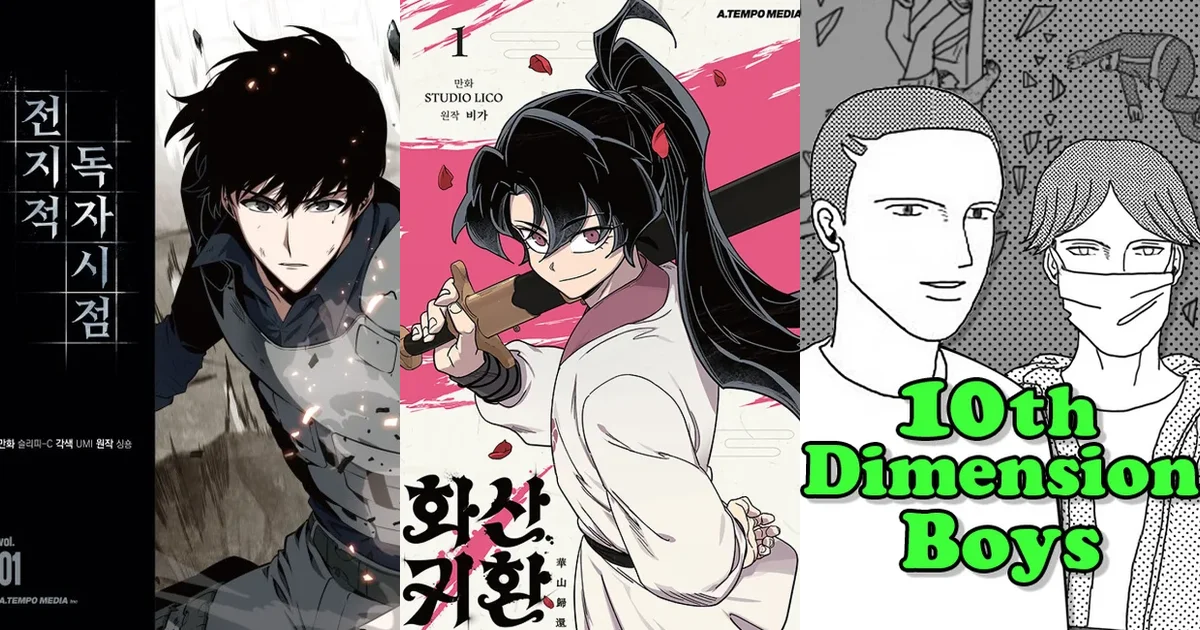
TL;DR: Best manhwa reviews 2026: 21 series, ratings from 7.0 to 9.2. S-Tier (9.0+) = Omniscient Reader's Viewpoint, Return of the Blossoming Blade, Bastard. A-Tier (8.0-8.9) = the core reading list including Solo Leveling, Weak Hero, Tower of God, and 8 others. B-Tier (7.0-7.9) = solid reads with specific audiences.
Best manhwa reviews 2026: our rating system
Ratings at ChapterBrief follow five criteria: narrative structure, art quality, pacing, genre execution, and staying power. A series needs to do something genuinely well -- not just avoid doing things badly -- to score above 8.5.
A 9.0 means the series clears the genre ceiling in at least three of those five areas. A 7.5 means it works, has a clear audience, but has weaknesses that keep it off the short list for most readers. The floor here is 7.0 -- below that, the review exists, but we won't recommend it first.
Ongoing series are rated on the run-so-far. If the ending changes the picture, the score gets updated.
S-Tier (9.0-10.0)
Omniscient Reader's Viewpoint -- 9.2/10
Omniscient Reader's Viewpoint review earns its score for what it does with structure. The premise -- a reader enters the novel he spent a decade following -- sounds like a straightforward isekai setup, but the series uses that premise to ask harder questions about narrative, sacrifice, and the gap between knowing how a story ends and being the one who has to live through it. Season 1 currently ends at English Episode 308 (#309 on WEBTOON), and the platform marks the series "will return." This is the most ambitious manhwa we've reviewed.
Return of the Blossoming Blade -- 9.1/10
The Return of the Blossoming Blade review covers a murim series that does one thing better than almost any comparable title: it takes swordsmanship seriously as a subject, not just as a vehicle for action. The protagonist's regression and reconstruction of his sect's core technique is treated with enough mechanical specificity that the fighting scenes carry genuine weight. Art quality and panel composition are consistent across the full run. It also earns points for being genuinely, deliberately funny -- comedy that comes from the protagonist's exhaustion with his second life rather than from slapstick, which almost no cultivation manhwa manages alongside serious combat. Also published under the fan-translation title Return of the Mount Hua Sect.
Bastard -- 9.0/10
The Bastard manhwa review is for a completed psychological horror series about a boy whose father is a serial killer. It earns the score by using its horror premise to build genuine dread -- not shock -- and by committing to a structure where the protagonist's moral position never becomes simple. Panel composition uses negative space more deliberately than most action-focused manhwa. Completed, no sequel hooks. One of the few series on this list we'd recommend to readers who don't normally read manhwa.
A-Tier (8.0-8.9)
Advertisement
A-Tier is where the core reading list lives. These are series that execute their genre well, hold up through their run, and have clear strengths worth reading for.
Painter of the Night -- 8.8/10
The Painter of the Night review is for a completed historical BL manhwa with the best linework in its genre. Art quality is the primary argument for reading this one.
Sweet Home -- 8.8/10
Completed horror with three Netflix seasons. The manhwa is better than the adaptation -- tighter, darker, and it doesn't fumble the ending the way the show did. The Sweet Home review is worth reading before you pick a version to start with.
Weak Hero -- 8.8/10
Weak Hero is school fighting without the typical wish fulfillment frame. Completed, with a Netflix drama adaptation (Class 1, Class 2). The psychological approach to its protagonist separates it from the genre baseline.
Eleceed -- 8.6/10
The premise sounds like a joke: secret agent gets stuck in a cat's body, adopted by a highschooler with hidden superpowers. It isn't. The action system has more internal logic than most of its peers, and the character writing holds up at 400+ chapters. The Eleceed review explains what keeps it from feeling like it's winging it.
Solo Leveling -- 8.5/10
The Solo Leveling review is for the series that defined the hunter genre's visual template. Completed. Anime Season 1 and 2 produced by A-1 Pictures. The art is the argument; the story is serviceable.
Blue Lock -- 8.5/10
The soccer premise almost doesn't matter -- this is really about ego, self-belief, and whether talent can be manufactured under pressure. The Blue Lock review covers what the tournament structure gets right and where the pacing loses itself in the back half.
Legend of the Northern Blade -- 8.5/10
Legend of the Northern Blade starts dark -- the protagonist's sect is wiped out, his father killed -- and stays dark. What separates it from revenge-fantasy genre fodder is how seriously it treats technique development. The escalation feels earned rather than convenient.
SSS-Class Revival Hunter -- 8.5/10
SSS-Class Revival Hunter runs a regression mechanic where the protagonist copies skills at the moment of death and wakes up in the past. Ongoing with a long run. Covers complex timelines well. Also published under the title SSS-Class Revival Hunter -- same series, not a separate one.
Tower of God -- 8.5/10
The Tower of God review covers one of the foundational long-form WEBTOON originals. Two anime seasons, a complex floor-based world, and a run long enough that pacing investment is required upfront.
Mercenary Enrollment -- 8.2/10
Mercenary Enrollment is the most accessible school action series on the A-Tier list. Former child soldier returns to normal school life. Fast pacing, clear premise, straightforward execution.
Nano Machine -- 8.1/10
Nano Machine runs a murim cultivation premise with a sci-fi injection mechanic. Naver's Korean series page lists 329 episodes, and the title remains ongoing. Reliable genre execution without the ambition of the S-Tier murim titles.
For the full ranked list of manhwa to read this year, including series outside the review index:
Best Manhwa to Read in 2026 →
B-Tier (7.0-7.9)
B-Tier doesn't mean skip. It means there's a specific audience and identifiable weaknesses -- read the full review before committing.
Viral Hit -- 7.8/10
Viral Hit is completed at 218 chapters. The school fighting premise is grounded in systematic skill-building rather than innate talent, which is the series' main distinguishing feature. Later volumes lose some of the early focus. Part of the Park Taejun Universe with Lookism.
Chronicles of the Heavenly Demon -- 7.8/10
Chronicles of the Heavenly Demon doesn't flinch from its dark premise -- the protagonist is raised as a weapon by people who despise him -- and the series doesn't cheerfully rehabilitate anyone. That consistency is what earns 7.8. It's long and ongoing, and the middle stretch demands patience.
Unholy Blood -- 7.8/10
Unholy Blood is a completed vampire action manhwa. Tighter pacing than most of its genre peers. The final arc resolves cleanly.
The Lazy Lord Masters the Sword -- 7.8/10
The regression premise isn't what makes this worth reading -- it's the family dynamics. The protagonist's relationship with his younger sister is written with more care than most genre entries bother with. The Lazy Lord Masters the Sword review covers where it delivers and where the pacing drags.
God of Blackfield -- 7.5/10
God of Blackfield is niche -- a former special forces soldier reincarnated into a chaebol heir's body, with the French Foreign Legion as backstory context. If that combination sounds interesting, 7.5 undersells it for you. If it doesn't, this probably isn't your entry point into manhwa.
Noblesse -- 7.5/10
Noblesse has a plot that exists mainly to set up character moments, and the character moments are good enough that this mostly works. It's one of the foundational WEBTOON originals (completed, 544 chapters), and the Noblesse review is honest about what you're actually getting: vibes and found-family dynamics, not tight plotting.
True Beauty -- 7.5/10
The premise is thin -- girl uses makeup to hide low self-esteem, love triangle ensues -- but the execution is more self-aware than you'd expect. The main story completed at 223 episodes; AniList's live record lists 257 chapters because it includes a prologue and 33 side stories. The K-drama adaptation (2020) is better known than the source material, which is unusual. True Beauty review: better than the premise suggests, weaker than the drama's fanbase implies.
For series that completed their runs this year:
Best Completed Manhwa →
How to use these best manhwa reviews 2026
Advertisement
This best manhwa reviews 2026 index covers 21 series across action, romance, cultivation, horror, and BL. The tier structure makes it easier to pick an entry point rather than scrolling through the blurbs looking for one that sounds right.
If you're new to manhwa: Start with Mercenary Enrollment (8.2) for action or Weak Hero (8.8) for psychological depth. Both are accessible without genre context.
If you've read Solo Leveling: The next step depends on what you liked. For better art and more ambition, try Return of the Blossoming Blade. For the psychological version of the power progression premise, try SSS-Class Revival Hunter. For something darker and completed, try Bastard.
If you prefer romance and slice-of-life: True Beauty is the most familiar entry. Painter of the Night has the strongest art of any completed series on the list.
If you want cultivation/murim: Return of the Blossoming Blade (9.1, also known as Return of the Mount Hua Sect) is the top pick -- best faction politics, best fight choreography, and genuinely funny for the genre. Legend of the Northern Blade is the completed alternative if you want a finished run.
For anime adaptation fans: Several A-Tier series have existing adaptations. See the full list of manhwa with anime adaptations for current and upcoming seasons.
Frequently Asked Questions
What is the highest-rated manhwa on ChapterBrief?
Omniscient Reader's Viewpoint holds the top score in this best manhwa reviews 2026 ranking at 9.2/10. Return of the Blossoming Blade (9.1) and Bastard (9.0) are the other S-Tier entries.
Which completed manhwa scores highest?
Bastard (9.0), Sweet Home (8.8), Weak Hero (8.8), Painter of the Night (8.8), and Solo Leveling (8.5) are completed. Omniscient Reader's Viewpoint is ongoing at Episode 308, and WEBTOON currently lists the series as returning for more.
Is Solo Leveling worth reading in 2026?
Yes, if you want to understand the genre template. The anime (A-1 Pictures, Seasons 1 and 2) covers much of the run -- the manhwa extends further and has better art. Rating 8.5 reflects strong execution with a thinner story than its S-Tier neighbors.
How does Tower of God compare to Solo Leveling?
Both rate 8.5 but for different reasons. Solo Leveling is faster, more visually striking, and easier to start. Tower of God is longer, more narratively complex, and rewards patience with a larger world. They don't compete directly -- they suit different reading modes.
What should I read after finishing the S-Tier series?
After Omniscient Reader's Viewpoint, start Return of the Blossoming Blade. After Bastard, try Sweet Home (same completed psychological darkness, different genre). After finishing that S-Tier murim title, Legend of the Northern Blade is the natural next read for a completed run.
Related Reading
Use these best manhwa reviews 2026 alongside the broader recommendation lists below:
- Best Manhwa to Read in 2026 -- broader ranked list including series not yet reviewed
- Best Completed Manhwa -- only finished series, no ongoing
- Manhwa With Anime Adaptations 2026 -- which series have anime and what they cover
References
- AniList Manhwa Rankings
- WEBTOON Official Library
- Omniscient Reader's Viewpoint on WEBTOON (Season 1 latest English Episode 308, #309; will return)
- Nano Machine on Naver Webtoon (329 Korean episodes listed)
- True Beauty on AniList (FINISHED; 257 chapters including prologue and side stories)