Loading…
ChapterBrief · Guides
Gosu Manhwa Reading Guide: 233 Chapters + Anime Prep
Gosu manhwa reading guide: 233 chapters completed, anime Takate in production. Arc breakdown, tonal shift guide, and where to read before the anime hits.
8 min readBy Ethan Mercer

Reviewing
Gosu
Gosu manhwa reading guide: 233 chapters completed April 2021, anime Takate in production from Toei Animation and Studio Mir. This guide covers the full arc structure, the tonal shift that most readers miss, and how to approach the series before the adaptation arrives.
TL;DR: Gosu manhwa reading guide -- 233 completed chapters, anime Takate in production. The series starts as murim comedy and earns something harder by the midpoint. Full arc breakdown, tonal shift explained, and where to read before the adaptation hits.
Key Takeaways
- Status: Completed, 233 chapters, April 2021; sequel exists
- Author/Art: Story by Gi-Un Ryu, art by Jeong-Hu Mun; consistent across all 233 chapters
- Platform: WEBTOON English, Naver Webtoon Korean
- Anime: Takate (Toei Animation, Studio Mir, Studio N); production confirmed late 2025
- Views: 1.4 billion on Naver Webtoon
- Reading time: approximately 10 to 12 hours for the full 233-chapter run
Gosu manhwa reading guide: what the series is about
Gang Ryong trained under a legendary murim master whose school was destroyed, whose reputation was erased, and who was left for dead after a betrayal by his own disciples. Gang Ryong spent years in isolation mastering his teacher's complete techniques. He comes out looking ordinary, acting quieter than expected, and handling opponents with a gap in power that does not announce itself until it is too late.
The early chapters play this as comedy. Gang Ryong is consistently underestimated. Opponents attack someone they believe is manageable. They are wrong. The scene resets. There are genuine laughs in these chapters, and the power gap is handled with timing rather than spectacle.
That version of Gosu generates the opening description: a murim comedy with a low-key protagonist who is secretly unbeatable. What generates 1.4 billion views is what comes after.
For context on where Gosu sits in the broader murim landscape, the Gosu manhwa review covers the series' rating, strengths, and where the final arc places it in the genre.
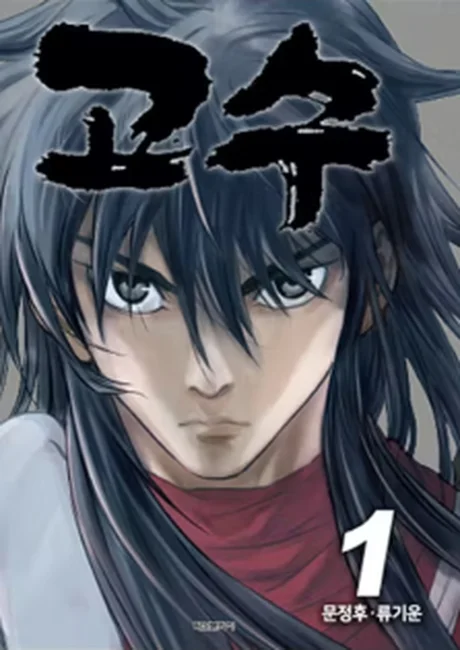 Gosu by Gi-Un Ryu and Jeong-Hu Mun -- 233 chapters, completed April 2021, available on WEBTOON
Arc breakdown: the three phases of 233 chapters
Advertisement
This Gosu manhwa reading guide splits the 233 chapters into three phases based on the series' tonal arc. Chapter boundaries are approximate since Gi-Un Ryu didn't title individual arcs.
Phase 1: the comedy entry point (chapters 1-50, approximately)
Gang Ryong leaves his isolation and enters the murim world for the first time. His goal is locating the men responsible for his master's downfall, but he cannot approach them directly. He lacks the social position and network connections that murim's power structure requires before a confrontation at that level becomes possible.
The first phase is him operating at the periphery of the world he is trying to reach. Every fight is against someone who underestimated him. Every scene relies on the gap between his actual capability and the appearance he presents. The comedy comes from this gap being exploited repeatedly, with Gang Ryong's reactions staying flat and unimpressed.
The characters introduced here serve two roles: some become significant later, others are genuinely just episodic. Jeong-Hu Mun's art in this phase is loose and expressive, calibrated for the comedy register.
Don't decide based on these chapters whether the series is for you. They're accurate to who Gang Ryong is at this point in the story. They're not accurate to the series he's building toward.
For context on how Gosu fits among current completed murim series:
Best Murim Manhwa 2026 →
Phase 2: the tonal shift (chapters 50-150, approximately)
Around chapter 40 to 50, the series reveals more about the betrayal that destroyed Gang Ryong's master. The antagonists responsible are not minor local threats. They are figures with real standing in the murim world, connected to its legitimate power structures.
This is where the series changes gears. The comedy is still there, but it's no longer the primary register. Gang Ryong's opponents aren't people who underestimated him anymore. They know what they're dealing with. The fights carry different weight because the stakes are different.
Jeong-Hu Mun's art responds to this. Panel density increases in combat sequences. Compositions that were loose and readable in Phase 1 become more technically detailed. The artist uses the same tools with different emphasis, and it works because the craft was always there, just deployed differently.
The tonal shift is gradual. Readers who notice it cannot usually identify a specific chapter where it happens. They observe that around chapter 60 or 70, the series stopped feeling like a comedy with occasional serious moments and started feeling like a revenge narrative with occasional humor. Both descriptions are accurate to different sections of the same run.
This is the phase where the series' full supporting cast develops. Characters who were introduced in Phase 1 as apparent comic relief or minor allies take on more specific roles in the larger conflict. The structure is deliberate rather than episodic.
Phase 3: the final arc (chapters 150-233)
The antagonists at the top of Gang Ryong's list are in play. The series is no longer building toward the confrontation. It is executing it.
What distinguishes the final arc from comparable endings in the genre is that it remembers what the series was originally about. The comedy entry point in Phase 1 was not a false start. Gang Ryong's character at chapter 1 is continuous with his character at chapter 200. The way the finale resolves reflects both the comedy version of the character and the revenge narrative version, without those two readings contradicting each other.
Readers consistently cite the ending as one of the better conclusions in murim manhwa. In a genre where series either run indefinitely or conclude with rushed chapters that cannot close 200 episodes of established storyline, Gosu delivers an ending that addresses what the series was actually about.
The sequel begins after this conclusion for readers who want to continue.
Gosu's anime Takate is part of a strong 2026 manhwa-to-anime lineup:
Manhwa Getting Anime Adaptations in 2026 →
The sequel
A sequel series exists and continues the world and characters after the original ending. It is not required to understand the 233-chapter run, which is complete in itself. Readers who finish and want more have somewhere to go.
Gosu manhwa reading guide: where to read
English: WEBTOON at Gosu on WEBTOON. Official English translation. Regional access can vary; check your local WEBTOON platform if the main link does not resolve.
Korean original: Naver Webtoon. The Korean run completed April 2021. Reader comments and community discussion from the original release can be searched for series history, though the English translation is the more accessible route for most readers.
What format to expect: Vertical scroll. Gosu is a native webtoon, designed for mobile reading on a vertical canvas. The art is calibrated for that format.
Step-by-Step
1. Start at chapter 1 on WEBTOON and read Phase 1 (roughly chapters 1-50) as comedy setup: Gosu is a native webtoon built for vertical scroll reading with no prequel to sequence in first. Gang Ryong is repeatedly underestimated by opponents who don't know what they're dealing with. It's accurate to who he is at this point in the story, but not accurate to the series he's building toward.
2. Give it through chapter 50 before deciding whether Gosu is for you: This is where the series starts revealing the real stakes behind the betrayal that destroyed Gang Ryong's master, and readers who reach chapter 50 almost universally continue through to the end.
3. Read Phase 2 (roughly chapters 50-150) expecting the tone to keep shifting: The comedy doesn't disappear, but it stops being the primary register as Gang Ryong's opponents turn out to have real standing in the murim world's power structure.
4. Finish with Phase 3 (chapters 150-233) for the resolution: The final arc executes the confrontation the first two phases built toward, and the ending is frequently cited as one of the stronger conclusions in the murim genre.
5. Decide separately whether to continue into the sequel: The original 233-chapter run is a complete, self-contained story. The sequel picks up after that ending for readers who want more, but it isn't required.
Reading tips
Advertisement
The chapter 30 question: Readers who find the early comedy doesn't land often ask if they can skip ahead. This Gosu manhwa reading guide's short answer: they can't, not really. They can't, not really. Phase 1 establishes Gang Ryong's character in ways the later arcs rely on. The tonal shift lands harder because of what Phase 1 built. Read through to chapter 50 before making a call.
The comparison to Return of the Blossoming Blade: Both are murim series with praised endings and a comedy-drama balance. The Return of the Blossoming Blade review covers how that series handles tone, which is structurally different from how Gosu handles it. Gosu uses early comedy as an entry point and moves away from it. Return of the Blossoming Blade keeps comedy integrated throughout its full run. Both approaches work; they are just doing different things.
Reading pace: 233 chapters is a reasonable single-weekend read if you start in Phase 1 and continue through. The pacing accelerates as the series moves into Phase 2 and Phase 3. Readers who felt Phase 1 was slow almost uniformly report that they lost track of time somewhere in Phase 2.
Before the anime: Takate is in production from Toei Animation and Studio Mir. When it releases, the reading queue for the source material will get long fast. 233 completed chapters is a manageable read before a major adaptation. Readers who wait until after the anime premieres will be reading alongside a much larger audience with a much higher spoiler load. Your call, but sooner is better.
Related Reading
- Gosu Manhwa Review: full review covering the series' rating, what the 1.4 billion views reflect, and the anime context
- Best Murim Manhwa 2026: where Gosu places among current completed and ongoing series
- Manhwa with Anime Adaptations 2026: full 2026 lineup including Takate
- Manhwa Like Gosu: 4 picks ranked by the inherited-technique setup, comedic register, and modern-murim collision
Frequently Asked Questions
Where can I read Gosu manhwa in English? WEBTOON (webtoon.com). The series originally ran on Naver Webtoon in Korean and completed there in April 2021.
Is Gosu manhwa completed? Yes. The original 233-chapter run completed in April 2021. A sequel series continues past the ending.
What is the Gosu anime called? Takate. Produced by Toei Animation, Studio Mir, and Studio N. Production confirmed late 2025; no premiere date announced as of mid-2026.
Should I read the sequel after the main series? The original 233 chapters are a complete, self-contained story. The sequel exists for readers who want more after the ending. It is not required.
Does Gosu have a lot of comedy or is it serious? Both, across different phases. Chapters 1 to approximately 50 lean into comedy built on the protagonist's power gap. From the mid-run onward, the series shifts substantially toward a revenge narrative. Readers who drop at chapter 20 because of the early comedy are making a decision based on the wrong version of the series.
How many chapters should I read before deciding? Through chapter 50. That is where the series begins revealing what it is building. Readers who reach chapter 50 almost universally continue to the end.
Is Gosu similar to Return of the Blossoming Blade? Both blend murim comedy with serious stakes and have praised endings. Return of the Blossoming Blade keeps comedy structural throughout. Gosu uses early comedy as an entry point and transitions away from it by the mid-run. Gosu is completed; Return of the Blossoming Blade is ongoing.
References
- Gosu on WEBTOON: official English platform, full 233-chapter run
- Gosu on AniList: series data, chapter count, staff credits, and sequel series information
- Gosu anime Takate announcement via Anime News Network: production confirmation
Was this guide helpful?
About the author

Senior Manhwa Critic & Analyst
Manhwa critic and former Korean-to-English webtoon translator with 8 years reading across 40+ genres. London-based. Tracks everything from power-progression to slice-of-life romance.
- 8 years reading manhwa across 40+ genres
- Former Korean-to-English webtoon translator
- 500+ manhwa titles completed
- Specializes in progression systems and power-scaling analysis


Disclaimer
This article is published for informational and entertainment purposes. It does not constitute professional financial, legal, or technical advice. Series availability, platform access, translation status, and chapter counts change. Verify critical details (pricing, regional availability, official translation status) with publishers and platforms. Affiliate links, where present, help support our editorial work and are labelled in our affiliate disclosure.
Comments
Loading comments…