Loading…


ChapterBrief · Reviews
God of Blackfield Review: More Than a High School Revenge
God of Blackfield review: Season 3 ended May 2026, 280 eps on Tapas. 7.5/10. The school arc is brief setup. This becomes a spy thriller by episode 50.

Reviewing
God of Blackfield
Mujang · Tapas
7.5
Score
7.5/ 10
Tapas
Pros
- The spy thriller pivot from episode 50 onward is genuinely compelling, not typical for the school revenge setup
- Kang Chan's military expertise creates concrete tension the school setting can't match
- Three complete seasons at 280 episodes before going on hiatus, with substantial story already told
- Geopolitical intrigue and multi-country intelligence operations add scope missing from most revenge manhwa
Cons
- The high school arc (early episodes) will mislead readers expecting a school or sports manhwa
- The transition from school to spy operations isn't telegraphed; readers who quit before episode 50 miss what the series actually is
- Some side characters in the intelligence world are thin across 280 episodes
Verdict
God of Blackfield earns its audience if you know what it actually is. The high school setup is a brief phase. This is a military spy thriller about a mercenary navigating intelligence politics.
God of Blackfield review: most readers quit during the school arc and never find out what the series is actually about. Kang Chan, the legendary mercenary known as the God of Blackfield, gets revived in a Korean high schooler's body. Three years after his death. His first problem is the bullies. The series looks, from the outside, like a revenge-in-school story.
It isn't. The school arc is a prologue to the spy thriller that follows.
TL;DR: God of Blackfield is a 280-episode Tapas series, currently on hiatus after Season 3 ended May 2026. Rating: 7.5/10. The premise misleads: this becomes a military intelligence thriller from around episode 50 onward. If you know that going in, the early episodes land differently.
God of Blackfield Review: Key Takeaways
Season 3 of God of Blackfield ended May 8, 2026, with a Tapas announcement confirming the hiatus before Season 4. The series has 280 episodes across three complete seasons. It started in February 2020. Six years in, there's a real body of story to read before Season 4 arrives.
The original story is by Mujang and Un. Art is by Insung Shin, whose design work is crisp and consistently strong. The platform is Tapas, not WEBTOON. This matters because a lot of potential readers search WEBTOON and conclude the series doesn't exist.
AniList scores it 71/100 with a popularity of 16,810. That modest score reflects the polarized audience: readers who quit during the school arc vs. readers who stayed through the pivot and found a different kind of series. Both groups are right about what they experienced. For a full breakdown of what else is on Tapas and other non-WEBTOON platforms, best manhwa not on WEBTOON covers the Kakao ecosystem and platform pricing comparisons.
God of Blackfield review: the premise the synopsis doesn't tell you
The pitch sounds like every other regression/revival manhwa. Legendary fighter dies in battle, wakes up in a weaker body, has to navigate a new life while dealing with the same old enemies. God of Blackfield's opening arc leans into this: Kang Chan deals with school bullies, attends classes, navigates the social structure of Korean high school with the patience of a man who has walked through battlefields.
The thing is, Kang Chan doesn't stay in high school long. His military skills and the reputation that follows him, even into a new body, attract attention from actual intelligence agencies. Korean domestic intelligence. French DGSE. By Season 2, the school is largely in the background.
The series becomes about Kang Chan operating in the space between legitimate intelligence services and mercenary work, handling operations that governments can't officially sanction. Think less "revenge story" and more "older operative forced to navigate bureaucratic intelligence politics while also being capable of clearing a room alone."
For a complete breakdown, see our Kill the Hero Reading Guide.
For readers who've finished Kill the Hero and want another revenge manhwa with an anti-hero who doesn't soften over time, God of Blackfield scratches the same itch while being structurally different. Kill the Hero stays in the dungeon-hunter economy. God of Blackfield goes geopolitical.
Art Style and Presentation
Advertisement
Insung Shin's work is consistent across all three seasons. The character design keeps Kang Chan visually distinct from the school setting he's placed in early: he looks like someone wearing a high school uniform as a costume, not a student. That's deliberate and it works. Readers understand immediately that something is off, even before the backstory lands.
The action sequences are clean. The transition from school brawl (choppy, reactive) to military operation (deliberate, methodical) is visualized in how Kang Chan moves and how the art frames the action. Season 2 and 3 combat is more composed, less reactive. The visual language shifts as the story shifts.
Spy thriller scenes, dialogue-heavy intelligence meetings, the kind of material that's harder to make visually interesting in manhwa format, are handled with enough restraint that they don't drag. The series knows when to let a tense conversation breathe and when to cut.
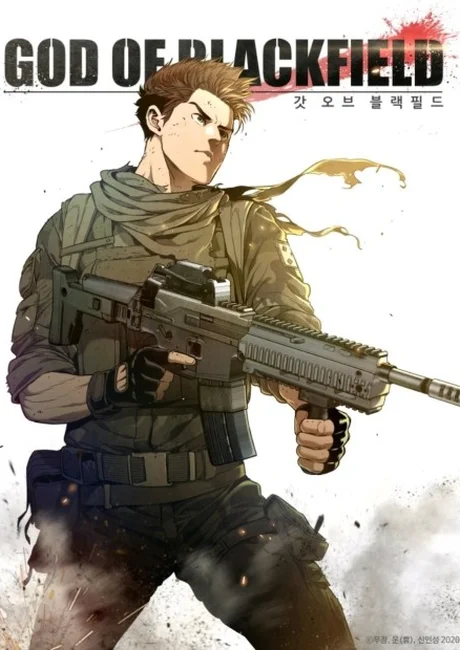 The cover reads military, not school. The story follows the cover's promise once the school arc clears.
The Pivot: When the Spy Thriller Takes Over
The intelligence recruitment storyline begins around episode 40-50. Kang Chan's actions in the school setting attract notice from someone who recognizes what his skill level implies. From there, the story pulls him into an operation outside the school context, and the school arc starts shrinking.
Season 2 is predominantly the intelligence world. Kang Chan moves between Korea and France, works alongside professional operators from multiple agencies, and gets drawn into a geopolitical conflict that extends across multiple factions. The stakes in Season 1 were personal. By Season 2, they're national.
Season 3 extends this further. The final episodes before the hiatus deal with consequences that affect Kang Chan's relationships with the institutions he's built alliances with, not the revenge arc from the beginning.
The revenge thread from the opening doesn't disappear. It gets complicated. Who shot Kang Chan from behind and why is answered across the three seasons, but the answer is entangled with the geopolitical conflict in ways that make the school-era revenge feel small by comparison.
What the Series Gets Right
The intelligence world proceduralism is God of Blackfield's best feature. Kang Chan doesn't solve problems with raw power. He solves them with the combination of battlefield instinct and political navigation that a real operator working across multiple jurisdictions would need. The story takes that combination seriously.
The pacing picks up substantially after the school arc. Readers who felt the early episodes were slow aren't wrong, but the series genuinely accelerates once the intelligence setting locks in. Season 2 and Season 3 move faster than Season 1.
Compare this to Absolute Regression, another dark action manhwa where the protagonist's skills and moral positioning are both unusual. God of Blackfield's world-building is heavier and the protagonist's situation more specific. Absolute Regression keeps its world compact. God of Blackfield sprawls into geopolitics. For a full arc breakdown and reading tips, see the Absolute Regression Reading Guide.
Three complete seasons matters. 280 episodes is a commitment, but the arc structure is clear: Season 1 is personal, Season 2 goes national, Season 3 goes further. Each one has a different focus.
What to Watch for in the Pacing
The school arc will slow down readers who don't know what's coming. It's not bad, but it's built for a different kind of story than what the series becomes. Episodes 1-40 are setup. They matter for character grounding but they're not the show's strength.
The secondary cast across the three seasons is uneven. Some intelligence contacts and operators who appear in Season 2 are memorable and well-developed. Others who seem significant in Season 1 fade. The series has a large cast for a 280-episode run and not everyone gets adequate development.
Unlike most action manhwa in the best manhwa fantasy category, God of Blackfield uses a contemporary geopolitical setting rather than fantasy world-building. That makes it unusual but also means readers who came for fantasy action may find the real-world political texture jarring.
Verdict
Advertisement
God of Blackfield is worth reading if you know what it is. The high school setup isn't the series. It's the frame before the series starts. Kang Chan's real story is what happens when a man calibrated for battlefields ends up navigating intelligence politics, geopolitical operations, and the question of who in his past life was actually the enemy.
Season 3 ended in May 2026 with a hiatus. Three complete seasons and 280 episodes is enough story to judge the series properly. Rating: 7.5/10. Know the pivot is coming, get through the school arc, and you'll find a military spy thriller that doesn't show up often in manhwa.
Season 4 is coming. Season 3 left things unsettled in ways that feel intentional, not unresolved.
Related Reading
- Absolute Regression review, for another action manhwa with a morally unusual protagonist in a dark setting
- SSS-Class Revival Hunter Review, another long-running Tapas series with an unusual protagonist ability and a power-reversal premise
- Best Manhwa Fantasy in 2026, for context on how God of Blackfield fits into the broader action manhwa landscape
- God of Blackfield Reading Guide: 280 Episodes, 3 Seasons
- Manhwa Like God of Blackfield: 7 Hidden-Skill Anti-Heroes, more picks with a concealed combat past and a false-identity structure
Frequently Asked Questions
Is God of Blackfield a school manhwa? Only in the early episodes. Kang Chan, the protagonist, is revived in a high schooler's body, so the first stretch of the series deals with school. But from roughly episode 50 onward, the focus shifts to intelligence operations, geopolitical conflicts, and Kang Chan's mercenary background. Readers who start expecting a school rivalry story will be surprised.
How many episodes does God of Blackfield have? God of Blackfield has 280 episodes across three complete seasons on Tapas. Season 3 ended in May 2026. The series is on hiatus between seasons, with Season 4 announced but without a confirmed release date.
Where can I read God of Blackfield? God of Blackfield is on Tapas, not WEBTOON. The series uses Tapas' coin system for newer episodes, with older episodes available for free. Searching WEBTOON will not find it.
Is God of Blackfield worth reading? Yes, if you want a revenge manhwa that pivots into military and spy thriller territory. The early school arc is slow if you don't know the pivot is coming. Once it gets into intelligence operations and Kang Chan using his battlefield skills geopolitically, the tension is unlike most manhwa.
Who wrote God of Blackfield? The original story is by Mujang, with additional story work by Un. The manhwa adaptation art is by Insung Shin. The series launched on Tapas in February 2020.
How long is the school arc in God of Blackfield? Roughly the first 40 to 50 episodes focus primarily on the school setting, establishing Kang Chan's new identity and the initial revenge threads. By episode 50, the intelligence recruitment storyline begins. The exact transition varies by season but the school setting diminishes significantly in Season 2 and is minimal in Season 3.
References
- God of Blackfield on Tapas, 280 episodes, Season 3 complete, hiatus before Season 4
- God of Blackfield on AniList, score 71/100, Action/Drama/Supernatural genres
About the author

Anime and manhwa writer covering seasonal releases and ongoing webtoons since 2018. Seoul-born, Melbourne-based. Writes the way she reads — fast and direct.
- Covering anime and manhwa since 2018
- 400+ series completed across anime and manhwa
- Seasonal anime tracker for 6 years running
- Romance and fantasy specialist with deep genre knowledge




Disclaimer
This article is published for informational and entertainment purposes. It does not constitute professional financial, legal, or technical advice. Series availability, platform access, translation status, and chapter counts change. Verify critical details (pricing, regional availability, official translation status) with publishers and platforms. Affiliate links, where present, help support our editorial work and are labelled in our affiliate disclosure.
Comments
Loading comments…