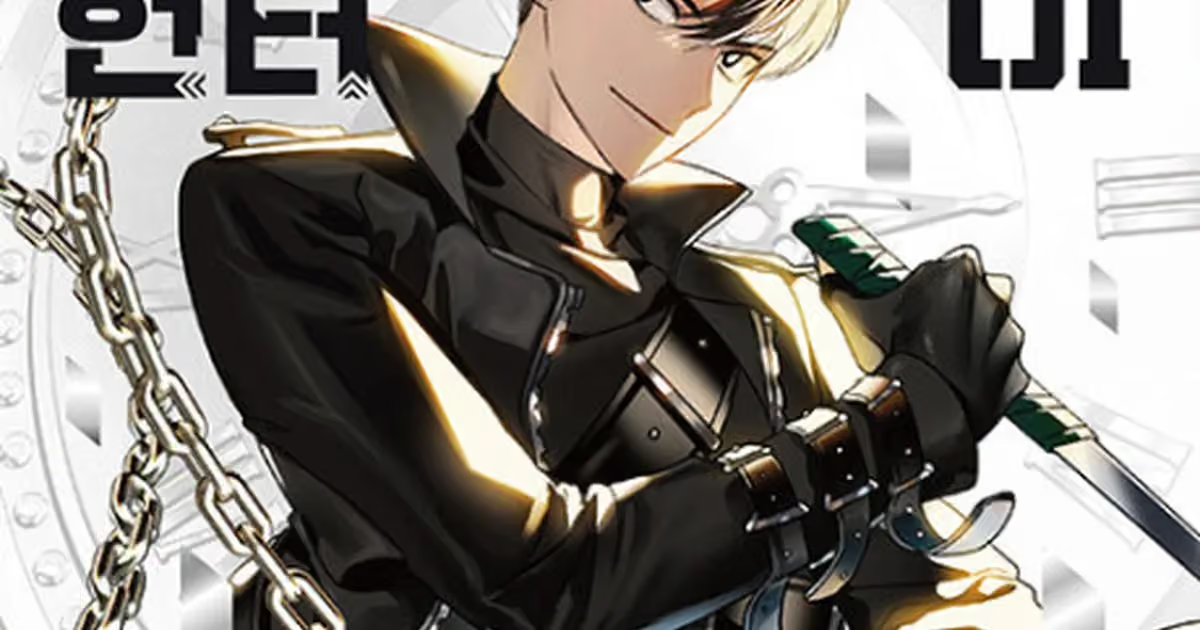
SSS-Class Revival Hunter review: 64,860 AniList users, ongoing since 2020, and the premise still lands cleanly six years in. Confucius Kim starts at the bottom of the Tower and dies to the strongest hunter in the world before the first arc ends. That death is not a setback. It's how the series starts.
TL;DR: SSS-Class Revival Hunter review: 7.5/10. Tower manhwa where dying to powerful enemies copies their skills, then rewinds time to before the death. Ongoing since 2020 on Tapas. Strong premise, solid Bill K art. Revival Hunter is the official Tapas title of the series the community calls SSS-Class Suicide Hunter: same series, two English titles, explained below.
The mechanic is the review. Every other question about SSS-Class Revival Hunter depends on whether you find the death-investment premise interesting enough to sustain a long run.
Rating: 7.5/10
SSS-Class Revival Hunter review: key takeaways
- Rating: 7.5/10; AniList popularity 64,860, mean score 83/100
- Tower setting; death copies attacker's skill, then rewinds time to before the death
- Original story by No-A Sin (web novel); manhwa adaptation story by Neida; art by Bill K
- Available on Tapas (English digital, 154 episodes as of August 2026), KakaoPage (Korean), Ize Press/Yen Press (5 English print volumes, Vol. 1 released October 2024)
- Season 4 ended at Chapter 151; on hiatus before Season 5 (no return date as of August 2026)
- Same series as SSS-Class Suicide Hunter: Revival Hunter is the official Tapas/Ize Press English title, Suicide Hunter is the fan-translation title
- An anime adaptation was confirmed September 9-10, 2026, premiering January 2027 on Crunchyroll (Studio Fu, directed by Hiroaki Sakurai)
Is SSS-Class Revival Hunter the same as SSS-Class Suicide Hunter?
Yes. One series, two English titles, and the split has confused readers for years.
The Korean title is SSS-geup Jugeoya Saneun Hunter, which translates to something like the SSS-class hunter who lives by dying. Early fan translations rendered the title as SSS-Class Suicide Hunter, working from the original web novel's Korean title, and that name stuck across Reddit, MyAnimeList discussions, and most recommendation lists. When Tapas licensed the official English release, it chose SSS-Class Revival Hunter, and the Ize Press print edition (a Yen Press imprint) kept the Tapas title.
So the split runs along official-versus-community lines:
| Title | Who uses it |
|---|---|
| SSS-Class Revival Hunter | Tapas (official English digital), Ize Press print volumes, AniList primary title |
| SSS-Class Suicide Hunter | Fan translations, Reddit and community discussion, older recommendation lists |
| SSS-geup Jugeoya Saneun Hunter | Korean original on KakaoPage / Kakao Webtoon |
AniList lists SSS-Class Suicide Hunter as an official synonym of the same entry, not a separate series. Same protagonist (Kim Gongja, localized as Confucius Kim in some releases), same death-copy mechanic, same chapters, same hiatus.
If you searched for the Revival Hunter title, you most likely found it through Tapas or the print release. Our SSS-Class Suicide Hunter review covers the same series under the community title with a full arc-by-arc breakdown; this page covers the official-title release, where to read each edition, and the current hiatus status.
What SSS-Class Revival Hunter actually is
Advertisement
The Tower is the world's power structure. Inside it, hunters fight their way up through floors, gaining strength and status as they climb. Confucius Kim is not a hunter anyone notices. He envies the skill-holders at the top of the hierarchy and resents the gap between his position and theirs.
Then he receives a legendary skill. The catch is in the activation condition: the skill copies the ability of whoever kills him. It does nothing while he stays alive.
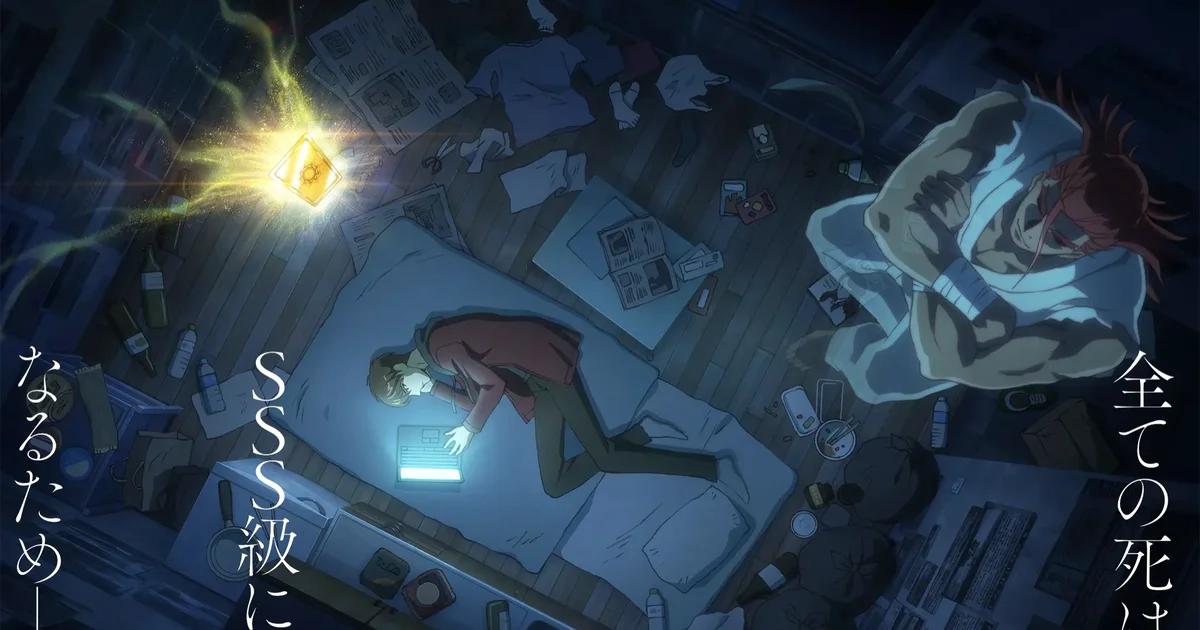
The Flame Emperor (rank #1, strongest hunter in the Tower) kills him before Confucius can think through what this means. This activates the copy skill. He copies the Flame Emperor's time-reversal ability, which rewinds time to before his death. He's alive again. The copy is permanent.
What follows is the series' core loop: Confucius identifies a skill worth having, engineers the circumstances of his own death, and walks away with the collected ability intact. Death is the resource. The Tower's strongest hunters are the suppliers.
This is genuinely clever. Most power-fantasy manhwa build strength through training or system upgrades. Revival Hunter builds strength through chosen vulnerability. Every death scene asks a different question than the usual genre formula.
The same series reviewed under its community title, with the full arc-by-arc breakdown:
SSS-Class Suicide Hunter Review
Confucius Kim: how the protagonist works
Confucius Kim starts the series as a nobody with a dangerous skill he doesn't fully understand. His early characterization is built around resentment: he watches the Tower's elite walk past him and wants what they have. This is a more honest emotional starting point than the usual "reluctant hero" framing. He doesn't pretend he isn't motivated by envy.
What changes across the first arc is how he relates to the skill. Initially he's reactive: the copy happens, he survives, he figures out what he acquired after the fact. As the series develops, he becomes strategic: identifying what skills are worth acquiring, working backward from what the Tower's power structure currently lacks, and engineering situations where a specific death becomes optimal. The shift from reactive to strategic is the character development spine.
His relationship with the Flame Emperor is the series' best character dynamic. The Flame Emperor (real name: Go Yeonsoo) is established as the single most powerful hunter in the Tower, and his casual assumption that Confucius is not a threat creates the dramatic irony that drives the first arc. When that assumption becomes untenable, the Flame Emperor's response is the measure of his own character.
The companion mechanic: Confucius Kim's unlikely mentor
The skill-copy premise is the headline, but the series has a second mechanic that most reviews treat as flavor and competitors generally gloss over: certain copied skills produce companion apparitions that only Confucius can perceive.
The most significant example arrives when Confucius copies a skill from the Sword Emperor. The Sword Emperor's real name is Bae Hu-ryeong, a legendary hunter whose swordsmanship earned him one of the Tower's top-tier titles. The copied skill, called Sword Constellation - Body, doesn't just transfer martial ability. It manifests Bae Hu-ryeong as a ghost that travels with Confucius through the Tower. Only Confucius can see or interact with him.
Bae Hu-ryeong chose to become Kim Gong-ja's teacher after observing one specific trait: his indifference toward death. A student who can die to a powerful enemy, rewind before the death using the time-reversal skill, and try again without hesitation is exactly the kind of student an old sword master finds worth investing in. He climbed to the 99th floor of the Tower when he was alive and holds the practical knowledge of someone who actually finished the ascent.
This creates a dynamic the series handles differently from most power-fantasy manhwa. Bae Hu-ryeong is a cranky, opinionated mentor who has definite views on how Confucius should develop. Their exchanges, visible only to Confucius, add humor and warmth that the skill-accumulation loop doesn't generate on its own.
For readers, the companion mechanic matters in ways the top-level premise doesn't signal:
It changes the emotional register. The death-copy strategy keeps Confucius in a cold, calculating mode. Bae Hu-ryeong introduces friction and personality that breaks the strategic coldness of the main loop. Readers who find the early arcs a bit mechanical often report that the Sword Emperor dynamic is what converts them to invested readers.
It grounds the power fantasy in a teacher-student structure. Confucius isn't building an isolated skill library. He's being shaped by someone who earned expertise the traditional way and has opinions about how Confucius deploys what he copies. The mentorship adds a layer to what would otherwise be pure accumulation.
It gives the series a long-term emotional arc. Bae Hu-ryeong's true body is in his sanctuary on the 99th floor, unreachable until Confucius climbs high enough. The series builds a quiet goal beneath the immediate arc objectives: reach the 99th floor, understand who Bae Hu-ryeong actually is, and resolve what meeting his true body means for both of them.
Reviewers who summarize the series as "die, copy skill, get stronger" are accurate but incomplete. The companion mechanic is where Revival Hunter earns its emotional register. Readers who come for the death premise tend to stay for the relationship.
Arc structure and chapter guide
Arc 1, The Flame Emperor Contract (chapters 1, approximately 50) The inciting arc. Confucius receives the copy skill and immediately dies to Go Yeonsoo. He acquires the time-reversal ability. The arc establishes the mechanic's strategic potential and introduces the Tower's top tier. The first arc is tightly constructed and ends with Confucius holding skills that rewrite his position in the hierarchy.
Arc 2, Climbing with a Collection (chapters 50, approximately 120) Post-acquisition complications. Other top hunters notice that Confucius has abilities he shouldn't have, and the political response to his growth becomes the primary narrative engine. New targets are introduced, each with a skill worth dying for and a reason that dying to them is strategically complex. This arc is where the "skill loop becoming predictable" criticism most applies, but also where Bill K's art for power interactions is strongest.
Arc 3 onward, Upper Tower Politics (Chapter 120, 151, Season 4 end) The later arcs move Confucius into direct conflict with the Tower's institutional structures. The series shifts from individual skill acquisition to factional maneuvering: Confucius is now powerful enough that the people he acquired skills from have an interest in how he develops. Season 4 concluded at Chapter 151. The series entered a scheduled hiatus before Season 5 with no confirmed return date as of August 2026. The original web novel by No-A Sin is complete at 400 chapters and covers where the story goes from here.
How the Tower setting works
The Tower provides structure that the death mechanic needs to function. There is an established hierarchy (floor levels, ranked hunters, institutional power), which means Confucius is always climbing toward something visible. He knows exactly who has the skill he wants. The social architecture of the Tower makes the targets legible.
This matters because it transforms the series from "guy dies repeatedly" into something more strategic. Each arc involves Confucius identifying a target near the top of the Tower, researching their ability, positioning himself to die to them in a controlled way, and managing the fallout of having suddenly copied something he shouldn't have access to.
The Flame Emperor makes this complicated from the start. The rank #1 hunter does not simply accept that Confucius now has his time-reversal skill. The political tension of how the Tower's power structure reacts to Confucius growing stronger is where the series does its best work. He's not just collecting skills. He's reordering who has what, and the people losing their monopoly on specific abilities notice.
For comparison, Second Life Ranker uses a similar Tower-and-climb setup but with a legacy-inheritance structure rather than death-copying. The two series share an audience but solve different problems. Second Life Ranker's reading guide covers the distinction in detail if you want to compare before starting either.
The skill accumulation problem
Most die-to-gain-power series treat skill acquisition as a power fantasy ramp. SSS-Class Revival Hunter does something slightly different: it makes the growing collection a political liability.
Once Confucius starts holding abilities that only certain hunters should have, those hunters notice. The series doesn't let him collect in a vacuum. Each new skill is simultaneously a power upgrade and evidence that he survived something he shouldn't have survived. The Tower's ranked hunters aren't slow to ask how a low-ranked hunter suddenly carries abilities belonging to the top tier.
This creates a structural complication the series handles well: Confucius has to manage perception alongside power. Too many visibly copied skills mean questions he can't answer safely. The strategic calculus isn't just "what skill do I need" but "what can I demonstrate knowing this without revealing where I got it." It's a meaningful complication that distinguishes Revival Hunter from simpler iterations of the same premise.
The Flame Emperor's time-reversal is the linchpin because it gives Confucius the ability to retry failed strategies, but using it visibly would reveal exactly what he took from the rank #1 hunter. The series is careful about when and how that ability gets displayed, which sustains tension well into arcs where Confucius has already acquired multiple other abilities.


Art and pacing
Bill K's art is consistent across what the series demands. Combat sequences are choreographed clearly, with multiple skill activations readable at speed without becoming muddled. The copied abilities each have a distinct visual language: the Flame Emperor's time-reversal looks different from what Confucius copies later, which matters for a series where the growing skill collection needs to feel like accumulation rather than abstraction.
The pacing follows a strategic-death rhythm. Setup phases (Confucius researching and positioning) alternate with death and acquisition phases. Neither outstays its welcome. The series doesn't linger on the deaths themselves. The emotional weight is in the calculation, not the impact.
Where the pacing shows strain is in the predictability of that pattern. Once you understand the formula (target identified, death engineered, skill acquired), each arc resolves through the same structure. The variables change (who has which skill, what the acquisition costs socially and politically) but the beat progression is consistent. Readers who want genre surprises will find fewer of them here than in, say, SSS-Class Suicide Hunter's loop mechanics, which complicate the formula more aggressively.
For readers who want more variation in the death-mechanic premise:
Manhwa Like SSS-Class Suicide Hunter
Which edition should you read?
Because the title split runs along edition lines, picking a title is really picking an edition. Here is how the releases compare.
Tapas (English digital, official). The primary way to read in English. 154 episodes as of August 2026, released under the Revival Hunter title. Tapas uses a coin/wait system: early episodes are free, recent ones unlock over time or with coins. Translation quality is consistent, and Season 5 will land here first in English.
Ize Press print (English physical, official). Yen Press's manhwa imprint began releasing print volumes in October 2024 under the Revival Hunter title, with 5 volumes out as of mid-2026. Print trails the digital release by a wide margin, but the oversized full-color format suits Bill K's skill-effect art better than a phone screen does.
KakaoPage / Kakao Webtoon (Korean, original). The source publication. Ahead of the English release and unaffected by the Tapas seasonal schedule.
The web novel (complete). No-A Sin's original novel runs to 400 chapters and is finished. The manhwa's Chapter 151 sits near the novel's midpoint, so the novel is the only way to know how the story ends today. If you search for the novel, both titles surface: older fan translations of the novel used Suicide Hunter, which is where the community name originated.
One practical note: because most recommendation lists and Reddit threads still say SSS-Class Suicide Hunter, searching that name plus "Tapas" is the fastest way to confirm you are looking at the same series and not missing some second title.
For readers who have finished the available chapters, the best system fantasy manhwa list covers the wider genre territory with series that hit the same competence-accumulation notes.
When Will SSS-Class Revival Hunter Resume?
No official Season 5 date has been announced as of August 2026. Season 4 concluded at Chapter 151 and the series entered its scheduled seasonal break, the same pattern it has followed since 2020.
This is structural, not a distress signal. Each season of Revival Hunter has operated on a release-then-hiatus cycle. The gaps run longer than a month but the series has returned consistently across all four seasons. It is not abandoned or cancelled.
What is confirmed: an anime adaptation, announced September 9-10, 2026, premiering January 2027 on Crunchyroll. Studio Fu is producing, Hiroaki Sakurai is directing, and Takeo Otsuka voices Confucius Kim. The manhwa's own Season 5 return date remains unannounced; the anime and the next manhwa season are separate, unrelated timelines.
For the fastest update, check the SSS-Class Revival Hunter Tapas page directly, Season 5 announcements post there first. If you want to read the full story before the manhwa catches up, No-A Sin's web novel is complete at 400 chapters. For alternatives in the meantime, manhwa like SSS-Class Revival Hunter covers the six closest reads by mechanic and tone.
SSS-Class Revival Hunter Season 5: the hiatus and what to do now
Season 4 ended at Chapter 151 and the series entered a scheduled seasonal break before Season 5. As of June 2026, no official return date has been announced on Tapas or the official Korean channels.
The scheduled-break format is how the manhwa has operated across its seasons since 2020. Each season concludes, a gap follows, then publication resumes. The gaps have historically been longer than a single month. Revival Hunter is not an abandoned or cancelled series; the hiatus is structural, not a distress signal.
During the wait, there is a read-ahead option: the original web novel by No-A Sin is complete at 400 chapters and covers the full story the manhwa is adapting. The manhwa's current position at Chapter 151 corresponds to roughly the midpoint of the novel. Readers who want to know how the story resolves before Season 5 lands can use the novel as a spoiler-forward companion. The novel and manhwa diverge in detail and pacing, but the core narrative follows the same arc.
For tracking updates: the SSS-Class Revival Hunter Tapas page posts Season 5 announcements when they happen.
SSS-Class Revival Hunter in 2026: worth starting on an open-ended run?
The hiatus question shapes whether now is the right time to start. Here is how to think about it.
If you only read completed series: the manhwa is not there yet, but the source web novel is. No-A Sin's original is finished at 400 chapters and covers the full story. Read the novel now, or wait for the manhwa to close the gap season by season.
If you're fine with ongoing series and seasonal breaks: 151 chapters is a substantial run before the hiatus wall. The first three seasons alone justify the time investment if the premise works for you. You won't hit the break immediately; there's enough content to establish whether the series clicks before you catch up to the current stopping point.
If you want to read the full story now: the web novel is the path. No-A Sin's original runs to 400 chapters and the story is complete. The manhwa's visual treatment is excellent, but the novel is there for readers who want resolution rather than a wait.
The honest recommendation: start at Chapter 1, read through Arc 1. If the Flame Emperor's death doesn't land as a strategic inversion by Chapter 10, the series isn't for you. If it does, 151 chapters gives you enough before Season 5 becomes a question.
SSS-Class Revival Hunter review: verdict
Advertisement
The Good
- The death-as-investment premise is a genuine strategic innovation, every death Confucius chooses is a calculation, which creates narrative tension the genre doesn't usually generate from "character loses a fight"
- Six years of reader retention (64,000+ AniList users since 2020) reflects a series that earns its audience rather than burning them on a single gimmick
- Bill K's art gives copied abilities distinct visual signatures, so the growing skill collection feels like accumulated power rather than abstract numbers
- The Tower hierarchy creates political stakes that scale with Confucius's growing strength: he's not just collecting abilities, he's restructuring who owns what in a social system that has opinions about that
The Cons
- The dual-title situation (Revival Hunter officially, Suicide Hunter in the community) still sends new readers hunting for a second series that doesn't exist
- The skill-collection loop becomes predictable once the pattern is established: target identified, death engineered, skill acquired; the variables change but the beat progression stays consistent
- Season 4 ended at Chapter 151 and the series is on hiatus before Season 5; no return date confirmed, which means an indefinite wait if you catch up
The ongoing status is not a deduction. That's a disclosure. Readers who need an ending today have the completed 400-chapter web novel; everyone else gets 151 strong chapters and a seasonal wait.
Start at chapter 1. The first arc establishes the mechanic clearly and sets the Flame Emperor as a credible antagonist. If the premise doesn't click by chapter 15, it won't. If it does, the Tower has considerable depth to explore.
Rating: 7.5/10
Frequently Asked Questions
Is SSS-Class Revival Hunter worth reading?
Yes for Tower-based manhwa readers who want a death mechanic with real strategic logic. The death-copy premise is well executed and the Tower hierarchy gives the series structure. Season 4 ended at Chapter 151; the series is on hiatus before Season 5 with no confirmed return date as of August 2026.
Is it the same series as SSS-Class Suicide Hunter?
Yes. Same series, two English titles. Revival Hunter is the official title on Tapas and the Ize Press print release; Suicide Hunter is the fan-translation title the community still uses. AniList lists Suicide Hunter as an official synonym of the same entry. Same protagonist, same chapters, same hiatus.
Where do I read it?
Tapas for English digital (154 episodes as of August 2026). KakaoPage and Kakao Webtoon for Korean. Ize Press, a Yen Press manhwa imprint, has 5 English print volumes, with Vol. 1 released October 2024.
How many chapters?
Tapas lists 154 total episodes as of August 2026. Season 4 concluded at Chapter 151 with additional episodes through the season close bringing the total to 154. The series is on hiatus before Season 5. The original web novel by No-A Sin runs to 400 chapters if you want to continue the story ahead of the manhwa.
Is it completed?
No. Season 4 concluded at Chapter 151 and the series is on scheduled hiatus before Season 5. No return date has been announced as of August 2026. The original web novel by No-A Sin is complete at 400 chapters if you want to read ahead. Check the SSS-Class Revival Hunter Tapas page for the latest update.
What is the revival mechanic?
Confucius copies the skill of whoever kills him, then uses the first copied skill (the Flame Emperor's time-reversal) to rewind before the death. He keeps all copies permanently. Each death is a deliberate investment.
Related Reading
- SSS-Class Revival Hunter Anime Release Date: January 2027: the confirmed anime adaptation, cast, and studio details.
- SSS-Class Revival Hunter Reading Guide: arc breakdown and pacing guide for the series.
- SSS-Class Revival Hunter Characters: The Full Cast Guide: every hunter and guild leader verified against AniList.
- Second Life Ranker Review: Tower-and-legacy manhwa for readers who want the same setting, no death mechanic.
- Best System Fantasy Manhwa: Full genre list including series in the competence-accumulation space.
- Manhwa Like SSS-Class Revival Hunter: For readers who finished this series and want more in that territory.