
TL;DR: The best manhwa for anime fans, matched to what you already watch: Solo Leveling for SAO/Overlord fans, Tower of God for HxH fans, Blue Lock for Haikyuu fans, God of High School for Naruto/DBZ fans. Each pick includes why the comparison works, not just that it does.
Overview
Manhwa and anime share more structural DNA than the format difference suggests. Both developed in parallel with shonen manga, both leaned into tournament arcs, power scaling, and ensemble casts at roughly the same historical moment. The main difference is format: manhwa reads vertically on a phone screen, in full color, in weekly chapter drops rather than 24-minute episodes.
For anime fans, that format difference is the biggest adjustment and the quickest one. After one chapter of Solo Leveling or Tower of God, the vertical scroll becomes automatic. The storytelling logic, the pacing beats, the way emotional stakes build across chapters, these feel familiar because they come from the same genre traditions.
The harder question is which manhwa to start with. Anime fandom is genuinely fractured by taste. A Death Note fan and a Haikyuu fan want completely different things, and handing them the same manhwa recommendation produces two bad results. This list is organized around anime you already know, not around manhwa genre labels. The matching logic is based on narrative structure, protagonist type, and tonal register, not just surface-level genre tags.
Nine series. Each one earns its placement by scratching a specific itch that a specific anime created, not by being the most popular manhwa in aggregate. If you already know which anime on this list you loved, you know which section to start from.
Key Takeaways
The best manhwa for anime fans sorted by what you already watch: Solo Leveling if you're into SAO or Overlord, Tower of God for HxH fans, Blue Lock for Haikyuu fans, God of High School for Naruto/DBZ fans, Omniscient Reader's Viewpoint for Re:Zero/Steins;Gate fans, and four more. Each pick below includes the closest anime equivalent and what makes the comparison accurate.
Anime fans who try manhwa for the first time usually hit one of two walls: they don't know what to read, or they don't know how to read it. The format difference is real (manhwa is vertical scroll, full color, built for mobile) and it takes about ten minutes to adjust. After that, the storytelling logic is close enough to anime that the transition is mostly painless.
The harder problem is finding the right starting point. Anime fandom is fractured by taste. Someone who loves the psychological tension of Death Note has no use for a recommendation built for someone who loved My Hero Academia. The picks below are matched to anime archetypes, not genres, which is a more accurate filter.
Nine manhwa. Each one earns its spot because it scratches a specific itch that specific anime created.
Best manhwa for anime fans: how manhwa reading works
Advertisement
Manhwa published on WEBTOON and Tapas is formatted as a single vertical strip per episode. You scroll down continuously, rather than turning pages. Most titles are in full color, which is standard rather than a premium feature. An episode typically takes five to eight minutes to read, roughly equivalent to watching a short anime clip.
The WEBTOON platform carries the largest English library and is the best starting point. Tapas carries some titles not on WEBTOON, particularly licensed imports.
If you've been reading right-to-left manga, the shift to vertical scroll takes a single chapter to get used to. If you've only ever watched anime, there's effectively nothing to unlearn.
Our manhwa with anime adaptation list covers titles that already made the jump to the screen.
Manhwa with Anime Adaptation 2026 →
For SAO / Overlord Fans: Solo Leveling
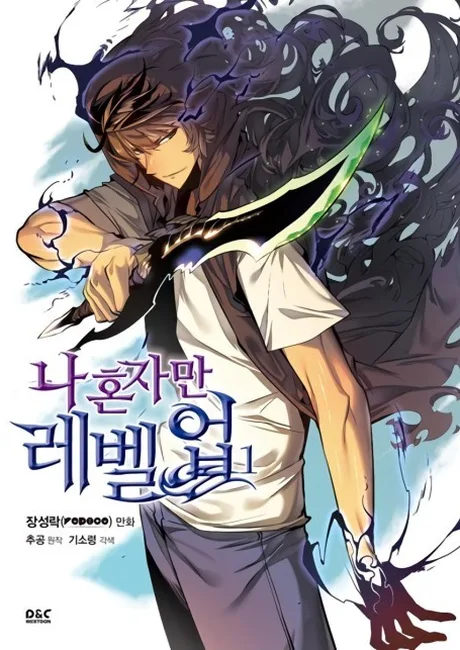
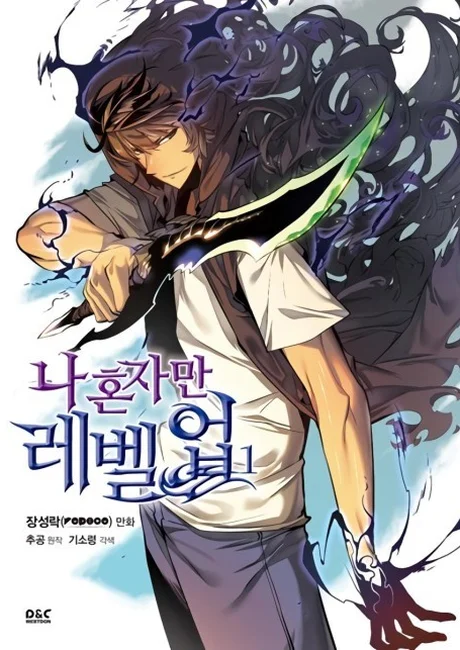 Solo Leveling cover.
Closest anime: Sword Art Online (Season 1), Overlord
Sung Jin-Woo starts the series as the weakest hunter in a world where humans fight monsters through magical gates. He's so underpowered that his hunter rank is essentially the equivalent of level-one fodder. What follows is a systematic dismantling of that starting condition. The series is built around the satisfaction of watching someone accrue power with full awareness of how power works. He doesn't stumble into strength; he engineers it.
That's the Overlord angle: an already-thinking protagonist using a broken ability set methodically. The SAO connection is more structural: the game-mechanics overlay on a fantasy-adjacent world, the solo protagonist dynamic, the sense that ordinary social rules have been suspended by a higher-order danger.
Solo Leveling is also the easiest entry point for anime fans because it got a full anime adaptation in 2024. You can watch the first season to calibrate your expectations, then read from chapter one forward. The manhwa is significantly further along in the story.
See our full Solo Leveling review for a breakdown of where the series peaks and where it overextends.
For Hunter x Hunter Fans: Tower of God
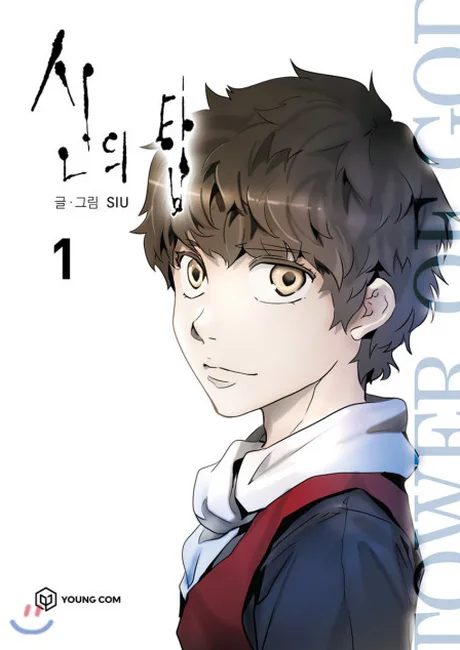
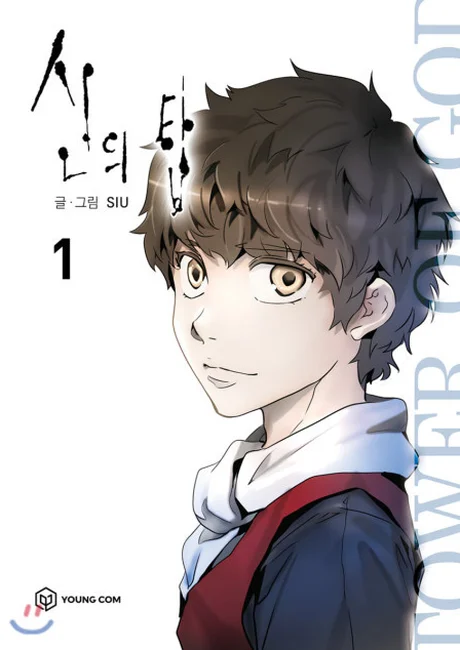 Tower Of God cover.
Closest anime: Hunter x Hunter (Greed Island and Chimera Ant arcs)
Twenty-Fifth Baam enters a tower to follow someone he loves. The tower has floors, each with its own set of tests. Passing a test means advancing. The people running the tower are not neutral arbiters.
The HxH comparison is structural, not tonal. Tower of God does what HxH's best arcs do: it takes an apparently simple objective (climb the tower, clear the exam) and reveals, progressively, that the rules of the game are more complicated than anyone told you. Characters have agendas that aren't disclosed for dozens of chapters. Alliances form and dissolve. The power system has internal logic that the narrative respects.
The series is over 600 chapters as of 2026 (currently on hiatus following the Season 3 finale in February 2025, with no dated return yet), and early chapters have rougher art than what it becomes. If you pushed through Chimera Ant's slower setup chapters, Tower of God's pace won't surprise you. Our Tower of God review covers which arcs land and which ones stall.
For Haikyuu / Kuroko's Basketball Fans: Blue Lock
Closest anime: Haikyuu!!, Kuroko's Basketball
Blue Lock takes everything that sports anime does with psychology (the inner monologue mid-play, the breakdown of what makes a specific player elite, the rivalry structure) and turns the dial to an extreme. The premise: 300 high school strikers are put through an experimental program where only one will survive to represent Japan. Losing means being banned from the national team forever.
Haikyuu is about collective growth. Blue Lock is about ego as a competitive asset. The series argues that the best striker in the world has to be slightly selfish, willing to take the shot when passing is safer. This isn't nihilism. It's a genuine structural argument about what makes an athlete elite, and it runs the argument honestly rather than resolving it cheaply.
If you found Kuroko's Basketball satisfying but thought its protagonists were too self-effacing, Blue Lock is the inversion. Isagi Yoichi is not modest by disposition; he becomes the protagonist by outthinking opponents in real time, not by being the purest soul in the room.
For a full rating and whether Season 3 makes this a good time to start, see the Blue Lock review. Manhwa like Blue Lock has more options if you burn through this one and want the next one already lined up.
For Naruto / Dragon Ball Z Fans: God of High School
Closest anime: Naruto, Dragon Ball Z (specifically the tournament arcs)
Three high schoolers enter a martial arts tournament where winning means having any wish granted. The early chapters play the premise straight: it's a fighting tournament with clean match structures and escalating opponents. Then it opens up into something considerably stranger involving Korean mythology, divine power systems, and a scale that eventually dwarfs anything the original tournament implied.
The DNA is unmistakably Shonen Jump-adjacent: friendship as combat fuel, rivals who push each other to impossible heights, power-ups that arrive in response to emotional crisis. The difference is that God of High School's mythological layer gives the power escalation a specific cultural register rather than the generic medieval-fantasy backdrop that Naruto uses for its endgame.
The God of High School anime exists (2020, 13 episodes) but cuts enormous amounts of the mid-series content. The manhwa is the version worth reading.
Our master manhwa reading list covers the top 30 titles across every genre for 2026.
Best Manhwa to Read in 2026 →
For Re:Zero / Steins;Gate Fans: Omniscient Reader's Viewpoint
Closest anime: Re:Zero, Steins;Gate
Kim Dokja is the only reader of a web novel that has just ended. Then the world transforms into the exact apocalypse scenario described in that novel. He knows every plot point, every character's hidden motivation, every monster's weakness. He is, structurally, a spoiler walking through a story.
The Re:Zero parallel: a protagonist carrying knowledge that the people around him can't access, forced to watch events unfold knowing more than he should. The Steins;Gate parallel: a character whose advantage is specifically informational (not strength, not magic, but knowing what the narrative will do next).
The more interesting question Omniscient Reader poses isn't "does the knowledge help him survive" (it does) but "what does it cost a person to treat everyone around them as characters in a story they've already read?" The series runs that question through the latest listed Episode 308 without fully resolving it, which is the right call; WEBTOON currently displays a "will return" notice during the season break.
Our Omniscient Reader's Viewpoint review goes into the structural choices in more depth.
For Demon Slayer Fans: Return of the Blossoming Blade
Closest anime: Demon Slayer: Kimetsu no Yaiba
Return of the Blossoming Blade is set in a fictionalized version of the Joseon period, historical Korea, with a distinctive visual style that draws on traditional Korean ink painting more than the generic fantasy aesthetic most action manhwa defaults to. The protagonist is a disgraced swordsman who returns from exile to find his family's sword school destroyed.
The Demon Slayer connection is emotional tone and aesthetic register, not plot structure. Both series invest in the specificity of their visual world: Demon Slayer in its color and pattern language, Return of the Blossoming Blade in the restraint of its historical palette. Both treat grief as the primary driver of combat motivation, which produces fights with actual stakes underneath the choreography.
If what you liked about Demon Slayer was the weight of what Tanjiro was fighting for rather than the spectacle itself, Return of the Blossoming Blade is the closer match. For pure spectacle, there are flashier options. The Return of the Blossoming Blade review has more on the series' pacing in its second half.
For Death Note Fans: Bastard
Closest anime: Death Note
Bastard is a psychological thriller about Jin Seon, a high school boy living with the family of his father, a serial killer. The premise is immediately uncomfortable: Jin is complicit by silence, and the manhwa doesn't let him off easily.
The Death Note connection is the cat-and-mouse dynamic and the dark tonal register, not the supernatural mechanics. Bastard is a realistic thriller. There are no shinigami. The horror is specifically the horror of proximity to someone who hurts people methodically, and the question of where moral responsibility begins when you've stayed quiet.
It's shorter than most manhwa on this list (92 chapters), which means it doesn't overstay its premise. If Death Note's second half felt like diminishing returns on its central concept, Bastard's tighter scope avoids that problem. Best dark manhwa has further options in the same psychological register.
For Re:Zero / Classroom of the Elite Fans: A Returner's Magic Should Be Special
Closest anime: Re:Zero, Classroom of the Elite
Desir Herrman survives the apocalyptic Shadow Labyrinth (the only survivor out of six party members) and wakes up thirteen years in the past. He knows exactly which choices led to the world's destruction. The series is about using that knowledge systematically rather than emotionally.
This is not a regression story where the protagonist immediately goes berserk on everyone who wronged him. Desir's advantage is strategic planning, and the series takes that seriously: he thinks in systems, not in revenge arcs. The Classroom of the Elite parallel is the cold-rationalist protagonist who functions within institutional structures while pursuing outcomes the institution hasn't considered. The Re:Zero parallel is the weight of knowing what goes wrong and being unable to prevent everything.
A Returner's Magic review → | Reading guide → | Season 2 anime (Crunchyroll 2026) → | Manhwa like A Returner's Magic is the natural next read after finishing it.
For Attack on Titan Fans: Sweet Home
Closest anime: Attack on Titan
Cha Hyun is a depressed high schooler who moves into a new apartment building and then watches, over the following days, as people around him begin transforming into monsters. The transformation mechanic is specific: it's driven by desire, and different desires produce different monster types. The building becomes a survival situation with a shrinking group of survivors, each carrying their own reasons to despair.
The AoT connection is the horror-survival structure and the particular moral weight that comes from watching transformation as a metaphor for losing someone you knew. AoT uses the Titans to externalize a specific kind of societal violence; Sweet Home uses its monster mechanic to externalize psychological collapse. Both take their horror seriously rather than using it as set-dressing for action scenes.
Sweet Home has a Netflix live-action series (2020-2024, three seasons), though it deviates substantially from the source material in the second season. The manhwa version runs the central metaphor more completely.
For more in this register, the best manhwa for anime fans starting point has a broader list of accessible entry points across genres.
Best manhwa for anime fans: where to read
Advertisement
Most of these titles are on WEBTOON in English: Solo Leveling, Tower of God, God of High School, Blue Lock (via the WEBTOON Canvas or official Naver partners), Omniscient Reader's Viewpoint, Sweet Home, and Bastard. Return of the Blossoming Blade and A Returner's Magic Should Be Special are also available through WEBTOON's platform or licensed publishers.
Tapas carries several of these as well, particularly titles with simultaneous release schedules. Both platforms have free tiers that cover dozens to hundreds of chapters before requiring fast-pass credits.
Frequently Asked Questions
Is manhwa different from manga?
Yes. Manhwa is Korean, manga is Japanese. The most visible difference is format: most manhwa published after 2014 uses vertical scroll (read top to bottom on a phone or browser), while manga uses right-to-left horizontal page turns. Manhwa is also almost always in full color, while most manga is black and white. How do I read manhwa on my phone?
Download the WEBTOON app (free, iOS and Android) or the Tapas app. Both are designed for vertical scrolling on mobile. Most of the manhwa on this list are available on WEBTOON. Scroll down continuously. Don't tap to turn pages. The format feels completely natural after one chapter. What's the best free option for reading manhwa?
WEBTOON offers the first several dozen chapters of almost every title for free, including Solo Leveling, Tower of God, and God of High School. Older completed series are often fully free. Newer chapters require waiting (the 'fast pass' system lets you pay to read ahead, but the free queue catches up within a week or two). Which manhwa on this list is most like Naruto or Dragon Ball Z?
God of High School is the closest match. It's a martial arts tournament series with over-the-top fights, character-defining power-ups, and the same escalating-stakes structure as Shonen Jump classics. The mythology scale eventually exceeds both Naruto and Dragon Ball, though the early chapters are more grounded. Do I need to know anything about Korea to enjoy manhwa?
No. The settings vary widely: some are fantasy worlds with no real-world equivalent, some are Korean high schools, some are historical. Cultural references are typically context-obvious (a school hierarchy, a military rank system), and the translated versions on WEBTOON and Tapas handle localization well. You will not be lost. Which manhwa has the best anime-level action scenes?
Solo Leveling got a full anime adaptation in 2024 that you can watch first if you prefer. For pure reading impact, God of High School and Tower of God handle action sequences in ways that the panel-by-panel format actually suits better than animation. The pacing is yours to control, and the color work in fight scenes is high-end. Is Solo Leveling worth reading if I already watched the anime?
Yes. The manhwa covers substantially more story than the first anime season, and the art in the later arcs (particularly Sung Jin-Woo's battles in the 200-plus chapter range) goes beyond what the anime has adapted. If you stopped at season one, the manhwa picks up exactly where it left off.
Related Reading
- Manhwa with Anime Adaptation 2026 →
- Solo Leveling review
- Tower of God review
- Blue Lock review
- Manhwa like Blue Lock
- Eleceed anime: release date and studio
- Eleceed reading guide
- Eleceed review
- A Returner's Magic Season 2 (Crunchyroll 2026)
- ORV reading guide (novel vs manhwa)
- Best Manhwa to Read in 2026 →
- Best manhwa school romance: 7 series sorted by theme: Curated picks: Best manhwa school romance: 7 series sorted by theme.
- Best Manhwa Like Black Clover: 7 Series Worth Reading: Top manhwa picks for fans of Black Clover.
- Best Manhwa Like Bleach: 7 Picks That Deliver 2026: Top manhwa picks for fans of Bleach.
- Manhwa like Classroom of the Elite: 6 series to read next: Top manhwa picks for fans of Classroom Of The Elite.
- 6 manhwa like Death Note for psychological thriller fans: Top manhwa picks for fans of Death Note.
- Manhwa Like Doctor Elise: 9 Picks Worth Reading Now: Top manhwa picks for fans of Doctor Elise.
- 7 manhwa like Hunter x Hunter, sorted by what works: Top manhwa picks for fans of Hunter X Hunter.
- Manhwa Like Jujutsu Kaisen: 8 Series Worth Reading: Top manhwa picks for fans of Jujutsu Kaisen.
- Manhwa Like Kingdom: 7 Picks for Strategy and War Fans: Top manhwa picks for fans of Kingdom.
- The Best manhwa like Mob Psycho 100: 6 Thematic Picks: Top manhwa picks for fans of Mob Psycho 100.
- Best manhwa like Nana: 6 picks for adult drama readers: Top manhwa picks for fans of Nana.
- Manhwa Like The Promised Neverland: Top Dark Picks: Top manhwa picks for fans of The Promised Neverland.
- Manhwa Like Wind Breaker: Crew, Found Family, and Fights: Top manhwa picks for fans of Wind Breaker.
- manhwa like Your Lie in April: 5 picks that deliver: Top manhwa picks for fans of Your Lie In April.
- Reformation of the Deadbeat Noble Review: Rated 7.5/10
References
- WEBTOON official platform: English library including Solo Leveling, Tower of God, God of High School, and Sweet Home
- Tapas manhwa and webcomics: alternative licensed platform with overlapping and exclusive titles