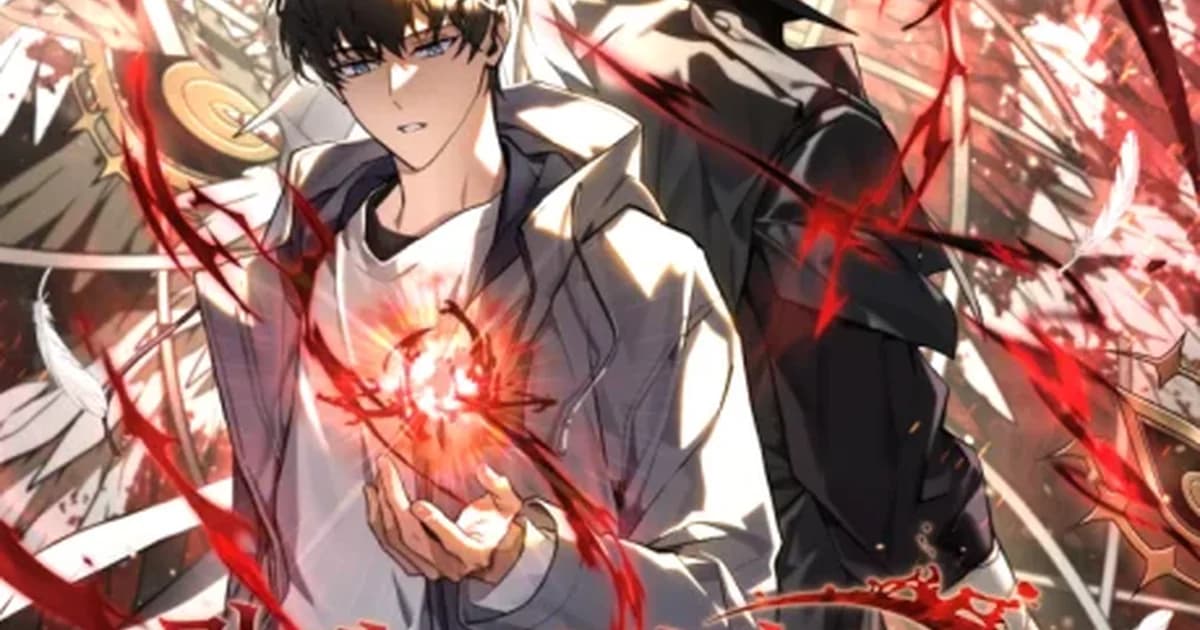


A Returner's Magic Should Be Special review starts with the structural premise, because the premise is the reason to read it and the reason to have reservations.
TL;DR: A Returner's Magic Should Be Special review: 7/10. AniList lists 268 finished chapters, while Tapas and Tappytoon currently display 269 platform entries. The premise is the case for reading it: Desir uses foreknowledge to develop classmates, not to become individually OP. Early arcs are strongest. Season 2 premieres October 7 on Crunchyroll.
Tapas access note: Tapas ends service on March 31, 2027 at 23:59 PT, so unlocked episodes will not be accessible after that date; see the official Tapas update.
Recent updates:
- October 1, 2026: Season 2's confirmed October 7 Crunchyroll premiere replaces the older October-only window; subtitle time and dub timing remain TBA.
- October 1, 2026: Fuji TV's live staff listing and official music notices confirm Arvo Animation, FLOW's Sorrow, and krage's Everlasting.
- October 1, 2026: AniList's 268-chapter record is distinguished from the 269 entries displayed by the live Tapas and Tappytoon editions.
Desir Arman was one of six mages who reached the final floor of the Shadow Labyrinth, humanity's last stand against extradimensional threats called Shadow Worlds. The party failed. Everyone died. Desir woke up 13 years in the past as a teenager retaking the entrance exam for Hebrion Academy, carrying full memory of the apocalyptic future.
The regression is standard. What's not: Desir's advantage isn't raw power. It's knowledge of who becomes powerful. He recruits and develops the undervalued classmates he knows will matter, before anyone else recognizes them. His regression value is organizational, not personal. He's not trying to become OP himself. He's trying to build a team that can win a war he already watched humanity lose.
That structural choice (team-builder regression instead of solo wish-fulfillment) is the most distinctive thing in the regression genre. Nothing else in the space commits to it this consistently.
Key Takeaways
- A Returner's Magic Should Be Special review: 7/10, distinctive premise, inconsistent execution
- Team-builder regression is the genre niche: Desir develops others, not himself
- Tappytoon for English digital; Yen Press physical (Vol. 6 out 2026)
- Season 2 anime: October 7, 2026, Fuji TV +Ultra, Crunchyroll, Arvo Animation
- Strong first ~100 chapters; pacing issues in mid-run arcs; series recovers
- Manhwa: 268 chapters, completed June 2024; source novel: completed August 2019 (8 volumes)
Overview
A Returner's Magic Should Be Special is a completed Korean manhwa recorded by AniList at 268 chapters, written by Usonan with art by Wookjakga, published by D&C Media and licensed in English by Yen Press. The live English platform pages currently display 269 entries on Tappytoon and Tapas. Physical volumes are published through Yen Press. The original light novel source is a separate work available in Korean on KakaoPage.
The premise: Desir Arman was one of six mages who reached the final floor of the Shadow Labyrinth, humanity's last stand against extradimensional threats. The party failed and he woke up 13 years in the past as a teenager retaking the entrance exam for Hebrion Academy. The regression is not unusual. What is: Desir's advantage is not raw power but knowledge of who becomes powerful. He recruits and develops undervalued classmates he knows will matter, before anyone else recognizes their potential. The series sits at the intersection of regression manhwa and academy drama, aimed at readers who want strategic team-building over solo wish-fulfillment escalation. A Season 2 anime from Arvo Animation was confirmed for Crunchyroll in 2026 and now premieres October 7, making it a strong time to read ahead.
 A Returner's Magic vol 4 cover. The team-builder premise is visible in how Desir is drawn: with his team, never alone.
A Returner's Magic Should Be Special review: art and story
Advertisement
Wookjakga's art is competent and consistent across the run without being visually distinctive. Character designs are readable and the academy setting is rendered cleanly, but the art rarely calls attention to itself as a strength. The magic battle sequences use the circle-tier system's visual logic adequately without achieving the kinetic clarity of the genre's best action art. The overall visual presentation suits the material without elevating it.
Narratively, the story's strongest structural feature is its team-building premise: Desir's foreknowledge accumulates as organizational intelligence rather than personal power, making the ensemble carry genuine dramatic weight. The academy social hierarchy (an alpha class for talented nobles and legacy students, a beta class for everyone else) frames the early arc's tension through demonstration of overlooked capability rather than argument about fairness. Shadow Worlds, the series' dungeon-run mechanic, are well-constructed in the early chapters but grow formulaic across the mid-run, where 30-plus chapter stretches with repetitive structures reveal the pacing's limitations. The romantic arc has consistency problems. The magic system's tier distinctions remain deliberately vague throughout, undermining the intellectual combat framing. Later arcs recover by expanding the political scope and revealing the true nature of the Artemis System and the Outsiders faction.
A Returner's Magic Review: Team-Builder Premise
Most regression manhwa operates on one engine: protagonist goes back in time, uses future knowledge to become personally stronger, eventually becomes the most powerful thing alive. Solo Leveling, The Beginning After the End, even Omniscient Reader's Viewpoint's Kim Dokja trends this direction: the foreknowledge accumulates into individual dominance.
 Solo Leveling.
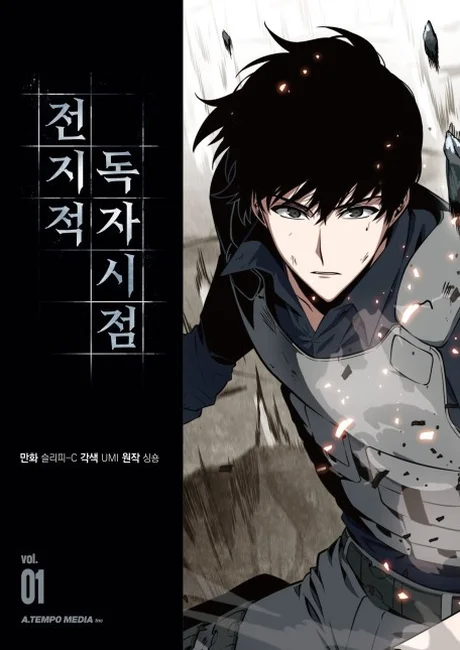 Omniscient Reader'S Viewpoint.
Desir's foreknowledge accumulates differently. He knows Romantica is capable of more than her initial ranking suggests. He knows Pram will develop into something exceptional with the right training. He knows Adjest's ice magic has potential her current instructors aren't drawing out. His first move every arc isn't acquiring a new skill: it's identifying who needs development and creating the conditions for it.
The practical effect: the party actually carries weight. This is unusual. Ensemble casts in regression manhwa tend to exist as support structures for the protagonist's personal growth. In ARMSSBS, the ensemble is the strategy. Desir without his team isn't the answer to anything.
The social structure of Hebrion Academy (an alpha class for talented nobles and legacy students, a beta class for everyone else) frames the first arc's tension. Desir is placed in beta. His classmates are the overlooked and underestimated. The elitism critique lands without moralizing partly because Desir's method is demonstrating capability rather than arguing about fairness.
The magic system
The system uses a circle-based hierarchy that quantifies mana capacity (First Circle through higher tiers). Desir's specific ability is Analysis Magic: he can deconstruct and counter opponent spells in real time, reading cast sequences faster than they complete. He's not the highest raw-mana user. He wins through tactical dissection.
The problem is the circle tier system is never clearly explained. What the difference between First and Second Circle means in terms of combat capability, how wide the gap between tiers is, what specifically makes Desir's magic "special" in the title's sense: these remain vague across the run. Multiple readers have flagged it. It's not a misunderstanding of the series; the vagueness is in the writing.
For a series that wants its combat to feel intellectual, this is a significant gap. The magic battles read as strategic without the reader being able to independently verify the logic. You have to trust the framing rather than follow the math.
Shadow Worlds, the second major mechanic, are more clearly constructed: recreations of historical events generated by an in-world AI construct (the Artemis System) that have corrupted and begun encroaching on reality as black fog that kills anything entering it. Clearing a Shadow World requires completing its historical scenario. The mechanic generates the series' dungeon-run arcs and is well-executed in the early run.
Arc structure and pacing
The early arcs (roughly chapters 1 through 100) are the series' strongest case for itself. The premise is demonstrated clearly: Desir uses foreknowledge to navigate the academy social structure, develops his team through specific training arcs, and clears Shadow Worlds that the original timeline's beta class couldn't handle.
The mid-run complications are where ARMSSBS shows its pacing limitations. Several Shadow World arcs extend for 30+ chapters with a repetitive structure: enter the Shadow World, establish historical stakes, work through the scenario, exit with some party growth. The gaps in narrative escalation are visible. The series is doing filler in a way its best arcs don't.
The romantic arc adds to this: tension between Desir and one character builds across the first hundred chapters in ways that feel like setup for something, and resolves with a different character without the groundwork having been laid. It's not a dealbreaker but it reads as a structural inconsistency rather than a deliberate misdirection.
The series does recover. Later arcs introduce the broader political structure and the true scope of the Shadow World threat: specifically what the Artemis System is and how the Outsiders faction connects to the apocalyptic future Desir is trying to prevent. The scale expands in ways that justify the slower middle.
For how A Returner's Magic sits in the broader regression and isekai genre:
Best Isekai Manhwa →


Comparisons
Against Solo Leveling: both use Korean hunters and system-adjacent mechanics. The structural difference is complete. Solo Leveling's Jinwoo is an isolation story: his growth separates him from everyone else. ARMSSBS is a cohesion story. The comparison in terms of art quality doesn't favor ARMSSBS; the Redice Studio work on Solo Leveling is the visual benchmark the genre hasn't matched.
Against Omniscient Reader's Viewpoint: both use foreknowledge as the core mechanic. ORV's Kim Dokja has meta-narrative knowledge (he read the entire story); Desir has lived-experience knowledge (he survived the future once). ORV is rated higher by most readers who've read both, largely because its pacing is more consistent and the ensemble gets more room to develop. They're doing different things with the same basic tool.
Against The Beginning After the End: reincarnation rather than regression (a king reborn as an infant in a magic world). Both have school arcs and power scaling. TBATE has more systematic world-building; ARMSSBS has more interesting team dynamics. Late-arc pacing problems appear in both. The Beginning After the End review
The team-builder regression niche ARMSSBS occupies is genuinely not claimed by any other major series. That's worth something.
The anime: Season 1 and Season 2
Season 1 aired October 8 through December 24, 2023, produced by Arvo Animation (director Taishi Kawaguchi, scripts Takamitsu Kouno). 12 episodes on Crunchyroll. IMDb score: 6.7. Anime News Network arithmetic mean: 6.527. The reception was mixed, viewers found it visually competent but pacing-compressed in ways that lost the early character work.
Season 2 was announced at New York Comic Con in October 2025. It now premieres October 7, 2026, with Fuji TV listing a Wednesday 24:45 JST broadcast on +Ultra and Crunchyroll listing the international simulcast. Crunchyroll's lineup leaves subtitle time and dub timing TBA and regional availability can vary. Fuji's official listing names Arvo Animation, director Taishi Kawaguchi, series composition by Takamitsu Kouno, and character design by Hiromi Katou. FLOW performs the opening theme Sorrow, while the official anime site lists krage's Everlasting as the ending theme.
The October 7 date matters for readers deciding when to start. The complete manhwa gives readers a finished story, but official production sources do not publish a Season 2 chapter endpoint. Read the licensed edition for the full context, then use the full Season 2 breakdown for confirmed release and platform details.
Reading ahead of Season 2: Season 1 established Desir's return to Hebrion Academy, the alpha/beta class conflict, and the early Shadow World premise. Season 2 continues that story on October 7. The anime sources do not confirm the chapter endpoint or cour structure, so this review does not assign a speculative range or promise how much of the completed manhwa will be animated.
For a ranked overview of all 2026 manhwa anime adaptations:
Manhwa with Anime Adaptations in 2026 →
 Season 2 premieres October 7, 2026. Fuji TV lists Arvo Animation; Crunchyroll lists the international simulcast.
A Returner's Magic Should Be Special review: verdict
Advertisement
The Good
- Team-builder regression is the genre's most distinct structural niche: Desir develops others, not himself
- 268 chapters complete, the full story with a conclusive ending, no wait required
- Season 2 anime premieres October 7, 2026: ideal timing to read ahead of the adaptation
- Early academy arcs (roughly chapters 1-100) are tight, well-paced character work with genuine ensemble investment
- Social commentary on elitism lands through demonstration of capability, not argument
The Cons
- Mid-run Shadow World arcs extend for 30+ chapter stretches on a repetitive formula
- The circle-tier magic system is never clearly defined: power comparisons require trusting the framing rather than following the math
- Romantic arc resolves in a direction the early setup does not cleanly support
- Art is competent and consistent but not visually distinctive by the genre's standards
7/10. A Returner's Magic Should Be Special earns this score through one thing done genuinely well: it's the only major regression manhwa that commits to a team-builder structure. Desir's foreknowledge is organizational rather than personal, and the series makes that premise work across its strongest arcs.
The deductions are real: the magic system's vague tier hierarchy, the mid-run pacing issues, the romantic arc inconsistency. These prevent the series from sitting with the genre's best work. But they don't undermine the premise itself, and the later arcs recover enough of what the early chapters established.
For readers who've exhausted Solo Leveling, ORV, and TBATE and want regression manhwa doing something structurally different: this A Returner's Magic Should Be Special review recommends it. It doesn't match those series on execution. It does something they don't.
For more system-fantasy manhwa where the protagonist deliberately chooses the hardest path:
Manhwa Like The Tutorial Is Too Hard →
Frequently Asked Questions
Is A Returner's Magic Should Be Special worth reading?
Yes, particularly if you want regression manhwa with a different structure. The team-builder angle is the genre niche nothing else occupies.
What's the rating?
7/10. Distinctive premise, inconsistent execution, worth reading.
How different is it from Solo Leveling?
Structurally opposite. Solo Leveling isolates its protagonist through power. ARMSSBS integrates its protagonist through team development.
Where can I read it?
Tappytoon (digital English). Yen Press (physical English volumes, Vol. 6 out 2026).
Is Season 2 confirmed?
Yes. October 7, 2026, on Fuji TV's +Ultra and Crunchyroll. Fuji lists Arvo Animation, director Taishi Kawaguchi, series composition by Takamitsu Kouno, and character design by Hiromi Katou. Crunchyroll's subtitle time and dub timing remain TBA.
How long is it?
AniList lists 268 chapters and FINISHED status. Tapas and Tappytoon currently display 269 entries in their English editions. The source novel is a separate work.
What does Season 1 of the anime cover?
Season 1 ran in 2023 on Crunchyroll and covered Desir's return to Hebrion Academy and the early academy arc establishing his team and the Shadow World mechanic. Reception was mixed: visually competent but compressed. Season 2 picks up from that story and premieres October 7, 2026; official sources do not publish its chapter endpoint.
Should I read the manhwa or wait for Season 2?
Read the manhwa if you want the complete story. AniList lists it as FINISHED at 268 chapters, while the live English editions display 269 platform entries. If you prefer to follow the anime first, Season 2 arrives October 7 on Crunchyroll, but no official source confirms how far into the manhwa it will go.
Related Reading
- A Returner's Magic Should Be Special Reading Guide: Arc breakdown and what each season covers for new readers.
- Manhwa Like A Returner's Magic Should Be Special: Seven picks that share the regression mechanic and high-stakes setting.
- Best Completed Manhwa: Ranked list of finished series across system fantasy, murim, and romance.
References
- A Returner's Magic Should Be Special on Tappytoon
- A Returner's Magic Should Be Special on Tapas
- A Returner's Magic Should Be Special official anime site
- Crunchyroll Fall 2026 lineup
- Fuji TV Season 2 listing
- FLOW official Sorrow announcement
- Official anime site, krage ending theme announcement
- A Returner's Magic manhwa on AniList
- Yen Press: A Returner's Magic Should Be Special
- Wikipedia: A Returner's Magic Should Be Special
- Anime News Network: Season 2 announcement