Loading…
ChapterBrief · Reviews
Omniscient Reader's Viewpoint Novel Review: 9.0/10
Omniscient Reader's Viewpoint novel review: 9.0/10. The complete 551-chapter web novel, why the ending lands, and when to switch from the manhwa.

Reviewing
Omniscient Reader's Viewpoint
singNsong · Munpia / Naver Series
9.0
Score
9.0/ 10
MunpiaNaver Series
Pros
- Foreknowledge-that-runs-out premise is structurally unique: Kim Dokja's advantage is finite and he knows it
- Meta-fictional layer (man inside a story he alone read) sustains tension across the full run in a way raw power escalation cannot
- Ensemble cast with proper arcs: Yoo Joonghyuk, Lee Hyunsung, and Jung Heewon all carry independent weight
- The ending resolves on its own terms and is widely reported as one of the genre's most satisfying conclusions
- Constellation system gives the apocalypse an audience, which flips the survival stakes into something stranger and more interesting
Cons
- Mid-run arc pacing thins out around chapters 80-120 in the manhwa, where the scenario structure starts repeating before the story finds new angles
- The manhwa Season 1 concluded at 311 chapters (May 2026), Season 2 on hiatus. Readers who want the full story need the web novel
- Art quality in crowd scenes and background work is uneven; Sleepy-C's character designs are strong but the apocalyptic scenery varies
Verdict
ORV earns its reputation through structural decisions most system fantasy manhwa never attempt: a protagonist whose advantage is temporary, an ensemble that actually matters, and an ending that delivers.
This Omniscient Reader's Viewpoint novel review covers the complete 551-chapter web novel by singNsong, the version with the ending. For the manhwa adaptation as its own work (Sleepy-C's art, Season 1's 311 chapters), see our Omniscient Reader's Viewpoint manhwa review. This page reviews the story as singNsong wrote it, and answers when to switch from the manhwa to the novel.
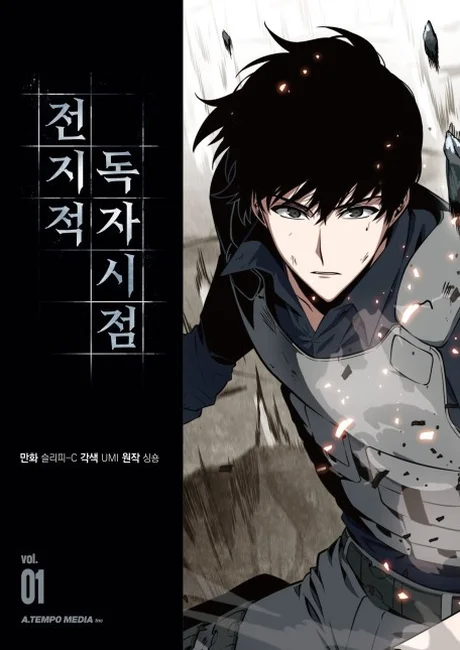 Omniscient Reader's Viewpoint, art by Sleepy-C.
Kim Dokja is the sole reader of a web novel called Three Ways to Survive in a Ruined World. Not "one of a few" or "one of the fans": the literal only person who finished it. When the world of that novel becomes reality and the apocalypse begins, he is the only living human who knows how the story is supposed to go.
That's the starting point. Here's the complication: his foreknowledge is bounded by what the author wrote, and reality is already diverging. His advantage is not omniscience. It is specifically the text of a finished novel that a world is imperfectly reproducing. The expiration date on his edge is structural, not dramatic. It was built into the premise from chapter one.
Rating: 9.0/10
Omniscient Reader's Viewpoint novel review: key takeaways
- Omniscient Reader's Viewpoint novel review: 9.0/10. The genre's best structural bet, and the only version with the full ending
- Kim Dokja's foreknowledge is finite, bounded by what was written, not by what will happen
- Constellation system: beings from other dimensions watch the apocalypse as entertainment and sponsor humans they find interesting
- Web novel is complete (551 chapters); manhwa Season 1 concluded at 311 chapters (May 19, 2026), Season 2 on hiatus. Full story requires the web novel
- Ensemble cast (Yoo Joonghyuk, Lee Hyunsung, Jung Heewon) carries genuine weight, not just backdrop
- Ending resolves the meta-fictional premise on its own terms, with no late-run abandonment of the setup
- Available on WEBTOON (English) and Naver (Korean)
Overview
Omniscient Reader's Viewpoint (ORV) is a Korean manhwa adaptation of a completed web novel by singNsong, with art by Sleepy-C, serialized on Naver Webtoon and available in English on WEBTOON. The web novel source is complete in Korean with fan translations in English; the manhwa Season 1 concluded at 311 chapters on May 19, 2026, with Season 2 on hiatus (no return date announced). Readers who want the full story need the web novel. Season 1 covers roughly the first half of the novel. Both are worth engaging with: the novel for narrative completeness, the manhwa for Sleepy-C's character rendering and constellation visuals.
The premise sits at the intersection of system fantasy and meta-fiction. Kim Dokja is the sole reader of a web novel called Three Ways to Survive in a Ruined World. When the world of that novel becomes reality and the apocalypse begins, he is the only living human who knows how the story is supposed to go. His advantage is not omniscience. It is specifically the text of a finished novel that a world is imperfectly reproducing. Reality diverges from the script. His foreknowledge has a structural expiration date. The series uses this to generate a kind of tension that standard system fantasy cannot: Kim Dokja is simultaneously more prepared than anyone alive and aware that his preparation has a hard limit he cannot calculate precisely. The constellation system, where beings from other dimensions watch the apocalypse as entertainment and sponsor humans they find interesting, adds a second layer of absurdism beneath the survival stakes. For system fantasy readers who want foreknowledge as a depleting asset rather than a compounding one, ORV is the genre's best structural argument.
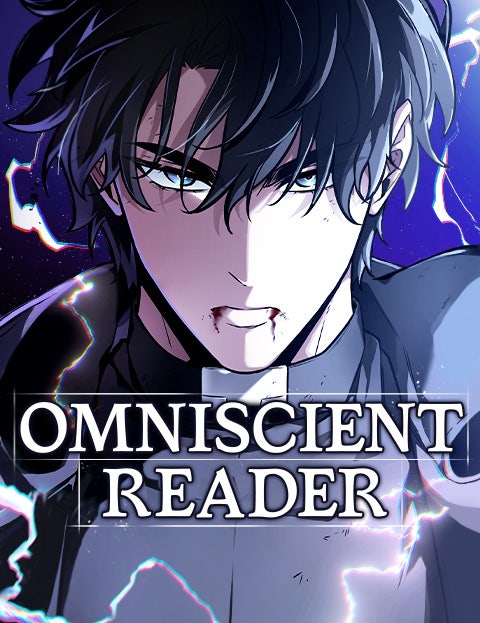 ORV's premise, a reader living through the novel he finished, is visible in every visual choice Redice Studio makes.
Omniscient Reader's Viewpoint novel review: the foreknowledge that runs out
Advertisement
Most system fantasy manhwa that features a protagonist with future knowledge treats that knowledge as a permanent advantage that compounds over time. The hero knows the dungeon layout, knows who the villain is, knows which skills to acquire first. The foreknowledge is a ceiling, not a floor. The character starts powerful and gets more powerful.
ORV inverts that. Kim Dokja's foreknowledge is not a compounding asset. It is a depleting one. He knows the plot. He knows the major arcs. But the plot is built for Yoo Joonghyuk (the novel's actual protagonist, the regressor, the chosen one) and the presence of Kim Dokja in the story is already a deviation. He's a variable the author never wrote. Every chapter that passes is a chapter closer to the point where his knowledge runs out entirely and he is operating on inference and desperation.
This matters mechanically. In most system fantasy, the protagonist's information asymmetry creates confidence: they know what's coming, they prepare, they win. In ORV, Kim Dokja's information asymmetry creates anxiety. He knows what was supposed to happen. What's actually happening is something different. He is simultaneously more prepared than anyone else alive and aware that his preparation has a hard limit he cannot calculate precisely.
The tension this generates is different from standard power-escalation tension. It does not erode with familiarity the way "protagonist who always wins" tension does. By the time Kim Dokja is strong enough that individual combat is not a concern, the foreknowledge gap has become the primary source of dramatic pressure. The story trades one kind of tension for another without stopping.
This is what separates ORV from the strongest titles in the system fantasy field. Not better execution of the standard premise: a structurally different premise that produces different kinds of stakes.
Our best action manhwa list covers top titles for fans of meta-narrative and apocalyptic stakes.
Best Action Manhwa 2026 →
The Constellation System and Why It Works
The apocalypse in ORV is not just a disaster. It is a performance. Beings from other dimensions (constellations, named after mythological figures, historical entities, gods across various traditions) watch the apocalypse as entertainment. They sponsor humans they find interesting. They grant power in exchange for compelling scenarios. The survival scenarios humanity is running are, from another angle, content.
This system has more structural leverage than it initially appears. The constellation mechanic creates two simultaneous power dynamics: the human survival hierarchy (who is strong enough to clear scenarios) and the constellation patronage hierarchy (who is interesting enough to earn sponsorship). These do not always align. A tactically brilliant survivor who bores their constellation is in trouble. A physically modest survivor who runs scenarios that constellations find compelling can punch above their raw strength.
Kim Dokja's constellation is Secretive Plotter. The relationship between them is not the typical patron-client dynamic, and unpacking why is one of the series' sustained revelations. The short version: Secretive Plotter's investment in Kim Dokja is not standard.
The system also adds tonal dimension. The apocalypse is real and the casualties are real. The constellations are real entities with genuine power. But the fact that they are watching, and that their entertainment preferences can be manipulated, means the story has a layer of absurdism running below the tragedy. Kim Dokja occasionally uses this deliberately. The scenarios where he performs for the constellation audience specifically to earn resources read differently from standard power-fantasy combat sequences.
For a detailed breakdown of where this constellation approach fits against other foreknowledge systems in the genre, the Second Life Ranker review covers the other major foreknowledge-plus-dead-relative structure in comparable depth.
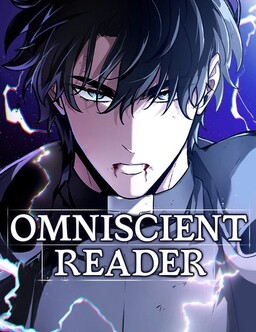 Season 1 ended May 2026, making this the right moment to read it as a completed arc.
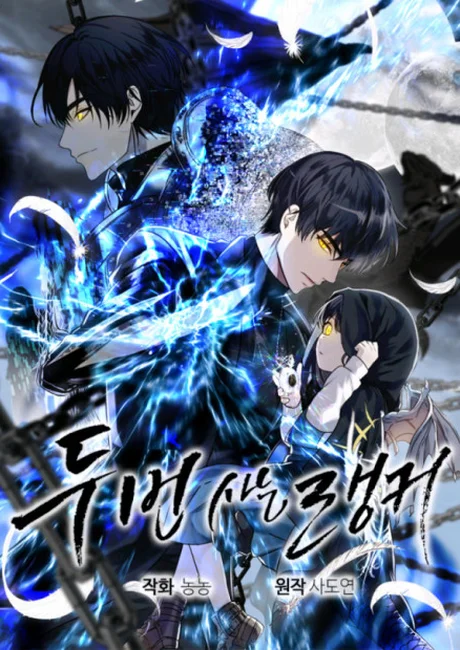 Second Life Ranker.
The Cast: Kim Dokja Is Not a Solo Protagonist
The comparison that comes up most for ORV is Solo Leveling, which is accurate for genre positioning but misleading about character structure. Solo Leveling is explicitly a solo protagonist story: the ensemble around Sung Jinwoo exists to observe him. Kim Dokja's ensemble exists to act independently of him.
Yoo Joonghyuk is the clearest case. He is the protagonist of the novel Kim Dokja read: the regressor, the one the story was supposed to center on. He is not a sidekick. He is not a rival in the tournament-arc sense. His arc runs parallel to Kim Dokja's through the full series, and by the later chapters, his independent actions and motivations carry as much weight as the nominal protagonist's. By around chapter 100, the power relationship between them has shifted substantially from where it started, and both characters have changed because of the other's presence in ways neither could have prevented.
Lee Hyunsung and Jung Heewon both receive development beyond "loyal party members." Heewon in particular has arc beats in the mid-run that resolve on her terms, not Dokja's. The story uses its large cast to run multiple emotional threads simultaneously, which produces a reading experience that does not feel like waiting for the protagonist to return to the page.
Kim Dokja himself is the most interesting part. He is powerful, increasingly so. He is also self-destructive in a way the story does not frame as cool. His tendency to sacrifice himself, to treat his own survival as the least important variable in any equation, is a character flaw the other cast members actively push back against. The series does not let him aestheticize it. This is unusual in the genre. Protagonists in system fantasy are usually coded as admirable even when their choices are bad. Dokja's self-erasure tendency is legible as a problem because the people around him treat it as one.
This ensemble dimension is what makes ORV comparable to manhwa that do character-driven system fantasy well. The list of titles that attempt it at this scale is short.
Art & Story
Sleepy-C's character designs are the strongest element of the manhwa visually. Kim Dokja's design (unremarkable physique, perpetually reading or scrolling, nothing that signals conventional protagonist status) is a deliberate choice that the art maintains consistently. Yoo Joonghyuk looks like a protagonist because he is the protagonist of the novel Kim Dokja read. The visual contrast between them is built into the casting, and it works.
The constellation designs are the art's high points. The representation of these entities (translucent, scaled wrong for human spaces, occupying visual frames rather than the panels themselves) communicates their observer status without over-explaining it. The scenes where constellations appear in proximity to human characters have a visual grammar that distinguishes them from standard ability-summoning sequences in other manhwa.
Background work and crowd scenes are inconsistent. This is a common limitation in manhwa produced at serialization pace, and ORV is not worse than the genre median, but it is noticeable against the character-focused panels where the detail is clearly concentrated. The apocalypse setting requires environmental sell-through that the art manages in focal moments and sometimes doesn't in transitional ones.
The web novel and the manhwa are meaningfully different reading experiences for the same story. The novel has interiority the manhwa cannot reproduce in the same space. Kim Dokja's internal commentary on the gap between what was written and what is happening is a significant part of the source text's texture. The manhwa translates this into visual storytelling with varying fidelity. Neither is a substitute for the other.
Our best completed manhwa list covers finished series for readers ready for Omniscient Reader's full arc.
Best Completed Manhwa →
Verdict
Advertisement
Omniscient Reader's Viewpoint earns its position through structural decisions most system fantasy manhwa never attempt. The foreknowledge premise is not just a flavor choice: it is the engine of the series' tension, and it produces different dramatic machinery than the standard regression or system-ranking structures that dominate the genre. The ensemble actually functions as an ensemble. The ending, available now through the completed web novel, resolves the meta-fictional premise on its own terms.
The mid-run pacing issues are real. There are stretches in the 80-120 chapter range where the scenario structure repeats before the story finds the next angle. The manhwa Season 1 concluded at 311 chapters (May 2026) and does not reach the novel's conclusion. Season 2 is on hiatus. Readers who want the complete story need the web novel.
Those are real limitations. Against the structural ambition and the execution of the core premise, they do not change the rating.
9.0/10. The best system fantasy premise currently running in the genre.
Related Reading
- Omniscient Reader's Viewpoint Reading Guide: Season 1 arc breakdown, novel vs manhwa comparison, and where to start.
- Omniscient Reader's Viewpoint Character Guide: AniList-verified names for Kim Dokja, Yoo Joonghyuk, the party, constellations, and antagonists.
- SSS-Class Revival Hunter Review: The closest structural companion: another protagonist with unique foreknowledge navigating high stakes.
- Best Completed Manhwa: Ranked list of finished series including where ORV sits against other completed titles.
References
- Omniscient Reader's Viewpoint on WEBTOON (English)
- Omniscient Reader's Viewpoint on AniList
- Best System Fantasy Manhwa: Full Ranked List
- Manhwa Like Omniscient Reader's Viewpoint: 8 Picks
- Second Life Ranker Review
Frequently Asked Questions
Is Omniscient Reader's Viewpoint worth reading?
Yes. ORV is one of the genre's strongest entries specifically because it uses foreknowledge differently from other regression or system fantasy titles. Kim Dokja's advantage is explicitly finite (he read the story, not infinite future knowledge) and the story never forgets that. The ending, known to English readers through the completed web novel, is widely considered one of the genre's most satisfying.
What is the Omniscient Reader's Viewpoint novel review score?
This review rates the Omniscient Reader's Viewpoint web novel 9.0/10. The meta-fictional structure, the ensemble development, and the ending quality push it above most system fantasy titles. The mid-run pacing issues and the incomplete manhwa (Season 1 done, Season 2 pending) prevent a perfect score.
How is ORV different from Solo Leveling?
Solo Leveling is a pure solo escalation story. ORV's Kim Dokja starts with knowledge, not power, and that knowledge has a hard limit: what the author wrote. When reality diverges from the text, his advantage erodes. The emotional stakes in ORV are also substantially higher, because Kim Dokja's self-destructive tendencies and his relationship with the cast produce arc resolutions that Solo Leveling's structure cannot match.
Do I need to read the web novel or can I just follow the manhwa?
The manhwa Season 1 concluded at 311 chapters (May 2026) and has not reached the novel's ending. Season 2 is on hiatus with no return date. If you want the complete story, you need the web novel. The web novel is complete in Korean and has fan translations in English. The manhwa covers roughly the first half of the novel with Sleepy-C's art.
Who is the constellation Secretive Plotter?
Secretive Plotter is Kim Dokja's constellation, the entity from another dimension who sponsors him. The connection between them is more complicated than the standard patron-client relationship, and unpacking it is one of the series' sustained revelations.
What is the constellation system in Omniscient Reader's Viewpoint?
Constellations are beings from other dimensions who observe the apocalypse as entertainment and sponsor humans they find interesting. A sponsored human gains attributes, skills, and power in exchange for providing compelling scenarios. The system creates dual power dynamics: survival ranking and constellation patronage, which do not always align.
Is the Omniscient Reader's Viewpoint ending good?
The consensus from readers who finished the web novel is yes. It resolves the meta-fictional premise on its own terms and does not abandon the setup in favor of a standard power-fantasy conclusion.
How does Kim Dokja compare to Yoo Joonghyuk?
Yoo Joonghyuk is the protagonist of the novel-within-the-novel: the regressor, the chosen-one figure. Kim Dokja is the reader of that story. Their dynamic runs through the entire series, and the power relationship between them shifts substantially across the run. Joonghyuk is not a secondary character. He has a full independent arc.
About the author

Senior Manhwa Critic & Analyst
Manhwa critic and former Korean-to-English webtoon translator with 8 years reading across 40+ genres. London-based. Tracks everything from power-progression to slice-of-life romance.
- 8 years reading manhwa across 40+ genres
- Former Korean-to-English webtoon translator
- 500+ manhwa titles completed
- Specializes in progression systems and power-scaling analysis



Disclaimer
This article is published for informational and entertainment purposes. It does not constitute professional financial, legal, or technical advice. Series availability, platform access, translation status, and chapter counts change. Verify critical details (pricing, regional availability, official translation status) with publishers and platforms. Affiliate links, where present, help support our editorial work and are labelled in our affiliate disclosure.
Comments
Loading comments…