Loading…


ChapterBrief · Manhwa
Manhwa Like A Returner's Magic: 8 Picks for ARMS Fans
Manhwa like A Returner's Magic: 8 academy and regression picks ranked by strategic depth and party dynamics. TBATE is closest; ORV has the deepest lore.

manhwa like A Returner's Magic Should Be Special starts with a very specific reader problem: most regression manhwa give you a protagonist who powers up solo using future knowledge. ARMS gives you Desir, who uses that same foreknowledge to develop the people around him. That party-builder structure is the series' defining feature, and it changes what kind of recommendation actually works.
TL;DR: manhwa like A Returner's Magic: 8 picks ranked by how closely they match the strategic foreknowledge, party dynamics, and academy setting. The Beginning After the End and The Extra's Academy Survival Guide are the closest matches. ORV is the best if you want a higher emotional ceiling, though it's ongoing rather than finished.
Manhwa like A Returner's Magic: key takeaways
- ARMS's core appeal is regression used strategically in a party context, not solo power scaling
- Academy setting is central to the first half; party dynamics matter across the full 268 chapters
- Season 2 of the anime premieres October 2026 and covers later material (Episode 13 onward); readers coming from the anime want the same foreknowledge-as-strategy tension
- Closest matches have at least one of: academy setting, future foreknowledge used by a strategist, or party/team focus
Manhwa like A Returner's Magic: what fans look for
Before sorting these by closeness, it helps to break down what makes ARMS work. Three elements show up consistently in what readers cite when they describe why they stayed:
The foreknowledge-as-strategy dynamic. Desir doesn't just know which enemies appear -- he knows which classmates have potential they haven't discovered yet, which alliances will form, which turning points are coming. He acts on that knowledge by positioning people correctly before events force the issue. That's a different kind of power than "I know the boss's weak point."
The party investment. Desir's party members are characters with their own development trajectories that Desir is actively managing. When they grow, it's because he understood them in advance. That gives the ensemble more weight than in solo-protagonist regression stories.
The magic system. Spells in ARMS have layering rules, rune circle mechanics, and tier distinctions that the series expects you to track. The strategic sequences work because the system has internal logic.
Each pick below is ranked by how much of this it delivers.
1. The Beginning After the End
Advertisement
 The Beginning After the End by TurtleMe and Fuyuki23.
The Beginning After the End is the closest overall match to what ARMS does. Arthur, a king who dies and is reborn as a child with his full adult memories, approaches his second life the same way Desir approaches the Shadow World clearings -- using foreknowledge to position himself correctly before events arrive rather than reacting to them. The academy where he trains is central to the first third of the series, and the party dynamics that develop there carry through.
Where it pulls ahead of the comparison: Arthur's past-life memories include combat expertise that translates differently at different ages, which produces a more gradual ability reveal than Desir's. The emotional stakes are higher in the back half once the party relationships have time to develop.
Where it differs: TBATE is ongoing with no announced completion, so if ARMS's 268-chapter completed arc is part of the appeal, this requires patience. The childhood chapters early in the series are genuinely slow.
Reads on WEBTOON and Tapas in English.
Full review with arc breakdown and where the series stands in 2026:
A Returner's Magic Should Be Special Review →
2. The Extra's Academy Survival Guide
 The Extra's Academy Survival Guide.
The structural match here is the clearest on this list. Ed, an office worker reincarnated as a villain extra in a novel he read, knows exactly how the main story's events unfold and tries to survive by staying out of the protagonist's way entirely. That premise -- knowing the story in advance and using that knowledge as a survival tool rather than a power advantage -- sits very close to what Desir is doing.
The difference in execution is tone. The Extra's Academy Survival Guide is funnier than ARMS; Ed's survival strategy produces comedy from how hard he tries not to matter, and that's intentional. But underneath the humor the tactical logic is the same: anticipate events, position correctly, avoid the catastrophic outcomes you know are coming.
107+ chapters, ongoing. Available on WEBTOON in English with the daily pass.
3. SSS-Class Revival Hunter
 SSS-Class Revival Hunter.
SSS-Class Revival Hunter overlaps with ARMS on the regression mechanic specifically. Jinwoo Kim dies, copies his killer's ability, and resets -- which means every death is a potential skill acquisition and a chance to approach the same situation with more information. By the middle arcs he's operating with a bank of foreknowledge built from dying repeatedly, which produces a similar strategic-protagonist feel to ARMS even though the mechanism is different.
The ability that carries the series -- copy-by-dying -- is unusual enough that the story can run for 154+ chapters without exhausting the implications. The SSS-Class Revival Hunter review has the full breakdown, but the short version is that if the regression-as-strategy angle is what you want, this delivers it in a different setting with a higher body count.
Ongoing, season break mid-2026. Available on Tapas.
4. Academy's Genius Swordsman
 The Academy's Genius Swordsman.
Academy's Genius Swordsman shares the academy setting and the hiding-true-strength structure with ARMS. The protagonist, reincarnated with knowledge of how combat works at levels others around him haven't reached, deliberately underperforms to avoid political complications. The tactical layer comes from managing other characters' perceptions rather than from combat directly.
At 129 chapters and ongoing, it's earlier in its run than the others on this list. The academy scenes are well-developed and the political intrigue is tighter than ARMS's equivalent sections. Where it differs: the party dynamics are less central, and the series leans harder into individual swordsmanship than cooperative team-building.
Read the Academy's Genius Swordsman review for the rating and what the series does well.
Full reading guide with arc breakdown and where to start:
A Returner's Magic Should Be Special Reading Guide →
5. Omniscient Reader's Viewpoint
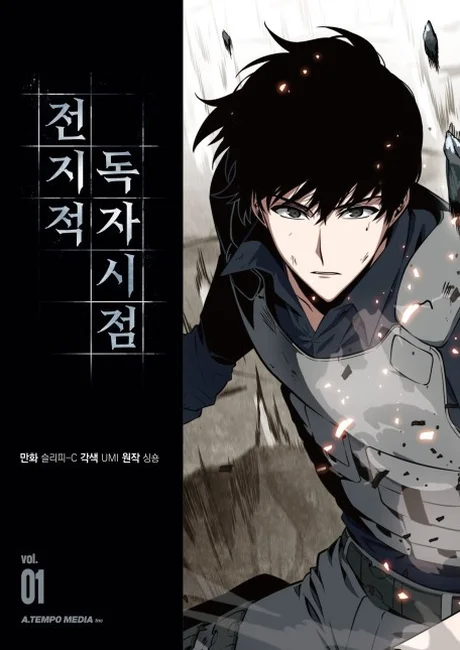 Omniscient Reader's Viewpoint.
ORV runs the foreknowledge angle in a way that complements rather than replicates ARMS. Kim Dokja is the only person who has read the web novel that has now become real life -- so he knows the scenarios, the characters, the outcomes. He uses that knowledge to maneuver through events while building relationships with the characters who are living through the story for the first time.
The emotional ceiling is higher here than in ARMS. The relationship between Dokja and the people he guides is built on an asymmetry -- he knows things about them they don't know about themselves -- and the series interrogates that asymmetry rather than just using it as a plot tool.
Ongoing, currently on hiatus around chapter 308. Available on WEBTOON. The Omniscient Reader's Viewpoint review covers why this is one of the stronger series in the subgenre.
6. Level Up With the Gods
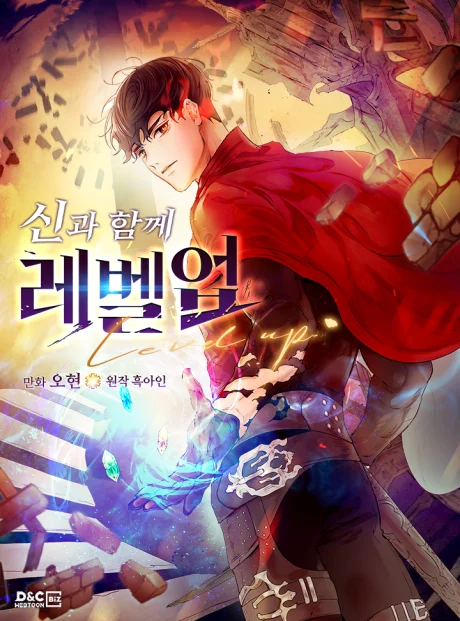 Level Up With the Gods.
Level Up With the Gods is primarily a tower regression series, but what distinguishes it from standard tower climbing is the mythology framework it builds around the system. Kim YuWon, who cleared the top of a tower in a future the reader never sees, returns to a point before the final catastrophe and has to clear it again with full knowledge of what's coming.
The God-tier beings are treated as actual figures from world mythology with their own internal logic, not just boss-encounter skins. That gives the system-exploration angle more weight than comparable series. At 167 chapters and ongoing, it's well into its second half on Tapas. It doesn't have an academy setting but the foreknowledge-used-strategically structure is the same.
7. Second Life Ranker
 Second Life Ranker.
Second Life Ranker starts from a different kind of foreknowledge: a twin brother's diary, which documents a tower run that ended badly. Yeon-woo doesn't have future-memory in the regression sense -- he's reading a record his dead brother left -- but the strategic effect is similar: he enters a system with information no one else has access to, and he uses it to plan several moves ahead.
The party dynamics develop as Yeon-woo assembles a team from connections his brother had, which gives the ensemble a slightly different quality than ARMS. At 222+ chapters and ongoing (Season 4 active in 2026), it's the deepest run on this list behind TBATE. Tapas carries the full series. The Second Life Ranker review has the rating and a more detailed arc breakdown.
8. The Extra's Academy Survival Guide vs. Damn Reincarnation
Advertisement

The eighth slot is conditional on what part of ARMS you most want to extend.
Damn Reincarnation is the better pick if you want the academy training and past-life memories angle specifically. The protagonist is reincarnated as a noble child with full memories of his previous life as a hero, and the series follows his training from the inside out -- building from fundamentals he already mastered once, at an academy where no one knows what he already knows. Season 3 begins in July 2026. The Damn Reincarnation reading guide has the arc summary and platform details.
The Extra's Academy Survival Guide is the better pick if you want the knowing-the-story tension -- but it's already at slot 2 on this list and can be skipped here if you've already started it.
Pick Damn Reincarnation if you burned through picks 1-3 and want another completed-arc training sequence. Otherwise, go back to TBATE and stay with it.
Related Reading
- A Returner's Magic Should Be Special Review -- full series review with verdict and rating; the 268-chapter completed arc breakdown
- A Returner's Magic Should Be Special Reading Guide -- where to start, arc structure, and which chapters each anime season covers
- The Beginning After the End Review -- detailed breakdown of why TBATE's regression premise works across its run
- The Extra's Academy Survival Guide Review -- rating and verdict on the closest structural match to ARMS's academy-foreknowledge premise
- Omniscient Reader's Viewpoint Review -- one of the strongest series in the foreknowledge subgenre, still ongoing
Frequently Asked Questions
What manhwa is most similar to A Returner's Magic Should Be Special?
The Beginning After the End is the closest overall match -- regression, foreknowledge used strategically, academy setting, and party dynamics that develop across the full run. If you specifically want the academy-foreknowledge structural match, The Extra's Academy Survival Guide is the tighter comparison.
What to read after the A Returner's Magic anime?
Start with The Beginning After the End for the most direct tonal match, then The Extra's Academy Survival Guide for the story-foreknowledge premise. Omniscient Reader's Viewpoint is the best choice if you want a higher emotional ceiling, though it's ongoing and currently on hiatus rather than finished.
Is ARMS finished?
Yes. The manhwa completed at 268 chapters and ended in June 2024. The original web novel also completed. The anime is a separate track: Season 1 (early arcs) aired in late 2023, and Season 2 premieres October 2026 covering Episode 13 onward.
What makes A Returner's Magic different from Solo Leveling?
ARMS uses regression foreknowledge to build up teammates, not to power up solo. Desir's advantage is applied outward -- positioning classmates correctly, developing their potential before events force the issue. That party-builder structure is what separates it from Solo Leveling's solo-protagonist framework.
Are there any completed manhwa like ARMS?
ARMS itself is the only completed academy regression manhwa in this group at 268 chapters. Omniscient Reader's Viewpoint might seem like the obvious completed pick given its scale, but it's still ongoing and currently on hiatus around chapter 308. SSS-Class Revival Hunter is the closest to finished, with Season 4 wrapping up its story.
Where can I read A Returner's Magic Should Be Special?
The manhwa is available on Tapas in English. Physical volumes are available through Ize Press. Season 1 of the anime (early academy arcs) aired in late 2023; Season 2 premieres October 2026 covering later material, and nothing new is streaming yet.
References
- A Returner's Magic Should Be Special on Tapas -- official English digital edition, full 268-chapter completed run
- A Returner's Magic Should Be Special anime on Crunchyroll -- Season 1 aired 2023 covering early arcs; Season 2 premieres October 2026 covering Episode 13 onward
About the author

Senior Manhwa Critic & Analyst
Manhwa critic and former Korean-to-English webtoon translator with 8 years reading across 40+ genres. London-based. Tracks everything from power-progression to slice-of-life romance.
- 8 years reading manhwa across 40+ genres
- Former Korean-to-English webtoon translator
- 500+ manhwa titles completed
- Specializes in progression systems and power-scaling analysis



Disclaimer
This article is published for informational and entertainment purposes. It does not constitute professional financial, legal, or technical advice. Series availability, platform access, translation status, and chapter counts change. Verify critical details (pricing, regional availability, official translation status) with publishers and platforms. Affiliate links, where present, help support our editorial work and are labelled in our affiliate disclosure.
Comments
Loading comments…