


A Returner's Magic Season 2 was confirmed at New York Comic Con in October 2025, with a 2026 premiere window announced for Crunchyroll. The official anime site and Crunchyroll's fall lineup now give the premiere date as October 7, 2026. FLOW returns for the opening theme. The confirmation came alongside a trailer that picked up immediately where Season 1 ended: Desir Arman back at Hebrion Academy, the Shadow Labyrinth looming in the background.
TL;DR: A Returner's Magic Season 2 premieres October 7, 2026 on Crunchyroll. It adapts the Commission Arc through the First Shadow World Arc (manhwa chapters 44-120). Season 2 is not accessible without Season 1 context. The manhwa is complete at 268 chapters on WEBTOON and Tapas.
Key Takeaways
- A Returner's Magic Season 2 confirmed at NYCC, October 2025
- Trailer released October 9, 2025, picking up immediately after Season 1
- October 7, 2026 premiere; Crunchyroll international streaming
- Season 1 covered manhwa chapters 1-43 (12 episodes, 2023)
- Manhwa completed at 268 chapters. No cliffhanger if you read ahead.
What Happened
Season 1 of A Returner's Magic Should Be Special aired in 2023 (12 episodes covering the first 43 chapters of the manhwa). The series follows Desir Arman, one of six survivors of an impossible Shadow World, who regresses in time to prevent the world's end. Armed with future knowledge, he re-enrolls at Hebrion Academy to build a better team than the one that failed.
Season 1 ends with the Promotion Competition arc. Desir's group completes the exam and earns standing at the Academy, but the structural problems behind the world's collapse are untouched. The season works as a proper Act One setup: characters introduced, stakes established, the larger threat still waiting.
A Returner's Magic Season 2 picks up at chapter 44. The next major arc is the Commission Arc, where the Academy sends students on real-world assignments outside the simulation framework. This is where the story's political dimensions start opening up: the faction systems, the gaps between noble and commoner students, and the machinery behind who actually controls Shadow World research. Chapters 47 through roughly 124 cover the Commission Arc, the Training Arc, and the First Shadow World Arc, which ends on a sequence manhwa readers have been waiting to see animated.
The manhwa completed at 268 chapters. The ending exists. If you read ahead of where Season 2 will land, you won't hit a cliffhanger mid-story.
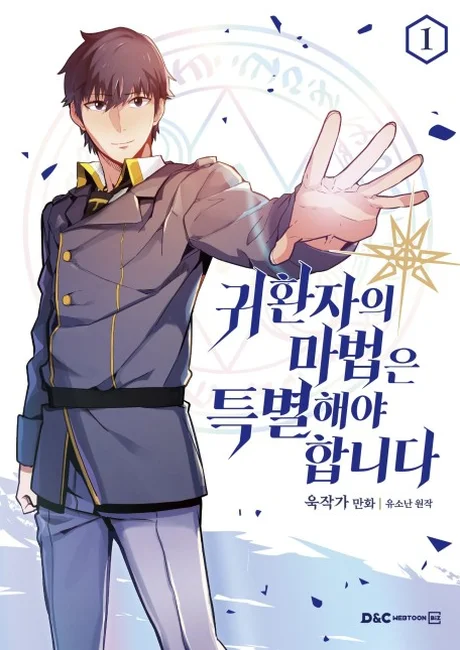 A Returner's Magic Should Be Special by Usonan, Season 2 continues where the acclaimed first season left off.
Crunchyroll's official Season 2 trailer, released August 21, 2026, showing Desir's group moving into the Commission Arc's real-world stakes.
Why it matters: A Returner's Magic Season 2
Advertisement
Season 1 had a specific pacing problem: too much world-building, not enough consequence. Everything was setup. The classroom scenes were functional, the combat was competent, but the series never let its stakes feel real. Desir knows the world ends. Season 1 never quite made you feel it.
A Returner's Magic Season 2's source material is different. The Commission Arc puts the cast in situations where failure has weight. The political structure of the world that Desir is trying to save becomes visible, and complicated. The story starts arguing with itself about whether a regression protagonist with future knowledge is actually in control, or just managing toward a worse ending more efficiently.
I'm cautiously interested. The first season showed the production could handle the adaptation mechanically. Whether they can handle the tonal shift in the later arcs is what A Returner's Magic Season 2 will show.
For manga and manhwa news in parallel, the Eleceed anime announcement and the Tomb Raider King anime are part of the same 2026 adaptation wave. A Returner's Magic Season 2 is one of the more interesting stories in this year's lineup, and the source material earns a better adaptation than Season 1 delivered.
For how the Tomb Raider King anime compares to its source across 11 episodes and 411 chapters, see Tomb Raider King Manhwa vs Anime: 11 Episodes, 411 Chapters.

 Tomb Raider King.
For where to read the manhwa legally if you want to get ahead of the adaptation, see where to read manhwa legally in 2026.
What changed from Season 1 to Season 2
The structural difference between the two seasons is not just a new arc. It's a change in what kind of story ARMS is.
Season 1 is a school arc. The central conflict is getting Desir's team (Romantica Eru, Pram Schneizer, and Adjest Kingscrown) trained and standing within Hebrion Academy's hierarchy. Desir's foreknowledge functions as a cheat code: he knows which disasters are coming, what spells work, which people to recruit. The Academy setting contains that advantage neatly. When your enemies are exam proctors and rival students, knowing the future means winning consistently.
Season 2 removes that container. The Commission Arc sends students into real-world situations: political disputes, military escorts, investigations into Shadow World anomalies that do not match Desir's memory. This is where his foreknowledge starts to fray. The future he remembers was shaped by different people making different choices. The timeline he's building isn't the same one he survived. Season 2 begins testing whether a regression protagonist's advantage degrades as his intervention compounds.
Three new characters get meaningful screen time in the chapters Season 2 will cover. Crow, a magic researcher working outside the Academy's formal structure, complicates Desir's read on who is actually working toward saving the world versus who is managing their own survival. The noble faction's internal politics become a speaking role rather than background texture. Adjest's family situation, which Season 1 gestures at without developing, becomes a plot thread with real weight.
One thing Season 2 does not do: restart. There is no recap buffer for viewers who skipped Season 1. The character relationships, the Academy's power structure, and the Shadow Labyrinth's symbolic function all carry over without re-explanation. Watching Season 2 without Season 1 will work on the level of basic plot comprehension and not much else. If you are coming in fresh, read the A Returner's Magic Should Be Special reading guide first, then start Season 1 on Crunchyroll.


Where to read A Returner's Magic Season 2
The anime has not aired yet, but the source manhwa is fully available. The complete 268-chapter run is on two legal platforms:
WEBTOON carries ARMS with a standard free scroll model: most chapters are available at no cost, with newer chapters requiring Fast Pass coins if you want same-day access. Given that Season 2 will adapt chapters 44-120, all of those chapters are well past any Fast Pass window and freely readable now.
Tapas also carries the series. The reading experience is similar to WEBTOON. Pricing varies by episode for premium chapters, but the same logic applies: anything Season 2 will cover is out of the premium window.
Reading pace recommendation for Season 2 source material: chapters 44-120 are not light reading. The Commission Arc spans roughly 50 chapters and the political structure of the world expands considerably. Plan for two to three sittings if you want to get through it in a week. The First Shadow World Arc (starting around chapter 100) is where the story's pacing tightens and the chapters start moving faster. Once you hit that section, the momentum carries.
The anime will almost certainly compress. Season 1 adapted 43 chapters in 12 episodes. At a similar compression ratio, Season 2's expected chapter range (44-120, roughly 76 chapters) would land in the 18-22 episode range. Whether that comes as a single longer season or a split cour has not been announced.
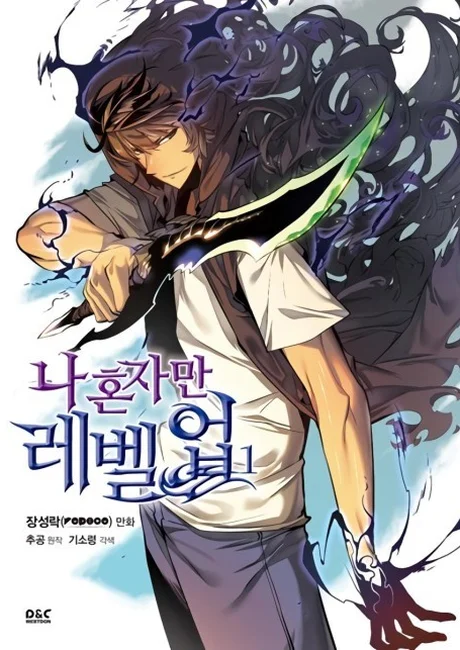 Solo Leveling set the benchmark for regression fantasy manhwa, the genre A Returner's Magic occupies.
The Shadow World system in Season 2
ARMS's central mechanic is the Shadow World: a training simulation that recreates historical disasters and forces participants to survive or solve them. Season 1 uses it as a classroom tool. The disasters Desir's group faces in Season 1 are Academy exercises, calibrated for student participants with safety structures in place.
Season 2's Shadow Worlds are different in kind. The Commission Arc and the First Shadow World Arc take the team into situations that are not controlled exercises. The disasters grow in scope. Historical events that Desir knows ended in catastrophe become the terrain his team has to navigate, often with incomplete information because Desir's memory of those events was filtered through the survivors' account, not the actual sequence.
The magic system itself does not change, but its application does. In Season 1, Desir's foreknowledge lets him prepare the right spells for specific scenarios. He knows what threat is coming so he can counter-build. In Season 2, scenarios start appearing that he has no memory of. Either the timeline has diverged enough that his records are obsolete, or some of the disasters he survived were not fully understood even by the six survivors. The system's rules stay constant; the advantage his knowledge provides becomes unreliable.
This is the most interesting development in ARMS's second half for readers who engaged with the premise seriously. The regression mechanic stops functioning as guaranteed dominance when the future being prevented is no longer the one Desir remembers. For a deeper look at how the series handles this from the start, see the A Returner's Magic Should Be Special review.
Community reception of Season 2's source material
Advertisement
Manhwa readers who are ahead of the anime split somewhat on the Commission Arc. The most common position in discussions on the ARMS subreddit is that chapters 44-80 are slower than the Season 1 content but necessary: the political structure the story builds in that range pays off in the First Shadow World Arc. The complaint is pacing in the middle of the Commission Arc, not the arc's overall function.
The First Shadow World Arc, which Season 2 is expected to end on or near, is where reader consensus is strongest. The sequence around chapters 110-120 is frequently cited as the first time ARMS fully delivers on its premise. The scenario design is more complex than anything in Season 1, the team dynamics are under actual pressure, and Desir's foreknowledge fails in a way that has consequences rather than just being a dramatic beat.
The Training Arc (roughly chapters 80-100, between Commission and First Shadow World) gets the least attention. It does character development work and establishes some dynamics that matter later, but it reads as connective tissue. If Season 2 compresses it in favor of spending more time on the First Shadow World Arc, that would be the right call.
One note on expectations: Season 1 underperformed its source material. The adaptation was technically competent but did not capture the weight of what Desir knows. If the production team makes the same choices in Season 2, the First Shadow World Arc's impact will land softer than it should. Readers who come to the anime after the manhwa have generally said the inverse: the manhwa hits harder, but the anime is a reasonable entry point for people who prefer the format.
Frequently Asked Questions
When does A Returner's Magic Season 2 air? October 7, 2026. Crunchyroll's fall lineup lists the simulcast, and the official anime site gives the same premiere date. Crunchyroll holds the international streaming rights.
Where did Season 1 end? Chapter 43 of the manhwa. The Promotion Competition arc wraps. Desir's group has standing at the Academy, but the larger story hasn't started yet.
What will A Returner's Magic Season 2 cover? The Commission Arc through the First Shadow World Arc, roughly chapters 44-120. This is where the world's political structure becomes visible and the stakes get real.
Should I read the manhwa before Season 2? You don't have to. But if you want to read ahead, the manhwa is completed at 268 chapters, so you won't hit an unfinished story.
Is the manhwa completed? Yes. 268 chapters, complete. The anime adaptation has a full story to work from.
Where can I watch Season 1? Season 1 is on Crunchyroll. Season 2 will also stream on Crunchyroll.
Related Reading
- A Returner's Magic Should Be Special Review: Full series review: what the first season established and where the story goes.
- A Returner's Magic Should Be Special Reading Guide: Arc-by-arc breakdown of the full run including Season 2 content.
- Best Manhwa Ongoing 2026: Other ongoing series releasing new chapters in 2026 worth following.
- Manhwa Like A Returner's Magic: 8 Picks for ARMS Fans
- Best Manhwa November 2026: the monthly roundup pairs the October 7 anime start with the finished comic and active weekly options
References
- NYCC October 2025 announcement, Anime News Network coverage, October 9, 2025
- A Returner's Magic Should Be Special on Crunchyroll
- A Returner's Magic manhwa on AniList
- A Returner's Magic Should Be Special Review


