Loading…

ChapterBrief · Manhwa
Manhwa Like Blue Lock: 7 Picks for August Film Fans
Manhwa like Blue Lock sorted by reader type: ego-driven, elimination bracket, or sports psychology. The live-action film released August 2026. Start here.

Finding manhwa like Blue Lock is harder than it looks, and the August 7, 2026 live-action film release brought a new wave of readers into the search. Whether you caught the film or you're catching up now, the question is the same: go in blind on the manga or read first.
TL;DR: Blue Lock is a manga (Japanese), not manhwa, but the competitive structure has close equivalents in both formats. The film released in Japan on August 7, 2026; the manga runs 356+ chapters with weekly updates; Season 3 anime confirmed. Manhwa like Blue Lock sort into three reader types: elimination bracket, ego-vs-teamwork inversion, and sports psychology
The problem is that Blue Lock is a manga, not a manhwa. It's Japanese, serialized in Weekly Shōnen Magazine, written by Muneyuki Kaneshiro with art by Yusuke Nomura. ChapterBrief covers both formats, and the question "manhwa like Blue Lock" is real regardless of the technical distinction. Readers want the same competitive texture: elimination rounds that create actual stakes, a protagonist whose ego is the point rather than the problem, psychological reads happening in real time during matches. Those elements exist across Korean manhwa and Japanese manga both.
This list covers seven picks. They're sorted by the specific draw, not by vague similarity. Blue Lock does three things that most sports series don't: it inverts the team-vs-individual philosophy, it runs an elimination bracket that creates genuine consequences, and it treats psychological competition as the actual sport. Which one brought you in determines which of these reads correctly.
Key Takeaways
- Blue Lock is a manga (Japanese), not manhwa, but the competitive structure has close equivalents in both formats
- The film released in Japan on August 7, 2026; the manga runs 356+ chapters with weekly updates; Season 3 anime confirmed
- Manhwa like Blue Lock sort into three reader types: elimination bracket, ego-vs-teamwork inversion, and sports psychology
- For the bracket format: The God of High School (complete), Solo Leveling (complete)
- For the ego-vs-teamwork inversion: Haikyuu (completed, 402 chapters), The Boxer (complete, 113 chapters)
- For sports psychology specifically: Ao Ashi (ongoing soccer), Eyeshield 21 (completed American football)
- Lookism bridges the ego theme without the sports format; useful for readers who stayed for Blue Lock's philosophical argument
- All seven picks are officially available in English; free options noted per series
Overview: What Blue Lock Is Actually Doing
Blue Lock's premise cuts against every sports manga convention that came before it. The Japan National Football Association funds a facility called "Blue Lock" and runs 300 elite teenage strikers through a survival competition. The winner represents Japan. The 299 who lose are banned from the national team permanently. The facility's architect, Jinpachi Ego, argues that Japanese football fails because it produces team-dependent players incapable of the individual excellence that changes games. His experiment is designed to manufacture one exception.
Yoichi Isagi, the protagonist, begins with a specific and named deficiency: he's too willing to pass. His spatial awareness is exceptional: he reads the field faster than his opponents, but he has been conditioned to distribute rather than finish. The series is about breaking that conditioning. The ego theme is not a background detail; it's the thesis. Every competitive sequence asks whether Isagi can prioritize the goal over the teammate.
This matters for picking manhwa like Blue Lock because it separates the structural elements. If you want the bracket, the bracket picks here will work. If you want the philosophical argument (the inversion of sports manga's usual moral), the philosophical picks are different, and the sports-specific picks are different again.
For context on where the manga currently sits and what the anime adaptation covers, the Blue Lock reading guide has the full chapter-to-episode breakdown and where the Season 3 anime will pick up.
Our Blue Lock reading guide covers where to start, reading order, and chapter highlights.
Blue Lock Reading Guide →
Manhwa Like Blue Lock: The Elimination Bracket
Advertisement
Blue Lock's training camp creates opponents who matter. The elimination format forces the narrative to invest in secondary characters; they have to be credible threats, not just background strikers. The bracket structure is replicable, and two series run it well.
The God of High School (WEBTOON, free, completed at 569 chapters) sends high school martial artists into a national tournament that starts as competitive fighting and escalates into something the early chapters don't prepare you for. Written by Yongje Park, it's the most direct structural equivalent to Blue Lock on this list. The high school setting maps onto Blue Lock's training camp, the secondary characters are built as recurring opponents rather than disposable obstacles, and the competition logic holds through the escalation. By chapter 40, the power gap between the frontrunners and the field has widened enough to feel real.
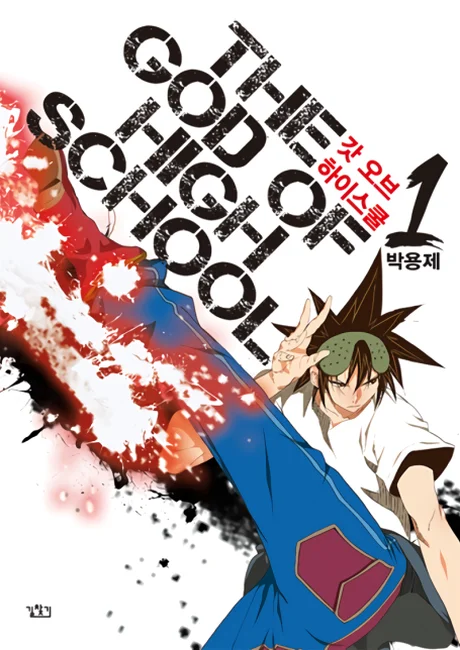 The God of High School cover art.
The comparison that works: GOH's tournament creates the same problem Blue Lock does: secondary characters you've invested in have to lose eventually. Both series handle this by making the losses count rather than papering over them. The God of High School review covers where the series peaks and where the supernatural escalation either works or doesn't depending on your patience for it.
Solo Leveling (completed manhwa, 179 main chapters + 21 side stories, Tappytoon/Tapas) is not a tournament series. The comparison here is structural rather than format-specific. Sung Jinwoo runs a dungeon progression that functions as a personal elimination bracket; he is constantly being tested against escalating threats with no exit option. The elimination logic is identical; what changes is that the bracket is solo rather than competitive.
 Solo Leveling cover art.
The trajectory is the direct comparison: Jinwoo begins as the weakest ranked hunter in the world and ends somewhere the classification system can't contain. The gap between start and finish is wider than any other series on this list. If the Blue Lock appeal is watching that gap close: the specific tension of a protagonist becoming dangerous chapter by chapter; Solo Leveling executes this with the clearest forward momentum.
A detailed look at pacing and late-game power escalation is in the best manhwa with system fantasy mechanics breakdown, which covers Solo Leveling's progression structure alongside comparable series.

For the Ego-vs-Teamwork Inversion
Most sports manga spend their entire run arguing that team cohesion is the highest value; the protagonist who tries to go solo either fails or converts. Blue Lock inverts this premise deliberately. Ego's facility is designed to produce someone who has unlearned the conversion. These picks engage the same philosophical argument, from different angles.
Haikyuu!! (manga, completed, 402 chapters, Shōnen Jump) is the series Blue Lock readers always compare because it covers the same competitive psychological ground with the opposite conclusion. Shoyo Hinata begins with a single physical limitation (height) and compensates with read-speed and positioning instinct. The comparison to Isagi is direct: both protagonists win through spatial processing rather than dominant physical ability.
What the comparison misses is the philosophical gap. Haikyuu is the argument that volleyball is best when the team reaches a collective peak. Blue Lock is the argument that football needs one person to reject that logic. Reading both in sequence makes the contrast sharper. Hinata's arc and Isagi's arc end in structurally similar places through completely opposite routes.
By chapter 80, Haikyuu's competitive matches are running at a density that rivals Blue Lock's best elimination rounds: six-on-six volleyball producing the same real-time psychological chess. Completed at 402 chapters, the full arc is available. The anime adaptation (Crunchyroll, all four seasons) covers the complete story.
The Boxer (WEBTOON, free, completed at 113 chapters) makes the individual supremacy argument more starkly than any series on this list. The protagonist, Yu, cannot be hit. Not from speed in any conventional sense; from spatial processing that tracks incoming trajectories faster than the attack completes. He reads movement before it concludes and places himself outside it.
This is the Blue Lock comparison that readers who stayed for Isagi's zone sequences will find useful: Yu's ability is the same cognitive architecture as Isagi's, applied to boxing instead of football. The series asks what prodigy-level ability actually costs: what it feels like from inside, what happens to opponents who encounter it. At 113 chapters, it's readable in a single day. The art is spare and precise, choreographed with something like technical diagram logic: movement, angle, timing, consequence.
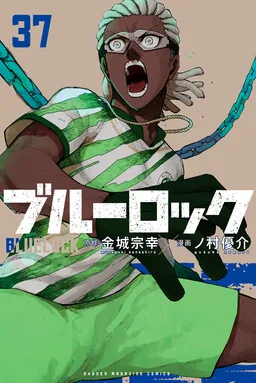
For the Sports Psychology
Blue Lock's best sequences are not the goals. They're the moments before: Isagi reading defensive positioning in real time, understanding what his opponent will do, designing the pass that exploits the gap before it closes. The psychology of competition, not the outcome. These picks engage that specifically.
Ao Ashi (manga, ongoing, 380+ chapters, available on K Manga) is the soccer series that covers the same sport Blue Lock uses with a different lens. Where Blue Lock is about individual excellence above all, Ao Ashi follows Aoi Ashito's tactical development as a fullback, a position defined by reading the entire pitch rather than finishing. The football here is more realistic, more interested in positional mechanics, and more willing to spend chapters on training sequences that don't resolve into wins.
The comparison works for readers who want soccer played seriously. Blue Lock's matches are compressed into decisive moments; Ao Ashi runs the full match in something closer to real time, with coaching commentary that unpacks positioning logic mid-sequence. For readers who stayed because Blue Lock treated soccer as a real sport rather than a backdrop, Ao Ashi is the follow-on. Slower pace, higher tactical specificity.
Eyeshield 21 (manga, completed, 333 chapters, Shōnen Jump) uses American football, which creates enough distance from soccer to read as a different sport. The comparison to Blue Lock is structural: Sena Kobayashi begins with a single exceptional trait (running speed), and the series is about how that one attribute develops into something usable within the complexity of a sport he didn't choose to play. Tournament format, elimination rounds, opponents built as credible threats with named abilities and specific weaknesses.
The psychological competition here runs through the playbook construction rather than real-time spatial reads, which is a different mechanism than Blue Lock's. But the sequence logic is similar: identify what your opponent cannot cover, design the play that hits it, execute before they adjust. At 333 completed chapters, it's the longest commitment on this list and the one most likely to reward readers who want the full arc.
Lookism (WEBTOON, free, 600+ chapters, ongoing) is not a sports series and the comparison doesn't apply in the early chapters; the first 80 chapters are primarily social dynamics around a transfer student with two bodies. But the later arcs introduce underground martial arts factions with ranking hierarchies, and the ego theme runs explicitly through that material. Who deserves to rank highest. What happens when the ranking system encounters someone it wasn't built to classify.
 Lookism cover art.
Among manhwa like Blue Lock that engage the philosophical argument about ego and hierarchy without a sports format, Lookism is the one that makes the social stakes explicit. The tutorial arc is 80 chapters, which is a real time investment before the relevant material arrives.
Our master manhwa reading list covers the top 30 titles across every genre for 2026.
Best Manhwa to Read in 2026 →
Manhwa Like Blue Lock: Which Pick Matches Which Reader
Three reader profiles covered in this list, matched to the picks:
If the elimination bracket is why you're here: The God of High School first. Complete, high-school setting, escalating stakes. Then Solo Leveling for the solo-trajectory version of the same progression logic.
If the ego-vs-teamwork inversion is the draw: The Boxer is the fastest read (113 chapters) and makes the individual supremacy argument most directly. Then Haikyuu to run the opposite argument and see why the contrast sharpens both.
If the sports psychology is what held you: Ao Ashi for soccer specifically. Eyeshield 21 for a completed arc with the same psychological competition in a different sport. Both reward readers who want the tactical detail, not just the outcome.
Lookism is the outlier. It belongs here for readers who stayed because Blue Lock's philosophical argument about ego interested them more than the soccer, and who want that argument in a different context.
For the August 2026 film: the manga is the full version. The anime covers the first 90 chapters (Season 1) and continues from there (Season 2, Season 3 confirmed). The film covers earlier material in a condensed format, readable as an introduction, not a replacement for either the manga or the anime's tournament arcs. If you're catching up for the film, the Blue Lock reading guide maps the fastest path from chapter 1 to where Season 2 ends.
Analysis
Advertisement
The pattern across these seven picks: Blue Lock is unusual for a sports series because it built its premise on rejecting sports manga's usual moral. The tournament series here (GOH, Solo Leveling) take the bracket logic. The sports series here (Haikyuu, Ao Ashi, Eyeshield 21) take the competitive-psychology logic, with different conclusions about whether the individual or the team is correct. The Boxer runs the individual supremacy argument to its cleanest form. Lookism runs the ego-and-hierarchy argument in a social context.
None of these are perfect replacements. The Blue Lock combination (soccer specificity plus elimination tournament plus explicit ego philosophy) isn't one that any single series replicates. What exists are series that get one or two of those elements right. Matching to reader type rather than to a vague "similar to Blue Lock" label is the only way this recommendation functions correctly.
For a broader look at what else the sports and competition genre covers across manga and manhwa, the best manhwa system fantasy list has the rankings with chapter counts and platform availability.
Frequently Asked Questions
What manhwa is closest to Blue Lock?
The God of High School is the closest structural match: elimination tournament, high school setting, escalating stakes. For the soccer specifically, Ao Ashi covers the same sport with more tactical realism. For the ego-driven protagonist arc, Solo Leveling is the direct equivalent.
Is Blue Lock a manhwa or manga?
Blue Lock is a Japanese manga, not a Korean manhwa. Written by Muneyuki Kaneshiro with art by Yusuke Nomura, serialized in Weekly Shōnen Magazine. ChapterBrief covers both formats; the picks in this article are Korean manhwa and Japanese manga that share Blue Lock's competitive structure.
What manhwa like Blue Lock is free to read?
The God of High School, Haikyuu!!, and Lookism are available on WEBTOON for free. The Boxer is completed and free on WEBTOON. Solo Leveling requires Tappytoon or Tapas. Ao Ashi is available through K Manga (Kodansha's platform).
Is there a Blue Lock manhwa adaptation?
No. Blue Lock is a manga with an anime adaptation (Season 1: 2022-23, Season 2: 2024, Season 3 confirmed). There is no manhwa version. The live-action film released in Japan on August 7, 2026, and covers earlier events in compressed form.
What should I read if I want Blue Lock but in a fantasy setting?
The God of High School replaces soccer with martial arts in an escalating tournament format: same elimination logic, same escalating opponents, supernatural powers introduced mid-competition. Solo Leveling has the ego trajectory without the tournament structure.
Is Haikyuu!! like Blue Lock?
Structurally, yes; both are sports series with deep psychological competition and a protagonist who compensates for one deficiency with exceptional spatial reading. The philosophies differ sharply: Haikyuu celebrates team cohesion, Blue Lock explicitly rejects it. If that contrast interests you, reading both in sequence is worthwhile.
Where can I read Blue Lock in English?
Official English digital via K Manga (Kodansha's platform). Print volumes from Kodansha USA. The anime streams on Crunchyroll and Netflix (Season 1). 356+ chapters available as of August 2026.
Do I need to watch the anime before reading manhwa like Blue Lock?
No. Either format works as an entry point. The anime Season 1 covers roughly chapters 1-90. Season 2 continues from there. If you've only seen the anime, the manga picks up immediately after the anime's final episode; there is no recap gap.
Related Reading
- Blue Lock reading guide
- God of High School review
- best manhwa with system fantasy mechanics
- Best Manhwa to Read in 2026 →
References
About the author

Senior Manhwa Critic & Analyst
Manhwa critic and former Korean-to-English webtoon translator with 8 years reading across 40+ genres. London-based. Tracks everything from power-progression to slice-of-life romance.
- 8 years reading manhwa across 40+ genres
- Former Korean-to-English webtoon translator
- 500+ manhwa titles completed
- Specializes in progression systems and power-scaling analysis




Disclaimer
This article is published for informational and entertainment purposes. It does not constitute professional financial, legal, or technical advice. Series availability, platform access, translation status, and chapter counts change. Verify critical details (pricing, regional availability, official translation status) with publishers and platforms. Affiliate links, where present, help support our editorial work and are labelled in our affiliate disclosure.
Comments
Loading comments…