Loading…
ChapterBrief · Manhwa
Manhwa Like Wind Breaker: Crew, Found Family, and Fights
Manhwa like Wind Breaker: 8 picks sorted by what drew you in. Delinquent crew dynamics, found family, or a cold protagonist who earns loyalty slowly.

TL;DR: Manhwa like Wind Breaker splits into three distinct searches: delinquent crew dynamics, found family, and fights with emotional stakes, each producing different recommendations. Wind Breaker (Satoru Nii's Kodansha manga) is ongoing in 2026; CloverWorks anime Seasons 1 and 2 stream on Crunchyroll. Haruka Sakura starts the series deliberately isolated; the character arc is his emotional walls coming down as the Bofurin crew earns his trust.
Manhwa like Wind Breaker is a search with three separate asks underneath it. The delinquent crew that operates as a found family: a protagonist who shows up isolated and earns belonging through fights that prove something about who he is. The fights themselves, which are clean and personal and have stakes beyond ranking. And the cold exterior that doesn't stay cold: Haruka Sakura spending chapters building walls the series spends chapters dismantling, one Bofurin member at a time.
These three asks produce different manhwa like Wind Breaker recommendations. A reader who came for the delinquent crew politics and faction fights has different needs than one who came for the emotional arc of a protagonist learning to trust people. Sending either reader toward a fighting tournament series or a pure power-escalation manhwa misses what Wind Breaker actually does.
The anime brought a lot of readers to manhwa who hadn't been there before. CloverWorks' adaptation of Wind Breaker Season 1 in 2024 captured the fights cleanly and the crew dynamics better than most action anime adaptations manage. Season 2 in 2025 expanded the faction politics. Both seasons have a quality ceiling the source material extends past: the manga's emotional beats accumulate across more pages than 13-episode runs allow. Worth naming plainly: Wind Breaker itself is a Japanese manga by Satoru Nii, which is exactly why this list exists, to hand its fans the Korean manhwa that run the same emotional engine.
The eight manhwa like Wind Breaker picks below are sorted by which element brought you to a recommendation search. Not by genre tags. Not by school setting alone. Each manhwa like Wind Breaker pick in this list is matched to a specific hook rather than a broad genre category.
Key Takeaways
- Manhwa like Wind Breaker splits into three distinct searches: delinquent crew dynamics, found family, and fights with emotional stakes, each producing different recommendations
- Wind Breaker (Satoru Nii's Kodansha manga) is ongoing in 2026; CloverWorks anime Seasons 1 and 2 stream on Crunchyroll
- Haruka Sakura starts the series deliberately isolated; the character arc is his emotional walls coming down as the Bofurin crew earns his trust
- For delinquent crew dynamics and gang-faction politics: Lookism (600+ chapters, WEBTOON free) and Viral Hit (completed, 222 chapters, free) are the best manhwa like Wind Breaker picks
- For found family (cold protagonist who opens up over time): Eleceed (WEBTOON, ongoing) and The Breaker (older but holds up, completed)
- For fights that have personal stakes (choreography where the emotional weight matters): Weak Hero and The God of High School
- The God of High School escalates into supernatural territory Wind Breaker never enters; flag that before you start
Overview: What Wind Breaker Is and Why the Anime Brought New Readers In
Haruka Sakura transfers to Furin High with the assumption that it's the toughest school in the area, and that being the toughest means he can handle anything alone. Furin is tough, but the students are not what he expected. Bofurin, the crew that defines the school, protects the town. They fight, but the fighting has a purpose: the territory around Furin is defended by its residents, and Bofurin is the instrument of that defense.
The premise inverts the delinquent genre's usual logic. Most delinquent manhwa organize around dominance (who controls which area, which crew is strongest, which protagonist eventually sits at the top). Wind Breaker organizes around protection. The fights have the same choreography, but the emotional valence is different. Winning means protecting something. Losing means something the crew cares about gets hurt.
That's the specific hook the anime caught. CloverWorks handled the fight choreography competently: Season 1's animation quality held through the major set pieces, and the crew dynamics translate to a 24-minute episode structure without losing too much. What the anime can't replicate is the chapter-to-chapter accumulation of trust between Haruka and the Bofurin members. That build is a weekly-serialization pacing effect. It works in the source material. The anime condenses it.
Season 2 expanded the faction politics and introduced opponents who challenge Bofurin's premise directly. For readers who watched and want more of that (the escalating stakes, the ideological friction between different crew philosophies), the manga has it and the anime does not yet.
For context on the delinquent genre more broadly and where manhwa like Wind Breaker sit among their peers, the best manhwa school setting list covers the full range. It's the right place to start if you want to understand how manhwa like Wind Breaker fit into the wider delinquent and school-action subgenre.
Our master manhwa reading list covers the top 30 titles across every genre for 2026.
Best Manhwa to Read in 2026 →
Manhwa Like Wind Breaker for Delinquent Crew Dynamics
Advertisement
Any manhwa like Wind Breaker that earns the comparison on this axis has to do the same work with the crew structure. Not just fighting, not just a school setting: the internal crew dynamics, the way individual members define the group's character, the faction politics that put crews against each other for reasons that aren't purely about ranking. The manhwa like Wind Breaker picks below run the same engine at different scales.
Lookism (Park Taejun, WEBTOON, free, 600+ chapters, ongoing): The first choice on any manhwa like Wind Breaker list for crew dynamics. The first 100 chapters of Lookism cover school hierarchy and crew dynamics in the same register as Wind Breaker's early arcs (territory, reputation, what it costs to stand behind a particular group). After chapter 100, the series expands into underground martial arts organizations and faction politics that dwarf anything in Wind Breaker's scope. The scale is different, but the underlying concern (who a crew is, what it's defending, what membership costs) is the same question. Lookism's protagonist Daniel Park runs a different emotional arc from Haruka, but the crew-identity structure is the most direct comparison in the delinquent genre. Read to chapter 100 to evaluate whether the underground expansion interests you. If it does, Lookism will hold you for 500 more chapters. The manhwa like Lookism guide breaks down what each arc contains.
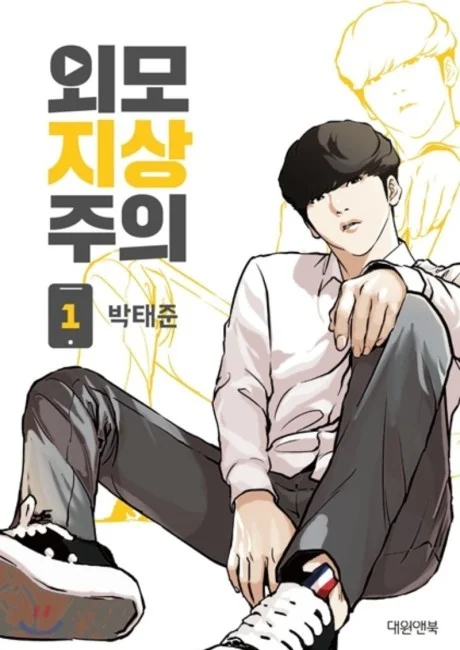 Lookism cover art.
Viral Hit (Park Taejun, also titled How to Fight, WEBTOON, free, completed at 222 chapters): A school underdog decides to post fight videos online for economic reasons and ends up building a small crew around the project. The crew in Viral Hit is tighter than Bofurin (fewer members, each with a specific role) and the loyalty dynamics are more transactional than Wind Breaker's idealistic protection premise. But the emotional payoffs of watching a protagonist go from isolated to genuinely backed by people who chose to be there are the same. As a manhwa like Wind Breaker, Viral Hit is also faster-paced, shorter per chapter, and completed, so you get the full arc without ongoing waits. The school hierarchy feels real in the early chapters in the same way Wind Breaker's does: the social cost of standing apart from it is visible and specific.

Manhwa Like Wind Breaker for Found Family and the Cold Protagonist Arc
The more specific manhwa like Wind Breaker search: a protagonist who starts closed off and earns belonging over time. Not a loner who gets powerful and then gains followers. A protagonist whose arc is specifically about learning to trust people: the found-family structure is the point, not a side effect of power escalation. Two series run this structure as their primary engine.
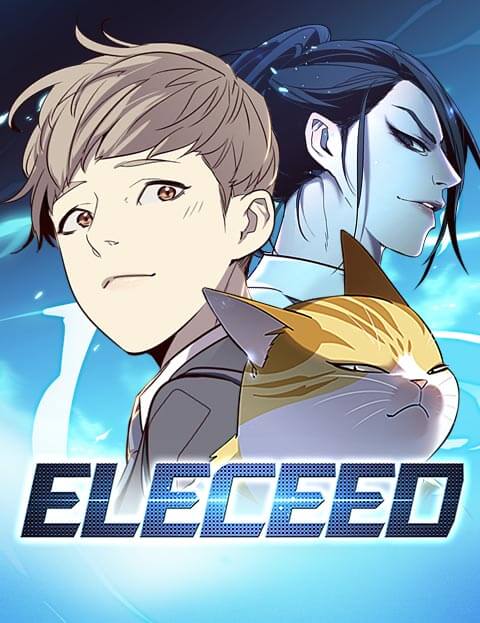
Eleceed (Son Jae-ho art, Zhena story, WEBTOON, free, ongoing): A protagonist with hidden abilities who starts the series with one genuine relationship and builds outward from there. The early chapters establish a found-family core (a mentor figure, a small group, a domestic dynamic that the action sits inside rather than replacing). Haruka Sakura's wall-building and the Bofurin crew's systematic dismantling of it have a close structural parallel in Eleceed's first 50 chapters, where the protagonist's reluctance to attach is legible and the series doesn't rush past it. The fighting escalates into supernatural territory Wind Breaker doesn't enter: after chapter 100, Eleceed becomes a different kind of series. The early register is the closest match for readers who came specifically for the emotional architecture of the cold-protagonist-opens-up arc. For a full account of what Eleceed builds toward, the manhwa like Eleceed list has context on how the series evolves.
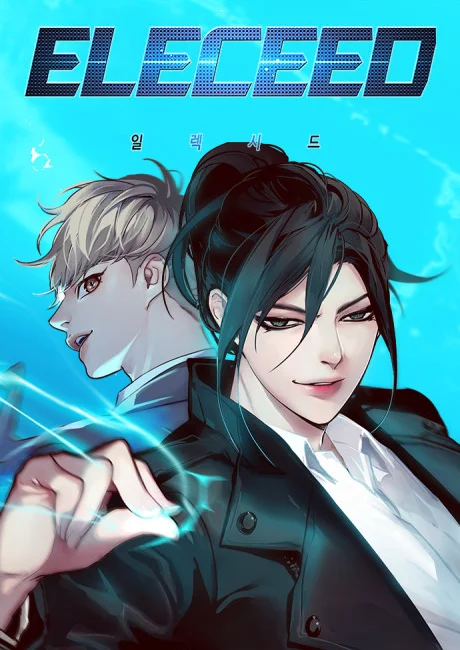 Eleceed cover art.
The Breaker (Jeon Geuk-jin story, Park Jin-Hwan art, completed): An older manhwa, the original series ran 72 chapters and its sequel New Waves ran 200. A high school student gets drawn into the world of murim martial arts through a teacher who initially refuses to take him seriously. The mentor-student dynamic drives the found-family register here, not a crew structure. The protagonist starts as an outsider and earns belonging through specific demonstrations of loyalty rather than through power. The cold-exterior element maps onto the mentor character rather than the protagonist, a structural inversion of Wind Breaker, but the emotional beats of earning trust and the feeling of belonging to something with a moral code are the same. As a manhwa like Wind Breaker on the found-family axis, The Breaker's art style is dated by current standards; the storytelling holds.
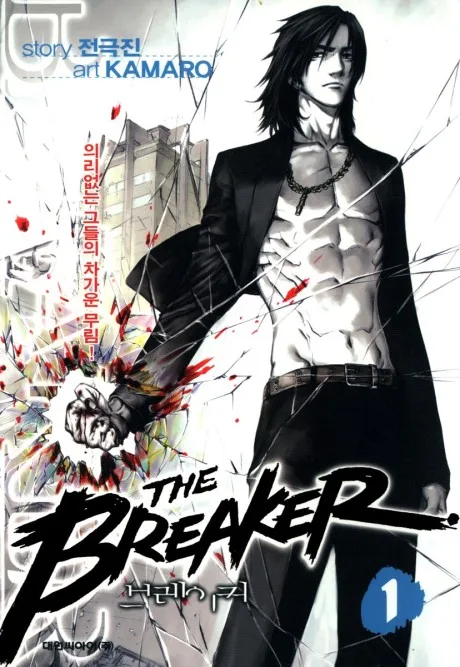 The Breaker cover art.
Our best action manhwa list includes top sports-adjacent and gang-territory fight manhwa.
Best Action Manhwa 2026 →
Manhwa Like Wind Breaker for Fights With Emotional Stakes
Wind Breaker's fights work because they mean something beyond the result. Wins and losses in the Bofurin arc have consequences for the people and places the crew is protecting. The choreography is clean enough that reading a fight is satisfying mechanically, but the reason to care about who wins is always tied to something emotional. The manhwa like Wind Breaker picks in this section run the same constraint at different ends of the supernatural spectrum.
Weak Hero (Seopass story, Kim Jin-Seok art, WEBTOON, free, 268 chapters, completed): Gray Yeon has no cultivation path, no awakened ability, no stat window. He wins through pattern recognition and mechanical advantage: the geometry of a fight, not raw physical advantage. What makes Weak Hero feel like manhwa like Wind Breaker is the same thing: you understand why the outcome matters before it happens. The stakes are established before the first punch. The wins don't feel clean because the margins are thin and the costs accumulate. If the emotional weight of Wind Breaker's fights is the specific hook (not just the choreography, but the reason to care about it), Weak Hero delivers that in a school setting with no supernatural elements ever. The manhwa like Weak Hero guide provides the full breakdown of what makes the series unusual in a genre that usually resolves through power escalation.
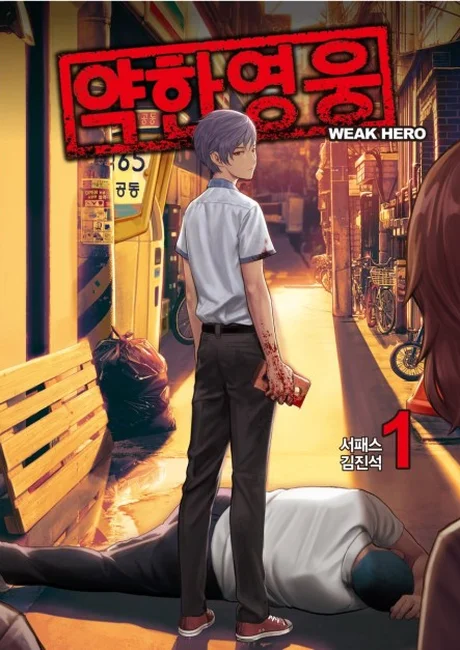 Weak Hero cover art.
The God of High School (Yongje Park, WEBTOON, free, completed at 569 chapters): The tournament structure is the early engine: high school fighters compete in a national bracket, with fights that escalate in personal stakes as the bracket narrows and the relationships between competitors develop. The Charyeok borrowed-power mechanic introduces supernatural escalation around chapter 60 that Wind Breaker never approaches, which is worth flagging before you start looking for manhwa like Wind Breaker in this direction. The reason to include The God of High School here is specifically the early tournament arcs, where the fights feel personal rather than spectacular: you know each opponent before the fight happens, and the outcome reflects something about who both characters are. That emotional specificity is the same thing Wind Breaker builds into its fights, without the scale escalation. The manhwa like The God of High School list covers what the series does after the tournament arc if the escalation question matters to you.
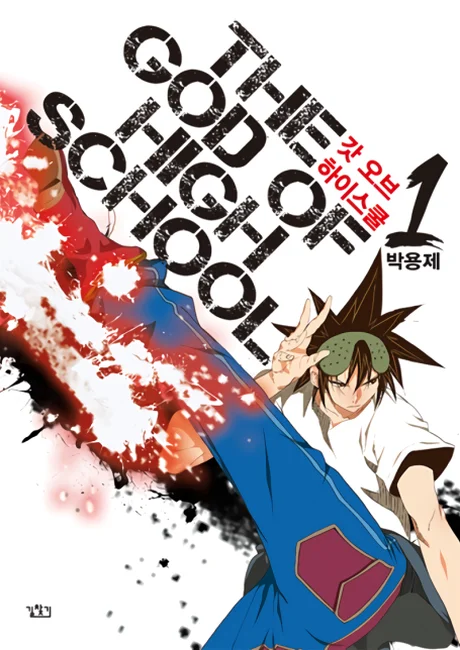 The God of High School cover art.
Analysis: Where Recommendations Usually Miss
Advertisement
The standard manhwa like Wind Breaker list sends readers toward any school-action series with a crew structure. That misses two things.
First, most delinquent manhwa organize around dominance rather than protection. The Bofurin premise is unusual: these are fighters who have decided to protect something external rather than accumulate power for its own sake. That moral clarity gives Wind Breaker's fights a different register. Recommending a series that runs the standard hierarchy-and-domination structure gives readers the surface features of a manhwa like Wind Breaker (school setting, crew, delinquent cast) without the actual emotional architecture. Lookism's early chapters are the exception. Viral Hit's underdog-builds-loyal-crew structure is the other exception.
Second, the cold-protagonist arc is specific. Haruka Sakura is not a reluctant hero who softens after one emotional speech. The arc runs across long stretches of the series before the wall cracks are visible, and longer still before the belonging feels earned rather than stated. Series that resolve this in 20 chapters (protagonist joins crew, has emotional moment, is now friends) don't replicate what Wind Breaker does. A manhwa like Wind Breaker in this specific sense has to earn the arc rather than declare it complete. Eleceed takes it seriously. The Breaker takes it seriously. Most others declare it done too fast.
For readers comparing anime-adapted manhwa and trying to decide which source materials are worth the full read, the best manhwa for anime fans list sorts by how well the manhwa extends past what the adaptation covers.
The one recommendation type to be explicit about: My Hero Academia comes up in Wind Breaker recommendation threads frequently because the anime overlap is real, and many viewers watch both. Wind Breaker itself is a Japanese manga by Satoru Nii, and this list deliberately points its fans toward Korean manhwa that share its emotional architecture. My Hero Academia stays off the list for a different reason: its quirk-powered escalation structure is nothing like Bofurin's grounded crew fights, so the recommendation fails on substance, not just category.
Frequently Asked Questions
Is Wind Breaker manhwa the same as the anime?
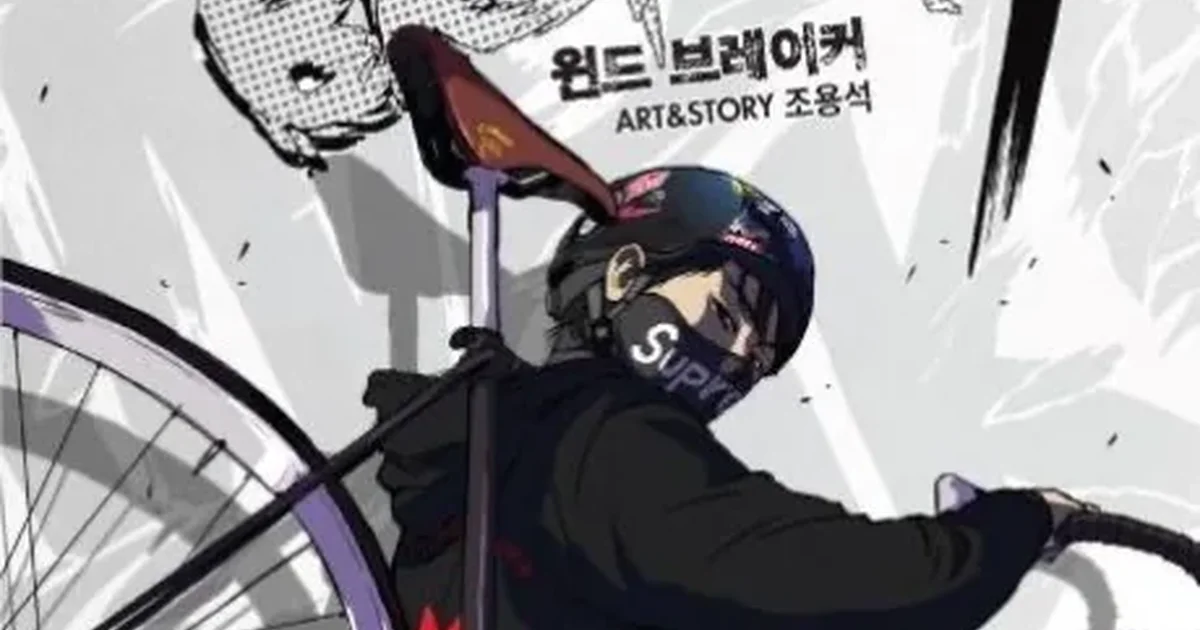
Two different series share the name, and the anime adapts neither manhwa. The CloverWorks anime (Season 1 in 2024, Season 2 in 2025, both on Crunchyroll) adapts the Japanese manga Wind Breaker by Satoru Nii, published by Kodansha. The Korean manhwa Wind Breaker by Jo Yong-seok is an unrelated cycling series cancelled in 2025. The anime covers the Bofurin crew and the school-protecting premise; the source manga goes considerably further in crew development and faction politics.
Where can I watch Wind Breaker anime?
Wind Breaker Season 1 and Season 2 are both on Crunchyroll. Season 1 aired spring 2024 (13 episodes). Season 2 aired in 2025. Neither season is on Netflix or other major platforms as of June 2026; Crunchyroll holds the simulcast license.
Is Wind Breaker manhwa completed?
No. The delinquent Wind Breaker (a Japanese manga by Satoru Nii, serialized weekly by Kodansha) is ongoing in 2026, continuing past the events of both anime seasons. No completion date has been announced. Readers searching for manhwa like Wind Breaker that is complete should look at Viral Hit (222 chapters) and The God of High School (569 chapters).
What is the best delinquent manhwa to start with?
Weak Hero is the strongest entry point: free on WEBTOON, 268 chapters (completed), and the protagonist wins through intelligence rather than raw strength. Lookism covers similar school-hierarchy territory in the first 100 chapters. Wind Breaker sits between them in tone: more emotional than Weak Hero, more focused on crew identity than Lookism. All three are valid starting points depending on which element of the delinquent genre matters most to you.
What manhwa like Wind Breaker has the best found-family structure?
Eleceed is the closest manhwa like Wind Breaker on the found-family axis: a protagonist who starts closed off and builds genuine bonds with a mentor and small crew, with emotional payoffs that accumulate chapter by chapter. For a harder-edged version of the same structure, Viral Hit shows a protagonist building loyalty with a small group where trust is explicitly earned over time.
Does Wind Breaker have a cold protagonist?
Yes. Haruka Sakura at the start of the series is closed off and deliberately distancing: he grew up believing he was a burden to others and built emotional walls accordingly. The character arc is specifically about those walls coming down as Bofurin proves they're not going anywhere. The transformation is earned gradually across the series rather than resolved in a single emotional scene.
What is Bofurin in Wind Breaker?
Bofurin is the crew Haruka Sakura joins at Furin High: a group of delinquents who have organized themselves around protecting the town rather than dominating it. That moral structure is what makes Wind Breaker unusual in the delinquent genre and is the reason most manhwa like Wind Breaker recommendation lists miss the actual appeal: they find series with similar surface features without the same underlying premise.
Related Reading
- best manhwa school setting
- Best Manhwa to Read in 2026 →
- manhwa like Lookism guide
- manhwa like Eleceed list
- Best Action Manhwa 2026 →
- Wind Breaker Manga Review: Bofurin Crew, Rated 8/10
- Wind Breaker Reading Guide: Where to Start in 2026
- Wind Breaker Character Guide: every named member of Bofurin and its rival crews, verified against AniList
References
About the author

Senior Manhwa Critic & Analyst
Manhwa critic and former Korean-to-English webtoon translator with 8 years reading across 40+ genres. London-based. Tracks everything from power-progression to slice-of-life romance.
- 8 years reading manhwa across 40+ genres
- Former Korean-to-English webtoon translator
- 500+ manhwa titles completed
- Specializes in progression systems and power-scaling analysis

Disclaimer
This article is published for informational and entertainment purposes. It does not constitute professional financial, legal, or technical advice. Series availability, platform access, translation status, and chapter counts change. Verify critical details (pricing, regional availability, official translation status) with publishers and platforms. Affiliate links, where present, help support our editorial work and are labelled in our affiliate disclosure.
Comments
Loading comments…