TL;DR: Best sci-fi manhwa splits into two honest paths: space adventure for escapism (Denma, Knight Run) and near-future dystopia for discomfort (Nano List, If AI Ruled the World, TACIT). All nine picks here carry an actual Sci-Fi genre classification, not a dungeon-system manhwa with a chrome coat of paint.
Most "best sci-fi manhwa" lists are actually isekai lists wearing a sci-fi label. Solo Leveling gets a stat window and a portal to another dimension and somehow lands on half the sci-fi roundups published this year.
Nano Machine bolts a nanotech upgrade onto a cultivation-world protagonist and gets called sci-fi because the word "nano" is right there in the title. Neither is wrong to enjoy. Neither belongs on a list that's supposed to mean something specific.
This list works differently: every entry below carries an actual Sci-Fi genre tag, not a secondary or borrowed one, and covers ground the genre-fantasy hybrids don't touch: space travel, artificial intelligence, alien contact, and near-future collapse. Decide first which version of sci-fi you actually want.
If you want scale and escapism, start with Denma or Knight Run. If you want something that sits closer to your own timeline and makes you a little uneasy, start with If AI Ruled the World or TACIT. The nine best sci-fi manhwa picks below split roughly along that line, and knowing which side you're on before you start saves you from bouncing off the wrong one.
Key Takeaways
Short version of the best sci-fi manhwa picks below, if you're skimming:
- Easiest starting point: Nano List (146 chapters, completed, the most popular entry on this list) or HIVE (243 chapters) for readers who want action first.
- Biggest scope: Denma, 1,414 chapters of space opera most Western readers have never encountered, serialized 2010 to 2019.
- Best AI picks: Nano List for domestic android sci-fi, If AI Ruled the World for the societal-scale version.
- Best post-apocalyptic picks: TACIT (found-family virus survival) and Duty After School (alien invasion played as tragedy, not thrill).
- All nine titles carry an actual Sci-Fi genre classification; none are dungeon-system or isekai manhwa relabeled to chase the keyword.
Overview: How This Best Sci-Fi Manhwa List Was Built
Every series here was pulled from AniList's genre-tagged Korean manhwa catalog, filtered specifically for a Sci-Fi classification, then cross-checked against the official platform page for chapter count, status, and author credit. Series where sci-fi is a decorative secondary tag behind fantasy or cultivation got cut. That excluded some legitimately popular titles: Nano Machine and Overgeared both carry sci-fi flourishes, but their actual genre DNA is cultivation and LitRPG respectively, and they're already covered on the best system fantasy manhwa list instead.
Nine series made the final cut, split across four rough categories: space and interstellar adventure, alien invasion and apocalypse, AI and machine intelligence, and dystopian mystery. Six are complete. One (Knight Run) is still actively releasing after seventeen years.
Chapter counts, status, and platform for every entry are sourced directly from AniList and the official WEBTOON, Naver, Manta, or Lezhin listing, not memory or a previous roundup. That sourcing discipline is the whole point of building a best sci-fi manhwa list this way instead of recycling whatever the last five roundups already agreed on.
Want the system-fantasy and isekai side of manhwa instead of hard sci-fi? That's a separate list with its own rules.
Best Isekai Manhwa →
Space Opera and Interstellar Sci-Fi
Advertisement
Two picks for readers who want scale: space opera manhwa built around a courier company running deliveries across the galaxy, and humanity fighting a war it's losing at the edge of known space.
1. Denma
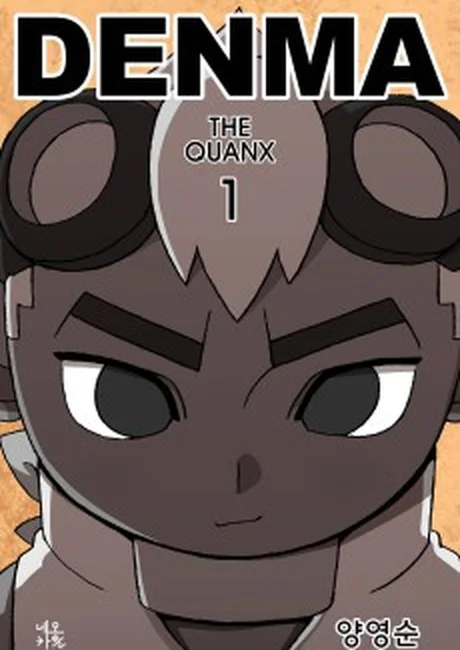 Denma.
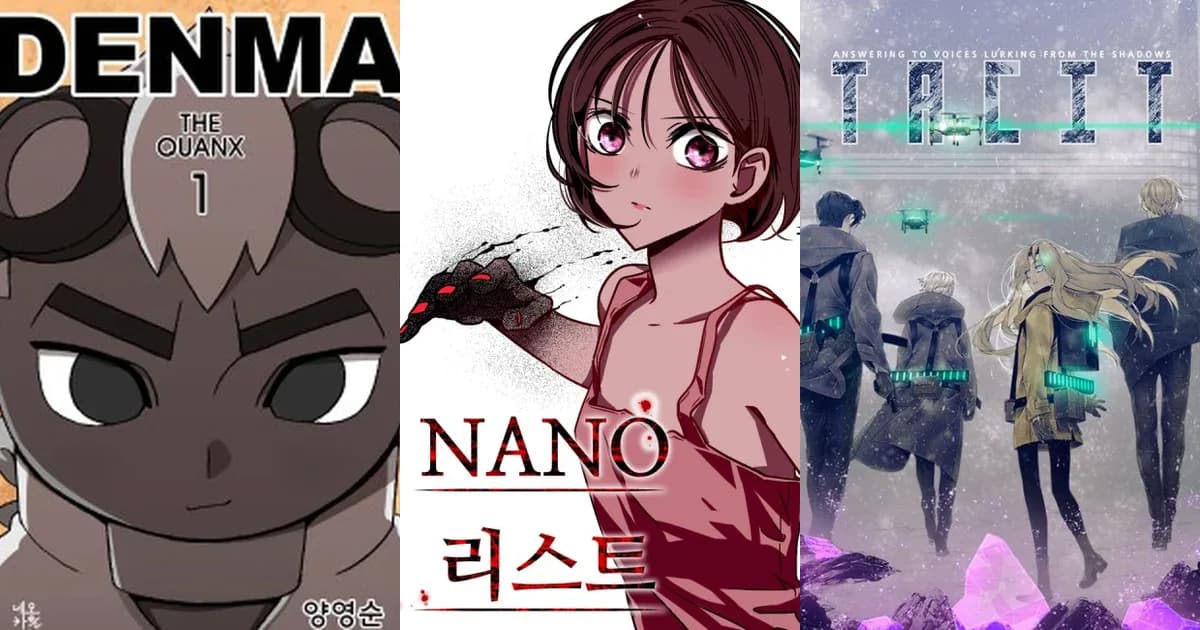
Denma is the entry that breaks the curve for everything else on this list: 1,414 chapters, serialized on Naver Webtoon from 2010 to 2019, and still barely known outside Korea. Yeong-Sun Yang's space opera follows Dike, a legendary hitman known as the Merciless Death of Planet Urano, whose consciousness ends up stuffed into the body of a child named Denma after a debt goes wrong. To pay it off, he works interstellar delivery routes for Silverquick, a courier company that staffs its most dangerous runs with "quanx," people born with a single supernatural ability.
The mismatch between Denma's toddler body and Dike's decades of violence is the whole engine of the story, both the comedy and the horror. Early chapters run short, deadpan vertical-scroll gags. Later arcs stretch into dense space-opera plotting most readers won't see coming, and the tonal range across a full decade of serialization is wider than almost anything else on WEBTOON. New readers should expect a slow ramp: nothing about chapter one signals how strange things get by chapter six hundred.
Status: Completed (1,414 chapters, 2010-2019). Platform: WEBTOON, Naver Webtoon. Best for: readers who want a long-haul series with a genuinely alien sense of humor, not another dungeon-system manhwa with sci-fi trim.
2. Knight Run
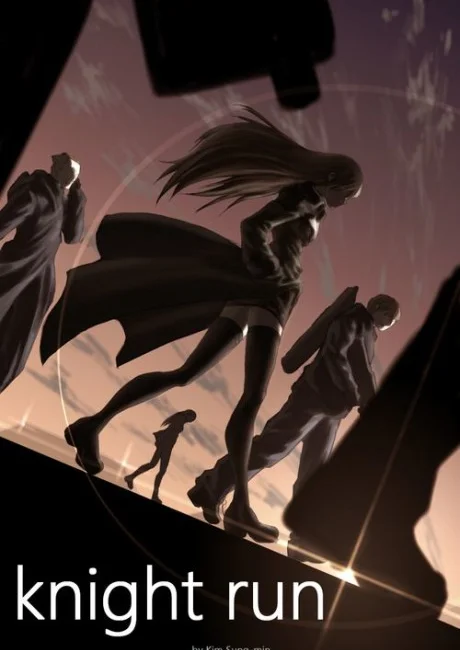 Knight Run.
Sung Min Kim's Knight Run has been serializing on Naver Webtoon since 2009, which makes it one of the platform's oldest still-active titles, sci-fi or otherwise. The premise: humanity pushed deep into space exploration, at war against monsters of unexplained origin, with elite pilots called Knights fielding what's left of the fight. It reads as militarized, scale-focused sci-fi, closer to a war drama than a character study.
Here's the honest caveat: neither AniList nor any English aggregator checked for this list tracks a current, reliable chapter count for Knight Run. It's still classified as actively releasing, seventeen years into its run, which says something about how committed its readership is even without solid numbers to point new readers toward. If exact totals matter to you before committing, start with Nano List or TACIT instead. Both have confirmed endings and confirmed chapter counts.
Status: Ongoing (started 2009; English aggregators don't track a current chapter count). Platform: WEBTOON, Naver Webtoon. Best for: readers who want war-scale space sci-fi over a tightly plotted character arc.
Alien Invasion and Apocalypse
Two picks that both start from "something is falling out of the sky," and go in opposite emotional directions from there.
3. HIVE
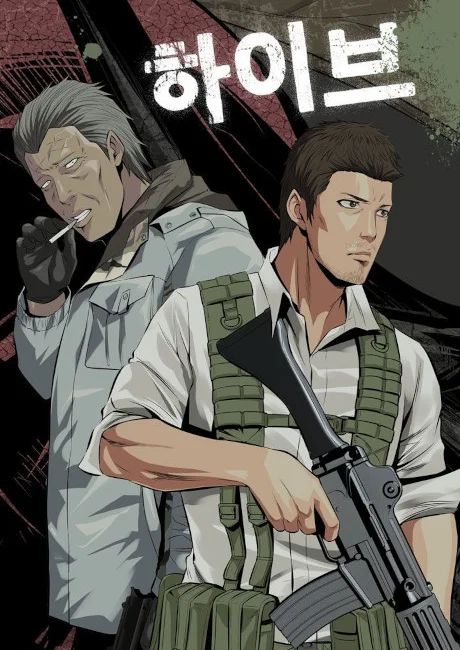 HIVE.
HIVE.
Gyu-Sam Kim's HIVE takes the alien-invasion premise somewhere stranger than most: the invaders are giant, oxygen-modified bees that have inverted the food chain, and humanity ends up somewhere near the bottom of it. The point-of-view character, Lee, isn't a soldier or a scientist. He's a middle manager whose only priority is keeping his family alive through what the story bluntly calls a bug apocalypse.
That unremarkable entry point is what makes HIVE work. Most body-horror survival stories center someone built for the fight. HIVE centers someone who very obviously isn't, and lets the mismatch generate both the tension and most of the dark comedy. Across 243 completed chapters, the scope escalates from a single besieged office building to something closer to full societal collapse, and Kim doesn't flinch from showing the toll that takes on ordinary people forced into extraordinary violence.
Status: Completed (243 chapters). Platform: WEBTOON, Naver Webtoon. Best for: horror-adjacent sci-fi readers who want body horror and dark comedy over clean action.
4. Duty After School
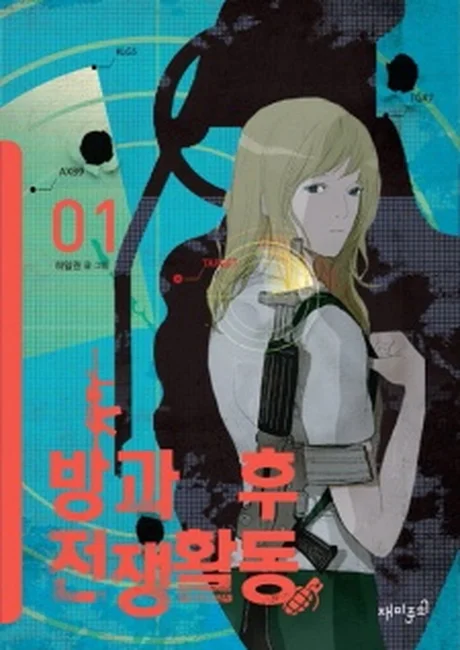 Duty After School.
Il-Kwon Ha's Duty After School starts from a grim logistical detail: something unidentified is falling from the sky, the invasion is killing people faster than the military can replace them, and Korea's government decides to conscript high school and college students into the fight. Fifty chapters, serialized 2012 to 2013, and every one of them is aimed at the specific horror of handing teenagers weapons because the adults have run out of other options.
It's bleaker than most alien-invasion manhwa, and it doesn't soften the outcome for its cast. TVING adapted it into a ten-episode live-action drama that aired March through April 2023, which is a reasonable litmus test: watch the compressed version first if you want the faster read, or go straight to the manhwa if you want the full weight of the decisions it makes, unedited.
Status: Completed (50 chapters, 2012-2013). Platform: WEBTOON, Naver Webtoon. Best for: readers who want alien invasion played as tragedy instead of escapist wish-fulfillment.
AI, Androids, and Machine Intelligence
Two picks that both ask what happens once AI stops being optional, at completely different scales.
5. Nano List
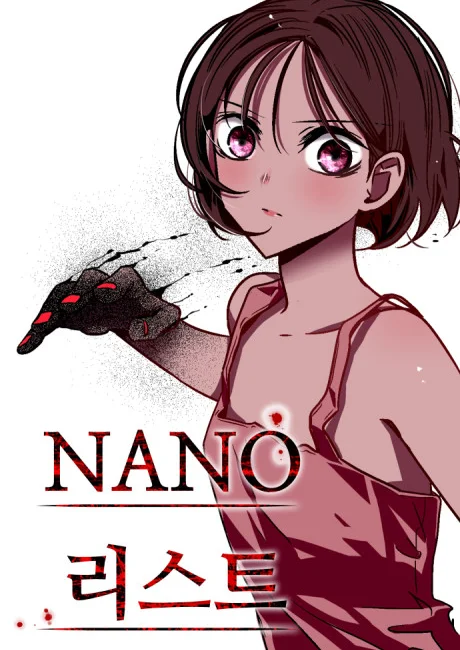 Nano List.
Song-A Min's Nano List is the most straightforwardly popular entry on this list by reader numbers, and it earns that popularity honestly. Milo lives in a near future where owning androids is unremarkable, right up until his sister gifts him two of them, one explicitly built as a bodyguard with lethal strength. The setup plays partly for comedy (what does an ordinary teenager do with a machine that could kill him by accident) and partly for a slow-burn mystery about why his sister thought he needed that kind of protection in the first place.
146 chapters, completed, and the android-as-household-object premise stays specific throughout instead of sliding into a generic robot-uprising plot. If your interest in sci-fi manhwa runs toward AI and artificial companionship rather than space travel, this is the strongest entry point on the list.
Status: Completed (146 chapters). Platform: WEBTOON, Naver Webtoon. Best for: readers who want android and AI sci-fi grounded in a single household instead of a whole society.


6. If AI Ruled the World
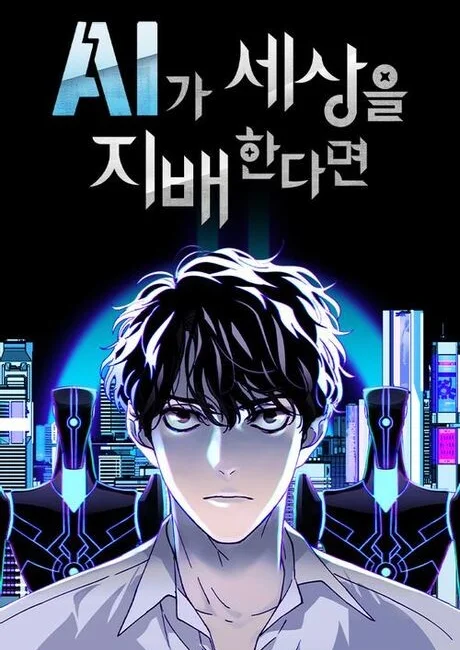 If AI Ruled the World.
Where Nano List keeps its AI premise domestic, POGO and HOOPA's If AI Ruled the World goes structural: artificial intelligence handles driving, healthcare, and most daily administration in this near future, and the story is built around what happens once that convenience stops being free. Fifty-two chapters, completed, told with drama pacing that treats "can humans and AI actually coexist" as an actually open question instead of a foregone conclusion in either direction.
It's a shorter commitment than most entries here, which makes it a reasonable test case if you're not sure whether dystopian-AI sci-fi is your genre before you commit to something longer. The title oversells the premise a little. It's less "AI seizes total control" and more "AI is embedded so deeply into daily life that removing it, or trusting it completely, both carry a cost," which is a more interesting question than the title alone suggests.
Status: Completed (52 chapters). Platform: WEBTOON, Naver Webtoon. Best for: readers who want AI dystopia without a hundred-plus-chapter commitment.
Denma's 1,414-chapter run is extreme even by manhwa standards. For more series built to go the distance, see
Best Long Running Manhwa →
Dystopian Mystery and Near-Future Collapse
Three picks for readers who want their sci-fi filtered through mystery pacing, found-family survival, or straight-faced disaster comedy.
7. Parallel City
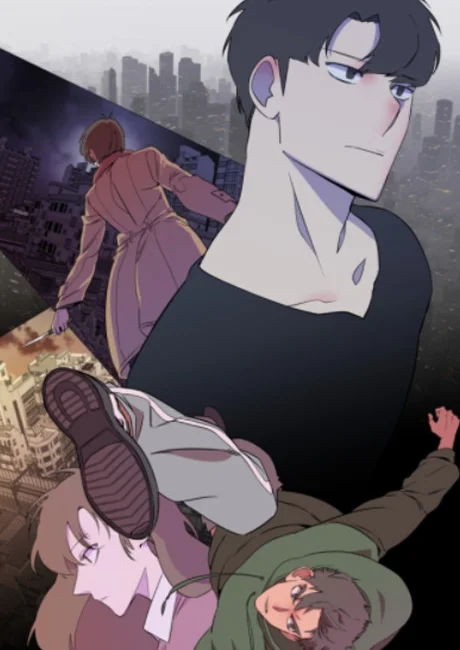 Parallel City.
Goda's Parallel City is a mystery-first sci-fi series that most "best sci-fi manhwa" roundups skip entirely, probably because its primary genre listing favors mystery over the more search-friendly sci-fi tag. The premise: people across a city start reporting doubles of themselves, then those doubles start disappearing, and nobody involved can tell whether what they're seeing is coincidence, conspiracy, or something closer to a systems-level malfunction in reality itself.
149 chapters, completed, and the pacing rewards patience. Parallel City plays its central mystery close for a long stretch before committing to an explanation, which is either exactly what you want from speculative mystery fiction or a pacing choice that will frustrate readers who want faster answers. Worth knowing before you start.
Status: Completed (149 chapters). Platform: WEBTOON, Naver Webtoon. Best for: readers who want sci-fi filtered through mystery-thriller pacing instead of straight action.
8. TACIT
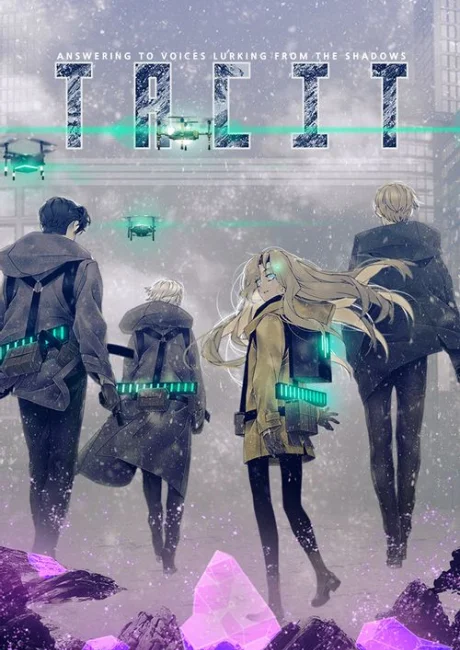 TACIT.
Dazzi Kim's TACIT sets its post-apocalypse in the near future: strange crystals emit a virus that turns people into something between undead and infected, and what's left of humanity clusters into safe zones like the one where Ruby lives with her father. The story kicks off properly when Ruby meets Arvan, pale-skinned, white-haired, and missing a heartbeat, and the two of them end up on a journey to figure out what actually caused the outbreak.
Eighty-five chapters, completed, and available on more platforms than most entries here (WEBTOON, Naver Webtoon, and Tappytoon all carry it), which matters if your usual platform doesn't have the earlier titles on this list. TACIT leans harder into found-family warmth than most virus-apocalypse manhwa bother with, softening some of the bleaker beats without undercutting the actual stakes.
Status: Completed (85 chapters). Platform: WEBTOON, Naver Webtoon, Tappytoon. Best for: readers who want post-apocalyptic sci-fi with a found-family core instead of pure survival grimness.
9. Cheolsu Saves the World
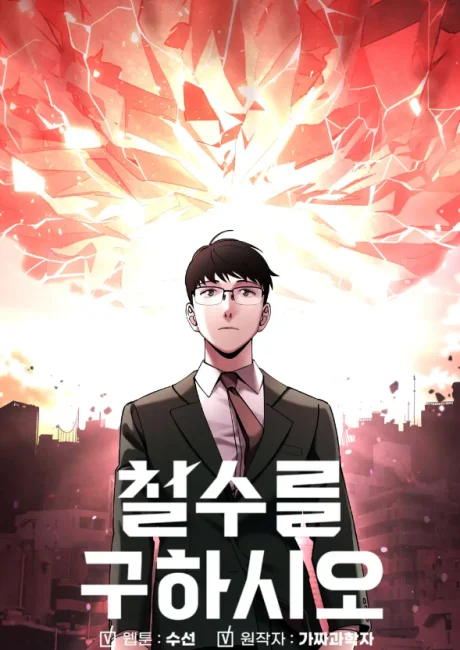 Cheolsu Saves the World.
The premise sounds like a joke and mostly plays like one, on purpose: an asteroid is about to wipe out Earth, humanity fails to stop it, and an entirely unremarkable Korean office worker named Cheol-Su gets sent back in time with the job of preventing the impact before it happens. Suseon's art and the original story credited to Gajjagwahakja treat the stakes as real while keeping Cheol-Su's total lack of qualifications as the running joke throughout.
Sixty-nine chapters, completed, and it carries the highest average reader score of any entry on this list. It's also the hardest to find.
Cheolsu Saves the World isn't on WEBTOON. It's licensed through Manta and Lezhin instead, which means readers who only check one platform for sci-fi manhwa will miss it completely. That's most of the reason it doesn't show up on other roundups covering this genre.
Status: Completed (69 chapters). Platform: Manta, Lezhin. Best for: readers who want disaster sci-fi played with comedic self-awareness instead of grim tone throughout.
Honorable Mentions
A few series get called the best sci-fi manhwa constantly and didn't make the cut, on purpose. Nano Machine reads sci-fi on the surface thanks to its nanotechnology upgrade system, but the genre DNA underneath is cultivation, not sci-fi; it belongs on the isekai and system-fantasy side of the site instead.
Sweet Home and God of Blackfield both get labeled sci-fi by casual recommendation lists, but AniList tags them Horror and Supernatural respectively, and reading them confirms that classification is right. Sweet Home's inner-monster mechanic runs on psychology, not technology. God of Blackfield is a revenge-and-resurrection drama with a high school setting, not a sci-fi premise. Both are excellent. Neither is what this list is for; find them on best dark manhwa instead. Hardcore Leveling Warrior's VRMMO setting sounds sci-fi-adjacent on paper but functions as fantasy-game LitRPG from the first chapter to the last.
Where to Read the Best Sci-Fi Manhwa
Advertisement
Knowing where a series lives matters as much as knowing which best sci-fi manhwa picks are worth your time, since a great pick on the wrong platform is still a series you won't actually start. WEBTOON carries seven of the nine picks here: Denma, Knight Run, HIVE, Duty After School, Nano List, If AI Ruled the World, and Parallel City, all searchable directly on webtoons.com.
TACIT is also available on Tappytoon if WEBTOON's episode-unlock pacing isn't for you. Cheolsu Saves the World is the one true outlier on this list. It's licensed through Manta and Lezhin, not WEBTOON, which is the single biggest reason it's missing from most other sci-fi manhwa recommendations despite having the highest average reader score of anything covered here.
Several of these titles also have screen adaptations worth knowing about. Duty After School's TVING drama is the clearest example, and it's part of a broader pattern of manhwa moving to live-action and streaming; the manhwa K-drama adaptations guide covers the other confirmed 2026 projects if that's a format you follow. TVING isn't just doing live-action, either: Terror Man, a completed Naver Webtoon sci-fi thriller outside this list, got an 8-episode anime on the same platform in January 2026, and the Terror Man manhwa guide covers the chapter count and what the anime actually adapts.
Frequently Asked Questions
What is the best sci-fi manhwa to start with?
Nano List is the easiest entry point: 146 completed chapters, a self-contained android premise, and the highest reader popularity of any title on this list. For something with bigger scope, HIVE's alien-bee apocalypse is a fast, dark-comedy read at 243 chapters.
Is there a manhwa about artificial intelligence?
Two, and they take different angles. Nano List keeps AI domestic, following a teenager living with two android companions built by his sister. If AI Ruled the World goes structural, following a near future where AI runs transportation and healthcare, and asks what that convenience actually costs.
What is the longest-running sci-fi manhwa?
Denma, by a wide margin. Yeong-Sun Yang serialized it on Naver Webtoon from 2010 to 2019 across 1,414 chapters, making it one of the longest continuously classified webtoons in Korean comics history, sci-fi or otherwise. Most Western manhwa readers have never encountered it.
Are there completed sci-fi manhwa worth reading?
Most of this list is complete: Denma (1,414 chapters), HIVE (243), Nano List (146), Parallel City (149), TACIT (85), Duty After School (50), If AI Ruled the World (52), and Cheolsu Saves the World (69) all have confirmed endings. Only Knight Run is still actively releasing.
What's the difference between sci-fi manhwa and isekai or system-fantasy manhwa?
Isekai and system-fantasy manhwa (Solo Leveling, Nano Machine, Overgeared) use game-like leveling systems inside a fantasy or portal-fantasy setting. The nine series on this list carry an actual Sci-Fi genre classification: space travel, AI, androids, alien contact, or near-future tech disaster, with no dungeon-crawling or stat window in sight.
Where can I read sci-fi manhwa in English?
WEBTOON hosts seven of the nine picks on this list: Denma, Knight Run, HIVE, Duty After School, Nano List, If AI Ruled the World, and Parallel City. TACIT is also on Tappytoon. Cheolsu Saves the World is the outlier, licensed through Manta and Lezhin instead of WEBTOON.
Is there a mecha or giant-robot manhwa worth reading?
Knight Run is the closest fit on this list: humanity fighting an unexplained alien threat during an era of deep-space exploration, with armored pilots called Knights carrying the front line. It's been serializing since 2009 and is still classified as ongoing, though English aggregators don't track a reliable current chapter count.
Related Reading
- Best Overlooked Manhwa: More completed series that don't show up on the usual recommendation lists, the same gap this list tries to fill for sci-fi specifically.