The Weak Hero reading guide exists because this is a completed series that rewards reading the whole run rather than sampling it. All 268 chapters are available. The ending exists and pays off what the premise sets up. In a genre full of long-running ongoing series with uncertain conclusions, that alone makes Weak Hero worth the time.
TL;DR: Weak Hero reading guide: 268 chapters, completed. Arc order: school arc ch 1-109, organized crime after. Tonal shift explained, Part 1 as standalone.
The series premise is deceptively simple: Gray Yeon, a slight, bookish transfer student, dismantles school bullying hierarchies through fighting that operates on physics and precision rather than size. The execution is more layered than that summary suggests. What follows is what to expect across the full run.
Overview
Weak Hero is a completed school-action manhwa by Seopass (story) and Razen (art), published on WEBTOON. The series ran 268 chapters and concluded with a full ending. All chapters are available now on WEBTOON with no ongoing wait. The series is rated for teen readers and older; it contains realistic school violence, serious injuries, and content depicting bullying without softening.
The premise: Gray Yeon transfers to Eunjang High, a school where social hierarchy is enforced through physical violence. He is slight, quiet, and academically focused. His fighting method uses physics, leverage, and precise targeting rather than size or strength, and it works because most school-violence hierarchies depend on the assumption that bigger always wins. The series escalates from this school-level premise through organized criminal networks that use schools as recruitment pipelines.
The series is by Seopass (story) and Razen (art). Razen's fight choreography is the visual distinction: each combat sequence shows weight distribution, contact points, and angle logic, making Gray's method legible on the page rather than just described. Platform: WEBTOON (free, official English). Status: complete at 268 chapters. No anime adaptation as of May 2026.
Weak Hero reading guide: key takeaways
- Weak Hero completed its run at 268 chapters; the series has a full ending
- Gray Yeon is not a power-fantasy protagonist; the fights are problems he solves, not tests of raw strength
- The series escalates from school hierarchy to organized criminal involvement over the course of the run
- Available on WEBTOON; the full run is readable now with no gaps
- By Seopass (story) and Razen (art); the partnership between script and visual choreography is central to the series' quality
Step-by-Step
Advertisement
1. Start at Chapter 1 on WEBTOON: The series reads in linear order with no spinoffs or seasonal breaks to navigate. The full 268-chapter run is free, with no subscription required.
2. Read on the WEBTOON app if you can: Razen's fight choreography uses panel height and vertical sequencing to convey movement, and the vertical scroll on mobile matches how the pages were composed. Desktop browser reading works but delivers a slightly different experience on the action sequences.
3. Read chapters 1-50 without skipping: The ensemble that matters in the final arc is introduced in these chapters. Secondary characters the series treats as important late in the run are first established here; missing their introductions means missing the payoff of their arcs.
4. Expect the scope to widen, not change genre, from the middle arc on: School-level violence connects to organized criminal networks by the middle arc (roughly chapters 110-200). The physics-based fight logic and the character work remain consistent throughout; only the scale of what Gray is operating against grows.
5. Decide at chapter 109 whether to treat Part 1 as a stopping point: Part 1 ends at chapter 109 and reads as a complete, contained school-arc story on its own. Part 2 (chapters 110-268) shifts into a darker, wider-scope register, so know that going in if you're deciding how far to read.
Weak Hero Reading Guide: The Premise
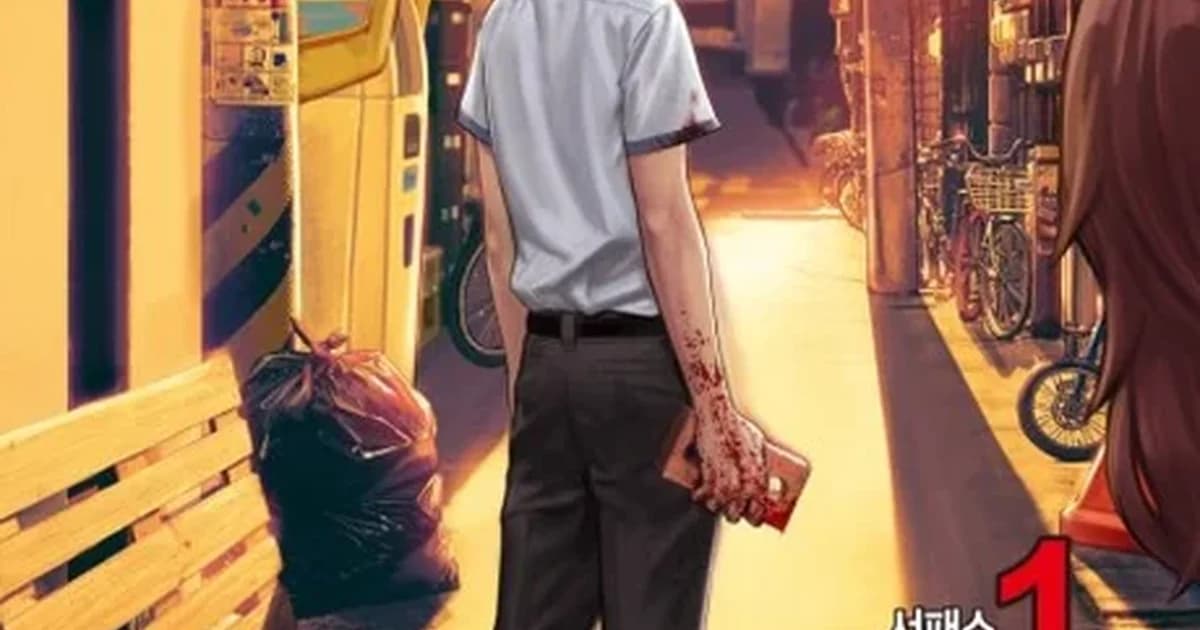
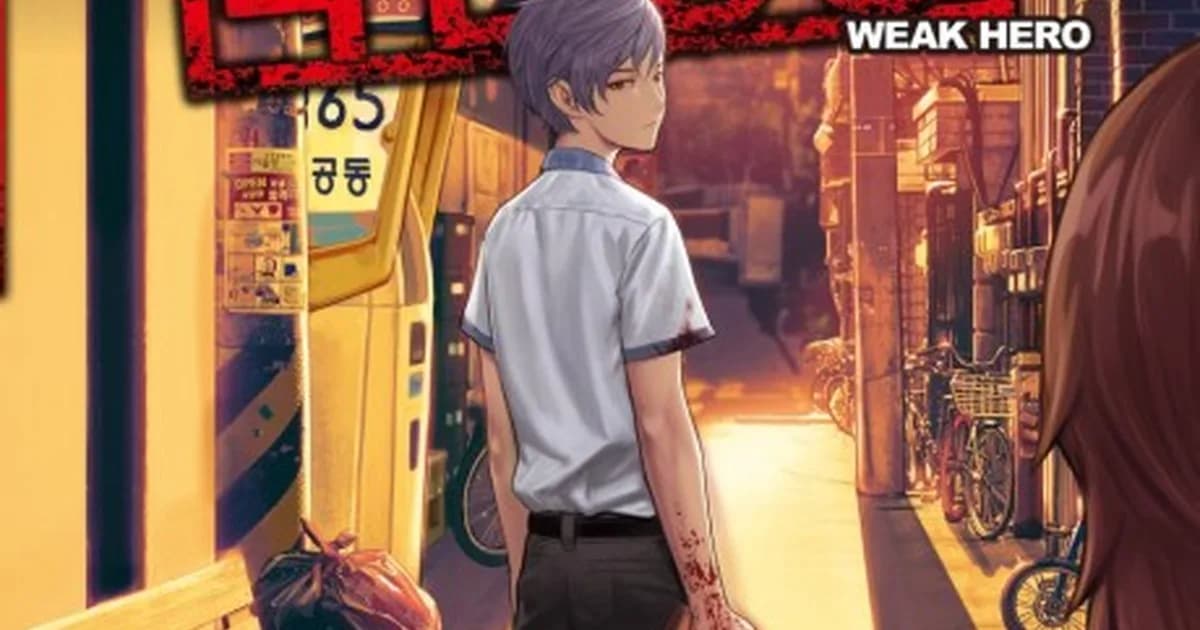
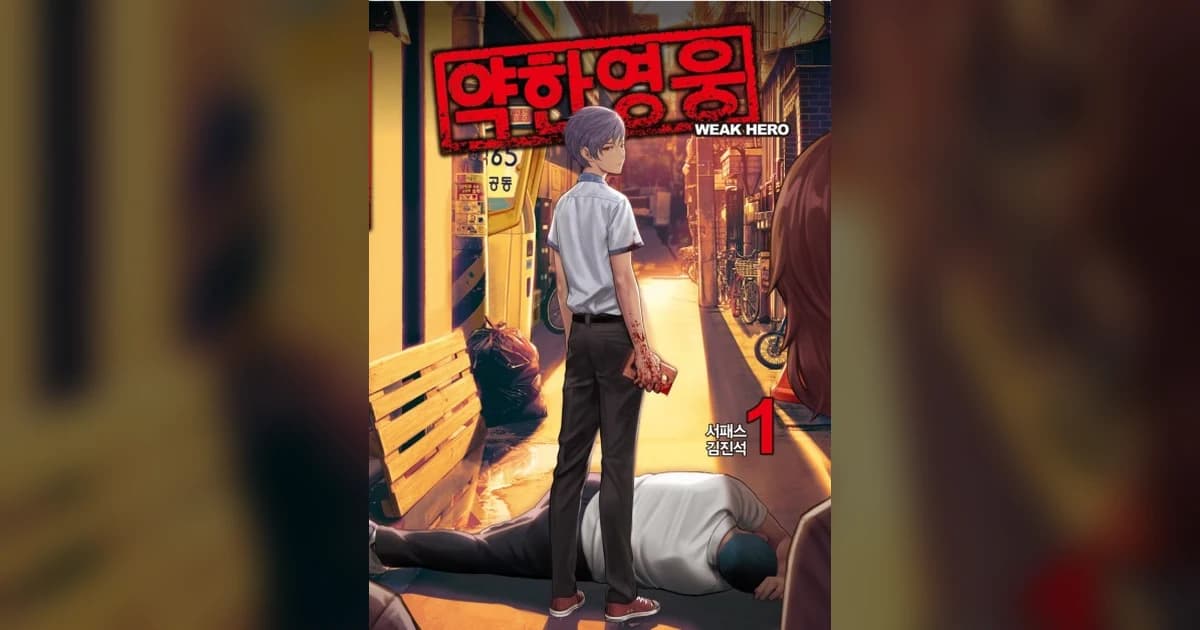
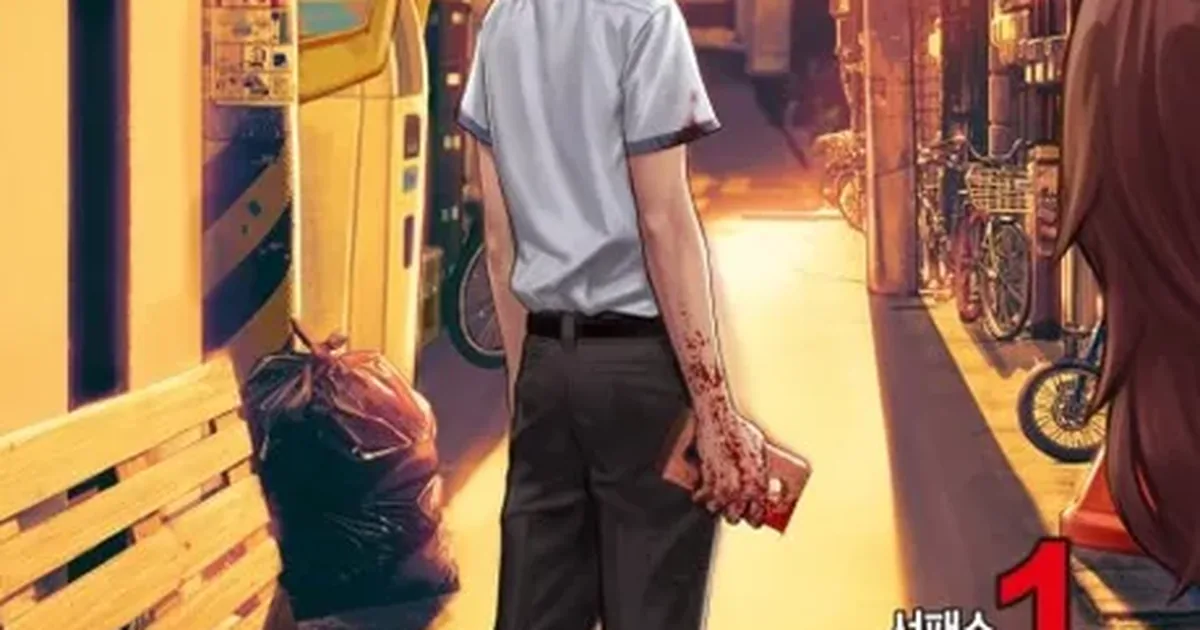 Official cover art for Weak Hero by Seopass (story) and Razen (art), free on WEBTOON with the completed 268-chapter run. Source: AniList.
Gray Yeon transfers to Eunjang High, a school where social structure is enforced through violence and controlled by a rotating cast of physically dominant students. He's small, quiet, gets top grades, and does nothing to attract attention until someone makes the mistake of targeting him.
His fighting method is the series' core innovation. Gray doesn't brawl. He identifies an opponent's weight distribution, the joints that don't bend backward, the specific pressure points that end a confrontation before it turns into a prolonged exchange. Each fight is a short, calculated problem. Hit the right target at the right angle with the right force and size stops being a factor.
The series uses this to examine something realistic: school hierarchies based on violence are maintained by the assumption that bigger always wins. Gray's method doesn't just beat individual opponents; it breaks the logic the hierarchy runs on.
Key characters to know
Gray Yeon: the protagonist. Quiet, studious, consistently presented as non-threatening until he isn't. His fighting method is the series' intellectual core, but his interior life (who he was before the transfer, what drove him to develop his approach) is the emotional core.
Donald Na: one of the first major antagonists Gray encounters with real organizational backing. His arc sets the pattern for how the series escalates: the threat isn't just physical size, it's access to networks and resources that individual ability can't simply outmaneuver.
Ben Park: Gray's closest ally through the run. His relationship with Gray functions as a moral compass for the series: Ben is the character who cares about the people around him in ways Gray doesn't always register, and his presence keeps the series from becoming purely tactical.
Jake Ji: a student whose path intersects with Gray's in ways that raise the series' core question in a different register: what happens to people who fight like Gray but don't have Gray's discipline or restraint?
The early chapters: Gray's method established
The first 50 or so chapters establish Gray's approach through a series of escalating confrontations. Each fight introduces a different type of opponent (bigger, more experienced, backed by stronger networks) and shows how Gray adapts his method rather than simply overpowering through training gains.
What these chapters also do is develop the ensemble. Weak Hero is not purely a one-character series. The students Gray encounters, the ones he doesn't help and the ones he does, the teachers who look away and the ones who don't: the social texture the series builds in the early chapters makes the later escalation meaningful. The violence in Weak Hero is embedded in a context that matters.
Razen's fight choreography establishes its visual language here too. The panel composition during fights shows weight, angle, and contact point rather than just action lines. You can follow exactly what Gray does and why it works; the visual logic mirrors the internal logic. This is consistent across the full 268 chapters; the art doesn't simplify as the series progresses.
For other completed school-action manhwa and where they rank:
Best Completed Manhwa →
The middle arc: escalation and background
As the series progresses, the scale of what Gray is operating against changes. School-level violence connects to organized criminal enterprises that use schools as recruitment pipelines. Gray's own background (where his precision comes from, who taught him, what the cost of that education was) becomes relevant in ways that recontextualize the early chapters.
This section of Weak Hero is where the series departs most clearly from a simple premise. The fights remain tactical and physics-grounded, but the stakes shift from social to physical survival in ways that require the earlier character work to carry weight. Readers who were engaged by the school-drama element will find it doesn't disappear; it becomes the frame around a larger conflict.
The ensemble deepens here too. Secondary characters from the early chapters take on more weight. Some of them make decisions that cost something. The series is consistent in its treatment of consequence; what happens to people in these environments doesn't reset between arcs.
One thing Weak Hero does in this section that the early chapters don't quite prepare for: it lets side characters be right about things the protagonist isn't. Gray's approach is effective. It's also narrow. Other characters notice what he misses, or understand situations from angles he doesn't have access to. The series earns its ensemble rather than just populating the background around its protagonist.
The final arc: resolution
By the final third of the run, Weak Hero is operating at a scale the first chapter couldn't have telegraphed. The criminal organizations are explicit. Gray's confrontations have moved past anything that fits in the category of "school fight." What remains consistent is the series' approach to its protagonist: he doesn't acquire power the genre usually grants; he applies his existing method to larger and more dangerous problems.
The resolution is earned in the way that distinguishes good completed series from good ongoing series: the ending addresses what the premise actually set up. The question Weak Hero asks in chapter 1 (what happens when you apply intelligence and precision to a system that only understands force) gets a real answer.
The final arc also resolves the character arcs that the middle section built. The relationships that mattered earlier are treated as relationships that still matter in the finale. This sounds like a basic standard but it's one many long-running series fail to meet; secondary characters in Weak Hero are not simply scaffolding that gets stripped away once the plot needs to move.
For action manhwa that blend school drama with broader combat:
Best Action Manhwa 2026 →
Why read it now
Weak Hero is worth reading specifically because it's done. The genre has no shortage of ongoing school-action manhwa with uncertain trajectories. Weak Hero has a shape: 268 chapters with a beginning, middle, and end that holds together as a single story.
The physics-grounded fight choreography also ages well. Razen's panel work on the combat sequences is detailed and readable; the spatial logic of each fight is clear on the page in a way that makes re-reading individual confrontations worthwhile.
Where to Read Weak Hero
WEBTOON is the primary official English source. The full 268-chapter run is available. Read in order; the series rewards continuity and early character introductions pay off late in the run. The vertical scroll format works well with Razen's fight choreography, which uses panel height and sequencing to convey movement in ways that print editions would have to adapt.
No physical edition has been widely announced for English readers as of 2026. Digital is the primary format. The WEBTOON app makes the reading experience comfortable on mobile; for a 268-chapter run, that's the recommended way to go through it.
If the school-social dynamic in Weak Hero resonated and you want more of it, Lookism → covers similar territory from a different angle; more explicit about appearance and social capital, and much longer at 600+ chapters.
Reading tips for Weak Hero
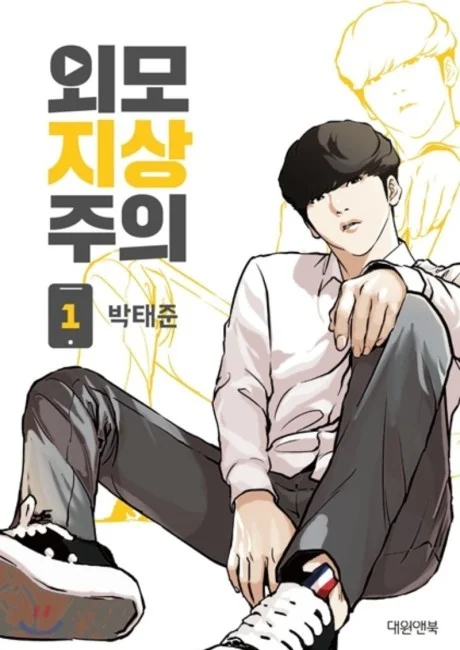 Lookism is the most consistent Weak Hero recommendation -- same school setting, overlapping character dynamics, different protagonist logic.
The fight choreography rewards attention. Each combat sequence in Weak Hero encodes the physics logic that makes Gray's method work. Readers who track what Gray is targeting and why (weight distribution, joint weakness, reach advantage) get more out of the fights than readers who follow action lines without the underlying logic. Razen makes this legible on the page: if a panel focuses on a knee angle or a grip position, that detail is doing work.
The middle arc (roughly chapters 110-200) is where the series makes its tonal shift. The school hierarchy connects to organized criminal networks, and the stakes become physical survival rather than social standing. Some readers hit this shift expecting more of the early-arc formula and feel the series has changed genre. It has not changed genre; it has escalated within the same logic. The physics-based approach to fighting and the character work both continue. The external scale grows.
Ben Park is worth tracking from his first appearance. His relationship with Gray functions as the series' moral compass; he is the character who registers the human cost of what Gray navigates. Readers who pay attention to Ben find the finale more emotionally complete.
A 268-chapter run at 20-30 chapters per session works out to 9-13 reading sessions. The series reads well in sustained sessions: the chapter-to-chapter momentum is consistent and arc breaks are natural stopping points.
Part 1 vs Part 2: What Changes and When
Weak Hero has two distinct parts, and readers who don't know about the division sometimes hit the transition and think something has gone wrong.
Part 1 ends at chapter 109. This is the school arc: Eunjang High, the network of schools feeding into Donald Na's organization, and Gray's confrontations within that system. The cast is relatively contained. The threats are local. The scale is school violence embedded in criminal networks that are present but not the primary focus. Part 1 reads as a complete story with its own shape, and it does function as a standalone if someone reads only those 109 chapters and decides to stop.
Part 2 (chapters 110-268) shifts the setting and expands the cast. The criminal organizations that were background infrastructure in Part 1 become the explicit subject. New characters are introduced with their own histories and motivations. The school setting doesn't disappear, but it's no longer the primary frame; it becomes one arena within a larger conflict. Gray's confrontations scale up in proportion.
The tonal shift is real but not a genre change. The physics-based fighting logic carries through. The character work built in Part 1 pays off in Part 2 in ways that make the earlier investment worthwhile. But Part 2 is darker in register, more willing to leave situations unresolved for extended stretches, and less contained in scope than what came before.
For readers who finished Part 1 and are deciding whether to continue: the series rewards the full run. The ending addresses what both parts set up. But Part 1 is the stronger half structurally, and readers who prefer the contained school-arc premise should know Part 2 commits to a different scale before they hit the transition.
Finding Part 2 is straightforward: it continues directly from chapter 110 on WEBTOON under the same series title. There's no separate listing or subtitle to search for.
Content Warnings: What to Expect from the Violence
Advertisement
Weak Hero is categorized as teen-appropriate, but the violence is closer to what most readers would call mature content.
The fights are not stylized in the way that most school-action manhwa treats combat. Razen's choreography shows contact points, joint stress, and injury mechanics with enough specificity that the consequences feel real. When a character takes a bad hit, the series shows what that does to a body rather than cutting away to the aftermath. Bones, blood, and the specific physical cost of Gray's methods are present on the page.
The bullying depictions are also specific. The series doesn't abstract school violence into competitive confrontation. It shows what systematic bullying does to people, including the psychological dimension, in ways that some readers will find more difficult than the physical fights.
Readers coming from True Beauty, Lookism in its lighter sections, or other school-setting manhwa with softer tonal profiles should know Weak Hero is operating in a different register. This is not a warning that the content is inappropriate, it's a calibration note: someone expecting romance-adjacent school drama will be surprised. Someone who wants realistic treatment of what school violence actually looks like will find the series handles it with care rather than exploitation.
There is no sexual content. The series is rated Teen on WEBTOON and that rating is accurate for readers who understand the violence is graphic in a specific and purposeful way.
Frequently Asked Questions
How long is Weak Hero? 268 chapters, completed. Full run readable now. Multi-week read at 20-30 chapters per sitting.
Is Weak Hero completed? Yes. Series finished, ending resolved. No ongoing wait.
Where do I read Weak Hero? WEBTOON. The full 268-chapter run is available at no cost, no subscription required.
What is Weak Hero about? Gray Yeon, a studious student who uses physics and precision to dismantle school bullying hierarchies, and the escalation that follows when those hierarchies connect to organized criminal networks.
Is Weak Hero appropriate for younger readers? Realistic school violence and some disturbing content. Teen-appropriate with awareness of context; not for younger children.
Who made Weak Hero? Seopass (story) and Razen (art).
Does Weak Hero have an anime? No adaptation confirmed as of May 2026.
For series recommendations in the same genre, see 8 Manhwa Like Weak Hero: Sorted by What Drew You In.
Related Reading
 True Beauty covers a similar reader age range from a romance-first angle -- school setting, identity theme, different genre register entirely.
- Best Completed Manhwa →
- Best Action Manhwa 2026 →
- Lookism →
- Weak Hero Review
- Weak Hero Character Guide: Every named character in the manhwa, verified against AniList and kept separate from the drama cast.