Loading…


ChapterBrief · Guides
God of Blackfield Reading Guide: 280 Episodes, 3 Seasons
God of Blackfield reading guide: 280 episodes on Tapas, Season 3 ended May 2026. The school arc is prologue. This becomes a spy thriller by episode 50.
7 min readBy Yuna Park

Reviewing
God of Blackfield
God of Blackfield reading guide: Kang Chan, the mercenary known as the God of Blackfield, gets killed and wakes up in a Korean high schooler's body. The series looks like a school revenge story for 40 to 50 episodes. Then the spy thriller starts.
TL;DR: God of Blackfield reading guide -- 280 episodes on Tapas, Season 3 ended May 2026, currently on hiatus. The school arc is prologue. By episode 50 this is a military intelligence thriller. Don't quit during the school section.
Key Takeaways
- Platform: Tapas (NOT on WEBTOON)
- Episodes: 280 across 3 complete seasons
- Status: Hiatus after Season 3 ended May 2026; Season 4 announced
- Authors: Story by Mujang and Un; art by Insung Shin
- School arc length: Episodes 1-40/50 -- get through this to reach the actual series
- Season structure: Season 1 = personal revenge, Season 2 = national ops, Season 3 = full geopolitical
God of Blackfield reading guide: what the series is
The pitch sounds like every other revival manhwa: legendary fighter dies, wakes up in a different body, has to work back to relevance. The opening arc runs with this. Kang Chan navigates Korean high school, handles bullies with the patience of someone calibrated for combat zones, and gets his identity straight.
If that's all you see before you quit, you've missed the point of the series.
God of Blackfield is a military spy thriller. Kang Chan doesn't stay in high school. His capabilities draw attention from actual intelligence agencies -- Korean domestic intelligence, French DGSE -- and within Season 2 he's operating on assignments no official government service can sanction publicly. Think mercenary contractor working across jurisdictions with real geopolitical stakes.
For a full critical assessment and rating, the God of Blackfield review covers the series at length. This guide focuses on how to read the 280 episodes without losing the thread early.
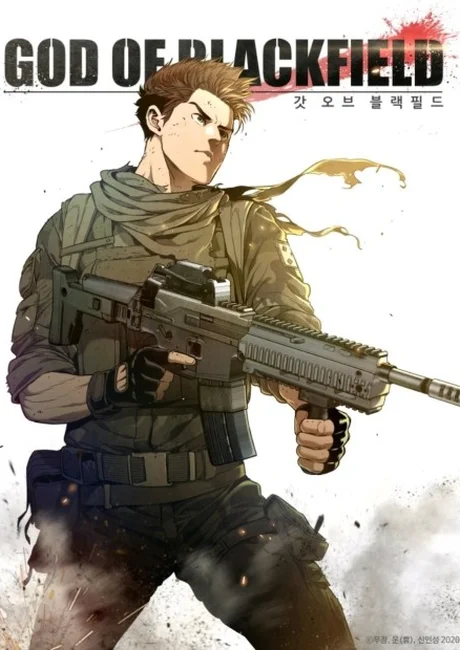 God of Blackfield by Mujang, Un, and Insung Shin -- 280 episodes across 3 seasons, available on Tapas
Season Breakdown
Advertisement
Season 1: Personal (episodes 1-~100)
The school arc occupies roughly the first 40 to 50 episodes of Season 1. Kang Chan deals with school-level conflicts -- bullying, social positioning, the dissonance between who he was and the body he's in. The comedy in these chapters comes from watching someone calibrated for battlefields navigate PE class.
Around episode 40-50, the shift begins. Kang Chan's actions attract notice from people who recognize what his skill level implies. An intelligence contact from the Korean DGSE liaison reaches out. The first off-school operation runs -- a retrieval job that has nothing to do with high school. After that, the school context shrinks rapidly.
The back half of Season 1 establishes the intelligence world that Season 2 will operate in fully. It introduces the Korean NIS, the French DGSE, and the specific question Kang Chan has been carrying since episode 1: who shot him from behind, and what were they trying to stop. The answer is complicated in ways the school arc doesn't hint at. By the end of Season 1, he has a network, a reputation in circles the school setting didn't touch, and enough information to start asking the right questions -- which is very different from having answers.
For another manhwa where the protagonist's past military identity drives the plot:
Kill the Hero Reading Guide →
Season 2: National (episodes ~100-200)
Season 2 is where the series earns its audience. Kang Chan operates between Korea and France, works alongside professional intelligence operators from multiple agencies, and gets drawn into a geopolitical conflict that crosses factions. The school setting is background at this point -- mentioned occasionally, not the environment.
The pacing in Season 2 is faster than Season 1. The arc structure is more confident. Individual operations have setup, escalation, and resolution without dragging into extended arcs that lose their momentum. For readers who found Season 1 slow, Season 2 usually changes that impression.
The revenge thread from Season 1 -- who shot Kang Chan from behind, and why -- gets complicated rather than resolved. The answer is entangled with the geopolitical conflict in ways that make the school-era framing feel small. This is one of God of Blackfield's stronger structural choices: it refuses to let the revenge plot resolve cleanly because the people involved are too embedded in the institutions Kang Chan now has to work alongside. The conflict is personal and institutional at the same time, and Season 2 earns the tension by keeping both threads active without forcing either.
Season 3: Full Scope (episodes ~200-280)
Season 3 extends the intelligence stakes further. The consequences of Kang Chan's alliances from Season 2 create new obligations and new threats. The final episodes before the hiatus deal with institutional fallout rather than individual revenge.
Season 3 ends in May 2026 with a hiatus announcement. Season 4 has been confirmed but has no release date. The ending of Season 3 is intentionally open -- the loose threads are story, not abandonment.
Step-by-Step
1. Start at episode 1 on Tapas: This is the only entry point, there's no separate season split on the platform. The series is not on WEBTOON, so search Tapas directly rather than looking there.
2. Push through the school arc (episodes 1 to roughly 40-50) without judging the series by it: Kang Chan handles school-level conflicts here while the series builds his identity. It reads slow if you're expecting the spy thriller immediately, but it's the setup Season 2 and 3 pay off.
3. Treat episode 50 as the decision point: This is where the intelligence recruitment storyline starts and the series shifts into a military spy thriller. Read to at least this point before deciding whether the series is for you.
4. Read in season blocks rather than chapter by chapter if you're bingeing: Season 1 (episodes 1-100) is slower and more social, Season 2 (episodes 100-200) is faster and operational, Season 3 (episodes 200-280) is the most procedurally complex. Treating each season as its own unit makes the rhythm shifts less jarring.
5. Budget for Tapas coins on the newest episodes: Older episodes unlock free over time, so catching up from episode 1 should be largely free-readable, but the newest chapters in the current season may still require coins.
How to read God of Blackfield without burning out
Readers who know what's coming through the school arc read it differently. It's not bad -- Insung Shin's art is clean throughout, and Kang Chan's character works even in the school context. But if you're expecting the series to stay there, it'll feel slow. Episode 50 is the inflection point. Read toward it, not against it.
Make it to episode 50 before deciding whether the series is for you. At that point you'll have seen enough of the intelligence world to judge whether the genre shift appeals. Readers who make it to 50 almost universally continue through Season 2. That's not a coincidence -- it's where the series shows its hand.
Each season has a different rhythm. Season 1 is slower: more social setup, more school. Season 2 is faster and more operational. Season 3 is the most procedurally complex. Reading in season blocks rather than chapter-by-chapter makes these shifts less jarring if you're bingeing.
One practical note: newer episodes on Tapas require coins. Older episodes unlock free over time. If you're catching up from episode 1, the early seasons should be largely free-readable at this point.
For Tapas manhwa in the same action-thriller tier:
Best Manhwa Not on WEBTOON →
God of Blackfield reading guide: where to read
Advertisement
English: Tapas at God of Blackfield on Tapas. The series is not on WEBTOON. Searching WEBTOON will not find it.
Korean original: The series originates on a Korean platform and was adapted for Tapas. The English translation on Tapas is the accessible route for most readers.
Current status: Season 3 complete as of May 2026. Season 4 in development with no release date. The hiatus between seasons is a known pattern for this series.
Related Reading
- Manhwa Like God of Blackfield: 7 more picks with a concealed combat past and a false-identity structure, closest match first
- God of Blackfield Review: full rating and critical breakdown -- 7.5/10, what the series gets right and where it slows
- Kill the Hero Review: anti-hero protagonist with a similar moral position, dungeon-hunter setting instead of spy thriller
- Manhwa Like Kill the Hero: six more cold-strategist picks if that unredeemed anti-hero tone is what you came for
- Absolute Regression Reading Guide: murim series where the protagonist's moral edge is the whole point, different genre but similar tone
- Manhwa Like Absolute Regression: more dark regression picks if that moral-edge tone is what you're after
- Best Manhwa Not on WEBTOON: Tapas, Lezhin, and KakaoPage series that don't show up on WEBTOON searches
Frequently Asked Questions
How long is the school arc in God of Blackfield? Roughly the first 40 to 50 episodes. By episode 50, the intelligence recruitment storyline starts and the series shifts toward the spy thriller it becomes through Seasons 2 and 3.
How many episodes does God of Blackfield have? 280 episodes across three complete seasons. Season 3 ended May 2026. Season 4 is announced but has no confirmed release date.
Where can I read God of Blackfield in English? Tapas. The series is not available on WEBTOON. Tapas uses a coin system for newer episodes; older episodes unlock free over time.
Should I push through the school arc? Yes. The school arc is setup. Episode 50 is the inflection point. Readers who quit before that miss what the series actually is.
Is Season 4 confirmed? Season 4 has been announced but has no confirmed date as of mid-2026. The hiatus between seasons is normal for this series.
Is God of Blackfield similar to Kill the Hero? Both have anti-hero protagonists with unusual skill sets. Kill the Hero stays in a dungeon economy. God of Blackfield goes geopolitical by Season 2. Same tone, different world.
What is God of Blackfield about? A legendary mercenary revived in a teenager's body. The school arc covers his re-entry. From around episode 50, the series becomes a military spy thriller about a battlefield-trained operator handling intelligence work across multiple countries.
References
- God of Blackfield on Tapas: official English platform, 280 episodes, Season 3 complete
- God of Blackfield on AniList: series metadata, action/drama, score 71/100
Was this guide helpful?
About the author

Anime and manhwa writer covering seasonal releases and ongoing webtoons since 2018. Seoul-born, Melbourne-based. Writes the way she reads — fast and direct.
- Covering anime and manhwa since 2018
- 400+ series completed across anime and manhwa
- Seasonal anime tracker for 6 years running
- Romance and fantasy specialist with deep genre knowledge




Disclaimer
This article is published for informational and entertainment purposes. It does not constitute professional financial, legal, or technical advice. Series availability, platform access, translation status, and chapter counts change. Verify critical details (pricing, regional availability, official translation status) with publishers and platforms. Affiliate links, where present, help support our editorial work and are labelled in our affiliate disclosure.
Comments
Loading comments…