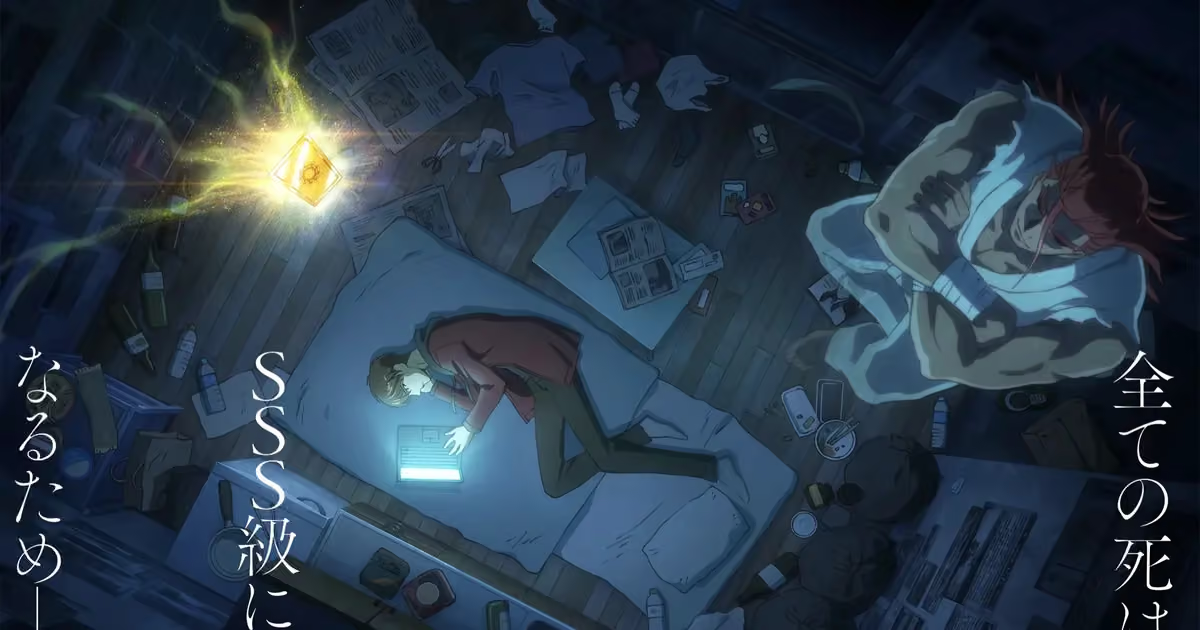


TL;DR: SSS-Class Revival Hunter reading guide in short: start at episode 1 on Tapas (as SSS-Class Revival Hunter), read in order, and know that the manhwa is on hiatus after Season 4 at 154 episodes, Tapas closes on March 31, 2027, and a TV anime arrives in January 2027.
Recent updates:
- October 8, 2026: corrected the novel's English release (Wuxiaworld has an official licensed translation; we previously said only fan translations existed) and the mechanic (the 24-hour reset is the Flame Emperor's regression skill, copied; we previously said this was not a regression story). Added Tapas's end of service, and removed anime staff and chapter-number details we could not source.
This SSS-Class Revival Hunter reading guide is about order and access, not plot recaps: where the series is published, where it stops, and what changed in 2026. The premise fits in one line. Gong-ja Kim copies abilities by dying, and the first ability he copies lets him go back in time.
Overview
SSS-Class Revival Hunter is the series' official English title; AniList also lists it as SSS-Class Revival Hunter. AniList lists it as RELEASING since December 31, 2020, with story by Neida, art by Bill K, and the original web novel by No-A Sin (credited on Tapas and Yen Press as Sinnoa). The English webcomic runs on Tapas, Yen Press publishes it in print, and the Korean original is on KakaoPage and Kakao Webtoon.
Tapas sums up the setup: in a "mysterious, RPG dungeon-like Tower," the protagonist lives a mundane life envying the star hunters until he receives "a legendary skill to copy others' abilities… at the cost of his life." Tapas's translation calls him Confucius Kim; AniList and the anime use Gong-ja Kim, his Korean name.
The status in October 2026: 154 episodes on Tapas, Season 4 finished, and a hiatus before Season 5 announced on February 27, 2026. Three other things changed this year: the anime announcement, Tapas's shutdown date, and the completed novel's licensed English release. All three are covered below.
Key Takeaways
- SSS-Class Revival Hunter reading guide: start at episode 1 and read in order; the opening chapters set up the mechanic
- 154 episodes on Tapas; Season 4 has ended and the series is on hiatus before Season 5 (announced February 27, 2026)
- Tapas ends service on March 31, 2027, and unlocked episodes can't be moved to Kakao Page or Kakao Webtoon
- TV anime: January 2027, Studio fu, streaming on Crunchyroll
- The web novel is completed in Korean at 400 chapters, with an official English translation on Wuxiaworld
- For the series verdict: SSS-Class Revival Hunter review
SSS-Class Revival Hunter reading guide: the mechanic
Advertisement
The mechanic is two skills stacked together, not one. The first is Gong-ja's own skill, which copies abilities but only through his death. The second is the one he copies first: when the Flame Emperor kills him, he gets the Flame Emperor's regression skill. The fan wiki describes how that first death plays out: it "activated his S+ skill which allowed him to copy Flame Emperor's regression skill, thus returning 24 hours before he was killed."
So it is a regression story, just an unusual one. The time travel is borrowed from the man who killed him, the jump is only 24 hours, and dying is the way in. The anime's synopsis frames the cost from the start: Gong-ja, "a weak F-rank Hunter," gains "a rare S-rank skill, with one catch: he must die to activate it." The fan wiki calls the skill card "I Want to Be Like You!" and lists it as S+.
That's why reading in order matters more here than in most system fantasy. The rules of what Gong-ja can copy, and what each death costs him, are set up in the first episodes and every later fight depends on them.
For how SSS-Class Revival Hunter compares to other system fantasy series in the genre:
Best System Fantasy Manhwa →
Gong-ja Kim and the cast you meet first
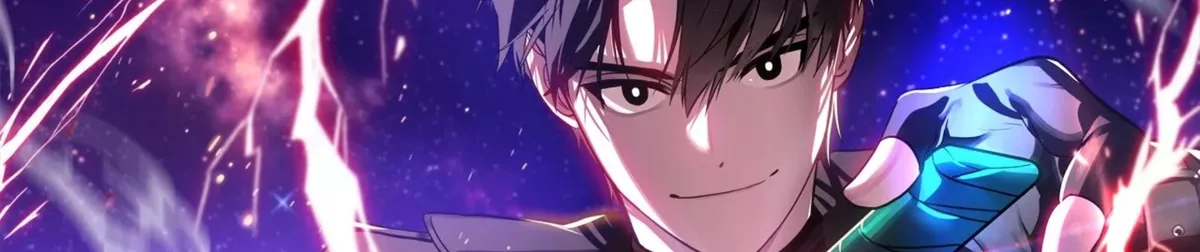 SSS-Class Revival Hunter banner. Banner via AniList.
Gong-ja starts at the bottom. The fan wiki describes him as an F-rank hunter who was an orphan before entering the Tower, bullied by people who looked down on him and envious of the elite. His rank history on the same page runs from F up through E, D, C, B, A and S to SSS, so the title is where he ends up, not where he starts.
AniList's main cast is Gong-ja Kim and the Sword Emperor (Geom-Je). The supporting cast includes the Flame Emperor (So-Ha Yu), the Black Witch (Anastasia Zelenska) and the Heresy Inquisitor (Bambollina). For the full cast with roles: SSS-Class Revival Hunter characters guide.
SSS-Class Revival Hunter reading guide: arc breakdown
There is no official arc-by-chapter map for the manhwa, and this SSS-Class Revival Hunter reading guide won't invent one: what follows is only what the official sources show. Tapas lists episodes by number and title, not by arc, and the fan wiki's arc pages are not reliable enough to cite.
What the official sources do show is the shape of the opening. Episode 1 is the prologue (March 22, 2021). The numbered chapters start with "A Loser's Envy," "The Real Flame Emperor" and "Skill Activation." That's the setup: envy, the first death, the copied skill.
For the shape of the whole story, a Wuxiaworld reader review of the novel is useful: "several arcs are deconstructions of usual genres, like murim, villainesses, demon kings." AniList's tags point the same way (Wuxia, Villainess, Necromancy, Time Loop). Expect the series to drop Gong-ja into a new genre setting, apply the death mechanic to it, then move on.
The Tapas feed shows 154 episodes, with Season 4 closed in February 2026. That's where the manhwa stops for now.
For a broader view of where SSS-Class Revival Hunter sits among this year's picks:
Best Manhwa to Read in 2026 →
Where to read SSS-Class Revival Hunter (and the Tapas deadline)
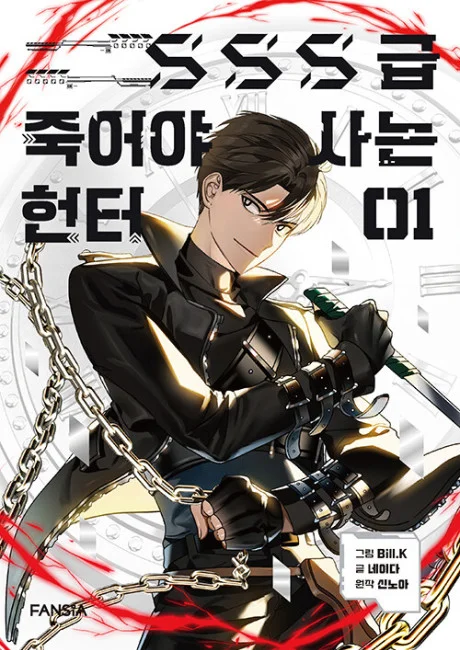 SSS-Class Revival Hunter by Neida, Bill K and Sinnoa. Cover via AniList.
The official English webcomic is on Tapas as SSS-Class Revival Hunter; episode 1 is free. Yen Press publishes the print edition, crediting Bill K (artist), Neida (adapted by) and Sinnoa (original author). The Korean original is on KakaoPage and Kakao Webtoon.
The deadline matters for anyone buying episodes. Tapas published an end-of-service FAQ: the "end of tapas service: march 31, 2027 at 23:59 pt." After that, readers "will no longer be able to access tapas, including any previously unlocked content." Free ink stopped on October 1, 2026, and Tapas says unlocked content "cannot be transferred to another kakao service or platform." Tapas has not said where its titles will go next, so think twice before buying a large batch of episodes.
The anime is the other route in. AniList lists SSS-Class Revival Hunter as a TV series for January 2027 with STUDIO fu as the main studio, and Crunchyroll will stream it "worldwide, excluding parts of asia." Cast and staff details are in our SSS-Class Revival Hunter anime guide. Crunchyroll's official teaser:
Official teaser via Crunchyroll on YouTube.


SSS-Class Revival Hunter vs. similar series
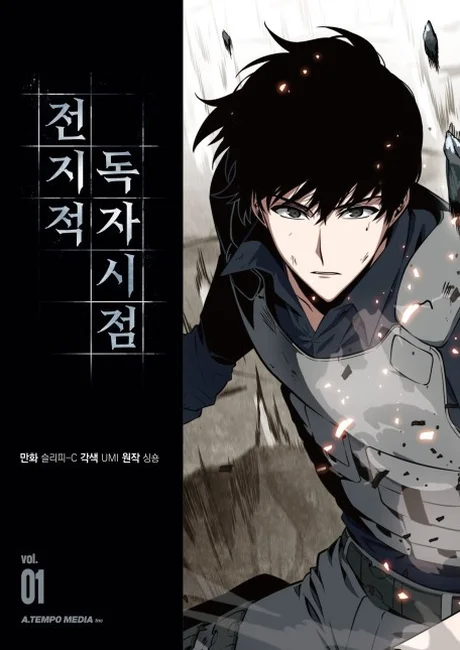 Omniscient Reader's Viewpoint by Sleepy-C, UMI and Singsyong. Cover via AniList.
Most manhwa like SSS-Class Revival Hunter lists land on other tower and regression series. The fair comparison point is foreknowledge: Gong-ja's edge is 24 hours of a future he has already lived through and died in.
Omniscient Reader's Viewpoint is the closest companion: another protagonist whose advantage is knowing what comes next, and a story that cares what that knowledge costs. Solo Leveling is the common comparison for the bottom-ranked-hunter start, though its power curve is about accumulation rather than dying. Return of the Blossoming Blade and other murim regression series share the second-chance premise in a martial arts setting.
Step-by-Step
The SSS-Class Revival Hunter reading guide in five steps:
1. Start at episode 1 on Tapas: Search for SSS-Class Revival Hunter, the official English title. The prologue is free and sets up the Tower and the hunter ranks.
2. Read the first numbered chapters without skipping: "A Loser's Envy," "The Real Flame Emperor" and "Skill Activation" establish the copy skill and the 24-hour regression, which every later chapter relies on.
3. Read through to episode 154: That's the end of Season 4 and the current end of the manhwa; Tapas announced a hiatus before Season 5 on February 27, 2026.
4. Plan around March 31, 2027: Tapas closes then and unlocked content goes with it, so don't stockpile purchases you can't finish before that date.
5. Decide on the novel last: The web novel is complete at 400 chapters on Wuxiaworld, so it spoils the ending. Read it only once you've accepted that.
Reading tips for SSS-Class Revival Hunter
The main SSS-Class Revival Hunter reading guide tip: read slowly through the early episodes. The point of each death is what it teaches Gong-ja, and that only lands if you track what he knew before and after the reset.
Don't judge the series by the opening alone. The structure that readers praise, a new setting tested against the same death mechanic, only shows once the story starts moving between settings. The Wuxiaworld reviewer's line about arcs that are "deconstructions of usual genres" is a good expectation to bring in.
Keep the title confusion in mind when searching: Tapas, Yen Press, Wuxiaworld and the anime all use SSS-Class Revival Hunter. SSS-Class Suicide Hunter is the alternative title AniList lists for the same series.
Manhwa vs. web novel: whether to switch
Switching is possible and official now. Wuxiaworld lists the novel as "completed" with 400 chapters, "licensed from sinnoa/ jayplemedia," translated by Namu, and it gives "1 free chapter every 23 hrs." The novel's status in Korean is completed, so it covers the full story.
Where to jump in is a reader estimate, not an official mapping. A post on the series subreddit says: "If you're caught up on the Manhwa and want to read the novel you can start on chapter 160." In the same thread, another reader points to the licensed release: "Wuxiaworld is fully translated, and the officially licensed release."
Our Take
This take rests only on the Tapas, AniList, Wuxiaworld and anime sources cited above. If you're new to the series, read the manhwa on Tapas now and finish before March 31, 2027, or wait for the January 2027 anime. If you're caught up and can't wait for Season 5, the licensed novel is the legitimate way forward, but it is complete, so you'll get the ending.
How We Checked This
Advertisement
On October 8, 2026 we checked this guide against the Tapas series page and end-of-service FAQ, AniList's records for the manhwa and the anime, the official anime site, Yen Press, Wuxiaworld, the fan wiki's Gong-ja Kim page, Crunchyroll's teaser, and one r/SSSClassSuicideHunter thread. Each fact has a row in our sources table with a quoted line from the page. On this pass we corrected the novel's English release and the mechanic's description, and added Tapas's end of service. We removed a "latest numbered chapter" figure that didn't match the Tapas listing, anime director and voice-cast names we did not re-check, an Ize Press credit, season-by-arc chapter ranges, a claimed early turning-point chapter, rank-system details, claims that the series is a fan translation on WEBTOON, and Reddit claims we could not open.
Last reviewed: October 8, 2026
Frequently Asked Questions
Where do I start reading SSS-Class Revival Hunter?
Episode 1 on Tapas, listed as SSS-Class Revival Hunter. The prologue is free, and the first numbered chapters set up the death mechanic.
How does the mechanic work?
Gong-ja's skill copies abilities at the cost of his life. When the Flame Emperor kills him, he copies the Flame Emperor's regression skill and returns 24 hours before he was killed.
SSS-Class Suicide Hunter or SSS-Class Revival Hunter?
Same series. SSS-Class Revival Hunter is the official English title; SSS-Class Suicide Hunter is an alternative title for the Korean SSS-geup Jugeoya Saneun Hunter.
How many chapters?
154 episodes on Tapas through Season 4. The web novel is completed at 400 chapters.
Is there an anime?
Yes: a TV anime in January 2027 from Studio fu, streaming on Crunchyroll.
Is it on hiatus?
Yes. Team Tapas announced on February 27, 2026 that Season 4 had closed and Season 5 would follow after a hiatus, with no date given.
What happens when Tapas shuts down?
Tapas ends service on March 31, 2027, and unlocked content can't be accessed or transferred to Kakao Page or Kakao Webtoon after that.
Should I switch to the web novel?
Only if you accept spoilers: it's complete and licensed in English on Wuxiaworld. One reader suggests starting at novel chapter 160 after catching up on the manhwa.
Related Reading
- SSS-Class Revival Hunter review →
- SSS-Class Revival Hunter Characters: The Full Cast Guide →: the cast, verified against AniList.
- Best System Fantasy Manhwa →
- Best Manhwa to Read in 2026 →
- Best Completed Manhwa →