Loading…
Loading…
ChapterBrief · Guides
Solo Leveling reading guide: arc breakdown, chapter ranges, art notes, and where to read. Covers the full 179-chapter run plus 21 side story chapters.

This Solo Leveling reading guide covers the full 179-chapter run, arc by arc and chapter range by chapter range, plus where the art actually gets good and where the series changes genre on you.
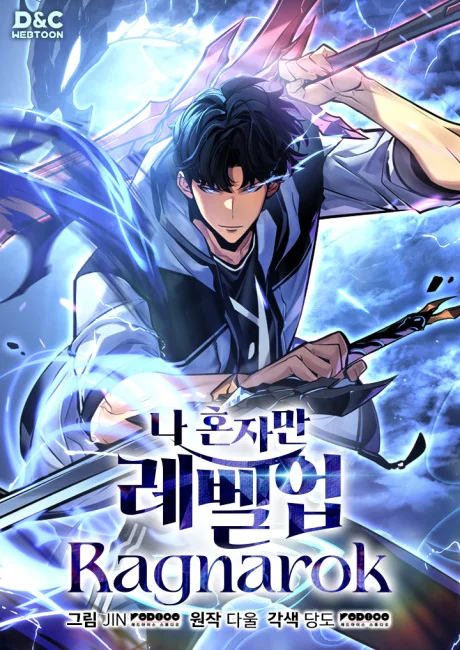
Solo Leveling is 179 chapters of a single thesis: what if the weakest person gained a system that nobody else had, and followed it to its logical extreme? That's the setup. The execution is where DUBU earns the reputation. If you've watched the anime and want to know where Season 2 left off, that's in here too.
TL;DR: Solo Leveling ran 179 chapters plus 21 side stories, completing in December 2021. The story divides into five arcs; Jeju Island (chapters 71-110) is where the series peaks. Art quality shifts significantly between chapters 1-25 and the series from chapter 50 onward
In the world of Solo Leveling, portals appeared connecting Earth to dungeons filled with monsters. Hunters (people with abilities) formed guilds to clear them. Sung Jin-Woo started as an E-rank Hunter: the weakest classification, no real power, taking low-paying jobs to pay his mother's hospital bills.
The series opens with Jin-Woo surviving a double dungeon (a hidden chamber inside a dungeon that was supposed to be cleared) by accepting a quest from a mysterious interface that appears only to him. That interface, called the System, gives him experience points, stat increases, and skill unlocks. He levels up. The dungeon doesn't.
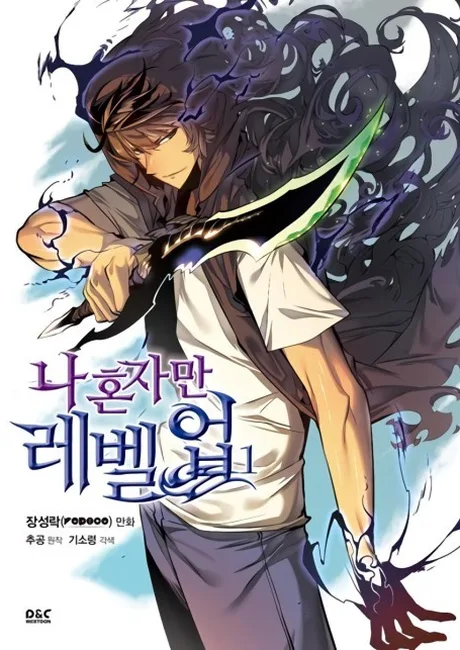
The web novel "Only I Level Up" by Chugong was published on KakaoPage starting in 2016. REDICE STUDIO's DUBU (Jang Sung-rak) adapted it into manhwa form from 2018 to 2021. It's a reinterpretation rather than a direct illustration, with pacing and visual choices that don't always match the source.
The core appeal is system mechanics as the central engine of the plot. Jin-Woo doesn't just get stronger through training or experience. He has a literal interface telling him he gained 320 EXP and his Agility increased by 4. The video-game framing is explicit rather than metaphorical, and the series builds on it consistently rather than using it as window dressing.
Our Solo Leveling review covers the full story arc, art quality, and what the ending delivers.
Solo Leveling Review →
The series starts at the double dungeon incident in chapter 1. The visual style here is rougher than what the series becomes: thinner line weights, less dynamic panel composition. Don't drop it based on chapters 1-10.
By chapter 10, Jin-Woo has his System and is grinding D-rank dungeons alone at night, hiding his actual stat gains from the Hunter Association. By chapter 20, he's clearing C-rank dungeons without breaking a sweat while officially registered as E-rank.
The key setup that pays off for the entire series: the System doesn't just grant stats, it grants skills. The first major skill, Ruler's Authority, telegraphs what Jin-Woo actually is. The series plants this in chapter 18 and doesn't explain it for another 90 chapters.
This is the longest arc and the one most readers either skip on reread or consider the weakest section. It's not bad. The Hapjeong basement dungeon sequence (chapters 40-55) is genuinely tense, and Jin-Woo's logic for declining every guild offer is consistent with his character. But the pacing is deliberate.
The arc's main structural job is establishing the Hunter world: how guilds operate, what S-rank gates look like, who the named characters are. Cha Hae-In, Hwang Dong-Su, and the Go Gun-Hee storyline all start here.
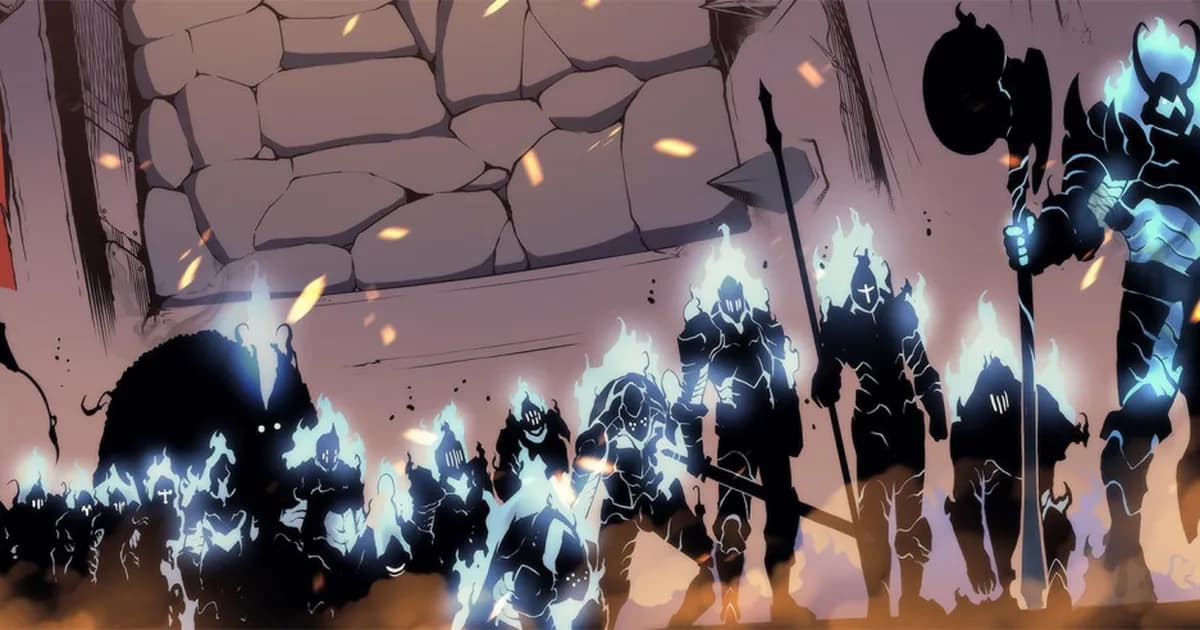
Chapter 68 is when the art fully arrives. The double-page spread of Jin-Woo's shadow soldiers appearing for the first time is where DUBU's compositional ambition clicks with the series' scale. Everything from chapter 68 onward looks like a different series from chapters 1-25.
Jeju Island is the series at its best. A horde of ant-type monsters has claimed the island; Korea's S-rank Hunters assemble for a raid that should be decisive. It isn't.
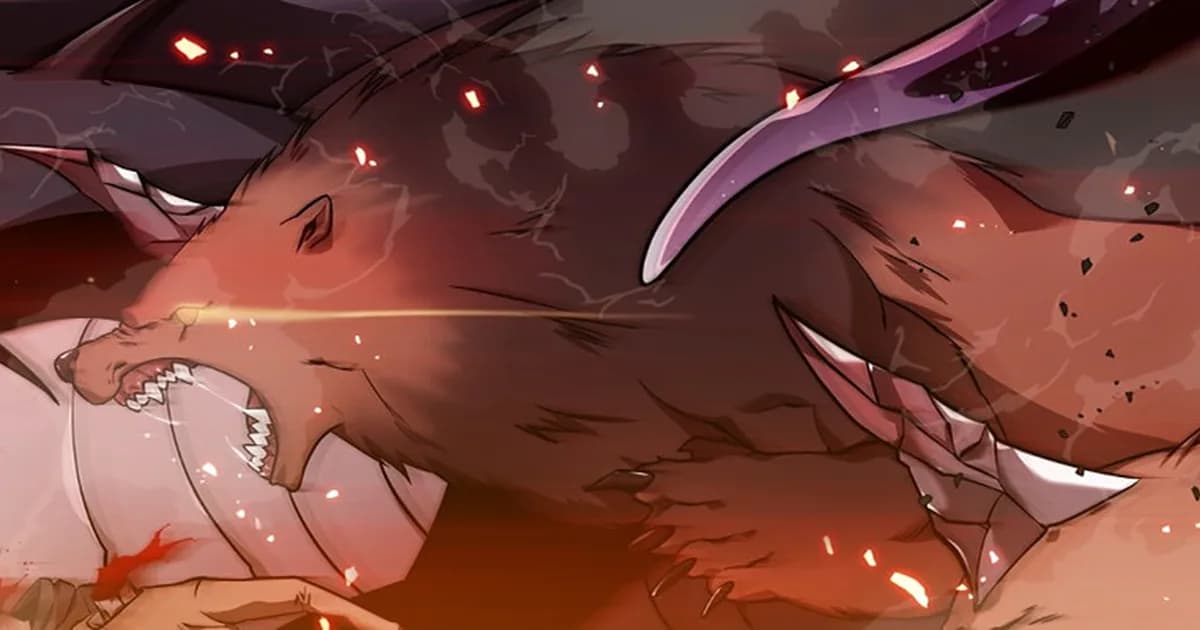
The ant king (Beru) is the specific point where the series commits to a villain genuinely threatening to the protagonists. Chapters 95-100 contain some of the most widely shared panels in manhwa: the destruction is choreographed clearly, the power gap is visceral, and DUBU uses the vertical scroll format to build tension through descent rather than just horizontal action.
Jin-Woo's arrival at chapter 100 is the sequence the series has been building toward. The fight from chapters 100-108 is 8 chapters of continuous action with almost no dialogue. For a reader coming from weekly-release serialization, this is the sequence that turns passive readers into people who immediately look for manhwa like Solo Leveling.
What the arc also does quietly: establishes that Jin-Woo is operating outside any normal Hunter classification. By chapter 110, the Hunter Association's S-rank system is rendered structurally irrelevant to the story.
This is where Solo Leveling becomes a different genre than it started as.
Up to chapter 110, it's a system-progression manhwa about a former weakling becoming strong. Chapters 111-115 reframe the entire premise: the System exists because Jin-Woo was selected as a vessel for something larger. The Monarchs (ancient beings who see humans as tools) are the actual antagonists. The "leveling up" was preparation.
This reframing alienates some readers who wanted the dungeon-grinding premise to continue indefinitely. It worked for me: the series had been seeding the Monarchs since chapter 18 and needed to pay the setup off. The Japan arc (chapters 120-135) is where the Monarch framework takes its first direct form in the plot.
Two specific panels in chapter 125 recontextualize the entire first arc. I won't describe them in detail, but if you've read up to chapter 124, you'll know immediately which ones.
For readers coming from the anime, Season 2 (Monarch of Shadow) covers approximately chapters 55-110. The Japan arc and the Monarchs revelation are not in the anime yet.
Note: This is also where the series' tone shifts from tactical problem-solving to mythological confrontation. If you preferred the dungeon-grinding early chapters, know that the final arc doesn't return to that format.
If you're looking for completed series with similar system-fantasy mechanics, best system-fantasy manhwa covers the field, though nothing there matches what Solo Leveling does in chapters 100-125.
The final 39 chapters are about momentum more than complexity. The Rulers, an opposing faction to the Monarchs, have their agenda; Jin-Woo has to decide whose war he's fighting.
Chapter 159 is the one most discussed in spoiler threads. It handles Jin-Woo's relationship with his father (dormant since chapter 30) better than most readers expect. A quieter chapter surrounded by action, and that contrast is intentional.
The final confrontation spans chapters 164-175. DUBU's panel density increases: some double-page spreads in this stretch are among the most labor-intensive in the run, and it shows. Chapter 175 specifically (the scale of the composition relative to the character positioning) is a genuine technical achievement in the format.
Chapter 179 is the epilogue. It's short. It answers every character's fate in 18 pages and doesn't outstay its welcome. The side stories (chapters 180-200) add 21 chapters that serve as the actual ending, covering Jin-Woo and Cha Hae-In's relationship, the world adjusting to the aftermath, and a time-skip introducing Sung Suho. They are essential reading, not bonus material.

DUBU's style is full-color webtoon with high panel density in action sequences. The art is not uniform across the run.
Chapters 1-40: thinner lines, simpler background detail, smaller shadow army designs. Competent but not distinctive.
Chapters 41-70: the shadow army's visual vocabulary solidifies. The creature designs for the ant arc start appearing in chapter 65 and immediately look different from anything in the series to that point.
Chapters 71-140: this is the art most people mean when they cite Solo Leveling's visual reputation. The ant designs are grotesque and detailed in the specific way body horror works best: too many joints, too much weight. Jin-Woo in shadow armor is a different design language from his early-series appearance, and the contrast is deliberate.
Chapters 141-179: the scale increases but detail density drops slightly in the most complex multi-character spreads. The double-page spreads still land. There are four in the final arc that read as deliberately composed images rather than sequential panels, but they're doing different work than the Jeju sequence.
One practical note: WEBTOON's free version compresses images. If the art quality matters to you more than cost, Tappytoon's version is noticeably sharper, especially in the dark-on-dark action sequences from chapters 100 onward.
Our best action manhwa list covers the top titles to read after finishing Solo Leveling.
Best Action Manhwa 2026 →

The anime adaptation (A-1 Pictures) is well-produced. Season 1 covers approximately chapters 1-45; Season 2 (subtitled Monarch of Shadow) covers through the end of the Jeju Island arc, roughly to chapter 110. A third season would presumably cover the Monarchs revelation and final arc.
The case for the anime: the score, the fight animation in episodes 7 and 8 of Season 1, and if you want to see the double dungeon sequence with sound design before committing to the manhwa.
The case for the manhwa: everything else. DUBU's paneling in the ant arc specifically does things animation struggles to match. The static composition of certain double-page spreads builds tension differently than sequential animation. The chapter 100 arrival scene hits differently as a single image you choose when to look away from.
Practically: if you watched both anime seasons and want to continue the story, you need the manhwa. The anime is not complete and Season 3 has no confirmed release date as of mid-2026.
For readers who discovered manhwa through anime (a common path), best manhwa for anime fans covers the entry points by which anime you came from.
WEBTOON (webtoon.com): Free, official English translation, full 179-chapter run plus side stories. Fast-pass coins available for early access but not required. Most readers use this. The image compression is noticeable in dark sequences.
Tapas: second official platform, similar pricing model. Slightly different chapter numbering for the side stories.
Tappytoon: Premium English version with higher image resolution. Costs coins per chapter but unlocks permanently. Worth it for the Jeju Island arc onward if visual quality is a priority.
Avoid fan translation sites. The official translation is complete and better than the fan versions. Specific technical terms like Monarch, Ruler, and the System's skill names diverge in fan translations in ways that cause confusion in the final arc.
The art quality shift between chapters 1-40 and the rest of the series is significant. If the opening chapters look underwhelming, keep going. Chapter 68 is when DUBU's compositional style fully arrives; the shadow army double-page spread there is a visual step change. Readers who drop the series in the first 25 chapters are not seeing the product as it develops.
WEBTOON's free version compresses images. In dark sequences (especially the ant arc chapters 95-110), the compression is noticeable. If visual quality matters to you, Tappytoon's premium version is sharper and worth the cost for chapters 71 onward.
Do not skip the side stories (chapters 180-200). They are labeled as extras but function as the actual ending. Chapter 179 is an epilogue; the side stories resolve Jin-Woo's relationship with Cha Hae-In and show the world's aftermath. Stopping at 179 leaves the story unresolved.
The Jeju Island arc (chapters 71-110) is the series' peak. If you are reading at a casual pace and want to experience one extended stretch at full attention, plan it for this arc. Reading 40 chapters in a single session here produces a different experience than spreading them across days.
Second Life Ranker is the most consistent recommendation after Solo Leveling -- same power-escalation structure, longer run, still ongoing.
Solo Leveling runs cleanest against other system-fantasy manhwa: series where a protagonist accumulates stats, skills, or levels through a game-like interface.
Against manhwa like Nano Machine: Nano Machine is murim + system, with more clan politics and a slower first 50 chapters. The action quality is lower but the world is denser. If you want political maneuvering alongside the power scaling, Nano Machine fills that gap.
Against Second Life Ranker: structurally similar (protagonist inherits a power from a specific event, solo-oriented, system-driven). Second Life Ranker has more narrative complexity in its supporting cast and takes longer to reach the same power tier. If you want more character depth at the cost of pacing, start there. For a detailed comparison, manhwa like Second Life Ranker breaks it down.
Against Omniscient Reader's Viewpoint: the genre neighbor most readers recommend after Solo Leveling. ORV uses system mechanics but is fundamentally different: ensemble cast, heavy emotional investment in supporting characters, more structurally ambitious. It's 550+ chapters ongoing and harder to start, but doesn't fall off after the first arc.
For readers who want to know where to go next, best manhwa for beginners covers entry points by reading experience rather than genre comparison.
Is Solo Leveling completed?
Yes. Solo Leveling completed publication in December 2021 at 179 chapters plus 21 side story chapters. The story has a definitive ending: no ongoing arcs, no spin-offs. You can read the full run in a single sitting without worrying about cliffhangers that will never resolve. Manhwa vs novel vs anime: which version of Solo Leveling is best?
The manhwa is the definitive version. DUBU's art is purpose-built for the vertical scroll format, and the panel pacing in action sequences doesn't translate to either the light novel or the anime. The anime covers approximately the first 45 chapters across Season 1 and Season 2; the manhwa gives you 135 more chapters of story and better visual execution than either adaptation. Where can I read Solo Leveling for free?
WEBTOON (webtoon.com) carries the full 179-chapter run at no cost. The platform uses a fast-pass system for early access, but all chapters are eventually free. Tapas is a second official platform. Tappytoon offers a premium version with higher image quality if you want to pay for it. How long does it take to read Solo Leveling?
At an average scroll pace, each chapter takes 6-8 minutes. The full 179 chapters works out to roughly 18-24 hours. Reading in blocks of 20-30 chapters per session gives you natural stopping points at each arc break. Side stories add another 45-60 minutes. Is Solo Leveling worth starting in 2026?
Yes, and arguably more so than in 2021. The story is complete, the anime exists as a preview or a companion, and the fandom discourse has settled. You can read the ending without spoiler anxiety. The Jeju Island arc (chapters 71-110) remains one of the best extended action sequences in manhwa. Which arc in Solo Leveling is the best?
The Jeju Island arc (chapters 71-110) is where most readers agree the series peaks. It's the largest-scale battle in the series, DUBU's action choreography is at its sharpest, and the stakes are clear enough to land emotionally. The Japan arc (chapters 111-140) is underrated: the Monarchs revelation changes the genre framing of the series entirely. Does Solo Leveling have a good ending?
It's divisive. The final confrontation (chapters 141-179) resolves every major plot thread cleanly, but it moves faster than some readers want after a long build. The side stories cover character moments that the main arc skips. If you want closure more than you want drawn-out spectacle, it lands well.
For series recommendations in the same genre, see Completed Manhwa Like Solo Leveling: 8 Series Worth Reading.
Nano Machine crosses the Solo Leveling progression structure with a murim martial arts setting.
Was this guide helpful?
About the author

Senior Manhwa Critic & Analyst
Manhwa critic and former Korean-to-English webtoon translator with 8 years reading across 40+ genres. London-based. Tracks everything from power-progression to slice-of-life romance.
Disclaimer
This article is published for informational and entertainment purposes. It does not constitute professional financial, legal, or technical advice. Series availability, platform access, translation status, and chapter counts change. Verify critical details (pricing, regional availability, official translation status) with publishers and platforms. Affiliate links, where present, help support our editorial work and are labelled in our affiliate disclosure.