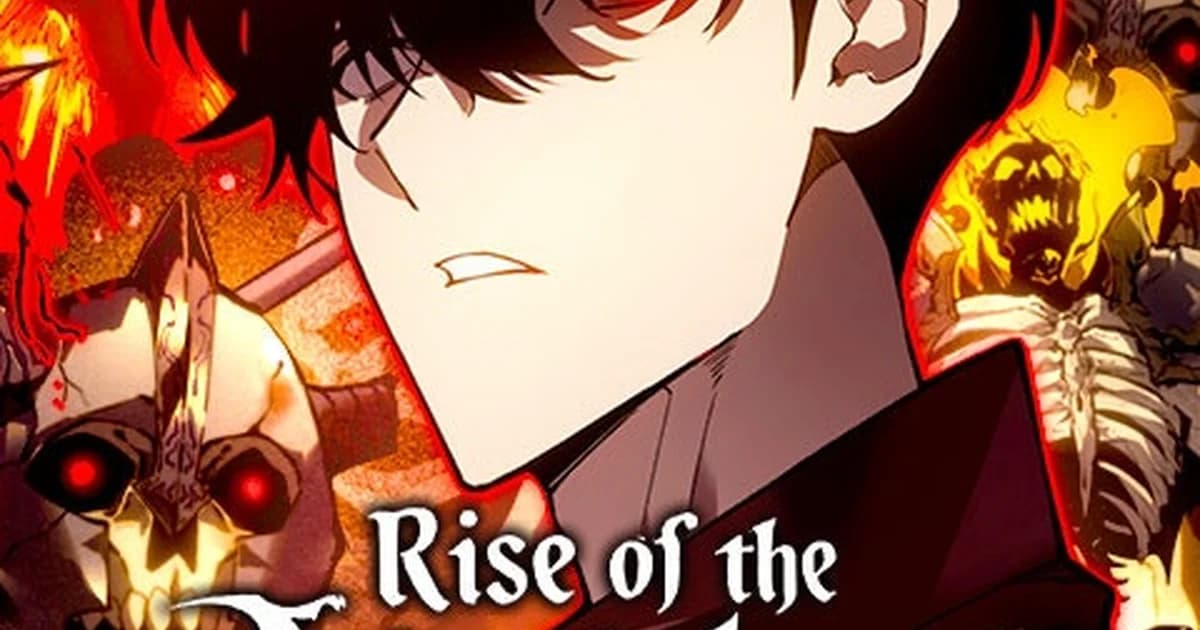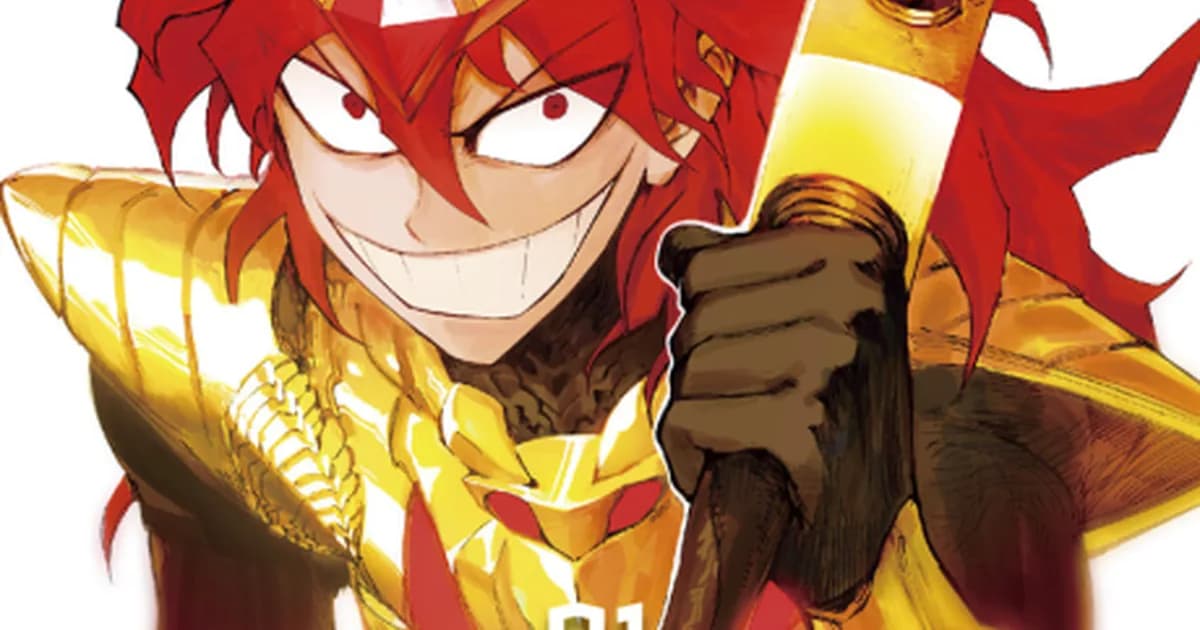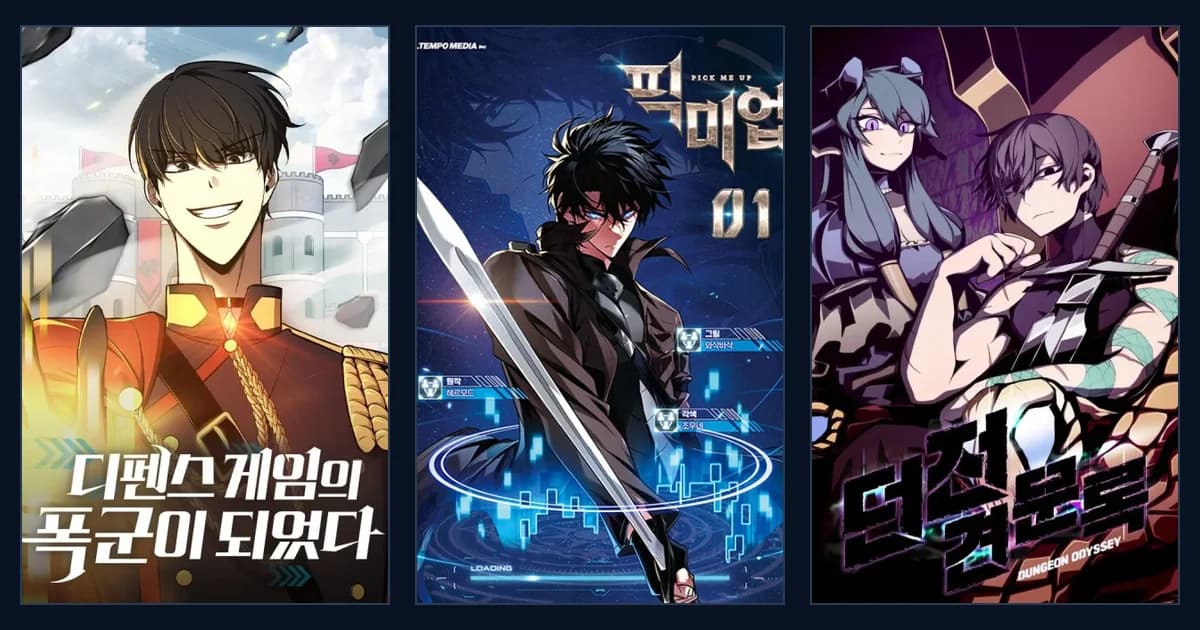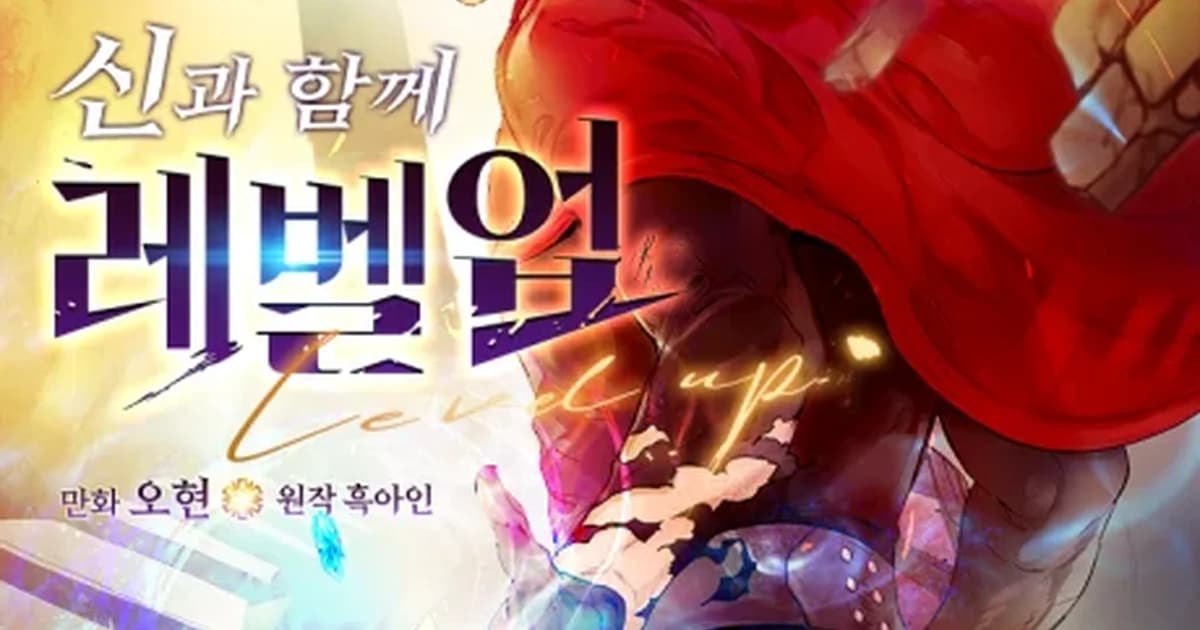
System fantasy manhwa is any webtoon built around a game interface that exists inside the story: a stat window, a quest log, a level counter only the hero can see. This page maps 28 of them by what the system actually does, from Solo Leveling's reality overlay to The Greatest Estate Developer's engineering. It doesn't rank anything. For a ranked shortlist, the best system fantasy manhwa list does that job with 16 picks.
What is system fantasy manhwa? The mechanic behind the genre
A "system," in the sense this genre uses the word, is a game interface that exists inside the story's reality. It shows up as a window only the protagonist (or a small, defined set of characters) can see: current level, stat points in things like strength or agility, a quest with a stated goal and reward, a skill that levels up with use. Everyone else experiences the same events as ordinary life or ordinary combat. The protagonist alone is reading a scoreboard.
That matters more than it sounds. A wizard who gets stronger through training is just fantasy. A wizard whose strength is a number that goes up by a stated amount, tracked in a window and unlocked through a quest with explicit conditions, is system fantasy. The interface turns inner growth into a checkable fact. You can watch the number, not just the vibe.
It became the genre's defining device because it solves a problem every long action series runs into: how do you make "getting stronger" legible without hand-waving? A stat window gives the writer explicit control over pacing. An early power level is written down, and every later jump has to be earned against it. Solo Leveling's shadow army, covered in the power-system deep dive linked below, is the clearest case of a system compounding across a whole run.
System fantasy manhwa's relationship to LitRPG mostly runs one way. LitRPG is the umbrella term for fiction where visible RPG statistics are a core part of the story. The word is recent: according to Wikipedia, it was coined in late 2013 in a brainstorming session between Russian writer Vasily Mahanenko and editors Dmitry Malkin and Alex Bobl. The idea is older. Andre Norton's Quag Keep (1978) drops its characters into a D&D game, and Larry Niven and Steven Barnes's Dream Park (1981) turns live-action games into future reality TV. Taiwan's ½ Prince (from 2004) and Japan's Sword Art Online (2009) came later, and Korea's The Legendary Moonlight Sculptor, a VR-game novel series of over 50 volumes, gets its own mention in that lineage. One neighbor term is worth knowing: GameLit covers game-world stories that skip the leveling. Most manhwa on this page are strict LitRPG in that sense. The stat window does the work, not just the setting.
System as a reality overlay: when only the protagonist sees the game
The purest version gives one character, and only that character, an RPG interface over ordinary life. Everyone else just lives.
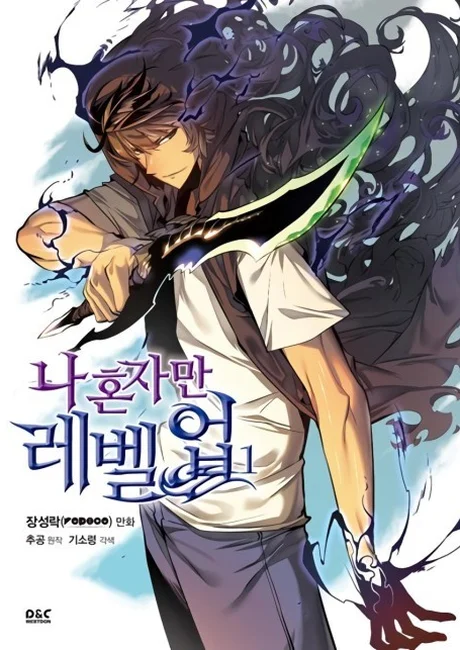 Solo Leveling cover art (via AniList).
Solo Leveling is the reference point every later entry gets compared against. Sung Jinwoo is "the weakest hunter of all mankind" in a world where awakened hunters fight monsters, until "a mysterious system chooses him as its sole player." The shadow army he builds compounds across the run into a scale the early chapters never hint at. It's finished: AniList counts 201 chapters, including the side story, ending in 2023, and it reads in English on Tappytoon, among others. The Gamer is the trope at its most literal: Jihan Han, a typical high schooler, can "view the world around him as a video-game," then finds a hidden world of people like him. It finished in May 2024 at 510 chapters on WEBTOON and is the genre's clearest baseline.
I'm the Max-Level Newbie flips the setup: streamer Kang Jinhyeok is "the only person who has cleared the game, [Tower of Trials]," and when the tower turns up in real life, he's the one person who knows it. It's ongoing on WEBTOON every Saturday. Readers are blunt about what it is. "Its junk food manhwa, fun to read, but dont expect anything investing," reads the top reply in a thread asking for more like it, and another adds, "sure, it's not ORV, but then again, not everyone can be ORV" (r/manhwa). The Return of the Disaster-Class Hero swaps the leveling window for raw history: the thirteenth saint, Lee Geon, was "backstabbed by twelve of his allies" and trapped in the Tower of Demons for twenty years, and he comes back stronger than any of them. It's ongoing on WEBTOON (every Tuesday) and Tapas.
For the mechanics of one specific series' system, ranks, and Monarch hierarchy in full technical detail, not genre-wide:
Solo Leveling Power System Explained →
Regression plus system: when the protagonist remembers
A big share of system fantasy pairs the interface with a second device: the hero has already lived through some version of events and carries that knowledge into a second attempt.
SSS-Class Revival Hunter is the sharpest version. Kim Gong-ja's skill copies the ability of whoever kills him, and the first thing he copies is the Flame Emperor's power to return 24 hours into the past when he dies. The loop doesn't erase what he's seen, which gives the dark comedy around his deaths real weight. It's on Tapas on a Wait Until Free timer, though Tapas stopped all new Ink on October 1, 2026 and closes on March 31, 2027. The English edition stops after chapter 151, while Season 5 has been running in Korean on KakaoPage since September 26, 2026, and an anime arrives in January 2027. Level Up with the Gods works the angle from the other direction: Yuwon Kim, "a plucky, high-ranking warrior," loses, comes back as a returnee, and relearns his skills "before taking on the Tower once again." Tapas is its only English home, and it's on a break after Season 3, with Season 4 promised.
A Returner's Magic Should Be Special sends Desir back thirteen years, after a decade fighting in the Shadow Labyrinth, to train his friends before the end comes. It finished in June 2024 at 268 chapters, and its anime's second season started in October 2026, after the first aired in late 2023. Tomb Raider King is a straight regression-revenge story: tomb raider Jooheon Suh, betrayed by his employer, goes back 15 years to before the tombs and their relics appeared. It finished in 2023 at 411 chapters, a sequel called Tomb Raider King: End Line started in July 2026, and its 12-episode anime ran from July to October 2026. I Killed the Main Player adds a twist: Corin is "just a minor NPC" who knows the game inside out, so when the main player starts murdering NPCs, Corin goes three years back to kill him and take his place. It's ongoing on WEBTOON every Sunday. The 100th Regression of the Max-Level Player makes the loop count the premise; it's ongoing in Korean, with Tapas listed as its English home. Doom Breaker plays regression rawer: Zephyr, killed by the god of destruction, is sent ten years back to when he was a slave. Its English edition stops at the Season 2 finale from March 2024, with no date for more.
The system as a game within the story: towers, dungeons, and VR
A second cluster treats the system less as an overlay and more as a game the hero has to play, climb or beat, with rules a sharp enough character can study.
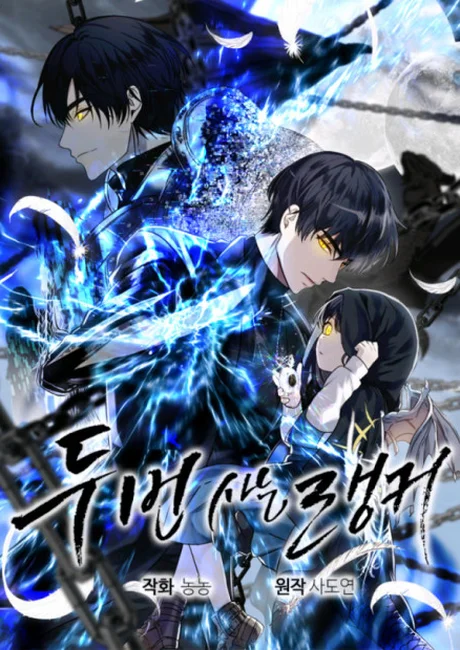 Second Life Ranker cover art (via AniList).
Second Life Ranker sits at the center of this group. Yeonwoo's twin brother was betrayed in the Tower of the Sun God, and Yeonwoo goes in with what his brother left behind, a pocket watch holding the knowledge he needs. That gives the early chapters the feel of a chess player who has studied the opponent's openings. Tapas is its only English home, and it's on a break after Season 3, since April 2026. Murim Login gives a struggling, low-ranked hunter a beat-up VR console that drops him into a martial-arts world he can't log out of. English stops at Season 1 (117 episodes) on Tapas; in Korean it finished its third season at episode 250 and is preparing Season 4. The Legendary Moonlight Sculptor, the VR-game story Wikipedia's LitRPG entry names, follows a young man who means to make it big in the new VR MMO Royal Road "for himself and his family"; its webtoon is still running in Korean, with Tapas as its only English home.
Tyrant of the Tower Defense Game takes a sharper premise: a streamer finally beats "Protect the Empire," a game considered unbeatable for over a decade, on its hardest mode, and gets sucked into it. It's ongoing, in English on Tappytoon and WEBTOON. Dungeon Odyssey follows Kim Jin-U, a "dungeon baby" who chose an ordinary life as a guide until an expedition goes wrong and he ends up owning a labyrinth. It's past 160 episodes on Tapas, its only English home.
When the system is furniture, not the engine
Not every system fantasy manhwa makes the interface the source of tension. Some use it as setting around a different engine, and some point it away from combat entirely.
Omniscient Reader's Viewpoint is the clearest outlier. Kim Dokja uses the full system vocabulary (constellations, skills, stat windows, scenarios), but his real edge is that his favorite web novel, "Three Ways to Survive the Apocalypse," came true and he's the only one who knows how it ends. WEBTOON's English run paused after Episode 308 on June 1, 2026, under a "will return" notice. The system is something the story happens inside, not the thing generating its stakes, which is exactly why it keeps getting argued about in genre roundups.
Overgeared points the system at production instead of combat. Shin Youngwoo, or Grid, a low-level player in the VR game Satisfy, lands a legendary class and becomes "a skilled blacksmith who can forge unique weapons." It adapts a finished 2,059-chapter novel, reads on WEBTOON and Tapas, and its J.C.STAFF anime started in late September 2026. Pick Me Up! Infinite Gacha turns a gacha game literal: Han Seojin is pulled into the game as a 1-star hero, and in that game "1-Star heroes are just fodder for learning a boss' attack patterns." It's ongoing on Tapas every Friday. The Greatest Estate Developer goes furthest from combat: a civil engineering student wakes up as Lloyd Frontera, a lazy noble buried in debt, and fixes things with engineering knowledge (and a giant hamster). It finished at 222 chapters in January 2026 and is complete on WEBTOON.

Comedic, hybrid, and boundary cases
A handful of these play the mechanic for laughs or blend it with another genre closely enough that the crossover is the point.
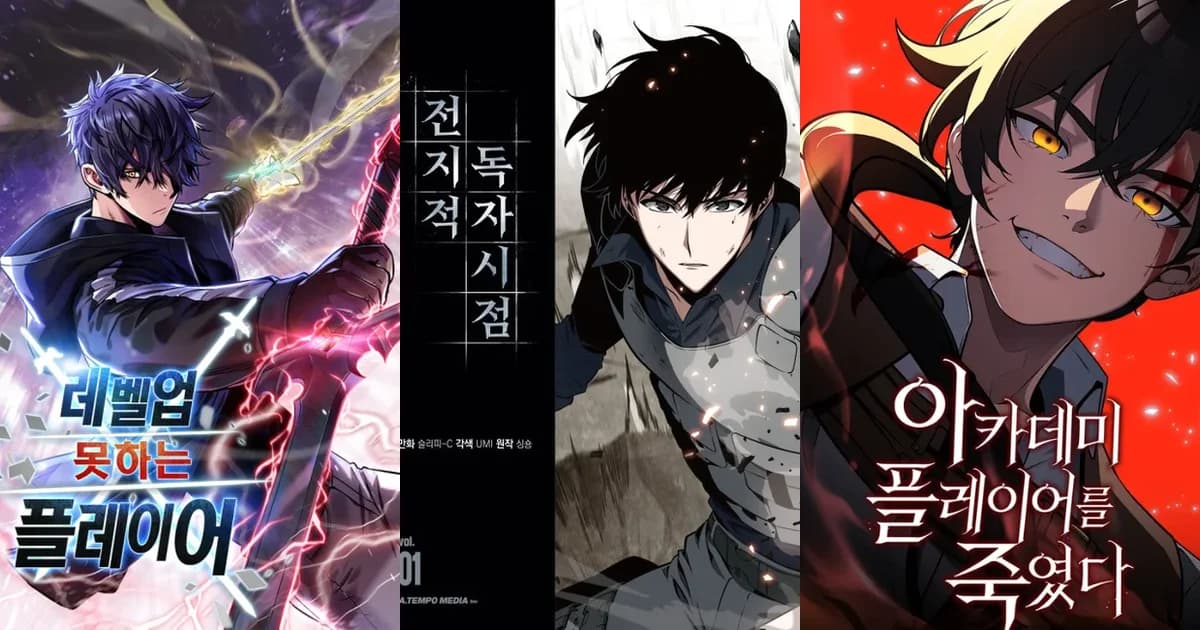
Nano Machine is the clearest hybrid: at the Mashin Academy, Yeo-un gets "a mysterious nanomachine injection from a future descendent" that works like a system inside a martial-arts world where nobody else has a framework for it. It's ongoing on WEBTOON every Wednesday. Hardcore Leveling Warrior works the comedy angle: Ethan, "the #1 player of the world's biggest game, Lucid Adventure," gets killed and knocked back to level 1, and the series plays his wounded ego for laughs before earning a real arc. It finished at 318 chapters on WEBTOON. The Tutorial Is Too Hard leans darker: Lee Ho-jae picks hell difficulty in a tutorial with "a mere 0.01% survival rate." Its English edition on Tapas went on hiatus on September 29, 2026 (reading guide). The Beginning After the End blends with isekai: King Grey is reincarnated "into a new world filled with magic and monsters," and it's at 300 episodes on Tapas, updating Thursdays.
The Player Who Can't Level Up, Rise of the Limitless Necromancer, The Infinite Mage and Archmage's Curriculum round out the magic-and-academy end. Player Who Can't Level Up's Kim Kigyu is stuck at level 1 until he learns to link with "Egos"; it's on a break after its fourth season on Tapas. The Infinite Mage follows Sirone, a commoner in a world where only nobles become mages, and is paused after Season 2 at 150 episodes on Tapas. Archmage's Curriculum, in which a mage "whose appearance can frighten anyone out of their wits" has to teach his master's daughter, runs every Saturday on WEBTOON. For the necromancer one, see our Rise of the Limitless Necromancer Review.
Not everything that looks adjacent counts. Surviving the Game as a Barbarian puts Hansu Lee inside Dungeon and Stone, "the role-playing game that no player has ever beaten," as a barbarian character; his edge is nine years of knowing the game, which makes it a game-world survival story first. Tower of God's tests and Shinsu work on a similar principle: rule-bound, but without a stat window or level counter behind them, so it sits outside this hub even though it shares shelf space with these series everywhere else. Genre labels get sloppy once a trope gets popular, and "system fantasy manhwa" is no exception.
For where system fantasy fits inside the site's broader action-manhwa coverage, including murim and street-fighting series that don't use a system at all:
Best Action Manhwa 2026 →
The complete system fantasy manhwa roster
Every series named on this page, grouped by how its system works rather than by rank. Status as of October 19, 2026.
Reality overlay: Solo Leveling (finished), The Gamer (finished), I'm the Max-Level Newbie (ongoing), The Return of the Disaster-Class Hero (ongoing).
Regression plus system: SSS-Class Revival Hunter (Season 5 in Korean; English paused after ch 151), Level Up with the Gods (between Seasons 3 and 4), A Returner's Magic Should Be Special (finished), Tomb Raider King (finished), I Killed the Main Player (ongoing), The 100th Regression of the Max-Level Player (ongoing), Doom Breaker (English stopped at Season 2).
Game-within-the-story: Second Life Ranker (between Seasons 3 and 4), Murim Login (English stopped at Season 1), The Legendary Moonlight Sculptor (ongoing in Korean), Tyrant of the Tower Defense Game (ongoing), Dungeon Odyssey (ongoing).
Narrative-aware or non-combat: Omniscient Reader's Viewpoint (season break), Overgeared (ongoing, anime airing), Pick Me Up! Infinite Gacha (ongoing), The Greatest Estate Developer (finished).
Comedic and hybrid: Nano Machine (ongoing), Hardcore Leveling Warrior (finished), The Tutorial Is Too Hard (English on hiatus), The Beginning After the End (ongoing), The Player Who Can't Level Up (between seasons), Rise of the Limitless Necromancer, The Infinite Mage (between seasons), Archmage's Curriculum (ongoing).
That's 28 series across five groups. A lot of the regression and game-world picks live on Tapas, so if one of them is on your list, read it before Tapas closes at the end of March 2027.
Our take
If you're new, read Solo Leveling first; everything else on this page gets measured against it, and it's finished. After that, pick by mechanic, not by hype: A Returner's Magic if you want regression done cleanly and finished, Second Life Ranker if you like studying a game's rules alongside the hero, and The Greatest Estate Developer if you're tired of fights altogether. ORV is the one to argue about, and worth reading for exactly that reason.
Frequently Asked Questions
What is system fantasy manhwa?
System fantasy manhwa is a subgenre of Korean web fiction where a character gains access to a game-like interface: a stat window, a quest log, a skill tree, or a level counter, layered onto a fantasy or modern-world setting. The mechanic is the point. A dungeon story without any interface is just action manhwa; a character tracking numbered stats without a dungeon is still system fantasy.
What is the difference between system fantasy manhwa and LitRPG?
LitRPG is the broader Western-fiction term, coined in late 2013 by author Vasily Mahanenko and editors Dmitry Malkin and Alex Bobl, for stories where visible RPG statistics are a core part of the reading experience. System fantasy manhwa is the Korean industry's parallel development of the same core idea, expressed through vertical-scroll art and webtoon serialization instead of prose. The conventions overlap heavily; the delivery format and reading culture around them don't.
What is the difference between system fantasy and isekai manhwa?
Isekai means a character is transported to another world. System fantasy means a character gets a game-like interface. The two overlap often (The Beginning After the End is both), but they're not the same axis. Solo Leveling, SSS-Class Revival Hunter, and Second Life Ranker are system fantasy set in a modern-world hunter setting, with no isekai transportation at all.
Is Omniscient Reader's Viewpoint a system fantasy manhwa?
It uses the full system vocabulary (constellations, skills, stat windows, scenarios), so yes, in the broad sense. But Kim Dokja's advantage is narrative foreknowledge, not stat accumulation. The system in ORV is a setting element the story happens inside, not the mechanism generating its tension the way it does in Solo Leveling or SSS-Class Revival Hunter.
What was the earliest system fantasy manhwa to complete its run?
Of the series on and around this page, Dice: The Cube That Changes Everything finished first, in July 2021 at 388 chapters, years before Solo Leveling's anime pushed the genre into the mainstream in 2024. Hardcore Leveling Warrior followed in 2022. The Legendary Moonlight Sculptor property is older still: Wikipedia's LitRPG entry names the Korean novel series among the genre's precursors.
How many system fantasy manhwa does this page cover?
Twenty-eight, across five groups sorted by how each one's system works, from completed series to ones on a season break. It doesn't rank them.
What's the difference between this page and the best system fantasy manhwa list?
The best system fantasy manhwa list ranks sixteen picks by how well each mechanic is built, a shortlist for someone who wants a recommendation right now. This page doesn't rank anything. It's a reference map of the whole genre cluster the site covers, organized by mechanic type, for someone trying to understand the genre's shape rather than get a single answer.
How we checked this: on October 19, 2026 we re-checked every series against AniList (status, chapters, staff, English links) and, where it would load, its English platform page; WEBTOON blocked some of our requests today, so a few episode lists come from our own checks of October 10 to 16, each dated in our sources table. The LitRPG history is from Wikipedia's LitRPG article. The reader quotes are from the linked r/manhwa thread.
Last reviewed: October 19, 2026
Related Reading
The six links below cover the system fantasy manhwa this hub returns to most often, one per sub-type discussed above.
- Solo Leveling review: full assessment of the series this hub keeps returning to as the reality-overlay baseline.
- SSS-Class Revival Hunter review: the death-copy regression loop in full.
- Second Life Ranker reading guide: the note-guided tower climb, arc by arc.
- Omniscient Reader's Viewpoint manhwa review: the narrative-aware outlier this hub's "furniture, not the engine" section covers.
- Overgeared review: the production-class system, gear crafting instead of combat.
- Nano Machine review: the murim-and-system hybrid, nanomachines inside a cultivation world.
References
Sources used to verify the LitRPG lineage and the platform, chapter, and status facts cited for each system fantasy manhwa above.