TL;DR: Manhwa terms describe four things: comic format, character roles, setting mechanics, and source material. Learn webtoon, MC, OP, murim, cultivation, regression, raws, and official translation first. This hub gives the short definition, then links to deeper explainers for systems such as murim, villainess isekai, and Solo Leveling's power rules.
Most manhwa terms fall into four useful groups. Format words tell you how a series is released, character words tell you who is driving the story, setting words explain its rules, and source-material words tell you where the story started. If you are choosing your next read, start with format. If the premise is confusing, jump to characters or settings. If a platform description mentions a novel, use the final group.
This page is the map, not a second full essay on every trope. For a deep explanation of one idea, use the linked murim manhwa explainer, OP MC explainer, or regression versus reincarnation breakdown. The division keeps these manhwa terms useful as a reference instead of turning one definition into another 2,000-word detour.
Advertisement
Key Takeaways
- Manhwa means Korean comics by origin. Webtoon usually means a vertical-scroll format or the WEBTOON platform, so the labels overlap without being identical.
- MC means main character. ML and FL mean male and female lead, while OP means overpowered.
- Regressors return to an earlier point in their own life. Returners are a wider category.
- Hunter, gate, dungeon, system, murim, cultivation, isekai, and LitRPG describe setting or progression mechanics.
- Raws are original-language chapters, scanlations are unofficial translations, and official translations are licensed.
Manhwa terms quick index
| No. | Term | Group |
|---|---|---|
| 1 | Webtoon | Reading format |
| 2 | Manhwa | Reading format |
| 3 | Long-strip | Reading format |
| 4 | Season | Reading format |
| 5 | Hiatus | Reading format |
| 6 | App-only episodes | Reading format |
| 7 | Wait-for-free | Reading format |
| 8 | Raws | Reading format |
| 9 | Scanlation | Reading format |
| 10 | Official translation | Reading format |
| 11 | MC | Character |
| 12 | ML / FL | Character |
| 13 | OP | Character |
| 14 | Regressor | Character |
| 15 | Returner | Character |
| 16 | Villainess | Character |
| 17 | Transmigrator | Character |
| 18 | Hunter | Setting and genre |
| 19 | Gate | Setting and genre |
| 20 | Dungeon | Setting and genre |
| 21 | System / status window | Setting and genre |
| 22 | Murim | Setting and genre |
| 23 | Cultivation | Setting and genre |
| 24 | Isekai | Setting and genre |
| 25 | LitRPG | Setting and genre |
| 26 | Web novel | Source material |
| 27 | Light novel | Source material |
| 28 | Adaptation | Source material |
| 29 | Aeni | Source material |
Manhwa terms by reading format
Format manhwa terms answer three practical questions: what are you reading, where is it released, and why does an English episode number differ from a Korean listing? They describe delivery and access, not quality.
1. Webtoon
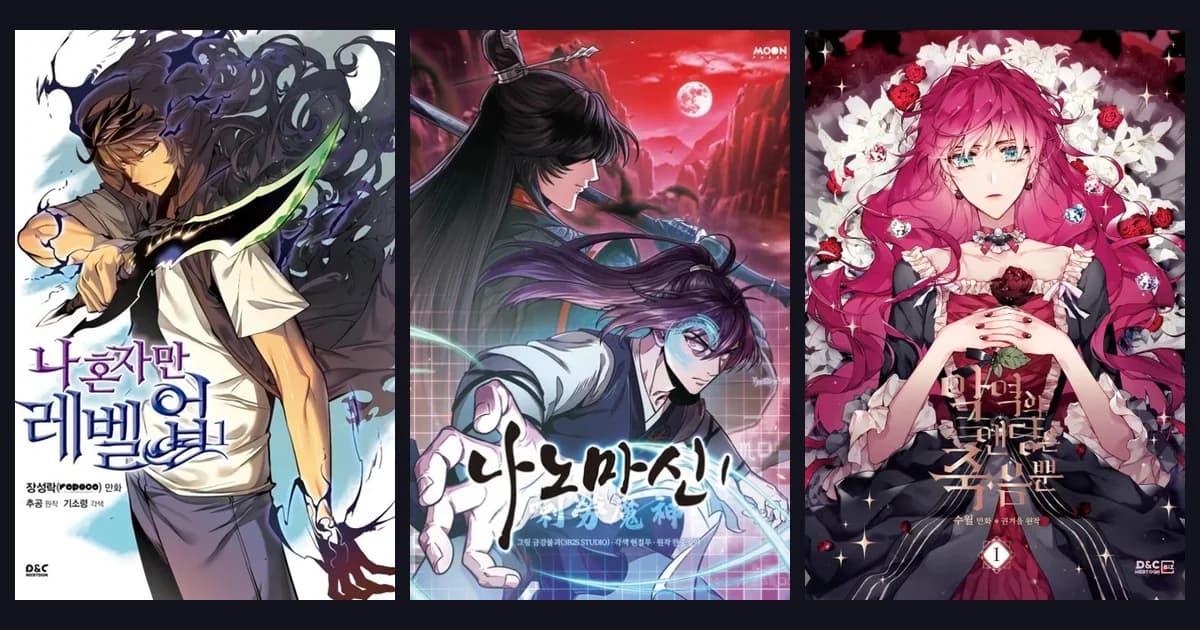
A webtoon is usually a digital comic built for vertical scrolling. WEBTOON is also a platform brand, so one word can mean a format or a service. AniList lists Solo Leveling as a Korean, finished, 201-chapter, full-color long-strip title.
2. Manhwa
Manhwa means comics from Korea. It identifies origin, not genre, color, or format. Manga vs manhwa vs manhua covers that distinction in detail. AniList lists The Boxer as Korean, finished, and 133 chapters.
3. Long-strip
Long-strip describes the tall, continuous page used by many digital comics. Panels are arranged for scrolling rather than printed pages, so the term describes layout, not genre.
4. Season
A season is a publishing block inside a longer series. Episode numbering may restart or stay continuous, so check the platform before converting a season number into a total chapter count. WEBTOON presents Return of the Blossoming Blade with season and episode labels.
5. Hiatus
Hiatus means a series has stopped releasing for a period. It is a release-status word, not a synonym for finished. AniList treats hiatus, releasing, and finished as separate status values, so a missing episode is not enough evidence to assign one.
6. App-only episodes
App-only episodes are chapters reserved for a mobile app instead of the public web reader. WEBTOON's Return of the Blossoming Blade page, for example, carries a banner saying new episodes are only on the app. That describes access, not whether a comic ended or lost its license.
7. Wait-for-free
Wait-for-free puts a timer between free unlocks. On Tapas, WUF is an app-only feature, the wait period varies by series, and an unlocked episode stays in the library for 72 hours. A separate "3 Hour WUF" version unlocks every three hours on eligible series. The timer and eligible range belong to the platform, and on Tapas they end with the service on March 31, 2027 (what the shutdown means).
Platform labels can change the reading route even when the story is the same. Where to Read Manhwa Legally in 2026 compares the major English services and their payment models.
8. Raws
Raws are chapters in the original publication language, usually Korean for a manhwa. A raw listing can be ahead of English, and its episode count should not be copied into the licensed edition.
9. Scanlation
A scanlation is an unofficial fan translation. It can be ahead of an official release, but it does not prove that a publisher licensed the work, and its chapter labels can differ from the original.
10. Official translation
An official translation is a licensed edition from a publisher or platform. It can use different names and episode packaging, so check whether a chapter number comes from Korean raws, English episodes, or collected volumes.
Manhwa terms for characters
Character manhwa terms are shorthand for narrative jobs. They identify the protagonist, romance roles, or type of second chance. One lead can be an MC, an OP character, and a regressor at once.
11. MC
MC means main character. It does not mean male, strongest, or heroic. The abbreviation answers “who does the story primarily follow?”
12. ML / FL
ML means male lead and FL means female lead. Romance readers use them to separate central love interests from the protagonist, though “lead” can also mean narrative importance.
13. OP
OP means overpowered. An OP MC starts above ordinary opponents, shifting tension toward secrecy, cost, politics, or consequences. OP MC manhwa explained compares that setup across several series.
14. Regressor
A regressor returns to an earlier point in their own life with future memories intact. The same person is revisiting their timeline, rather than waking up as somebody else.
15. Returner
Returner is a broad label for someone who comes back from another world, future disaster, mission, or long absence. It does not require a reset to childhood or a repeat of the same timeline.

16. Villainess
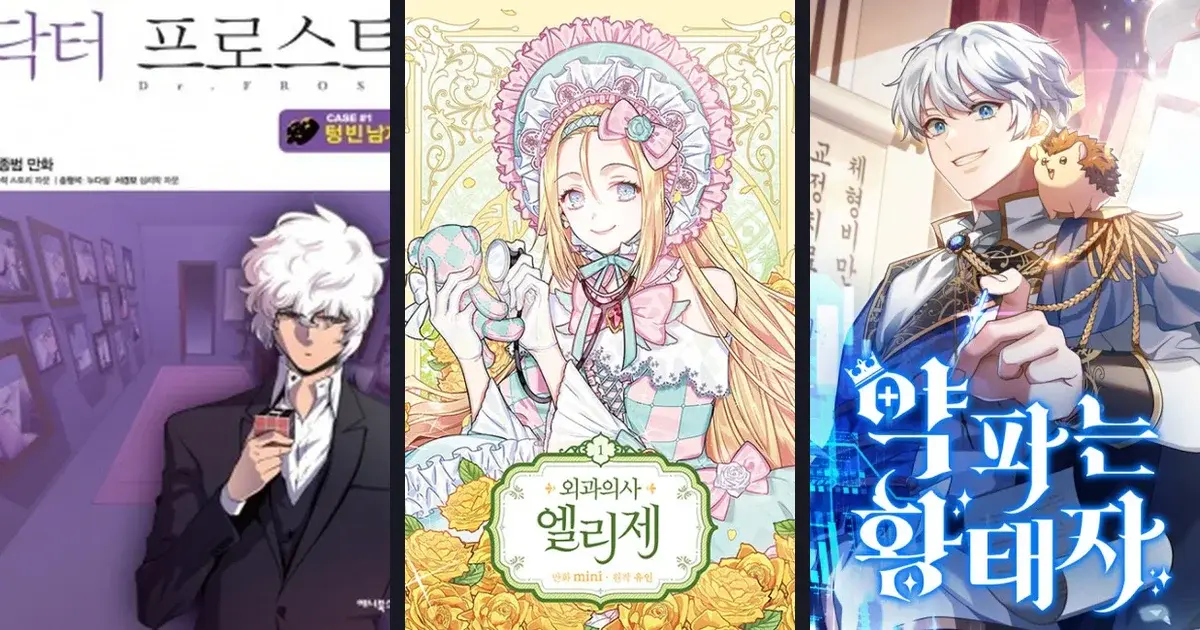
A villainess is the woman assigned the antagonist role in a romance or otome-style story. The protagonist often knows her scripted ending and tries to avoid exile, execution, or ruin. Villainess isekai explained covers the death-flag mechanic; AniList lists Villains Are Destined to Die as Korean and ongoing without a final chapter total.
17. Transmigrator
A transmigrator enters another body, story, or fictional world, often with memories from their original life. The body and identity problem is the defining feature. AniList lists The Greatest Estate Developer as Korean, finished at 222 chapters, and tagged Isekai.
Manhwa terms for settings and genres
Setting manhwa terms describe the rules a protagonist must survive. Hunter and gate suit modern monster fantasy; murim and cultivation suit martial-arts progression; system and LitRPG make progress visible through game language. The labels can overlap.
18. Hunter
A hunter is a person who fights monsters or explores dangerous zones in modern fantasy. The word often implies guilds and ranks. AniList describes Solo Leveling with awakened hunters battling monsters and tags it with Dungeon.
19. Gate
A gate is a portal or breach connecting the ordinary world to a dangerous space. It may open into a dungeon or release monsters; other series call the same device a rift or portal.
20. Dungeon
A dungeon is a contained danger zone with enemies, rewards, and an entrance rule. It can be a ruin or a generated instance, usually giving characters a reason to keep raiding.
21. System / status window
A system is a visible game-like interface for quests, levels, stats, skills, or notifications. A status window reports current abilities. Solo Leveling's System belongs only to Jin-Woo, as Solo Leveling power system explained details.
22. Murim
Murim is the martial-arts society used by Korean action and fantasy comics. Sects, clans, masters, internal energy, and rank hierarchies matter more than modern institutions. The murim manhwa explainer separates it from wuxia and xianxia.
23. Cultivation
Cultivation is staged training that builds internal energy, qi, technique, or a spiritual body. Characters advance through named realms. AniList tags Nano Machine with Martial Arts and Cultivation and lists its Korean record as ongoing without a final chapter total. For the Chinese form, with qi refining, sects and immortality as the goal, see what cultivation manhua is.
24. Isekai
Isekai means another world. The protagonist may be transported, reincarnated, summoned, or reborn inside a novel or game. Villainess, estate, and dungeon stories use the label in different ways.
25. LitRPG
LitRPG treats role-playing game mechanics as part of the narrative. Levels, stats, classes, and quests are usually visible. A system manhwa can feel LitRPG-like without using the label, and LitRPG does not require a Korean webtoon.
If “system” still feels vague, Nano Machine cultivation explained shows how a murim realm ladder and a visible interface can operate in the same story.
Manhwa terms for source material
Advertisement
Source-material manhwa terms tell you what existed before the comic and what changed when the story moved mediums. Web novels, light novels, adaptations, and aeni answer different questions when chapter counts or story order disagree.
26. Web novel
A web novel is prose published online, commonly in serialized chapters. A manhwa may change its pacing or scenes, so the novel's chapter total is not automatically the English manhwa episode count.
27. Light novel
A light novel is a commercially published prose category, often with illustrations. It is not simply a web novel with a different cover. Some series move from online serialization into edited volumes, while others begin with a publisher. NovelBrief's web novel vs light novel breakdown explains why the same story can read differently as the author's running text and as the edited book.
28. Adaptation
An adaptation retells an existing work in a new medium. A web novel can become a manhwa and a manhwa can become an anime, with each version using its own release schedule and canon order.
29. Aeni
Aeni is the Korean shortening of the word for animation, and Korea.net uses it to mean Korean animation. It describes animation origin, not comic format, which is why an aeni and a manhwa adaptation are different things.
Related Reading
- What Is Murim Manhwa? Explained for sects, martial ranks, wuxia, and xianxia.
- OP MC Manhwa Explained for the overpowered protagonist pattern.
- Regression vs Reincarnation Manhwa Explained for second-chance mechanics.
- Villainess Isekai Trope Explained for death flags and role-based isekai.
- Where to Read Manhwa Legally in 2026 for platform access and payment terms.
Frequently Asked Questions
What does manhwa mean?
Manhwa means Korean comics by origin. It does not require a genre, color palette, or reading format.
What is the difference between manhwa and webtoon?
Manhwa names Korean origin. Webtoon usually names a digital vertical-scroll format, and WEBTOON is also a platform.
What does MC mean in manhwa?
MC means main character. It says who the story follows, not whether that character is male, heroic, or strongest.
What does MC and ML mean in BL manhwa?
MC means main character, ML means male lead, and FL means female lead. These role labels do not state a content rating.
What does murim mean in manhwa?
Murim is a martial-arts society built around sects, teachers, internal energy, and ranked fighters. It describes a setting, not one power system.
What is cultivation in manhwa?
Cultivation is progression through training and named stages of internal power. Korean murim stories may use it alongside sect politics and sword fights.
What is the difference between a regressor and a returner?
A regressor returns to an earlier point in their own timeline. Returner is a wider term for someone who comes back from elsewhere.
Are raws and scanlations official translations?
No. Raws are original-language chapters and scanlations are unofficial. Official translations come from a licensed publisher or platform.
References
- What is WEBTOON?
- Tapas episode unlocking and Wait Until Free
- Solo Leveling on AniList
- The Boxer on AniList
- Return of the Blossoming Blade on AniList
- Return of the Blossoming Blade on WEBTOON
- Nano Machine on AniList
- Villains Are Destined to Die on AniList
- The Greatest Estate Developer on AniList
- Aeni in Korea.net