TL;DR: OP MC manhwa means stories built around a protagonist who becomes dramatically more powerful than everyone around them, and the trope dominates Korean web fiction because the chapter-a-day serialization format rewards immediate payoff over slow buildup. The good ones move the tension somewhere other than raw strength once the fights stop being close. The bad ones just inflate numbers.
For a ranked list of specific titles, see our best manhwa with OP MC picks. This article does something different: it explains the trope itself, where the term comes from, why it took over Korean web fiction specifically, and how to tell a genuinely well-built OP MC story from a lazy one before committing to a few hundred chapters.
Two questions do most of the work here. What kind of overpowered are you actually looking at, since "OP" covers at least three structurally different setups? And once the protagonist can't realistically lose a fight, where does the story put its tension instead? Answer those and picking a series stops being a coin flip.
Overview
OP MC is shorthand for overpowered main character, and it functions less like a genre label and more like a filter readers apply before opening chapter one. Recommendation threads on r/manhwa fill up with requests for it constantly, which tells you the demand is real even when the term itself gets used loosely. Not every overpowered protagonist got that way through the same mechanism, and the mechanism matters more than the raw power level for predicting whether a series will hold your attention past the first arc.
The trope's dominance isn't an accident of taste. It's downstream of how Korean webtoons get published and read, and understanding that context makes it easier to spot which OP MC series are built with intention and which are running the formula on autopilot.
OP MC manhwa: key takeaways
- OP MC means overpowered main character, a term borrowed from gaming and esports balance discourse before manhwa readers applied it to protagonists
- The trope dominates Korean web fiction partly because chapter-a-day serialization rewards a payoff inside every single chapter, not just at the end of an arc
- Three structurally distinct sub-types exist: system-granted, hidden power, and returner (regressor)
- A well-executed OP MC story relocates its tension once combat stops being a real threat, into strategy, relationships, or the cost of dominance
- A poorly-executed one has nothing left once the outcome of every fight is obvious in advance
- For ranked picks, use our best OP MC manhwa list; for the full four-way typology, use our OP MC types breakdown
OP MC manhwa: what "OP" actually means
OP is short for overpowered, and the abbreviation didn't start in manhwa fandom. It comes from gaming and esports communities, where players use it to complain about a character, weapon, or strategy that's disproportionately strong relative to the rest of a balanced system. A broken team comp in a fighting game gets called OP. A dominant build in an RPG gets called OP. Webtoon and manhwa readers, many of whom cross over from gaming communities, carried the term over and applied it to protagonists instead of game mechanics.
Applied to a manhwa lead, OP MC describes something more specific than raw numeric strength. It's about the gap between where a protagonist started, in status, skill, or social standing, and how quickly and completely that gap closes or reverses. A protagonist who trains for a decade and becomes the strongest fighter in their world reads differently from one who wakes up with god-tier power after a single event, even if both end at the same final power level. Manhwa fandom treats "OP MC" almost as a genre marker now, something readers filter for the same way they'd filter for "slow burn" or "completed."
Why the OP MC trope dominates Korean web fiction
Two forces explain the concentration of OP MC stories in Korean web fiction specifically, and neither is really about taste.
The first is wish fulfillment, and it isn't complicated. Watching someone overlooked become dominant satisfies something readers keep coming back for, and the appeal doesn't need to be subtle to work. Most OP MC stories put the protagonist at rock bottom first, weakest hunter, disposable bait, ignored younger sibling, specifically so the rise reads as more dramatic.
The second is a format constraint most readers never think about: WEBTOON, Naver, and Kakao serialize in single vertical-scroll chapters, released daily or several times a week, and read individually rather than in bound volumes. A chapter needs to justify itself on its own terms far more than a manga volume chapter buried in the middle of a book does. OP MC structure is unusually well suited to that constraint. A power gain, a reveal, or a decisive win can close out almost any given chapter cleanly, which gives serialized writers a reliable unit of payoff to build around instead of relying on slow-burn tension that pays off three arcs later.
That same format pressure is also why system fantasy, regression, and reincarnation cluster so heavily around OP MC premises. Each mechanic is a built-in justification for the protagonist to have an advantage nobody else in the story has access to: a system interface grants visible, trackable power; a regression gives the protagonist knowledge of what's coming; a reincarnation carries memory and skill from a previous life. All three make the "why is this person suddenly capable of winning" question answer itself in chapter one, which is exactly what a daily-release format needs.
Solo Leveling's system interface is the clearest version of this mechanic in action.
Best System Fantasy Manhwa →
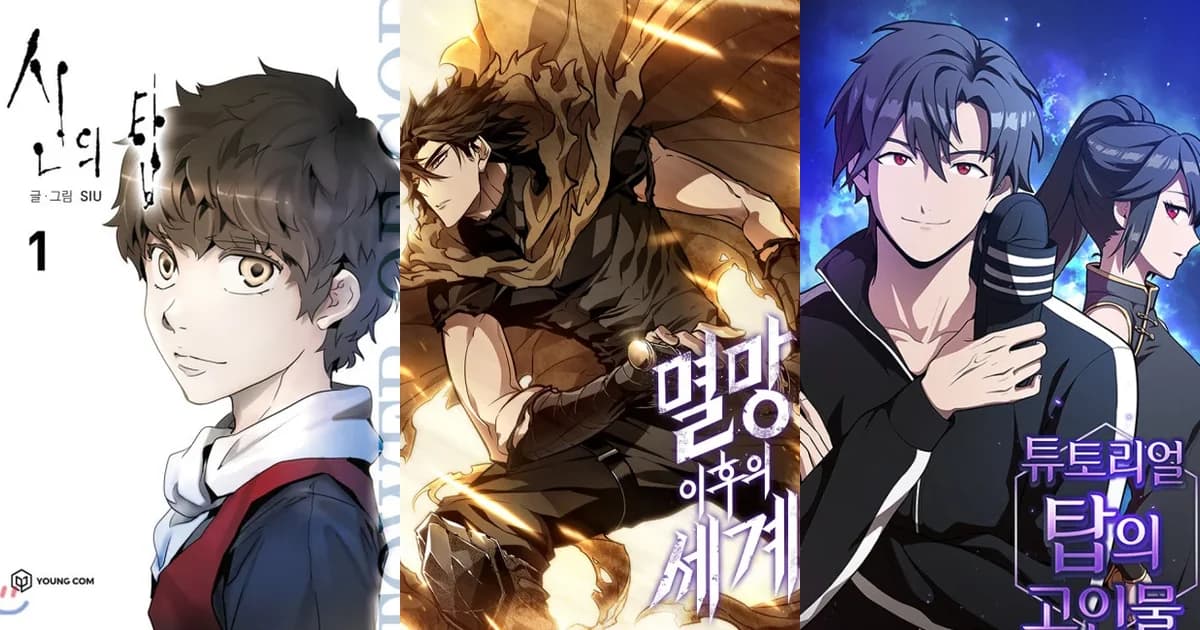
The three shapes of OP MC: system, hidden power, and returner
"OP MC" gets used as if it's one thing, but the mechanism behind the power changes what kind of story you're actually reading. Three shapes cover most of the trope.
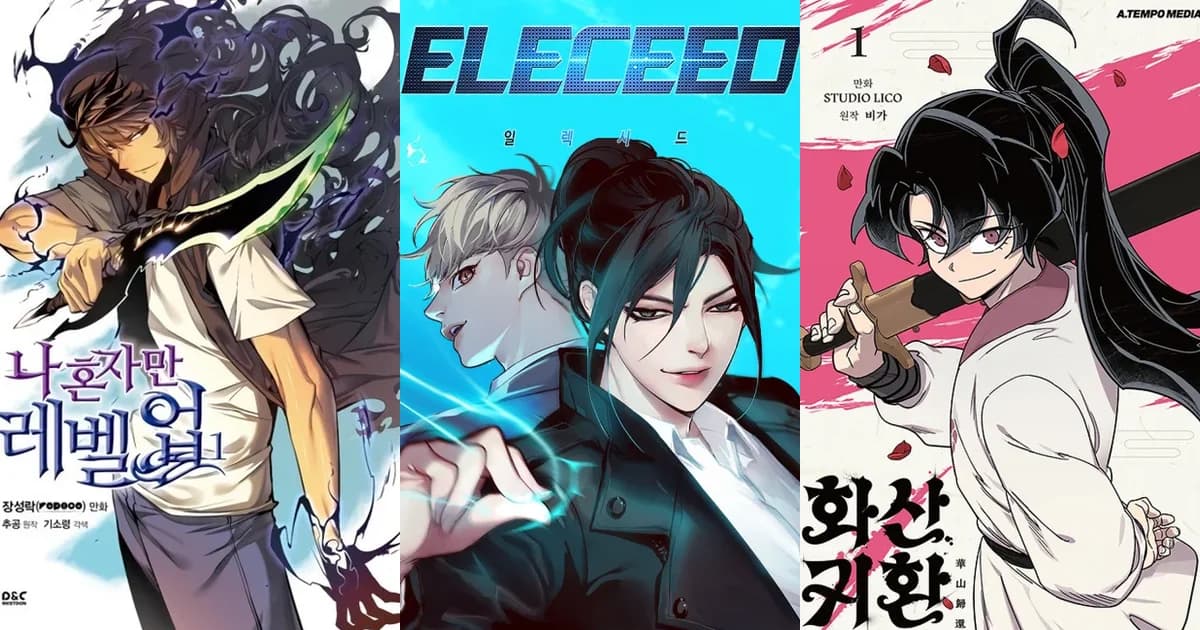
System-granted is the version most readers picture first: an external interface, stat windows, level-ups, quest notifications, visible only to the protagonist. Solo Leveling is the standard reference point. Sung Jinwoo starts as the weakest E-rank hunter in his world, survives a double dungeon by staying out of the way, and then receives a system that levels him up as he completes quests and defeats monsters. The system does real work for him, tracking experience and handing out abilities he'd never have developed alone.
Hidden power flips the reveal. The protagonist was already strong before the story started; the plot just hadn't shown it yet. Eleceed's Kaiden is the cleanest example: a world-class awakened hiding from enemies inside the body of a cat, overpowered from chapter one, with no growth arc required for that half of the story.
A returner, sometimes called a regressor, has already lived through the ending once, usually a failure or a death, and comes back to an earlier point with that experience intact. Return of the Blossoming Blade's Chun Myung watched his entire sect get destroyed, fought and eventually died in the final battle, then wakes up years earlier knowing exactly which alliances will betray him and which techniques he'll need before anyone else does.
These aren't always mutually exclusive; some series stack two shapes together. For the full four-way typology, including the trained/earned and strategic variants and a ranked comparison of where each series lands on craft, see our manhwa overpowered MC types breakdown, which organizes picks by mechanism rather than by ranking.
Analysis: what separates a good OP MC manhwa from a boring one
Here's the actual craft problem every OP MC story eventually runs into: once the protagonist can't realistically lose a fight, the story has to find its tension somewhere else. Series that don't plan for this moment collapse into a predictable loop, someone underestimates the protagonist, gets defeated, reacts with shock, repeat, and the reader's attention goes with it.
Second Life Ranker avoids the trap by relocating tension into strategy and trust rather than raw output. Yeon-woo inherits his dead twin brother's accumulated knowledge of a brutal tower, so the advantage is informational as much as physical, and the interesting question stops being "can he win" and becomes "how does he use what he knows, and who can he actually trust while doing it." The antagonists have enough depth that several characters expected to be enemies turn out to be more complicated, which keeps the fights from being foregone conclusions even when the outcome mostly is.
Omniscient Reader's Viewpoint runs the same principle from a different angle. Kim Dokja's advantage is knowledge, not combat power, he's the only person who read a web novel called "Three Ways to Survive in a Ruined World" to its end, and the events of that novel are now happening around him. His overpowered status is functionally about information, and the stakes come from what he chooses to do with foreknowledge and how his relationships hold up once other characters realize how much he knows.
The failure mode looks nothing like either of those. It's a protagonist who wins every encounter with no cost attached, side characters who exist to register amazement and nothing else, and a plot that keeps introducing bigger numbers because it has no other lever to pull. Power escalation without a corresponding cost is just repetition dressed up as progress. That's the entire diagnostic: watch what happens to the story once the fights stop being uncertain, and you'll know within a couple of arcs whether the series has a plan for it.
Regression and reincarnation OP MC premises overlap heavily with isekai structure.
Best Isekai Manhwa →
Read a couple of chapters past the first major power-up before deciding. That's usually where a series shows its hand.
Frequently Asked Questions
What does OP MC mean in manhwa?
OP MC stands for overpowered main character. The term started as gaming and esports shorthand for a character or strategy too strong relative to everything else in the system, and manhwa readers borrowed it to describe protagonists who become dramatically stronger than the people around them, usually within a much shorter timeframe than the story's internal logic seems to allow.
Why are so many manhwa main characters overpowered?
Two reasons stack on top of each other. First, wish fulfillment: watching someone go from overlooked to dominant is satisfying and doesn't need to be subtle to work. Second, format economics: WEBTOON, Naver, and Kakao serialize in single chapters readers consume and rate individually, and an OP MC arc structure gives almost any chapter a clean shape, a fight, a reveal, a power gain, without needing a slow multi-chapter buildup.
What is the difference between a system OP MC and a hidden power OP MC?
A system OP MC gets an external interface, stat windows, quest notifications, skill assignments, that grants power going forward. Solo Leveling's Sung Jinwoo is the standard example. A hidden power OP MC is already strong when the story starts; the plot just hasn't revealed it yet. Eleceed's Kaiden is a hidden power protagonist: a world-class awakened hiding in the body of a cat before the story ever shows his real strength.
What is a returner or regressor OP MC?
A returner (also called a regressor) OP MC has already lived through the story's ending once, usually a failure or a death, and comes back to an earlier point in time with that knowledge and experience intact. Return of the Blossoming Blade's Chun Myung watched his sect get destroyed, died in the final battle, and wakes up years earlier knowing exactly what's coming.
What makes an OP MC manhwa boring?
The tension runs out the moment the protagonist stops being able to lose. If nothing else replaces that tension, generic side-character shock and escalating numbers are all that's left. A well-built OP MC story moves the stakes somewhere else before that happens, into relationships, strategy, or the cost of being unbeatable.
Is Solo Leveling a good example of OP MC done well?
Yes, specifically as a system OP MC. The shadow extraction mechanic keeps generating new tactical questions even after Sung Jinwoo is unkillable, which is why the series holds up across its full complete run rather than flattening into repetition.
Where can I find a ranked list of the best OP MC manhwa?
Our best manhwa with OP MC list ranks ten picks by how well each delivers on the premise. This article explains the trope itself; that one recommends specific series to read.
Related Reading
- Omniscient Reader's Viewpoint Review: the knowledge-based OP protagonist discussed above, full verdict and chapter breakdown.
- Manhwa Terms Explained: A Plain-English Reader Guide: the quick definition of OP and related reader shorthand.