Loading…
ChapterBrief · Reviews
Villains Are Destined to Die Review: Hard Mode (8.5/10)
Villains Are Destined to Die review: 8.5/10. Penelope wakes as the otome villainess on hard mode, where the love interests start at 0% and can kill her.
9 min readBy Yuna Park

Reviewing
Villains Are Destined to Die
Webtoon by Gwon Gyeoeul (story) and SUOL (art), from the original web novel · KakaoPage / Tappytoon (English)
8.5
Score
8.5/ 10
TapasTappytoon
Pros
- The hard-mode game UI makes the genre's implicit 'raise favorability or die' subtext literal: Penelope sees actual affection percentages, so the death stakes are visible and exact
- The love interests starting at 0% (Reynold at -10%) turns every interaction into a legible risk calculation, which generates real tension instead of vague dread
- Penelope's double consciousness (a modern player optimizing a game while a real person forms real attachments) gives the romance genuine psychological depth
- SUOL's art is expressive and detailed, with strong character acting that sells the gap between Penelope's calculated front and her actual fear
Cons
- The large male-lead roster means some routes get far more attention than others, and a couple of love interests stay underdeveloped
- The early chapters front-load game mechanics, which can read as dense before the emotional stakes take over
- As an ongoing series, the central question of escaping the game is still unresolved, so the verdict covers the journey, not a finished arc
Verdict
The villainess isekai that made the genre's hidden survival logic visible, and is better for it. One of the best in the category, with real psychological weight under the game UI.
Villains Are Destined to Die review, and the thing I want to lead with is the one mechanic that makes this series better than almost everything else in its genre: you can see the number. The affection meter is right there on the page, and when it says 0%, it means she could die.
Rating: 8.5/10
TL;DR: Villains Are Destined to Die (also titled Death Is the Only Ending for the Villainess) is an ongoing villainess isekai on Tapas and Tappytoon, art by SUOL. A modern player wakes up as Penelope Eckhart, the villainess of a reverse-harem otome game, stuck on hard mode where the love interests start at 0% affection (Reynold at -10%) and a wrong choice can kill her. By making the genre's hidden survival logic into visible game UI, it earns tension most villainess stories only gesture at. 8.5/10.
Key Takeaways
- Villains Are Destined to Die review verdict: 8.5/10, one of the best villainess isekai manhwa
- Premise: a player wakes as the otome villainess Penelope on hard mode, where affection meters are visible and a wrong choice means death
- The literal game UI makes the death stakes exact, which is why the tension lands harder than vague favorability dread
- Also known as Death Is the Only Ending for the Villainess; art by SUOL, ongoing on Tapas and Tappytoon
- Best for fans of villainess manhwa who want survival stakes with their romance
What Villains Are Destined to Die actually is
Cha Siyeon is a university student grinding the reverse-harem mobile game Daughter of the Duke's Super Love Project. She is trying to unlock the new ending, which means clearing hard mode, which means failing a lot. One night she falls asleep mid-attempt and wakes up inside the game, as the character she was playing: Penelope Eckhart, the villainess.
Penelope is the adopted daughter of Duke Eckhart, brought in to replace his lost biological daughter, Ivonne. In the game's normal mode, Penelope is the antagonist the real heroine has to overcome. In hard mode, Penelope is the player character, and hard mode is brutal by design. The male leads who would normally start warming to the heroine at 30% affection instead start at 0%. One of them, Reynold, starts at -10%, because the game wanted hard mode to feel genuinely punishing. And in this world, a love interest whose affection is low enough does not just reject you. He can kill you.
So Penelope is playing the hardest difficulty of a dating sim where the fail state is death, except now she is living inside it. That is the premise, and it is also the engine. This is a villainess isekai, but it is built on a foundation most of the genre leaves implicit.
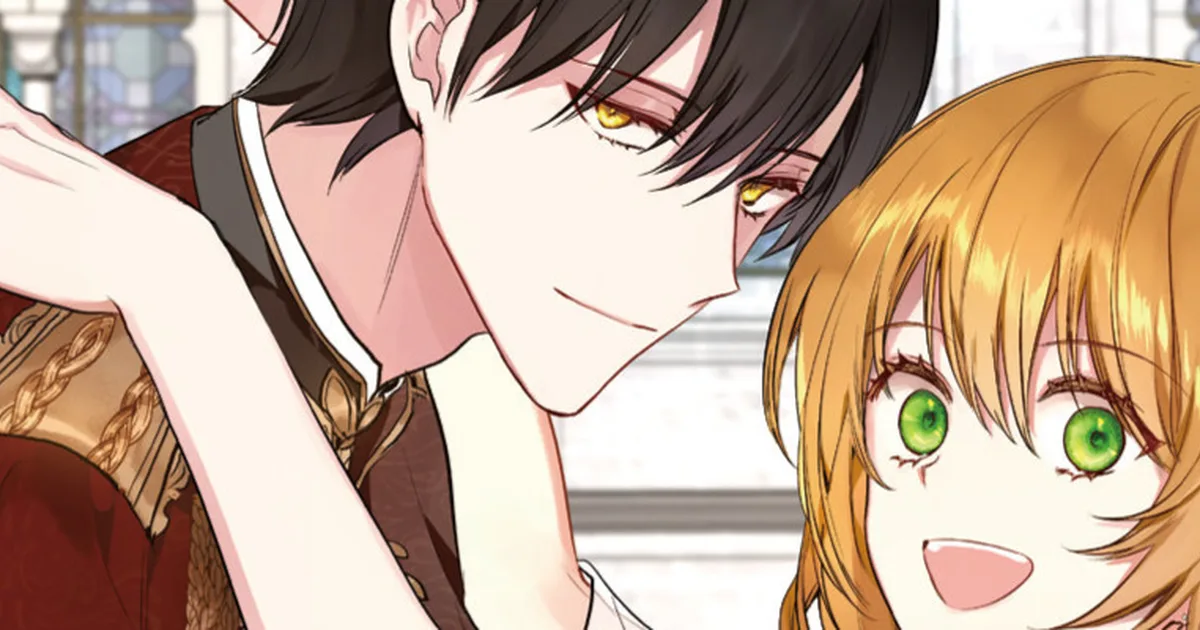
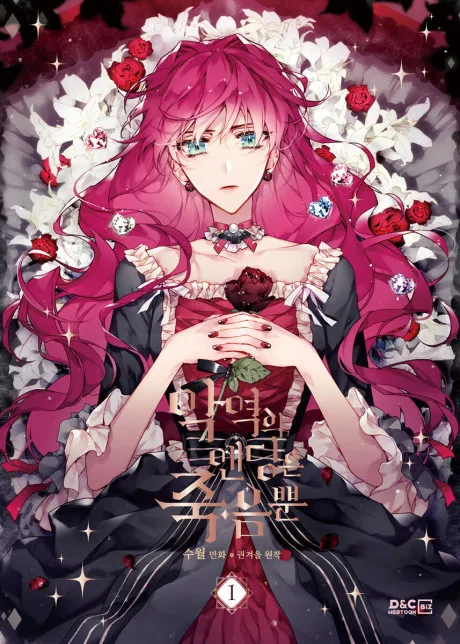 Penelope's design holds the series' central gap: the composed villainess face she shows the Eckhart house, and the fear underneath it.
The mechanic that makes the genre work
Advertisement
Here is the thing villainess isekai usually asks you to take on faith. The heroine has to "raise her favorability" with dangerous people or face her doom, but the favorability is invisible. You are told the male lead is warming up, or cooling off, and you trust the narration. The stakes are real in theory but vague in practice.
Villains Are Destined to Die puts the number on the page. Penelope can see each character's affection percentage. She knows the exact threshold below which a person becomes lethal. When she makes a choice, she watches the meter move, and so do you. The genre's central tension, survive by managing how dangerous people feel about you, stops being a mood and becomes a measurable, visible quantity.
That sounds like it would drain the drama out, like turning a relationship into a spreadsheet. It does the opposite. Because the number is exact, every interaction becomes a legible gamble. You know precisely how close to the edge Penelope is. A scene where she pushes a conversation to nudge a meter from 8% to 11% carries more weight than a hundred vaguely tense ballroom encounters, because you understand the math of her survival. The competitor reviews tend to describe this as "a darker villainess story," which is true and incomplete. The darkness works because it is quantified.
And underneath the optimization, something more human runs. Penelope is a player gaming a system, but she is also a person, alone and frightened, forming attachments she did not plan for to people she initially saw as obstacles or threats. The double consciousness, the calculating modern player and the scared girl wearing the villainess's face, is where the series earns its emotional weight. For a different take on the reincarnated-into-a-story heroine who schemes to survive, Raeliana runs a similar engine on information leverage rather than affection meters.
Story and art quality
SUOL's art is a real asset. The character designs are distinct, the costuming and court settings are richly drawn, and the acting carries the series' central gap: the difference between the composed face Penelope shows the Eckhart household and the fear underneath it. When a meter ticks the wrong way and her expression holds steady while her eyes do not, the art is doing the work the premise needs.
The writing is strongest when it stays close to the survival logic. Penelope's relationships with her adoptive brothers, Reynold and the others, develop with real friction because every one of them is, mechanically, a potential cause of death. The Eckhart family politics give the affection meters a context that matters: this is not just romance, it is a hostile household where being liked is the difference between living and not.
The weaknesses are the genre's usual ones at scale. The roster of love interests is large, and the series cannot give every route equal depth, so a couple of leads stay thinner than the central ones. The opening chapters lean hard on explaining the game mechanics before the emotional stakes fully arrive, which can feel dense up front. And it is ongoing, adapted from a completed novel, so the big question of whether Penelope can escape the game at all is still open.
How it compares to the rest of the genre
Villains Are Destined to Die sits at or near the top of the villainess isekai pile, and its AniList score reflects that. What separates it from the flood of similar series is not tone or art, though both are strong. It is the decision to make the survival mechanic explicit. Most villainess stories are about charming your way past a death flag. This one shows you the flag, the meter, and the threshold, and dares you to watch Penelope walk the line.
If you are building a list from the best villainess manhwa, this belongs in the top tier. If your interest is the broader reincarnated-heroine space, it sits alongside the strongest entries in the best romance manhwa of 2026, where the survival framing makes it a sharper read than the pure-romance picks.
Villains Are Destined to Die review: verdict
Advertisement
The Good
- The literal affection meters make the genre's hidden survival logic visible and exact, generating real tension instead of vague favorability dread
- Reynold starting at -10% affection turns every early interaction into a legible risk calculation
- Penelope's double consciousness (player optimizing a system, real person forming unplanned attachments) gives the romance genuine psychological depth
- SUOL's art is expressive and detailed, with strong character acting that sells the gap between Penelope's calculated front and her actual fear
The Cons
- Large male-lead roster means some routes get far less development than the central ones
- Opening chapters front-load game mechanics before the emotional stakes fully arrive
- Ongoing series adapted from a completed novel, so the central question of escaping the game remains unresolved
8.5/10. This is the villainess isekai that looked at the genre's invisible survival logic and decided to make it visible, and the series is far better for the choice. The affection meters could have been a gimmick. Instead they are the reason the tension is exact, the stakes are legible, and the romance carries weight a vaguer version could not.
The marks against it are honest and minor. The large cast spreads the development unevenly. The mechanics-heavy opening asks for patience. And the ongoing status means the ending is still unwritten. None of that pulls it out of the top tier of its genre.
For anyone who likes villainess stories but has grown tired of vague "raise your favorability" stakes, this is the one that finally puts the number on the page. Start at episode 1, watch the first meter move, and you will understand within a few chapters why this series earns its reputation.
Rating: 8.5 / 10
Frequently Asked Questions
Is Villains Are Destined to Die worth reading?
Yes, 8.5/10, one of the best villainess isekai manhwa. The visible affection meters and hard-mode death stakes give it tension the genre usually only implies.
Is it the same as Death Is the Only Ending for the Villainess?
Yes, same series, two English titles. Both follow Penelope Eckhart in the otome-game hard mode.
What is it about?
A player wakes as the otome villainess Penelope on hard mode, where the love interests start at 0% affection and a wrong choice can kill her.
How many chapters?
Ongoing on Tapas and Tappytoon with regular updates, adapted from a completed web novel.
Where can I read it?
Tapas and Tappytoon (English), with a physical edition from Yen Press. Art by SUOL. No anime as of mid-2026.
Related Reading
- Best villainess manhwa 2026: Where Villains Are Destined to Die ranks among the genre's top entries.
- Raeliana review: Another reincarnated-into-a-story heroine who schemes to survive, built on information leverage instead of affection meters.
- Best romance manhwa 2026: Broader romance picks for readers who want more after Penelope's story.
- Best reincarnation manhwa: The reincarnated-into-a-game-or-novel subgenre this belongs to, with more entries.
- Manhwa like Villains Are Destined to Die: Six villainess and otome-isekai picks ranked by how close the fit is, for readers who want more after Penelope's story.
- Villains Are Destined to Die Reading Guide
- Yen Press Manhwa: Every Confirmed Print Series in 2026: the full 9-volume print rundown and how it stacks against the rest of Ize Press's catalog
- Villains Are Destined to Die Characters: Full Cast Guide
References
About the author

Anime and manhwa writer covering seasonal releases and ongoing webtoons since 2018. Seoul-born, Melbourne-based. Writes the way she reads — fast and direct.
- Covering anime and manhwa since 2018
- 400+ series completed across anime and manhwa
- Seasonal anime tracker for 6 years running
- Romance and fantasy specialist with deep genre knowledge


Disclaimer
This article is published for informational and entertainment purposes. It does not constitute professional financial, legal, or technical advice. Series availability, platform access, translation status, and chapter counts change. Verify critical details (pricing, regional availability, official translation status) with publishers and platforms. Affiliate links, where present, help support our editorial work and are labelled in our affiliate disclosure.
Comments
Loading comments…