

Finding manhwa like Second Life Ranker is harder than it looks, and getting the wrong recommendation based on the wrong reading of the question is easy.

Some readers came for the tower. The Obelisk in Second Life Ranker is a world unto itself (floor hierarchies, climber factions, enemies that scale with the protagonist's progress). They want more of that. They don't necessarily care about the twin brother or the encrypted diary.
TL;DR: Manhwa like Second Life Ranker sorted by what hooked you: tower setting, foreknowledge, or grief beneath revenge. Eight picks with platform details.
Some readers came for the foreknowledge mechanic. Yeon-woo enters the tower already knowing where the traps are, which alliances will collapse, and who killed his brother. Nobody else has that information. The series runs on that gap: a protagonist operating from a frame of reference the world has no way to account for. That mechanic is the draw, not the setting.
And some readers came for what sits underneath both: the grief. The diary isn't just a tactical resource. It's Jeong-woo's voice. Yeon-woo isn't reliving his brother's experience: he's reading it, alone, after the fact, while walking the same floors. That emotional register, revenge built on top of loss rather than just built on top of wounded pride, is what makes Second Life Ranker feel different from comparable titles.
Each of those three searches points somewhere different.
Overview
Second Life Ranker (also titled Ranker Who Lives a Second Time) is a Korean manhwa based on a web novel by Do-Yeon Sa, published on Naver Webtoon and available in English on Tapas. The story follows Yeon-woo, a special forces veteran who discovers his twin brother Jeong-woo died inside the Obelisk, a massive tower where climbers compete across floors for power, status, and rare abilities. Jeong-woo left behind an encrypted watch containing a detailed diary of his time in the Obelisk, including the alliances he built, the enemies who betrayed him, and how he died.
Yeon-woo enters the tower for the first time using that diary as a complete guide. He is not regressing into a past life. He has not lived these events before. He is reading someone else's experience, someone he loved, while walking the same floors and dismantling the people responsible for his brother's death. That distinction sets Second Life Ranker apart from regression manhwa, where the protagonist's foreknowledge is their own lived experience compressed into memory. Yeon-woo's advantage is borrowed, personal, and weighted with grief in a way that tactical foreknowledge usually is not.
The series ran four seasons on Naver, with Season 4 currently on hiatus since an April 2026 announcement (219 episodes live on Tapas, no confirmed return date). The tower-climbing system, the floor-by-floor accumulation of powers and alliances, and the single-protagonist revenge structure are what define the reading experience. Readers searching for manhwa like Second Life Ranker are usually chasing the tower, the foreknowledge mechanic, or the grief beneath the revenge, and each of those points to different series.
manhwa like Second Life Ranker: key takeaways
- The foreknowledge mechanic in Second Life Ranker is borrowed from a dead brother's diary: not time regression, not reincarnation. Series that match this structurally: Omniscient Reader's Viewpoint, A Returner's Magic Should Be Special
- The tower setting is genre-foundational: Tower of God established it; SSS-Class Revival Hunter runs the same accumulation logic inside one
- The grief-and-revenge motivation connects most directly to Doom Breaker
- For the system-fantasy without the tower: Solo Leveling (completed), The Beginning After the End, Eleceed
- Second Life Ranker is on Tapas (paid), not free on WEBTOON. The platform gap matters for accessibility.
For the Tower Setting
Tower of God is the structural ancestor: 652+ episodes, currently on hiatus on WEBTOON, and still one of the most architecturally complex towers in the genre. Bam enters the tower to find his only friend, Rachel, which is the thinnest possible motivation stated plainly, but the series earns what it does with it. The tower is a civilization: multiple floors, each with their own ecosystems and power structures, an administration that controls access, ancient conflicts that filter down to every new arrival. Second Life Ranker's Obelisk is a single-purpose structure by comparison. Tower of God's tower is everything: politics, religion, history, identity.
The protagonist angle is inverted. Bam is not operating from foreknowledge or information advantage. He's operating from ignorance, compensated by a specific quality that keeps drawing older and more capable people toward him. Tower of God is an ensemble narrative; Second Life Ranker is a solo revenge narrative. That's the real difference. But if what you want is a tower that takes itself seriously as a setting rather than as a backdrop, nothing else on this list goes further. Free on WEBTOON. For the full arc breakdown, the Tower of God reading guide covers the three main story periods and where the long test sequences sit.
SSS-Class Revival Hunter (Tapas, 154 episodes; Season 4 hiatus) runs a tower-climbing system that is structurally closer to Second Life Ranker's logic. Kim Gong-ja can copy the ability of whoever kills him, then resets to the moment before death, which means his accumulation happens through dying, repeatedly, inside a system that nobody else understands as a resource. The tower's floor structure and the way the series treats power acquisition both echo Second Life Ranker's rhythm. It's also darker in specific ways: the comedy in the early chapters reads as pitch-black rather than light, and the mechanics of what Kim Gong-ja goes through to build his capabilities are genuinely grim rather than triumphant. Where Second Life Ranker runs on foreknowledge as the information advantage, SSS-Class Revival Hunter runs on the ability to treat death as a library. The SSS-Class Revival Hunter reading guide covers the arc structure and the chapter where the premise commits fully. Buy the volumes at Better World Books (affiliate link)
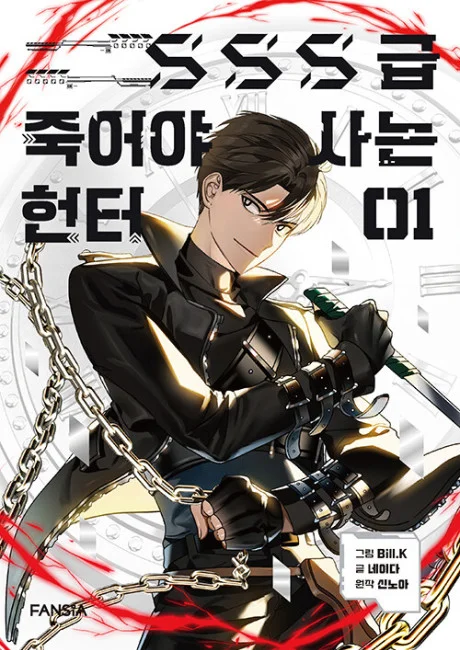 SSS-Class Revival Hunter cover art.
Our master manhwa reading list covers the top 30 titles across every genre for 2026.
Best Manhwa to Read in 2026 →
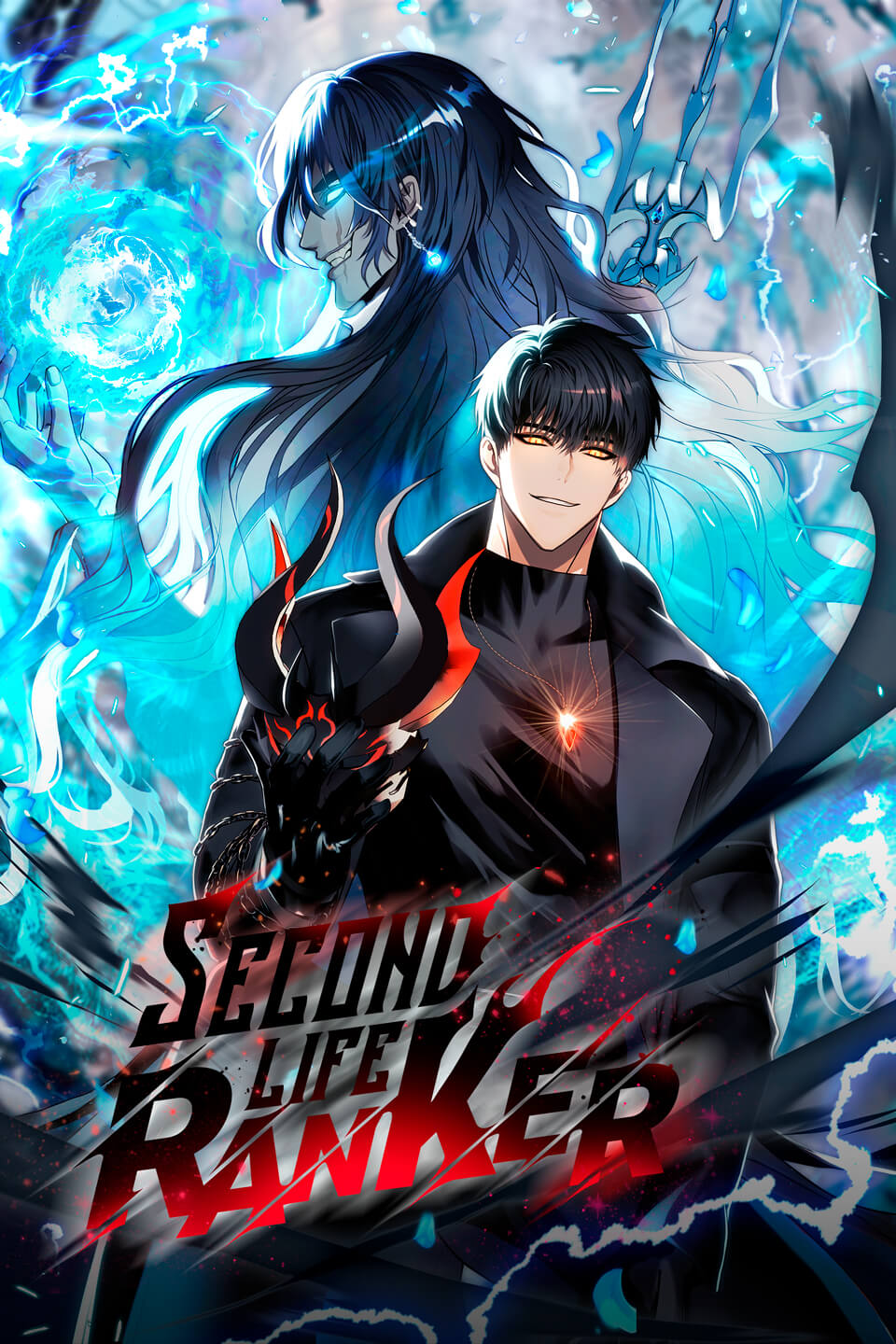 Second Life Ranker uses its twin-brother revenge premise to keep stakes personal across 300+ chapters.
For the Foreknowledge and Information Advantage
The specific mechanic in Second Life Ranker (a protagonist who operates with information others don't have, derived from an emotionally significant source) is less common than it looks. Time regression manhwa gives foreknowledge routinely, but the protagonist in a regression story lived the events themselves. That's a different feeling. Yeon-woo reading Jeong-woo's diary is accessing someone else's experience. The following three series are the closest structural matches.
Omniscient Reader's Viewpoint (WEBTOON, ongoing; source novel completed at 551 chapters) is the best single recommendation for any reader whose primary interest in Second Life Ranker was the foreknowledge mechanic and what the series does emotionally with it. Kim Dokja's advantage is having read the web novel that the world is now enacting. He's the only reader who finished it. He knows how it ends, or thinks he does. No tower, no physical combat as the primary engine, but the structure is identical to Yeon-woo's: information derived from a text that had a deeply personal relationship attached to it, deployed in a world that has no framework for what the protagonist knows. The web novel was Kim Dokja's parasocial anchor for years. The diary was Jeong-woo's life. Both series understand that information advantage and emotional weight can occupy the same mechanic simultaneously. Buy the volumes at Better World Books (affiliate link)
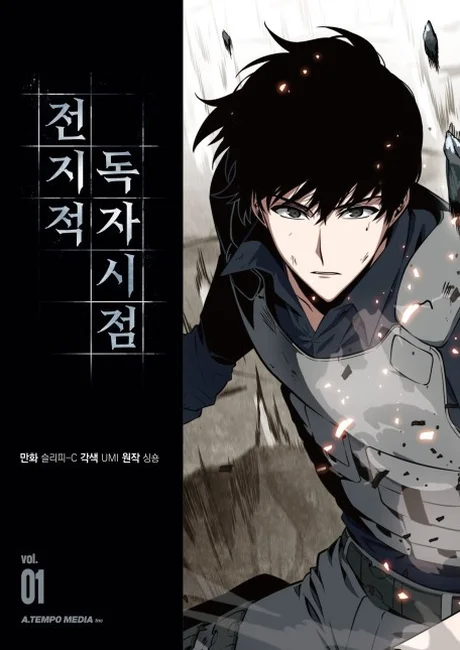 Omniscient Reader's Viewpoint cover art.
ORV is also the better-written of the two. singNsong (novel) and Sleepy-C (manhwa adaptation) built something that earns its length consistently, with the source novel at 551 chapters and the manhwa ongoing. The more interesting question (which Second Life Ranker sometimes doesn't ask clearly enough) is what the cost of knowing is, not just what the benefit is. ORV asks that question continuously. Free on WEBTOON with paid fast-pass chapters.
A Returner's Magic Should Be Special (268 chapters, completed, Tappytoon) has a more conventional setup: Desir and a small party are the only survivors of a catastrophe, and Desir uses that foreknowledge in a regression scenario to prevent it. The foreknowledge comes from personal experience (regression, not diary) so the emotional register is different. But the series earns a place here because of what it does with the information asymmetry. Desir doesn't just use what he knows to win fights. He uses it to navigate social and political structures, which is the same move Second Life Ranker makes in its mid-seasons when faction politics become as important as floor progression. The parallel isn't in the grief mechanic but in the way foreknowledge gets applied as strategy across all domains, not just combat. Buy the volumes at Better World Books (affiliate link)
 A Returner's Magic Should Be Special cover art.
Doom Breaker (101 chapters, 2 seasons complete, WEBTOON) is the grief match rather than the pure information-advantage match. Zephyr regresses after humanity's defeat. The series never lets him forget what was lost: the regression is a second chance loaded with the memory of everyone who didn't survive the first timeline. Second Life Ranker's early chapters work the same way: Yeon-woo winning floors his brother died on is not a neutral experience, and the series doesn't pretend it is. Doom Breaker sustains that register across both seasons. For readers who found Second Life Ranker most compelling when it was about grief rather than power, this is the direct recommendation. The Doom Breaker review covers where the two seasons land relative to each other. Buy the volumes at Better World Books (affiliate link)
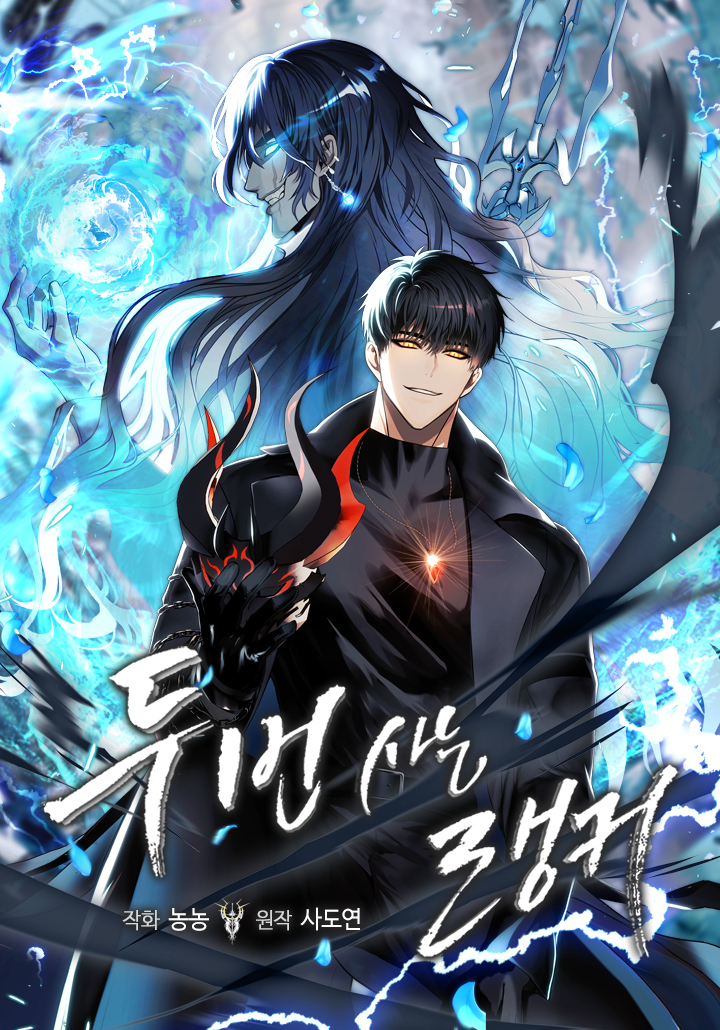 Season 4 was confirmed in April 2026; the series has been on hiatus since, with 219 episodes live on Tapas.


For the System Fantasy Without the Tower
Not every reader of Second Life Ranker is primarily invested in the tower structure. The system mechanics (visible power acquisition, stat-window progression, the sense of a protagonist accumulating capabilities toward a known endpoint) exist in plenty of manhwa that use dungeons, battlegrounds, or open worlds instead of a tower floor structure.
Solo Leveling (179 chapters, completed, Tappytoon) is the genre's most accessible version of the same ingredient set: a protagonist who starts near the bottom of a ranked system and accumulates power at a rate nobody around him can explain or match. No tower, no diary, no revenge motivation: Solo Leveling strips the genre to its elemental form. Sung Jin-woo's arc is about becoming the strongest, stated plainly, without emotional complication. If Second Life Ranker's personal stakes were what you read through rather than for, Solo Leveling's cleaner mechanics will read as relief rather than loss. It's also completed, which matters for readers who prefer a finished arc. The Solo Leveling review covers its positioning in the genre in more detail. Buy the volumes at Better World Books (affiliate link)
 Solo Leveling cover art.
The Beginning After the End (299 episodes, ongoing, Tapas) runs a concealed-capability structure similar to what Second Life Ranker does in its tower. Arthur Leywin, a powerful king reincarnated into a magic world, spends significant chapter time accumulating power in an environment that doesn't know what it's looking at. The opening 30 chapters are childhood (slower than the Second Life Ranker opening) but the concealment mechanic that emerges afterward is the same structural move: a protagonist who operates at a level the surrounding world can't measure. Tonally lighter than Second Life Ranker; the grief element is absent. What it shares is the structure of a protagonist running ahead of their environment's comprehension for a sustained arc. Buy the volumes at Better World Books (affiliate link)
Eleceed (405 episodes currently visible, ongoing, WEBTOON; newer episodes app-only) works differently from most items on this list. Jiwoo can move at superhuman speed but hides that ability; Kayden, formerly one of the top-ranked Awakened in the world, is trapped in a cat's body and can't use his power directly. Both main characters are operating significantly below their actual capability. That's a different version of the Second Life Ranker information asymmetry: not foreknowledge, but concealment, with the gap between apparent and real capability as the ongoing engine. Eleceed is also the most accessible series here: free, lighter in tone, shorter individual chapters. The Eleceed review places it in the Awakened-human genre context and covers where the art peaks.
 Eleceed cover art.
Our best action manhwa list has top picks for fans of dungeon-clearing and sibling revenge narratives.
Best Action Manhwa 2026 →
What the Manhwa Like Second Life Ranker Search Is Really Asking
The more interesting question behind the manhwa like Second Life Ranker search is why the diary mechanic works when it does. Second Life Ranker is not the first series to give a protagonist foreknowledge: regression manhwa has been doing that for years. What it does differently is attribute that foreknowledge to a specific dead person, make it emotionally contaminated, and then sustain that contamination through the progression arc rather than dropping it once the wish-fulfillment structure takes over.
That's a structural choice, not a genre feature. And it's why the search for manhwa like Second Life Ranker keeps ending up at titles that don't obviously belong together (Omniscient Reader's Viewpoint with no tower, Doom Breaker with no diary, Solo Leveling with no grief). Each of them shares one specific strand of what Second Life Ranker is doing, not the full combination.
The full combination is genuinely rare. Second Life Ranker (reviewed in the Second Life Ranker review) earns its 8.0/10 partly by holding those elements together longer than most comparable titles would. For readers who want the closest possible match, Omniscient Reader's Viewpoint is the answer. For readers who want the best execution of a single element (tower, foreknowledge, grief, or system accumulation) the list above separates those out. For where the whole genre stands in 2026, the best manhwa ongoing 2026 covers the current active titles.
For the reading order and arc breakdown: Second Life Ranker Reading Guide: Catch Up Before Season 4.
Tapas is scheduled to end its service on March 31, 2027; see what we know about the shutdown.
Related Reading
- Second Life Ranker Character Guide: Yeon-woo, the One-Horned Tribe royals, and the rest of the named cast, sourced from AniList.
- Tower of God reading guide
- SSS-Class Revival Hunter reading guide
- Best Manhwa to Read in 2026 →
- Doom Breaker review
- Solo Leveling review
References
- Second Life Ranker on Tapas
- Tower of God on WEBTOON
- Omniscient Reader's Viewpoint on WEBTOON
- Eleceed on WEBTOON
- r/manhwa
Frequently Asked Questions
What manhwa is most similar to Second Life Ranker? Omniscient Reader's Viewpoint is the closest structural match: Kim Dokja's foreknowledge comes from having read the book the world is now living through, which parallels Yeon-woo's diary exactly. For the tower setting specifically, Tower of God is the direct genre ancestor. SSS-Class Revival Hunter runs the same power-accumulation logic in a tower system.
What manhwa like Second Life Ranker are free on WEBTOON? Tower of God and Eleceed are free on WEBTOON. Omniscient Reader's Viewpoint is also on WEBTOON with free chapters. Doom Breaker has a WEBTOON presence. SSS-Class Revival Hunter reads on Tapas (paid). Solo Leveling is on Tappytoon and Naver (paid). The Beginning After the End is on Tapas.
Is Second Life Ranker a regression or reincarnation story? Neither. Yeon-woo does not go back in time and does not reincarnate. He enters the tower for the first time, as himself, using his dead twin brother's encrypted diary as a guide. The foreknowledge is borrowed rather than lived, and that distinction makes it feel categorically different from regression manhwa.
What manhwa should I read if I want the grief element of Second Life Ranker? Doom Breaker handles grief and rage as the emotional engine most directly: Zephyr's regression is driven by humanity's defeat and the weight of what was lost. Omniscient Reader's Viewpoint carries a similar emotional register: Kim Dokja's foreknowledge is tied to a deeply personal relationship with the book's author. Second Life Ranker's grief mechanic is rarer than it looks.
What manhwa like Second Life Ranker are completed? Solo Leveling is completed at 179 chapters (Tappytoon). Omniscient Reader's Viewpoint is ongoing on WEBTOON (source novel: 551 chapters, completed). A Returner's Magic Should Be Special is completed at 268 chapters (Tappytoon). Doom Breaker has two complete seasons at 101 chapters. Second Life Ranker has been on hiatus since an April 2026 announcement, with 219 episodes live on Tapas and no confirmed Season 4 return date.
How does Second Life Ranker compare to Tower of God? Tower of God is ensemble-focused and uses the tower as a world to explore. Second Life Ranker is a solo protagonist revenge narrative where the tower is the arena for settled grievances. Tower of God builds outward (more characters, more factions, more lore). Second Life Ranker builds inward: everything serves the twin-brother premise. Both are long, serious, and structurally complex.
What should I read after finishing Second Life Ranker during Second Life Ranker's Season 4 hiatus? SSS-Class Revival Hunter satisfies the tower-system accumulation mechanic while Season 4 waits. Omniscient Reader's Viewpoint is ongoing on WEBTOON with 551+ chapters of source material available, enough to occupy the gap. For the tower architecture specifically, Tower of God has 652+ episodes going much further into the tower's mythology, though it is currently on hiatus.
- SSS-Class Revival Hunter on Tapas -- 154 episodes; Season 4 hiatus
- The Beginning After the End on Tapas -- 299 episodes