Legend of the Northern Blade character guide, short version: Jin Mu-Won is the son of a sect leader who died to save him, and almost everyone else in the cast is either someone who helped destroy that sect or someone who helps him bring it back. The names below come from the series' character list on AniList, with roles checked against each character's entry. The manhwa is finished at 202 chapters, so nothing here is going to change.
Reviewing
Legend of the Northern Blade
Most major characters carry an epithet, and the epithet usually tells you their standing before the story explains it. Here's the cast at a glance.
| Character | Epithet | Who they are |
|---|---|---|
| Jin Mu-Won | The Northern Blade | 5th generation leader of the Northern Heavenly Sect |
| Jin Kwan-Ho | North Wall | His father, the 4th generation leader |
| Buk Jin-Hu | Founder of the sect and creator of its martial art | |
| Eun Ha-Seol | Mysterious girl Mu-Won takes in; Geum Dan-Yeop's sister | |
| Seo Mu-Sang | Vice Captain and strategist of the Third Mercenary Group | |
| Hwang-Cheol | The sect's weakest and most loyal warrior | |
| Jo Cheon-Woo | Demon Fist | Traitor, founder of the Broken Fist Sect |
| Geum Dan-Yeop | Silent Night member trying to wake the group up | |
| Dam Jeok-Shim | Awakened Nirvana | Member of the Nine Skies |
| Dam Soo-Cheon | Lone Star of the Cerulean Sky | His third son, one of the Seven Lesser Heavens |
| Bi Sa-Won | Spear Dragon Lord | Member of the Nine Skies |
| Bul-Yeong | Shaolin monk and member of the Nine Skies |
Jin Mu-Won and the Northern Heavenly Sect
Jin Kwan-Ho, the North Wall, spent decades holding the Silent Night back from the mainland. Then his most trusted comrades and the Nine Skies betrayed him. He gave up his life on the condition that his son be spared, Tappytoon's summary puts it bluntly: accused of colluding with the enemy, he was "forced to disband the sect and commit suicide to protect his son." Mu-Won lives "under close surveillance" until a Silent Night attack shakes things loose, and then "trains to master the fighting techniques of his predecessors."
Those predecessors go back to Buk Jin-Hu, the 1st generation leader. The Central Heavenly Alliance elected him to lead the sect, and he created its signature art, the Gathering of Ten Thousand Shadows. When Mu-Won resurfaces after being presumed dead for 10 years, he does it as the 5th generation leader, and the title he takes, The Northern Blade, is the one the series is named after.
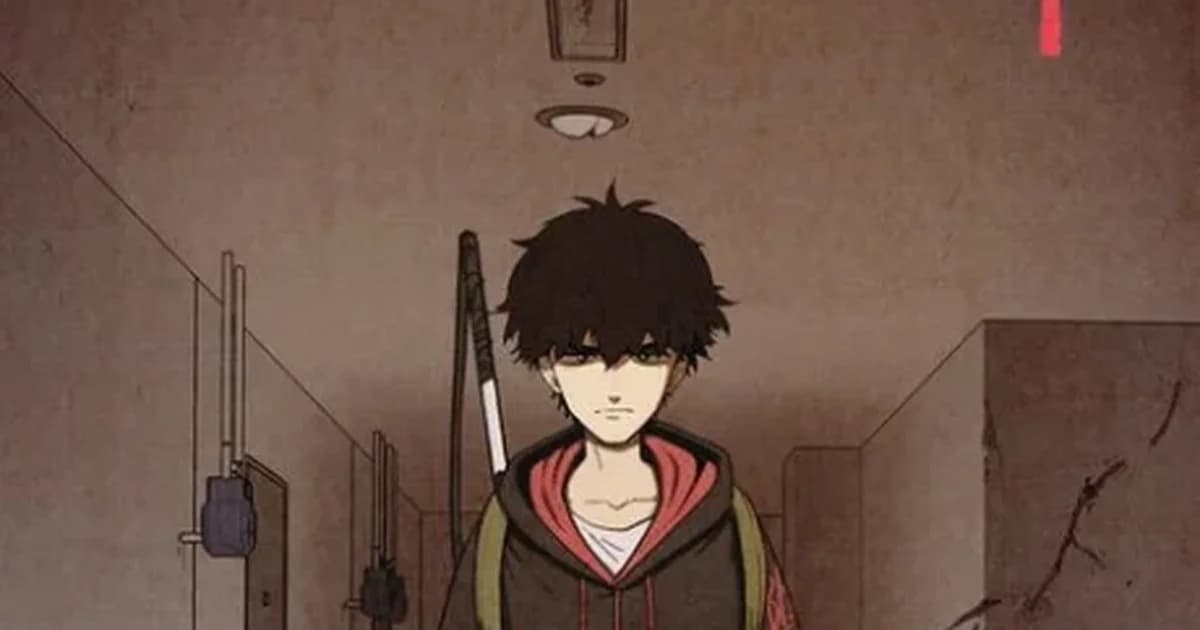
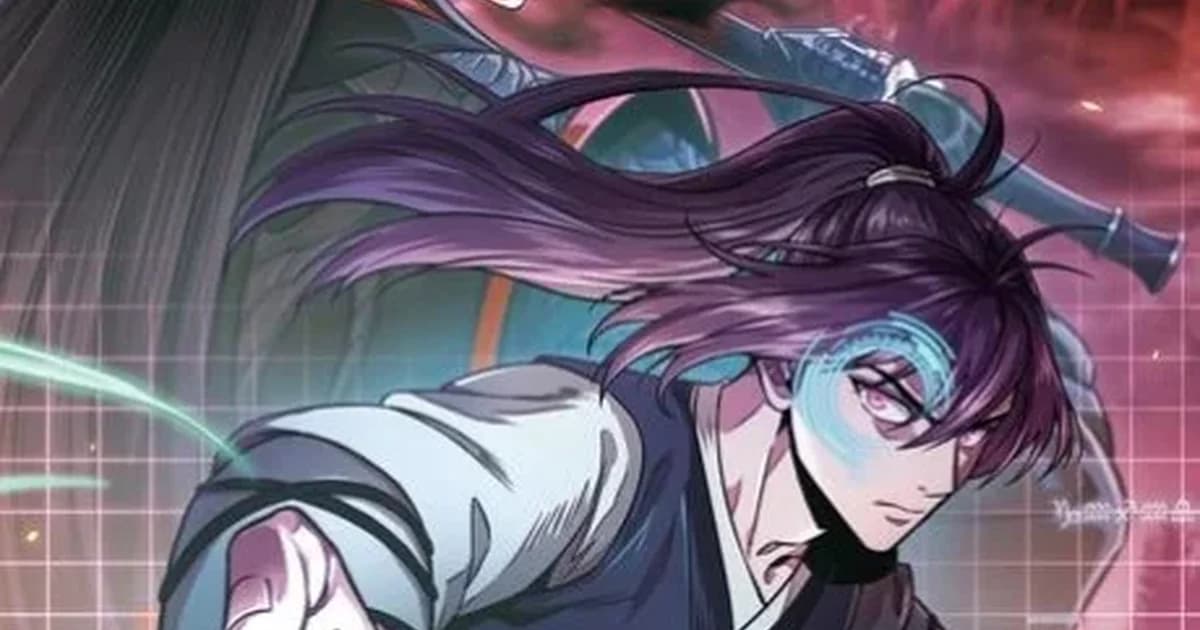
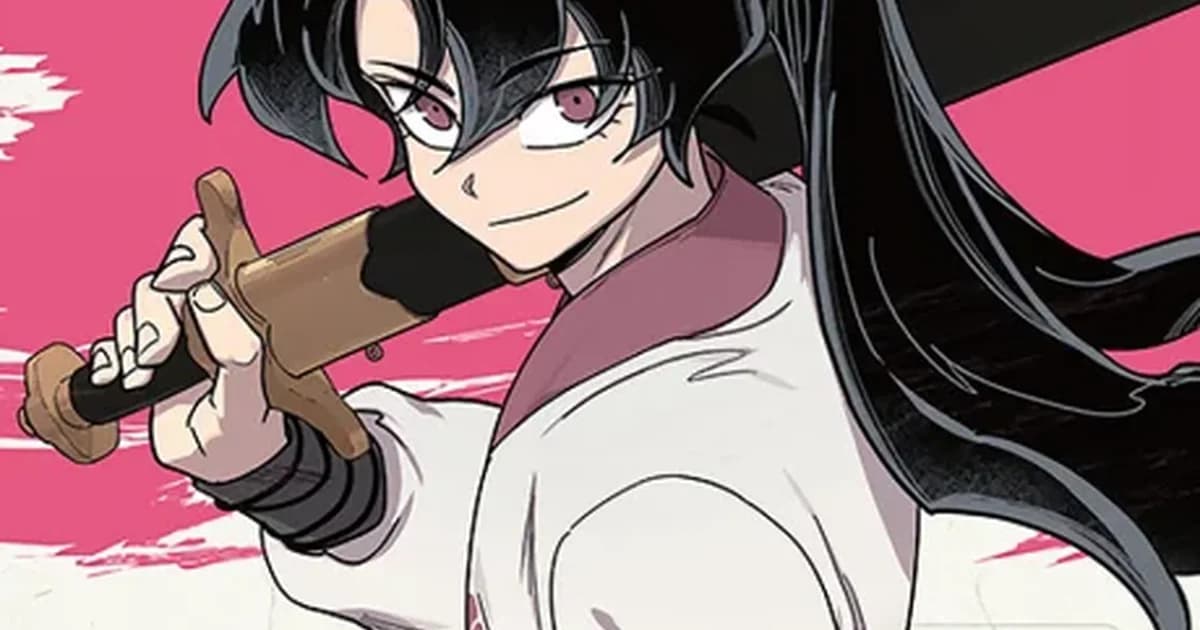
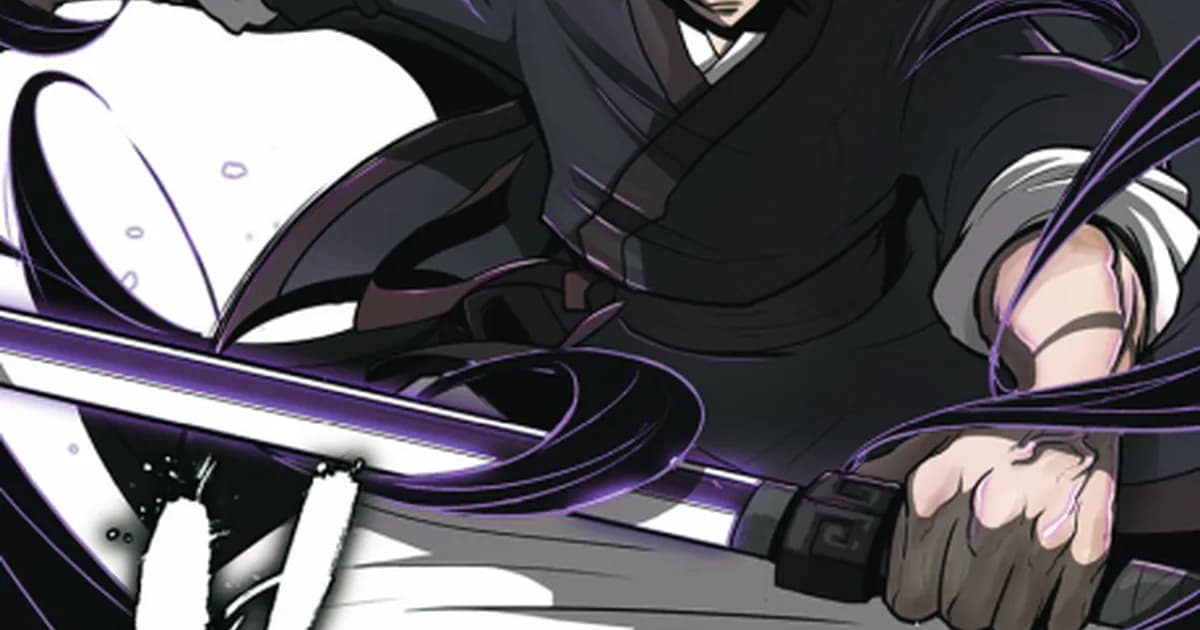
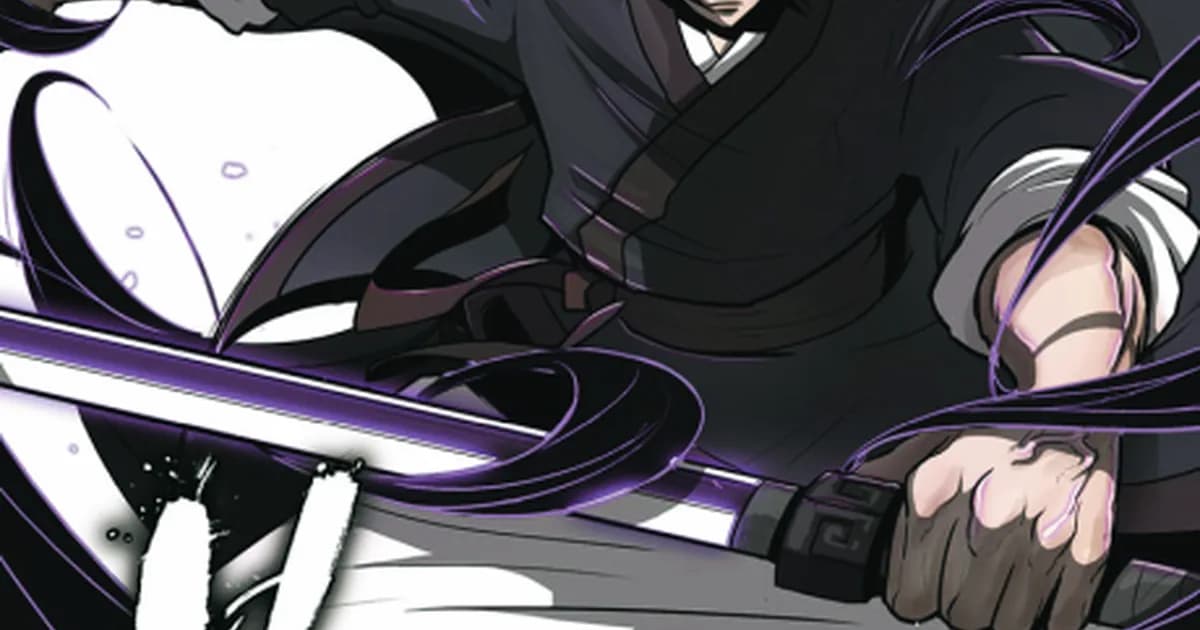
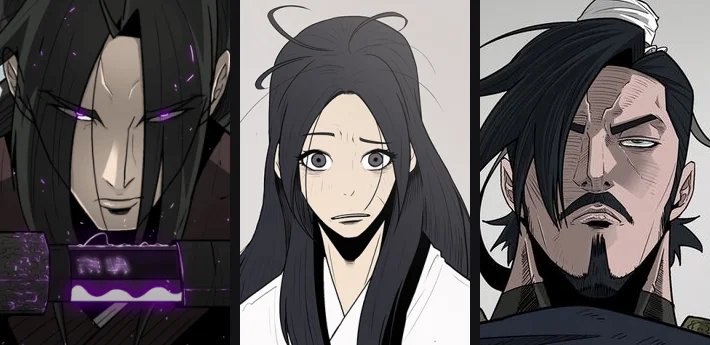 Left to right: Jin Mu-Won, Eun Ha-Seol and Seo Mu-Sang. © Woogack (dailybooks Inc.) & HAE MIN / SEOUL MEDIA. Portraits via AniList.
Mu-Won's Allies
Eun Ha-Seol meets Mu-Won after an unknown attacker wounds her. She recovers, slowly opens up to him, and defends him when the sect comes under attack, until her master, the Witch of the White Night Seo Geum-Hyang, rescues her. Her family history runs straight into the enemy camp: she and her brother, Geum Dan-Yeop, were orphaned when their home was destroyed.
Seo Mu-Sang arrives with the Third Mercenary Group, which the Central Heavenly Alliance sends to keep guard over Mu-Won. He's the group's Vice Captain and chief strategist, so treat him as the brains of the escort, not the muscle.
Hwang-Cheol was the weakest fighter the Northern Heavenly Sect had, with martial arts that stop at self-defense, and its most loyal. After the sect dissolved he worked as a wandering merchant and kept bringing supplies to Mu-Won through his teenage years in the ruined sect.
The Iron Brigade is a wandering mercenary group led by Yong Mu-Seong, with Chae Yak-Ran (Unnatural Strength) as vice-leader and Dam Jin-Hong (Arrow of the Setting Sun) among its members. They're hired swords, not sworn members of the sect, which is worth remembering when they line up beside Mu-Won.
Don't expect most of these people early. In an r/manhwa thread from a reader stuck around chapter 41, one reply suggested: "If it's too slow for you, I'd recomm switching over to something easier to read and trying again later. It's 10/10 worth reading the whole thing." The first stretch is mostly Mu-Won alone with the ruins of his sect.
The Traitor and the Silent Night
Jo Cheon-Woo, the Demon Fist, was one of the legendary Great Four of the Northern Heavens. He colluded with the Nine Skies, betrayed the Northern Heavenly Sect, and went on to found the Broken Fist Sect in Unnam province. Of all the comrades who turned on Jin Kwan-Ho, he's the one the cast list names.
Geum Dan-Yeop belongs to the Silent Night, the group the North Wall spent his life fighting. By the time he appears it's dormant, and he wants to wake it up against the Central Heavenly Alliance. His method is a provocation: he kidnaps merchants in Unnam province so that Jo Cheon-Woo's Broken Fist Sect will strike back. That puts the traitor and the Silent Night in the same province on purpose, with Eun Ha-Seol's brother pulling the strings.
The Nine Skies and the Seven Lesser Heavens
The Nine Skies are "a group of powerful and untouchable martial masters who ruled over the world of murim," in the words of Bul-Yeong's AniList entry. Three members appear by name in the cast list:
- Dam Jeok-Shim, Awakened Nirvana: a hedonist with three sons by three wives, who doesn't much care for any of them. His son and successor despises him.
- Bi Sa-Won, the Spear Dragon Lord.
- Bul-Yeong, who belongs to the Shaolin Temple as well as the Nine Skies. The Nine Skies cut across sects; they aren't one army.
Dam Soo-Cheon, Dam Jeok-Shim's third son, sits in a separate group, the Seven Lesser Heavens, and heads the Valley of No Return. He also goes by Heavenly Martial Emperor. With Seo-Mun Hye-Ryeong and Shim Won-Lee he founded the Cerulean Dragon Society to give young martial artists a bigger voice in murim affairs. When father and son share a scene, remember the son built his own faction rather than inheriting one.
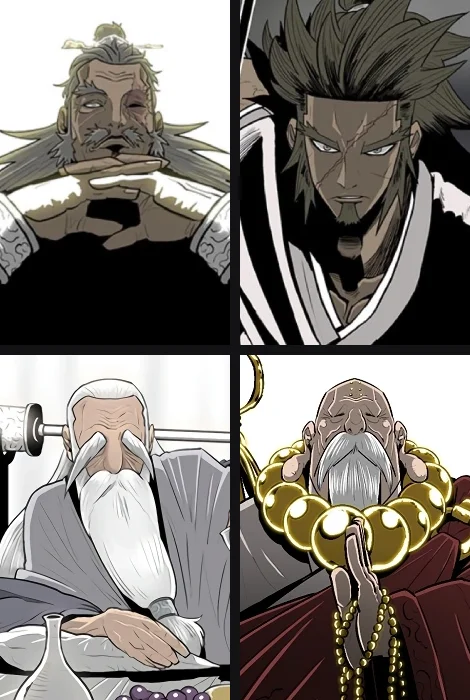 Top row: Dam Jeok-Shim, Dam Soo-Cheon. Bottom row: Bi Sa-Won, Bul-Yeong. © Woogack (dailybooks Inc.) & HAE MIN / SEOUL MEDIA. Portraits via AniList.
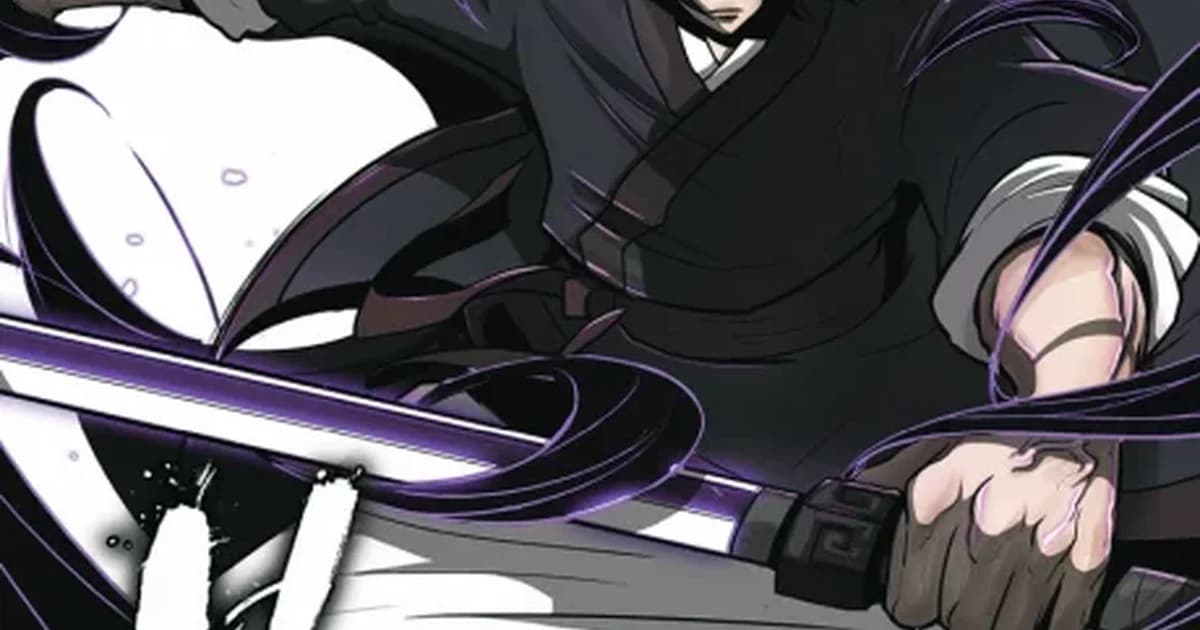
KakaoPage's official promo for the Korean release, built around Mu-Won's sword:
*"Jin Mu-Won's sword that will change everything," KakaoPage's official video for 북검전기 (YouTube).*Our Take
The cast is strongest at the top and bottom: Mu-Won, his father's ghost and loyal nobodies like Hwang-Cheol carry the emotion, while the Nine Skies supply the menace. The weak spot is the last villain. One r/manhwa reader put it this way: "wish we had time to build up the main antagonist, he kinda sucked, no real connection to the MC." We'd agree, and we'd still read it for Mu-Won. Read it for him and the sect, and keep this table open for the titled masters.
For the verdict on the whole series, see the Legend of the Northern Blade review. For where to start and where to read it in English, see the Legend of the Northern Blade reading guide. Want the same mood elsewhere? Try manhwa like Legend of the Northern Blade.
Return of the Blossoming Blade rebuilds a fallen sect too.
Return of the Blossoming Blade Character Guide →
Frequently Asked Questions
Who is Jin Mu-Won in Legend of the Northern Blade? The main character: the last descendant of Jin Kwan-Ho, the Northern Heavenly Sect's 4th generation leader. Thought dead for 10 years, he comes back as the sect's 5th generation leader with the title The Northern Blade.
Who betrayed the Northern Heavenly Sect? Jo Cheon-Woo, the Demon Fist, a former member of the Great Four of the Northern Heavens. He colluded with the Nine Skies, betrayed the sect and later founded the Broken Fist Sect in Unnam province.
Who are the Nine Skies? A group of powerful, untouchable martial masters who rule the murim world. Members named in the cast include Dam Jeok-Shim (Awakened Nirvana), Bi Sa-Won (Spear Dragon Lord) and Bul-Yeong of the Shaolin Temple.
Is Legend of the Northern Blade finished? Yes. The manhwa ended in November 2024 at 202 chapters, and Tappytoon lists the English release as completed.
Related Reading
- Legend of the Northern Blade Review: the verdict on the fights and the slower middle stretch.
- Legend of the Northern Blade Reading Guide: where to start and where to read it legally.
- Manhwa Like Legend of the Northern Blade: picks for the same lone-avenger murim mood.
- Nano Machine Character Guide: another murim cast built on faction politics.
- Return of the Blossoming Blade Character Guide: a sect rebuilt after its fall.
- Best Murim Manhwa 2026: where Northern Blade sits in the genre.