Loading…
ChapterBrief · Reviews
Volcanic Age Review: Patient Murim Regression Done Right
Volcanic Age review: 7/10. Joo Seo-Cheon regresses from the murim world's apex. 303 chapters, completed, no official English translation. Who it's for.
8 min readBy Ethan Mercer
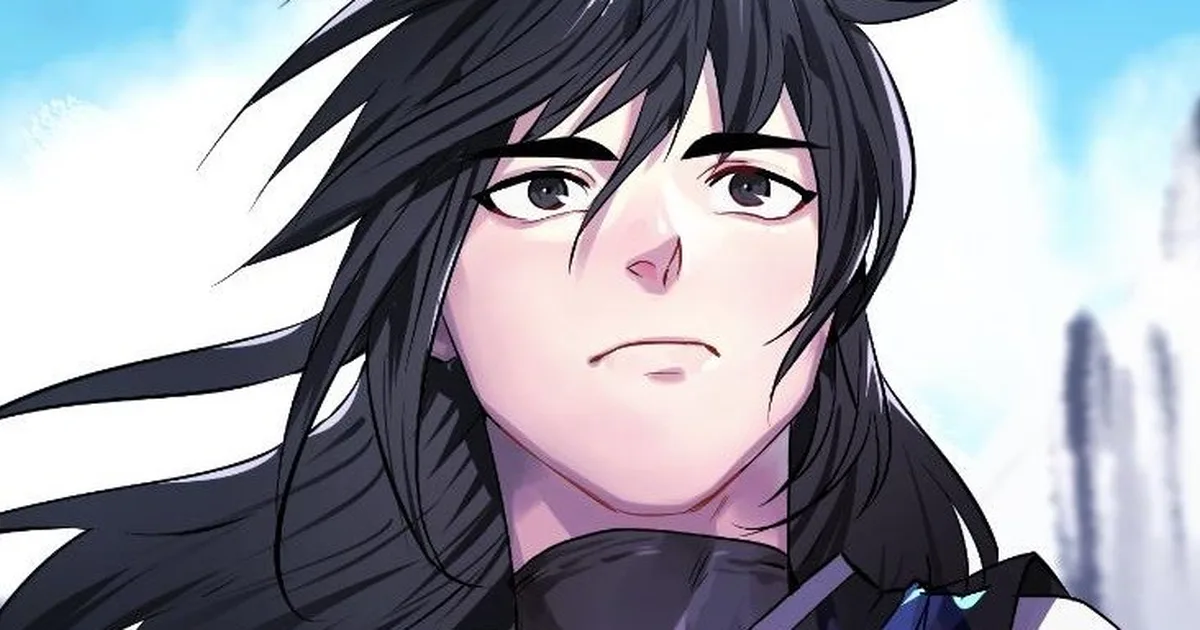
Reviewing
Volcanic Age
Jeong-Jun (original story), Tomato (art)
7.0
Score
7.0/ 10
Fan-translated (no official English platform)
Pros
- Regression premise inverted: protagonist starts at the hierarchy's apex, not its base. The knowledge advantage is elder wisdom, not power escalation.
- Political and strategic layer of murim fiction is treated as the primary subject, not background texture.
- Completed at 303 chapters with a defined ending. No waiting.
- Forbidden technique integration is thematically central, not a power upgrade stapled onto a conventional story.
Cons
- Early arc pacing (roughly chapters 1-60) is the series' slowest and the most common drop point. The payoff is real, but it takes time arriving.
- Readers who want consistent action density will find the mid-arc deliberate to the point of frustration.
- No official English translation. Fan-translated versions cover the full run, but quality varies across the early chapters.
Verdict
Volcanic Age earns its 7/10 for the inverted regression premise and its commitment to playing that premise straight across 303 chapters, but it asks patience of the reader that not everyone will want to give.
Volcanic Age review: the series does one structural thing the regression genre rarely attempts, commits to it across 303 completed chapters, and earns a 7/10 for exactly that reason.
The thing it does: Joo Seo-Cheon was already at the top when he died.
TL;DR: Volcanic Age review: 7/10. Joo Seo-Cheon, supreme murim elder, dies and regresses to youth with seventy-plus years of political and strategic knowledge intact. 303 chapters, completed, no official English translation. The premise is the genre's most structurally distinct variation, the pacing is deliberate to the point of being a filter, and the forbidden technique integration is thematically central rather than incidental. Best for readers who finished Return of Mount Hua Sect or Legend of the Northern Blade and want another completed, serious-register murim series.
Most regression protagonists start the second life from weakness: a failed disciple, a sect's disappointment, someone the hierarchy had written off. The appeal is escalation. You watch the underestimated protagonist use foreknowledge to climb. Volcanic Age turns that premise over. Seo-Cheon was the murim world's most respected elder. His regression isn't a climb from the bottom of a hierarchy he once topped. It's a reconstruction from the peak, backward through specific failures he watched happen the first time and now has the chance to prevent.
Rating: 7/10
Volcanic Age review: quick verdict
Volcanic Age is 303 chapters, completed, with a defined ending. The protagonist starts as the murim world's highest-ranking elder and regresses downward through his hierarchy with full memory of his first life intact. The series has no official English translation; the complete run is available through fan communities.
The score is 7/10. The inverted premise works. The pacing is the genuine filter: the early arc (chapters 1-60 approximately) establishes the first life's stakes at a measured pace that many readers won't survive. Those who do will find the mid-arc payoff real and the final arc's divergence from the first-life timeline genuinely earned.
The regression premise: starting at the top
The premise inversion deserves the attention it gets, because it changes what the story is allowed to be.
Standard regression murim gives the protagonist a power advantage with strategic seasoning. They return to weakness but can rapidly approach the strength they had, applying foreknowledge to accelerate that progression. The dramatic engine is combat escalation: watching the protagonist become stronger, faster, than he did the first time. The foreknowledge is a strategic accelerant layered over wish fulfillment.
Seo-Cheon's situation has no escalation arc available. He was already at the top. His regression advantage is purely informational: seventy-plus years of direct experience watching the murim world's political movements, alliances, betrayals, disasters, and missed opportunities. He knows which sect will collapse and when. He knows which alliances were formed under false pretenses. He knows which disciples, now children around him, will become significant figures. He knows which techniques he spent decades struggling to master in his first life and can approach differently the second time.
This creates a specific kind of dramatic tension. The question is never whether Seo-Cheon is strong enough. He's an elder-caliber strategist operating in a world of young men. The question is whether his foreknowledge is accurate enough: whether the second life follows the first life's pattern closely enough for his predictions to hold. When the second life diverges from the first, the series' most interesting sequences appear. Seo-Cheon without his foreknowledge advantage, having to operate as a skilled martial artist and political actor rather than as a man who already knows the outcome.
The reading guide covers the full arc breakdown in detail. For readers deciding whether to start:
Arc structure, pacing timeline, and how the foreknowledge mechanic functions across all three acts:
Volcanic Age Reading Guide
The forbidden arts and what they change
Advertisement
Seo-Cheon's sect officially does not practice the techniques he knows how to use. They exist in the sect's hidden records, not its public curriculum. Seo-Cheon spent his first life watching what happened when certain threats arrived that those techniques would have answered. His second life includes access to the techniques through the knowledge advantage, not through any granted permission.
This is more structurally interesting than the typical forbidden arts framing in murim fiction, where the techniques are dangerous power the protagonist uses despite prohibition. In Volcanic Age, the forbidden techniques aren't a power ceiling breaker. They're part of the knowledge set that makes the second life different from the first. The question of when and whether to deploy them, and against whom, is a political calculation rather than a power-scaling decision.
The series doesn't fully develop this as a thematic subject the way Chronicles of the Heavenly Demon does with Un-Seong's infiltration premise. COTHD makes the demonic arts lineage its central subject; Volcanic Age uses the forbidden techniques as one element in a broader strategic inventory. Readers who want the forbidden arts to be the narrative's center should start with Chronicles of the Heavenly Demon review before or alongside Volcanic Age.
What the forbidden technique integration does accomplish is keeping the series from defaulting to pure political drama. Seo-Cheon's physical capabilities matter. The combat sequences are informed by his technical knowledge across both lives. The fights don't feel disconnected from the strategic layer, which is a coordination problem many murim series with contemplative protagonists don't solve cleanly.
Pacing: the series' main filter
The early arc runs approximately 60 chapters. It establishes Seo-Cheon's first life, his standing in the murim world, the specific events and relationships that defined his existence, and the regression trigger. It is the series' slowest section by a significant margin.
This is deliberate. The first life setup isn't padding. It's weight. Without knowing what Seo-Cheon lost and what he's specifically trying to correct, the mid-arc decisions read as arbitrary strategy rather than purposeful correction. The late arc's divergence from the first-life timeline carries emotional significance only if the reader understands what the first life looked like and why those specific outcomes mattered.
The cost is real: readers who approach the early arc looking for the momentum of modern murim manhwa will find it doesn't deliver. The best-regarded current series in the genre (Return of the Blossoming Blade, Nano Machine) generate regular chapter-level payoffs and move at a different cadence. Volcanic Age doesn't operate that way. The payoff is structural, distributed across the full run, and it requires accepting the early arc's pace as the entry cost.
The mid-arc (chapters 60-160 approximately) applies the knowledge advantage systematically. Seo-Cheon identifies threats no one else sees coming, backs alliances that look wrong on current information but are correct given his foreknowledge, and places disciples in paths he knows will matter. The late arc (chapters 160-300) accelerates as his changes to the timeline compound: the second life diverges from the first life enough that his predictions become unreliable, and he has to operate on inference and expertise rather than memory.
The final arc is where opinion splits most. The ending has a defined resolution, and the strategic payoff for the regression premise lands. But a segment of the community considers the quality drop in the late arc severe enough to put Volcanic Age in the "ruined by its ending" category. The critique centers on pacing compression in the final stretch: the series that spent 150 chapters establishing deliberate political maneuvering rushes its final confrontations. Whether that's a fatal problem depends on how much the early arcs earned your investment.
For readers who want to compare the pacing against the most similar completed alternatives:
The six closest completed and ongoing series for Volcanic Age readers, sorted by what drew you to the series:
Manhwa Like Volcanic Age
Verdict: right reader, wrong reader
Advertisement
The 7/10 is accurate rather than generous.
The Good
- The inverted regression premise is the genre's most structurally distinct variation: starting from the murim world's apex, not its base
- Completed at 303 chapters with a defined ending -- no waiting, no abandoned arcs
- Political and strategic drama treated as the primary subject, not background texture to a combat series
- Forbidden technique integration is thematically central, not a power upgrade stapled onto a conventional structure
The Cons
- Early arc pacing (roughly chapters 1-60) is the series' slowest section and the most common drop point for new readers
- Readers who want consistent action density will find the mid-arc deliberate to the point of frustration
- No official English translation -- fan-translated versions cover the full run but quality varies across early chapters
- A segment of the community considers the late-arc compression a significant quality drop
The right reader: finished Return of Mount Hua Sect or Legend of the Northern Blade and wants another completed, serious-register murim series. Reads the political and strategic layer of murim fiction as the primary interest. Tolerates slow-build first acts. Comfortable with fan translation covering the full run.
The wrong reader: primarily engaged with murim for action density. Expects the regression protagonist to escalate toward power quickly. Wants an official English release. Chapter 30 is approximately as representative of the series' pace as chapter 130; if that pace doesn't work at chapter 30, it won't change.
Completed status is significant. Volcanic Age sits alongside Chronicles of the Heavenly Demon and Legend of the Northern Blade as one of the few fully finished dark murim series with defined endings. For readers who've been burned by long series that ran out of plan before they ran out of chapters, a completed 300-chapter run with a real ending is worth factoring into the decision.
The best murim manhwa 2026 list places Volcanic Age in context against the full genre field, completed and ongoing. That's the right resource for readers mapping the genre rather than evaluating this series specifically.
7/10. The premise is the genre's most structurally distinct variation. The series earns it.
Frequently Asked Questions
Is Volcanic Age worth reading?
Yes, for readers who want completed murim regression with a patient pace and a protagonist who operates from knowledge and strategy rather than escalating combat power. If Return of Mount Hua Sect or Legend of the Northern Blade matched your taste, Volcanic Age belongs on your list. If you primarily read murim for the action density, the pacing will test you.
What is Volcanic Age's rating?
This review rates Volcanic Age 7/10. The inverted regression premise is the genre's most distinctive structural variation: starting from the top of the murim hierarchy rather than the bottom. The series commits to that premise across all 303 chapters. Pacing in the early arc and the absence of an official English translation prevent a higher score.
How many chapters is Volcanic Age?
Volcanic Age completed at 303 chapters. The full story is available. No sequel or continuation has been announced.
Where can I read Volcanic Age in English?
Volcanic Age does not have an official English translation on any major platform as of mid-2026. The complete 300-chapter run is available through fan translation communities. Quality of translation varies across the early chapters; later chapters are more consistent.
How does Volcanic Age compare to Chronicles of the Heavenly Demon?
Both are completed murim series centered on forbidden or heretical cultivation techniques within a corrupt hierarchy. COTHD's Un-Seong infiltrates the demonic sect that killed his master and masters their arts from inside. Volcanic Age's Seo-Cheon uses regression and foreknowledge alongside his sect's officially-hidden demonic techniques. COTHD moves faster and the action density is higher. Volcanic Age is more political and contemplative. Both have full endings.
Is Volcanic Age completed or ongoing?
Volcanic Age is completed at 303 chapters. The story has a defined ending. It is not ongoing.
How does Volcanic Age differ from other regression murim manhwa?
Most regression murim protagonists start weak and escalate. Joo Seo-Cheon was already the murim world's most respected elder when he died. His regression doesn't give him an escalation arc. It gives him seventy-plus years of lived political knowledge applied to situations that now have different outcomes available. The dramatic tension is strategic, not combative.
Related Reading
- Volcanic Age Reading Guide: Arc breakdown for all 303 chapters, including the early-arc pacing curve and how the foreknowledge mechanic evolves across the three acts.
- Manhwa Like Volcanic Age: Six completed and ongoing picks for readers who finished Volcanic Age, sorted by which element (regression, demonic arts, completed arc) drew you to the series.
- Chronicles of the Heavenly Demon Review: The closest tonal match at 246 completed chapters, with demonic arts cultivation as its central subject rather than one element among several.
- Best Murim Manhwa 2026: Full genre map placing Volcanic Age against the complete field of completed and ongoing murim series.
References
About the author

Senior Manhwa Critic & Analyst
Manhwa critic and former Korean-to-English webtoon translator with 8 years reading across 40+ genres. London-based. Tracks everything from power-progression to slice-of-life romance.
- 8 years reading manhwa across 40+ genres
- Former Korean-to-English webtoon translator
- 500+ manhwa titles completed
- Specializes in progression systems and power-scaling analysis
Keep reading


Disclaimer
This article is published for informational and entertainment purposes. It does not constitute professional financial, legal, or technical advice. Series availability, platform access, translation status, and chapter counts change. Verify critical details (pricing, regional availability, official translation status) with publishers and platforms. Affiliate links, where present, help support our editorial work and are labelled in our affiliate disclosure.
Comments
Loading comments…